
Lisa Phu

Managing Editor, KTOO

"As Managing Editor, I work with the KTOO news team to develop and shape news and information for the Juneau community that's accurate and digestible."

School board unmoved by travel ban task force, public testimony

Dzantik'i Heeni Middle School student Connor Norman, his mother Michelle Norman, and school budget committee member Jennifer Lindley all testified during Tuesday night's school board meeting urging the board to reconsider the ban on middle school sports travel. (Photo by Lisa Phu/KTOO)
Dzantik’i Heeni Middle School student Connor Norman, his mother Michelle Norman, and school budget committee member Jennifer Lindley all testified during Tuesday night’s school board meeting urging the board to reconsider the ban on middle school sports travel. (Photo by Lisa Phu/KTOO)

The Juneau School Board will not reconsider the ban on middle school sports travel, at least for the rest of the school year.

Floyd Dryden Middle School teacher Jeannette Sleppy is a member of the community task force created to come up with alternatives to the travel ban. Sleppy was one of several who spoke out in unanimous opposition of the ban during Tuesday night’s Board of Education meeting at Juneau-Douglas High School.

“Our superintendent was quoted recently stating, ‘Building trust comes down to doing what the community is asking you to do through the elected board and following through with that.’ I urge you, the board, to build trust with us, this community, and continue to allow our middle school athletes the opportunities that competitive travel offers and has offered the middle school students of this community for many years.”

The school board adopted the middle school sports travel ban last September. It takes effect in July.

Sleppy said the task force conducted an online survey and received 263 responses. Only 9 percent of those responses support the ban on middle school sports travel she said.

In its final report, the task force recommends permitting out-of-town travel under certain conditions. These include making travel available to all team members and limiting each team to only one trip per school year.

Tom Rutecki is a member of the school district’s Activities Advisory Committee. He says the group did not put forward a recommendation to the task force, “but we do agree that travel should be allowed for middle school activities and athletics.”

Rutecki says before any policy on travel is developed, the board needs to establish a philosophy on middle school sports. He says the Activities Advisory Committee has started working on one.

“We basically are trying to get away from a competitive philosophy of teams that win to a developmental approach. We want to recommend establishing grade level teams. Go away from the skill-based teams and divide them into teams where fundamental, social and physical skills are developed.”

Following public testimony in favor of permitting middle school travel and the presentation by the task force, school board President Sally Saddler asked the body if they wanted to reconsider the ban:

“Can I get a show of hands of board members who want to see this on the agenda next month?”

When no hands went up, the packed audience broke out in a murmur.

School board member Barbara Thurston said the task force’s recommendations didn’t bring the board any closer to resolving the issues and the board wasn’t ready to reconsider the ban.

“The conclusion I get from this is that the ideal situation at the middle schools is that it involve both an intramural and a competitive component. And we have one school that has a competitive program but not an intramural program, and one that has intramurals and not competitive. And if the proposal and the resources allowed for both at both schools, I think that’s where we could go, but it really sounds like we have to choose, that neither school can afford to do both,” Thurston said.

Juneau resident Jon Kurland led the task force. He said the school board’s reaction is disappointing.

“I feel bad for Juneau kids who are in elementary school or middle school who aren’t going to have those opportunities in the future,” Kurland said. 

While Kurland didn’t get the outcome he was hoping for, he says the group will likely not pursue the issue.

“I don’t think so. I think this committee has done its work,” he said. 

Saddler said the school board will not look into the middle school travel ban again this school year unless the Activities Advisory Committee comes forward with a philosophy.

Shakespeare is alive in the capital city, 24 hours a day

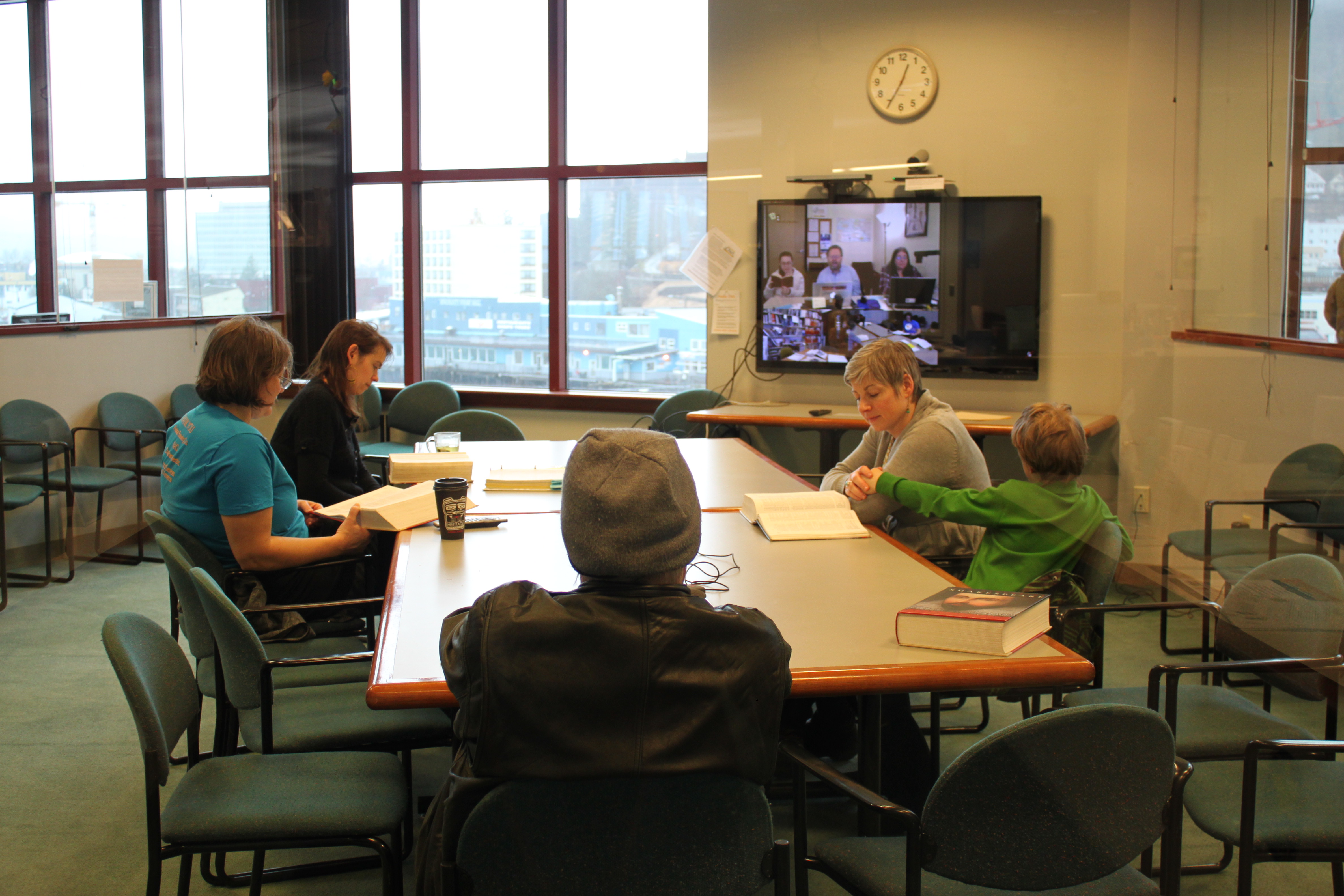
If he were alive today, William Shakespeare would be 450 years old in April. In honor of the event, the capital city is celebrating with its first Bard-A-Thon, 24 hours of Shakespeare readings for eight consecutive days. The Juneau Public Library is hosting the event.

Non-stop Shakespeare kicked off on Saturday. Here’s a glimpse of the Bard-A-Thon on the fourth day.

Cahal Burnham is missing school at Montessori Borealis to read the part of Luciana in Act 2 of “The Comedy of Errors.”

“Dromio, thou snail, though slug, thou sot!” he exclaims. 

Cahal and four other people are reading the play at the downtown library, while across town at the Alaska State Library, three people are participating by video conference.

City librarian Amelia Jenkins is in charge of organizing each reader’s part.

“Would you like to be Dromio of Ephesus?” she asks Cahal.

“Uh, yeah sure,” he replies.

“Balthasar?” Jenkins calls out, hoping to solicit a volunteer.

When no one replies, event organizer Beth Weigel poses the question over video conference and state librarian Daniel Cornwall volunteers to be Balthasar.

In Act 3 of “The Comedy of Errors,” one of Shakespeare’s most beloved comedies, 10-year-old Cahal reads the part of Dromio of Ephesus, a servant. Dromio’s master and well-respected merchant, Antipholus of Ephesus, is played by 63-year-old Bruce Rogers of Fairbanks.

Antipholus: “Thou drunkard, thou, what didst thou mean by this?”

Dromio: “Say what you will, sir, but I know what I know.
That you beat me at the mart I have your hand to show;
If the skin were parchment and the blows you gave were ink,
Your own handwriting would tell you what I think.

Antipholus: “I think thou art an ass.”

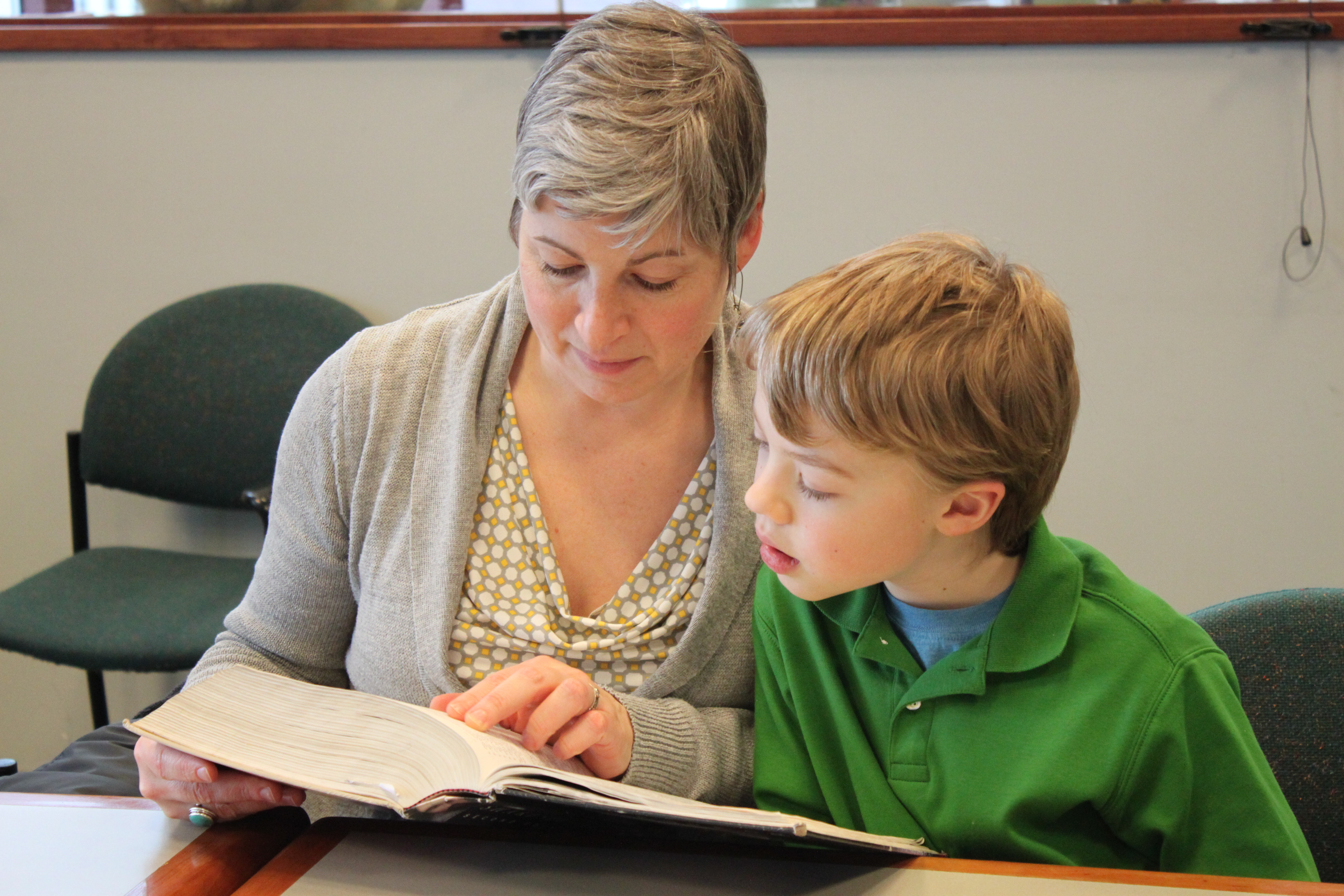
Cahal is with his mother, but it was his idea to participate in the Bard-A-Thon. His interest in Shakespeare stems from reading the children’s book series, “Alvin Ho.”

Cahal laughs. “He was throwing Shakespearian insults out and this was one of them: ‘Be gone ye beshibbering onion-eyed flap dragon.’ It’s funny,” he says.

Bruce Rogers is Artistic Director of the Fairbanks Shakespeare Theatre, which is getting ready to perform its 15th Bard-A-Thon in April. He’s been facilitating middle-of-the-night sessions at Juneau’s Perseverance Theatre, reading parts 1, 2, and 3 of the historical “Henry VI.”

“Nothing else to do when you’re up that late,” Rogers says. “Have another cup of coffee and read a little Shakespeare.”

Juneau organizer Beth Weigel says the Bard-A-Thon is a way for Shakespeare amateurs to begin understanding the literature.

“If you’re at home trying to read it silently, sometimes it doesn’t make sense. It makes more sense when you’ve got different voices reading and you hear the words and you can get a little bit of the jokes that come in and out,” Weigel says.

Thirty-nine plays will be read during the Bard-A-Thon, which is getting statewide attention. Prefer Shakespeare sonnets? Join in reading 100 of  the Bard’s poems at 8 a.m. Friday morning at the Douglas Library.

“Hamlet” marks the finale of Juneau’s Bard-A-Thon. Nome public library plans to participate through video conference.

School administration’s budget favors bigger class sizes, fewer teachers

Tuesday night's Board of Education meeting had a packed audience. (Photo by Lisa Phu/KTOO)
Tuesday night’s Board of Education meeting had a packed audience. (Photo by Lisa Phu/KTOO)

The Juneau School District administration has ignored recommendations by the budget advisory committee to keep class sizes small and delay a new language arts curriculum.

At Tuesday night’s Board of Education meeting, Superintendent Glenn Gelbrich said the goal of the administration’s proposed budget is to increase student achievement.

“Whether we’re looking at percentage of students who graduate, numbers of students who are proficient in international standards, attendance rates – in any of those factors and more, we want more of our kids to be successful as time goes by,” Gelbrich explained. 

The administration’s budget proposes cutting nearly 20 teaching positions and increasing class sizes by three students across all grade levels. A third grade teacher would have 30 students in a class, instead of 27. High school classes would grow to more than 31.

The proposed budget also adds a new elementary language arts curriculum, but postpones a secondary math program.

“Like the budget committee, we did one of the easy things, which was to move $400,000 out of the budget for the secondary math materials based on the recommendation of that committee,” Gelbrich said.

Budget committee member Michelle Norman was upset that only one of its recommendations was implemented. She questioned the purpose of the committee if the board plans to just pass the administration’s budget.

“If it is the belief by this board that they and the school district administrators know best, then the process I just participated in was for show and nothing more,” Norman said.

Auke Bay Elementary School teacher JoAnn Jones urged the board to implement more of the budget committee recommendations.

“I want to ask you to honor the hard work that the budget committee did. These members listened for many months. They asked hard questions that you didn’t ask and they gave you recommendations for budget cuts and add backs. I want you to listen to them,” she said.

In the fight between small classes versus new curriculum, school board member Barbara Thurston said budget committee members didn’t explain how small class sizes would improve student achievement. On the other hand, she said public testimony in favor of new curriculum did.

“If I have to pick, I’m going to lean towards something that all the evidence I’ve seen and all the testimony we’ve received is likely to increase achievement. And at the moment, for the elementary, I think that’s probably the curriculum,” she said. 

If the Alaska State Legislature increases school funding, the administration plans to add back some items reduced from the budget and would decrease class sizes. Several bills before lawmakers would raise the base student allocation, the amount districts get from the state for each enrolled student.

The school board will hold another hearing on the budget and take public testimony during a special meeting on March 25.

(Editor’s note: A reference to a per pupil funding term has been corrected. The term is “base student allocation,” not “Base School Allocation.”)

Forum@360: Middle East to Southeast

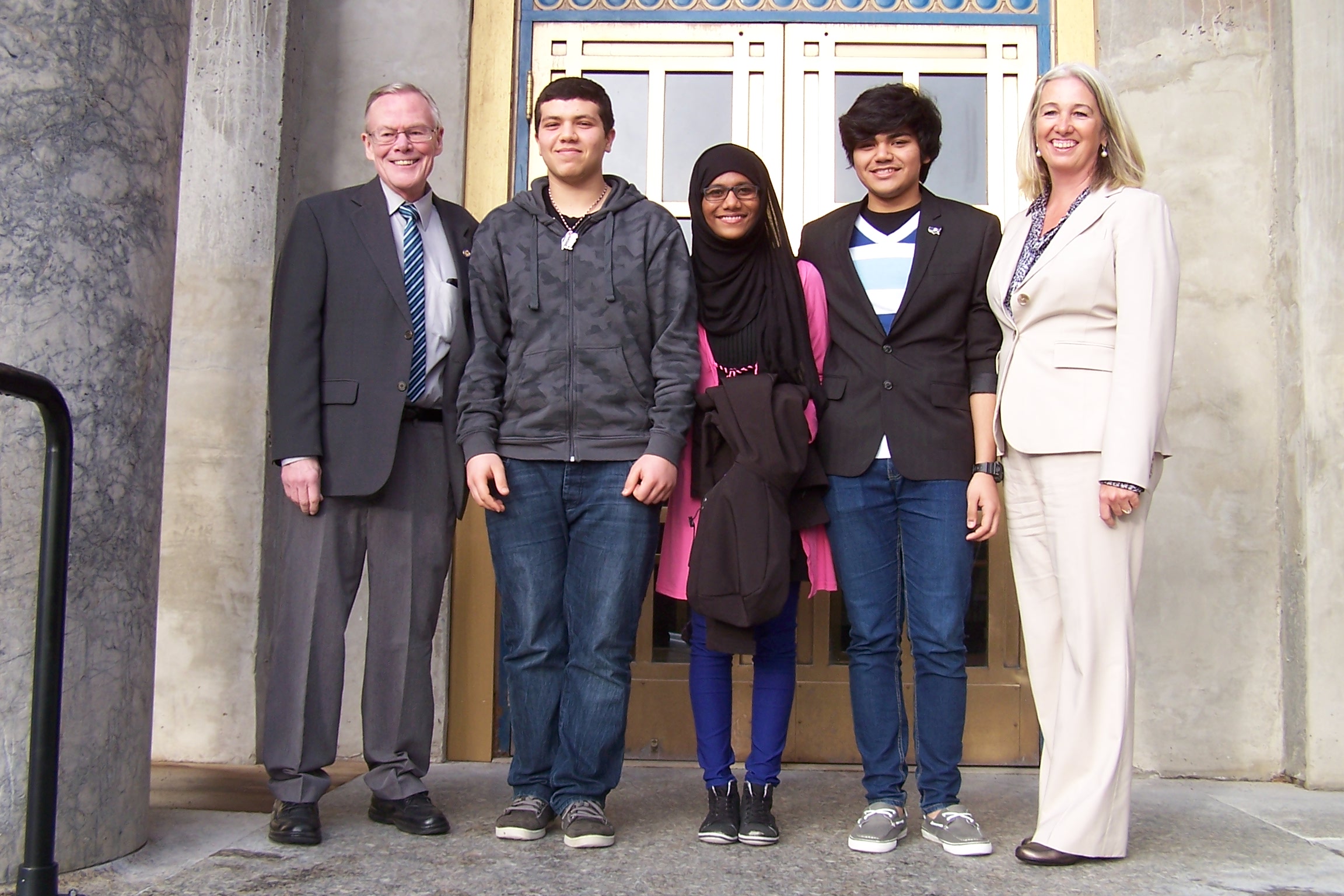
Exchange students from the Middle East Haytham Mohanna, Maha Abdulrazzaq, and Abdulla Husain pose with Sen. Dennis Egan and Rep. Cathy Munoz during a visit to the Capitol in January. (Photo courtesy of Alida Bus)

Be part of a studio audience Friday, March 7 for Forum@360: Middle East to Southeast.

Three exchange students from Yemen, Bahrain, and Gaza are spending a year in Juneau and Haines. Maha Abdulrazzaq, Abdulla Husain, and Haytham Mohanna will talk about adapting to life in Southeast Alaska, going to American schools, and what they miss about home. Audience will get to participate in a Q&A session with the students. Lisa Phu hosts.

Program starts at 5:30 p.m., March 7, at KTOO’s new studio @360, with doors opening at 5 p.m.

Find out more about the students.

Broadcast on 360 North:
 Friday, March 7, 2014 at 8 p.m. (Alaska time)

Broadcast on KTOO-FM: Thursday, March 13, 2014 at 7 p.m. (Alaska time)

About: Forum@360 is a new studio series on 360 North, Alaska’s public affairs channel. Guests from around Alaska will share their stories and discuss the issues of the day with a live studio audience in Juneau, moderated by local hosts.

Go here to watch the livestream on Friday, March 7 at 5:30. Submit your thoughts and questions using the comment bar next to the video player.

Former sheriff calls prohibition on drugs a farce

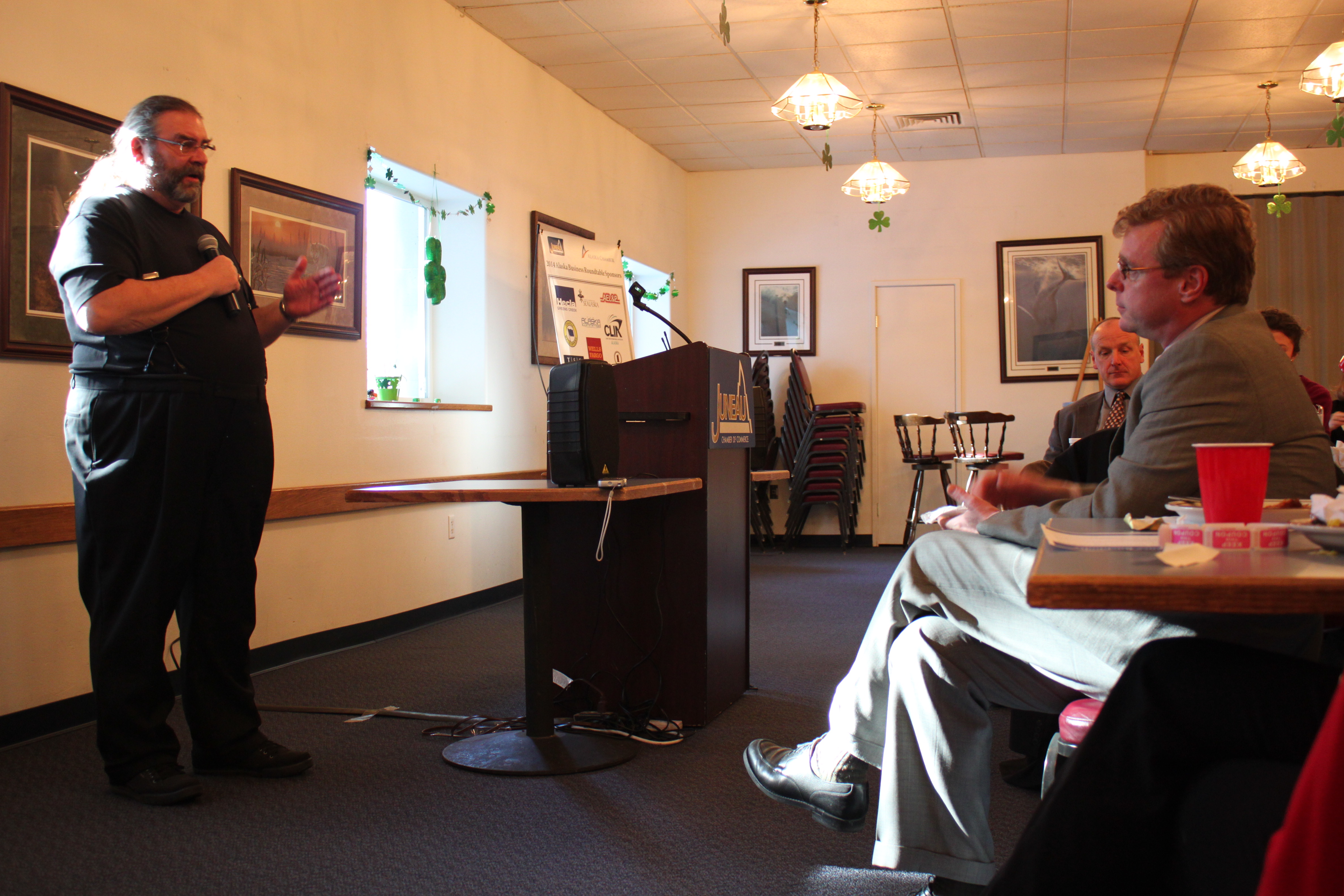
As a member of Law Enforcement Against Prohibition, former Wisconsin sheriff Lance Buchholtz speaks at a Juneau Chamber of Commerce lunch about why drugs should be legalized. (Photo by Lisa Phu/KTOO)
As a member of Law Enforcement Against Prohibition, former Wisconsin sheriff Lance Buchholtz spoke at a Juneau Chamber of Commerce lunch on why drugs should be legalized. (Photo by Lisa Phu/KTOO)

Former Wisconsin sheriff Lance Buchholtz says the prohibition on drugs is a farce.

As a representative of a law enforcement group advocating for the legalization of drugs, he’s traveling around the state and spoke at a Juneau Chamber of Commerce event Thursday.

Buchholtz doesn’t personally condone the use of the drugs.

“I feel that no one should do drugs. Drugs are a terrible thing to do, right? Let’s all agree on that, if we could, that nobody wants drugs in our society,” he says.

But as a member of Law Enforcement Against Prohibition, or LEAP, a non-profit organization of current and former police officers, lawyers and judges, Buchholtz thinks we need to end the prohibition on drugs.

“It’s not working. It’s expensive. It’s costing us billions of dollars a year. We’re locking up a lot of people that are not violent offenders and we just need to find another way,” he says. 

LEAP’s solution is to legalize drugs and regulate the market. It doesn’t name specific drugs. Buchholtz says criminalizing drugs has not benefited society or kept communities safer:

“Are we keeping any of this stuff out of our communities now when it’s illegal? It’s out there. We can’t arrest our way out of this problem.”

Buchholtz says the role of law enforcement should be to keep people safe from violence, not to intervene in drug use.

“If someone has a drug problem, it should be a medical issue, it should be a mental health issue, it should be a spiritual issue. I don’t see how it being a law enforcement issue is improving or helping anyone is this situation,” he says.

Alaska voters will decide whether to legalize marijuana in an August ballot initiative. Buchholtz thinks this kind of effort will influence federal law.

“The states are going to have to say, ‘Look, this is what we want and this is how we want to do it,’ and eventually the federal government is going to have to fall in line if enough states do what Alaska is proposing to do, and then Wisconsin does it and New York does it. Eventually, it’s going to have to happen,” he says. 

While LEAP does not support specific legislation, Buchholtz did speak to Alaska lawmakers while in Juneau.

Recently, the Affiliated Tribes of Northwest Indians, which includes the Tlingit and Haida Central Council, announced its opposition to legalizing marijuana.

School budget committee prioritizes smaller classes, more nurses

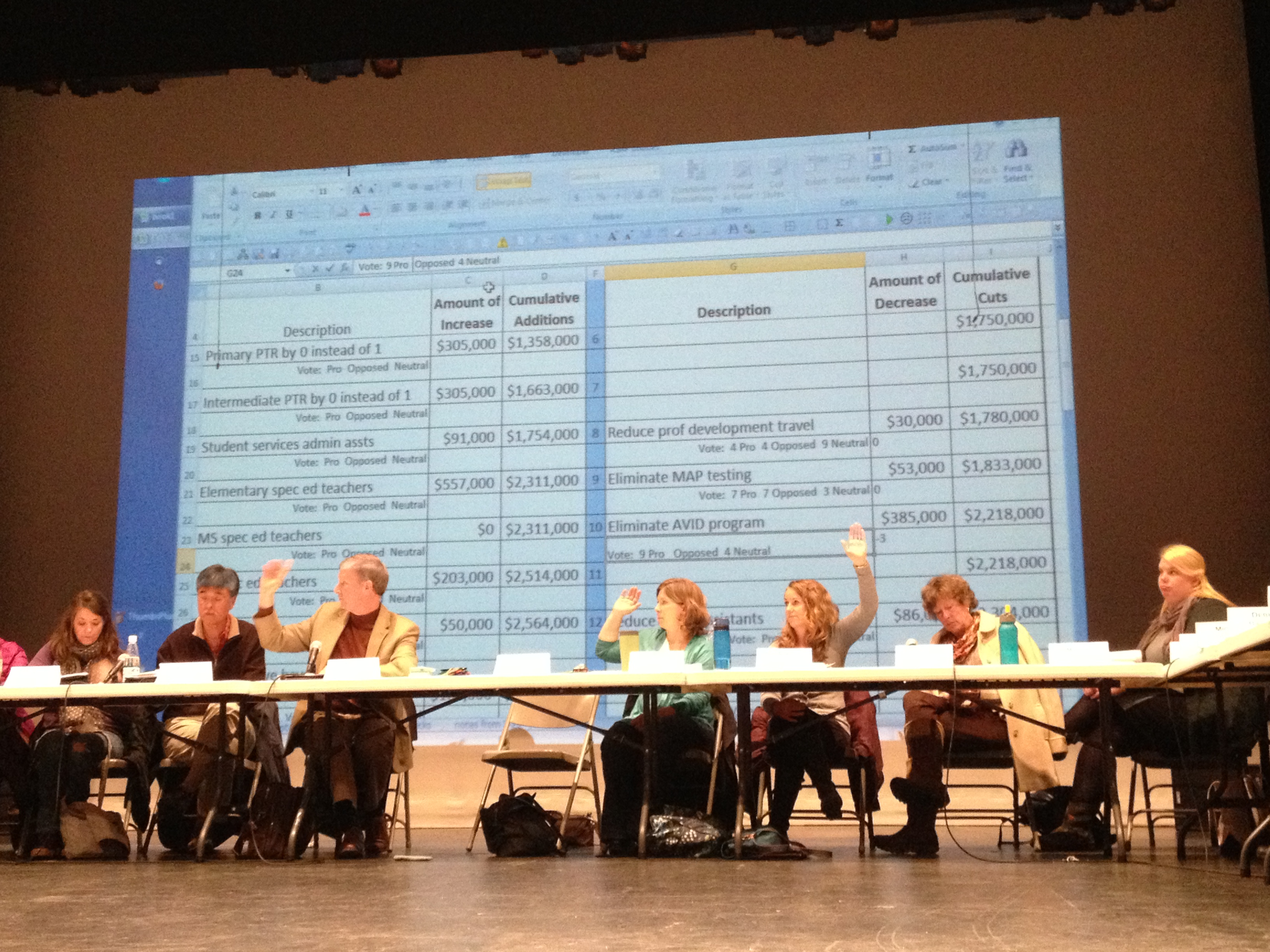
The Juneau School District Budget Committee votes on  priorities during a final meeting, held Tuesday night. (Photo by Lisa Phu/KTOO)
The Juneau School District Budget Committee votes on priorities during a final meeting held Tuesday night. (Photo by Lisa Phu/KTOO)

A school budget advisory committee disagreed with the superintendent on how to deal with a multi-million dollar shortfall at its final meeting Tuesday night.

The Juneau School District Budget Committee wants to maintain a lower student-teacher ratio, add nurses and postpone new language arts and math courses. The superintendent is proposing raising the student-teacher ratio, maintaining the number of nurses and adding the new curriculum. The administration’s proposed budget cuts $4.3 million.

Budget committee member Sue Mason says her biggest priority is the student-teacher ratio.

“I would really like to see the classrooms stay smaller. The greater number of the students, the less time the teacher can spend with students individually.”

The administration’s proposed budget cuts about 20 teaching positions. Committee co-chair Brian Holst says keeping all these positions isn’t possible, but prioritizing a low student-teacher ratio over new curriculum could preserve some.

“By postponing the curriculum, you’re freeing up resources that could be spent on teachers, so the net is probably seven to eight teachers potentially,” Holst says.

If pending legislation brings the district more funding, Superintendent Glenn Gelbrich says he’d still recommend raising the student-teacher ratio, but by less. Several bills are working through legislative committees that would raise per-pupil funding.

“We’re hopeful and optimistic that that might happen, but we can’t have full confidence that that’s going to happen at this stage,” Gelbrich says.

Without additional funding, Gelbrich is proposing raising the student-teacher ratio by three additional students. A kindergarten teacher, for example, would have 25 students instead of 22.

Due to previous budget cuts, the school district currently has five nurses and five health aides. The committee recommends raising the number of nurses to 10, putting a nurse back in each school.

School nurse Maureen Hall says she’s happy the committee recognizes the importance of nurses in schools.

“However, I don’t think the will of the administration would be to honor that recommendation,” Hall says. “It was [the budget committee’s] number two priority last year, was to reinstate the two nurse positions that had been cut out of the 10, and instead, administration came back and eliminated three more nurse positions and went to the health aide model.”

The budget committee also recommends eliminating the AVID college readiness program, and reducing the number of instructional coaches.

The district’s proposed budget for the 2014-2015 school year is about $90 million.

The budget committee will present a final report on its recommendations to the school board March 4.

Site notifications
Update notification options
Subscribe to notifications