Lisa Phu

Managing Editor, KTOO

"As Managing Editor, I work with the KTOO news team to develop and shape news and information for the Juneau community that's accurate and digestible."
Bartlett HR director steps down, city to take over

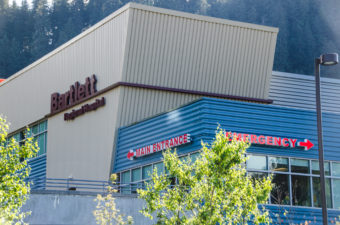
Bartlett Regional Hospital (Photo by Heather Bryant/KTOO)

Bartlett Regional Hospital is changing the way it manages its personnel.

As of Monday, current hospital HR director Norma Adams is resigning, and the city and borough of Juneau will take over human resources for the hospital.

The Bartlett Regional Hospital board of directors recently voted to fully integrate the two human resources departments.

Board vice president Reed Reynolds says the hospital approached the city about sharing HR services.

“We do operate as a city entity and we felt that it was important at least to consider ways in which we could utilize services that are already in place for the city to serve the hospital and these are areas where we felt that special expertise was either not required or could be obtained in other ways,” Reynolds says.

Norma Adams is the human resources systems administrator at Bartlett Regional Hospital. Outgoing CEO Chris Harff announced Adams’ resignation in an email to Bartlett staff on September 16. (Photo from Bartlett Regional Hospital website)

Bartlett human resources director Norma Adams was hired May 2012;  her final day on the job is September 30th.

The hospital will not replace Adams. Instead, Mila Cosgrove will take over Adams’ responsibilities. Cosgrove is director of human resources and risk management for the city and borough of Juneau.

“My office will be providing oversight at the human resources function at the Bartlett Regional Hospital. Our staff will be working closely together. We’ll be providing everything that you would normally find in a human resources office, from how you hire and pay people to policy administration to handling of employee issues and claims, as well as training, workforce planning, etc.,” says Cosgrove.

In a recent memo to Bartlett CEO Chris Harff and board chair Linda Thomas, Cosgrove outlined concerns with the hospital’s current human resources.

“As we did the investigation, there were some individuals among the staff that felt like the HR department at times was more of a management advocate than an employee advocate,” she says.

Cosgrove is referring to a recent confidential personnel investigation regarding allegations of a hostile work environment at the hospital. A report of the investigation was never made public.

In the past two fiscal years, the hospital spent more than $275,000 on issues related to employment dissatisfaction issues often related to management practices. In the memo, Cosgrove suggests that these costs could’ve been avoided.

“The more proactive you are in your human resources practices, if you catch problems or potential problems early, chances of resolving them before they turn into a more serious event is helpful. Basically looking at opportunities to make sure that your managers and supervisors are well trained, that policies are consistently applied – all of those types of things would be more proactive strategies,” Cosgrove explains.

Salary and benefits of current hospital HR director Norma Adams totals $230,000 a year. Cosgrove anticipates the cost of integrating hospital HR with the city’s may be less than what it costs to run the two separately.

“What I expect it will be is cost neutral and potentially a cost saving though we have to work that out. You’re taking essentially a full time HR person out of Bartlett and we’ll have to see do they need some additional support? It will impact my ability to provide direct services to the CBJ area, so we’ll need to take a look at that,” says Cosgrove.

Adams has been part of the senior leadership team of Bartlett, which is undergoing transition with her upcoming departure, and CEO Chris Harff’s resignation. At this point, Cosgrove says it is unclear if she will also be part of the hospital’s leadership team.

The merger means Cosgrove will be human resources director for about 1,500 CBJ and hospital employees. Aside from the director, the hospital employs four other HR staff, which Cosgrove says will not change.

As the entities integrate, Cosgrove plans on spending half her time at the hospital and the other half at CBJ.

Hospital board vice president Reed Reynolds says the board will reevaluate how the hospital deals with human resources and have a decision by the end of 2015.

Assembly candidate Kate Troll on AJ Mine and education

This profile is part of KTOO’s ongoing coverage of the 2013 municipal election. See all of the election coverage here.

Kate Troll is running against Bill Peters for the areawide assembly seat, the only contested race in the October 1st municipal election. (Photo by Lisa Phu/KTOO)

Kate Troll has a history in fisheries and tourism, and wants to make sure the public’s interest is put first.
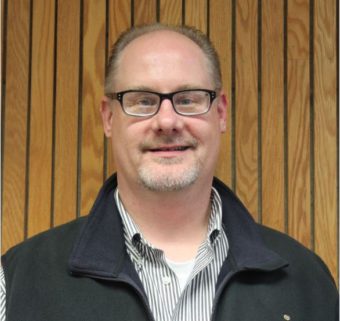
Troll has been executive director of United Fishermen of Alaska, Southeast Alaska Seiners, and Alaska Conservation Alliance. She was once a fisheries development specialist for the state’s Department of Commerce, Community, and Economic Development.

Troll got into politics in the 1980’s when she served one term on the Ketchikan Borough assembly.

Troll explains what piqued her interest to run for the Juneau assembly now.

“One of the last actions that the assembly took when they were dealing with the AJ mining resolution and they dealt with it in the consent agenda. Those sorts of breaches of due public process really catch my attention, and so I thought, yeah, I could play a very constructive role in making sure the public interest is out there first and foremost,” she says.

Troll feels strongly that any future action taken on the mine must incorporate recommendations made by the city’s AJ Mine Advisory Committee in 2011.

“I think there’s other ways to monetize the assets of the AJ Mine than just looking at reopening it as a gold mine,” says Troll.

Troll says she has researched the issue and found that in other countries, former mines are being used in the biotechnology field. She also suggests the mine could be used to house networked computer servers.

She says the city of Juneau walks a fine line as both owner and regulator of the mine.

“We have a monetary interest to converting assets to revenues, but we also have that responsibility to protect our public water supply and all those sorts of things, so looking at alternative ways as the owner to convert those assets to revenues is a good thing to do. I just feel very strongly though when it comes to looking traditionally at the mine and what we know, it’s real important to separate the owner hat from the regulator hat.”

While Troll has a lot to say on the AJ Mine, that’s not one of her priorities. Those include affordable housing, downtown revitalization, and school funding.

She appreciates the assembly’s high priority on education funding but believes local government could do more.

“I would like to get the assembly engaged in making the case to the legislature – go arm in arm with our school board and our superintendent, reach out to other communities that are feeling the same crunch we are – that we need to invest in our schools and we can afford to do that,” Troll says.

Another priority is growing the economy through jobs.

“There are some federal research jobs related to natural resources that I think should be located here in Juneau. For example, there are 200 such positions in NOAA and about a hundred of those could possibly be located here at the Ted Stevens Center,” Troll explains.

Troll is a former bed and breakfast owner and operator. She’s written a book called “Eco-nomics and Eagles: A People’s Guide to Economic Development and the Environment.” Troll recently spent time in California generating interest for two screenplays that she wrote. Both are set in Alaska and deal with the issue of climate change.

Assembly candidate Bill Peters has a history of serving

This profile is part of KTOO’s ongoing coverage of the 2013 municipal election. See all of the election coverage here.

Bill Peters is running against Kate Troll for the areawide assembly seat, the only contested race in the October 1st municipal election. (Photo by Lisa Phu/KTOO)

Bill Peters has spent much of the last two decades serving on non-profit, community, and municipal boards. Now he’s hoping to add CBJ assembly to that list.
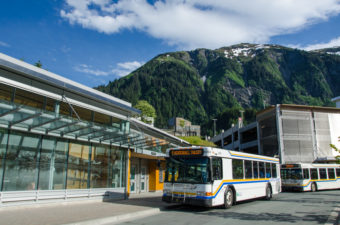
Peters was 27 when he joined the board of Big Brothers Big Sisters in Anchorage. He stuck with it when he moved to Juneau 16 years ago, and was the first board chair when the state’s three regional Big Brothers Big Sisters merged into one in 2007.

Peters served one term on the Juneau school district board of education.

He also pushed a ballot initiative for a second high school. Peters holds firm to his belief that two high schools in Juneau are better than one.

“I get it. I understand. There are a lot of people in the community that would still advocate that one high school can serve the need and they would probably argue with declining populations. But I would like to think, from a positive perspective, we need to build our economy, we need to bring people to our community, jobs are very important, we need to provide a good education for those people coming, and I think in the long term, we’re going to see that growth,” Peters says.

He says now is the right time to join the assembly.

“Running for assembly has always been on my radar. It’s an open seat, so it’s a good opportunity for me to run. I’m passionate about service in the community, but most importantly, we’ve got some important issues right now that we need to work on,” he says.

For Peters, those issues are affordable housing, jobs in Juneau, education, and access to a clean water supply.

“Last Chance Basin has been deemed that it’s not sufficient. I know the city is doing some work and I’d like to ensure that that work continues to identify a supplemental water supply – that would be Salmon Creek – and then also look to rehabilitate the wells that are at Last Chance Basin,” Peters says.

Peters thinks water could be an issue if AJ Mine is developed, but says the assembly has a responsibility to consider any proposal that comes forward.

“I’m a proponent of economic growth and this could be an opportunity that could have a positive benefit to our community. As an assembly member, I would do what is needed to take a look at that, certainly understanding that any viable option would need to meet state, federal, and city regulations,” he says.

On the issue of solid waste,

“One of the things that I would like to work on is considering whether or not we can bring back the incinerator and whether that could address both solid waste and the sludge. If there was the incinerator option that would work to take care of both those needs.”

Peters is Vice President of Corporate Development at True North Federal Credit Union. If he gets voted in, Peters says he’ll bring a financial background to the assembly, which he thinks will be useful for finding an appropriate balance between revenues and expenditures.

CBJ approves funds for buses, airport and wasterwater plants

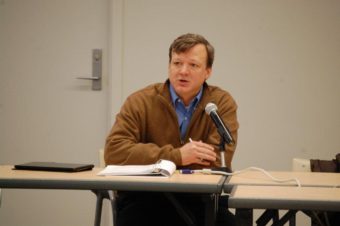
A city bus at the downtown station
$1.5 million was allocated to replacing four Capital Transit buses. (Photo by Heather Bryant/KTOO)

Funds were passed through the city and borough of Juneau assembly last night during a regular meeting.
The assembly adopted several ordinances. One of them appropriated $290,000 to update the Juneau-Douglas Wastewater Treatment Plant and the Mendenhall plant.

The state’s Department of Environmental Conservation is providing the loan funds. City staff says loans will be repaid with wastewater utility customer revenues.

Assembly member Jerry Nankervis said he would like to know if that means a rate increase for Juneau residents.

“It might be three cents, I don’t know. But it would just be nice to have that sort of an estimate because I believe they could come up with that based on the number of customers and the cost what that would work out to be. But it’s just one of those things that I believe when people hear us pass these and they see that we just passed on a possible rate increase or more money to them, I would like to be able to answer what that is.”

The assembly also adopted an ordinance appropriating $1.5 million of grant funding from the state Department of Transportation and Public Facilities for the replacement of four Capital Transit buses.

Deputy City manager Rob Steedle:

“This funding will replace four 35-foot New Flyer Buses which have provided over 12 years of service and nearly half a million miles. This is the last replacement of buses programmed into the 2008 Transit Development Plan and adopted by the Statewide Transportation Improvement Plan (STIP). It is planned to replace these four buses with similar vehicles.”

Juneau’s airport is getting appropriations of close to $2 million, with the majority of funds coming from the Federal Aviation Administration.

$1.2 million is going towards the design runway rehabilitation project and more than $700,000 dollars towards an airport master plan study.

New CBJ lobbyist may have conflicted interests

Lobbyist Kevin Jardell, May 2013. (Photo courtesy of Kevin Jardell)

Kevin Jardell once lobbied against building a new state office building in Juneau. Now, he’s going to be representing Juneau in the state capitol building as the city and borough’s new lobbyist.

Kevin Jardell held high state positions in the Frank Murkowski administration before becoming a lobbyist at the end of 2006. He was deputy administration commissioner and then served as the governor’s communications director and legislative director.

Also on Jardell’s resume is almost five years as legislative aide for Anchorage Republican Representative Joe Green, a strong proponent of moving the legislative session out of Juneau.

Juneau Mayor Merrill Sanford voted to hire Jardell. He says Jardell’s work on the issue isn’t a concern, “If he felt that way back in the ’90s, he doesn’t feel that way anymore.”

The assembly voted 6 to 3 on the motion to hire Jardell as the new lobbyist, with members Karen Crane, Jesse Kiehl, and Loren Jones voting no.

As a lobbyist, Jardell made more than $380,000 plus expenses last year.

One of his eleven current clients is Exxon Mobil Corporation, which pays Jardell almost $12,000 a month.

Another client is Juneau1, the owner of Juneau’s Department of Labor and Workforce Development building, also known as the “Plywood Palace.”

Assembly members Kiehl and Jones say representing both Juneau1 and the CBJ is a potential conflict of interest.

“Lobbyists need to be able to represent all of their clients with equal vigor and equal integrity. And I think that one of this clients which owns the department of Labor building is too strong a conflict with the city support for a new office building that was proposed a couple years ago and hopefully will be in the works again, so I didn’t feel like that was a situation that would work,” says assembly member Jesse Kiehl.

Juneau representative Cathy Munoz was the prime sponsor of a bill in 2009 that would have built a new state office building in Juneau on Alaska Mental Health land.

“I would hope that Kevin would consider moving beyond representing Juneau1. Of course, I can’t – I don’t have a say, I don’t have any direct contact with him around those issues, but if he is truly going to advocate for the city of Juneau, I would hope that he would consider that, in terms of who his other clients are,” says Representative Munoz.

Mayor Sanford says a conflict of interest question was put before all five lobbyist finalists during interviews and they all answered the same way.

“They had to abide by the conflict of interest rules that were out there and they would make sure that if they had some issue that was a conflict between two of their clients they would talk to both of us and they wouldn’t handle the issue for one of them or the other,” explain Sanford.

Sanford says he doesn’t think Jardell has any current conflicts with the city and borough of Juneau.

Assembly member Mary Becker made the motion at Saturday’s special assembly meeting to contract with Jardell. She says she was impressed with his plans.

“He wants to build more of an assembly relationship in the Capitol building. I don’t think we’ve done a lot of that. We meet with the governor and we meet with our local, our three legislators but we don’t actually go into the finance committees with our lobbyist and talk so that was something that was appealing to me that I thought would be a real good idea,” says Becker.

Jardell’s proposed annual fee is $55,000. Sanford says that fits into the city’s current budget but the terms of the contract have yet to be determined.

Jardell currently serves on CBJ’s Docks and Harbor’s board.

Jardell has never lobbied for a city government before.


Original story, published September 23, 2013:

Kevin Jardell will be the new lobbyist for the city and borough of Juneau.

The assembly voted 6 to 3 on the motion with assembly members Crane, Kiehl, and Jones voting no.

The CBJ assembly conducted interviews with five lobbyist finalists on Saturday in executive session.

“The interviews went real well. We started a little bit after 2pm and interviewed all five on the short list. At the end we came out of executive session and Ms. Becker made a motion to contract with Kevin Jardell as our next lobbyist,” says Mayor Merrill Sanford.

Jardell’s current clients include Juneau1, the owners of Juneau’s Department of Labor building, also known as the “Plywood Palace.” Exxon Mobil Corporation pays Jardell almost$12,000 a month for his lobbying services. Jardell does not have any current municipal clients.

Prior to his work as a lobbyist, Jardell was a legislative aide for Anchorage Republican Representative Joe Green, served as Deputy Administration Commissioner for the state, and worked as a legislative director for Governor Murkowski’s office.

Locally, Jardell serves on CBJ’s Docks and Harbor’s board.

Jardell’s proposed annual fee is $55,000. Mayor Sanford says that fits into the city’s current budget but payment has not been determined yet.

Sanford says he is working with city manager Kim Kiefer to negotiate the terms of contract with Jardell. Sanford hopes it’ll be ready for the assembly in October.

Cycling Alaska … and the rest of the world

32-year-old Dr. Steve Fabes from London is in the midst of a six-continent bicycle ride. While cycling the length of North America, Fabes made a stop in Juneau.

Dr. Steve Fabes’ bicycle journey started January 2010 when he left his job as an internist in a London hospital.

“I waved goodbye to my friends and my friends from there and I took off through Europe, through a very, very cold Europe. It was the coldest in 30 years,” Fabes said.

But the seed for the trip was planted long before. When Fabes was 19, he cycled through Chile with his younger brother. That trip got him thinking of a bigger bike ride – one around the world.

After completing medical school and starting his career as a doctor, the desire for more adventure nagged at him.

“Eventually it came to a head and I thought I need to make a decision and I decided I have to go for it. I don’t want to get old with any regrets. This has to happen,” he said.

After crossing Europe, Fabes traveled into the Middle East, and then cycled down the east coast of Africa.

The goal of Fabes’ journey is to cycle through six continents – so far he’s completed four – but the trip has another purpose as well.

“On the way I stop and visit remote medical clinics to gain a bit of understanding about how the neglected tropical diseases are targeted on the front line,” Fabes said.

In the realm of tropical diseases, people often think about HIV/AIDS, malaria, and tuberculosis. In his travels, Fabes is highlighting the 17 tropical diseases that are neglected.

“They’re medically diverse. They’re mainly parasitic infections and they’re a huge burden. One billion people worldwide affected so that’s one-sixth of the earth’s population,” Fabes explained.

When Fabes is not visiting mobile medical clinics, he’s stopping around the world to give talks on what he’s learned and to shed light on the issue.

Fabes is also living a simpler, less complicated life on a bike.

“You have to narrow things down and you have to take exactly what you need because every gram counts and when you’re cycling up a mountain your mind is going to be thinking about all those things you don’t necessarily need.”

Aside from items to camp and cook with, a few pieces of clothing, Fabes also carries a few luxury items – a laptop, which he bought once he crossed the border into the United States, some books, and an iPod.

Fabes has spent most nights either camping or in cheap hostels, among other places.

“I’ve slept in schools, police stations, churches, mosques, monasteries, army barracks. I’ve slept in a shed with a water buffalo. I’ve slept in all kinds of places,” he listed.

As for showering, Fabes isn’t doing it as much as he should, “My record is eleven days without a shower,” he said laughing. “When I’ve been cycling through Alaska, I can just jump in rivers and stuff and it’s really cold but if that’s my only option than that’s just what you have to do.”

On his journey so far, Fabes says he’s grown to trust people.

“99.9 percent of people have been very kind, hospitable, generous, and that’s been the recurring theme of my trip really, the defining feature is just the generosity of people I’ve met along the way.”

Fabes still has another two continents, more than two years, and about 30 countries left in his bike ride. Next month he flies to Australia, where he’ll cycle up the east coast of the country, onto Indonesia, then the rest of Asia, and back across Europe to home.

Dr. Steve Fabes’ talk with the Juneau World Affairs Council will air on 360 North on October 18th.

Site notifications
Update notification options
Subscribe to notifications