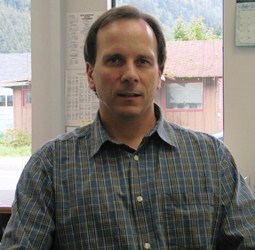
Rosemarie Alexander

Municipal election coming up

Tuesday is Election Day in Juneau. The polls open at 7 a.m., but voters can still cast absentee and early ballots today (Monday) at City Hall downtown, or the Mendenhall Mall polling station.

Early voting for the municipal election has been steady, but slow, according to City Clerk Laurie Sica.

She says the last count was done on Wednesday – when 175 fewer voters than last year had cast early and absentee ballots.

Three Juneau Assembly and two school board seats are up for election. One citizen’s initiative and four other measures are on the ballot.

The Assembly Areawide seat is the biggest contest with three candidates: Geny Del Rosario, Loren Jones and Carlton Smith.

Two candidates – Brad Fluetsch and Jesse Kiehl — are running for the District One seat, and Randy Wanamaker is unopposed for District Two.

While Juneau Assembly districts mirror the city and borough’s seats for state House, the Assembly is elected areawide.

“Every voter can vote for every candidate on the ballot, there’s no restriction,” Sica says. “Candidates must live in the district it was the idea of the assembly when they wrote the charter that they’d have some assurance that not all the candidates came from downtown, valley or Douglas. So that was just one way to make sure there was some representation from different parts of the community.”

Five issues are on this year’s ballot: Proposition One would change financial reporting requirements for Juneau public officials: Assembly, School Board, and Planning Commission as well as the city manager. Instead of filing with the Alaska Public Offices Commission, they would file less detailed forms with the CBJ. A major difference is that the amount and source of income over one-thousand dollars would not have to be reported.

Proposition Two calls for an extension of Juneau’s three percent sales tax. It covers police, fire and ambulance service, street maintenance and improvements, as well as some city operations, public services and youth activities. Some of the tax also goes into a savings account.

Proposition Three would authorize the sale of one-point-four million dollars in general obligation bonds for a new heating system at Auke Bay Elementary School. A ground-source heat pump has been determined to be the most energy efficient system for the school, and will reduce operation and maintenance costs over the long-term.

The annual property tax impact would be about one-dollar and 21-cents per one-hundred-thousand dollars of assessed value.

Proposition Four calls for just under one-point-two million dollars in bonds for a new athletic field at Adair Kennedy Park in the Mendenhall Valley. The artificial turf was the first installed in Juneau. After 11 years of heavy use by school athletic teams, it is old and worn out.

The annual impact to property taxes for the turf field bonds is approximately one-dollar and four-cents per one-hundred-thousand dollars of assessed value.

Both propositions three and four qualify for 70 percent reimbursement by the state education department’s debt reimbursement program.

Proposition Five is a citizens’ initiative aimed at reducing the use of plastic bags. It would impose a 15-cent tax on each plastic shopping bag provided by Juneau’s largest retailers — Safeway, Walmart, Home Depot and Fred Meyer.

The polls open tomorrow at 7 a.m. and close at 8 p.m. Election Central this year is at City Hall Assembly Chambers.

Football season ends; playoffs next

The Juneau-Douglas Crimson Bears secured a home playoff game, but came in second as leaders of the Railbelt Football Conference in this weekend’s closing game of the regular season.

The Bears beat the Lathrop Malemutes 53 to 8 Friday night in Fairbanks. It was the win they needed to clinch a quarterfinal contest in Juneau.

But the Bears were tied with Wasilla for number one seed in the Railbelt. When Wasilla beat Palmer by one point Friday night – 23 to 22 – it put Wasilla at the top and Juneau second. As the clock expired, the Warriors kicked a 30-yard field goal to take out the Moose.

The Crimson Bears finished the regular season with seven wins and one loss – to Wasilla. For the season the Bears accumulated a total of 373 points, more than any other team in the Railbelt, and allowed only 95 points by opposing teams.

They play the East Anchorage High School Thunderbirds next weekend in the capital city in the state championship quarterfinals for large schools. The Cook Inlet Conference team finished the regular season with four wins and four losses.

The Railbelt’s West Valley and Wasilla are also in the quarterfinal contests.

The Thunder Mountain Falcons on Friday lost to the Renton High School Indians, on a score of 42 to 6.

The Renton, Washington team traveled to Juneau for the non-conference game.

The Falcons are now three wins and five losses for the season. But they’re at the top of the small Southeast Conference and will host the Homer Mariners from the Northern Lights Conference next weekend in the first-ever playoff game on Falcon’s field. Earlier this season the Falcons lost to the Mariners by a score of 84 to 20.

“S-E-A-N O’-B-R-I-E-N”

Sean O’Brien is running for the Juneau School Board in the October 4th municipal election, but his name doesn’t appear on the ballot.

Get out a pen, pencil, lipstick, whatever you have handy. Grab some paper, a cereal box, or your iPhone. This is the information you need:

“S-E-A-N, for Sean, and O’Brien is spelled O-apostrophe-B-R-I-E-N.”

Sean O’Brien is running for one of the two open school board seats. He served on the board from 2005 to 2008. He’d planned to run again next year, when there may be up to three vacancies. But when only one candidate filed, O’Brien re-evaluated his timing. He was too late to get on the printed ballot, but not too late to file as a write-in candidate.

For a tune up, O’Brien attended September’s school board meeting.

“It was energizing, it was positive, it was invigorating” he says. “It made me feel even better about jumping back in.”

O’Brien’s experience with Juneau’s education system extends beyond his previous term on the school board. He is the parent of three graduates of the public school system as well as a current junior high school student and a high schooler.

O’Brien himself is a graduate of Juneau-Douglas High School, and his father was a teacher. His family moved to Juneau when O’Brien was six months old.

In 1983, he graduated from Western Washington University in Bellingham, Washington, where he focused on environmental studies and psychology, and came right back to Juneau.

He’s been working for the state of Alaska since 1988, beginning in the Department of Labor and Workforce Development. Now he works for the Department of Education, where he can focus exclusively on people with physical and mental disabilities. It’s an area he’s always been interested in, and it overlaps with his interest in youth and the school system.

“We also deal with Youth Transition, which is individuals in schools ages 16 to 24 who have disabilities and are trying to go to work. I supervise the statewide coordinator for our Youth Transition program,” he says.

If elected, O’Brien says the school budget will be his primary concern. Teachers, he says, and the administration, are already working really hard.

“It’s difficult to look at limited resources and try to work smart,” he says.

One of the examples he gives for working smart:

“Looking at data and evidence-based practices and creating reasonable standards, so we’re not re-inventing the wheel.”

Another item on his agenda is retaining students in the school system.

“The single most important issue I’ve always thought about for kids’ success is engagement in the school. Engagement with the teacher, engagement with the curriculum, being interested, and following through. If things start to slip have early intervention with the kids,” he says.

Juneau has a high dropout rate. O’Brien says only half the kids who enter ninth grade will actually graduate. He believes one of the main reasons is that students don’t see much relevancy in the curriculum. He references a study that looked at 100 students who dropped out of the school system.

“The assumption that they were already flunking out, that they were D and F students, wasn’t the case. It wasn’t poor academic performance. It was disengagement, it was their perception that it wasn’t that valuable for them to continue,” he says.

But how does one deal with a limited budget and the need for extra resources to address a high dropout rate? One example O’Brien gives is the creation of a district-wide Professional Learning Community, or PLC. Teachers share among themselves what works and what doesn’t, and time is set aside for the program.

“We have some amazingly talented teachers that are doing some amazing things and sometimes what is missing is that linkage that is understood by their peers,” he says. “This is really an opportunity to build within our own framework and our own expertise and resources in a really cost effective way.”

O’Brien says he also supports alternative education systems, like homeschooling, or Montessori programs.

“Getting a kid to fit into the right engagement environment means you’ve got to have a different variety of environments for that kid, because kids are so different,” he says.

O’Brien and Sally Saddler are running for the two open school board seats. Saddler’s name appears on the ballot and O’Brien’s needs to be written in…

“S-E-A-N O-apostrophe-B-R-I-E-N.”

Jesse Kiehl: the “everyday work” is most important

CBJ Assembly District One candidate Jesse Kiehl is a home-grown Alaskan. He was born and raised in Anchorage and after college he moved to Juneau.

Kiehl likes to say he “finally got it right.”

He is bullish on Juneau and its environs. He moved to the capital city 13 years ago and decided this is the place to raise his family. He and his wife Karen have two daughters, ages 9 and 7, and a pug dog.

“We love to go camping and hiking around Juneau,” he says. “Not everybody in the family likes ridge tops as much as I do so my solo time I often get to hike up high.”

Kiehl adds fishing and hunting to his list of favorite things about the Juneau area.

At work, he’s steeped in state of Alaska budgets and policy. For the past ten years he’s worked for Juneau’s state senators: first Kim Elton and now Dennis Egan.

“I have really enjoyed getting to know and digging into public policy issues, government issues and government budgets, and working with people of every point of view I had ever imagined,” he says, “and quite a few I just learned about when I started dealing with the folks who held them!”

On his way to the state capital, he interned as a college student in the nation’s capital for the late Senator Ted Stevens and then in the Alaska governor’s office. After graduating from Whitman College in Walla Walla, Washington, he worked in the Knowles Administration then became a staff member to the Alaska Board of Education.

“I learned a lot there about how some of the ins and out and intricacies of government can really help connect people better to government, or separate people from their government. And obviously I always think that connecting people to government is the better way to go,” he says.

The initiative process is one way Alaskans connect with their government – and this year’s municipal ballot carries a measure brought by Juneau citizens. Proposition 5 would impose a 15-cent tax on plastic bags.

Kiehl agrees with the concept of reducing the use of plastic bags.

“I never go duck hunting on the wetlands without bringing back pockets, or a sack full, of plastic garbage.”

But he’s voting no on the initiative. He says it’s poorly structured, applying only to Juneau’s largest retailers. He also believes the tax is too high and, of course, would have the biggest impact on groceries – the stuff people shop for the most.

Kiehl is also voting no on another high-profile ballot measure – Proposition 1. It would exempt CBJ officials, including Assembly members, from state financial disclosure requirements, to be replaced by a local reporting system.

“I understand the desire to make the financial disclosure a little easier on candidates and elected officials,” he admits. “They’re a pain!”

But Kiehl says the ballot measure would loosen the disclosure rules too much. For example, it eliminates the requirement to reveal the amount and source of income over $1,000 as well as declaring an official’s close economic associations with persons who do business with the city and borough.

“As Alaska’s capital I think we should lead by example in a number of things and one of those is we need to use more comprehensive disclosure not less,” Kiehl says. “We need to use the stricter standard.”

Kiehl has been hitting a lot of doors in Assembly District One, which encompasses downtown to the airport, and Douglas Island. He says he hears a lot about the landfill.

“Someone called it ‘Mount Trashmore’ the other day,” he says.

He believes the first step is to stop putting sludge in the landfill. That was billed as a temporary answer to a decrepit sewage incinerator, but the city has continued it for months. While the city needs to expand recycling, he says, that’s not a long-term solution.

“We need as an Assembly to buckle down, bore in and find solutions to Mount Garbage.”

He calls the Assembly’s work low-profile, unglamorous subjects like garbage, pot holes and sewers.

“It’s an everyday slog through a giant packet of backup material and talking to people on every side of an issue and trying to find the best decisions to move Juneau forward,” he says.

Jesse Kiehl says it’s that every day work for the community that he wants to do.

He is opposed for the Assembly District One seat by Brad Fluetsch.

Oil tax cut could impact state credit rating

A legislative agency says the state’s credit status will be at risk if the oil tax reductions proposed by the governor become law.

One of the most controversial issues expected during next year’s legislature is a bill introduced by Gov. Sean Parnell that would reduce oil taxes from the current levels by as much a $2-billion a year, depending on oil market prices.

The non-partisan Legislative Research Service reported Wednesday that the substantial decrease in revenue from the tax cut could be seen as a negative factor by credit agencies.

Anchorage Democrat Bill Wielechowski, chairman of the Senate State Affairs Committee, says the governor’s numbers show the state would be losing billions of dollars under his tax proposal.

“The governor’s numbers show that within the next decade the state will be broke. According to this non-partisan legislative research report – the research they’ve done – it is very likely to put downward pressure on our credit rating. The loss of our credit rating will have a severe impact all across Alaska,” Wielechowski says.

As an example, Wielechowski says that by lowering the credit rating by one level – from AAA to AA+ – the price for the Susitna hydroelectric project alone would increase by more than $300 million, due to higher interest on bonds for the project. He says Alaska needs the revenue to build infrastructure projects and protect jobs.

“Two billion dollars into the Alaska economy every year creates thousands and thousands of jobs across the state,” Wielechowski says. “If you take that money out of the capital budget, which is going to have to happen if you pass the governor’s bill, you’re talking about losing probably thousands of jobs all across Alaska.”

Economist Gregg Erickson is Editor at Large for the Alaska Budget Report, which reported in February on the connection between the governor’s tax cut and the state’s credit standing. He is not willing to project the effects of credit ratings on job growth.

But Erickson says the Parnell administration recognized the reason for high Alaska credit ratings was the savings and income from the current oil tax regime. In the Budget Report’s story, however, the administration denied any possible negative effects of a lower income.

“But, of course, their denial, which they issued in an e-mail to me, was totally devoid of any backup at all. They just said it,” Erickson says. “It’s been remarkable how little analysis was done to support the proposed policy. And it’s no surprise, given the lack of analysis, that they haven’t made much progress with it.”

The Parnell administration did not reply to requests for a response to the Legislative Research report, or to Wielechowski’s comments.

Loren Jones ready for Assembly “graduate school”

Loren Jones is one of three candidates for the Assembly areawide seat. The first question he hears campaigning is “WHY ARE YOU RUNNING”?

“And before I can answer they often answer for me: ‘Are you crazy, what kind of insanity are you bringing, are you really tired of retirement, are you willing to put up with…’ ”

Long meetings, lots of meetings and lots of homework. While the most visible work of the Assembly is at regular Monday night meetings, the real work in done in committees.

“I sort of perceive the Assembly like graduate school,” Jones says. “If you’re going to be doing three hours every two weeks, you’re going to be doing 20 to 25 hours a week, getting ready for those three hours or the committee meetings leading up to it.”

For the last few months Jones has attended most of those meetings.

“And sometimes the public doesn’t realize that they’ve done 30 hours of work. They see the 10-minute discussion at the Assembly meeting and think it’s been railroaded through or nobody’s given it any thought.” He says the Assembly should present its work to the public better than it does.

Jones is used to all that work. He came to Juneau in 1975 as an alcohol counselor for the city and borough. He had just completed a master’s degree in sociology at Washington State University, with an emphasis on substance abuse studies.

He soon discovered he was a better administrator than counselor and in 1976 he went to work for the Alaska Department of Health and Social Services — at a time when the state was beginning to use computer systems.

“I could understand what the computer people were telling the social workers but the social workers couldn’t. The computer guys couldn’t understand what the social workers were saying and I could, so I became translator in a way,” he says.

Jones found his niche in the behavioral health field and spent the rest of his career working on mental health and substance abuse issues. He was director of the state Division of Alcoholism and Drug Abuse for 10 years. He retired from state service in 2003.

Over the years, Jones has served on the CBJ Social Services Advisory Board, and the boards of directors for Bartlett Regional Hospital, Hospice and Homecare, and Catholic Community Services. He’s currently on the Juneau World Affairs Council.

He and his wife LaRae have raised two sons in Juneau, who now live outside the state. In recent years the Jones’s have traveled around the world, with stops on both ends to see children and grandchildren. That would be curtailed if he’s elected, but Jones says he’s ready for all the tough issues that come before the Assembly.

One of those is the AJ Mine. He believes the panel is taking an honest look at the feasibility of re-opening the AJ, but says the town needs a new water supply before even considering it.

The AJ Mine is one of many issues that divide Juneau.

“Even if we split 50-50, we know exactly why some people are on one side of that 50 and some people are on the other side. Juneau has never been shy, so in that sense it takes someone who is willing to listen and find the common ground.”

He says that’s his strength.

“So I think if there’s a distinguishing characteristic that I bring to the Assembly it would be somebody who has a real desire to hear all that out,” he says.

Jones has listened to all the arguments for and against the measures on the municipal election ballot. He says he’s torn on the 15-cent plastic bag tax, and probably will vote against it.

“But I support elimination of plastic bags, I support people taking in reusable bags,” but he doesn’t support the details of the tax, which would only be collected at the four largest businesses in Juneau.

Whatever the outcome, Jones says Proposition 5 has raised awareness of the plastic bag problem and begun an important community dialogue.

Jones is a definite NO vote on Proposition 1, which exempts city and borough officials from state financial disclosure laws, to be replaced with a local ordinance. When he worked as a director on the state level, he had to fill out the forms and says he never saw it as a problem.

“The people of Alaska have made it very clear in lots of different ways that they want some disclosure about who does what, when and where,” he says.

Jones listened to the debate before the Assembly and says he heard nothing to convince voters the change in law would enhance public trust of Juneau officials.

“I think what I heard from the public was you’re trying to hide something,” he says. “I don’t think they (Assembly) are, but that’s the message the public heard and that’s not the message that we should be sending.”

Loren Jones says he’s ready to go to work on Juneau’s landfill problem, affordable housing, improving health care services and increasing quality jobs as well as social service problems, such as the chronic inebriates that hang out downtown.

This is his first run for political office. His opponents for the areawide seat are Geny Del Rosario and Carlton Smith.

Jones is a gourmet cook and his meals are often sought after for local raffles and auctions. If he’s elected he says he’ll still take time for his epicurean hobby. Five hours in the kitchen his way to relax.

Site notifications
Update notification options
Subscribe to notifications