Rosemarie Alexander

Del Rosario: Energy, diversity important to Assembly

Geny Del Rosario is one of the three candidates vying for the CBJ’s district-wide assembly seat. A recent interview with KTOO’s Amanda Compton was just one stop in her busy schedule.

“Started the day early, sun was out, and it was a good day, and as usual we have work to do and appointments to go to.”

Del Rosario grew up in the Philippines. Her bachelor’s degree is from the University of Santa Tomas, where she majored in Economics with a minor in Business Administration.

“I worked in Philippines for many years with a lot of corporations, that’s where I got my experience in business,” she said.

Through a Rotary International exchange program, Del Rosario traveled to the United States, settling in California.

“I had my real estate license there and worked my way through in the business sector there and found that CA too busy for me and moved to Las Vegas – what a place to go!”

She established a travel agency in Las Vegas, and was appointed tourism coordinator by the Philippine Government.

“Well, things happened, and when you go on a cruise as a travel agent we come to Juneau, and I loved Juneau and I said, ‘someday, if I come back, I’ll stay’ and that’s why I’m here,” she said.

That “someday” was in 2005. Del Rosario quickly rolled up her sleeves, and started a cruise shuttle bus business. Now she operates a food kiosk, just behind the downtown public library.

Del Rosario says she enjoys serving customers. That’s why she’s running for Assembly – she likes helping people. Her top three priorities, if elected?

“Services of parents, children, and seniors.”

She stresses the importance of better support for senior citizens, early childhood education, and after- school programs.

“When you start early childhood, that is what the children would learn as they grow old and they will not be a burden to society,” Del Rosario said. “I’m into prevention. Are we building more schools or are we building more prisons? Education doesn’t end after school, that’s why Afterschool Programs are important.“

Del Rosario says she will bring the attributes of flexibility and adaptability to the Assembly. Those characteristics define her position on the reopening of the AJ Mine, currently under study by the Assembly.

“The AJ Mine is location – it is too close for comfort to the citizen of Juneau,” Del Roasrio said. “Eventuality (sic) comes and this mine opens, I would be very resilient to make sure that environmentally it is safe, that it will not contaminate our water, soil and air, and that the city complies even if we are the landlord.”

Del Rosario is against extending the road north of Juneau, but explains that she understands the feeling of claustrophobia some citizens say they experience, and would respond accordingly.

“Now? I would say no, but in the near future? Yes. There’s a need for it? Then we can build the road,” she said.

Those issues are not questions in the upcoming municipal election, but renewing Juneau’s 3 percent sales tax and imposing a plastic bag tax are on the ballot. She supports both.

“Are plastic bags worth the price of your health or the health of the Ocean or the environment? It is for convenience, I know, I use it, I will not deny it, but if we can learn to change our lifestyle and use reusable I would. The time to start is now,” she said.

Whether it’s selling school bonds or opting out of state financial disclosure rules, Del Rosario says CBJ officials must make sure the public is aware of every program they want to implement. Del Rosario states she supports adopting Proposition 1, exempting city officials from the state financial disclosure law and replacing it with a local ordinance.

“A public person, you have to be open and be transparent,” she said. “When you are in the city, issues are dealt in the city. What happens in the city, stays in the city.”

Del Rosario says Juneau needs more subsidized housing and a better solution to Juneau’s growing landfill.

“The CBJ should examine other resources like the green waste recycling, or the plasma burner, or an oven incinerator,” she suggested. “The best thing we have to the think about is what is cost effective that would have the best result?”

Though Del Rosario has only been living in Juneau since 2005, she’s firm that community involvement and exposure should outweigh experience in this election.

“I have the energy to do this! I’ve been on the street morning, noon and night and I meet all the folks and they said we need someone new.”

She also says Juneau’s approximately 5,000 Filipino residents need representation on the Assembly.

“They said to me ‘we have not any representation or voice for us.’ I said to them, ‘I will help you as a community, but I have other constituents to serve too’.”

She says diversity also plays a large role in her platform.

“I believe that diversity is the key to unity, and diversification is essential to growth and prosperity,” Del Rosario said.

Geny Del Rosario is running against Loren Jones and Carlton Smith for the areawide seat of the Juneau Assembly. The municipal election is October 4th.

Learning from rural Alaska

Two House committees are on their way to rural Alaska to see firsthand how education funds are being spent.

The House Community and Regional Affairs and House Education committees will visit Galena and Koyukuk this week for a glimpse into life in rural Alaska.

Galena is a town of about 500 people on the Yukon River and home to a statewide boarding school and distance education program. Known as IDEA, the Interior Distance Education of Alaska supports home school students throughout the state, including Juneau.

Representative Cathy Munoz chairs the Community and Regional Affairs Committee. She says the committees want to see the results of programs they’re funding.

“We altered the foundation formula in the last legislative session to increase funding for vocational education. We also funded the governor’s scholarship program, so we’re very interested in what school districts are doing to encourage and prepare students to take advantage of that opportunity once they graduate. And then we’re also investing in vocational education infrastructure throughout the state,” Munoz said. “We’re trying to get Alaskans prepared for the jobs that are going to be required as we move forward into the future.”

The lawmakers – from Juneau, Anchorage, Fairbanks and Stony River – will also stop in Koyukuk – a village of about 100 on the Yukon River.

Munoz says the committee hopes for a clearer picture of the unique rural subsistence economy, so legislators know better how to support the communities.

Juneau: A good place to retire

The number of senior citizens in Alaska is increasing at a rate of more than four times the national average.

The oldest Alaskans reside in the Panhandle, according to the 2011 Juneau and Southeast Economic Indicators.

The annual one-stop guide to Juneau’s economy for the previous year is published by the Juneau Economic Development Council. It shows senior citizens – defined as age 65 and over — were 8 percent of Juneau’s population in 2010.

JEDC Program Officer Meilani Schijvens says that’s nearly double from ten years ago.

“An increase of about 1400 residents in their 60s. By the year 2024, one in five Juneau residents, or 18 percent of the town’s population, will be senior citizens, compared to one in 20 in 1990” Schijvens says.

Baby boomers are choosing to stay in Alaska after retirement. With sales and property tax exemptions still in place in the capital city, it’s seen as one of the best places to retire.

“U.S. News and World Report has ranked us one of the communities to retire in, in terms of tax breaks and also in terms of having access to an active lifestyle,” Schijvens says.

One-quarter of Juneau employees work for the state of Alaska. Most of those recently retired or approaching retirement age have been in the state system long enough to be part of the defined benefit plan, which provides medical insurance into retirement as well as a set monthly pension check. For many, that makes it affordable to continue living in Juneau.

JEDC Executive Director Brian Holst says Juneau also offers an expanding health care industry.

“We have a disproportionately good health care system for the size of our community, in part because this is a hub for the region, but also because we have a lot of ensured workers in Juneau, which allows us to have a robust health care,” Holst says. But as the Juneau and Southeast region age, more senior support services will be needed, he says.

Schijvens says another group of Juneau’s population is expanding: the “20-somethings.”

“Between 2000 and 2010 the number of people in Juneau age 20 to 29 grew by 17 percent, so that’s 629 (additional) people.”

In the year 2000, the annual Economic Indicators report showed a lack of people in their 20s in Juneau. Schijvens says the age group was the only category under 50 to grow over the last ten years.

The 35 to 39 age group has declined 27 percent in the last decade.

“We have in Juneau a large baby boomer population. Those baby boomers had kids and that population shift is now moving into their 20s and there are not as many people in their 30s,” Schijvens says. “So it’s simply a matter of following the local demographics.”

Juneau’s median age increased from 35 in the year 2000 to 38 last year. Statewide, the median age is younger, while it’s slightly older in the Southeast region. It’s notably older in Haines and Wrangell, where the median age is 46. Nationally, the median age is 37.

A link to the Juneau and Southeast Economic Indicators 2011 can be found at www.jedc.org.

Falcons: SE conference champs. Bears: one more game to go

The Thunder Mountain Falcons are the Southeast Conference champs in high school football. The Falcons beat the Ketchikan Kings 30 to 12 on Saturday in Ketchikan.

After a slow start to the season – and losing their first four games – the Falcons have won three contests in a row, putting them at the top of the small conference of three schools: Thunder Mountain, Sitka and Ketchikan. The Falcons are assured a playoff game in Juneau in two weeks, against a Northern Lights Conference team.

In Juneau on Saturday, the Juneau-Douglas Crimson Bears beat the Fairbanks’ West Valley Wolf Pack by a score of 29 to 8. The Bears have five wins and one loss, and still have one more regular-season game.

The Wolf Pack came to Juneau with just one loss for the season and the crowd expected a tougher contest than it turned out to be. Defense was the key: the Crimson Bears’ line totally stifled the Wolf Pack’s running game, which has been the centerpiece of their offense this season.

Head Coach Rich Sjoross says the Bears defense was tenacious.

“We benefited from getting in the backfield, disrupting their timing,” Sjoross says.

Juneau must win the last regular season game to secure a home play-off for the quarterfinals. The Crimson Bears play Lathrop, another Fairbanks team, next week at Lathrop.

“If we beat Lathrop, we’re guaranteed a home playoff game, absolutely,” Sjoross says. “If Palmer beats Wasilla and we beat Lathrop then we’re the conference champions.”

Juneau plays in the large schools’ Railbelt Conference. The quarterfinals pit a Cook Inlet conference team against a Railbelt team.

2011 Juneau Economic Indicators

Juneau’s economy is back on track. After a brief flirt with recession, Alaska’s capital city is healthy.

That’s the headline from this year’s 2011 Juneau and Southeast Economic Indicators, prepared by the Juneau Economic Development Council.

Meilani Schijvens is the primary author of the annual report, which looks back at 2010.

“This year we’re happy to announce the Juneau population is up, the Southeast population is up, employment is up, total payroll is up, unemployment is down, ” Schijvens says. “School enrollment is up, both is terms of Juneau School District and UAS. Housing starts are up and home values are increasing.”

The annual report shows increases in 2010 employment and wages in mining, fishing, health care, and federal, state and local government. But Schijvens says some of the increases in 2010 were not enough to make up for the losses of 2009.

“Just for an example, the average annual employment in Juneau grew by 2.3 percent in 2010, but in 2009 the loss was 3.5 percent and that was a big loss,” she says. “So we have these nice upward trending numbers but they don’t erase all the losses of 2009.”

The downturn in the cruise industry affects Juneau’s retail segment and city sales tax. One-hundred twenty-three-thousand fewer people arrived by cruise ship last year than in 2009. Schijvens says that’s already turning around and more passengers are projected next year.

The number of independent travelers was up: Both Alaska Airlines and the Alaska Marine Highway System report increases for 2010.

“Ferry passenger traffic was up 6.6 percent. Alaska Airlines passenger traffic was up by 3.9 percent and in 2011 that’s continuing to go up, an additional 3 percent so far,” she says.

The number of passengers traveling by small, regional airlines grew more than 17 percent last year.

The Indicators report is a one-stop guide to economic information for 2010. JEDC compiles research from federal, state, local and industry sources to help inform the business and political communities and citizens about Juneau’s economic climate. Brian Holst is JEDC executive director.

“It looks back at where we’ve been,” Holst says. “The Indicators report gives us a good snapshot of where we are. It doesn’t tell us where we’re going. We believe that by having good information, a good understanding of what the economic sitatuion is, people can make better decisions about the future.”

The population in both the capital city and Southeast region increased slightly in 2010. Senior citizens are the fastest growing segment, but the number of “20-somethings” is also rising.

The report’s bad, but not unexpected news: Juneau’s cost of living is 39 percent more than the average American city. Housing costs are 66 percent higher.

A link to the 75-page Juneau and Southeast Economic Indicators 2011 can be found at www.jedc.org.

Assembly repeals Atlin Drive zone change

The Juneau Assembly has repealed a controversial zone change on a small parcel of residential land in the Mendenhall Valley.

The Assembly last month overrode the Planning Commission and CBJ Community Development staff and zoned the area light commercial. Then the city attorney said it was illegal.

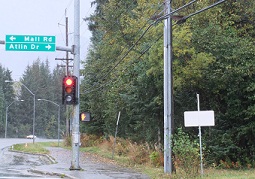
The heavily wooded corner of Atlin Drive and Mendenhall Loop Road was previously owned by the U.S. Forest Service. While the parcel is 2.68 acres, it’s also wetlands, reducing the usable land by 40 percent.

Developer Richard Harris and consultant Murray Walsh have been seeking the zone change since January. They weren’t successful until August, when they appealed a Planning Commission decision to the Assembly.

City attorney John Hartle said the zone change violates the city’s land-use code, but the developer’s attorney reads it differently. Walsh told the Assembly Monday night the turn of events was “horribly demoralizing.”

“I understand the yearning for clarity in these things. It would be a good idea to change the code so that we’re not faced with this kind of thing again,” Walsh said. “This has gone on eight months. Lots of emotion, lots of trial. And I just think that the assembly should stick with the decision it’s made, give us what we asked for, and give us a chance to earn our way into something the whole community will be proud of.”

The entire Atlin Drive neighborhood, including Saint Paul’s Catholic Church, has been against the zone change, primarily because Harris has no plan for the corner. He has said he just wants the flexibility that commercial zoning would give.

Linda Wild has testified several times on the issue. She told the Assembly it was time to get beyond dueling attorneys and emotional reactions and focus on a common goal – quality use and development of the property that’s compatible with the neighborhood.

“Mr. Harris would be well advised to remain in dialogue with the neighborhood to garner their support for a specific project rather than the ‘trust me’ of a blanket light commercial designation,” Wild said. “I’d sure hate to see 48 housing units or a Denny’s on that little corner.”

All but one Assembly member – Johan Dybdahl — voted to repeal their action. The corner remains medium density residential.

Site notifications
Update notification options
Subscribe to notifications