Rosemarie Alexander

MSHA updates Kensington accident report

The Kensington mine accident that killed Juneau resident Joe Tagaban last week is the eighth U.S. mining fatality in 2011, according to the Mining Safety and Health Administration. It was also the first explosives fatality for the year.

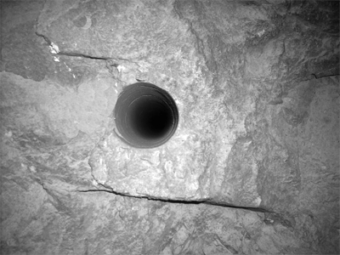
An updated report from MSHA indicates Tagaban was waiting on a ramp for the blast to be initiated. And when it was, small rock and debris traveled through a 3-inch diameter diamond borehole, striking him.

The regulatory agency says the hole should have been mapped and plugged.

The report lists several best practices for using underground explosives; that includes evacuating all persons from the designated blasting site.

MSHA is asking for other suggestions to prevent such an accident.

The underground section of the Kensington mine where the accident occurred was closed for a week during the initial investigation.

While the mine is back in full operation, no blasting can be conducted in production areas underground until MSHA says it’s safe.

The company is working with the agency to finalize blasting protocols in production stopes. Blasting activities related to mine development are continuing.

According to MSHA, there were 14 U.S. metal and non-metal mining fatalities reported in 2010.

Click here for the MSHA “Fatalgram.”

Kensington mine back in full operation

Kensington Mill

The Kensington Gold Mine is back in full operation, following a week closure in an area where a miner was killed last week.

Mine owner Coeur Alaska says all underground activities are at full capacity. But according to the Mining Safety and Health Administration, no blasting can be conducted in production stopes until the agency says it’s safe. Stopes are openings – or rooms – created in the process of extracting the gold ore.

MSHA’s preliminary report indicates 30-year-old Joe Tagaban, of Juneau, was struck by rock – initiated by a blast — that flew through a previously drilled hole intersecting the stope where he was working.

Coeur Alaska spokesman Tony Ebersole says blasting activities related to development are continuing and the company is working with MSHA to finalize protocols in production stopes.

The mill is also back in full operation after being down earlier this week for planned maintenance.

The company says it doesn’t expect the closure will impact 2011 production levels. Through the first six months of this year, Kensington produced 49, 434 ounces of gold.

The Kensington Gold Mine is about 45 miles northwest of Juneau.

State will conduct Juneau Access supplemental EIS

The state of Alaska will not appeal the Juneau Access case to the U.S. Supreme Court.

Instead, Gov. Sean Parnell says it’s time to get on with an Environmental Impact Statement that considers improved ferry service in Lynn Canal.

Two federal courts have sided with conservation groups that the state should have reviewed a “no-build” option to a highway out of Juneau. Chances the Supreme Court would take the case are probably less than one percent, according to the Department of Law. And if they did, it could be another two years before there’d be a decision.

Transportation Commissioner Marc Luiken says it’s too risky.

“I think we’ve got a pretty good mandate from the Ninth Circuit (Court) as to what they would expect us to do so that’s what we’re going to do,” Luiken says.

He says it will take about two years to complete an EIS. It means studying marine highway routes, schedules, and ships as well as reviewing and updating all the project alternatives. The state’s preferred alternative extends Glacier Highway about 50 miles to the Katzehin River, where vehicles would have to board a ferry for the last leg of the trip to Haines or Skagway.

The Southeast Alaska Conservation Council and other Lynn Canal environmental groups sued in 2006, saying the state and Federal Highway Administration should have taken into account better ferry service that did not require building new ferries, terminals, or roads. Luiken says the department will start the supplemental EIS process immediately.

“They had suggested we keep the old ferries and when we replace them use those to provide adequate additional shuttle ferry service in the Lynn Canal as well as pull ferry service from other SE communities, potentially, when the need arises,” Luiken says. “So that’s the direction we’re going to go with this supplemental EIS.”

SEACC Executive Director Lindsey Ketchel says she’s not surprised at the Parnell administration’s decision to conduct the EIS, but she’s disappointed the governor just doesn’t drop the highway completely.

“You know we think the governor has not been able to factor into his transportation vision a prudent and balanced approach,” Ketchel says. “We’re seeing just huge amounts of money going to studying the road to Umiak, tons of money going to studying the road to Nome and then you add the Juneau Access road. You know at some point in time you have to say there isn’t going to be this amount of federal dollars available to build this amount of extension of transportation in the state of Alaska.”

The supplemental Environmental Impact Statement could cost between $1 million and $2.5 million, according to the Request for Proposals, which went out yesterday (Wednesday).

Memories of Joe Tagaban

Joe Tagaban Memorial

The young miner killed last week in a Kensington mine accident is described as a guy who loved his job, children and hockey. Thirty-year-old Joe Tagaban of Juneau died on Wednesday. It was the first fatality at the mine, which opened in June of last year.

Though he wasn’t a member of the organization, his parents have asked that memorial donations to to Big Brothers Big Sisters of Juneau, because Joe was a big brother to all kids he met.

His mother, Sandy, shares some memories in this story.

Tagaban memorial set

Memorial services for Joe Tagaban have been set for Tuesday at 3 p.m. at the Juneau Christian Center, across from Fred Meyer.

The 30-year-old Juneau man was killed in a mining accident on Wednesday at the Kensington Gold Mine.

A reception is set for 5 pm. at the Juneau Arts and Culture Center.

In lieu of flowers, the family has asked that donations be made to Big Brothers Big Sisters of Juneau. Joe’s parents, Mike and Sandy Tagaban, say they chose the organization because Joe was the “ultimate big brother.”

Site notifications
Update notification options
Subscribe to notifications