1 Sections

Newscast – Thursday, Feb. 12, 2026

In this newscast:

  • The state Senate will consider a bill meant to increase educational options for Alaska students who are deaf or hard of hearing.
  • Staff from Alaska Marine Lines and the Alaska Marine Highway System discussed EV shipping safety during a panel held by Renewable Juneau, an advocacy nonprofit, yesterday.
  • KTOO’s Mike Lane sat down with Akanksha Basil to learn about her efforts to strengthen and streamline disaster response coordination in Juneau.
  • There will now be more time to speak out on the future of the Federal Subsistence Board, which has authority over hunting and fishing on federal public lands.

Alaska lawmakers float sending inmates out of state as prison costs mount

prison
Lemon Creek Correctional Center in Juneau, Alaska in June 2023. (Clarise Larson/KTOO)

As Alaska lawmakers reckon with a tight state budget and rising costs in the Department of Corrections, some are floating an uncomfortable idea: once again sending Alaska inmates out of state.

Over the last ten years, lawmakers have boosted the Department of Corrections’ budget by 70%, and even that hasn’t been enough.

Each of the past five years, the department has had to ask lawmakers for millions more — or tens of millions more — to make ends meet. This year, the department is requesting $24 million to cover unexpected costs in the current budget.

The department’s commissioner, Jen Winkelman, told the Senate Finance Committee earlier this month that she looked every day for ways to rearrange operations to avoid budget shortfalls or overruns. Health care for inmates and overtime to make up for short staffing are the two largest cost drivers, Winkelman said.

“It is consistently … a perfect storm,” Winkelman said.

Lawmakers went as far as to close one housing unit at the Spring Creek Correctional Center in Seward last year in an effort to save money. But sometimes, Winkelman said, big expenses come up unexpectedly.

“Approximately two weeks ago, we had a large fight on the yard — 48 inmates involved in a fight,” Winkelman told a House committee on Tuesday. “Quick napkin math, we believe it to be just under $200,000 that that cost us.”

Five people were injured in the fight, and all are recovering, a department spokesperson said. But Winkelman said the cost-cutting move to close part of the prison may have played a role and ultimately resulted in a large unexpected cost.

“Those are just those anecdotal examples of the population and the complexity when we start overpopulating one area, what happens as a result due to the population we serve,” she said.

The spiraling costs have some lawmakers floating a return to a practice Alaska abandoned more than a decade ago: sending prisoners out of state to save money.

“We can’t keep going the direction we’ve been going the last few years,” said Sitka Republican Sen. Bert Stedman, a co-chair of the Finance Committee. “The operating budget is extremely strained with those items, and that’s what’s driving this discussion.”

Wasilla state Sen. Rob Yundt, a Republican in the minority, filed Senate Bill 126 last year, which if passed would direct the Department of Corrections to explore the idea to see if it saves money.

“Oftentimes we get to run legislation that we’re excited about,” Yundt said at a hearing on Tuesday. “There is none of that here.”

In the 1990s and 2000s, the state contracted with private prisons in Colorado and Arizona. By 2005, about a third of Alaska’s prisoners were held out of state in private facilities, according to news reports at the time.

One of those prisoners was Adam Barger, who spent more than a decade in out-of-state prisons after his conviction in Alaska in the 1990s. He returned in 2013 after the state opened the $240 million Goose Creek Correctional Center in the Mat-Su borough in an effort to bring Alaska’s prisoners home.

When he was transferred back, guards told him how much more difficult it was to manage prisoners who had been sent to Outside facilities than those who had not, Barger told lawmakers during public testimony on the bill.

“We were more violent, had gang affiliations, drug addictions, behavioral problems, and were more resistant to authority than those who had never been sent out of state,” Barger said. “Then, we were released back into the community.”

Some, like Barger, managed to leave the justice system behind them, he said. Barger said he earned a master’s degree and now lives in Arizona.

“For many, though, they were apt to get out and return to incarceration, often in conjunction with another charge,” Barger said. “They went back to their communities and created more victims because the behavioral issues they developed out of state had not been addressed or resolved prior to their release.”

Barger asked lawmakers to oppose Yundt’s bill.

Yundt’s bill would mandate that Alaska prisoners be kept separate from those from other states. It would also limit the prisoners that could be sent out of state to those with at least seven years left in their prison term, and Yundt said he’d like to see inmates brought back to Alaska as their release date approaches.

Sen. Löki Tobin, an Anchorage Democrat in the majority, said she sees other ways to reduce costs in the state’s prison system — like granting parole for people who are elderly, disabled or unlikely to reoffend.

Tobin said Alaska grants parole far less often than other states, and she blames the state’s parole board for keeping too many people behind bars.

“They’re engaging in double jeopardy,” Tobin said. “Folks who are up for discretionary parole, who are excellent candidates to re enter into their community safely with support, are being recommitted to incarceration.”

The parole board chair said last year that state law places strict limits on the board’s ability to grant parole.

The policy director of the Alaska chapter of the American Civil Liberties Union, Mike Garvey, said that sending prisoners out of state would cut them off from family and friends in Alaska and make them more likely to reoffend.

“Moving prisoners out of state jeopardizes the constitutional rights of prisoners in Alaska, as well as presents public safety concerns,” Garvey said. “Alaska’s Constitution guarantees prisoners the right to rehabilitation, to due process, the right to counsel and the right to adequate medical care.”

Yundt said he was sympathetic to Barger and Garver’s concerns.

“I was once a young child that would travel to see family members as well on a Sunday, and so that’s not a great situation for anyone to be in,” he said. “I wish we weren’t in the situation, but here we are.”

Democratic Juneau Sen. Jesse Kiehl, a member of the powerful Finance Committee, said he understands the cost concerns, but he’s skeptical.

“I will just express a little concern about the notion of shipping Alaskans to warehouses outside,” Kiehl said. “We’ve done that in the past. The cleanup has been both expensive and ugly, and I don’t know that that’s a long term cost we want to bear.”

To realize any savings, Winkelman said, the department would likely need to close a facility. And that brings with it a whole host of thorny questions about jobs, local economies and public safety.

But with few options to control rising costs, and a governor resistant to standalone efforts to raise revenue, it may be a choice they’re forced to make, said Sen. Lyman Hoffman, a Bethel Democrat who co-chairs the Finance Committee.

“We have a limited budget. If we are not able to pass revenue measures, we have to look at doing something,” he said. “So this is an idea that is on the plate.”

Alaska lawmakers grill transportation officials over controversial ferry project

Rep. Louise Stutes, R-Kodiak, questions officials from the Department of Transportation and Public Facilities during a House Transportation Committee meeting in Juneau on Feb. 10, 2026.
Rep. Louise Stutes, R-Kodiak, questions officials from the Department of Transportation and Public Facilities during a House Transportation Committee meeting in Juneau on Feb. 10, 2026. (Eric Stone/Alaska Public Media)

Members of the House Transportation Committee slammed state transportation officials on Tuesday over a controversial ferry project that lawmakers said stands to benefit private interests but not ferry users themselves.

“The Alaska Marine Highway System was created for Alaskans — not for DOT — but for people and their usage. And you know, I don’t like to see you lose sight of that,” Rep. Louise Stutes, R-Kodiak, said during the hearing,

At issue is the Cascade Point ferry terminal project. The Alaska Department of Transportation signed a $28.5 million dollar contract over the summer to kickstart the effort, which aims to shorten the ferry route between Juneau, Haines and Skagway.

The project would entail building a ferry terminal 30 miles farther north of Juneau than the current one in Auke Bay. That means passengers would have to drive or use a shuttle service to travel between the remote terminal and town.

The contract ignited a wave of opposition from people in all three communities during a public comment period. During the hearing, Stutes noted that the vast majority of the more than 600 public comment letters opposed the project.

“92% of the people said, ‘We don’t want Cascade Point,'” Stutes said.

The pushback has largely centered around concerns that the new terminal would make regional travel less convenient and efficient – as opposed to more, as the state has argued. People have also argued the funds would be better spent on improving existing ferry service.

Christopher Goins is DOT’s southcoast region director. During the hearing, he acknowledged that the numbers Stutes cited are correct and that the project has sparked a lot of “fear” in the public.

But he added that the agency is taking public feedback seriously. He said that includes extending the original comment period and planning two additional rounds of public meetings in Haines, Skagway and Juneau.

“My staff is going to sit there, and we are going to listen to what people have to say, because we want them to be able to put that on the record,” Goins said. “That is fair and that is just. I think this project, of all the projects, needs that process.”

Goins acknowledged public concern over the state’s decision to move forward with the initial contract before soliciting feedback. Still, he said, the agency plans to go through the proper process.

“I think a lot of people got afraid because we hired a contractor to do a design-build process,” Goins said. “That doesn’t mean that the design, and the engineering, and the permitting, the consultation that comes with that process, is ignored. It is not.”

That answer didn’t appear to satisfy lawmakers.

“When you talk about there being controversy and welcoming the dialog, it doesn’t seem to jive with the fact that dollars are already dedicated towards this project,” said Committee Co-Chair Ashley Carrick, D-Fairbanks.

Lawmakers also grilled Goins and DOT Commissioner Ryan Anderson over concerns that the project stands to benefit private interests more than the communities that rely on the ferry system to get to Juneau for health care, groceries, air travel and more.

The new terminal is expected to benefit Grande Portage Resources’ proposed New Amalga Gold Project, which would likely use Cascade Point as its logistical base. But the terminal would also serve as a boon to Goldbelt Native Corporation, which owns the land.

“It feels very strongly to me like what’s really happening is Goldbelt is the primary beneficiary of a project the state is going to utilize federal dollars to support,” Carrick said.

Anderson, the agency’s commissioner, emphasized the importance of the private sector to the state’s economy and said working with industry can help promote economic development in Alaska.

Other lawmakers pressed agency officials over a controversial economic analysis of the project and about uncertainty around the new terminal’s overall cost and whether it would actually generate significant savings for the state.

Q&A with Juneau’s Alaska Fellows Program VOAD coordinator on improving local disaster response

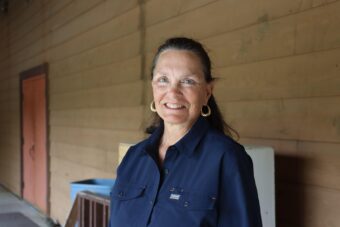
Akanksha Basil smiles for a photo in downtown Juneau on Wednesday, Feb. 4, 2026. (Photo by Clarise Larson/KTOO)

The Alaska Fellows Program cultivates Alaska’s next generation of leaders. It places young professionals in communities across the state, where they work alongside nonprofit and public sector organizations while receiving mentorship, housing and a modest living stipend.

In Juneau, Akanksha Basil is tasked with improving the community’s disaster response.

KTOO’s Mike Lane sat down with Basil to learn about her efforts to strengthen and streamline disaster response coordination in Juneau.

Listen:

The following transcript has been lightly edited for clarity.

Mike Lane: You’re here in Juneau, working with United Way to establish a VOAD. So what is a VOAD? And why does it matter in Alaska?

Akanksha Basil: Yeah, so VOAD, “Volunteer Organizations Assisting or Active in Disaster,” is a group of community organizations from around a particular place that mobilizes in cases or events of disaster to coordinate resources where they need to be going, depending on the type of disaster and the people affected. So you know, who’s going to come in for feeding, and who’s going to come in for shelter. Who’s taking care of, you know, debris removal and construction, and who’s also looking at kind of a long term recovery part of this. 

Mike Lane: How would a coordinated VOAD change the way Juneau responds to disasters compared to how things have been working up until this point?

Akanksha Basil: Sure, so a coordinated VOAD would streamline the process a little bit more. So currently, what’s really great about Juneau an Southeast is that we already have an established network of people that communicate and coordinate when disasters strike, but it’s more on an informal basis. But we’d like to make this process a little bit more structured and coordinated, so that we know exactly who to call in case of emergency, no matter what the prior existing connection would be, especially because organizations are changing and there’s turnover and disasters involve different different responses and different needs. So I think that having a coordinated VOAD in Juneau would make the process a lot more streamlined, stress free and fungible and adaptable, in case that was needed.

Mike Lane: And so far, what kind of organizations are currently involved or being recruited?

Akanksha Basil: So we have organizations from all kind of sectors and who take care of all different things, anyone from Juneau Animal Rescue to the food bank and Salvation Army and the Red Cross, various churches around town that already have really wonderful established feeding programs and and mutual aid networks. And I think that this is, this is a process that we’re really trying to make as public as possible. So we are really encouraging public participation, public leadership. We want to get the word out so that people know where to find us, and they know how to get involved. So any organization, anyone’s welcome, because this is a public — it’s a public process.

Mike Lane: So are there resources or support that are still needed to fully launch this particular VOAD?

Akanksha Basil: Yes, for sure. So, right now, we are a small but mighty network. We still have quite a few organizations that we need to get in touch with, reach out to, and we’re trying to get collaboration from a broader, a broader set of the population. So that’s been a major next step to look at. 

Mike Lane: From the ground up, how long does it take to build a functioning VOAD?

Akanksha Basil: Oh, that’s a good question. I would say, quite some time, right? It’s definitely a process that we’re learning about every day. It’s changing every day. We’re still really in the initial processes of figuring out how to do this. A lot of my first couple months was researching the community, getting to know people here, making connections, figuring out what past disaster responses have looked like, and we’re just just about, kind of starting to structure structured committees, create internal policy. And you know, actually wanted to mention that we’ve also held a couple meetings so far that have been really productive have spurred some really great conversations. So we’re really happy about that, too. 

Mike Lane: And how can people get involved? 

Akanksha Basil: Yes, please. I would love for people to reach out to United Way. I’ve got an email address: voad@unitedwayseak.org … I welcome anyone, anyone to reach out and share your thoughts, share your opinions, inquire more about the process. Because we’d love people, more people to be involved in this process.

Mike Lane: Akanksha Basil, thank you for joining us.

Akanksha Basil: Thank you so much. Appreciate you.

Alaska’s chief justice highlights progress on court delays in speech to Legislature

Alaska Supreme Court Chief Justice Susan Carney delivers the State of the Judiciary address to the Alaska Legislature on Feb. 11, 2026.
Alaska Supreme Court Chief Justice Susan Carney delivers the State of the Judiciary address to the Alaska Legislature on Feb. 11, 2026. (Eric Stone/Alaska Public Media)

Alaska Supreme Court Chief Justice Susan Carney highlighted efforts to reduce case backlogs and asked lawmakers to fund new judges and long-delayed courthouse maintenance during the annual State of the Judiciary address on Wednesday.

Carney pointed to a pair of December reports from the Anchorage Daily News, ProPublica and Bethel public radio station KYUK. They told the story of a man who spent seven years in jail awaiting trial for a murder he did not commit, and the victim’s family’s ongoing search for justice.

Carney is also the judicial branch’s chief administrator, and she says the reports remind the court system that it must remain committed to resolving cases quickly and fairly.

“I know that the cases with extreme delay are outliers compared to the vast majority of criminal cases and the time it takes to resolve them, but it’s still heartbreaking to think of the anguish that victims suffer and the problems that delays cause to everybody involved in criminal cases,” Carney said.

But the court system has made significant progress, Carney said. She said courts had cleared a pandemic backlog, with the number of open cases significantly below pre-pandemic levels. She said the number of felony cases more than two years old has been cut by more than half since 2023.

Carney thanked prior chief justices for their work bringing the backlog down, and she says she’s recently put out a new policy tightening existing limits on orders known as continuances, which delay court proceedings.

Carney also celebrated the rededication of the Utqiagvik Courthouse to honor an Indigenous legal pioneer. She called magistrate Sadie Brower Neakok a “trailblazer” and highlighted her commitment to ensuring language access for Indigenous people, starting before statehood.

“She regularly held court at her kitchen table and did it in Iñupiaq when the people appearing in front of her didn’t understand English,” Carney said. “When she became a state court magistrate, she and magistrate Nora Guinn from Bethel insisted that they be able to hold court in the language that their community members understood.”

Carney also came with requests. She asked lawmakers to open the state’s purse to fund a new judge in Palmer to handle the growing workload in the Matanuska-Susitna Borough. The last time the state added a judge to the state’s fastest-growing region was in 2006, according to the court system, and in the meantime, the population has grown 40% and the number of cases filed has risen 55%.

Carney said the court system has tapped retired judges and those from other communities to fill in at the Palmer courthouse to handle criminal cases and other urgent matters, but she said she was concerned delays could mount in other areas without a new judge.

The chief justice also urged lawmakers to fund long-delayed maintenance. She says court facilities across the state are badly in need of repair, including an administrative building in Anchorage.

The building has a crumbling facade, “barely keeping out the elements and the occasional vermin,” she said.

“On the facade, close to head height, so that people passing by can see it, is a great big metal map of the state of Alaska,” Carney said. “I’m sorry to tell you, Kodiak is no longer part of the state of Alaska.”

Fortunately, Carney said the Kodiak-shaped hunk of metal did not land on any passing pedestrians. But she said the episode underscores the dire need to repair and upgrade courthouses.

Key lawmakers have said that despite a large deficit, they plan to prioritize school and state facility maintenance in this year’s budget.

Newscast – Wednesday, Feb. 11, 2026

In this newscast:

  • The Juneau School District is returning over $1 million earmarked for child care back to the city,
  • The Alaska Department of Transportation has faced intense scrutiny in recent months over its plan to build a new ferry terminal between Juneau and Haines. Now, the agency is drawing fire from a panel of lawmakers charged with overseeing it,
  • For the Alaska Survival Kit series, Alaska Public Media’s Wesley Early set out to learn how Alaskans can increase their chances of finding a date and falling in love,
  • Alaska Supreme Court Chief Justice Susan Carney highlighted efforts to reduce case backlogs and asked lawmakers to fund new judges and long-delayed courthouse maintenance during the annual State of the Judiciary address today
Site notifications
Update notification options
Subscribe to notifications