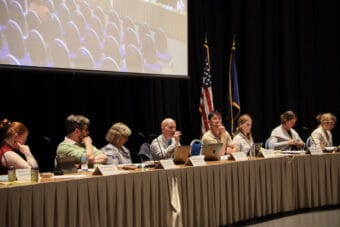
Juneau voters will decide whether the city should implement a new seasonal sales tax system. The Juneau Assembly approved the ballot question at a meeting Monday night.
The city wants to take greater advantage of the 1.7 million cruise ship visitors that come to town every summer by increasing the local tax in those months.
But, a handful of testifiers at the meeting, like Auke Bay resident Tom Williams, argued it’s not a good deal for year-round residents.
“I have a question for you — what in the world are you doing?” he said. “I think you need to get back and start to go back and figure out who you work for, because all you’re doing with this seasonal sales tax approach is squeezing a balloon.”
Assembly members say the change is meant to capitalize on cruise ship tourism spending. Right now, Juneau has a fixed 5% local sales tax rate. It’s made up of both permanent and temporary taxes that help pay for general government costs, some specific voter-approved projects and community priorities like child care support.
The proposed seasonal sales tax system would change that. It would bump the rate up to a 7.5% tax from April through September and then drop it down to a 3% tax from October through March.
Nearby Southeast Alaska tourism towns like Ketchikan, Sitka and Skagway have already adopted similar seasonal tax structures. Deputy Mayor Greg Smith said he thinks Juneau would benefit by doing the same.
“When we talked about doing this in December, it was to hopefully help people see and feel that ‘I’m going to be paying less in taxes, and my family will benefit due to tourism,’” he said. “A seasonal sales tax does that.”
Earlier this summer, Assembly members removed a part of the original proposal that would have used the additional revenue from the new system to offset the cost of removing local sales tax on food and utilities. That’s because an advocacy group called the Affordable Juneau Coalition gathered enough signatures this spring to put that question on the ballot already.
The coalition also got enough signatures for a ballot question asking whether to place a limit on the city’s property tax rate.
Angela Rodell, a member of the group, testified against the seasonal tax proposal on Monday. She argued it would financially hurt residents more than it would benefit them.
“At a time when many in our community are already struggling with the rising cost of living, housing, food, childcare, and utilities, substantially increasing the sales tax for six months over the summer is not only ill-timed, it is fundamentally unaffordable for working families and individuals on fixed incomes,” she said.
Assembly member Wade Bryson said the seasonal structure is needed to help recoup the estimated $9 million loss in annual sales tax revenue the city could face if sales tax is removed on food and utilities, which would happen if voters approve the measure.
“Allowing the citizens to answer the questions at the same time gives the citizens — gives all the voters — a chance to say ‘yes or no,’ if they want a giant hole in the budget. Do they want all of our social services to go away?” he said.
The city recently notified local organizations that receive city grants that it would be withholding a portion of their funding until the election due to “the potential of significant revenue loss” if the citizen initiatives pass.
Those organizations include the Juneau Community Foundation, Juneau Arts and Humanities Council and KTOO.
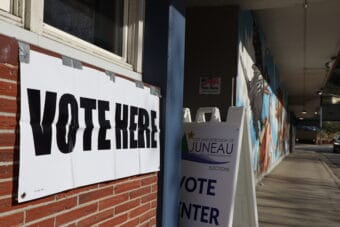
Voting in this year’s by-mail municipal election ends Oct. 7. Ballots will be mailed to registered voters beginning Sept.19.