Juneau elections

Five candidates vie for a District 2 seat on the Juneau Assembly

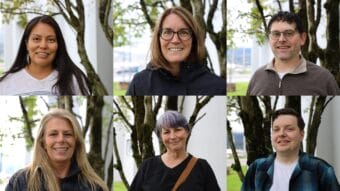
From left to right, Emily Mesch, Mary Marks, Maureen Hall, Nano Brooks and Dorene Lorenz are the candidates running for Juneau Assembly District 2 in the 2024 municipal election. (Clarise Larson/KTOO)

In last year’s municipal election, 10 candidates ran for two areawide seats. This year, five are running for a single District 2 seat. 

The winner will replace outgoing member Michelle Hale, who is retiring from her role after serving six years on the Assembly. 

As Election Day nears, candidates share their views on the propositions on the ballot, the local economy and how they think the city should better spend its time and resources. 

Split views on Ship Free Saturdays 

One of the hottest topics on this year’s ballot is Proposition 2. It asks voters whether to ban all cruise ships that carry 250 or more passengers from visiting on Saturdays and on the Fourth of July as soon as next summer.

According to a poll by KTOO, District 2 candidate Mary Marks is the only candidate running for Assembly this election who is voting in favor of the proposition.

“The free-ship Saturday ballot, I believe would be beneficial. And I come from my perspective as a tribal citizen, as a community citizen,” she said in an interview. “I like to hunt and gather my foods, and it would be really nice to be able to have that open freely, whether I’m heading out on Thane Road or out in the Valley gathering or fishing.”

Other candidates like Dorene Lorenz disagreed. She said she would be a “no” vote because of the negative economic impact it could have on some residents and local businesses. 

“I think that the Ship-Free Saturday ballot initiative is a bit shortsighted and that we already have seven months that are ship-free, and we have a bunch of people who really rely on that income and can only get it when the ships are here, and we need to allow them to take advantage of the investment they have made in that industry,” she said. 

Maureen Hall said she thinks the proposition could tarnish the positive steps the city has taken with the cruise industry in recent years. 

“I feel like this is not quite the right approach. I feel like the partnership between the cruise industry and our city, as well as concerned citizens, is working,” she said. “I think it would be very detrimental to the economy of our community.”

Nano Brooks and Emily Mesch also said they plan to vote “no.”

Support for public safety and wastewater bonds

In a survey conducted by KTOO, all five candidates for District 2 said they would vote ‘yes’ on the $12.7 million public safety radio bond on the ballot this year, but Brooks was the only candidate in the District 2 pool to say he wouldn’t be voting in favor of the $10 million Juneau Douglas Wastewater Treatment Plant bond.

In an interview, Brooks said that while he thinks both are important things for the community, he doesn’t support the way the city wants to pay for them.

“We have a lot of savings for projects that either haven’t been approved or haven’t had much forward progress,” he said. “So before placing a greater burden on the people of the community, I would have liked to have seen the consideration to maybe use funds that are already available.”

Meanwhile, candidates who supported both like Mesch said they think the bonds are critical projects to ensure the community’s health and safety needs are met. 

“I think they’re important. I think there are certain things that we need for a functioning city, and I hope the voters approve it,” she said. “I think both of the initiatives will go a long way toward making lives of people in Juneau better.”

Mesch ran for one of the two open Areawide Assembly seats in last year’s election, but lost to Ella Adkison and Paul Kelly. 

Glacial outburst flooding preparation takes the forefront 

All District 2 candidates expressed concern about the record-breaking glacial outburst flooding event that happened in Juneau this past August, which damaged hundreds of homes in the Mendenhall Valley. But, they differed on what types of actions the Assembly and city should — or should’ve already taken — to mitigate its impacts on residents. 

In an interview, Mesch said she thinks the city needs to hit the ground running on getting mitigation efforts and a plan in place for residents before next year’s anticipated flood breaks.   

“Any mitigation we can do that’s on city land should be done. Any effort to push the federal government and state government where it’s relevant to. As long as there is a plan in place by June of next year, physically to stop a flood,” she said. “Whether that is drilling through the mountain, whether it’s putting a giant dam around Mendenhall Lake – whatever the people above my pay grade decide is the right thing to do.”

While others agreed, some candidates like Brooks were more pointed about what actions they wanted to see the city take.

“This issue now being a reoccurring disaster that’s affecting hundreds of homes and people needs to be one of the highest, if not the highest, priority of the Assembly right now,” he said. “The easiest thing to do right now is a basic alert system and evacuation program. The second thing to do is that you can build levees or dams to divert the water when we do have the next potential overflow or outburst.”

Marks criticized the Assembly for not taking action after the flood in 2023. 

“I really believe that this should be a lesson to our Assembly, as well as the administration that we need to act here and really pay close attention if we don’t know what we’re up against,” she said. “It’s important to ask those questions and not be afraid to ask the questions and allow the community to be a part of that solution, working together.”

Who’s donating to their campaigns?

Hall leads the group in the amount of money raised for her campaign. According to campaign finance records, she has raised just under $7,100. Some of her donors include Juneau Mayor Beth Weldon, former Assembly member Maria Gladziszewski, former school board member Brian Holst and Sealaska Heritage Institute President Kaaháni Rosita Worl.

She’s followed by Lorenz, who has reportedly raised $1,250 this election. According to the Alaska Public Offices Commission, neither Brooks, Mesch or Marks have raised more than $5,000 toward their respective campaigns. That means they’re exempt from filing campaign finance disclosures.

Find more election coverage at ktoo.org/elections. 

Two new faces make their bid for a District 1 seat on the Juneau Assembly

Connor Ulmer (left) and Neil Steininger (right) are the candidates running for Juneau Assembly District 1 in the 2024 municipal election. (Clarise Larson/KTOO)

Neil Steininger and Connor Ulmer are making their debut in Juneau’s local political arena in hopes to secure the open District 1 seat on the Juneau Assembly this municipal election.

The two new candidates are going head to head to replace outgoing Assembly member ‘Waahlaal Gidaag Barbara Blake, who is not seeking re-election. Come October, she will have served one, three-year term in the seat. 

Steininger is a consultant who has extensive experience with Alaska’s state government. He spent 11 years working for the state, including eight at the Office of Management and Budget, and he has a Bachelors in economics.

In an interview with KTOO, Steininger said his previous experience with government affairs will be an asset for the Assembly.

“I have a lot of experience in the public sector, finance and budgeting and administration,” he said. “I’ve learned a lot about what policy decisions are effective in functional government. And I think I can bring that viewpoint to the Assembly, and work with the other Assembly members to kind of bring in some of those ideas and concepts and knowledge that would help as we try and move the city forward.”

When it comes to priorities, Steininger said his biggest priority if elected on the Assembly will be to tackle the demographic changes happening in Juneau — which he thinks is intertwined with a lot of issues the Assembly is already trying to take action on. 

“We really need to be thinking about how can we attract young families to town. And I think that really comes down to things like figuring out our housing issue, figuring out our child care issue, and also protecting the jobs that bring in young families,” he said. “We need to figure out how to enhance that and really try to make sure that 20 years from now, Juneau doesn’t continue to have these demographic issues.”

Ulmer is an executive assistant for the Central Council of the Tlingit and Haida Indian Tribes of Alaska’s Office of the President.

He has served in various roles roles related to local tribal government and entities, including as a member of the Tlingit and Haida Community Council, a trustee with the Goldbelt Ancestral Trust and a youth advisor for Sealaska Corporation’s board of directors.

“I believe my experience working at Tlingit and Haida with our executive council, which is our governing body outside of our tribal assembly, and my time at Sealaska as the board youth advisor and on the Tlingit and Haida Juneau Community Council has all kind of helped push me forward to run and bring in another Native voice to the Assembly and also just a younger perspective to everything,” he said in an interview. 

Ulmer said he thinks housing is one of the most important issues facing Juneau right now. 

“I think that is kind of the biggest thing that the city needs to look at, is how we can open up additional land and make sure that it is affordable – not just for a small group of people, but for everybody across all different lines of work and everything,” he said. 

The pair agree on a lot of issues up for debate this election. They both support the $10 million Juneau Douglas Wastewater Treatment Plant bond and the $12.7 million public safety radio bond. And, they both oppose the Ship-Free-Saturdays ballot proposition and a recall of school board members. Both have also been actively campaigning by attending forums and community events. 

According to the Alaska Public Offices Commission, neither Steininger or Ulmer have raised more than $5,000 toward their respective campaigns. That means they’re exempt from filing campaign finance disclosures.

Election Day is Oct. 1, but the final outcome of all candidate races won’t be known until all of the mail-in ballots are received and the city certifies final results on Oct. 15. 

Find more election coverage at ktoo.org/elections.

Why some Juneau residents want to ban cruise ships on Saturdays this election — and what’s at stake if it passes

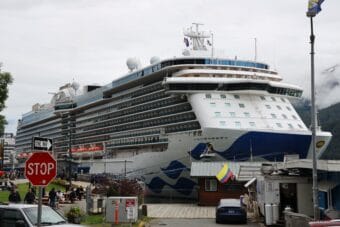
The Majestic Princess berths in Juneau’s harbor on July 24, 2024. (Clarise Larson/KTOO)

Imagine one day a week in the summertime when there are no large cruise ships floating in the harbor, no tourists bustling down the docks and no buses driving people to the Mendenhall Glacier. 

If Proposition 2 is passed by Juneau voters this fall, that could become a reality.

The proposition, known as Ship Free Saturdays, asks voters whether to ban all cruise ships that carry 250 or more passengers from visiting on Saturdays and on the Fourth of July as soon as next summer. Throughout the spring, supporters gathered over 2,300 signatures to get it on the ballot. 

Advocates for the proposition say enough is enough and the reins need to be pulled on the growth of tourism, but opponents say the financial and legal implications could hurt the local economy.

Who’s for it, and who’s against it?

Karla Hart is a longtime activist against tourism growth in Juneau. She was at the forefront of getting the proposition on the ballot. 

“Ship-Free Saturdays would give us a relief,” she said during a recent forum. “Every week we will have one day of a pause. We can breathe, we can do things in our homes without helicopter noise. We can go out in the community and not be diluted by all the people who are here who aren’t from here.”

Karla Hart speaks to a crowd at a forum in support of the Ship-Free Saturday ballot proposition downtown on Wednesday, Sept. 4, 2024. (Clarise Larson/KTOO)

According to data provided by the city, Juneau’s cruise passenger volume has more than tripled in the last three decades.

At the forum, Hart and other residents like Steve Krall said the growth of tourism has drowned them out. Krall said they simply want one day a week during the summer to get a break from it. 

“What would we do if we had Saturdays? We’d actually live our lives like we used to, like we hoped to,” he said. “I used to be able to launch a kayak from downtown. I’ve got a sailboat, I could sail it in the harbor. I could actually maybe walk downtown and not wonder if I was going to get hit by a car.”

Hart said the Ship Free Saturdays campaign is a grassroots effort made up of everyday residents. According to campaign finance records, the group has only raised $380.

On the other side, hundreds of thousands of dollars have poured in from cruise ship company affiliates and businesses that want to stop the proposition in its tracks. Campaign records show that the group advocating against the proposition, Protect Juneau’s Future, has raised more than $300,000. That money has gone toward banners across town, social media ads and mailers. Big donors for the opposition campaign include a Norwegian Cruise Line affiliate and Westmark Hotels, which have each given $75,000 to the cause. 

It’s not just big companies that are against the proposition — many local businesses are too. Wings Airways & Taku Glacier Lodge, a local tourism business, has donated $10,000. Holly Johnson is its chief marketing officer.   

“This is not about Saturdays. It will never be good enough,” Johnson said at a panel hosted in August. “All days of the week would never be good enough for the people that are really pushing this. But they tacked on to something that was really emotional.”

Johnson and other members of Protect Juneau’s Future said during the panel that their businesses rely on tourism, and even taking away one day of the week would be a major financial blow.

A panel of members of the Protect Juneau’s Future advocacy group speak to the Greater Juneau Chamber of Commerce on Thursday, Aug. 29, 2024. (Clarise Larson/KTOO)

According to data shared by the city, cruise visitors to Juneau in 2023 directly spent $30 million on Saturdays alone. They also produced $3.7 million in revenue for the city on those days. 

McHugh Pierre is the president and CEO of Goldbelt, Inc., a local Alaska Native corporation. The company owns the popular Goldbelt Tram tourist attraction downtown and has invested millions into a gondola project at Eaglecrest Ski Area. 

“I don’t want to be told when to do things and when not to do things, because when does it stop and start? Is it just visitors on Saturdays? Is it truck drivers on Tuesdays? Is it cultural storytellers on Wednesdays?” Pierre said during the August panel. “I don’t like any of it. It’s bad, and we just need to vote against it.”

What happens if it passes?

Some companies are already putting legal pressure on the city too, according to Juneau Municipal Attorney Emily Wright. 

“If this moves forward we likely would get sued,” she said in an interview.

A cruise ship arrives in Juneau in July 2024. (Clarise Larson/KTOO)

Since April, the city has received three letters threatening lawsuits if voters pass the proposition. 

In a letter sent to the city attorney’s office in June, Royal Caribbean Cruises called the proposition unlawful under state and federal law. Allen Marine Tours said it violated federal maritime law and citizens’ constitutional right to travel. And, a law firm that represents the privately owned A.J. Dock also voiced legal concerns. 

“We could have multiple lawsuits that come in that get joined together because it’s the same issue. We could have the dock owners. We could have businesses who are having their businesses impacted. We’ve got the two private docks, and then we’ve got the cruise lines themselves,” Wright said. 

If voters pass the proposition, it becomes law. That means it’s the city’s responsibility to defend against lawsuits — using taxpayer dollars. 

This wouldn’t be the first time the city has been sued over conflicts with cruise lines. The industry previously sued Juneau over how it spends the money earned from passenger fees.

That three-year legal fight was settled in 2019. Juneau agreed to pay Cruise Lines International Association Alaska $1.5 million to cover legal fees, and both parties agreed to settle future disputes outside of court.

Juneau’s law department is closely watching a legal battle over limiting cruise ships in Bar Harbor, Maine. That’s where a ballot initiative to limit cruise passengers passed in 2022. A local business group tried unsuccessfully to sue the town and is in the process of appealing the ruling. 

Wright said if Ship Free Saturdays passes in Juneau, there could be injunctions filed over the proposition.

“An injunction means to stop something. So we would say, ‘Okay, guys, you’re not allowed here on Saturdays’ and the cruise ships would ask the court to stop us from enforcing that until the court makes a final decision about whether this is legal or not,” she said.

The business group in Bar Harbor tried to do that but failed. Wright said it’s hard to know how things will play out in Juneau if it comes to that. 

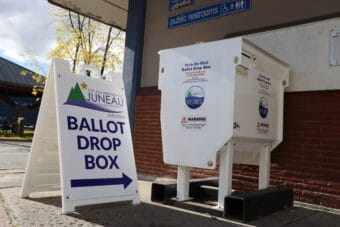
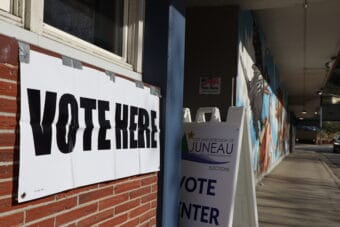
Voters have until Tuesday, Oct. 1 to make their choice. The final results of the by-mail election won’t be certified until Oct. 15. 

Find more election coverage at ktoo.org/elections.

For Juneau mayor, incumbent Beth Weldon faces challenger Angela Rodell

Angela Rodell (left) and Beth Weldon (right) are the candidates running for Juneau Mayor in the 2024 municipal election. (Clarise Larson/KTOO)

Two people are vying to serve as Juneau’s next mayor in the Oct. 1 municipal election.

Incumbent Mayor Beth Weldon faces challenger Angela Rodell, who is running on a fiscally conservative platform and out-fundraising her opponent so far. 

Weldon has served as Juneau’s mayor since 2018. In an interview leading up to the election, she said her highest priority right now is flood preparation and mitigation following last month’s record-breaking glacial outburst flood.

“If we don’t figure out something or if we can’t get the federal government involved or figure out something local, our next year – could the flood be even worse? And that’s where our housing stock is in Juneau, is in the Valley,” she said. 

Meanwhile, Rodell said she is running because she thinks there needs to be a heightened focus on how the city spends its money. 

“I think we need to get back to basics and really focus on our spending priorities and what our community needs to keep our young families and our senior citizens here and make Juneau affordable,” she said. 

This is Rodell’s first time running for local office. She previously served on the Juneau Airport Board for six years. She was CEO of the Alaska Permanent Fund Corporation from 2015 to 2021, when the fund’s board of trustees voted to remove her from the role. She’s now a consultant and legislative staffer and serves as board chair of Launch Alaska, a nonprofit tech company based in Anchorage. 

Weldon is a retired division chief with Capital City Fire/Rescue and owns Glacier Auto Parts. She has two adult sons and is a lifelong resident of Juneau. If re-elected, it will be Weldon’s third, three-year term as mayor. She also served two years as an Assembly member before resigning to run for mayor.

The pair share common ground on local issues like the Ship-Free-Saturday ballot proposition or a recall of school board members, both of which they oppose. But they differ on two other ballot questions – the $10 million Juneau Douglas Wastewater Treatment Plant bond and the $12.7 million public safety radio bond. Weldon supports both, while Rodell opposes them. 

“They’re pretty ancient, and for safety reasons, and just being able to talk to other agencies – that’s really important to fix that system,” Weldon said about the public safety radio bond. 

But Rodell says the city should have set aside money for the projects a long time ago. 

“I’m concerned that we’re using debt for these two ballot initiatives simply because we have a number of reserves that we’ve held over time for various initiatives,” she said. “We’ve raised taxes significantly over the last four to five years, and I’m concerned that we’re not addressing ongoing maintenance needs when they happen, but rather it seems to get to a crisis point.”

Both candidates have attended a handful of candidate forums and events in the months leading up to the election. According to campaign finance records, Rodell has raised more than $23,000 toward her campaign while Weldon has raised just under $16,000. Several current and former Republican state lawmakers are among Rodell’s campaign patrons.

Election Day is Oct. 1, but the final outcome of all candidate races won’t be known until all of the mail-in ballots are received and the city certifies final results on Oct. 15. 

Why a recall of two Juneau School Board members is on the ballot — and what happens if it’s successful

Juneau School Board President Deedie Sorensen and Vice President Emil Mackey at a meeting in February 2024. (Clarise Larson/KTOO)

When Juneau voters fill out this year’s municipal election ballot, they’re going to see two recall petitions – one asking whether to recall Board of Education President Deedie Sorensen, and another asking whether to recall board Vice President Emil Mackey. 

The recall questions made it on the ballot after a local group gathered enough signatures for them to qualify — nearly 2,400 signatures each. 

But qualifying for the ballot doesn’t mean what’s written in the petitions is accurate. 

The ballot states that Sorenson and Mackey demonstrated misconduct and incompetence by failing to understand accounting errors in the fiscal year 2024 budget, resulting in a $7.9 million deficit and a taxpayer loan from the city. 

According to Municipal Attorney Emily Wright, the City and Borough of Juneau’s Law Department determines if there are legal grounds, or a reason, for the recall – not if that reason is true or factual.

“We as the Department of Law do not have to know whether this is true or not,” she said. “We don’t look to see whether it’s fixed or not. We don’t make any of those judgment calls. We just say, ‘Okay, does it meet the threshold?’”

The recall group originally wanted to include everyone on the board who voted in favor of the consolidation of Juneau’s high schools and middle schools earlier this year. But Mackey and Sorensen are the only current members of the board who are eligible for recall due to the timing of their terms.

The group cited several allegations against the pair, but only one met the threshold to trigger a recall. And, because it qualified legally, the rest is up to the voters.

“It’s now the voter’s job to determine whether it’s true or not. It’s not my job to say this is true or not,” Wright said. 

In fact, what’s written on the ballot as the reason for the recall isn’t completely accurate.

What actually happened?

The ballot says that Sorensen and Mackey failed to do their duty as board members during the 2024 fiscal year budget process – when district administration discovered accounting errors and overestimated enrollment numbers. It resulted in a multimillion-dollar budget gap. The school board ultimately addressed that deficit and never actually took out a loan from the city, as the ballot states. 

But, for the 2025 fiscal year — which started this past July — the board also had to address another multimillion-dollar deficit. That is what led the district to close some schools, consolidate grades and reduce staff. 

Mackey said he thinks that’s the real reason people want him off the board.

“A lot of it is just angry Thunder Mountain parents,” he said. “And I get it, they should be angry. But the truth is, is that it had to be done.”

Part of the consolidation plan closed one of the two high schools in town – Thunder Mountain in the Mendenhall Valley. That means students from both high schools are now at Juneau-Douglas High School: Yadaa.at Kalé downtown. And Thunder Mountain High School is now Thunder Mountain Middle School. 

“We had to shut down one high school or the other, or we were going to lay off another 30 to 60 teachers, depending on what we were looking at,” Mackey said. 

Sorensen agrees that the actual reason for the recall is the consolidation vote. 

“I believe that the impetus for and the hostility towards Dr. Mackey and I stems from the fact that we were part of the block of four votes that voted for consolidation, that consistently voted for consolidation. In particular, the closure of Thunder Mountain High School,” she said. 

But Jenny Thomas, one of the leaders of the recall effort, disagrees. 

“It’s not so much Thunder Mountain. I mean, you closed Floyd Dryden and you closed [Dzantik’i Heeni Middle School], and the narrative that’s being put out there is as angry TM parents — a large majority of my signers were middle school parents,” she said. 

The recall group is largely made up of parents, and Thomas is also running for school board this year.  

“I would hope that they would realize this is not coming from a place of anger because we didn’t get what we wanted, I know that’s being pushed out there,” she said. “It’s not just TM families, it’s everybody that was affected.”

What’s next?

Thomas knows that recalling the two school board members won’t undo the board’s decisions to close Thunder Mountain High School or the rest of the consolidation process. But she said it will fix some problems.

“I think it’s going to make the board listen to the public a little bit more. Because, I mean, you testify, right? Hours of testimony, you never hear back from them,” she said. “What’s the point of testifying? I mean, it makes you feel like your opinion and your voice doesn’t matter, and you don’t want anybody in the community to feel like that.”

Mackey said that recalling him and Sorensen will send a chilling message to future board members. 

“They’re going to look back at this if this succeeds, and they’re not going to make the hard choices, because they’re going to be scared they’re going to be recalled, they’re going to be drug in the mud, and they’re going to be held accountable for something that wasn’t their fault,” he said. “And that is scary — it’s terrifying.”

But Mackey said it won’t stop him from running again in the future. Sorensen and Mackey’s current terms end next year. Sorensen said she plans to retire after that.

There haven’t been many recall questions on Juneau’s ballots over the years. Since 1970, voters have only been asked twice whether someone should be recalled, according to city clerk records. 

If Mackey and Sorensen are recalled, the remaining school board members will have up to 30 days to appoint two new members.

WATCH: Juneau School Board candidates discuss local issues at 2024 League of Women Voters forum


Six Juneau School Board candidates running in the Oct. 1 election answered questions about local education issues during the 2024 League of Women Voters School Board forum on Wednesday.

KTOO’s Clarise Larson and the Juneau Empire’s Mark Sabbatini moderated the live forum.

See Tuesday’s Juneau Assembly candidate forum here.

Find more elections coverage — including candidate profiles — at ktoo.org/elections

Site notifications
Update notification options
Subscribe to notifications