Alaska Native Arts & Culture

Cultural ambassadors prepare for tourists at Mendenhall Glacier amid staffing uncertainty

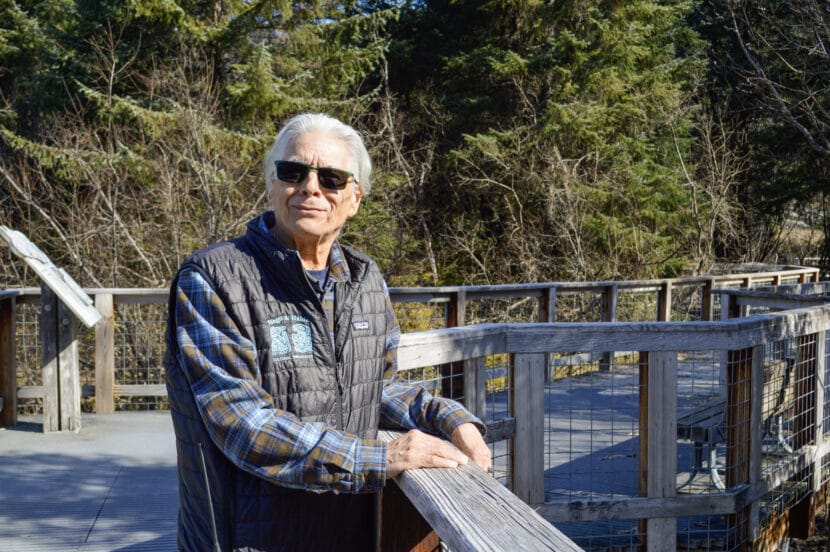
Lee Miller is a Cultural ambassador at Mendenhall Glacier Visitor Center on April 2, 2025. The Central Council of the Tlingit & Haida Indian Tribes of Alaska program started in 2024 to teach tourists about Lingít stewardship of the land. (Photo by Yvonne Krumrey/KTOO)

At Mendenhall Glacier Visitor Center earlier this week, cultural ambassadors were learning how to best represent Lingít stewardship and connection to the glacier to the roughly one million tourists slated to visit this summer. 

Saaní Liana Wallace set off down the walkway toward Steep Creek. For this training, her supervisor sent her and her fellow ambassadors out to study the plants along nearby trails and take photos of the ones they don’t know. 

“Join the crowd,” she said. “We’re talking about plants, so Lee [Miller], who’s been here a while, is going to show me a plant that he wants us to work on.” 

While U.S. Forest Service staffing at Mendenhall Glacier Visitor Center remains uncertain, there will be eight people working at the glacier in a different role – as cultural ambassadors. They’re employed by the local tribe and they teach visitors about Lingít history, culture, and its connections to the land.  

The Central Council of the Tlingit & Haida Indian Tribes of Alaska program started last year, as part of a co-stewardship agreement the tribe formed with the Forest Service. 

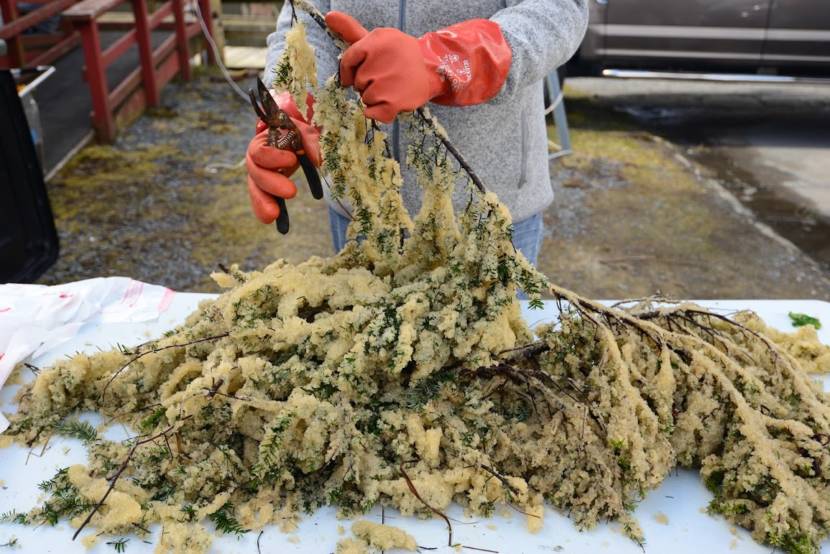
It will allow people like Shaaḵ’indax̱ Jonah Johnson to teach visitors about things like Devil’s Club – or as it’s called in Lingít, s’axt. He likes it because there’s more to it than meets the eye.

“It looks like it’s just a harmful plant, but it’s really our medicine plant,” Johnson said.

In February, a wave of federal firings left one remaining Forest Service staff member at the visitor center. In a typical summer, there are about a dozen on site. 

Some of the fired staff have been rehired, but there are rumors they may lose their jobs again, or accept a deferred leave offer. Forest Service officials say they aren’t able to share any plans for staffing for the summer.

But while that’s up in the air, the cultural ambassadors are moving forward with their plan to staff Mendenhall Glacier Recreation Area.

Góos’k’ Ralph Wolfe directs Indigenous stewardship programs for the tribe.

“We’re still out there, we’re still going to be there,” he said. “And we’re just trying to figure out where we can help the Forest Service kind of fill in.”

He said he’s been thinking of how the ambassadors may be stepping in to do work the Forest Service rangers would be doing – like managing visitor safety. 

But he said the program’s mission is still focused on highlighting Indigenous stewardship. 

“We’re trying to be flexible while also making sure our mission is to make sure that the culture is passed on,” Wolfe said. 
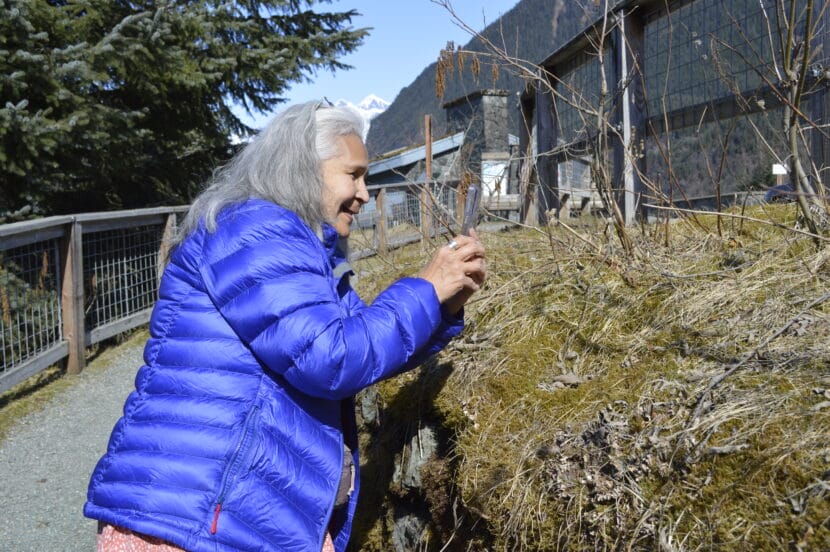
Cultural ambassador Saaní Liana Wallace takes a photo of a plant to identify on April 2, 2025. (Photo by Yvonne Krumrey/KTOO)

Cultural Ambassador Lee Miller is returning for his second season. He said he thinks all of the staff at the glacier will be spread thin this year. 

“But it’s exciting,” he said. “I mean, every day is different, every person is different.”

Miller said he loves representing the Áak’w Ḵwaan, and bringing the joy of the natural world to visitors. 

“You can pass it on to them. You’re, you know, you’re coming in and you say, ‘Okay, I just saw a porcupine out on the meadow there,’ or an eagle or a heron, and, you know, just point it out to them, and they’ll ask you questions,” he said.

Miller’s family has been here for thousands of years, but he’ll be greeting people who are seeing the glacier for the first time. 

“Just interacting with them and watching them,” he said. “You know it just — that made the whole season.”

And the 2025 season begins April 14, when the first cruise ship arrives in Juneau.
Tribal education leaders speak out against Trump’s plan to close the Department of Education

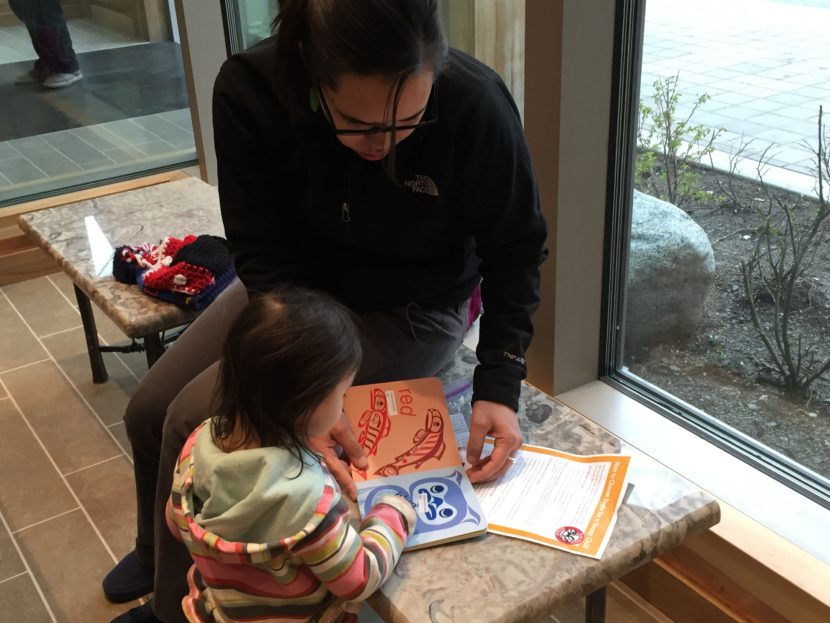
Margaret Katzeek brought her niece Elayna Katzeek to the Baby Raven Reads family night. (Photo by Lisa Phu/KTOO)

A group of education leaders from tribal organizations spoke Wednesday at a U.S. Senate hearing against the dissolution of the federal Department of Education – and for protecting programs that support Indigenous students.

The hearing followed an executive order President Trump signed last month that aims to close the department.

Advocates outline benefits of culture-based programs

Rosita Yeidiklasókw Ḵaaháni Worl, the president of Sealaska Heritage Institute, was one of the witnesses at the hearing. Worl, who is Łingít, spoke about the persistent lack of education funding, especially in Alaska, given the state’s fiscal situation.

“Despite these challenges, we can confidently state that through our culture-based programs that we have integrated into schools with DOE funding, we have witnessed measurable educational achievement among Native students, as well as improvements in their social and emotional well-being,” Worl said.

Examples of programs funded by the department include Baby Raven Reads, Worl said. That’s an early literacy initiative that helps Alaska Native students see their culture and lifestyle – such as picking berries and fishing – reflected in educational materials.

Nationally, Native students’ scores continue to trail behind reported averages for all students. Worl noted that since Baby Raven Reads’ implementation in Southeast Alaska, students’ reading scores have improved. Juneau students who attended another culture-based program funded by the department – Tlingit Culture, Language, and Literacy – also showed better scores than those who didn’t attend it, she said.

Another speaker at the hearing was Sydna Yellowfish, the director of Indian Education at Edmond Public Schools in Oklahoma. She said that funding through the department is important for addressing high rates of suicide and sexual assault among Native students, as well as experiences such as homelessness, foster care and substance abuse.

“I feel like we are obligated to address these challenges and work with our students and our families as the best that we can,” Yellowfish said.

Sen. Lisa Murkowski, who co-led the oversight hearing, highlighted programs that fund tutoring, language initiatives and post-secondary education opportunities for Native students. She also pointed to the Alaska Native Education Program that supports curricula and cultural activities.

“(There are) so many of the programs that have been directed to and really intended to benefit our Native students, whether it’s at the Baby Raven Reads level or all the way up to our tribal colleges,” Murkowski said. “We need to make progress on the ground, and we owe it to our Native kids across the country.”

A legal obligation

Murkowski said that the department’s programs help the government fulfill its federal Indian trust responsibility – a legal obligation to protect Indigenous people’s rights and well-being. She said that it includes Native students across the country, more than 90% of whom attend public schools.

Sen. Brian Schatz, a Democrat from Hawaii who co-led the hearing with Murkowski, said that if the Education Department is dismantled, Native students “will be at the mercy of state governments that have no trust and treaty responsibility to meet their unique needs.”

“Eliminating the Department of Education would lead to fewer choices and tremendous instability, high poverty and smaller schools, especially those in rural Native communities,” Schatz said. “This is not permissible under the law.”

Murkowski said one proposed workaround is to transfer the department’s programs to other agencies and to administer funding through the states. But she and several speakers noted that such a transition could be detrimental to tribal sovereignty and lead to additional bureaucratic hurdles and delays.

Worl pointed out that in Alaska, a group of Native students sued the state in the 1970s saying that it failed its constitutional responsibility to provide education to Alaska Natives. While the state built schools in rural communities as a result of the Molly Hootch case, Worl said today, many of the rural school facilities are falling apart.

“We have schools that have been in disrepair. Students should not be in those schools,” Worl said. “I just don’t think Native education is a high priority there. I would not support it going to the state.”

Lingít Word of the Week: G̱áax’w — Herring eggs

STA staff and volunteers distribute herring eggs on branches after the 2020 subsistence harvest. (Photo by Berett Wilber/KCAW)

This is Lingít Word of the Week. Each week, we feature a Lingít word voiced by master speakers. Lingít has been spoken throughout present-day Southeast Alaska and parts of Canada for over 10,000 years.

Gunalchéesh to X̱’unei Lance Twitchell, Goldbelt Heritage Foundation and the University of Alaska Southeast for sharing the recorded audio for this series.

This week’s word is g̱áax’w, or herring eggs. Listen to the audio below to learn how to say g̱áax’w.

The following transcript is meant to help illustrate the words and sentences. 

Ḵaakal.áat Florence Marks Sheakley: G̱áax’w. 

That means herring eggs.

Here are some sentences:

Ḵaakal.áat Florence Marks Sheakley: Ḵaa jéexʼ kei naldzée yaa yá g̱áaxʼw.

It is getting difficult for people to get herring eggs.

Keihéenák’w John Martin: Tsaa eex̱i tín áwé dux̱áa nooch g̱áaxʼw.

People always eat herring eggs with seal oil.

Keiyishí Bessie Cooley: Dziskʼu dleeyí, g̱áaxʼw daséi yaa dul.átch

People trade moose meat for herring eggs.

Kaxwaan Éesh George Davis: G̱áax’w wutuwax̱áa.

We ate herring eggs.

You can hear each installment of Lingít Word of the Week on the radio throughout the week. 

Additional language resources:

Find biographies for the master speakers included in this lesson here.

Learn more about why we use Lingít instead of Tlingit here.

Watch a video introducing Lingít sounds here.

Alaskan television producer shares the importance of Indigenous representation in children’s media

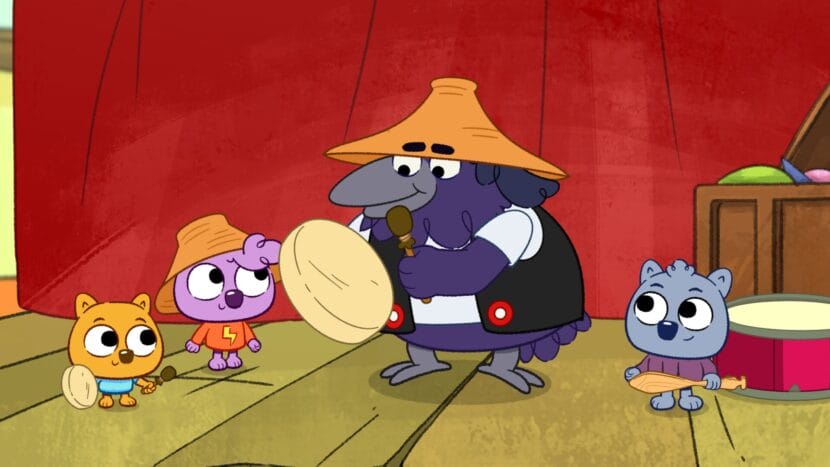
A still from “Work It Out Wombats!” with characters Zeke, Zadie, Chanáa and Malik. (photo from GBH.)

Sydney Isaacs-Hulstine is a Craig-based Lingít and Haida artist. Raised in Klawock, Isaacs-Hulstine is an associate producer for children’s TV show “Molly of Denali.”

She recently wrote an episode for another children’s show, “Work It Out Wombats!” It features an Alaska Native character that draws on Lingít and Haida culture.

Isaacs-Hulstine sat down with Jamie Diep to talk about the episode and the importance of representation in children’s media.

Listen here:

The following transcript has been lightly edited for clarity.

Jamie Diep: I want to talk about this episode of “Work It Out Wombats!” that you wrote. Could you give a quick rundown of what you pitched? The process of producing this episode and watching it come together

Sydney Isaacs-Hulstine: With “Work It Out Wombats!” the team really wanted me to pitch an idea that felt like Alaska, that felt like my culture. They wanted me to really embrace it, whatever it may be. And so I was thinking and thinking, ‘What could I do? And I kept thinking of this Raven character, because he plays such a significant role in all of our cultures, for Lingít, Haida, Tsimshian, and a lot more folks hold Raven in high regard.

So I kind of pitched this character in a way, this elder character named Chanáa, which is Haida for grandfather. And they really liked it. They were over the moon for this crazy, kooky, elder, with some mischief and jokes, and [he] kind of reminds me of Tigger a little bit from “Winnie the Pooh.”

And so from there, we were like, ‘Okay, we have this character. What is he going to do?’ And again, thinking of my culture, that Raven is this trickster, the mischief. He’s smart and quick, and there’s tons of wit everywhere. And so I thought riddles, and that kind of spurred on this whole thing.

So it was like a really neat kind of balance of how tricky of a riddle is too tricky, and how is it too easy? And where’s the balance there? We spent a lot of time together trying to figure out that balance, and then from there, once the story was solid, it was design time. 

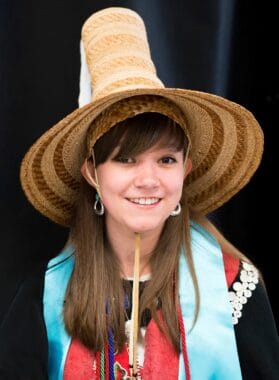
A portrait of Sydney Isaacs-Hulstine. (photo from Sydney Isaacs-Hulstine)

And I had asked at the very beginning, like even before I started writing, if it would be okay if I were to see Chanáa’s design, because I feel very strongly to make sure that we’re represented authentically and accurately. The wombats has a very unique style. So it was like, how much of my culture and balance it with their world, so that it doesn’t pop out in a weird way, but it feels natural.

And so his hat, his necklace, shirt, his vest, all of that is very much based on the culture, with references and working hand in hand. And then same with some of the props in there too, near the end of the episode that was all worked out together – and the dance movements and the drum beats – they worked with me on it to make sure it was accurate.

Jamie Diep: What’s something that stood out to you or something that surprised you about working in children’s media? 

Sydney Isaacs-Hulstine: GBH Kids and the children’s media department was really thoughtful, and I was astonished by how much they cared and how much they crafted all of our series, all of our episodes. And every single show was just very carefully done to make sure that kids were not only entertained, but they’re also getting some education. And I don’t think that exists everywhere.

Jamie Diep: What’s particularly important about having a broad spectrum of representation in children’s media and the projects that you’ve worked on, whether that’s Alaskan Native representation, Lingít and Haida representation, or just other forms of representation. Why is this important in children’s media?

Sydney Isaacs-Hulstine: The early exposure that kids can get to different cultures and diversity and underrepresented voices, the better off that they’re going to be. They’re going to grow up knowing this and just be more well rounded individuals for it, with a broader experience and lens. And it’s really important to have that, because it’s just a part of growth and life, and it’s for everybody. The more voices that you have and different perspectives that come to play their part in how these shows are made. It just gives you a deeper and richer experience and a really great quality show.

And I think it’s really good for kids to absorb that, because they can feel that through the screen and take in that information that they’re hearing and that representation and grow up knowing, ‘oh, oh, the I know exactly who these folks are. I’ve learned about this. I’ve seen it on TV.’ And then it just continues. It just spreads. It’s very infectious.

Lingít Word of the Week: Tsaa — Seal

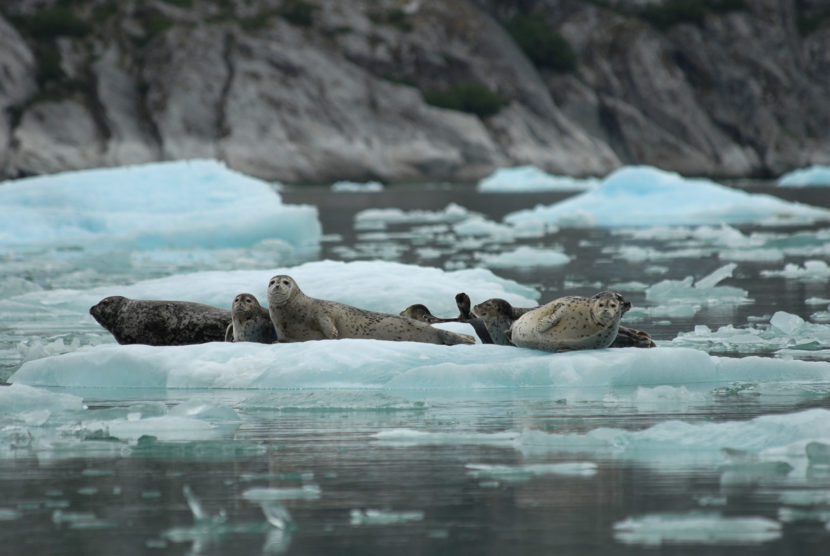
Harbor seals rest on ice near South Sawyer Glacier in 2007. (Photo courtesy NOAA's Alaska Fisheries Science Center)
Harbor seals rest on ice near South Sawyer Glacier in 2007. (Photo courtesy NOAA’s Alaska Fisheries Science Center)

This is Lingít Word of the Week. Each week, we feature a Lingít word voiced by master speakers. Lingít has been spoken throughout present-day Southeast Alaska and parts of Canada for over 10,000 years.

Gunalchéesh to X̱’unei Lance Twitchell, Goldbelt Heritage Foundation and the University of Alaska Southeast for sharing the recorded audio for this series.

This week’s word is tsaa, or seal. Listen to the audio below to learn how to say tsaa.

The following transcript is meant to help illustrate the words and sentences. 

Keiyishí Bessie Cooley: Tsaa. 

That means seal.

Here are some sentences:

Keiyishí Bessie Cooley: Lagaaw yáx̱ amdlitsaa, wé tsaa.

The seal burped loudly.

Keihéenák’w John Martin: Tsaa táayi haa x̱’éi yak’éi.

Seal fat tastes good to us.

Kooshdáakʼu Bill Fawcett: Goodé sáwé tsaa l’ooni áwé kg̱waḵóox̱?

Where are they going to hunt seals?

Ḵaakal.áat Florence Marks Sheakley: Ḵúnáx̱ haa atx̱áyi áyá tsaa.

Seal is an important food of ours.

Kaxwaan Éesh George Davis: Tsaa taayí awaadákw.

They rendered seal fat.

You can hear each installment of Lingít Word of the Week on the radio throughout the week. 

Additional language resources:

Find biographies for the master speakers included in this lesson here.

Learn more about why we use Lingít instead of Tlingit here.

Watch a video introducing Lingít sounds here.

Juneau’s X̱’unei Lance Twitchell wins Emmy for ‘Molly of Denali’ episode

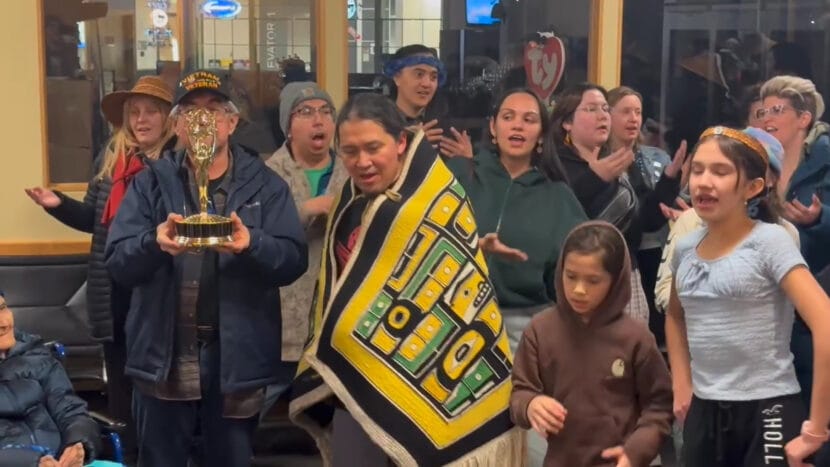
X̱’unei Lance Twitchell dancing in a Chilkat robe at the Juneau International Airport on Sunday, March 16, 2025. (Screenshot from video courtesy of Bostin Christopher)

Juneau resident X̱’unei Lance Twitchell won an Emmy Saturday for Outstanding Writing for a Preschool Animated Series. 

Twitchell won the award for writing ”Not a Mascot,” an episode for the PBS Kids show “Molly of Denali.” 

The winning episode follows the show’s main character Molly Mabray as she learns that a competing basketball team – the Sitka War Chiefs – has a mascot based on Indigenous stereotypes. She then helps the team find a new mascot.

This is the second Emmy nomination for Twitchell and his first award. He shares it with head writer Raye Lankford.

Twitchell received the award at the ceremony in Los Angeles. Juneau residents welcomed him home at the airport Sunday night with traditional song and dance. Wearing a Chilkat robe, he thanked his supporters and said they can accomplish great things together.

“I am so thankful for this opportunity to stand on the backs of all the storytellers who brought us here, all the people who work on this wonderful show,” he said. “It takes so many hands to do something like this.”

Twitchell is also an author and a professor of Alaska Native Languages at the University of Alaska Southeast.

“Molly of Denali” received a nomination for Outstanding Interactive Media this year as well. This is the show’s first Emmy award.

Listen to a Rainy Day Conversation interview with Twitchell talking about his Emmy nomination and other work with Juneau Afternoon host Bostin Christopher here.

Site notifications
Update notification options
Subscribe to notifications