Juneau Schools

Juneau School District proposed budget continues to rely on $400 BSA increase, despite board concern

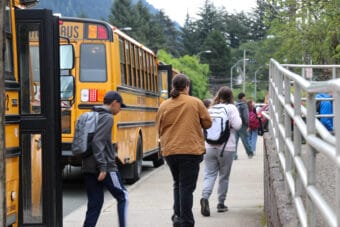
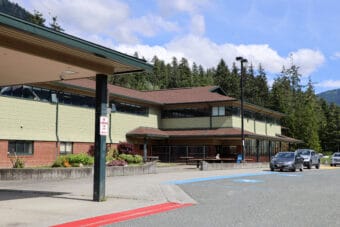
Students walk off a bus to the Thunder Mountain Middle School entrance for the first day of school on Thursday, Aug. 15, 2024. (Clarise Larson/KTOO)

The Juneau School District Board of Education appears to maintain its concerns about state funding as it moves through the budget process for the next fiscal year.

Board President Deedie Sorensen appeared troubled by some assumptions the budget is based on at a budget work session Thursday. The proposed budget depends on a $400 increase in per-student spending from the state.

“I want to feel confident that, you know, if it’s a big zero, that we have planned our contingencies based on how we can weather it without making everybody’s lives a total misery for an entire school year,” Sorensen said.

Superintendent Frank Hauser said that if the state doesn’t raise its per student contribution the budget would fall about a million dollars short. That is, after factoring in adjustments and what’s projected to be in the fund balance,

“That leaves a million dollars left over,” he said. “That could be addressed through the year, through whether we look at what the vacancy factor looks like, maybe holding back on some spending, It would be easier to absorb a $1 million difference throughout the span of a whole year. So we could do budget revisions to address what that would look like.”

The budget discussion is happening as a bill to increase the per pupil funding formula by $1000 is expected to go onto the House floor for debate on March 10. 

District Finance Director Liz Pearce said at the work session that the proposed budget that assumes the state will increase funding by $400 per student includes about $1.36 million in unallocated funds. That’s about $350,000 above the minimum the district needs to maintain.

Several board members requested a list of items that funding could be used for before its next meeting.

The board is scheduled to hold a final hearing on the budget on Tuesday.

Juneau Assembly moves forward with plan that would demolish most of Marie Drake building

Students exit the Marie Drake building, which formally housed the Juneau School District’s alternative high school, Yaaḵoosgé Daakahídi, and Montessori Borealis, on Wednesday, April 24, 2024. (Clarise Larson/KTOO)

The city is considering a plan to demolish nearly all of the building between Harborview Elementary and Augustus Brown Swimming Pool to open up the area for parking downtown. The Marie Drake building once housed Juneau School District’s Montessori and alternative high school programs. 

At a committee meeting Monday night, the Juneau Assembly moved forward with a plan to spend $150,000 to get more concrete cost estimates for the demolition and get more input from the public. 

That’s despite some reluctance from members like Alicia Hughes-Skandijs. She argued the building could be used to serve other needs in Juneau, and wanted to explore other options. 

“This, from a fiscal standpoint and just an operational standpoint, just doesn’t make sense to me, as presented as our best option,” she said. “Having a building that we could use for child care, which is been a top priority for ours and something that we know we need in the community, that is way more attractive for me.”

The building is named after a territorial educator who wrote the lyrics to the state song, “Alaska’s Flag.” The district gave the building to the city last spring as part of its school consolidation plan. It’s been empty of students since. 

The Assembly briefly considered turning it into a new City Hall, but that plan fell through when cost estimates to renovate it came back high.

The proposed demolition plan would knock down about 80% of the building, including most of the former classroom spaces. Some of it would be left untouched though, like the planetarium and gym space. 

City Manager Katie Koester said the plan is estimated to cost about $10 million, compared to $75 million to fully gut the building and renovate it. She said the Assembly will need to decide how the city would pay for the demolition if they choose to move forward with it. 

“Really, there’s no version of demoing that doesn’t have a large price tag,” she said. 

Assembly member Wade Bryson said demolition is the most fiscally responsible option for the space. 

“Trying to keep things the same is going to cost us more in the long run than if we bite the bullet and make these historic changes right now,” he said. 

The demolition would open up the space for 75 new parking spots. Koester said a portion of those may be used for city employees, but some could be set aside for students at the high school. 

Juneau Jazz Festival connects professional musicians with local band students

Bob Athayde leads Ketchikan High School Big Band students through warm ups during a jazz clinic on Friday, Feb. 7, 2025. (Photo by Jamie Diep/KTOO)

The second annual Juneau Jazz Festival packed nearly thirty performances, workshops and events related to jazz music into four days last week. The festival’s musicians also went into the schools and placed professionals in the seats among student musicians from Juneau, Sitka and Ketchikan. 

At Juneau-Douglas High School: Yadaa.at Kalé on Friday, the sounds of Herbie Hancock filled the air in the music wing as the Sitka High School Big Band played for a jazz clinic. Joining the students were professional musicians from around the world. While they performed, other students at the high school were just beginning their day.

The clinics were part of the Juneau Jazz Festival, a partnership between Juneau Jazz & Classics and Juneau School District. From jazz combos made up of a handful of musicians to full big bands with close to thirty members, students worked with music educator Bob Athayde and other jazz musicians to add some finishing touches to their sets before two days of concerts.

It’s the second year Juneau has had the jazz festival. Before that, the event ran in Sitka for about two decades. Athayde is based out of California, but he’s been involved with the festival since 2002. He said the students’ attitudes and ability to take feedback brings him back to Alaska each year.

“It’s always uplifting to see young people play music, be engaged. And, you know, if someone says, ‘Oh, kids.’ No, kids are doing really good things. And I think we just have to continually catch them doing something right,” Athayde said.

Brian Van Kirk is one of the organizers and teaches band at Juneau’s high school. He said these events can connect students to professional musicians.

“There’s no other festival that puts the accessibility of the artists to students like this – the Sitka Jazz and now the Juneau Jazz,” Van Kirk said. “It’s nowhere else that you sit in a section and work with Grammy award-winning musicians.”

The festival comes as the Alaska State Legislature is considering bills to increase school funding. Years without significant permanent increases have led districts across the state, like the Ketchikan Gateway Borough School District, to consider music program cuts

But Van Kirk said these programs do more than teach students about the arts.

“What we learn in band cross-pollinates to all the things that you need to be successful as an adult. Hard work, repetition, diligence, community, working together on a project – all of those things transfer,” he said.

In addition to ensembles from area schools, students from the three participating high schools – Juneau-Douglas, Sitka High School and Ketchikan High School – formed the All-Alaska Jazz Band. Juneau-Douglas senior Elijah Goins played piano for the band. He’s been playing keyboard for 10 years and has focused more on jazz through high school.

“It’s fun being able to create something and sit down at a piano or pick up an instrument and just play whatever you want. And jazz allows you to do that. It’s so improvisational that there isn’t bad jazz. There’s just different jazz,” he said.

Goins said it’s great to learn and play with different artists beyond his own school.

“It’s such a different experience to get to work with other students that have different teachers and to work with these musicians that have been playing for years and are just leagues ahead of you and can share so much information,” he said. “It’s so valuable.”

The festival is expected to return to Juneau next year.

Juneau student, school staff information may have been compromised in national data breach

Students walk off a bus to the Thunder Mountain Middle School entrance for the first day of school on Thursday, Aug. 15, 2024. (Clarise Larson/KTOO)

The Juneau School District says its students’ personal data may have been compromised in a national data breach. 

The software company – PowerSchool – initially told the district its system was not breached last week. But further examination by the district’s IT department revealed suspicious activity. PowerSchool then confirmed Juneau’s data had been compromised.

Superintendent Frank Hauser shared the news at a school board meeting Tuesday night. 

“After first saying that our Juneau School District product or student information system was not impacted, our PowerSchool rep has now reversed course and said that it was,” he said. “This is a developing situation, and the district has communicated to families the information we have at present.”

PowerSchool is a software used by districts across the nation for things like grades, attendance and homework assignments. It can also store some more confidential and personal information like social security numbers and medical conditions. The Juneau School District has used the software for many years. 

The nationwide cybersecurity breach happened late last month. The company discovered that a user had gained unauthorized access to its information using a customer support portal. 

Since then, some districts in the country have reported that students’ contact information – things like names and addresses –  had been breached along with sensitive data like social security numbers.

Hauser said the district is still waiting to hear back about how much personal information was accessed in Juneau. But, there’s some important information they believe was not compromised. 

“The Juneau School District does not collect social security numbers, driver’s license numbers or any credit card information in PowerSchool,” he said. 

Hauser said the district will update families and the public as it learns more. Other districts in Alaska had their data compromised too, including the Petersburg School District, Bering Strait School District and Nome Public Schools.

Fading financial support puts Juneau School District’s free breakfasts at risk

Randy Pierce, the head cook at Juneau-Douglas High School: Yadaa.at Kalé, prepares breakfast for students on Tuesday, Dec. 17, 2024. (Clarise Larson/KTOO)

The smell of maple syrup and savory sausages filled the air at Juneau-Douglas High School: Yadaa.at Kalé on Tuesday morning. 

It was breakfast time and Claire Snyder, a junior at the high school, walked down the cafeteria line to grab a bite to eat before class. 

“Usually sometimes I don’t have enough time to get something at home, or I just forget,” she said. “I’m really good at forgetting things.”

The district’s free universal breakfast program means students don’t have to start the day with an empty stomach and families don’t have to worry about paying for it. The Juneau School Board voted on Tuesday to extend the benefit for another semester — but after that, its future is uncertain.

Taelyn Eriksen, a freshmen at Juneau-Douglas High School: Yadaa.at Kalé, orders breakfast on Tuesday, Dec. 17, 2024. (Clarise Larson/KTOO)

“It’s really convenient and nice for people who just don’t have enough time, and at least they can start with breakfast, because starting with breakfast gives them at least something throughout the day,” Snyder said. 

Snyder is one of about 60 students who eat breakfast at the high school –  and one of 650 students who eat it across the district. It’s free to every student. Schools across the country invest in meals because studies show that children who eat a nutritious breakfast perform better in school than those who don’t.

“As much as we would like to think that kids go home and have nutritious food, we know that that doesn’t always happen,” said Elizabeth Seitz, who oversees the district’s breakfast and lunch programs.

Kristina Brown, a cook at Juneau-Douglas High School: Yadaa.at Kalé, slices oranges for students on Tuesday, Dec. 17, 2024. (Clarise Larson/KTOO)

Seitz said the breakfast program has been in place for nearly a decade. Community donors help keep it free, but support has decreased over time. She said each breakfast costs roughly $4.50 a meal before federal reimbursements

“Being able to offer all the kids a free breakfast is a huge benefit to the community, as well as our students,” she said. “The students don’t need to now worry about where they’re going to get their breakfast, so they’re not thinking about an empty stomach while they’re trying to study and learn.”

On Tuesday, the school board voted to absorb a $115,000 funding gap for the semester using some unexpected funding from the state. But, that money isn’t promised for next school year — or the year after that. 

That concerns Randy Pierce, the head cook in the high school’s kitchen. She said knowing that students are getting a nutritious meal every day is what gets her up in the morning.

“You don’t know a child’s outside life. You don’t know if they’re getting breakfast in the morning. At least we know when they’re coming here and they’re getting that free breakfast,” she said. “We know they’re getting fed, and if they lose that, who knows if they’re getting to eat at home.”

School Board members like Emil Mackey said the district needs to find reliable funding quickly if they want to keep the program free. 

“This is something we need to really deep-dive in the budget, and really reach out to our partners and see what we can do to accommodate this in the future,” he said. “This is not a cost that we just continue to absorb without help.”

Seitz said that, in the meantime, she plans to reach out to more community partners to see if they can offer more funding. She also wants to get more families to apply for the program so the district qualifies for more federal reimbursement money. 

That’s all to keep students like Savannah Sonesen fed and able to focus on school. She said it really helps her pay attention during the day.

“If I don’t get breakfast at home, I sometimes come here,” she said. “Or if I really would like to try out the breakfast here, I’ll go for it.”

Juneau’s share of the state’s school funding boost is $500K more than projected

Students walk to the Harborview Elementary School entrance for the first day of school on Thursday, Aug. 15, 2024. (Clarise Larson/KTOO)

The Juneau School District is getting nearly half a million dollars in unexpected funding from the state. 

District administrators anticipated $5.2 million from a one-time state funding boost to school districts, but a December finance report from the district shows the number is closer to $5.7 million. Superintendent Frank Hauser explained the change to school board members during a meeting on Tuesday. 

“One-time funding is based on overall enrollment across the state, the number of students and what percentage of students we have compared to the state overall,” he said. “That’s where that one-time funding fluctuates a little bit.”

He said the Juneau district’s percentage was higher than originally thought. More students equals more money. 

The boost follows a bumpy financial year for the district. A multimillion-dollar budget crisis last winter led the district to reduce staff and consolidate schools. Some of that was due to state funding not keeping up with inflation.

This year’s one-time funding meant the board could add back dozens of jobs in July. The district recovered roughly 40 full-time positions, including several elementary and secondary staff positions, paraeducators and staff for the district’s homeschool program.

At the meeting Tuesday, the board briefly discussed using some of the unanticipated $500,000 to cover the cost of providing free breakfasts to students next semester. That would cost the district roughly $115,000.

School board member Emil Mackey thought it could be a good use of the money. 

“I support extending this. It helps the most vulnerable in our schools,” he said. “It helps with learning outcomes directly. A hungry child cannot learn.”

Others were concerned about tacking on the cost without a plan for how to cover it beyond the semester. The board will resume the discussion at its next regular meeting. 

Site notifications
Update notification options
Subscribe to notifications