Education

Juneau School District closes three schools amid moderate flooding

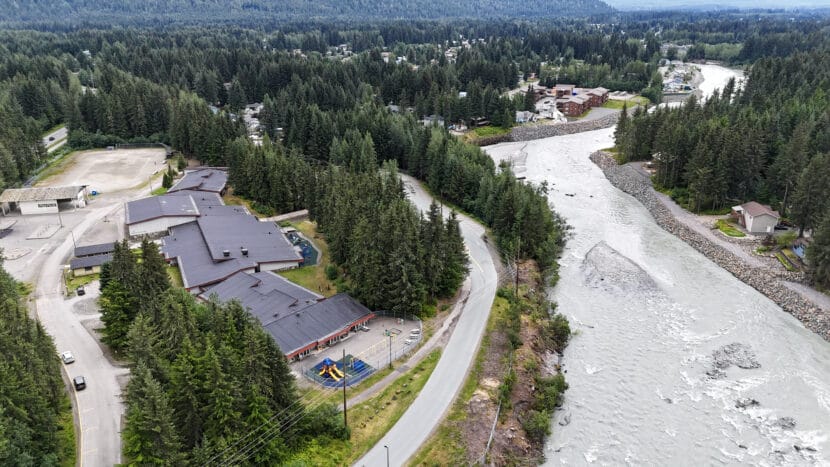
Mendenhall River Community School next to the Mendenhall River on Wednesday, July 30, 2025. (Photo by Clarise Larson/KTOO)

Update, 3:52 p.m. Tuesday:

The Juneau School District is canceling all extracurricular and school-sponsored events Tuesday and Wednesday. 

According to a district press release, this includes the first day of school for high school freshmen at Juneau-Douglas High School: Yadaa.at Kalé scheduled for tomorrow.

The district is also closing Kax̲dig̲oowu Héen Elementary School, Mendenhall River Community School and Thunder Mountain Middle School at 4 p.m. today until the City and Borough of Juneau issues an all clear. District administrators and staff are working in the buildings until the closure.

The district has not yet made a decision on closing schools on Thursday. It will make an announcement by Wednesday at noon. If any schools need to close, the district will close all campuses.

The district will continue to update families through automated calls, texts, emails, the Juneau Schools app and the district website.

Update, 10:45 a.m. Tuesday:

The Juneau School District will make a decision on closing schools by Wednesday at noon. Superintendent Frank Hauser said during a press conference Tuesday the district is requesting families update their contact information in PowerSchool to ensure they receive the most up-to-date information from the district.

Original story:

With school set to begin on Thursday, the Juneau School District announced Monday that it plans to close all schools this week if any campuses are impacted by glacial outburst flooding.

The glacial lake that releases water annually is full. That means the Mendenhall River could flood at any time this week, but it’s not clear exactly when that will happen.

Three schools in the Mendenhall Valley – Kax̲dig̲oowu Héen Elementary School, Mendenhall River Community School and Thunder Mountain Middle School – could experience flooding.

At a press conference Monday, Deputy City Manager Robert Barr said one of the reasons for closing all schools is because of district staff who may live in the flood zone.

“They have teachers, and they have staff that are in that flood inundation, that are going to be in that 17-foot impact area that we’ll be recommending an evacuation for,” he said. “From their point of view, [it’s] hard to operate the rest of the district when their faculty, when their staff, are potentially impacted.”

In an email to KTOO, Juneau School District Chief of Staff Kristin Bartlett wrote additional road congestion from school related traffic and road closures cutting off people returning home as other reasons for the plan.

In a press release, the district said it plans to announce any closures before the school day begins if possible. But it’s also prepared to evacuate schools as needed.

Students and staff will move to a safe location outside of the evacuation zone. Only guardians and emergency contacts listed in PowerSchool will be able to pick up students.

Students who take the bus and live in the evacuation zone may also be taken to a different location for pickup if they attend a school outside of the flood zone. Photo ID is required to pick up students. 

The district’s website has information on flood procedures. District leadership says families can receive updates through the Juneau Schools app. The district will also email updates to families through its Blackboard communications system.
Find the latest news on glacial outburst flooding and resources for how to prepare at ktoo.org/flood.

Summer school program prepares incoming Juneau middle schoolers

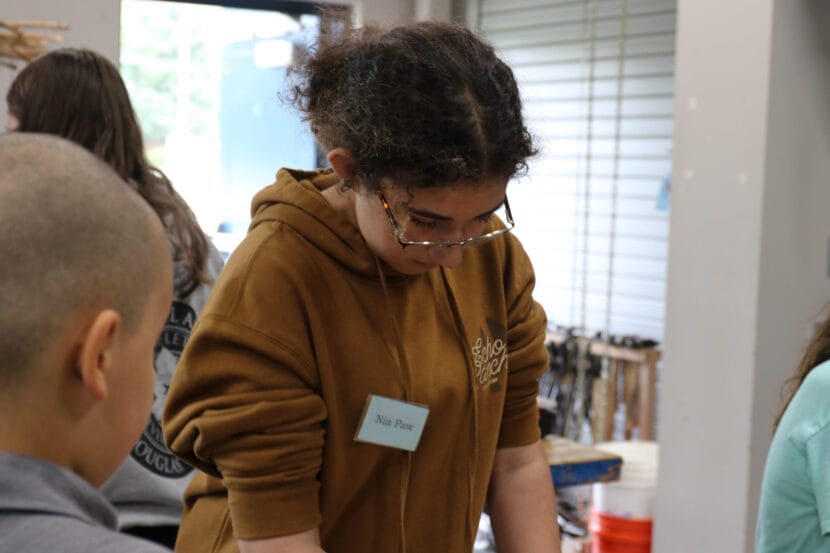
A student in a brown sweatshirt and glasses looks down in a classroom. Her sweatshirt has a nametag that says "Nia Paw."
Rising seventh grader Nia Paw dyes pieces of a leather wallet brown during a maker space class at Thunder Mountain Middle School on July 23, 2025. (Photo by Jamie Diep/KTOO)

Listen here:


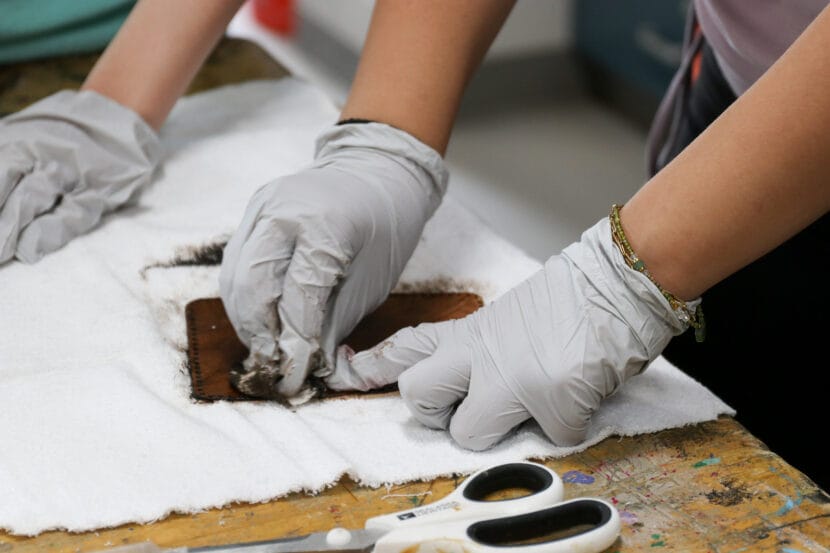
Students used hammers to stamp different shapes into pieces of leather in the last moments of a maker space class at Thunder Mountain Middle School. Shortly afterward, another class filed in and got to work. Student Nia Paw learned how to dye a leather wallet from her classmates. She put on latex gloves and poured out thick, dark dye to make the wallet brown.

“We have dye and, like, some sort of cloth, and we have to rub it in, in like, a circular motion,” she said.

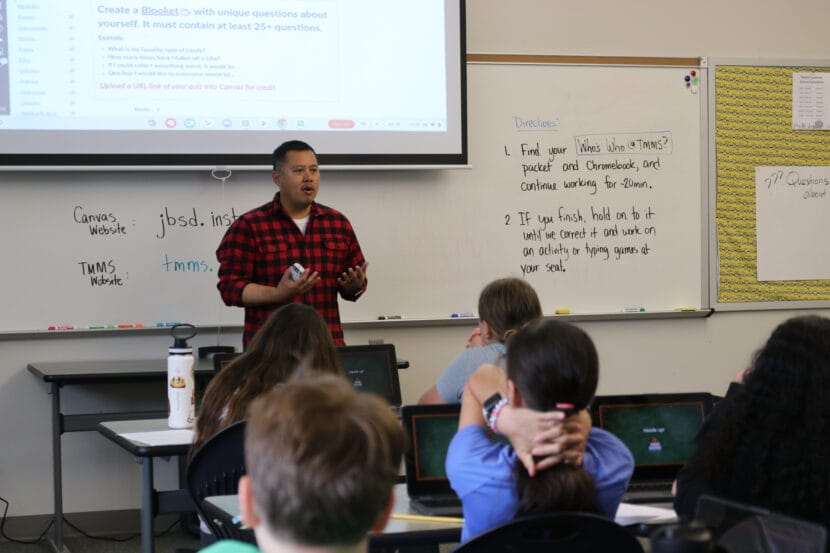
This isn’t a typical class – it’s part of the Juneau School District’s summer school program to get students ready for middle school.

Around 40 to 50 incoming seventh graders spent three weeks at Thunder Mountain Middle School in July as part of a transition program. Students from across the district navigated a larger building, juggled a class schedule and hit a major milestone – learning how to open lockers.

Paw, who went to Sayéik: Gastineau Community School in Douglas, said she liked meeting new people from outside of her school. But it wasn’t all fun and games.

“I think the only downside is the amount of stairs,” Paw said.

Gloved hands wipe dark brown liquid on a piece of leather on top of an off-white towel.
Rising seventh grader Nia Paw dyes a piece of leather brown during a maker space class at Thunder Mountain Middle School on July 23, 2025. (Photo by Jamie Diep/KTOO)

Working alongside her is Xander Thaler, who went to Sítʼ Eetí Shaanáx̱ – Glacier Valley Elementary School on the other side of Juneau. He said he feels ready.

“I’m excited I get to have the opportunity to finally go to middle school after waiting six years,” Thaler said.

He said summer school also introduced him to many other students from around the district.

“I like the socializing that I’ve done,” he said. “I feel like I’ve made new friends. I feel like I’ve met new people, and also I can get comfortable to the people I meet next year.”

His mom, Casey Locklear, said she was glad Thaler and his twin brother got to do the program, and wants them to pay that forward when the school year starts.

“If they saw somebody that did seem lost or they didn’t know where to go, what to do, to make sure to help them, so that we could expand the knowledge of the program itself, and help their friends,” Locklear said.

Lexi Razor is the principal of summer school this year. She spends the school year teaching math at Juneau-Douglas High School: Yadaa.at Kalé. Razor said students from all backgrounds do the program, and that it’s good to see them become more comfortable on the large campus.

Marques Dumaop teaches incoming Thunder Mountain Middle School students during Juneau School District’s summer school program in July, 2025. (Photo by Jamie Diep/KTOO)

“There’s a range of kids here,” she said. “There’s kids here that don’t typically like school or go to school, and so getting them here to kind of learn the environment is going to be helpful. And then we also have kids in the program that like school and are good at school, but they’re also building some confidence.”

These programs don’t just help students. Mae DelCastillo is a parent of an incoming seventh grader. She said the program puts her at ease as it prepares her daughter for middle school.

“As a mom, it really did give me so much comfort because she’s just now mentally prepared and just excited to start middle school,” she said.

Her daughter Lucena said she’s the only person from her group of friends at Auke Bay Elementary School to do the program. She said she’s excited to show her friends how things work when the school year begins.

“My friends are gonna be like, ‘I’m so scared,’ she said. “And I’m like, ‘You’re not gonna be scared, because I’m gonna be like, right there.’” 

Seventh graders do have another chance to familiarize themselves with the middle school. The district will offer a tour on Wednesday, Aug. 13 in the evening, one day before the official start of the school year.

Registration for now privately-owned RALLY after-school program off to a rocky start

A green metal play structure with two slides on a blue rubber flooring.
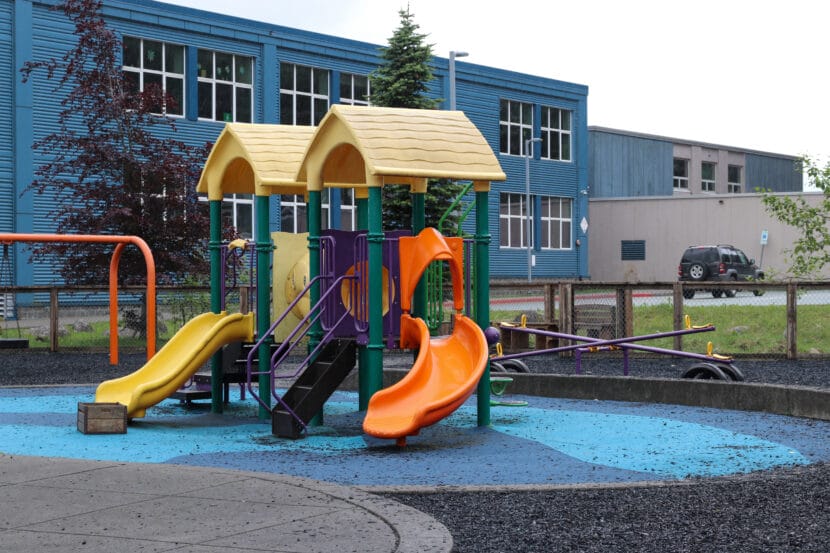
The Harborview Elementary School playground on July 9, 2025. (Photo by Jamie Diep/KTOO)

Registration for after-school child care in the Juneau School District opened last Friday, but the information the district provided to families did not line up with the actual application process. The district will cease to operate the Relationships and Leadership Learning for Youth program, known as RALLY. It will be operated by Auke Lake Preschool beginning in September.

The district announced that registration for RALLY would begin Aug. 1 on Auke Lake Preschool’s website. But enrollment information and registration links for RALLY weren’t available then and are still not active as of Monday afternoon.

Auke Lake Preschool’s co-owner Derik Swanson said in an email to KTOO that families should instead submit a preschool application that is available on its website with a note that it is for RALLY. He said to add a first and second choice for site preference to the application as well.

Lauren Sanzone has been sending her children to RALLY since 2022 and tried to register this week. She said it’s stressful but they want to continue using RALLY for afterschool care. She’s also working on a backup plan for child care.

“I am fortunate that I have a good paying job and I have the privilege of being able to pay for childcare, but I also don’t have confidence that I could even find an alternative at any price that would provide consistent afterschool care for my kids,” she said.

The district said RALLY will run at Auke Bay Elementary School, Harborview Elementary School and Sítʼ Eetí Shaanáx̱ – Glacier Valley Elementary School. The district said in a frequently asked questions page that Auke Lake Preschool will maintain the same monthly cost as the district.

The district-run summer child care program is scheduled to end this Friday, but the district will continue to provide transitional care for children enrolled in Auke Lake’s program until the end of the month. The district has not provided details on the transitional care.

The new RALLY program is expected to officially open Sept. 1.

Alaska lawmakers override Dunleavy’s education funding veto

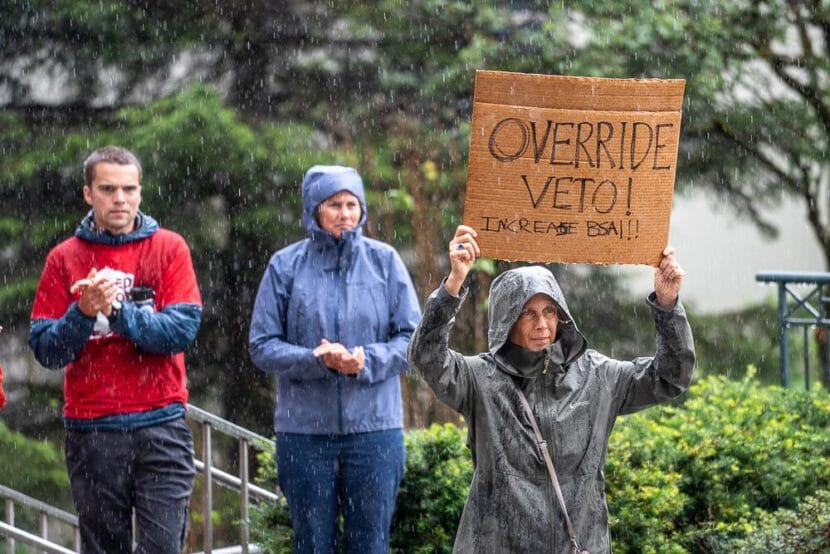
Suzanne Cohen holds a sign in the rain outside the Alaska Stae Capitol on Friday, Aug. 1 calling on lawmakers to override Gov. Mike Dunleavy's veto of more than $50 million in public school funding.
Suzanne Cohen holds a sign in the rain outside the Alaska State Capitol on Friday, Aug. 1 calling on lawmakers to override Gov. Mike Dunleavy’s veto of more than $50 million in public school funding.

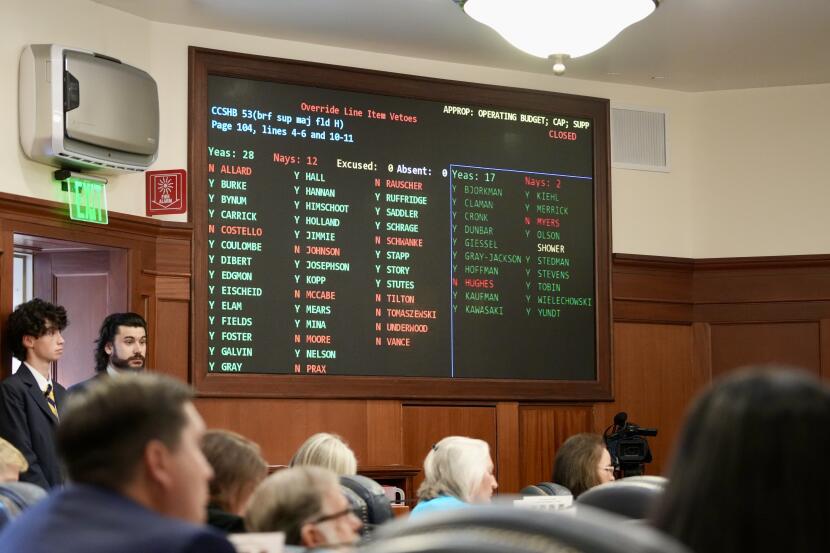
Alaska lawmakers on Saturday overrode Gov. Mike Dunleavy’s veto of some $51 million in state funding for public schools. The 45-14 vote means lawmakers successfully reversed Dunleavy’s decision to cut $200 of the per-student funding increase approved by lawmakers during the last legislative session.

The vote was the second successful veto override after lawmakers convened Saturday for a special session called by Dunleavy.

Alaska lawmakers vote on overriding Gov. Mike Dunleavy’s veto of $51 million in state education funding. (Eric Stone/Alaska Public Media)

Members of the Democrat-heavy bipartisan majorities in the House and Senate, who are typically at odds with the Republican governor, said they saw the special session as an effort to ensure the governor’s vetoes were not overridden. Dunleavy initially asked Republican lawmakers to avoid the Capitol to ensure his vetoes stood, his spokesperson said. But lawmakers overrode him nonetheless.

In May, 46 legislators voted to override Dunleavy’s veto of a bill boosting the so-called base student allocation, the per-student figure in the state’s education funding formula, by $700. The vote came after years of advocacy from teachers, students, administrators and community leaders who said the state’s education system was in crisis after nearly a decade of essentially flat long-term funding.

But after the Legislature adjourned for the year, Dunleavy trimmed the per-student increase from $700 to $500 for the upcoming school year in the state’s budget using his line-item veto power. That amounted to a year-over-year cut for schools, which last year received the equivalent of a $680-per-student boost in one-time funding. Educators and students on Friday gathered on the Capitol steps to call on lawmakers to reverse the veto.

“The state of Alaska is falling short of its constitutional responsibility to adequately fund public education,” Fairbanks Superintendent Luke Meinert said. “Instead, more and more of that burden is being shifted on the local taxpayers, stretching communities like Fairbanks beyond their limits, and the consequences are real.”

When he issued the call in early July, Dunleavy said he wanted lawmakers to consider education reforms to boost the state’s bottom-of-the-nation test scores and take up legislation that would create a state agriculture department.

In an emailed statement, Dunleavy on Friday again urged lawmakers to consider his proposals.

He introduced three bills for the special session on Saturday. One would expand tax credits for businesses that donate money or equipment to schools. Another would advance a pilot program in which the state would work with tribes to create so-called state-tribal compact schools. A third would create new retention bonuses for teachers, allow the state education department to bypass local school boards and directly create new charter schools, allow students to enroll in schools outside their district and create a new reading-focused after-school program.

Many of the proposals are ideas majority lawmakers have said they need more time to consider or have rejected in the prior two sessions, and legislative leaders said they did not plan to vote on the bills during the special session.

“No hearings on bills to improve Alaska’s dismal student test scores, no effort to lift the public school system from 51st in the nation, no tribal compacting to improve educational opportunities for our rural and Native students, and no apparent desire to prevent high school seniors from being unprepared because they don’t have the skills needed to compete for good jobs in the increasingly competitive 21st century economy,” Dunleavy said. “That is a shame.”

Lawmakers plan to evaluate some elements of what Dunleavy proposed, including a system that would allow students to enroll in out-of-district schools, with a task force that will begin meeting later this month.

The governor’s bill expanding tribal compact schools remains pending. Dunleavy introduced a new version for the special session on Saturday. A day earlier, representatives from five tribes that the bill would allow to create compact schools called on lawmakers to act on the proposal during the special session.

“This is really a pilot project,” said Knik Tribe Education Director Carl Chamblee. “This is something where we’re ready to move forward. It shouldn’t take that much time for a pilot project to be reviewed, discussed and voted on by a body of legislators.”

But Senate President Gary Stevens, a Kodiak Republican, said he had concerns about the bill. The bill would have the state work directly with tribes to create new schools, rather than placing them within existing school districts.

“It’s a very important issue, but we want to make sure that if we do tribal schools, they’re done properly, and they’re done right, and they’re done through the local school districts, not through the Department of Education,” he said.

The head of the Coalition for Education Equity, Caroline Storm, said Friday her advocacy group was readying a lawsuit that would seek to force the state to adequately fund schools.

The Anchorage Chamber of Commerce, a business group, sent a letter to lawmakers urging them to override Dunleavy’s veto.

“Continued constraints on the Anchorage School District will degrade the long-term economic health of Anchorage. As the largest community and economic hub of Alaska, these impacts have detrimental ripple effects statewide,” said the group’s president and CEO, Kathleen McArdle. “We already see the impacts in continued outmigration, and Alaska won’t get the chance to foster transformative solutions without the trust of families.”

Correction: A previous version of the story misstated the vote total. It was 45-14, with one lawmaker absent.

Juneau School District, teachers’ union turn to mediation after negotiations stall

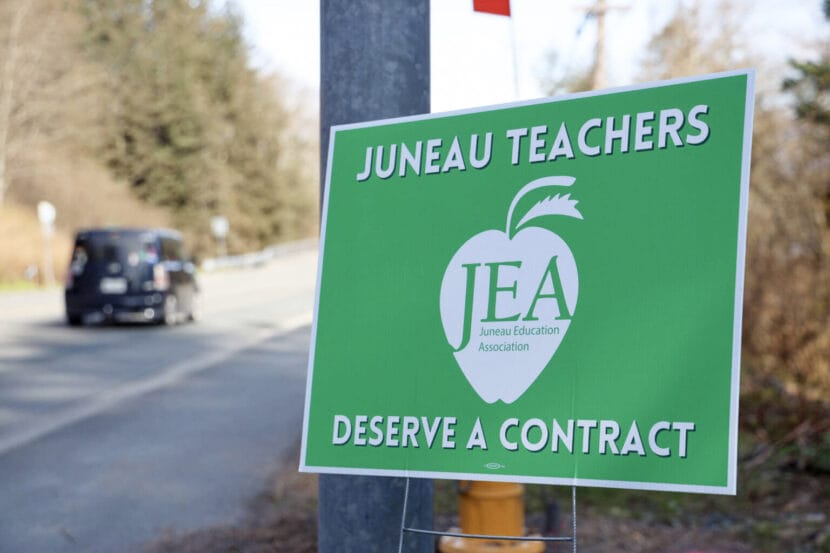
A green and white lawn sign with the Juneau Education Association logo and text saying, "Juneau teachers deserve a contract" as a black car drives in the background.
A car drives past a Juneau Education Association sign posted next to the North Douglas Highway in May 2023. (Photo by Clarise Larson/KTOO)

Contract negotiations between the Juneau School District and the Juneau Education Association stalled Thursday when both sides declared an impasse. This comes as the district and the teacher’s union enter their sixth month of negotiations.

In a joint press release, the district and union cited state education funding uncertainty as one of the obstacles in negotiations.

Gov. Mike Dunleavy vetoed more than $50 million in state education funding this year. The Alaska Legislature is scheduled to meet in a special session this Saturday to vote on overriding the veto. 

The district is also waiting to see how a proposed state regulation change for municipal funding contributions and a federal disparity test appeal will impact its budget.

District and union representatives could not be reached Monday for comment.

Negotiations began in February this year. The district’s initial proposal included a 2.5% salary increase for the contract’s first year and a 1.5% increase in the second year on top of raises for more work experience and training.

The district is also proposing an additional 1% retirement plan match and flat funding for health insurance contributions. Teachers have several options for health insurance plans, including a free employer-compensated option.

JEA’s proposal includes a 10% raise in salaries for both years and for the district to cover 85% of health insurance premiums. The district estimates JEA’s proposal would cost nearly $28 million more than its version.

The district and union will now enter mediation. Both parties also declared an impasse during the previous bargaining cycle in 2022, which lasted more than a year.

School leaders in Alaska express relief as Trump administration releases frozen funds

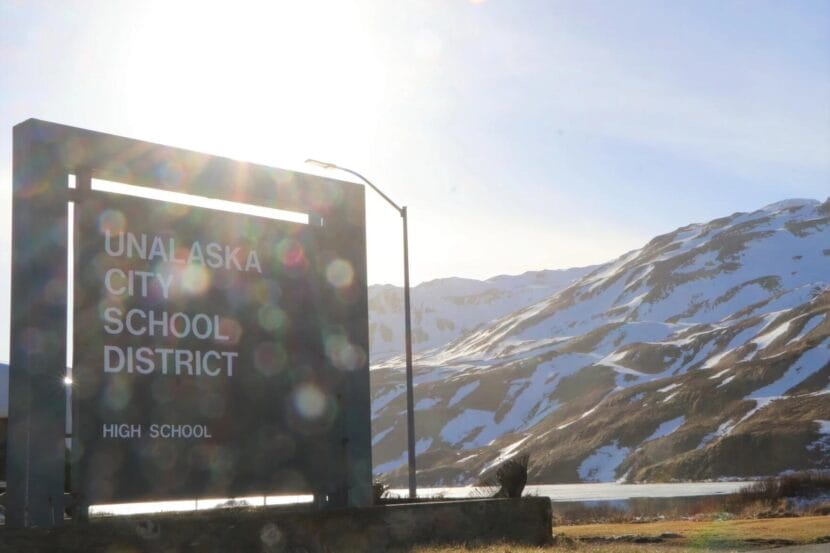
an Unalaska City School District sign
The Unalaska City School District sign. (Maggie Nelson/KUCB)

The Trump administration will release millions in federal education funding for Alaska that had been frozen since June 30. Alaska schools will now receive over $46 million that they included in their budgets for the upcoming school year. The money supports programs for migrant education, professional development for teachers, adult English learner services, as well as before-and-after-school programs.

Kimberly Hanisch is the Unalaska City School District Superintendent. Earlier this month, she was preparing to cut staff after learning that over half of their funding from the federal programs was frozen.

“Without those programs, it is just impossible to meet all students’ needs,” Hanisch said. “So, much relief for our students and for our staff to know that we have those opportunities back.”

Districts learned on June 30 that the money would not be released, just a day before it was to be sent out to states. About 60% of Unalaska students qualify as English Language Learners. Hanisch is glad the funds will now be available, but said the process has been chaotic.

“The quickness of it just seems to be part of the chaos that seems to be embedded in everything related to education funding right now,” Hanisch said. “It’s good that they unfroze it, but it’s just unsettling that we’re never really sure what’s going to happen next.”

Sen. Lisa Murkowski signed onto a letter with nine other U.S. senators asking Office of Management and Budget Director Russell Vought to release the $6.8 billion in federal money for schools and adult learning programs.

In a Friday press release, Murkowski called the funding thaw a win.

“Local communities have the best understanding of the unique needs of their students and how best to serve them,” Murkowski wrote. “But the anxiety, disruption, and extra work to figure out how to serve students without this funding should never have been necessary.”

A coalition of schools and advocacy groups filed a lawsuit over the frozen money earlier this week. The Anchorage School District — one of three Alaska districts named in the suit — said they had to lay off five employees due to the federal and state funding cuts to their already-approved budget for the upcoming school year.

Districts are still dealing with the impacts of Gov. Mike Dunleavy’s line-item veto of state formula funding. Legislators are set to convene a special legislative session Aug. 2 to discuss education funding and reforms. They will have five days once they begin to vote on an override of Dunleavy’s vetoes, but Dunleavy has asked several lawmakers to skip the first part of the session.

Site notifications
Update notification options
Subscribe to notifications