Local Government

Sica named Alaska’s Municipal Clerk of the Year

Juneau City Clerk Laurie Sica accepts her Alaska Municipal Clerk of the Year award, surrounded by CBJ officials. (Photo courtesy Jesse Kiehl)

Juneau City Clerk Laurie Sica has been named the Municipal Clerk of the Year by the Alaska Association of Municipal Clerks.

The annual award is given for outstanding contributions to the municipal clerk profession. It’s given for professionalism and growth in the job, leadership, community involvement, and elections.

The Alaska Municipal League and Association of Municipal clerks are meeting this week in Fairbanks. In a comment on Facebook, City Attorney John Hartle said “When Laurie finished her speech, there wasn’t a dry eye in the house!”

Eaglecrest master plan underway

Jubilant beginning skiers, 2011
Developing hiking and biking trails and summer tourist attractions are very important to the future of Eaglecrest Ski Area, according to a random telephone survey of Juneau residents.

The survey is part of the long-range master plan being prepared to guide area development over the next 20 years.

A study of the Eaglecrest market, the survey, and examples of successful summer activities at other ski areas were presented last night (Wednesday) at a public meeting on the master plan.

Jim Calvin of Juneau research firm McDowell Group is leading the work. He said the single most important component of the master plan study is community input.

“The market assessment is important, understanding of what goes on in ski areas across the country is important, the economics and financial feasibility are important, but first and foremost we have to know what is acceptable,” Calvin said. “What kind of future development is consistent with what current users and the community overall really value at Eaglecrest?”

Calvin said the telephone survey results are statistically representative of Juneau as a whole – both ski area users and non-users. But when he analyzed results by those groups, they were quite different. While 50 percent of non-users wanted summer activities, only 32 percent of skiers and snowboarders viewed them important.

Tapping into Juneau’s hundreds of thousands of summer cruise ship visitors may be a way to generate additional revenue for the ski area, but Calvin said it isn’t easy to break into that market.

“It’s not just build it and they will come. The main cruise lines each offer more than 40 different opportunities to see whales, see glaciers, flightseeting, you name it, so there’s a lot to do and there’s really stiff competition for the visitor dollar and visitor time,” he said. He says most people come to Juneau to experience Alaska, such as whales and glaciers. They purchase their tours in four-hour blocks and there’s little time to visit a ski area within the confines of the already limited day in town.

Calvin was careful to note the city-owned ski area is not planning to compete with private-sector operators.

“With respect to the master plan, it’s identifying those kinds of activities that might be compatible with community values,” he said. “Then when a private-sector operator comes to Eaglecrest management or board and says ‘I’d like to do X,’ they will have the plan, the documentation, the measure of community attitude to know whether that’s compatible with what we all think is the right way to manage Eaglecrest,” he explained.

McDowell Group is working with SE Group, an international ski area planning firm. Resort Planning Director Claire Humber has helped many areas build master plans, considered “working” documents.

“It’s not ‘here’s the answer, do it.’ A master plan should never be that,” Humber said. “A master plan is a process as much as it is a document. This is a way of evaluation as you move into the future.”

An online survey asking what types of development Juneau residents would like to see at Eaglecrest can be found at ski.juneau.com until the end of the month. Public comments also can be sent to facilitator Jan Caulfield at janc@gci.net.

It will be several months before the master plan is complete. A draft is expected in February, when another public meeting will be held.

CBJ Assembly finalizes annual goals and priorities

The Juneau Assembly has set its top ten goals and priorities for the next year.

The list includes gaining support for a new State Library Archives and Museum building in the Capital City. The state recently broke ground on the 124.5-million dollar project in the Willoughby District, though it’s not yet fully funded. Assemblywoman Karen Crane – a former state library director – says it’s important to keep pushing for the so-called SLAM building, which could spark public and private investment in Juneau.

“There now looks like there might be some support for it within the administration,” Crane says. “And if it doesn’t get funded within the next year or two, the project is not going to go forward.”

Deputy Mayor David Stone pushed for a financial transition plan to help the city adjust to an expected decline in state and federal assistance.

“I think we have a responsibility to future assemblies, as well as our citizens to have a good financial plan for how we’re going to weather this storm,” says Stone.

Perhaps the most controversial item on the list is a review of whether or not to promote development of the AJ Mine. Because the mine is so divisive, Crane says it’s important to decide how the matter will be resolved, and when.

“There’s a significant number of people in the community who are very nervous about this, and I think it would be helpful if we could lay out for them in some more detail how the process is going to go,” Crane says. “And for ourselves: What are going to be the issues that make this project either a project that moves forward or that we decide is not moving forward?”

The assembly goals list is finalized annually after the fall municipal election. This year’s version was narrowed down from about 60 goals discussed at an assembly retreat last month.

CBJ Assembly Top 10 Goals for 2011

• Support new state library, archives and museum (SLAM)
• Find ways to reach out not only to our neighboring Southeast communities, but all Alaska communities to enhance Juneau as the Capital City and an important regional economic and transportation hub
• Actively promote Juneau as a World Class Climate Research center
• Develop a CBJ financial transition plan for the potential future decline of state and federal assistance
• Continue to support fisheries development in Juneau through infrastructure development
• Complete review of the potential development of the AJ Mine for initial go/no go decision
• Successfully recruit and hire a new city manager
• Ensure that Juneau has a functioning local solid waste disposal option into the future
• Implement a long term solution for Juneau’s sewage solids
• Identify a route and begin permitting the extension of North Douglas Highway

Eaglecrest master plan public meeting

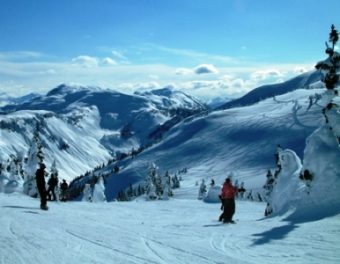
Lovely Eaglecrest Day, 2011
How will Eaglecrest look 20 years from now? Will the city-owned ski area be bigger? Will there be cabins and condominiums, restaurants and bars?

Will summer cruise ship tourists put it on their agenda during their few hours in port?

A host of “what if’s” are under consideration in a long-range master plan being prepared to guide area development over the next 20 years.

Jim Calvin of Juneau’s McDowell Group is heading up the research. He says the master plan will look at the opportunities now available to Eaglecrest that would get more people enjoying the mountain.

“”It also will develop a set of criteria the board can use in 5, 10, or 15 years to evaluate proposals in light of what the community considers to be compatible uses of Eaglecrest that are consistent with how the community values Eaglecrest today,” Calvin says.

The study has been underway since August, beginning with a random telephone survey of 450 Juneau households and an assessment of the Juneau market, inclulding demographics, Calvin says.

“What are the demographics in terms of age and income? And what do other analysts and what do we see in terms of future population growth?”

In the last three years, Eaglecrest has added one new lift and replaced the platter pull with a chairlift. A gravel road winds to the top of the mountain, a major improvement for the summer hiking and biking crowd. Calvin says much of the master plan work is studying the potential summer visitor market.

“How non-residents spend their time when they’re here and how much they spend for the various excursions they enjoy while they’re in Juneau,” Calvin explains.

McDowell Group is working with the international ski area planning firm SE Group. The organization has worked with ski areas all over the country and has seen what works and doesn’t work, especially summertime development.

The Eaglecrest study team will present what they’ve learned so far at a public meeting on Wednesday, from 7 to 9:30 p.m., at Centennial Hall.

Calvin says people will want to hear SE Group’s presentation on summer and winter developments that have been successful at other ski areas. 

SE Group also is putting together displays on potential activities to expand resident and visitor use at Eaglecrest, such as new hiking and mountain biking trails.

Jan Caulfield is facilitating tomorrow’s public meeting, the first of two on the master plan.

“We’re really hoping the evening will get people thinking and coming in with written comments at a later date,” Caulfield says. “We’re asking people to submit comments by the end of November that we can work with during the planning process.”

The information gleaned so far by the study group will be presented tomorrow (Wednesday) at 7 p.m., followed by questions and the displays. Another public meeting will be held in February.

Caulfield says Juneau residents also should take an online survey asking what types of development Juneau residents would like to see at their mountain. It can be found at http://skijuneau.com.

CBJ Assembly approves annexation petition

The City and Borough of Juneau will file an annexation petition with the state’s Local Boundary Commission tomorrow (Wednesday), seeking to incorporate roughly 1,952 square miles of unorganized land south of the current CBJ boundary.

The assembly voted 7 to 1 last night (Monday) in favor of an ordinance authorizing the petition. The dissenting vote was cast by new member Jesse Kiehl, who questioned the timing of the move.

Juneau is filing its annexation petition in response to the City of Petersburg, which wants to form a borough that includes the area in question. CBJ officials say the land most appropriately belongs with Juneau, pointing to model borough boundaries developed by the state more than 20 years ago that identified it for annexation to the Capital City.

During discussion on the matter, Kiehl asked City Attorney John Hartle why the sudden rush to annex it now.

“I suppose it was the manager’s and the mayor’s political judgment that if Juneau didn’t do something, then the Local Boundary Commission would near by default place those lands into the proposed Petersburg borough,” said Hartle.

Kiehl also questioned City Manager Rod Swope about what affect annexing the largely undeveloped and unpopulated area would have on Juneau’s budget. Swope said right now it would be negligible.

“At this point in time costs are minimal to virtually nonexistent,” Swope said. “And until which time there is actually any kind of significant development in that area, there would not be costs to us.”

Kiehl said he voted no on the ordinance because he didn’t think Petersburg’s move to incorporate the land was sufficient reason to trigger annexation by Juneau.

“If we had a very strong interest in these lands, we would have done better to be the first to file for them before the boundary commission, rather than to do so in response to one of our neighbors,” said Kiehl.

Last week Juneau filed a responsive brief to Petersburg’s petition to form a borough with the Local Boundary Commission. The brief doesn’t argue against the proposed borough, but says the disputed area has more administrative ties to Juneau than Petersburg.

Both communities will be able to make more arguments before that matter is settled, both in writing and at hearings before the boundary commission.

Assemblyman Randy Wanamaker was recused from last night’s discussion and vote on the annexation petition due to a conflict of interest.

Wanamaker is on the board of directors for Juneau Native Corporation Goldbelt. The company owns 30-thousand acres at Hobart Bay, in the area being contested by Juneau and Petersburg.

Goldbelt Vice President Derek Duncan reiterated the company’s desire to have the land remain unincorporated for now. But he said it could make its borough preference known soon.

“We will take into consideration how a borough government will affect the development of our economic opportunities at Hobart Bay. We will also continue to weigh what borough option is best politically for Goldbelt in the future,” said Duncan.

Sealaska, the regional Native Corporation for Southeast Alaska, owns about 20-thousand acres of subsurface mining rights in the same area as Goldbelt’s Hobart Bay land. But Sealaska officials say they’ll follow Goldbelt’s lead on expressing a borough preference.

The entire contested area consists of everything from the southern CBJ boundary, as far south as Cape Fanshaw and east to the Canadian border.

Assembly approves expedited manager search

The Juneau Assembly will undertake an expedited search for a new city manager to replace the retiring Rod Swope.

At its Committee of the Whole meeting last night (Monday), the assembly decided to only advertise the position in Alaska, and set the deadline for applications for December 1st – one month from today. The assembly will then take two weeks to narrow the list of applicants down to a top five. Interviews will take place in January, with the goal of offering the job to the chosen candidate on January 30th.

Mayor Bruce Botelho said the timeline should be manageable.

“I don’t think we’re going to be overwhelmed if we keep to our decision to recruit only within the state,” Botelho said.

The assembly also decided on a salary range of 135-thousand to 150-thousand dollars. That’s at the low end of what municipal managers typically make in Alaska.

Swope first retired almost three years ago. But when the initial search fizzled, the assembly asked him to come back on a two-year contract, which was due to end yesterday. Last month, Swope agreed to stay on through March 31st, when he says he’ll retire for good.

Deputy Manager Kim Kiefer has expressed interest in the position. She was interim manager during Swope’s sabbatical.

City Manager and City Attorney are the only positions hired by the assembly.

Site notifications
Update notification options
Subscribe to notifications