Mental Health

No Shame, No Euphemism: Suicide Isn’t A Natural Cause Of Death

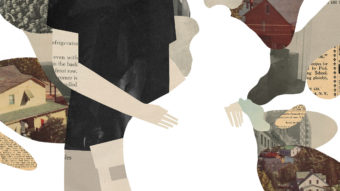
Keith Negley for NPR

Beware the mention of natural causes, as in my mother’s obituary:

“Norita Wyse Berman, a writer, stockbroker and artist … died at home Friday of natural causes. She was 60.”

Sixty-year-olds don’t die of natural causes anymore. The truth was too hard to admit.

Fifteen years on, I’m ashamed of my family’s shame. Those attending her funeral and paying shiva calls knew the truth anyway. People talk.

One of the many ironies of dying young is that my mother was a true believer in modern medicine. She had a cabinet full of elixirs and potions for which she paid top dollar. For most of her life she never paid retail for anything, so the medicine cabinet was testament to her insecurity about fleeting beauty and a quest for longevity. Others around her might succumb to aging, but my mom had confidence that her vitamins and nutraceuticals could hold back Father Time.

Her anxieties predated the Internet and the rise of Dr. Oz. I know she’d have become a big fan of the telegenic surgeon, and would have asked why I couldn’t have a practice more like his. After all, she told me more than once, “Making money is not a sin.”

She divorced my father when I was 12. She wanted a career, which was an idea my father did not support. Eventually she became a stockbroker, and in spite of limited financial acumen, she became very successful. She had natural sales ability and made brilliant use of her greatest talent — networking. The fact that the 1980s and ’90s witnessed two of the greatest bull markets in Wall Street history certainly helped.

The Schumann family in 1972, including the author, age 3 1/2, center. Courtesy of John Henning Schumann
The Schumann family in 1972, including the author, age 3 1/2, center.
Courtesy of John Henning Schumann

My mother remarried soon after my parents’ divorce. But 15 years into her career, my stepfather convinced her to retire because of his own declining health.

They moved to Florida, accelerating their senescence by living in a gated golf community. Finances were no issue, but my mother’s mental state soon started to unravel.

My mother hated golf. She tried other pursuits like painting and travel. But retirement simply wasn’t for her. My sense was she’d lost her self-worth when she no longer felt like a stock market titan.

One day my stepfather called to let me know that he found my mother lying on the floor of the garage with the car running. It was time to get help.

Thus began my family’s odyssey in the mental health care system.

Over the next five years, my mother would bounce between despondent lows and powerful highs. Diagnoses abounded, depending on where in the cycle she was. One doctor labeled her bipolar, another “majorly depressed with psychotic features.”

Medicines were started, adjusted and then new ones were added. Her doctors tried mightily to find the right cocktail of drugs so she could stay in balance.

Eventually most of her improvement came from lithium. But she hated taking it because it made her urinate frequently and because she saw it as a relic. If she had to be on medication, why couldn’t it be one of these newer-fangled drugs with a more impressive name and less stigma?

My mom was the type of patient who thinks there’s a pill for every ailment. Antibiotics for colds. Weight-loss pills. Sleep aids. The silver-bullet theory of medicine. She even underwent shock therapy as a potential quick fix. But because her psych meds earned her the label “crazy,” she sought any opportunity to shed them.

Twice this behavior led her to other suicide attempts. Her doctors called them gestures. We wanted to believe that she didn’t have real intent.

My mother’s behavior taught me the first practical thing I learned in medical school: Don’t stop taking medication for a chronic condition without first telling someone. Like hospitalized patients that “cheek” their pills, my Mom lied to her doctors about taking her medications because she didn’t want to be nagged and didn’t want to be dependent on them.

But without her pills her mental health was far too fragile.

We were stuck in twin binds. My mother loved medicines and their potential for miracles, but she always sought to ditch them the moment she felt better.

As my mother’s mental health struggles surfaced, I was on my way to becoming a doctor. But I was powerless to help someone closest to me.

It’s not that my mother didn’t believe in my healing powers. On my very first day of med school I called home to debrief. “I have a rash I need you to take a look at,” she interjected.

Did she really think after Day 1 I knew anything about doctoring?

Looking back, I can now see that my mom was giving me my earliest lesson in the culture of expectations. There’s a reason medical ethicists warn against treating family and friends. Corners get cut. Judgment becomes impaired. Honesty becomes scarce.

Throughout her illness I believed that I was there for my mother. In our talks I was able to cut through the bull she fed everyone else. My intention was to let her know that my newly acquired medical knowledge would always be available to her. I wanted her to trust me.

But the more I pressed, the farther she receded. She put up a brave front, so convincing that she bluffed her way past my fledgling diagnostic skills. In her last rise out of the depths, we all hoped against reality that she was on the road to a permanent recovery.

Then she hung herself on the day after Thanksgiving.

It’s painful to admit even now. But I no longer feel shame. Sadness, yes. Even anger still, though that ebbs.

I also harbor the hope that others can learn from her illness and death. If suicide remains in the shadows of stigma and superstition, it will always plague us.

Suicide, after all, is not a natural cause of death.

John Henning Schumann is a writer and doctor in Tulsa, Okla. He serves as interim president of the University of Oklahoma, Tulsa. He also hosts Public Radio Tulsa’s Medical Matters. He’s on Twitter: @GlassHospital

Copyright 2015 KWGS-FM. To see more, visit http://www.kwgs.org.
Read Original Article – Published AUGUST 01, 2015 7:03 AM ET

Even Mild Mental Health Problems In Children Can Cause Trouble Later

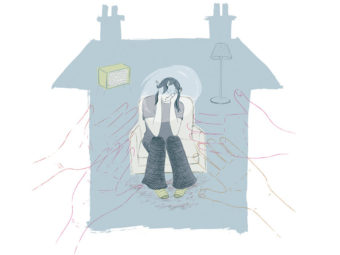
Illustration Works/Corbis

It’s not easy for a child who has had mental health issues to make a successful transition into adulthood. But even children who have symptoms that are mild enough that they wouldn’t be diagnosed are more likely to struggle with life as adults, a study finds.

Children and teenagers with a psychiatric disorder had six times higher odds of having at health, legal, financial and social problems as adults, according to a study published Wednesday in JAMA Psychiatry. Those with milder symptoms were three times more likely to have problems as adults.

We already know from previous studies that most adults with mental health issues had a previous psychiatric disorder during childhood – it doesn’t have to be the same exact condition. But this study shows mental health problems that occurred during childhood can make it more likely that someone will struggle as an adult, making it more likely that they won’t graduate from high school or commit a felony, for instance.

The data comes from a population study that followed children starting at ages 9, 11 or 13 in 11 mostly rural counties in North Carolina from 1993 to 2010. Participants were interviewed every year until they turned 16, then again at 19, 21 and 25.

They were tested for symptoms of common childhood psychiatric disorders such as anxiety disorder, social phobia, depression and ADHD. Those affect 1 percent of the population at any given time.

The researchers wanted to know if a common mental illness is distressing and impairing to a child or teenager at the moment, does it continue to impact after they go into adulthood, Copeland tells Shots.

“Most common chronic conditions happen in middle adulthood, with the exception of mental illness,” says William Copeland, lead author of the study and an associate professor of psychiatry at Duke University School of Medicine.

But for mental illness, symptoms usually first appear in childhood, and have the biggest impact in terms of financial cost, mortality and other indicators – a term known as disease burden – on youths from 10 to 24 globally.

But there are also a lot of people who report mental health problems that are significantly impairing their lives but don’t count as having a psychiatric disorder under standardized criteria for diagnosis, according to Copeland. This is no small group – as many as half of the patients who go to a doctor for psychiatric disorders do not meet the established criteria, he says.

This is no minor problem, says Copeland, “the vast majority of them aren’t getting help at all because they don’t meet threshold, but [the impact] is still significant enough that they need help down the road,” Copeland says.

Of course, a bad environment growing up doesn’t help, so Copeland and team also took into account factors such as an unstable, dysfunctional or poor family background and retested the data. The results still hold true.

It’s important to understand that the data from the study is not necessarily people who think they have mental disorders, but a random sample who were tested as part of the study and shown to have these symptoms, says Daniel Klein, professor of clinical psychology at Stony Brook University. In some cases the symptoms are very mild, and people don’t see themselves as having a mental disorder.

And that’s a problem.

“As a society we’re prone to think of childhood as a relatively carefree life, obviously with exceptions, and most of the mental disorders you think about are in adults, except ADHD and autism, but the whole gambit are there in childhood,” says Klein, who was not part of the study.

“People are coming around to the notion that these [mental health] problems are significant and can have long term affects,” says Copeland. “Kids continue to have problems in adulthood even if it’s not psychiatric problems.”

It’s important that we make treatment and prevention programs accessible in childhood, Klein say. On that, “we’re doing a terrible job.”

An editorial in the same issue of JAMA Psychiatry echoed that thought. Ben Lahey, a professor of epidemiology at the University of Chicago, believes that we as a society don’t invest enough in mental health treatment, especially when it comes to children and adolescents, to reduce the burden later in adulthood.

Lahey also points out an important missing part of the puzzle: “The paper, and several papers before it, all they establish is childhood disorders predict adult disorders, they can’t tell us why. Correlation does not imply causation.”

Copeland agrees, saying, “We’re talking about odds and relative risks.” Copeland says of the study, But he also adds, “We want to do things that reduce the rate of mental health problems in general.”

Copyright 2015 NPR. To see more, visit http://www.npr.org/.
Read Original Article – Published JULY 15, 2015 1:24 PM ET
Site notifications
Update notification options
Subscribe to notifications