Sexual Abuse & Domestic Violence

In third week of trial against former Juneau chiropractor, judge declares two charges a mistrial

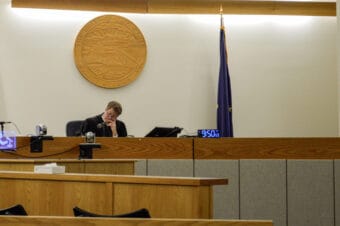
Judge Larry Woolford in the Dimond Courthouse in Juneau on August 14, 2025. (Photo by Yvonne Krumrey/KTOO)

Friday marked the end of the third week of a sexual assault trial against former SEARHC chiropractor Jeffrey Fultz, who stands accused of abusing patients in Juneau between 2014 and 2020. 

Presiding Judge Larry Woolford declared a mistrial Wednesday for two of the 16 sexual assault and harassment charges. Fultz will continue to stand trial for the remaining 14 charges.

The mistrial happened because a witness testified that she had experienced misconduct from Fultz beyond what she had previously testified to on record. The witness is an alleged victim of sexual assault and has not been publicly identified outside of the courtroom. KTOO is not identifying her in this story.

Woolford ruled that state prosecutors withheld information from the court and Fultz’s attorneys, which then came up in the witness’s testimony in front of jurors.

“After an objection by the defense, it became clear that the prosecution knew of [the witness’s] allegation at least as early as the day before her testimony in court but intentionally withheld the allegation from the defense,” Woolford’s order states.

The jurors have been told to disregard that witness testimony.

Fultz’s defense attorney James Christie said the prosecutors intentionally withheld the witness’s disclosure. 

“We are entitled to have all of the evidence that is in the state’s possession ahead of time,” he said. “There’s no question about that.” 

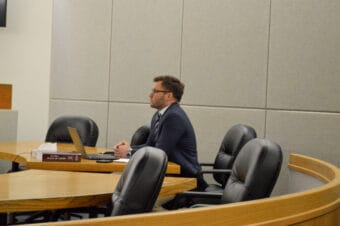
Former Juneau chiropractor Jeffrey Fultz sits during his sexual assault trial in Juneau on Wednesday, July 30, 2025. (Photo by Yvonne Krumrey/KTOO)

Prosecutor Krystyn Tendy said she thinks Woolford’s ruling is assuming that the prosecutors had bad intentions. 

“The state disagrees with the characterization of the bad faith analysis that the judge conducted,” she said.

The charges can be retried if state prosecutors choose to pursue them again. Tendy said they are still deciding how to move forward with these charges. 

This week, the court also heard from two people who have been mentioned a lot in the trial so far — two medical providers that worked with Jeffrey Fultz in SEARHC’s physical therapy department at the time of the alleged crimes.

The women accusing Fultz of assault repeatedly contrasted Fultz’s treatment — the amount of touching, the places he touched, and the way he encouraged them to take their clothes off — with the treatment they received from these two providers. 

Emily Haskell is a physical therapist who worked in SEARHC’s physical therapy department. The prosecution asked how she approaches patients with a history of sexual trauma — something a few of the alleged victims told Fultz they experienced.

“I think especially if someone has had experienced sexual or interpersonal trauma, I think I was a lot more cautious with if I was going to touch them,” Haskell said. “Probably a lot more cautious with asking them to, you know, pull their shirt down to look at their shoulder, or pull their pant leg up, or something like that.”

Haskell said she doesn’t give massages to patients in the course of her physical therapy treatments.

“Because it really is not within the scope of practice of physical therapy. I’m trying to find, like, dysfunctional or painful spots in muscles, sometimes a whole muscle itself,” she said. “But I think of massage therapy as like a more broad and less direct approach to managing muscle tension.”

A massage therapist with SEARHC, Amanda James, also worked with some of Fultz’s patients. 

She said she would work with patients on their comfortability level with covering their bodies.

“If you’re not comfortable taking off certain clothing, or any, that’s okay,” James said she told patients. “I can work over the sheets.”

James said she wouldn’t ask a patient to disrobe fully to treat upper body issues. She said she always does work on the glute muscles over sheets and as a rule, doesn’t work on muscles in the groin area. 

Fultz’s defense asked James if any of the alleged victims she treated complained to her about their treatment with Fultz. She testified that they did not.

The trial was scheduled through Friday, but it’s continuing into another week. The state has called about two dozen witnesses — each alleged victim, partners of complainants, medical experts, former SEARHC employees and one Juneau police detective. The state rested its case Friday. 

The defense began calling its witnesses Friday. The trial is expected to wrap up at the end of next week.

More women testify in trial against former Juneau chiropractor

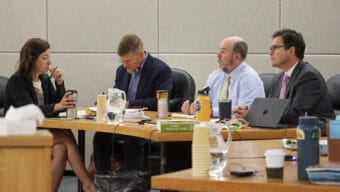
Former Juneau Chiropractor Jeffrey Fultz and his defense team at the Dimond Courthouse in Juneau on Thursday, July 31, 2025. (Photo by Yvonne Krumrey/KTOO)

This was the second week of testimony in the trial against Jeffrey Fultz, a former Juneau chiropractor who is accused of assaulting more than a dozen women under the guise of medical care. 

This week, the jurors heard from more complainants — alleged victims. Thirteen women have accused former Juneau chiropractor Jeffrey Fultz of touching them inappropriately and without their consent while they sought treatment for pain and injuries. As of Thursday afternoon, we heard from most of them. 

They testified that they felt discomfort during their appointments. Some said their experiences with Fultz caused them to avoid medical care later. 

Rebecca Parkey testified on Friday. She worked at Southeast Alaska Regional Health Consortium and saw Fultz for treatment of recurring migraines. She said she was uncomfortable with the way he touched her, but she assumed he must have been acting within the bounds of medical care. She kept going back to treat her pain.

“Every time I walked down the hill, I kept questioning myself, like, ‘what are you doing?’” Parkey said. “‘Why are you going back?’ And then I would argue with myself, like, stop being crazy.”

Defense attorney James Christie asked Parkey to compare her care with Fultz to that of other chiropractors and massage therapists she’s seen, including when she lived in Missouri. 

“And the chiropractor in Kansas City, who you really liked, they didn’t do massage therapy? Well, your chiropractor, I mean?” Christie asked.

“No, because he wasn’t a massage therapist. And technically, neither was Jeff,” Parkey said.

Tori Talley, another woman who testified, was in her early 20s when she was treated by Fultz. She said he touched her in sensitive places, making her very uncomfortable. But like Parkey, she doubted herself. 

Prosecutor Jessalyn Gillum asked Talley if Fultz asked for permission or warned her that he would touch those areas.

“Do you remember if at any point the discussion of touching sensitive areas of your body — did that ever come up with Mr. Fultz prior to that last appointment, when he was doing the massage?” Gillum asked.

“No,” Talley said.

“Did you give any consent to that part of your body being touched, even for medical purposes?” Gillum asked. 

“Absolutely not,” Talley said.

Talley said experience with Fultz caused her to avoid all medical care in general.

“I took a break from seeing anyone at SEARHC and a long break from physical therapy,” she said. 

“How did that affect your symptoms, if at all?” asked Gillum.

“I definitely had a lot more headaches, and I stopped seeing all providers, and I developed really bad anxiety, and I developed a panic disorder, and not being able to see my providers,” Talley said.

During cross-examination, Fultz’s lawyers pointed out that Talley had anxiety and panic disorders before seeing Fultz. She said they escalated after her experience and break from medical care. 

Marcy Sowers was a Fultz patient in 2014. She said she worried at the time that confronting him or avoiding physical therapy appointments with him could jeopardize her ability to access health care in the future. 

“Your PT was linked in with your compliance with everything else,” she said.

Defense attorney Wally Tetlow quoted her telling the police years ago that she would have acted if Fultz was being inappropriate.

“Did you say you would have run to [Juneau police] quicker than quick if Fultz touched you inappropriately? He never crossed the line with anything inappropriate did he?,” he asked. 

“He flirted with the line,” Sowers said.

On the stand, Sowers said that now she thinks about the women who say they were harmed by Fultz years after she was. She initially reported him to Indian Health Services. She wonders if things would have been different for them if she reported it to police then.

Proceedings are scheduled to continue for at least one more week. 

Correction: this story has been updated with more information about Marcy Sower’s reporting process and with the correct prosecutor’s name. 

Witnesses begin to testify in the sexual assault case against former Juneau chiropractor

Former Juneau chiropractor Jeffrey Fultz sits during his sexual assault trial in Juneau on Wednesday, July 30, 2025. (Photo by Yvonne Krumrey/KTOO)

Content warning: This article includes mentions of sexual assault and abuse that may be uncomfortable for some readers. Resources are available at the bottom of this post.

The trial against former Juneau chiropractor Jeffrey Fultz, accused of assaulting more than a dozen women under the guise of medical care, is underway. KTOO reporter Yvonne Krumrey breaks down the first few days of witness testimony with reporter Clarise Larson. 

Listen:

Clarise Larson: Where are we in the trial now?

Yvonne Krumrey: After two weeks of jury selection and Tuesday’s opening statements, the trial is now really in full force. That means we are starting to hear from expert witnesses and alleged victims. This will likely be the bulk of the next two weeks: both the state prosecutor and Jeffrey Fultz’s defense team will be using these witnesses to try and establish their side of the story.

Clarise Larson: Tell me more about the opposing sides. What did the attorneys say during opening statements? 

Yvonne Krumrey: The state is arguing that Fultz used his position as a medical provider at Southeast Alaska Regional Health Consortium to gain access to vulnerable women and assault them when they sought medical care.

This is state prosecutor Jessalyn Gillum:

“We are here because the defendant engaged in sexual contact with his patients under the guise of legitimate medical treatment,” she said. “He violated their trust and he violated their bodies. ” 

The state points to repeated testimony from witnesses who say Fultz touched them in a sexualized way and in sensitive places without reason or consent, and denied them appropriate coverings during treatment.

The defense team argues that Fultz was giving appropriate medical treatment, and that the women who accused him didn’t express their discomfort at the time. 

“The evidence in the case is going to show that during legitimate medical treatment, Dr. Fultz did make contact with sensitive areas of the body, but he did not make any contact with sensitive areas of the body without consent,” said defense attorney Wally Tetlow.

He also said that the former investigator for this case — a Juneau police officer who died in 2023 — led the women to the conclusion that they were assaulted. 

Clarise Larson: Okay, so who have we heard from since those opening statements?

Yvonne Krumrey: Tuesday and Wednesday we heard from Dr. James Lehman, an expert witness called by the state. He’s a doctor and professor at the University of Bridgeport School of Chiropractic. Attorneys asked him about a whole lot of specific medical treatments. Remember, this case is about medical treatment and whether it was appropriate or abuse. 

The state asked Dr. Lehman about what areas are appropriate to touch based on what treatment the women accusing Fultz requested.

“Are you aware of any legitimate chiropractic or any legitimate chiropractic treatment that requires a practitioner to make direct contact with the breast or vulva of a patient who comes in complaining of generalized back pain?” asked Krystyn Tendy.

“No,” Lehman said.

This went on for about two minutes, as the prosecutor asked about other medical conditions the women sought treatment for. The answer was always no. 

In cross-examination, the defense showed Dr. Lehman charts that show that tension muscles and tissue in the chest area can impact muscles down the arms. And that treating the chest area can be appropriate for treating other pain elsewhere in the body.

The state then asked Dr. Lehman about informed consent – something the women claim Fultz did NOT do before touching sensitive areas.  

“You explain to the patient what you’re going to do, why you’re going to do it, and what they should expect the outcome to be, make certain that they understand it and they approve of your proceeding,” he said.  

Clarise Larson: And I know witnesses and alleged victims were expected to speak this week. Has that happened?

Yvonne Krumrey: Yes, Wednesday and Thursday we heard from Christina Love. The court is now using alleged victims’ full names but we are only using ones who have given us permission. Love has given us permission to use her full name.

She testified about how her experiences with Fultz got progressively more uncomfortable and how different they were from other SEARHC providers she saw.

Love said initially things were comfortable but his behavior started to change [after a few years]. He walked in on her changing. He gave her a covering that was too small.

He began touching her in places she wasn’t comfortable with, without permission, and moved her hands away when she tried to cover these areas. 

She began requesting other providers, but would only get scheduled with Fultz, who she understood to be in charge of appointments. And the weird behavior escalated. 

“I trusted him,” she said. “I was so mad and betrayed. I felt betrayed by myself that I should have known.”

Love reported it to AWARE, who called JPD, and from there, the criminal investigation into Fultz began. Her testimony dug into that process as well.

Fultz’s attorney James Christie questioned Love next. He asked about her previous testimony  earlier in the case and questioned her memory. He also pointed out her lack of experience with medical treatment.

“We can agree that you have no training as a chiropractor,” Christie said. 

He argued that her testimony has changed throughout official proceedings and asked about Detective Darbonne guiding or leading her to the conclusion that she was assaulted. 

Clarise Larson: So what do you expect the rest of the trial to look like? 

Yvonne Krumrey: I believe more of what we saw this week. The prosecutor said we would hear from more of the women who have accused Fultz of similar behavior. Based on the defense’s opening statements, I’m expecting they will call their own expert witnesses, too. All told, they’re expecting to call dozens of witnesses to the stand. 

There are two more full weeks scheduled for this trial. 

Trial of former Juneau chiropractor accused of assaulting more than a dozen women begins

Former Juneau chiropractor Jeffrey Fultz sits during jury selection ahead of his sexual assault trial in Juneau on Wednesday, July 30, 2025. (Photo by Yvonne Krumrey/KTOO)

Content warning: This article includes mentions of sexual assault and abuse that may be uncomfortable for some readers. Resources are available at the bottom of this post.

After 10 days of jury selection, lawyers read opening statements Tuesday in the trial of a former Juneau chiropractor arrested four years ago on multiple sexual assault charges. Jeffrey Fultz is accused of assaulting more than a dozen women under the guise of medical care while he worked at Southeast Alaska Regional Health Consortium.

While the charges against Fultz have been public for years, this was the first chance to hear from his defense.

One of Fultz’s defense attorneys, Wally Tetlow, opened with arguments that Fultz provided legitimate care to the witnesses.

“The evidence in the case is going to show that during legitimate medical treatment, Dr. Fultz did make contact with sensitive areas of the body, but he did not make any contact with sensitive areas of the body without consent,” Tetlow said.

He said while the women accusing Fultz of assault may have been uncomfortable during their treatment, that does not mean he committed assault. 

He also argued the investigating officer Daniel Darbonne — a former Juneau Police officer who died in 2023 — told women they were assaulted without reviewing the medical records himself.

“They didn’t know at all whether it’s legitimate medical treatment or not, but it was,” he said. “But Darbonne tells them it’s not, and they believe him.”

The defense attorney ended with a plea to the jury. 

“At conclusion of the evidence in this case, we’re going to ask you to find Mr. Fultz not guilty on all of the charges,” he said.

The Fultz trial comes after years of delays, and will decide whether he perpetrated the crimes more than a dozen Juneau women accuse him of. He could face years in prison.

Judge Larry Woolford read instructions to the 16 jurors seated.

“This is a criminal trial, and the fundamental obligation of jurors in a criminal trial is to apply the presumption of innocence and the burden of proof beyond a reasonable doubt,” he said. “The defendant, although accused of a crime, begins trial with a clean slate with no evidence favoring conviction.”

State prosecutor Jessalyn Gillum opened the state’s case against Fultz by outlining what he’s accused of. 

“We are here because the defendant engaged in sexual contact with his patients under the guise of legitimate medical treatment,” she said. “He violated their trust and he violated their bodies. ” 

She read the list of witnesses and what they sought treatment for in chronological order, beginning with when they started treatment. 

“Upon these allegations becoming public, additional women stepped forward,” Gillum said.

Gillum outlined what witnesses will say: women who sought care for injuries in their hands and arms would find Fultz spending extensive time on their buttocks and breasts. In some instances, they claim he touched their vaginas. They said that Fultz didn’t leave the room when women undressed and that he ignored “no” and dismissed uncertainty from his patients. 

The jury will hear from expert witnesses and alleged victims in the coming days. The trial is expected to last for at least another two weeks.

The Indian Health Services established a hotline for callers to report suspected child abuse or sexual abuse by calling 1-855-SAFE-IHS (855-723-3447) or submitting a complaint online on the IHS.gov website. The hotline may be used to report any type of suspected child abuse within the IHS, or any type of sexual abuse regardless of the age of the victim. The person reporting by phone or online may remain anonymous.

Locally, people can call AWARE in Juneau at 907-586-1090.

Juneau chiropractor accused of assault scheduled to start trial Tuesday

Courtroom A at the Dimond Courthouse in Juneau on Dec. 11, 2024. (Photo by Yvonne Krumrey/KTOO).

Editor’s note: This story originally reported the trial would begin Monday, July 14 due to a clerical error on the court system calendar. It actually begins Tuesday, July 15. 

A new trial date has been set for the Juneau chiropractor arrested four years ago on multiple sexual assault charges. Jeffrey Fultz is accused of assaulting more than a dozen women under the guise of medical care. His trial is scheduled to start next Tuesday.

This is Fultz’ third trial date. It comes after nearly 50 hearings and numerous postponements. But at a pre-trial hearing Tuesday, the state prosecutor, judge and Fultz’s defense attorney all said they plan to avoid further delays. 

A final pretrial hearing is scheduled for Friday. 

Police arrested Fultz in 2021 based on seven initial accusations that he had assaulted patients while he was a chiropractor for Southeast Alaska Regional Health Consortium. Fultz now faces 15 felony sexual assault charges and one misdemeanor harassment charge. 

Fultz has been living in Colorado since posting bail four years ago. He has made one in-person appearance in Juneau court since.

One of Fultz’s accusers, a woman the courts are identifying as C.E.L., said that she is relieved and grateful this case may finally go to trial. 

“So many of us have lived in this limbo, and we’ve been unable to fully heal, because the system that promises accountability has kept stalling,” she said.

Several factors contributed to the delay. The investigating Juneau police officer died. The first judge assigned to the case retired. Fultz’s first attorney was deemed “mentally unable” to continue with the case. 

Fultz hired his current attorney, James Christie, in January of last year.

Fultz’s case was first scheduled to begin trial in February of this year but was delayed as the court continued to process and release outstanding records. Then, it was scheduled for a trial date in April but was delayed yet again when a member of the defense team experienced serious health issues.

Some of the charges Fultz faces date back to 2014. 

“Once we get into trial, what we’ll see is that some of the victims, the harm happened to them 11 years ago,” C.E.L. said. “Like, that’s when Obama was in office.”

The Anchorage Daily News and ProPublica reported early this year that felony cases in Alaska often face years of delays requested by defense attorneys and approved by judges.

Due to new limitations established by the Alaska Supreme Court, cases filed before 2023 now have a limit of 270 days before they must go to trial starting in May. 

The order says the defense and prosecution are each allotted 90 days of delay requests, and a further 90 days is included for “other periods of delay for good cause.”

C.E.L. said long delays can take a toll on alleged victims of assault.

“This idea that ‘justice delayed is justice denied’ is absolutely true, and that every delay reinforces the idea that harm against victims isn’t urgent, isn’t serious,” C.E.L. said. 

The trial is scheduled for a five-week time period, starting next Tuesday and lasting into August. Judge Larry Woolford will be presiding. 

The public may attend proceedings in person in Courtroom A at Juneau’s Dimond Courthouse, or by phone.  

In early 2021, the Indian Health Services established a hotline for callers to report suspected sexual abuse by calling 1-855-SAFE-IHS (855-723-3447) or submitting a complaint online on the IHS.gov website. The hotline may be used to report any type of suspected child abuse within the IHS, or any type of sexual abuse regardless of the age of the victim. The person reporting by phone or online may remain anonymous.

People who suspect they may be the victims of sexual abuse in Juneau can also call AWARE at (907) 586-1090.

An investigation found a Juneau woman’s death was an overdose. Her family is still searching for answers.

Tanya Ulrich holds a picture of her sister, Isabelle Sam, with family on May 20, 2025. (Photo by Yvonne Krumrey/KTOO)

Content warning: this story contains details about suspected sexual violence against women.

On a cold afternoon in January 2023, Tanya Ulrich opened her door to see a Juneau police officer. He told her that her sister, Isabelle Sam, was found dead in a van outside of a local grocery store.

“I asked if we can go and see her really quick, make sure that it is her – because I didn’t, I didn’t want to believe it,” Ulrich said. “And they said that you can’t come see her.”

Ulrich wouldn’t get to see her sister’s body for more than a week.

“I called again the next day at the morgue, and they said they were already sending her up to Anchorage for the autopsy,” she said.

The state medical examiner in Anchorage found the cause of death was an overdose from fentanyl and alcohol. Sam’s death was classified as an accident. The police said there wasn’t enough evidence to make a case against anyone.

Now, two years later, her family still has questions about the circumstances surrounding her death. After seeing the police report, they worry she may have been the victim of a crime. 

This family’s story isn’t uncommon. Alaska Native families often carry the burden of unanswered questions when their loved ones die of unnatural causes.  

For Sam’s family, questions began to surface almost immediately, when authorities released her body. 

“We didn’t get to see her until the day we had her funeral over in Sitka, and that’s when we realized that she had some bruises on her – on her face,” Ulrich said. “It really, really upset me and her kids.”

The state medical examiner’s report on Sam’s death says Sam had “contusions” on her face and neck, but those injuries didn’t cause her death. Later, the family saw autopsy photos and Ulrich said there were also bruises all over her body.

Isabelle Sam’s death is similar to that of many Missing and Murdered Indigenous People, or MMIP, cases where the family’s suspicions go unresolved because authorities don’t have enough evidence to investigate further, or make arrests. 

Sam was Lingít – Kaagwaantaan from Sitka. She was a mother and a grandmother. She had been unhoused and struggling with addiction for some time. Ulrich said Sam experienced domestic violence from partners in the past, and she was always worried about her. 

Ulrich said her sister loved going berry picking and playing softball. She said Sam always made things fun.

“You could really just see her out on the dance floor, like dancing away,” she said. “Doesn’t really matter which song. She was just fun-loving.”

Ulrich lost another sibling shortly after Sam’s death, and she was juggling multiple jobs and a child with special needs. But she couldn’t stop thinking about her sister. This past February, she requested the police report from the investigation into Sam’s death. 

In the report were details that made her feel even more uneasy. For example, there were two men with Sam in the van when she died – and one of them told police the other was acting guilty. When police saw her body, she was partially undressed.

The medical examiner ordered a sexual assault examination. The nurse who filed the report said there were signs of sexual assault after death on Sam’s body. But a doctor with the medical examiner’s office told police he wasn’t sure of that. 

Though the medical examiner’s report determined Sam’s death was accidental, Ulrich says she sees enough suspicious details in the reports that she thinks a crime took place around her sister’s death. She’s read them over and over again. 

“I keep getting confused,” Ulrich said. “That’s why I keep rereading everything, seeing if I missed anything. Or, like, maybe it’ll make more sense. I put it down. Every time I look at it, like, there’s stuff that contradicts stuff, there’s stuff that don’t make sense.”

Juneau Deputy Police Chief Krag Campbell said the investigating officer for Sam’s case followed normal procedure, and that there wasn’t enough evidence in this case to proceed with any charges related to her death. 

Campbell said the medical examiner determines the official cause of death and that influences how an investigation will proceed. 

“We’re looking at them to say, like, is this suspicious in nature?” he said. 

Unless there is unmistakable evidence of a crime, he said.

“Outside of seeing a – during an investigation – seeing an obvious sign of something that would cause death, or someone saying, ‘I saw so-and-so kill them,’ you know, that type of stuff,” he said. 

In this case, the medical examiner’s office wouldn’t confirm to JPD that there were definite signs of assault on Sam’s body, despite contusions on her face and neck, and trauma to other areas of her body. 

Campbell confirmed that her case was taken to the prosecutor, but there wasn’t enough evidence to take it to trial. 

Now, Isabelle Sam’s family doesn’t know what to do with their questions. 

“That is unfortunately too common of an experience where families have followed every end that they can. They’ve done everything that they can,” said Aqpik Charlene Apok, founder of Data for Indigenous Justice.  

Apok’s nonprofit collects and publishes data about missing and murdered Indigenous people. Her database is different from what state authorities report. It includes cases that have been officially closed – ruled as suicides and accidents – where families think there is more to the story.

Apok said deaths like Sam’s often go without prosecution, even when the family thinks they should be taken to court. 

“We may not be seeing eye to eye, from family to prosecution or family and law enforcement,” she said. 

Apok said families often still have questions after authorities close their loved one’s case. 

“And that’s why we have awareness about this issue,” Apok said. “That’s why we’re trying to have systemic change. That’s why we’re trying to see patterns like that, so that we can identify, then, where is that gap? What is happening?”

The legal system may not be able to answer all of the questions Isabelle Sam’s family has about what happened in the last hours of her life. But there are structural disparities that affect Alaska Native people – stemming from generations of colonial violence – that could have contributed to her death in that van.

In 2022, Alaska Native people died from overdoses at more than three times the rate of white people in Alaska. 

Alaska Native people make up nearly half of the state’s unhoused population, while only making up 16% of the state’s population as a whole. 

Apok said families shouldn’t be left to question the circumstances around their loved one’s death. But many still do. 

“I call them survivor families,” she said. “They shouldn’t have to burden as much as they are, to carry it forward.”

And for Tanya Ulrich, the loss is still fresh. She read a message from Sam’s daughter, who lives in Sitka, that said what a good mom Sam was, how she always looked out for her kids.

“‘She made sure her kids were always safe and okay,’” Ulrich read. “‘She took care of us the best that she could.’”

Site notifications
Update notification options
Subscribe to notifications