Public Safety

Opening arguments, testimony provided in shooting trial

Prosecution says it was reckless without any reason behind it. Defense says it was an accident, maybe even self-defense.

Now underway in Juneau Superior Court is the case centering around the shooting that occurred December 20, 2011 on Glacierwood Drive in the valley.

Kenneth Nalan is charged with first degree felony assault for severely injuring John Duran. It happened in Nalan’s own bedroom. But exactly how it happened is still unclear after opening arguments and initial testimony Tuesday.

“This isn’t an issue of who done it. It’s a question of why done it,” said District Attorney Dave Brower.

Everyone had reportedly been drinking multiple beers when shooting happened at Nalan’s house.

“So, you’re going to have to figure this out,” said Brower as he addressed the jury during opening arguments. “The state has charged him with assault in the first degree, recklessly causing serious physical injury with a dangerous instrument. Ken Nalan was in his house with his gun in his hand, and he shot John Duran.”

Duran had been dragged out from Nalan’s bedroom to the front porch where he was laying on his side. Both Nalan and his brother-in-law John Day were reportedly over or on him, trying to stem the bleeding before EMTs arrived.

Brower played an audio recording made by the Juneau Police Department’s patrol supervisor at the scene, then-Sargeant David Campbell, as he and his two subordinate officers try to make sense of the scene when they arrive.

“Faster, faster!” Nalan is heard pleading for EMTs to care for Duran and get him to the hospital. “I don’t want to kill a man!” Nalan is also heard on tape apologizing for the shooting.

Campbell, now a lieutenant, said he did not put Nalan and Day in handcuffs because they were compliant, but he admitted that might have been a mistake considering the nature of the incident.

Defense attorney Eric Hedland said Nalan is not disputing that he shot Duran. He wants to show that the shooting was either self-defense, accident, or a reflex. Hedland argues that Duran approached Nalan after drawing a revolver. As he tells it, Nalan sensed danger and grabbed or reached for the weapon just before it went off. .

“He sees Mr. Duran come out behind, come into his view from behind the armoire with the gun in his hand, and he reacts,” said Hedland. “Immediately, (Nalan) grabs the gun, the gun goes off, and Mr. Duran gets shot in the face.”

The bullet passed through Duran to a wall on the other side of the bedroom.

Nadine Peratovich is John Day’s girlfriend who was in Nalan’s house with her baby at the time.

Among the police officers who testified Tuesday was Joseph Bankowski, a rookie who admitted walking into Nalan’s bedroom and picking up the .357 Magnum to unload it. He did it to safely secure the firearm. But he was questioned by Hedland for possibly compromising the crime scene and any evidence in the bedroom.

Officer Steve Warnaca, another patrolman first on the scene, took pictures of the bedroom where the shooting occurred. But he could not explain apparent discrepancies of multiple beer cans and a desk chair that appeared to be positioned differently in crime scene pictures.

Complicating the case for the jury during opening arguments were confusing comments about the gun that was fired and at whom. At one point, Hedland described the gun that was stored in Nalan’s closet as Ruger while Brower even said at one point during opening arguments that it was the main witness John Day that got shot by Nalan.

Nalan appeared very still, had his head down or turned away from the jury during most of the trial on Monday and Tuesday.

Duran and Day are expected to testify as early as Wednesday morning.

A six-man eight-woman jury is hearing the case which is expected to last at least through Friday.

Shooting trial underway

Opening arguments are planned for Tuesday in the case of a Juneau man charged with firing a handgun that wounded another man in December.

Kenneth Nalan, 36, is being charged with felony assault.

Prosecutors say Nalan shot a friend, 33-year old John Duran, with a .357-caliber handgun. It happened during a get-together at Nalan’s house in the Valley just before Christmas (Dec 20). Duran required facial reconstruction surgery after he was shot.

After nearly five-hours of voir dire or questioning potential jurors on Monday, a 6-man 8-woman jury was seated. Two jurors will be randomly selected as alternates and excused just before deliberations get underway.

After the newly-seated jury had been excused for the day on Monday, Public Defender Eric Hedland suggested that he may make a case for a form of self-defense during the incident.

Fairbanks woman charged with forging ACMP initiative signatures

A Fairbanks woman has been charged with submitting fraudulent signatures for the Alaska Coastal Management Program initiative.

Deborah A. Carroll faces five felony and misdemeanor charges, including forgery, unsworn falsification, and perjury.

Juneau Mayor Bruce Botelho is chairman of the Alaska Sea Party – the group behind the coastal management initiative. He says group officials noticed the forgeries the night before submitting their petition books to the state Division of Elections.

“It was quite evident just as a lay person looking through that the signatures – indeed the handwriting throughout – looked suspiciously similar. So, we withheld it,” says Botelho. “The following week, I delivered this booklet to the Office of Special Prosecutions, and they in turn delivered it to the State Troopers for investigation that resulted in the criminal complaint.”

The charges were originally announced by Lieutenant Governor Mead Treadwell’s office, which erroneously said Carroll was hired by the Sea Party.

Botelho says the group did not have a direct relationship with Carroll. She was employed by consultant Scott Kohlhaas, who organized much of the group’s signature gathering effort in Anchorage, Fairbanks and the Mat-Su.

Botelho says one isolated incident should not diminish the efforts of dozens of volunteers, who collected nearly 30-thousand valid signatures in less than a month to put the coastal management initiative on this year’s ballot.

“Throughout the process I frankly had expected that our signature gatherers would bring integrity to the process and 99.5 percent of them did,” Botelho says.

Carroll is scheduled to be arraigned in Fairbanks on Friday, April 13th.

Before closing last year, the Alaska Coastal Management Program gave local communities greater input into development on federal land in their backyards. It also streamlined the permitting activities of various state and federal agencies.

Legislation introduced this year to reauthorize the program with similar language to the initiative appears unlikely to pass.

Marijuana grower pleads out

Sentencing is planned for May 10 for a Juneau man arrested for trying to grow marijuana in a home off of North Douglas Highway.

Juneau police say as many as 181 marijuana plants and grow equipment were found last December at a residence at the 5000 block of the highway. Total value of everything seized was estimated at $200,000. Scott Eberhardt, 27, a tenant of the residence, was charged with misconduct involving a controlled substance.

A jury trial in the case was planned for last week. A change of plea hearing was held on Thursday morning.

Alaska delegation introduces bills honoring Judge Boochever

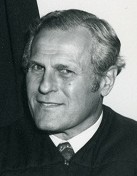
Judge Robert Boochever (Photo courtesy Alaska Court System)

Alaska’s Congressional delegation has introduced legislation to rename Juneau’s federal courthouse facilities in honor of the late Judge Robert Boochever, who passed away in October at the age of 94.

After moving to Juneau in 1946, Boochever served as an assistant U.S. Attorney, and later became the fourth Chief Justice of the Alaska Supreme Court. In 1980, he became the first Alaskan appointed to the federal Ninth Circuit Court of Appeals.

When he wasn’t practicing law, he was involved in several community groups, including the American Red Cross, the Chamber of Commerce, and Juneau Rotary Club.

Legislation to name Juneau’s federal courtroom after Boochever, comes as the U.S. Justice Department is considering closing at least 60 federal courthouses nationwide – including Juneau’s.

Feds chasing down seafood fraud

Zen Chinese Restaurant and Jaded Lounge

iFriendly audio

Zen restaurant is the most recent, but it may not be the last.

That suggestion from federal fisheries enforcement officials after owners of the Juneau restaurant Cai and Yao Hu admitted serving up subsistence-caught halibut and agreed to pay a hefty fine.

The original Notice of Violation and Assessment of Administrative Penalty (NOVA) says the restaurant’s owner-operators were actually penalized $20,900. That’s the base penalty plus estimated costs avoided by buying halibut at below commercial fair market value.

The Hus bought a total of 271 pounds of subsistence-caught halibut.

Julie Speegle, spokeswoman for the National Oceanic and Atmospheric Administration, said the fine was commensurate with the small amount of fish purchased.

Federal fisheries investigators say they provided the halibut for the subsistence fisherman to sell to the restaurant during an undercover operation. He did not catch the halibut himself.

“This person who made the sales was cooperating with the government,” said Speegle.

The Hus bought the fish on two separate occasions between February 1, 2010 and March 9, 2010 for what appears to be no more than $5 per pound.

It’s a unique Alaskan twist on what may be a widespread problem in a competitive global seafood market.

Margot Stiles, senior scientist with the conservation and advocacy organization Oceana, says seafood fraud is an economic crime that can hurt retailers and consumers. Stiles co-authored a report that suggests between 25- and 70-percent of the seafood sold in stores or served up in restaurants may be the result of species substitution. You may not be eating what you think you’re eating.

“If they’re lying (about) what the identity of the fish is, then you really have to wonder whether if it’s fresh and what else they’re not telling you,” said Stiles.

Stiles also said it can be risky to human health if a consumer has an allergy to a specific fish and they get something different than what they expected.

Species availability is one reason for substitutions. You may get farmed Atlantic salmon during the off-season for fresh wild salmon. Stiles says other common substitutions include pollock for cod, and rockfish or tilapia for red snapper.

Here in Juneau, a restaurant like Zen at the Goldbelt Hotel could get subsistence-caught fish at a steep discount to the usual wholesale price of $10 per pound and still pocket a hefty margin for their halibut dishes. But it’s unfair competition for the honest commercial longliner or processor.

The Zen case was settled administratively, as a civil matter under the Northern Pacific Halibut Act. That law specifically prohibits the sale and purchase, trade or barter of subsistence-harvested halibut as outlined either in statute or regulation.

We continued trying getting comment out of the Hus. Mitchell Hu, manager of Zen, told KTOO at his restaurant March 21st that he was also the Cai Hu that was named as co-owner. But he declined to answer most questions and said he “had no comment at this time.”

This isn’t the first time that a Juneau restaurant has been caught buying subsistence-caught halibut. The now-defunct Doc Water’s Pub, a restaurant that was located in the Merchants Wharf downtown, purchased over 4,500 pounds of the flatfish starting in 2005 until early 2008 when federal agents raided the place. Doc Water’s bought their subsistence-caught halibut for as low as $4 per pound.

Susan Auer, senior enforcement attorney for NOAA’s office of general counsel, declined to talk on tape for this story. But she said such a quantity purchased over an extended period may have been why they referred the case to prosecutors for potential criminal charges under the Lacey Act. That’s the federal law prohibiting sale or purchase of fish or wildlife that’s been in violation of another state or federal law. In this case, the underlying law that was violated was the Northern Pacific Halibut Act.

Doc Water’s owner Jason Derek Maroney was sentenced to ten-months in prison to be served as community confinement, and a year of supervised release. David Allen Skrzynski, a Juneau-based commercial salmon fisherman and holder of a subsistence halibut registration certificate or SHARC card, was sentenced to twelve months and a day in prison, and three years of supervised release. Part of Skrzynski’s plea agreement entered in the federal court system on March 10, 2010 remains under seal. That’s as little as one day after the last reported sale to Zen. And the recent NOVA filed against the Cai and Yao Hu specifically names Skrzynski as the fisherman who sold them the subsistence fish during the undercover operation.

“This type of thing is more common than we like to think,” said NOAA’s Julie Speegle.

NOAA attorney Susan Auer also sees it as an increasing problem. She said restaurant and lodge owners have not been careful about the source of fish that they’ve been purchasing. They either have been reselling them as meals or repackaging them for their clients. Auer said she believes there are other cases already in the works.

Site notifications
Update notification options
Subscribe to notifications