Public Safety

Juneau’s fire chief reflects on 33-year career ahead of retirement

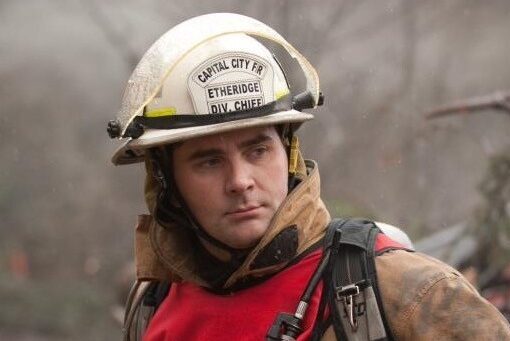
Capital City Fire/Rescue Chief Rich Etheridge during a training on Douglas. (Courtesy of Rich Etheridge)

Chief Rich Etheridge is retiring from Capital City Fire/Rescue at the end of this year. After serving as a first responder for decades, he’s now turning his focus to woodworking.

KTOO’s Mike Lane spoke with Etheridge about his retirement and his future plans.

Listen:

The following transcript has been lightly edited for clarity. 

Mike Lane: We’re speaking with Chief Rich Etheridge. Chief, you’re retiring soon. How did you come to this decision?

Rich Etheridge: You know, I’ve been in my career for a little over 33 years now. This is all I’ve done since I was 18, whether it was wildland firefighting or a state trooper and volunteer firefighter. Actually never planned on being the fire chief, but it just, you know, happenstance. You know, my career went that direction. But, you know, between family and I’ve got a little side business at home that’s been taking off and you know … I think chiefs need to turn over periodically and just get fresh ideas and new new ideas in the department to keep it healthy.

Mike Lane: You have such an interesting history. You were a state trooper. How long were you a state trooper? 

Rich Etheridge: For almost five years.

Mike Lane: And you weren’t just in Juneau, were you? 

Rich Etheridge: No, most of my time was on the Kenai Peninsula, and then a year up in Talkeetna. It was amazing.

Mike Lane: And then you went to CCFR, or to another fire department. 

Rich Etheridge: Yeah, I got hired back at CCFR as the fire prevention officer. So I was responsible for going out and doing public education, fire investigations, code enforcement and those types of things.

Mike Lane: I see. That’s so interesting, fire investigations. So you’re one of the guys who would determine how the fire started, where it started, and what was used?

Rich Etheridge: Yeah, or I started doing that as a volunteer. It was just fascinating to do that. How did this happen? You know, everybody sees the big black hole, but those big black holes tell a huge story and, and how did the fire travel to get to where it was at? It was just a really unique way to look at firefighting. 

Mike Lane: So what year did you start with CCFR?

Chief Etheridge: I started in, you know, full time as a volunteer. It was like late ‘92.

Mike Lane: Just a few decades. 

Rich Etheridge: Yeah, a couple. 

Mike Lane: A couple of decades. And you worked yourself up the ranks, obviously, from from that point forward. And what are some of the highlights of your career? And can you tell us anything that you’re particularly proud of, something that jumps out at you?

Rich Etheridge: Sure. You know, our response to the COVID stuff here in town, I thought was pretty amazing — how our department responded to that. We stood up a whole lot, really fast. I think we hired 65 people within just a couple of weeks, working with our HR department to staff the airport for COVID testing. We did the drive-through testing centers, and then we also created — what’s alive today — our mobile integrated health program. People that were sick with COVID and couldn’t leave and the doctors didn’t want them in their waiting rooms, we would send EMTs and paramedics out to go take them medicine or you know, whatever they needed to keep them recovering and not spreading COVID around the community. So I think between COVID and that mobile, integrated health program, getting all that stood up and put together, and having it as big and lasting of a program as it’s become.

Mike Lane: CCFR, of course, we’ve reported on this. They’ve struggled over the years with the chronic understaffing issues and union contract negotiations. So what do you think is needed to solve those particular issues moving forward?

Rich Etheridge: Man, that’s a really tough question. You know, Juneau is an isolated community. We don’t have outside resources, and then we also have a budget that we have to work within. So it’s just trying to find that balance between what the needs are and what we can afford as a community. Fire departments are expensive to run, and, you know, trying to get a huge career staff is going to be extremely cost prohibitive for the city, and volunteers are having a harder and harder time volunteering because of the requirements to keep them safe. I think the staffing and the long term retention of folks is going to be the biggest challenge over the next, next decade.

Mike Lane: And what are your plans for after CCFR, what’s your retirement plans?

Rich Etheridge: My retirement plan is to do my woodworking shop a little bit more full time.  Right now, it’s just kind of evenings and weekends and small projects here and there, but be nice to kind of expand that and do a lot more with it. 

Mike Lane: What kind of woodworking?

Chief Etheridge: Right now, one of the primary things I make are looms for the Lingít weavers here in town and the robes that they make and stuff like that. So that’s been one of my primary projects lately. It is so cool to be a part of that. 

Mike Lane: And how did you learn how to do this? 

Rich Etheridge: One of our gentlemen here in town, Kevin Miller, was making them, and he’s retired and travels a lot, and he has a hard time keeping up with the demand for that stuff. So he showed me his magic, how he puts all that stuff together, and I’ve just kind of been running with it.

Mike Lane: Wow. Well, congratulations again, and thanks for joining us.

Rich Etheridge: Hey. Thank you, sir.
Child dies in Christmas Eve car accident by Auke Lake

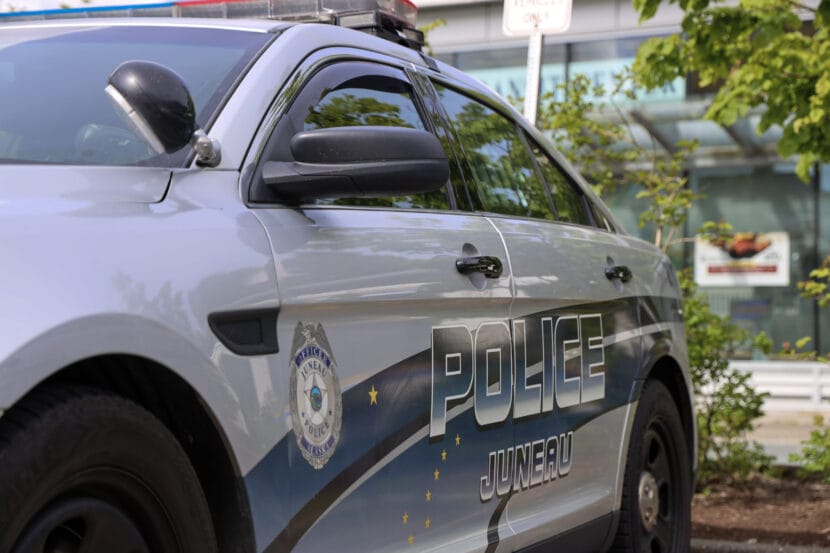
A Juneau Police Department vehicle park in downtown Juneau on Thursday, June 13, 2024. (Clarise Larson/KTOO)

A 7-year-old child died from injuries suffered in a car accident near Auke Lake on Christmas Eve. 

Police received a call around 1:30 p.m. Wednesday reporting that two vehicles had collided along Glacier Highway near Auke Lake, according to a press release from the Juneau Police Department. 

Emergency responders extracted multiple people who were trapped inside the vehicles at the scene, including a child who was reportedly unconscious at the time. 

The child was transported to the hospital and police later confirmed that the child had died. 

The accident closed traffic along Glacier Highway between Pederson Hill and the Auke Bay roundabout for several hours before the road was reopened shortly before 5 p.m. 

Police say they are still investigating the cause of the accident.

Six months after Juneau man’s disappearance, his family continues to search for answers

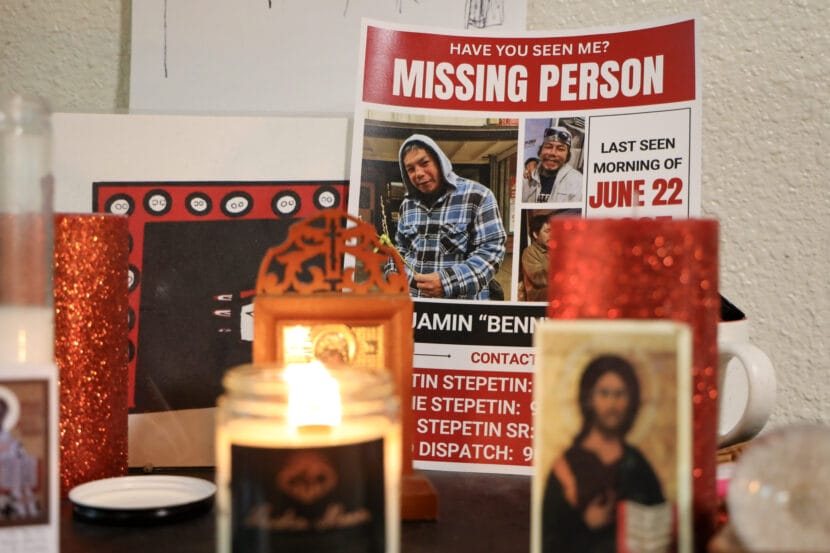
A candles burns near a missing person’s poster of Benjamin Stepetin at his brother’s apartment on Thursday, July 3, 2025. (Photo by Clarise Larson/KTOO)

This week marks six months since 42-year-old Juneau resident Benjamin “Benny” Stepetin was last seen in downtown Juneau. 

His brother, Martin Stepetin Sr., said his family and friends haven’t stopped looking for him even during the holidays.

“We just don’t want his memory to fade, or anybody to think that we’re giving up searching for him at all — because we’re not,” he said. “We’re still doing everything we can to still try to find what happened to my brother.”

Police listed Benjamin as a missing person after he was last seen in Juneau on June 22 in the downtown area. Benjamin is Alaska Native, about 5 feet, 6 inches tall and has brown eyes. Before he went missing, he often frequented the downtown area and had been homeless for roughly two years.

Following his disappearance, his family raised over $25,000 to fund a robust search effort and paid for divers to search the Gastineau Channel in September. Martin believes his brother may have fallen or been pushed into the water. 

And, though Martin said the divers didn’t find any signs of Benjamin then, the family is working with the Juneau Police Department in hopes of getting divers into the water for another search soon. 

Juneau Police Deputy Chief Krag Campbell said detectives are still actively investigating the case and encourage anyone with information about Benjamin’s disappearance to contact the department. 

Campbell said the department believes there may have been people involved in Benjamin’s disappearance who aren’t coming forward. 

“It is being investigated as more than just a missing person’s case, but also a missing person’s case with a criminal aspect to it,” he said. 

People can share information by calling JPD’s dispatch line at 907-586-0600 or submitting an anonymous tip through Juneau Crimeline.

Juneau sees back-to-back house fires in same neighborhood as negative temperatures persist

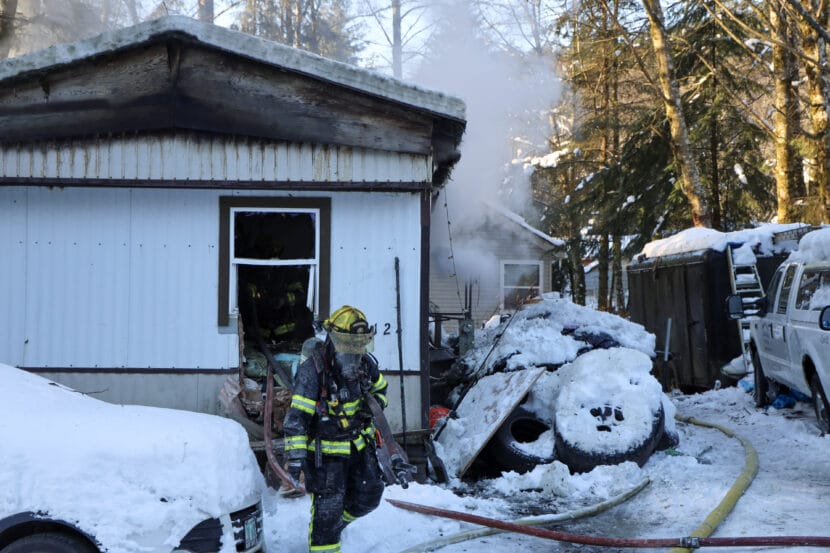
Firefighters exit a residential fire at the Switzer Village Mobile Home Park in Lemon Creek on Monday, Dec. 22, 2025. (Photo by Clarise Larson/KTOO)

Juneau saw two destructive residential fires in a mobile home park in the course of just three days. One fire resulted in a fatality. 

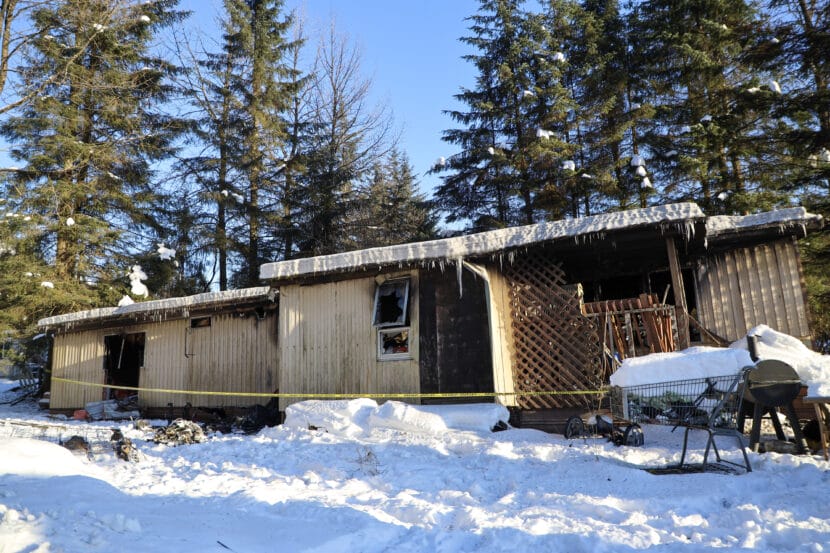
The first fire was reported on Saturday evening at about 7:30 p.m. at the Switzer Village Mobile Home Park in Lemon Creek. Family members reported that 38-year-old Juneau resident Calvin Olsen died in the fire. Olsen played a key role in helping launch Juneau’s first tribally owned auto detailing shop called Sacred Shine.

Caution tape surrounds the home of a fatal fire on Saturday at the Switzer Village Mobile Home Park in Lemon Creek. (Photo by Clarise Larson/KTOO)

The second fire was reported before noon on Monday, less than three blocks away. Officials said it appeared that no one was home at the time. 

At the scene of Monday’s fire, Capital City Fire/Rescue Chief Rich Etheridge said the causes of both fires are still under investigation. But, he said Juneau tends to see an increase in residential fires with the onset of cold weather. 

“When we have cold snaps like this, structure fires are pretty common because people are trying to find ways to heat their places, so fire danger goes way up,” he said.  

Temperatures dropped to -7 degrees Fahrenheit this weekend at the Juneau International Airport. On Monday, the National Weather Service in Juneau issued an extreme cold warning through noon on Tuesday. 

Etheridge said the cold weather can also cause operational issues like equipment failure. On Monday, a valve on a responding fire engine froze up and the fire hydrants weren’t pushing out water with enough pressure. 

He said it’s important for residents to check their heat sources regularly and make sure they are clear of any flammable objects. Electric space heaters should be turned off if no one is in the room with them.

“Just stay safe, check on your friends and neighbors, make sure people get heat,” Etheridge said. “If you’re running into problems, call the local heating companies and try not to jerry-rig something.”

Etheridge said CCFR will share more information about the causes of the fires in the coming days. 

What goes into keeping Juneau’s streets clear of snow all winter long?

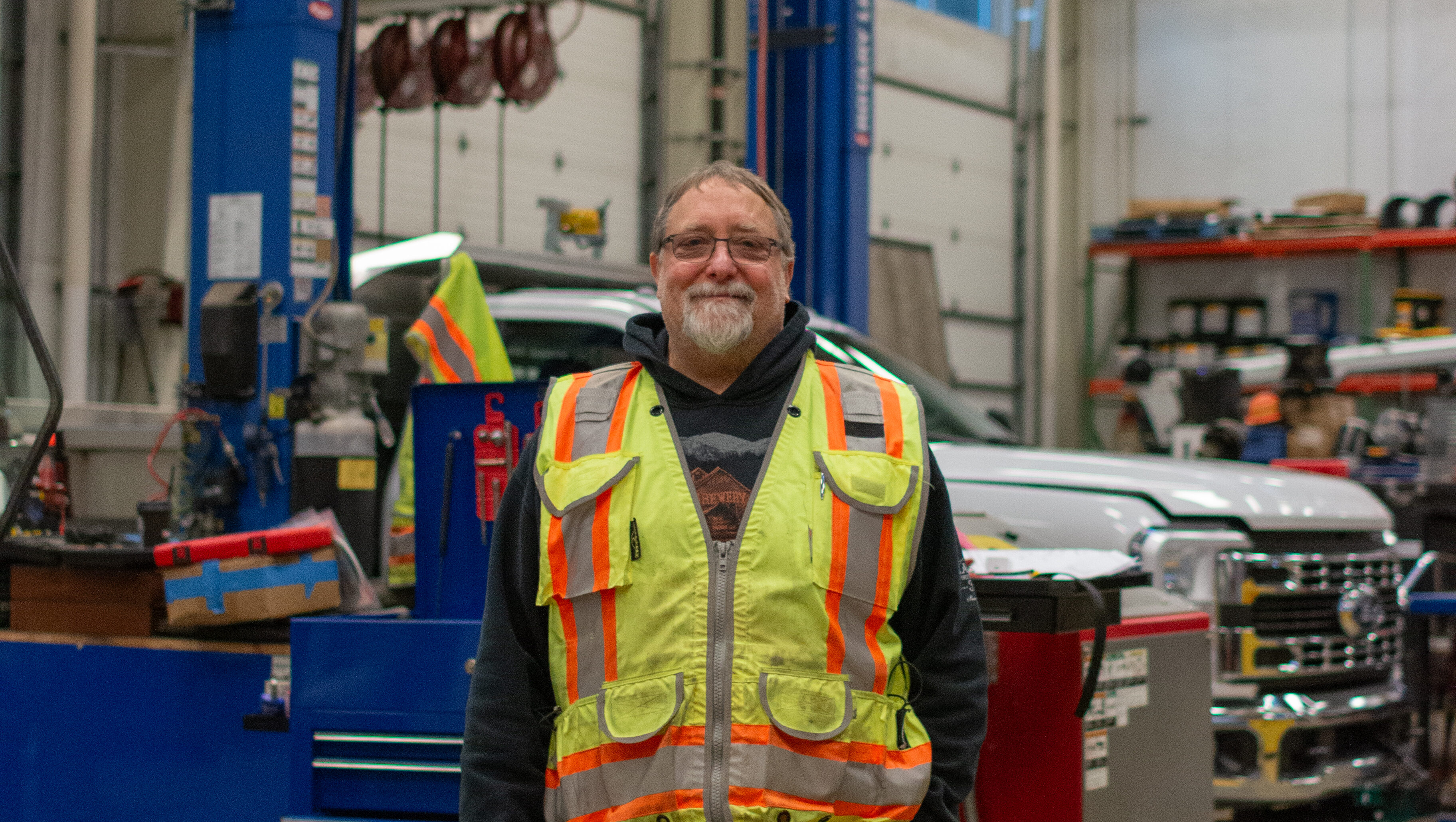
CBJ Streets & Fleet Superintendent Scott Gray. (Courtesy of CBJ)

When it snows, crews fan out with plows, graders, blowers and more to clear the streets in Juneau. 

Morning Edition Host Mike Lane recently sat down with CBJ Streets & Fleet Superintendent Scott Gray to learn more about local snow removal operations.

Listen:

This transcript has been lightly edited for length and clarity. 

Mike Lane: The city and the state both share responsibility in keeping Juneau’s roads safe and plowed during the snowy months. Can you explain how that works and who is responsible for what?

Scott Gray: Let’s start with CBJ. So CBJ basically takes care of all — pretty much all — the residential areas, downtown area, anything that’s not on the main arterial, like Egan Drive, Back Loop, Loop Road, Fritz Cove and Douglas Highway — that’s all DOT. There’s a number of other smaller streets. They go all the way out the road. They do Engineers Cutoff. They do Nine Mile Creek Road out Douglas. So DOT has quite a few roads locally here in Juneau that are kind of residential too, but we take care of a lot of the residential areas, more populated areas.

Mike Lane: So what does a typical snow removal day look like for your department?

Scott Gray: We have a town crew. The town area crew comes in at 1 o’clock in the morning and they get off at 9 o’clock in the morning. Then we have another crew that comes in 8 in the morning, and they get off at 4 p.m. So we stagger them. We have two guys that work four tens, so they’ll work Sunday through Wednesday, Wednesday through Saturday, and they work from 5 o’clock in the morning until 3 in the afternoon.

Mike Lane: What equipment do you use and or need for the job? And how has technology changed when it comes to snow removal in Juneau?

Scott Gray: Well, so we use graders a lot. We also have loaders with bull blades, and they come from, you know, like 12-foot bull blade to 14 feet, and they’re heavily chained up, and they can go anywhere. They’re pretty amazing pieces of equipment out there. And we have 10-yard trucks with plows, belly blades. We have blowers, so when everything’s all calmed down, hopefully we can go through the neighborhoods. We can blow the big berms out of the way. We have a contract with multiple trucking companies here in town for hauling snow, because a lot of our trucks are already outfitted with sanders, and unless we have a big lull in between storms, we don’t pull those sanders out.

Mike Lane: What do you recommend as the best strategy for residents to deal with the berms?

Scott Gray: You really need to think about snow placement. So when you shovel your driveway, the best way to do it is to put that snow up in your yard or somewhere where the plow can’t get a hold of it again.

Mike Lane: What about sidewalks? Whose responsibility is it to keep those cleared?

Scott Gray: Well, actually, it is the property owner’s responsibility to clear the sidewalks, and we understand that isn’t doable in a lot of areas. There are some people out there, though, that are really good about, you know, cleaning up their sidewalks, and I have to give them kudos for that. It’s a lot of work.

Mike Lane: How do you plan for back to back storms?

Scott Gray: That’s a tough one, you know? I mean, we try to keep our equipment up and running. We have a whole fleet department, you know, that takes care of us and other departments. The Fleet department, they take care of  260 pieces of equipment and vehicles. So we, we try to go through all the equipment in between storms, so we’re ready. So when it does hit, we’re good to go.

Mike Lane: Where do you put all the snow that you remove from, from neighborhoods, etc.?

Scott Gray: So we have multiple areas that we pull, or we we haul the snow to, in the Valley. We also have an area in Lemon Creek where we haul snow to. And then we also have an area out at Thane.

Mike Lane: What should people do when they encounter a plow or grader on the roads?

Scott Gray: You know, give them room. Give them space. A grader only does 22 miles an hour, but that piece of equipment, it takes a lot to get it stopped on a slippery road. So give them space. Their visibility behind them is none.

Mike Lane: Now, Scott, you’re the superintendent for CBJ streets and fleet, and you have quite a few people on your teams in staggered shifts. Do you have a full boat of employees? Or are you still looking for somebody?

Scott Gray: We currently have two positions that are open. We have an operator one position, and it’s a flex position. And then there, then we also have a seasonal position.

Mike Lane: So I would assume that if somebody wanted to apply for either of those positions, they would go to juneau.org and do that through the website. Okay, excellent. Is there anything you’d like to add to this?

Scott Gray: Well, I’ve got to say, my team is out there doing a great job, and they’re clearing the roads. I appreciate them, and I couldn’t do my job without them.

A Kodiak couple faces possible deportation due to a voter registration error by the state

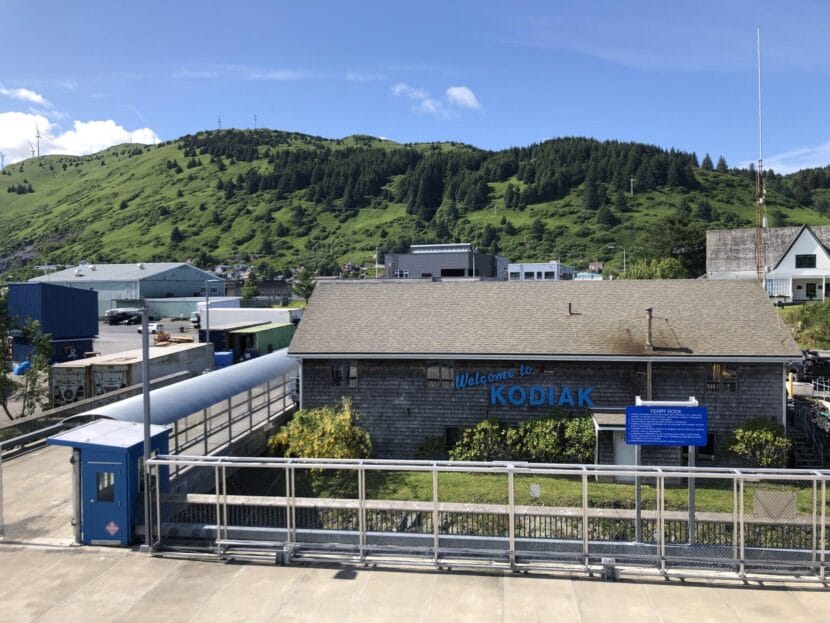
The ferry terminal at Pier 1 in Kodiak is seen on July 14, 2021.
The ferry terminal at Pier 1 in Kodiak is seen on July 14, 2021. (James Brooks/Alaska Beacon)

A years-old mistake by the Alaska Department of Motor Vehicles voter registration program has endangered the citizenship of two prominent Kodiak residents and could cause them to be deported, according to a newly filed lawsuit in Alaska’s federal court.

The suit, filed Thursday by Eva Benedelova and Pavel Benedela in the U.S. District Court for the District of Alaska, says U.S. Citizenship and Immigration Services canceled their citizenship oath ceremony because they were erroneously registered to vote in Alaska when they updated their driver’s licenses in 2022.

USCIS is overdue on a decision about their citizenship, the suit claims, and it asks a judge to order final action.

Attorney Margaret Stock, who is representing the couple, said there’s a bigger issue at stake: Many more Alaskans may unknowingly be facing the same problem.

According to a timeline provided by the Alaska Division of Elections, between 2022 and 2024, “less than 50” Alaskans, “mostly non citizens,” were “being registered to vote through DMV online transactions such as address updates, license renewals, etc.” despite stating that they were not U.S. citizens and did not want to register to vote.

The Division of Elections admitted the error involving the Kodiak couple, apologized, and wrote a letter saying that Benedelova and Benedela did nothing wrong. The couple never voted and immediately canceled their voter registration when they discovered the problem.

Alaska Senate President Gary Stevens, R-Kodiak, and Rep. Louise Stutes, R-Kodiak, submitted a letter of support for the couple. The office of U.S. Sen. Dan Sullivan, R-Alaska, has also been working on the case and advocating for the couple. The couple’s employer, North Pacific Seafoods, backs them too.

“The errors in 2022 and 2024 were committed by the Alaska DMV, not by these upstanding individuals,” wrote Dave Hambleton, President of North Pacific Seafoods.

Despite that support and extensive documentation about the error, USCIS sent a letter to Pavel Benedela on Dec. 5 stating that the federal agency is seeking further evidence and that “false claims to U.S. citizenship and voting violations … even renders an alien deportable.”

The couple have two children who have grown up in the United States, Stock said. If either one of them becomes a citizen, the children will, too. If they don’t, all could be deported.

“It’s an insane situation,” Stock said. “It shouldn’t be happening. It’s not right. It’s unjust. The state’s at fault, and they shouldn’t be punishing these folks because of errors made by State of Alaska employees.”

According to the complaint, the delay in the Kodiak couple’s citizenship application appears to be due in part to a federal policy implemented by USCIS in May 2025 that requires the agency’s headquarters to approve all matters where an applicant has been registered to vote in the United States.

“By the way, blanket policies like that are unlawful,” Stock said.

According to a timeline of events provided by the Alaska Division of Elections, the errors affecting the Kodiak couple and an unknown number of other Alaskans took place at the DMV between 2022 and 2024.

Alaska law allows people who update their driver’s licenses — or get new ones — to automatically register themselves to vote.

It’s supposed to be an opt-in process, but in 2022, an update to DMV’s system “cause(d) online transactions with DMV to automatically opt-in people who don’t select either yes or no,” an act that sent voter registrations to the Division of Elections, the division’s timeline states.

In the case of Benedelova and Benedela, someone along the process — likely a state employee — filled out the voter registration form in their name, copying their signatures without their knowledge or consent.

“I confirm that Mr. Benedela and Mrs. Benedelova did not specify on any DOE document that they are U.S. citizens,” wrote elections supervisor Ryan Wilson on Dec. 12. “Additionally, your signatures on the voter registration forms are a digital copy of which neither of you was aware of its use.”

Stock said that while Benedela and Benedelova are the only people who have come forward publicly about the issue, she is aware of others in the same position.

“I can tell you that I know other people the same things happen to, so it’s not just a one-off with these two people,” she said.

Stock said that in her career, she’s seen many examples of people mistakenly registered to vote because of a lack of understanding about what a citizen is, but this case is something different.

“The creepy thing is that the registration form says you’re not allowed to use an electronic signature on it, but the state’s been doing that anyway. … We have a copy of their voter registration form, and the state created that on their own, without the immigrants’ knowledge, and submitted it and checked off that they were US citizens. Some employee of the state is really doing bad things, basically,” Stock said.

A spokesperson for the Alaska Department of Administration, which oversees the DMV, did not answer questions by the deadline for this article on Friday.

The Division of Elections, which has been examining the issues for years, provided detailed documentation and explanations, as well as an apology it sent the couple.

According to its timeline of events, Benedelova was registered to vote through the DMV process in September 2022.

The division became aware of noncitizens being registered to vote by the DMV in 2023 or 2024 and worked with the DMV to reword their forms and change the process so people who opted out did not have their information sent to the division.

An additional question was also added to the process: “Are you a U.S. Citizen?”

Despite those changes, the effects of the erroneous process appear to be lingering. This summer, the U.S. Department of Justice asked Alaska and other states to provide copies of their voter rolls in order to identify noncitizens who may have illegally participated in state or local elections.

The data provided by the division and obtained by the Beacon via a public records request included an inactive voters list with 541 people whose records were tagged as “NC” for non-citizen.

Among those 541 people were Benedelova and Benedela, who had canceled their registrations in 2024 immediately after learning they had been erroneously registered.

At the time the record was released, the director of the Division of Elections said to treat it cautiously because some people might have been erroneously labeled.

“When we have gone in there and looked and contacted them, we have found that usually it was a mistake,” she said.

Site notifications
Update notification options
Subscribe to notifications