Alaska Beacon

Alaska Beacon is part of States Newsroom, a network of news bureaus supported by grants and a coalition of donors as a 501c(3) public charity. Alaska Beacon maintains editorial independence. Contact Editor Claire Stremple for questions: info@alaskabeacon.com. Follow Alaska Beacon on Facebook, Bluesky and Twitter.
Former state medical board member dies in house fire after arrest for child sexual abuse images

Flashing lights atop a law enforcement vehicle. (Valerie Lake/Alaska Public Media)

Alaska State Troopers said in a bulletin Monday that Dr. Ryan McDonough died in a weekend fire at his home in Wasilla.

At the time of the fire, McDonough — a cardiologist formerly with Mat-Su Regional Medical Center — was on $50,000 bail after being arrested on Dec. 11 and accused of owning child sexual abuse images.

The alleged crimes, and the bail posted by McDonough’s wife, were reported by the Anchorage Daily News on Friday, a day after the medical center fired him.

The fatal fire at McDonough’s home took place Saturday; McDonough was initially listed as missing after the fire, but firefighters found human remains at the site, and preliminary testing later identified McDonough’s body.

The cause of the fire remains under investigation, and the other people who lived at the home were unharmed.

Alaska Gov. Mike Dunleavy appointed McDonough to the state medical board in August. That month, he joined other members of the medical board in voting to impose restrictions on medical care for transgender youth in the state and to recommend that Alaska lawmakers end legal access to abortion in the late stages of pregnancy.

McDonough subsequently appeared to drop off the board; he attended its August and September meetings but was absent from its October and November ones, public records show.

Because of absences and unfilled seats, the board — which regulates doctors and other medical professionals in Alaska — has had problems finding a quorum needed to do business.

McDonough’s name was removed from the board’s roster in November. A spokesperson for Dunleavy told the Anchorage Daily News that the governor’s office found out about McDonough’s alleged crimes on Friday and was not aware of any investigations at the time of his appointment.

According to an affidavit submitted in Palmer courts by a Department of Homeland Security officer, the online file storage company Dropbox sent a tip to the National Center for Missing and Exploited Children on July 31.

That tip led to the investigation of a Dropbox account linked to McDonough that contained a video of a child being sexually abused. A second tip followed another video on Aug. 10.

The Anchorage Police Department, in charge of investigating tips like those received by the National Center, obtained a search warrant for McDonough’s Dropbox, GCI and Google accounts. Subsequent searches found additional suspect videos, and McDonough’s computer was seized during a search warrant on Dec. 11, shortly before his arrest.

The Alaska Beacon typically publishes copies of court affidavits but is not doing so in this case because of their graphic contents and because they describe acts of sexual violence against children.

McDonough’s next court appearance was scheduled for Jan. 31.

Disaster aid deadlines extended into 2026 for those affected by Western Alaska storms

Alaska Organized Militia members, assigned to Task Force Bethel, survey Nightmute, Alaska, while conduct post-storm recovery efforts for Operation Halong Response at Oct. 27, 2025. (Courtesy photo by the Alaska National Guard)

The State of Alaska and the Federal Emergency Management Agency have extended their deadlines to apply for individual disaster assistance for those impacted by storms in Western Alaska, including Typhoon Halong.

How to apply for State of Alaska or FEMA individual assistance:

  • Online
  • Call the Alaska Call Center at 1-866-342-1699
  • Or visit an assistance hub set up in Bethel through Dec. 19.

State and federal officials are continuing to encourage residents to register for both state and federal assistance programs to maximize their potential benefits. The new deadline for applications is February 20, 2026.

“We know that there may be more people out there, and we want to give them this opportunity to register,” said Jeremy Zidek, a spokesperson for the Alaska Division of Homeland Security and Emergency Management.

Zidek urged residents to apply for both assistance programs if they have experienced any level of storm damage. He said registrations can be updated once they have been filed.

“We always say that if people are unsure about their damages or unsure if they want to apply, to just go ahead and apply,” he said. “They can always amend their application at a later date. But after those deadlines, it becomes very difficult for us to register people, so we really urge anyone that had damage, even if it was a little bit of damage, to apply and go through the process.”

The state has received 1,920 aid applications and FEMA has received 1,630 applications for assistance as of Dec. 10. The programs provide relief for damage to homes, damage to essential personal property and medical, dental or funeral needs directly related to the disaster. State disaster aid also includes assistance for damage to subsistence camps. The Small Business Administration is also providing low-interest loans, including up to $100,000 for repairs to subsistence camps.

The state and FEMA have distributed over $41 million in disaster assistance as of Nov. 25, and have visited 43 communities.

An estimated 1,160 residents evacuated from Western Alaska following Typhoon Halong, with dozens of communities sustaining damage across the region.

Since the evacuations, 678 residents have been staying in hotels in Anchorage. The first group of families began moving into longer term housing last week, according to a state update. The state’s emergency management division is working with local property owners and non-profit partners to locate apartments and housing units throughout Anchorage for long-term housing for storm displaced residents.

Officials also set a Dec. 15 deadline for owners to claim pets. Over 200 dogs were evacuated from Western Alaska after the storms, and 21 dogs remain unclaimed. Pet owners who have not yet claimed their dogs  can search for them at a website created by volunteers.

Federal disaster areas include:

    • The Northwest Arctic Borough
    • Lower Yukon Regional Education Attendance Area
  • Lower Kuskokwim Regional Education Attendance Area

State of Alaska disaster areas include:

  • North Slope Borough Northwest Arctic Borough
  • Yupiit Regional Education Attendance Area
  • Lower Kuskokwim Regional Education Attendance Area
  • Bering Straits Regional Education Attendance Area
  • Lower Yukon Regional Education Attendance Area
  • Kashunamiut Regional Education Attendance Area
  • Pribilof Islands Regional Education Attendance Area
Pollution response teams from U.S. Coast Guard Sector Western Alaska and U.S. Arctic conduct post-storm assessments in Kipnuk, Alaska, Oct. 22, 2025, after the community was impacted by severe flooding from Typhoon Halong. Personnel deployed to affected areas to identify pollution concerns and work with state, federal, and industry partners to conduct clean-up operations. (U.S. Coast Guard photo by Petty Officer 1st Class Shannon Kearney)

Lawsuit challenges Trump administration approval for Arctic Alaska oil exploration plan

A caribou in the Teshekpuk herd is seen on June 27, 2014, in the National Petroleum Reserve in Alaska. A lawsuit filed Thursday claims the U.S. Bureau of Land Management approved ConocoPhillips' winter oil exploration plan without adequately considering damages to habitat used by caribou and other wildlife.
A caribou in the Teshekpuk herd is seen on June 27, 2014, in the National Petroleum Reserve in Alaska. A lawsuit filed Thursday claims the U.S. Bureau of Land Management approved ConocoPhillips’ winter oil exploration plan without adequately considering damages to habitat used by caribou and other wildlife. (Bob Wick/U.S. Bureau of Land Management)

Environmental and Native organizations on Thursday sued the Trump administration to try to overturn last month’s approval of an expansive oil-exploration program on the North Slope.

The lawsuit, filed in U.S. District Court in Anchorage, said the U.S. Bureau of Land Management violated federal laws when it gave the go-ahead to a ConocoPhillips plan for seismic surveys and exploration drilling this winter on federal lands in Arctic Alaska.

ConocoPhillips’ plans call for seismic surveys in the National Petroleum Reserve in Alaska, along with four exploration wells and associated development. The exploration work is planned near ConocoPhillips’ huge Willow project, which is in development, and its Greater Mooses Tooth Unit, which is already producing oil.

The plaintiffs bringing the lawsuit are Sovereign Iñupiat for a Living Arctic, the Center for Biological Diversity and The Wilderness Society. They are represented by the environmental law firm Earthjustice.

The lawsuit argues the approval violates the Naval Petroleum Reserves Production Act, a 1976 law that mandates environmental protection in the reserve, and the Administrative Procedures Act, which concerns the public process for government decision and actions.

The planned program will cause serious environmental damage that will last for several years, including in areas around Teshekpuk Lake, the North Slope’s biggest lake, and the Colville River, known for its raptor populations and paleontological resources. Previous presidential administrations established protections for those sensitive habitats, including the calving site for the caribou herd named for the lake.

“The record shows the exploration program is likely to cause long-term harm to vegetation and soils that provide crucial habitat to caribou, birds, and a host of other wildlife in the Reserve, including to those within the Teshekpuk Lake and Colville River Special Areas,” the lawsuit said. “The exploration program is also likely to cause population-level impacts to the Teshekpuk Caribou Herd, and long-term harm to subsistent hunters and the communities that rely upon them for food security and health and wellbeing.”

The lawsuit faults the BLM and U.S. Department of the Interior for limiting public information about the proposal and, once the proposal was announced, restricting public comment to a mere seven days before concluding that the exploration work would pose no significant environmental harm.

Both the lack of public information and the conclusion were wrong, the plaintiffs said. In their lawsuit they cited expert testimony from Martha Raynolds, a University of Alaska Fairbanks scientist, who said the seismic program would scar the tundra for more than 15 years.

“The company’s plans would crush sensitive Arctic tundra under 95,000-pound thumper trucks, disrupt caribou migration patterns and destroy our ability to enjoy these magnificent lands,” Matt Jackson, Alaska senior manager for The Wilderness Society, said in a statement. “With an administration bent on ignoring the public, our only choice is to turn to the court to defend these public lands for generations to come and ensure that our rural communities remain free to sustain our Alaskan way of life.”

Seismic surveys use sound waves to help map underground geologic structures. The work is done with vehicles that crisscross the surface. UAF experts have warned for years about the threats to tundra and permafrost from seismic surveys.

Nauri Simmonds, executive director of Sovereign Iñupiat for a Living Arctic, said the areas targeted for exploration are sensitive and should be protected from development.

Even among our own Iñupiat relatives who support oil development, there is recognition that some places are too important to risk, too vital to our way of life to be sacrificed. ConocoPhillips’ exploration program is not only an assault on caribou and tundra — it is another chapter in the enfoldment of our people into systems designed to fracture us from within,” she said in the statement.

A spokesperson for the Department of the Interior declined to comment on the lawsuit, citing a policy concerning pending litigation.

Dennis Nuss, a ConocoPhillips spokesperson defended the approvals and criticized the plaintiffs.

“These actions by the same groups that have historically used legal maneuvers to delay exploration and development in the Petroleum Reserve jeopardize hundreds of local jobs and adds unnecessary risk to investment in Alaska,” Nuss said. “We remain confident in the robustness of our plan and BLM’s permits and look forward to completing our work within Alaska’s limited winter exploration season.”

He did not comment on whether ConocoPhillips had started the winter program.

The Willow project, with an estimated 600 million barrels of oil reserves, is expected to start producing oil in 2029. It is slated to be the westernmost producing oil field on the North Slope. The development has been controversial, but its approval by the Biden administration in 2023 has survived legal challenges. Projected revenues to the state from Willow production are now far more modest than previously estimated, according to Alaska Department of Revenue officials.

Production at the Greater Mooses Tooth site started in 2018.

State senators express skepticism about proposed Juneau ferry terminal backed by Dunleavy

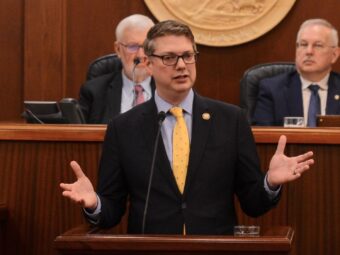
Sen. Jesse Bjorkman, R-Nikiski, speaks Wednesday, April 23, 2025, on the floor of the Alaska Senate.
Sen. Jesse Bjorkman, R-Nikiski, speaks Wednesday, April 23, 2025, on the floor of the Alaska Senate. (James Brooks/Alaska Beacon)

In a Friday hearing, members of the Alaska Senate spoke critically about a proposed new ferry terminal in Juneau, questioning why the project would be worth its multimillion-dollar cost.

Earlier this year, state legislators planned to divert $62 million from a variety of transportation projects in order to pay for the state share of federal transportation grants worth between $500 million and $600 million.

Lawmakers included the diversion in their budget for the year, but Dunleavy vetoed the maneuversaying that the “funding is either still obligated in the original project or has been fully expended and is unavailable for reappropriation.”

That left legislators’ spending plan partially unfunded.

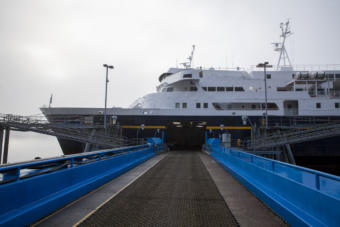
One of lawmakers’ biggest targets this past spring was DOT’s plan to build a new ferry terminal in Juneau, roughly 30 miles north of the existing terminal in Auke Bay, at a place called Cascade Point, which would shorten ferry runs to Haines and Skagway.

Legislators sought to divert $37 million from an account intended to fund that new terminal, but Dunleavy vetoed the transfer and the Department of Transportation subsequently signed a $28.5 million contract for work on the terminal.

In October, the state’s ferry advisory board concluded that the project likely did not make economic sense.

“Do you agree with that study?” asked Sen. Jesse Bjorkman, R-Nikiski, during Friday’s hearing of the Senate Transportation Committee.

“Can you please make the case to the Alaska people why you think investing this money … in the Cascade Point project makes fiscal sense for Alaskans?”

Ryan Anderson, commissioner of the Alaska Department of Transportation and Public Facilities, responded that “as a public agency, we’re more than economics. In this case, there’s this idea of saving people time with a much shorter run, saving money, the cost of operating that ship, we’re saving fuel. It’s less carbon emissions. I mean, there’s a lot of good benefits to shorter ferry runs.”

Lawmakers didn’t have the votes to override the governor’s vetoes, which means that when they reconvene in January, they’ll have to come up with a new way to fund construction work this summer.

According to documents presented to the committee on Friday, the Alaska Department of Transportation has “deferred” about 25 projects 1-3 years “to remain within available match.”

Without new money, “fewer projects will move to contract award, limiting construction activity.”

Anderson told the transportation committee that his agency is prioritizing “shovel ready” projects, those that are about to go to construction.

“As we go and prioritize projects through this year, we’ll continue that action, and we’ll be ready. That’s really how we’re looking at this program,” he said.

Alaska settles 2 lawsuits against vape companies for allegedly targeting kids for addiction

A person using a Juul vape.
A person using a Juul vape. (Joey Mendolia/Alaska Public Media)

The state of Alaska has settled lawsuits against Juul and Altria, two nicotine vapor manufacturers, for a combined $7.8 million, the state Department of Law said on Friday.

The suits were part of a nationwide pattern: Alaska and other U.S. states had alleged that the companies deliberately targeted children with advertising, something that likely contributed to a surge in nicotine use among children and young adults.

Altria settled Alaska’s lawsuit for $2 million last year, and the state announced a $5.8 million consent judgment with Juul on Friday.

Under the settlements, neither Juul nor Altria must admit fault, but both must abide by marketing restrictions. One key point in the settlement: Juul can’t use cartoons to advertise its products.

“This case took five years and a great deal of work from our public health and consumer protection teams, but it was worth it,” said Alaska Attorney General Stephen Cox, in a prepared statement.

“We now have strong court-enforceable limits on how these companies can operate in Alaska, and we’ve obtained a per-capita recovery that ranks near the top nationally, with those dollars going straight into prevention and consumer protection.”

Alaska was one of the last states in the country to settle with Juul, which has already paid more than $1 billion to states across the country.

Some states have since filed additional lawsuits against vape distributors, alleging that they contributed to a surge in nicotine vapor use among children and young adults.

Money from Alaska’s Juul settlement is to be paid over the next five years.

Under the financial terms of the consent judgment, half of the proceeds would be used to fund tobacco control and prevention programs, and the other half would go to the Department of Law’s consumer protection program.

Typically, the spending of money earned in financial judgments must be approved by the Alaska Legislature before becoming official.

“The use of vapes and other nicotine products among youth in Alaska remains a concern,” said Alaska Department of Health Commissioner Heidi Hedberg in a prepared statement. “This funding will help families and communities continue to access education, prevention, and cessation programs.”

Mat-Su Republicans suggest six candidates for two spots in Alaska House of Representatives

The Alaska State Capitol is seen on Tuesday, Nov. 25, 2025. (Photo by James Brooks/Alaska Beacon)

Republican officials in the Matanuska-Susitna Borough have proposed a field of six conservative Alaskans for two vacant seats in the Alaska House of Representatives.

On Sunday, local Republican Party officials delivered their suggestions to replace Cathy Tilton and George Rauscher, whom Gov. Mike Dunleavy appointed to fill two vacancies in the Alaska Senate.

Those Senate vacancies occurred when Sen. Mike Shower, R-Wasilla, resigned to run for lieutenant governor and Sen. Shelley Hughes, R-Palmer, resigned to run for governor.

To replace Tilton, the Republican leaders of House District 26 nominated Chickaloon tribal police chief Donna Anthony, veterinarian Sean McPeck, and a former Tilton aide, Steve St. Clair.

AnthonyMcPeck and St. Clair have each filed to run for the seat in next year’s elections.

For Rauscher’s former seat, Republican leaders for House District 29 picked Chikaloon tribal police officer Lucas Howard, local community council member Gerald Garret Nelson, and former police officer John James.

Nelson had previously filed a letter of intent to run for the seat next year.

The nominations are advisory only; Dunleavy may pick anyone who is a Republican, lives in the appropriate district and meets the constitutional requirements for state House.

Under state law, the governor has until Dec. 29 to make his picks. Anyone he chooses must be approved by a majority of the House’s 21 Republicans in order to be seated.

The governor is expected to act well before the deadline in order to allow time for that confirmation vote and for the new legislators to hire staff and prepare to move to Juneau for the five-month regular legislative session, which begins Jan. 20.

House Minority Leader DeLena Johnson, R-Palmer, is in charge of the House’s all-Republican minority caucus.

Through a spokesperson, Johnson said the timing of a confirmation vote is dependent upon the governor, but that she is tentatively planning a vote for the upcoming weekend.

Site notifications
Update notification options
Subscribe to notifications