Alaska Public Media is one of our partner stations in Anchorage. KTOO collaborates with partners across the state to cover important news and to share stories with our audiences.
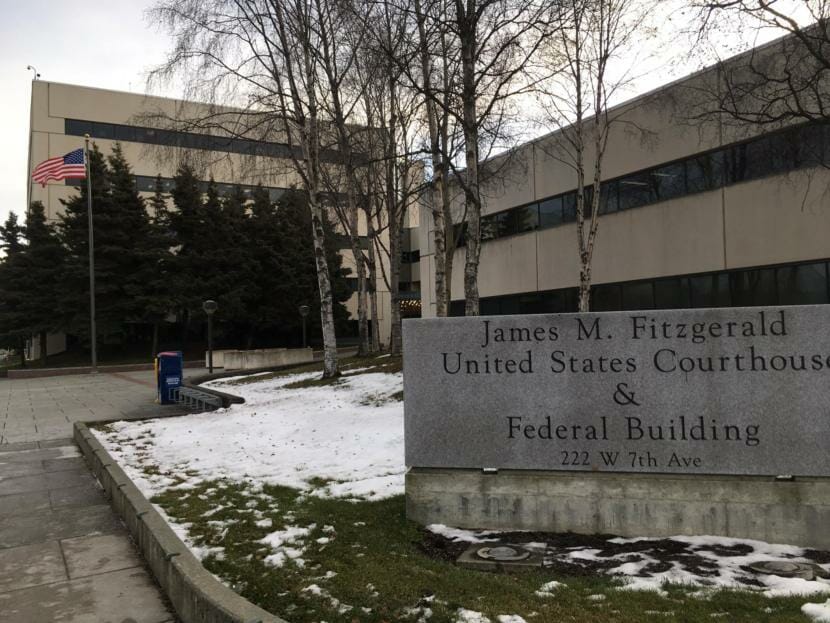
The United States Courthouse and Federal Building in downtown Anchorage. (Photo by KDLG)
A federal trial began Monday in Anchorage for a class-action lawsuit against the Alaska Office of Children’s Services on behalf of all kids in OCS custody.
Marcia Lowry, an attorney and director of a national nonprofit advocating for foster reforms, said the organization is helping with this lawsuit because Alaska’s foster system has some of the worst outcomes in the country.
“They have a very, very high maltreatment rate,” Lowry said. “They do not have the kids visited every month. That’s a federal requirement children have to be visited, because how else can you know whether a child is safe when you put a child in a foster home?”
The complaint alleges OCS caseworkers have too many cases to be able to adequately serve families and that the agency has failed to place Alaska Native foster children in culturally appropriate placements, violating the Indian Child Welfare Act.
Former foster youth testified Monday that under OCS care, they moved placements frequently, missed school because of instability and experienced abuse and assault when they were placed in foster homes and hotels.
OCS director Kim Guay also took the stand Monday. She said all OCS employees are working to make positive changes in the system and that the agency has taken steps to increase recruitment and improve training.
Margaret Paton-Walsh, assistant attorney general for the state, is defending OCS in the trial. She said running the foster care system in Alaska is challenging.
“It’s especially hard in Alaska because of the size and the remoteness of so many of the communities, and we are doing the best that we can to manage the challenges that we have,” Paton-Walsh said. “And there are definitely challenges. Nobody is denying that. And I think critically in this context, we have a very, very severe caseworker shortage.”
Guay also repeatedly pointed out on the stand that OCS is only one piece of the child welfare system.
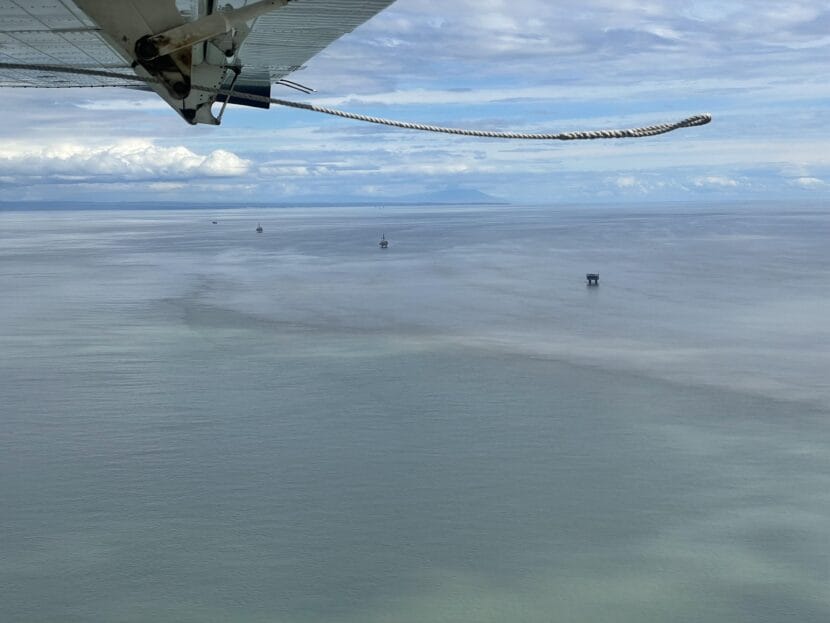
Oil and gas platforms in Cook Inlet in 2021, as seen from a floatplane. (Liz Ruskin/Alaska Public Media)
The Trump administration has announced plans to hold six oil and gas lease sales in Cook Inlet over the next six years, starting next March.
The plan “ensures Alaskans benefit from new jobs, stronger local economies and long-term investment in their communities,” the Interior Department said in an emailed statement.
Southcentral Alaska depends on natural gas from Cook Inlet for heat and electricity generation, but industry has shown only mild interest in the area in recent years.
It takes more than a lease sale to boost production, said Larry Persily, a former Kenai Peninsula Borough official for oil and gas matters.
“ That’s the first step. But there’s not really a shortage of opportunities in Cook Inlet. There’s more a shortage of capital and interest,” he said. “So I guess the first test we’ll see is who bids in March of 2026.”
Hilcorp is the primary producer of Cook Inlet gas. It has been the only bidder in the last two federal offerings. The company has warned that it may not be able to supply enough gas by 2027 to meet Southcentral’s demand.
Persily said the newly announced lease schedule doesn’t solve the near-term problem.
“Because by the time you have a lease sale and you get permits and you explore and you find something to turn to production, it’s probably not going to come in time,” he said. “So dealing with the Southcentral gas shortage is going to have to come from existing leases” or outside the region.
The offshore oil and gas leasing plan announced this week was mandated by Congress in the reconciliation bill it passed in July.
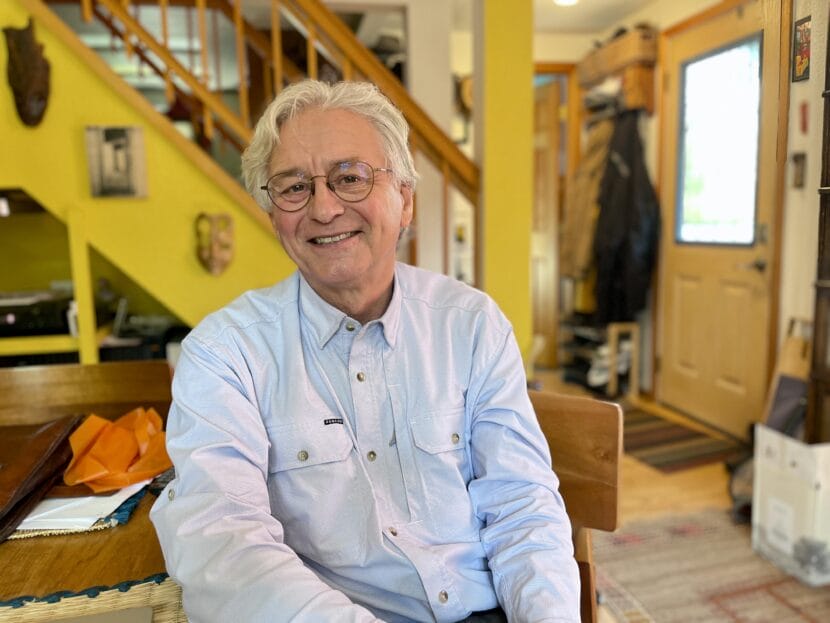
Former state senator Tom Begich announced he’s running for governor. He’s the first Democrat in the crowded race. (Liz Ruskin/Alaska Public Media)
Former state senator Tom Begich is running for governor.
Begich, an Anchorage Democrat, is the first Democrat in a field already crowded with Republicans.
The main reason he’s running, he said, is to reverse what he sees as state stagnation. He emphasized the need to boost education funding and wants to raise state revenues — from corporate taxes, trimming oil tax credits and the like. He says $500 million in new state revenue is within easy reach.
“That’s just about agreeing that these things make sense. None of those things cost an individual Alaskan anything,” he said. “What it requires is members of the Legislature and the governor to agree, and I’m not seeing that happen right now.”
Bills to change how the state taxes corporations and grants petroleum tax credits are pending in the Legislature but face an uncertain fate.
The last Democrat to win a statewide race in Alaska was Mary Peltola. She was elected to the U.S. House in 2022, lost in 2024 and hasn’t announced whether she’s running for any office in 2026. If she decides to run for governor, said he would drop out.
“I’ve always told her, and I would say this to you: if she were to get in this race, I wouldn’t need to be in this race. She would be in the race,” he said. “But I am in the race, and that is the difference.”
So far, Begich has only filed a letter of intent to run, but if he wins, he’d be the fourth in his family to hold statewide office. His father, Nick, and brother Mark served in Congress as Democrats. Tom is the uncle of Alaska Congressman Nick Begich III, a Republican.
Santiago “Diego” Martinez’s work station as sushi chef for Sushi Motto. Martinez was arrested by ICE officials outside the restaurant on Aug. 11, 2025. (Wesley Early/Alaska Public Media)
An immigrant seeking asylum in Anchorage was arrested outside the restaurant where he worked and detained by federal Immigration and Customs Enforcement officials earlier this month.
ICE officials said they detained Santiago “Diego” Martinez, 30, for having a drunken driving conviction. However, his attorney said ICE admitted they made a mistake – Martinez does not have a criminal conviction – but he remained in custody as of Monday.
It was the morning of Aug. 11 that Jennifer Choi got a call from Martinez’s girlfriend, who said he needed help. Choi went behind her restaurant, Sushi Motto, and saw ICE officers detaining Martinez.
“So when I go, Diego was in the car,” Choi said. “And then I said, ‘OK, what’s going on?’ They say he don’t have a green card. I tell them, he has a green card. He has a green card. I tell them, like two, three times, but they said, ‘We have to take him.'”
Martinez had worked for Choi for more than five years as a sushi chef. She said he was a great employee.
“He has a good heart,” Choi said. “He helped, even though he’s a sushi chef, he helped in the kitchen, dishwash, whatever needed help. He did everything. He never complained.”
Martinez is a Mexican national who was in the country illegally, ICE spokeswoman Christine Cuttita said in an email. ICE officials first encountered Martinez in 2019 when he entered the country and was arrested by airport police, Cuttita said. His case was dismissed by a judge in 2022 for “prosecutorial discretion.”
Margaret Stock, Martinez’s attorney, said Martinez is an Indigenous person from Mexico and was seeking asylum in the United States. The charges for his initial immigration arrest were dismissed, because the judge ruled he had a valid asylum case, Stock said.
“He does have a very good reason not to return,” Stock said. “I mean, people in the family have been killed and murdered.”
It’s not uncommon for asylum cases to take years to resolve, she said.
Cuttita with ICE wrote that Martinez, “jeopardized any legal privilege to remain in the United States when he was arrested by the Anchorage Police Department on Nov. 12, 2024, for driving under the influence.”
But the charges were thrown out, Stock said, and Martinez doesn’t have a drunken driving conviction on his record.
“I talked to the ICE people, and they were operating on misinformation that he had a DWI conviction, which he doesn’t have,” Stock said. “But they claim that was the reason, on the telephone to me, that they were arresting him, was that he had a DWI conviction.”
Stock said the ICE officials told her they made a mistake arresting Martinez, since he doesn’t have a drunken driving conviction, but they still won’t release him.
“They told me that once they grab somebody, they’re not allowed to release him anymore,” Stock said. “And they say that this is a new rule that has been made up by the DHS leadership, that people who are pending asylum, they can just grab them anytime and put them in detention.”
Cuttita said that convictions and arrests can both jeopardize someone’s immigration status. But Stock said the Department of Homeland Security isn’t following the law.
“I think it’s illegal and it’s un-American,” Stock said. “It’s unconstitutional, and then on top of it, there’s obviously errors in the system. So how can we trust the Department of Homeland Security when they make these kinds of egregious errors all the time?”
For now, it remains unclear if Martinez will be deported.
Stock said she was able to meet with Martinez when he was being held at the Anchorage Correctional Complex, but the opportunities were limited.
“He was freezing cold and shivering while he was talking to me,” Stock said. “He said it’s freezing in there, and then he also told me that they would only let him make one phone call a day. They’ve denied me access to speak with him because they have special rules that attorneys aren’t allowed to go in there for huge chunks of the day. You know, they have hours that are off-limits to attorneys.”
Those rules, Stock said, contradict what ICE’s website says about the Anchorage Correctional Complex, that attorneys can access clients from 8 a.m. to 6 p.m. every day.
Martinez was transferred to a detention center in Tacoma, and Stock is there, too, working to get him released. But she said she was worried that the center will have similarly harsh conditions and the same lack of access as the Anchorage jail.
Meanwhile, Choi, Martinez’s boss, said she’s concerned about how his detention will impact her business and her employees.
“Everybody is getting sad, like, depressed, I think,” Choi said. “And, you know, some people, they don’t even want to work, even though they have a green card. You know, they’re just scared to work.”
Choi said she’s also pitching in to try to get Martinez back to Alaska.
Mike Bialy operates the Red Umbrella hotdog stand, two miles from the military base where Presidents Trump and Putin will meet. “I just hope everything goes smoothly,” he said. (Liz Ruskin/Alaska Public Media)
Mike Bialy operates a hotdog stand on Fourth Avenue in Anchorage, just two miles from Joint Base Elmendorf-Richardson, where President Donald Trump and Russian President Vladimir Putin plan to meet.
“I just hope everything goes smoothly, because I know a lot of the United States is kind of tense right now,” Bialy said, between customers. “And a lot of European countries, especially Ukraine, is really tense right now.”
Alaska has a long relationship with Russia, its across-the-strait neighbor. Alaska was once a Russian colony, served as a defensive bulwark for North America during the Cold War, and saw a period of warmer relations after the Soviet Union fell that has since cooled again.
While the Ukraine war is the main subject of the presidential meeting, many Alaskans wonder whether Putin will express Russia’s long-simmering sellers’ regret while he’s here. Czar Alexander II sold Alaska to the U.S. in 1867 for pennies an acre. The notion that Alaska should belong to Moscow is a theme among Russian patriots today. The Kremlin has not seriously proposed taking Alaska back, but some Alaskans are bracing for Putin to raise the issue, maybe as a joke, or to say that borders can be fluid to try to legitimize his seizure of Ukrainian territory.
Still, Lewis Baker thinks the meeting could be a boon for Anchorage.
Lewis Baker and his dog L.E. (pronounced “Ellie”). If the meeting leads to a peace accord, Anchorage “could be the new Versailles,” he says. (Liz Ruskin/Alaska Public Media)
It “puts us in the spotlight for a little bit,” he said, walking his brown retriever, L.E., down Fourth Avenue. “And if something good comes of it — which hopefully there will be — people would remember that.”
Anchorage, Baker said, might become a name associated with a peace deal or treaty, making Alaskans proud.
“It could be the new Versailles,” he said.
(Baker may be the first person to associate Anchorage, founded as a tent city in 1915, to the opulent French palace built in the 1600s where the Treaty of Versailles was signed.)
After the Ice Curtain of the Cold War melted, Alaskans could go to Russia and get to know their Russian neighbors. Civic and cultural organizations were established. Rick Mystrom was the mayor of Anchorage in the 1990s and traveled to Anchorage’s Russian sister city, Magadan. During a particularly tough winter, Mystrom helped organize coat drives for the community.
Rick Mystrom was mayor of Anchorage in the 1990s, when Alaska’s relationship with Russia’s Far East flourished. (Liz Ruskin/Alaska Public Media)
“We ended up sending three airplanes full of clothes and food to Magadan that year,” Mystrom recalled.
He said he still feels the spirit of those times.
“But my continued good feelings about the people of Russia doesn’t extend to Vladimir Putin,” he said.
Mystrom calls Putin a killer, citing the suspicious deaths of Kremlin opponents and critics, as well as the war on Ukraine.
“If I were mayor, I think I would have a hard time to give him a warm welcome to Anchorage,” Mystrom said. “I would be polite, but probably cold.”
Some in Anchorage plan to protest. Karen Colonell bought a dozen Ukrainian flags for the occasion and hopes Alaskans will show the world they stand against Russian aggression.
“We have some values that we need to uphold, and freedom is one of them,” she said.
Bill Gallanger questions the wisdom of waving the Ukrainian flag in Putin’s face. Gallanger grew up during hotter phases of the Cold War. He recalls doing duck-and-cover exercises in school.
“I don’t know why you’d want to be antagonistic to a leader of a nuclear country,” he said. “Seems like the normal thing is to be welcoming of a world leader that’s willing to come to America to discuss negotiations of great proportion, keeping us out of World War III.”
Retiree Bill Gallanger questions the wisdom of antagonizing the leader of a nuclear country. (Liz Ruskin/Alaska Public Media)
The White House has tamped down expectations for this meeting, calling it a “listening exercise.” And those who protest will have to do it from afar, since they won’t be allowed on the military base.
Army barracks on Joint Base Elmendorf-Richardson. (Emily Russell/Alaska Public Media)
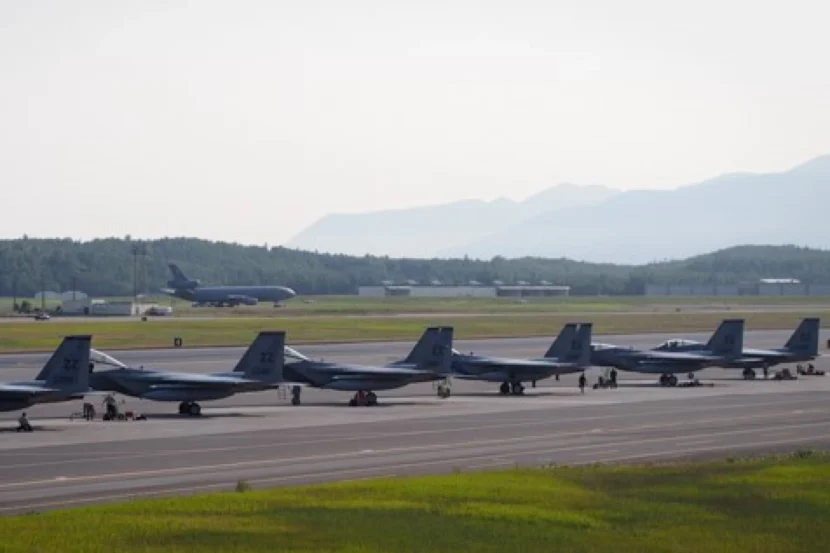
President Donald Trump and Russian President Vladimir Putin will meet Friday at Anchorage’s Joint Base Elmendorf-Richardson.
Here are 12 things to know about the historic, and controversial, summit.
1. Where is the meeting taking place and when?
Anchorage’s military base: Joint Base Elmendorf-Richardson.
But the White House has, so far, released few other additional details, like at what time they’ll meet and how long they’ll be here.
2. Wait. Why are they meeting in Anchorage?
President Trump announced last Friday that they’d meet in Alaska. We’re not totally sure how they landed on the location.
Meetings like this often take months to plan, but this one came together in a week. CNN reported that scrambling organizers weighed other Alaska cities, too, and determined Anchorage was the only viable option. Within the city, only JBER met security requirements.
Also, Anchorage is about 4,300 miles from the Kremlin, and about 3,300 miles from the White House, so you could argue it’s sort of a midway point.
Otherwise, Alaska has a long and complicated history with Russia. Russia sold Alaska to the United States in 1867 and, during the Cold War, the Anchorage base was key in countering the Soviet Union.
But the White House has tamped down expectations of a breakthrough that might lead to a ceasefire. White House press secretary Karoline Leavitt said Tuesday that the meeting will be a “listening exercise” for Trump.
“Only one party that’s involved in this war is going to be present,” Leavitt said. “And so this is for the president to go and to get, again, a more firm and better understanding of how we can hopefully bring this war to an end.”
4. Has Putin ever visited the U.S. before?
Several times. Most recently, in 2015, he was at the U.N. in New York for tense talks with then-President Obama over Ukraine and Syria. In 2001, he made a state visit, stopping in Washington, D.C., New York and Texas. In 2007, he visited then-President George W. Bush at the family compound in Kennebunkport, Maine. He’s also attended multiple international summits.
5. But it’s not uncommon for world leaders to stop at JBER, right?
Right. In its prior incarnation, Elmendorf Air Force Base hosted many visits from presidents and world leaders, often because it was a convenient refueling stop for flights between Washington, D.C., and Asia, or between Europe and Asia. President Nixon and Emperor Hirohito met at the base in 1971, the first time the reigning monarch of Japan set foot on foreign soil. The next year, on his way home after his historic trip to China, Nixon spent the night at the home of Elmendorf’s top general.
Most presidents since statehood have landed at Elmendorf and met with local dignitaries or made some kind of address, including former President Biden and Trump during his first term. President Obama went farther afield on his 2015 trip to Alaska, even visiting Snow City Cafe in downtown Anchorage where he took selfies with fans and ordered cinnamon rolls.
President Donald Trump addresses troops at Joint Base Elmendorf-Richardson in 2019. (Air Force Staff Sgt. Westin Warburton)
6. Aside from the meeting, do we know what else Trump and Putin are doing in Alaska?
So far, it looks like they are making a day trip of it. We’ve heard no plans for either of them to leave JBER.
7. Will there be any street closures or other traffic impacts I should know about?
Not that we know of…yet.
As of Wednesday afternoon, Shannon McCarthy with the Alaska Department of Transportation said there were no anticipated street closures and no known traffic impacts in the city. Any updates on Friday will be posted to 511.alaska.gov.
8. I’m flying in or out of Anchorage on Friday. How will this affect my flight?
The Federal Aviation Administration issued a Temporary Flight Restriction over Anchorage airspace for Friday from 9:15 a.m. to 4:15 p.m. This restriction mainly impacts all non-commercial flights out of Anchorage airports, including sites like Merrill Field and Lake Hood.
But most commercial flights shouldn’t see any major disruptions, said Lex Yelverton at Ted Stevens Anchorage International Airport. She said some flights in and out of Ted Stevens on Friday may experience minor schedule changes or delays of anywhere from 15 to 45 minutes. It’s likely that the airport won’t receive exact information on which flights will be affected until Friday, so Yelverton said anyone travelling should be prepared for delays and build some extra time into their schedules. She said commercial airlines will have the most up-to-date information about specific flights.
9. Anchorage School District students return to class Thursday and Friday. What’s the district doing to prepare?
In a message to students and families on Wednesday, ASD said school will go on as planned this week. The message said that schools around JBER, including the three public elementary schools on base, might experience “minor traffic disruptions, depending on how things play out once both presidents arrive.” In some areas of the city, there may be increased security or air activity, but ASD said they’re expecting any impacts to schools to be minimal.
10. What will security be like in the city?
Anchorage Police Department spokesman Chris Barraza said city police will have an increased presence around town, with additional officers on patrol starting late Thursday night. There will also be increased security on Friday at Ted Stevens Anchorage International Airport, according to the airport spokesperson.
11. Do we expect a big influx of people in the city for the meeting?
Yes.
Barraza, at APD, estimated 700 journalists from all over the world will be arriving in Anchorage this week. As of Wednesday afternoon, he couldn’t provide an exact number for dignitaries or other visitors related to the summit. And, of course, there are already a lot of visitors here because it’s peak tourism season in Alaska.
12. Are there any protests or rallies planned?
Yes. There are protests and demonstrations planned all over the state in support of Ukraine and democracy, including in Homer, Fairbanks, Sitka and Petersburg.
In Anchorage, there are a few planned demonstrations: a peaceful protest in solidarity with Ukraine at 4:30 p.m. Thursday near the Midtown Mall, at the intersection of the Seward Highway and East Northern Lights Boulevard. Another protest is planned for noon on Friday on 510 L Street. Plus, Anchorage Stands with Ukraine plans to put up a massive Ukrainian flag on the Park Strip Friday afternoon.
The Alaska Republican Party is also planning a rally in support of Trump near the Midtown Mall on Friday from 11 a.m. to 1 p.m.
Close
Update notification options
Subscribe to notifications
Subscribe
Get notifications about news related to the topics you care about. You can unsubscribe anytime.