Associated Press

Lack of water drove Alaska island mammoths to extinction

BERLIN — Scientists say that one of the last surviving populations of woolly mammoths was likely driven to extinction by lack of drinking water.

Mammoths lived on Alaska’s St. Paul Island in the Bering Sea until about 5,600 years ago. They never came into contact with humans, who only arrived on the island in 1787.

Researchers from the United States examined evidence of environmental change and found that the mammoths’ demise coincided with declining freshwater resources caused by rising sea levels and drier climate.

In a study published Monday by the Proceedings of the National Academy of Science, they concluded that mammoths may have contributed to their own demise by congregating around remaining water holes.

By trampling the vegetation these Ice Age giants hastened erosion that further reduced the freshwater supply.
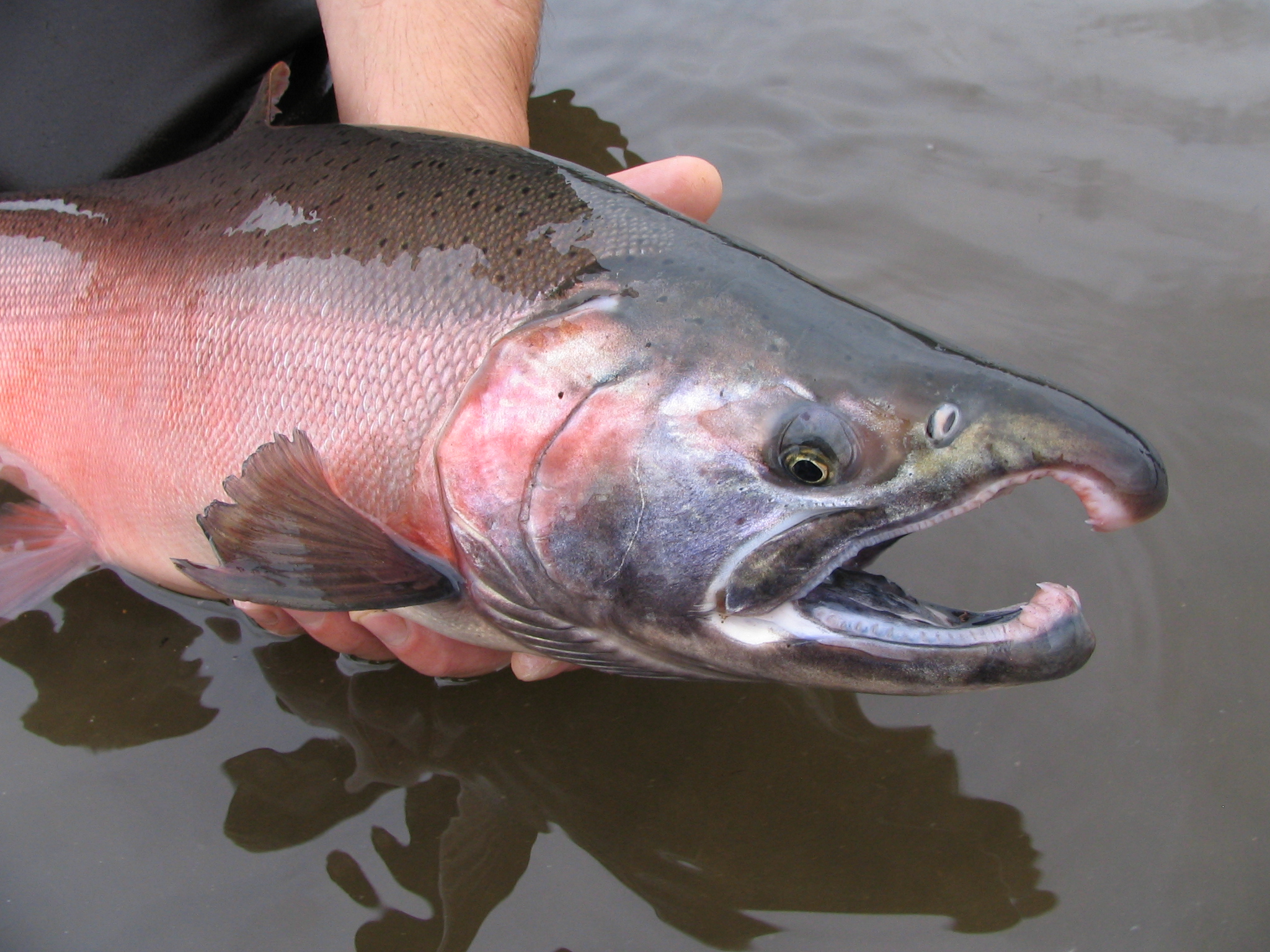
Science unsure of cause for salmon decline in Yukon River

Chinook King Salmon Yukon Delta
Chinook salmon, Yukon Delta NWR. (Public domain photo by Craig Springer/U.S. Fish & Wildlife Service)

TESLIN, Yukon Territory — Ask scientists about the decline of the Yukon River’s chinook salmon run, and they’ll tell you they know one thing for sure — it’s for real.

After that, it gets harder. Peter Hagen works with the National Oceanic and Atmospheric Administration in Juneau. He says there are all sorts of different possibilities and probably not one single reason why the fish decline or rebound.

Hatched in small, gravel-bedded streams in river headwaters, chinooks remain in freshwater for up to 18 months before heading downstream.

After a few months near river mouths, they head into the deep, cold waters of the Bering Sea, where they make their living for up to eight precarious years before beginning their epic migration back to the creeks where they began.

Research hasn’t yet teased out when and where the problem lies.

Two common culprits — industrial development and increased fishing — haven’t been factors along the river, so many scientists believe the problem is in the ocean.

Denali Park road reopens on limited basis after mudslide

Updated 10:35 a.m. Aug. 1: Officials at Alaska’s Denali National Park say vehicles are moving on a limited basis through an area hit by a mudslide on the only road into the park.

The slide covered about 100 feet of road with debris about 10 feet deep.

Park staff Sunday closed the road at Mile 67, beyond the Eielson Visitor Center, where most tour buses turn around to return to the park entrance.

However, the mudslide temporarily stranded guests and employees at private lodges in Kantishna and visitors who rode to the western end of the park road.

Lodge and visitor buses were able to make it through later Sunday.

Park officials say the road remains closed but limited traffic movement would be allowed at 8 a.m. and 6 p.m. Monday.


Original post: 8:29 p.m., July 31: Officials say that much of the only road that runs through Denali National Park has been closed after a large mudslide. Park staff on Sunday closed Denali Park Road at mile 67 just west of the Eielson Visitor Center after a mudslide Saturday morning covered the route with debris that is 100 feet wide and 100 feet deep.

Associated Press

Two cases of Mumps in Fairbanks

Fairbanks health officials say two cases of mumps have been confirmed in the area. The Fairbanks Daily News-Miner reports that according to a statement from Fairbanks Memorial Hospital and Tanana Valley Clinic, both cases are associated with overseas travel.

Trees cut to make room for Talkeetna Airport expansions

People living near the Talkeetna Airport are upset because expansions to the site have required many large trees to be cut down. KTUU-TV reports that residents say without the trees they have a clear view of the airport, which shuttles tourists and climbers to Denali as well as fielding local traffic .An ADOT spokeswoman says the FAA–funded project required the trees be removed.

Shishmaref residents decide to stay or leave

A tiny island village on Alaska’s storm-battered western coast is entering a new chapter in its decades-long pursuit to move the entire community from its badly eroding shores to safer ground.

The Inupiat Eskimo community of Shishmaref will hold a special election next month asking residents if they should develop a new community at a nearby location on the mainland or stay put with added protections.

Either scenario selected in the Aug. 16 vote would cost millions. That’s money the community of nearly 600 doesn’t have.

Regardless of the vote, the impoverished village 600 miles northwest of Anchorage ultimately will have to search for funding to make the choice a reality.

Shishmaref Mayor Howard Weyiouanna Sr. says “doing nothing is not an option.”

Site notifications
Update notification options
Subscribe to notifications