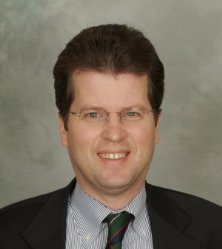
David Stone (Photo courtesy City and Borough of Juneau)
Juneau Deputy Mayor David Stone is back in his old job at the Alaska Department of Labor.
Commissioner Click Bishop today (Tuesday) renamed Stone deputy commissioner, a position he held prior to last fall’s state election. In December, Stone accepted a job as chief of staff for newly-elected Lieutenant Governor Mead Treadwell. He rejoined the Labor Department earlier this year as an assistant commissioner.
Greg Cashen – who had been executive director of the Alaska Workforce Investment Board – will take over Stone’s assistant commissioner job, Bishop announced.
Jeff Selvey is the new director of the Workforce Investment Board, which helps plan employment training programs in Alaska. Selvey is a longtime educator in Alaska, and previously worked as the board’s career and technical education coordinator.
AWARE’s effort to build a new extended stay shelter for victims of domestic violence and sexual assault could get a boost from the City and Borough of Juneau.
The CBJ Assembly Human Resources Committee last night (Monday) recommended the city partner with AWARE to apply for up to 850-thousand dollars in federal pass-through money for the project.
Since 2007, the Juneau nonprofit has been planning a six-unit residential shelter, with four 2-bedroom apartments and two efficiencies. Executive Director Saralyn Tabachnick says the facility would serve as transitional housing for women and families who utilize AWARE’s emergency shelter. “Transitional” meaning four months to two years.
“We say that we’re a 30 day program, and the reality is for people trying to find housing in Juneau, it’s very difficult no matter what your means are. So we often extend the 30 days,” says Tabachnick. “And it would be helpful to have transitional housing – some longer term safe shelter where they can continue to build stability and safety.”
The grant – combined funds already secured by the organization – would help AWARE complete planning and start construction, estimated at 3.5-million dollars.
Tabachnick says a long-term domestic violence shelter has been a need in Juneau and all of Southeast for as long as she can remember.
“This is a regional need. There is not a transitional housing facility for domestic violence survivors in all of Southeast Alaska,” Tabachnick says. “Our service area is Juneau and then nine northern communities in Southeast Alaska: Haines, Hoonah, Klukwan, Skagway, Gustavus, Elfin Cove, Pelican, Yakutat, and then Tenakee Springs.”
Community Development Block Grant applications are due in December 2nd. Proposals from around the state are judged by the Alaska Department of Commerce, Community and Economic Development, and funds will be awarded early next year.
A Juneau man is dead after a diving accident Monday morning in Funter Bay on the west side of Admiralty Island.
Alaska State Troopers say 35-year-old John Robert Pugh, Jr. didn’t come up from his second dive of the day, sometime before 8 o’ clock Monday morning. An unidentified companion went in after him, administered CPR, and brought Pugh to the Auke Bay boat launch aboard a 21-foot skiff.
Pugh is the son of University of Alaska Southeast Chancellor John Pugh and former Alaska Corrections Commissioner Margaret Pugh. State business records list him as holder of a business license for the Scuba Tank dive shop on Dunn Street and a part owner of the company Johnny’s Oysters for which the business license expired in 2007.
Pugh was reportedly diving in about 20- to 25-feet of water when the accident occurred. He was reportedly found near the bottom with the regulator out of his mouth.
Sergent Tim Birt says troopers have requested an autopsy by the state Medical Examiner’s office in Anchorage, because the death happened in a remote area and was unobserved. An investigation is underway, but the death is not considered suspicious.
Birt says the commercial sea cucumber dive fishery was getting underway in the area Monday, but he says Pugh’s dive was considered recreational in nature.
The 10th Circuit Court of Appeals ruling means the controversial decade-old policy, which prevents road construction on certain federal lands, remains in place nationwide.
Wyoming argued that federal agencies violated the 1964 Wilderness Act and the National Environmental Policy Act in implementing the Roadless Rule.
The State of Alaska is currently challenging the rule on two fronts. A lawsuit filed in the District of Columbia argues that the rule itself violated the Alaska National Interest Land Conservation Act and the Tongass Timber Reform Act. Meanwhile, another suit filed with the 9th Circuit Court of Appeals seeks to reverse a lower court ruling that removed an exemption for the Tongass National Forest.
Assistant Alaska Attorney General Tom Lenhart says Friday’s decision won’t stop the state from moving forward with those suits.
“We made some of the same claims that was made by Wyoming. But in addition to that we have ANILCA and we have the Tongass Timber Reform Act, both of which apply only in Alaska,” says Lenhart. “And we feel strongly that the Roadless Rule, in fact, violates both of those federal statutes in Alaska.”
Earthjustice Attorney Tom Waldo says it’s unlikely the D.C. court will overrule the other circuit courts, even when it comes to the Alaska-specific arguments.
“The forest service thoroughly considered the application of those laws when it adopted the Roadless Rule,” says Waldo. “And we’re very confident that for the same reason that the 9th and 10th Circuits have rejected all the other challenges to the Roadless Rule, we think the D.C. court will also reject those Alaska-specific challenges to the Roadless Rule.”
Waldo and Lenhart agree that the 10th Circuit decision shouldn’t have any bearing on the Tongass exemption case, since that’s a separate issue from challenges to the rule as a whole.
Legislation sponsored by Alaska’s Congressional delegation would exempt the entire state from the rule.
The Roadless Rule was implemented in 2001, in the last days of the Clinton Administration. The Obama Administration has defended it.
Andre Rosay, UAA Justice Center. (Photo by Casey Kelly/KTOO)
The telephone survey was conducted between April and June of this year. Respondents were limited to English-speaking adult women, who live in the City and Borough of Juneau. Andre Rosay with the University of Alaska Anchorage Justice Center analyzed the data, and says despite those limitations, the survey had a relatively large sample size.
“Our original goal was, I think 550 respondents, and we were able to collect data from 600,” says Rosay.
While he thinks the result is a fairly conservative estimate of the amount of domestic violence and sexual assault in Juneau, Rosay says the survey was designed to get accurate information.
“We identify the survey as a survey of health and injury, and then we slowly get into more serious forms of victimization,” Rosay says. “So, we’ll begin with psychological aggression, then we’ll move on to coercive control, eventually we’ll talk about physical violence, and then towards the end of the interview, we ask about sexual violence.”
Rosay says past domestic violence and sexual assault surveys have been skewed by using legal definitions. This survey addressed specific behaviors.
“We didn’t ask respondents if they were a victim of an assault, instead we asked them, ‘Have your romantic or sexual partners kicked you? Have your romantic or sexual partners hit you with a fist or something hard?'” Rosay says.
The results were weighted to represent the number of women over the age of 18 in Juneau – about 11,700, according to the last Census. Based on those estimates more than 47 percent of women in the Capital City have experienced domestic violence and 35 percent have experienced sexual violence in their lifetime. Estimates for just the past year were shocking: 12 percent of women in Juneau were physically abused by a partner, and one percent were sexually assaulted or raped. Overall, Rosay says 55 percent of women in Juneau have been victims of either domestic abuse or sexual violence, or both.
“Our neighbors, our friends, our co-workers, our mothers, daughters, people that we care about and people that we love,” says Rosay.
Regional surveys like the one in Juneau have been done in Anchorage, Fairbanks and Bristol Bay this year, patterned after a 2010 statewide survey. However, Rosay cautions against comparing data from any of the studies.
“Because you’re talking about different types of assaults that are committed against different types of people, and that are perpetrated by different types of offenders,” Rosay says. “But what I can tell you, is that in all of the regions that we have studied this year, we are finding very high, unacceptably high, rates of violence against adult women.”
“To give some time for community strategies to go into effect,” Morton says.
AWARE Executive Director Saralyn Tabachnick. (Photo by Casey Kelly/KTOO)
In Juneau, one of those strategies has been developed by AWARE, a nonprofit domestic violence and sexual assault prevention center. It’s a plan called “Pathways to Prevent Violence.” AWARE Executive Director Saralyn Tabachnick says three of the four pathways are at least in part targeted at young children and teens.
“I think that’s critically important. To give healthy messages early on and to repeat them early on,” Tabachnick says.
The Juneau Police Department also has taken an active role in fighting crimes against women. Julia Erickson is JPD’s police crisis intervention specialist, a social worker position created two years ago to follow up with victims of domestic or sexual abuse.
“To make sure that they get the resources that they need to support them through the court process, through getting into safe shelter, getting a protective order, whatever needs to be done to ensure their safety, and to stop the re-victimization of women,” says Erickson.
The survey of Juneau women was paid for as part of a legislative appropriation to the state Council on Domestic Violence and Sexual Assault. It also received support from Governor Sean Parnell’s Choose Respect initiative.
For months now, Juneau City Manager Rod Swope has warned that a shrinking tax base, less federal support and a lower return on investments add up to a potential 7.5-million dollar shortfall for the city’s upcoming biennial budget. His projection hasn’t changed.
“The first year we’re figuring probably try to reduce the budget by $5-million, and then the second year we’re anticipating we’ll still have to take further reductions of about $2.5 million,” he says.
Swope’s strategy for dealing with the deficit also hasn’t changed. He told the assembly that vacant positions will be held open as long as possible while city departments look for efficiencies. He’s also asked all department heads to take a two-week furlough before July. But Swope says the assembly will decide if the shortfall warrants cuts to city services.
“My plan was to go ahead and work with the departments to identify those, list them out to indicate what the service currently is, what the proposed reduction would be, and then clearly state what the impact would be to citizens in the community,” he says.
Swope thinks he can give the assembly his list of proposed service cuts by the end of November. Mayor Bruce Botelho says the assembly agrees with that approach.
“His proposed strategy is one that the assembly simply affirmed. It confirmed the direction that he intends to take the city,” Botelho says.
Swope will leave his budget proposal in the hands of the Assembly before he retires on March 31st.
Botelho expects the assembly will hold several meetings to review the hiring process for a new city manager, beginning October 31st at another work session. Swope retired for the first time almost three years ago. But when a nationwide search for his replacement fizzled, the assembly asked him to come back on a two-year contract, which he agreed to do after a six-month hiatus.
The whole assembly will decide whether to do another search for a city manager. But this time around, Botelho supports promoting Deputy Manager Kim Kiefer, who was acting manager during Swope’s sabbatical.
“She is thoroughly familiar with all the issues that are taking place in city government. She is thoroughly familiar with and dedicated to, committed to this community,” says Botelho.
Kiefer did not apply for the city manager’s job when Swope retired the first time, but says now she’s up to the challenge.
“Part of it for me now is that I did do it for six months and I have a better understanding of it. And I’ve got another two years under my belt, so I feel like I’m in a better position,” Kiefer says. “And also I think, from the city’s standpoint, when we’re looking at a 7.5 million dollar deficit, that trying to keep things as stable as we can when we move forward is a good thing for the organization.”
Kiefer has roots in Juneau, having moved to the Capital City in the sixth grade. She attended Auke Bay School and graduated from Juneau Douglas High School in 1977. She returned after college and started working for the city in 1984. She’s been deputy manager since 2006.
If selected as manager, Kiefer says she knows one thing for sure: “It’s definitely a two-person job, because I did both for the six months. Having a deputy city manager and a city manager as that team is really critical.”
At its retreat Tuesday, the assembly also discussed a list of capital projects that could be funded by an extension of the city’s one-percent temporary sales tax. The current extension expires in 2013, and would need to be reauthorized by voters next fall. Botelho says a five-year extension could bring in 35- to 40-million dollars over the life of the tax. The list of projects being considered is about 150-million. The mayor expects it will be pared down between now and next summer, in time for the assembly to approve a ballot proposition to go before voters at the fall municipal election.
Close
Update notification options
Subscribe to notifications
Subscribe
Get notifications about news related to the topics you care about. You can unsubscribe anytime.