Clarise Larson

City Government Reporter, KTOO

"My mission is to hold Juneau’s elected officials accountable for their actions and how their decisions impact the lives of the people they represent. It’s rooted in the belief that an informed public has the power to make positive change."

When Clarise isn't working, you can find her skijoring with her dog, Bloon, or climbing up walls at the Rock Dump.

What do residents and tourists think of Juneau’s proposed seasonal sales tax this election?

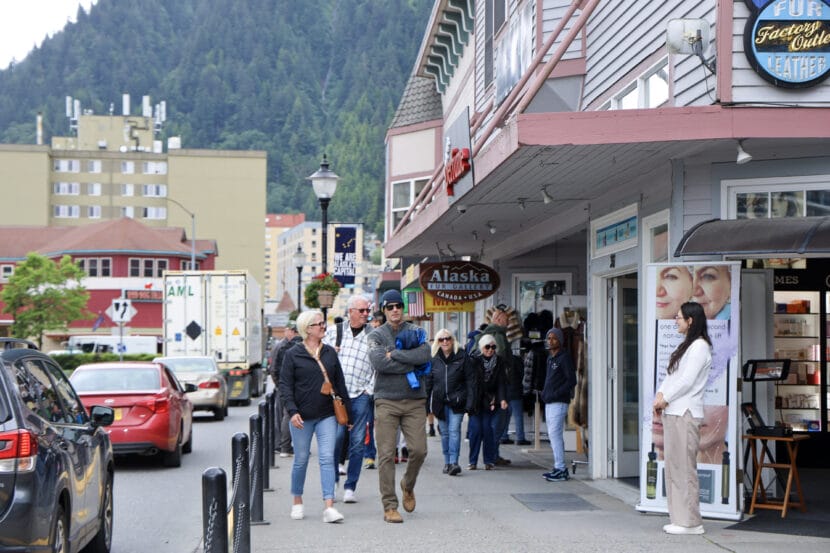
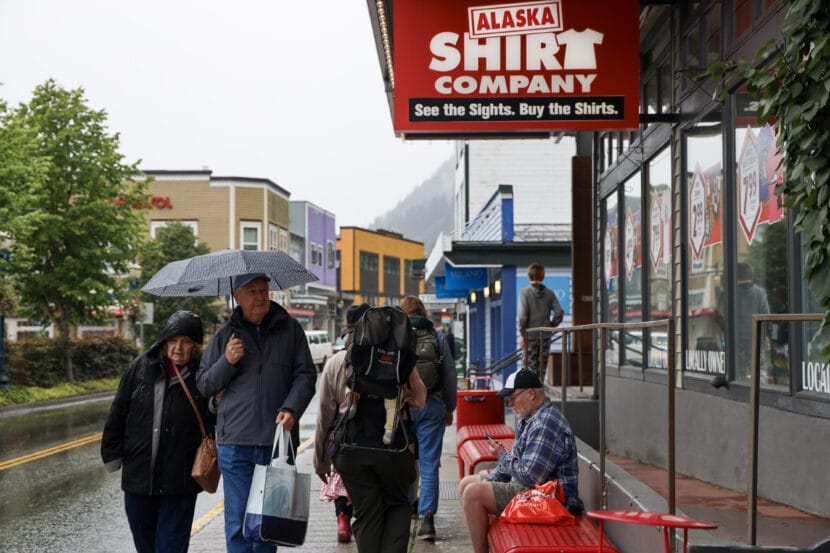
Cruise ship visitors walk past the Alaska Shirt Company in downtown Juneau on Thursday, Sept. 18, 2025. (Photo by Clarise Larson/KTOO)

Voters will decide this fall whether to adopt a seasonal sales tax to make the most of the more than a million cruise ship passengers who visit Juneau each summer.

Some residents are wary of the idea.

It was a rainy September day on Thursday, but the wet sidewalks and streets were still lined with cruise ship passengers donning thin plastic ponchos and holding shopping bags.  

Mickey Hall and her friends, Russ and Pat Genzmer, stood outside the Alaska Shirt Company in downtown Juneau. They were all holding the store’s iconic, bright red shopping bags. 

“I got a sweatshirt, and my grandson got socks,” Hall said, laughing. 

They were in Juneau for the day, visiting off the Nieuw Amsterdam cruise ship. Without looking at their receipts, they couldn’t say how much they paid in local sales taxes on the souvenirs they just bought. 

“What is the sales rate?” Hall asked.

“I thought it was free,” Genzmer said, laughing. “I thought they had no sales tax in Alaska.”

That’s half true. While Alaska has no statewide general sales taxes, many municipalities have their own local taxes. In Juneau, that’s 5% on goods sold year-round. But that could soon change. 

Juneau voters will decide this October whether the city should implement a new seasonal sales tax system. The city would bump its tax rate up in the summer when tourists are in town to 7.5%, then lower it to 3% in the winter to give locals a break.

The change would apply to most residents, with a few exemptions. Advocates for the system say it’s meant to take advantage of the summer tourists while also giving some winter relief to year-round residents. Juneau Assembly member Neil Steininger supports the idea. He’s an economist and previously served as director of the Office of Management and Budget for the state.

“We have a lot of out-of-town visitors, and we have a lot of economic activity from non-residents in the summer, and so it allows us to shift some of that tax burden away from residents, making it even more affordable for individual residents in Juneau,” he said. 

While cruise ship passengers Hall and the Genzmers say they won’t lose sleep over the tax increase, not everyone is on board. 

Juneau resident Wayne Coogan is co-owner and general manager of Coogan Construction. He said he’s worried that implementing a seasonal tax structure in Juneau will disproportionately affect construction spending. 

“Everyone knows that the construction industry, to a great degree, goes to sleep in the wintertime,” he said. “They bed down and wait for the weather to come back for what’s called the construction season. And so the heavy spending occurs in the summertime.”

While Juneau’s city government does offer some sales tax exemptions for construction materials, it doesn’t cover everything. Coogan said the seasonal change will make buying goods in the summer more expensive, which will eventually trickle down to consumers.

But other locals, like Joel Ferrer, said he sees the logic behind the system. He lives in Juneau year-round and owns a tourist shop downtown. He says he is willing to try it.

“The bottom line is, like, there’s no perfect system. There’s always going to be a glitch, or some people will be affected in a positive way. Some will be a negative way,” he said. “No one’s going to be totally happy with whichever.”

Other Southeast Alaska tourism towns like Ketchikan, Sitka, Craig, Pelican and Skagway have already adopted seasonal tax structures. All of them see a significant amount of summer tourism. 

Ketchikan implemented a seasonal sales tax structure within city limits in 2023. The borough has a population of about 14,000 year-round residents, but it sees more than a million tourists each year. 

Ketchikan Mayor Bob Sivertsen said the tax structure just makes sense.  

“The reality of it is, the community sees our resources being used, our streets being crowded,” he said. “I think they see this as a positive way for the community to utilize the economy that we have, which is the seasonal economy, in the best interest of the community.”

The additional revenue the city takes in from the new system goes into its general fund and has paid for things like wage increases for city workers. Sivertsen said he hasn’t heard much backlash from the community about the system. 

“We all understand that we have to pay for the services we get, but if we can get the visitors to pay for a larger portion of that in a short period of time, it makes sense,” he said. 

Janice Walker runs Madison Lumber and Hardware in Ketchikan. She said while the new system hasn’t dramatically changed her business, it does cause some headaches. 

“It’s just something every six months we have to do, and then they also have a sales tax-free day down here, so you got to do it for that day,” she said. “Anyways, for the retailer, it makes it a little more difficult.”

She said she supports the change as long as the revenue that the city takes in goes toward services that benefit year-round residents. 

In Juneau, the sales tax boost in the summer is intended to offset another ballot question that would exempt essential food and residential utilities from local sales tax.

The cruise ship passengers on Franklin Street, Hall and the Genzmers, say go for it. 

“Good for you guys,” Hall said. “People live here — they deserve a break.”

But it’s not up to them. Juneau voters will decide.

The last day to vote in Juneau’s by-mail election is Oct. 7. Ballots will be mailed to registered voters on Friday. Completed ballots can be returned by mail, in city drop boxes starting Friday, or to city vote centers starting Monday. 

More information about when and how to vote can be found at juneau.org/elections

Find the latest local election coverage at ktoo.org/elections.
Near-miss landslide in downtown Juneau prompts apartment complex evacuation

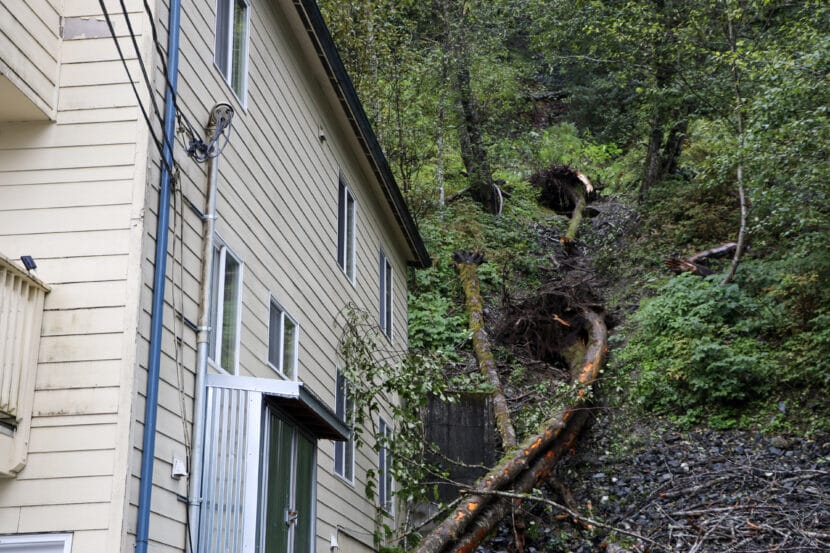
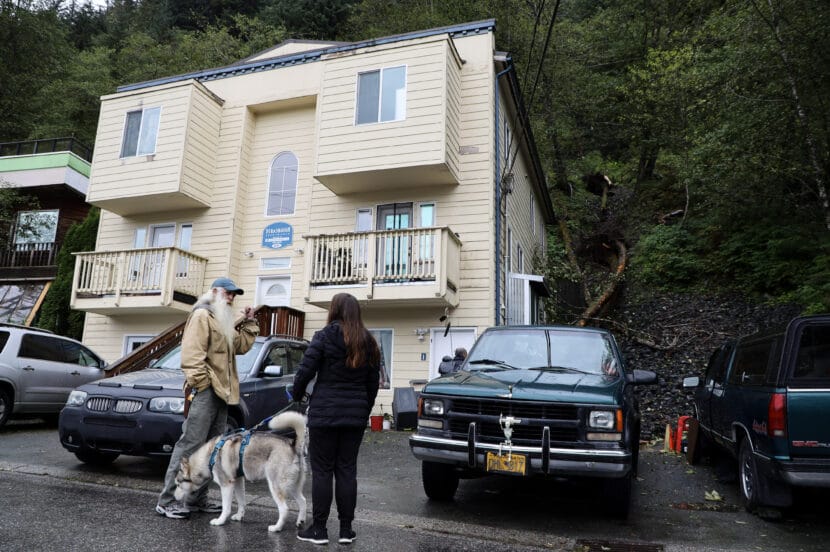
Dave Bonilla and Monica Johnson stand outside the Strasbaugh Apartments on Gastineau Avenue, where they live on Thursday, Sept. 18, 2025. A landslide occurred next to the building the night before, forcing them to evacuate. (Photo by Clarise Larson/KTOO)

A landslide triggered by heavy rain and wind took down trees next to an apartment building in downtown Juneau late Wednesday night. Although this slide didn’t damage homes or hurt anyone, people living in the building are calling it a near miss.

On Thursday afternoon, Dave Bonilla stood outside the Strasbaugh Apartments on Gastineau Avenue smoking a cigarette and gazing at a gash in the mountainside adjacent to the building. He has lived there for more than five years. 

The night before, a torrent of soil, rocks and large trees slid down Mount Roberts, barely missing the building. Bonilla said he really didn’t know what had happened. 

“I have no idea,” he said, laughing. “I was asleep, and it came down, I guess woke everybody else in the building up — but I was out.”

Landslide debris scars Mount Roberts near the Strasbaugh Apartments on Gastineau Avenue in Juneau on Thursday, Sept. 18, 2025. (Photo by Clarise Larson/KTOO)

Monica Johnson also lives there with her husband and two young children. She was at work, listening to the police scanner, when the landslide struck. 

“I hear on the dispatch saying that 265 [Gastineau Avenue] just reported that a tree and some boulders came down and hit the apartment building next to their house,” she said. “So I’m looking at Google Maps, going, ‘oh my gosh, it’s on Gastineau Street.’”

All of the residents were safely evacuated around 11 p.m. This isn’t the first time they have had to evacuate. 

A landslide occurred in the same spot last summer. The scar is still visible on the mountainside. Juneau, and Gastineau Avenue in particular, are prone to landslides. The street is in a severe landslide hazard zone, according to maps the city commissioned in 2022 but didn’t adopt

Gastineau Avenue has a long history of landslides. In 2022, a landslide hit three homes and knocked out power on the street. In 1936, Juneau’s deadliest landslide killed 15 people and buried parts of downtown in thick mud. And back in 1920, a landslide destroyed 16 buildings on Gastineau Avenue and South Franklin Street, killing four people.

Looking at the mountain, Johnson said Wednesday night’s landslide has her family looking for a more secure place to live.

“All of this has happened to us several times. Anything can come down,” she said. “Like, those two trees on the side, they kind of creep me out, because if those were to fall, they could smash right into our building.”

Ryan O’Shaughnessy is the emergency program manager for the City and Borough of Juneau. After the landslide, he went to the building with first responders from Capital City Fire/Rescue to assess the danger. 

“They looked up the slide and identified a bunch of loose material further up the slide path,” he said. “So, some more trees with exposed root wads up the slide path.” 

O’Shaughnessy said that because more rainfall was expected overnight Wednesday, he was concerned it could cause more soil and trees to slide downhill. That’s when the city decided to evacuate the building. 

He said the city planned to open an emergency shelter, but the owner of the building booked hotel rooms for the 15 displaced residents instead. 

The city lifted the evacuation order around 10 a.m. Thursday. O’Shaughnessy returned to the building in the morning to assess the damage. 

“Very, very little, if any damage to the building at all,” he said. 

Last year’s landslide caused more damage. Johnson said a tree smashed the electrical box and damaged the foundation. Her family was displaced for more than two months while the building was being repaired. 

O’Shaugnessy said there isn’t a way to predict landslides in Southeast Alaska yet, but when emergency responders and planners can assess the site and see an imminent threat, they issue evacuation warnings to keep people safe. 

Juneau voters will decide on key local tax measures this election. Here’s what you need to know.

Watch this story above or listen below:

Juneau’s 2025 municipal election is just around the corner. Candidates for Juneau Assembly and school board are on the ballot this year, alongside three questions.

Ballot propositions one and two aim to reduce the tax burden on individual residents, but officials say that will come at a cost to the city’s coffers. Ballot proposition three attempts to boost city tax revenue by increasing the sales tax rate when cruise tourists are in town, then lowering it again in the off-season. 

Christine Woll is a longtime Juneau Assembly member and chairs its finance committee. 

“I actually think this is probably the most consequential election we’ve had locally in the 15 years I’ve been here in Juneau,” she said. “Each of these will have a big impact on the city’s budget and ability to fund services in our community.”

An advocacy group called the Affordable Juneau Coalition gathered enough signatures this spring and summer to place propositions one and two on the ballot. Angela Rodell is the treasurer of the group and formerly ran the Alaska Permanent Fund Corporation. She said the propositions are designed to make Alaska’s capital city more affordable. 

“We have a very high cost of living, and that impacts almost everybody, except, obviously, the wealthy,” she said. 

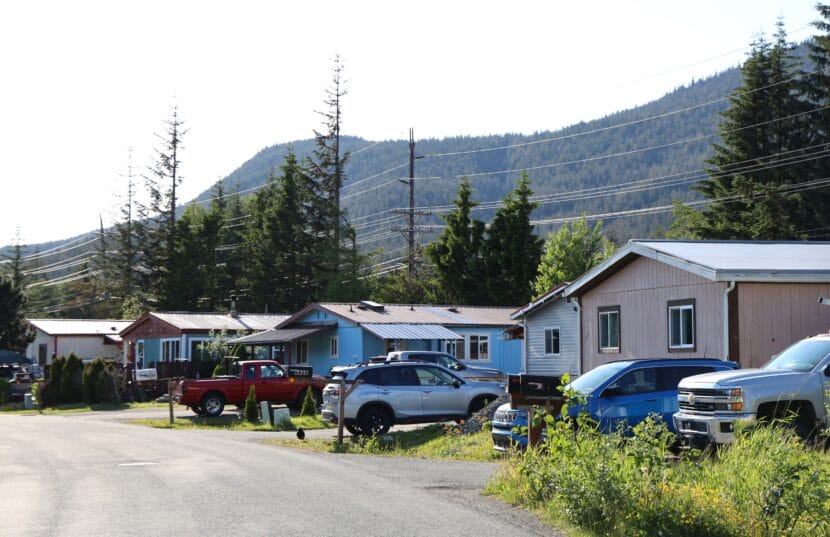
Manufactured homes in Lemon Creek on Monday, June 17, 2024. (Clarise Larson/KTOO)

Proposition 1

Proposition 1 seeks to cap the local property tax rate, also known as the mill rate. One mill is equal to $1 per $1000 in property value. 

“Everyone who owns property in Juneau pays property tax to the city based on the value of their property,” Woll said. “This would be capping the rate at which the Assembly can charge them for that.”

Right now, the city caps the mill rate at 12 mills. But, if voters pass Proposition 1 this election, that cap would be lowered to nine mills

Now, that change could lower property taxes for property owners. But it also means the city would take in less revenue each year. For each dollar the city collects in property taxes, a bit more than 50 cents goes toward education and a little under 40 cents goes toward city services. 

The rate cap wouldn’t be immediately devastating to the city’s roughly $140 million in annual discretionary revenue. But, Woll said over time it could substantially influence the city’s ability to fund the services residents usually expect. 

“It results in about a $2 million loss to city revenue every year, which is significant,” she said. “But when I think long term, it’s maybe less about the money and more about the city’s ability to respond to changing environments.”

The city estimates that owners with property assessed at half a million dollars or less would save about $80 per year in property taxes if the proposition passes and their home value stays the same. 

Woll said the proposition’s passing will be most beneficial to Juneau’s wealthiest residents and large commercial land owners — not low income people.

“That’s kind of the question that’s being asked this year is, ‘do you think we should be focusing on making this a community that has services for our lowest income people, or do you think that we should cut taxes for the wealthiest in the community to make things more affordable?’” she said. 

Rodell disputes that, and argues the change will force the Assembly to focus its spending on needs versus wants — something the Affordable Juneau Coalition thinks it hasn’t been focusing on. 

“I think we can figure out how to tighten that belt a little bit,” she said. “I think it’s really imperative that the city show its residents that they care about affordability and want to really focus on the things that make this community very livable.”

An employee restocks food at Foodland IGA in downtown Juneau on Tuesday, April 29, 2025. (Photo by Clarise Larson/KTOO)

Proposition 2

Proposition 2 would also shrink the amount of revenue the city brings in each year. The proposition would exempt essential food and residential utilities from local sales tax. Right now, the city taxes food and utilities like just about everything else – at 5%. But if the initiative passes, it would drop to zero percent for everyone, regardless of their income. 

Economists say that taxes on food hit low-income people the hardest. Juneau Assembly member Neil Steininger is an economist, and he supports the concept. 

“We don’t have the supply chains that can provide us lower-cost food, like a lot of areas down south do,” he said. “That really impacts your day-to-day living, because you got to eat every day.”

But, he warns that the current 5% tax on food and utilities brings in a combined $10 to $12 million in revenue to the city annually. He said removing that tax would leave a serious hole in the city’s budget. 

“That’s more than just a little belt tightening, you know, that’s more than just, you know, buying less paper clips and buying less Post-it notes,” Steininger said. “That’s really looking at the overall spectrum of services we provide and choosing some to not provide.”

Cruise ship tourists visit shops in downtown Juneau on Wednesday, July 10, 2025. (Photo by Clarise Larson/KTOO)

Proposition 3

That potential cut to services is why the Assembly put Proposition 3 on the ballot. It asks voters whether to implement a new seasonal sales tax system next year. They’re hoping it would recoup some of the revenue lost if the property tax or food and utility tax propositions are passed by voters. 

“The seasonal sales tax, basically will make up for that $9 to $12 million revenue loss by shifting the tax burden from residents to our summer visitors,” Woll said. 

This proposal would raise sales taxes in the summer months and lower them in the winter. It’s aimed at taking advantage of the roughly 1.7 million summer cruise ship tourism visitors that come to town each year. Other nearby Southeast towns like Ketchikan, Sitka and Skagway have similar seasonal tax structures in place already.

Juneau currently charges 5% in local sales taxes. That’s made up of both permanent and temporary taxes. They help pay for general government costs, voter-approved projects and community interests.

If voters pass Proposition 3, shoppers would instead pay a 7.5% tax from April through September and a 3% tax from October through March. 

“We have a lot of out-of-town visitors, and we have a lot of economic activity from non-residents in the summer,” Steininger said. “It allows us to shift some of that tax burden away from residents, making it even more affordable for individual residents in Juneau.”

But Rodell said she’ll be voting no on the measure and the Affordable Juneau Coalition is advocating against it. Her opinion is that it won’t actually save money for year-round residents and businesses. 

“It needs to go back to the drawing board,” she said. “They need to do a better job about defining how it’s going to help the residents of this community.”

The last day to vote in Juneau’s by-mail election is Oct. 7. Ballots will be mailed to registered voters Friday. Completed ballots can be returned by mail, in city drop boxes starting Friday or to city vote centers starting Monday. 

More information about when and how to vote can be found at juneau.org/elections

Find the latest local election coverage at ktoo.org/elections

Cruise ship passenger dies from fall on Mount Roberts in Juneau

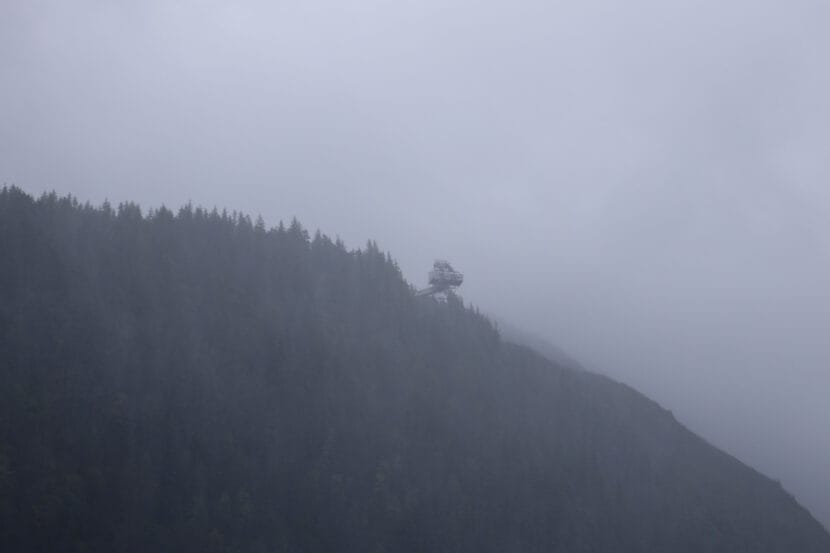
Fog surrounds the Goldbelt Mount Roberts Tramway on Wednesday, Sept. 17, 2025. (Photo by Clarise Larson/KTOO)

A cruise ship passenger died in Juneau on Tuesday after falling off a steep mountainside on Mount Roberts near downtown. 

Search and rescue responders used drones to locate the body of 32-year-old Texas resident Britian Pool Tuesday night, according to a dispatch the Alaska State Troopers shared Wednesday afternoon.

His body was recovered by Troopers and Juneau Mountain Rescue after he and another man reportedly fell from the Mount Roberts trail and slid down the mountainside. Capital City Fire/Rescue assisted troopers and Juneau Mountain Rescue on a rescue near the tram, according to a department Facebook post on Tuesday night. 

Both men were passengers on a cruise ship visiting Juneau for the day. Responders were able to locate and rescue the man with Pool, who suffered minor injuries. 

According to troopers, Pool’s body is being sent to the state medical examiner’s office and his next of kin have been notified

Pool is the second cruise ship passenger to die from a fall on Mount Roberts this year. At least five people have died in the backcountry around Juneau this summer. 

Correction: Alaska State Troopers initially reported the wrong age for the man who died. 

Severe wind causes fallen trees, power outages in Juneau

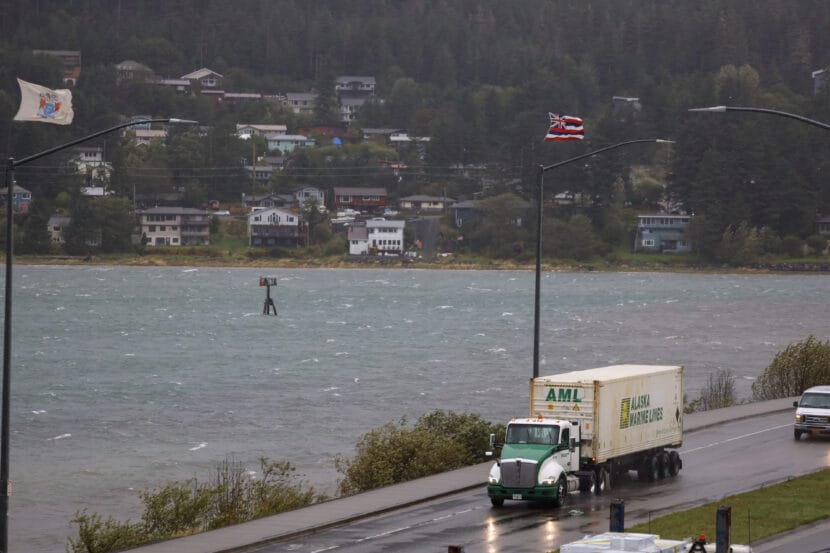
Wind blows the water in the Gastineau Channel on Wednesday, Sept. 17, 2025. (Photo by Clarise Larson/KTOO)

This story has been updated. 

A storm moving through Southeast Alaska is causing high winds that will continue into Wednesday evening in Juneau. It’s resulting in power outages and fallen trees. Multiple cruise ships have canceled port calls.

The National Weather Service issued a high wind warning early Wednesday morning, which is in effect until 7 p.m. Brian Bezenek, the lead meteorologist at the Juneau NWS office, said sensors have reported gusts reaching up to 60 miles per hour downtown.

“We’ve got some very gusty and strong winds moving through the area that have been knocking down a few trees here and there, as well as some other minor damage around town,” he said.

Three cruise ships that were scheduled to arrive in Juneau canceled their stops ahead of the storm Tuesday night. One ship, the Caribbean Princess, chose to stay in Juneau overnight and remains in port this afternoon. The Viking Orion cruise ship was scheduled to arrive in Sitka today, but instead diverted course to Juneau due to the winds.

Matt Creswell, the city’s harbormaster, said local tugboats helped the ship moor this afternoon.

“All cruise ships visiting Juneau are able to have tugs on standby at any time they want,” he said. “That’s a common thing that if you need a tug, it’s always manned and ready to go if the ships need it.”

Alaska Electric Light & Power reported an areawide outage due to downed trees across town. The City of Hoonah also reported outages.

Bezenek said the heavy winds are expected to head north and through Juneau later this evening.

“It’s drifting north, and it should be jumping inland across the mountain range through today,” he said. “We’ll probably have the gusty winds in the Juneau area continue for another couple hours, and then we’ll see this wind band probably pushed north through the Lynn canal area.”

The Juneau School District reported at noon that all schools have been impacted by the power outage, but classes are continuing as regularly scheduled.

This is a developing story. Check back for updates. 

Juneau’s fire chief will retire this fall

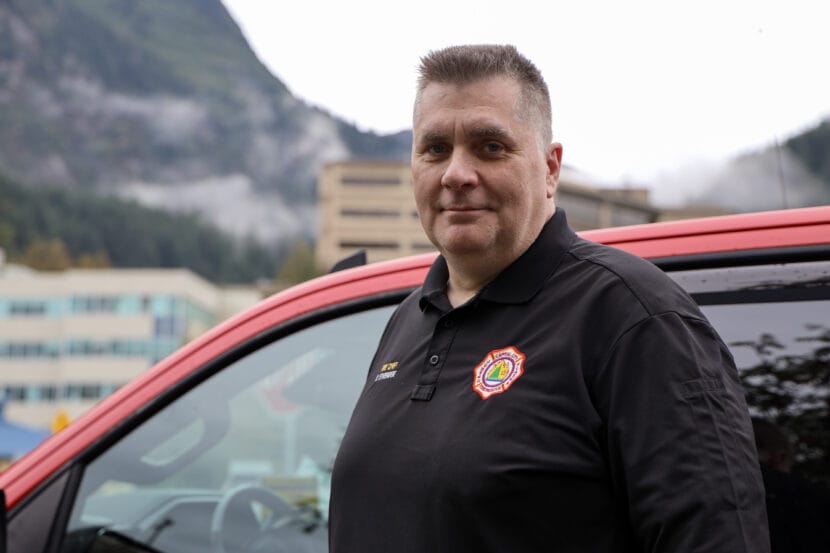
Juneau’s Capital City Fire/Rescue Chief Rich Etheridge in downtown Juneau on Tuesday, Sept. 16, 2025. (Photo by Clarise Larson/KTOO)

Juneau’s longtime fire chief announced he plans to retire later this fall. 

Rich Etheridge has been at the helm of Capital City Fire/Rescue for more than 15 years. During that time, he led the department as it responded to countless house fires, search and rescues and natural disaster events.  

He said he intends to help recruit and train his replacement before his departure, which doesn’t have a firm date yet. He said retirement kind of crept up on him. 

“Everybody said you’ll just know when it’s time. And I’m like, ‘What?’ I don’t know what that meant,” he said. “But it’s true — you just know.”  

Etheridge has worked in public service for more than three decades. During that time, he served as an Alaska State Trooper and Juneau’s fire marshal before becoming chief. He said he plans to enjoy his retirement in Juneau, spending time with family and growing his woodworking business. 

Etheridge said he hopes to see the department continue to focus on recruiting and retaining employees after his departure. Earlier this summer, CCFR announced it would pilot a paid internship program this year to equip locals with certifications and skills needed to work in the field. 

Etheridge said he thinks the new program will serve as a long-term investment in the department’s future and help combat its chronic understaffing issues.

The Juneau Career Firefighters Union is currently at an impasse in its negotiations over a new contract with the city. Union representatives say uncompetitive wages and staffing shortages are driving people away from the department.

Etheridge shared a piece of advice he thinks everyone should know when it comes to fire safety. 

“I would say get rid of that mindset, ‘It won’t happen to me,” he said. “Everybody that we go to for these emergencies, that’s the number one thing they say is, ‘I never thought it would happen to me.’ Because you don’t pay attention to fire safety or your safety going in the outdoors, because we all have this feeling of invincibility.”

The city intends to begin recruiting for the position in the coming weeks. 

Site notifications
Update notification options
Subscribe to notifications