Clarise Larson

City Government Reporter, KTOO

"My mission is to hold Juneau’s elected officials accountable for their actions and how their decisions impact the lives of the people they represent. It’s rooted in the belief that an informed public has the power to make positive change."

When Clarise isn't working, you can find her skijoring with her dog, Bloon, or climbing up walls at the Rock Dump.

Juneau Assembly passes budget with historically low property tax rate

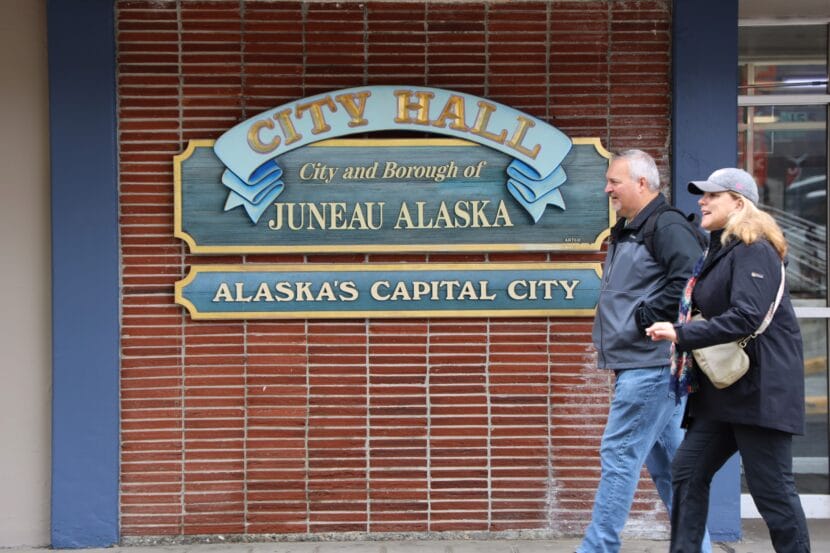
Tourists walk past City Hall in downtown Juneau on Tuesday, June 4, 2024. (Clarise Larson/KTOO)

Juneau Assembly members have approved a city spending plan for next year that lowers the property tax rate and maintains current city services.

At a special meeting Monday night, members unanimously approved the City and Borough of  Juneau’s budget and mill rate for the fiscal year that will begin July 1. The budget includes funding for things like schools, the city-owned hospital, the airport, Eaglecrest Ski Area and docks and harbors. 

Next year’s mill rate will be 10.04, which is lower than last year’s rate of 10.16 and the 10.28 rate that the city manager originally suggested.

Assembly member Greg Smith said it took a lot of compromises to get to that number.

“We had to get to a vote of five to set the mill rate, there was a lot of back and forth — some wanted it higher, some wanted it lower — this is where we got to,” he said.

A mill rate determines how much property tax residents pay to the city. One mill is equal to $1 per $1000 in property value. This means that for every $1,000 in taxable property value, there would be a tax of $10.04 for next year.

Next year’s rate is the lowest it’s been in decades. To keep the rate low without spending from savings, members used some creative thinking to pull some money from a fund that was created to build a new City Hall — until voters shot that idea down again last year. 

Although the rate passed unanimously, member Alicia Hughes-Skandijs did express some hesitancy about lowering it, for several reasons. She said one is the financial crisis that the municipally owned hospital, Bartlett Regional Hospital is going through. 

“You know, throughout the process in which we all did a lot of work, I was advocating for a higher mill rate. This gives me some nerves, some pause, but I am not going to maintain my objection just because this is the work of the committee,” she said. 

The budget also includes a $518,000 loan to Eaglecrest to cover a deficit and give a slight raise to employees. And it puts money the city collects through sales tax and marine passenger fees toward dozens of local projects. 

Only one resident gave public testimony on the budget at the meeting. Joshua Adams said he didn’t want the Assembly to put money from the city’s 1% temporary sales tax toward the Telephone Hill redevelopment project. He said he would rather have the funds instead go toward child care and affordable housing.

“Affordable housing and child care are the reason people voted for the 1% sales tax, not Telephone Hill,” he said. 

The Assembly kept the money for Telephone Hill in the budget.

Former Haines lawmaker is vying for Juneau Rep. Andi Story’s seat in the House

Former lawmaker Bill Thomas on the House floor. (Photo courtesy of the Alaska Legislature)

In a last-minute filing, a Haines resident and former Alaska House of Representatives member is vying for the seat that’s currently held by Juneau Representative Andi Story. 

Republican Bill Thomas registered to run last week, just a couple of days before the deadline for the statewide primaries. Thomas is Lingít and a lifelong resident of Haines. 

In an interview, Thomas said that after a decade away from being in the legislature, he’s ready to come back.

“I have ideas, and I’d like to share them with people and help people. And I think my experience and knowledge of the way that the body works down there and the state would be helpful,” he said. 

Juneau is represented by Jesse Kiehl in the Alaska Senate, and Sara Hannan and Story in the House. All three are Democrats who first took office in 2019 after the 2018 election.

Thomas is running for Story’s District 3 seat, which represents parts of the Mendenhall Valley, Auke Bay and Out the Road, Haines, Skagway, Klukwan and Gustavus. 

Both Kiehl and Hannan are running unopposed. 

Thomas was a member of the House from 2005 to 2013, and after that remained active both publicly and politically. He served as a lobbyist for the Borough of Haines, a political assistant to Gov. Mike Dunleavy and is now the vice president for the Chilkoot Indian Association. 

He said some of the priorities he wants to pursue if elected are incentivizing workforce development, lowering energy costs in Southeast Alaska and offering more assistance to veterans. 

Thomas said that although Story is the incumbent, he’s confident he can persuade voters to choose him. 

“I think it’s just about what you bring to the party,” he said. “I think my diverse background and history, I feel like I can bring something and maybe get people’s attention.”

In an interview, Story said she doesn’t know much about her competitor but encourages voters to learn more about him. But she said she hopes her work as a lawmaker is far from over.

“I want to keep doing the job. We are so close on some key legislation that I want to get through,” she said. “I’m in it to win it!”

Story said that includes a permanent increase in public education funding and reinstating a pension system for state and local government workers.

The statewide primaries will take place this August. 

With cruise tourism booming, Juneau has negotiated a limit on how many passengers can come off ships

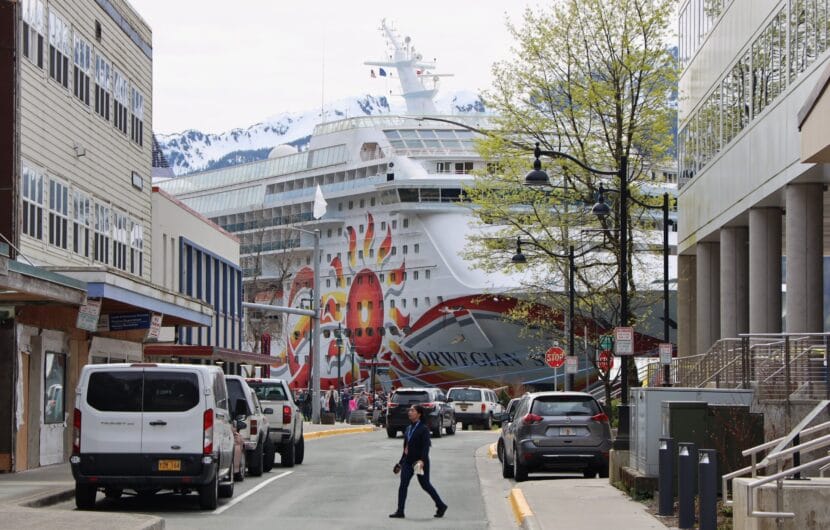
The Norwegian Sun in downtown Juneau on Saturday, May 4, 2024. (Clarise Larson/KTOO)

After a record-breaking boom in cruise ship tourism following the COVID-19 pandemic, city leaders in Juneau have been publicly considering if — and how — they can limit that growth in the coming years. 

Now they’ve negotiated an agreement with cruise lines that they believe does just that. Starting in 2026, Juneau will have a cap on the number of daily passengers that come off cruise ships: 16,000 people on most days and 12,000 people on Saturdays. Currently, Juneau can see up to 21,000 visitors on its busiest days. 

Juneau’s Visitor Industry Director Alix Pierce said the agreement was finalized Friday. She called it groundbreaking.

“This has been a hard-fought agreement for the city, and it is a huge win for the city,” she said. “It is exactly what I wanted out of this, and I’m extremely happy that we’re here.”

Earlier this month, the Juneau Assembly approved the limits. 

Last year, a record-breaking 1.6 million passengers visited Juneau, with about the same expected this year and next. Pierce said the new agreement should keep the annual passenger count at that same level. 

She said that will be key in curbing future growth while also protecting local businesses that rely on the industry.

“This was an effort to kind of thread the needle and balance the competing voices that we hear in our roles as public officials trying to work through this,” Pierce said. 

But some residents in Juneau, like Karla Hart, said they are less than impressed. Hart is a longtime advocate who often criticizes the growth of tourism in Juneau and the effects it has on the people who live here year-round. 

“The pretense that it’s doing anything to address the real issues of the community is just absurd. It’s not even worth the paper it’s written, so it’s totally worthless,” she said. 

Hart said the agreement — and other agreements the city has done in the past to mitigate the impacts of the industry —  are all for show. 

“They’re not doing anything that really protects the community as a whole,” she said.

Because of that, she and other residents have been looking for ways to limit tourism without necessarily getting the consent of cruise lines. 

Hart and four other residents are trying to get a question on the local ballot this October asking whether Juneau should ban all large cruise ships on Saturdays. So far, she said they’ve collected enough signatures to get it on the ballot, but the city clerk is still verifying them. 

“I think that’s our best immediate vehicle to get word to the industry and to the city leaders, that the community wants some relief from this industry,” she said. 

If the “ship-free Saturdays” ballot initiative gets passed by voters, that could go into effect as soon as next year.

But Pierce has long said negotiations are better than trying to enforce regulations. That’s because other communities have tried to do that and wound up in court. 

And the cruise industry has sued Juneau in the past. A lawsuit over how the city spends the money it earns from passenger fees was settled in 2019, with both parties agreeing to work together to settle disputes outside of court.

“It’s not that the city is beholden to the cruise industry or anything like that. And I do hear that narrative sometimes,” Pierce said. “It’s more, it’s always a lot easier to solve a problem with somebody you have a positive relationship with, than somebody who you’re in a big, legal fight with all the time.”

Pierce said there could be a lot of unknown implications to passing a ballot initiative like this one — both legally and logistically. And she also doesn’t know how it might affect the new agreement. 

“There was a ballot measure that limited cruise ships that passed in Bar Harbor, Maine, and there are lawsuits on top of lawsuits on top of injunctions on top of different trading legal barbs, and the city spent a lot of money on legal fees,” she said. “So I think there would be a lot of legal activity after a ballot initiative passed.”

The new agreement means once the limits go into effect in 2026, they will remain in place in perpetuity. But the city and cruise lines also agreed to meet annually, and changes can be made during those discussions. 

Juneau’s hospital is bleeding cash. City leaders are considering cutting services to stop it

Bartlett Regional Hospital Board President Kenny Solomon-Gross talks during a meeting with the Assembly on Wednesday, May 29, 2024. (Clarise Larson/KTOO)

Bartlett Regional Hospital is in a tough spot. It’s facing a $7.5 million budget deficit for the next fiscal year, and will have to dip into savings to cover the shortfall. But its board says that’s not sustainable.

Max Mertz, the hospital board’s finance committee chair, explained how the hospital got into such a hole — and what it will take to get out of it — during a joint meeting between the board and the Juneau Assembly Wednesday night.

“We have three years of cash left from today before we’re closing the doors, essentially. We’re not able to make payroll without a significant adjustment to the way that we’re operating,” he said. 

Mertz explained that the hospital’s budget crisis didn’t happen overnight. Since 2019, it hasn’t been making enough money to cover its costs. And since mid-2020, it’s actually been steadily losing about $1 million a month.

Hospital leaders attribute that loss to higher labor costs, temporary pandemic relief funding drying up, staff and leadership turnover and low insurance reimbursement rates. Efforts in the past to correct course – like hiring restrictions and overtime reductions — just haven’t been enough. 

“We’re left with very stark choices about how we want to move forward,” he said.

Now the board is considering cutting or reducing “non-core” services that are draining money — things like the Rainforest Recovery Center, Home Health and Hospice, crisis services and support for children with autism.

The board said cutting services will be the last resort – and they’re trying to find ways to subsidize the programs via city dollars, handing them over to other providers, or any other creative efforts to get out of the red. 

But, nothing is off the table at this point. Board President Kenny Solomon-Gross said that in the coming weeks, the board will host public meetings and ask for input from the community.

“One of the best things about having a community hospital that we all own, is we as a community get to choose what services we want for us,” he said. 

At the meeting, a handful of residents and hospital staff were there to advocate for some of the services potentially on the chopping block. 

Juneau resident Mary Alice McKeen said that Home Health and Hospice provides critical services that need to continue. Bartlett began offering the services last summer, taking over the role after Catholic Community Services stopped providing it in 2022. 

The home health program gives intermittent in-home care for people in recovery from an illness or surgery, and hospice is for patients who have a life expectancy of six months or less. McKeen says both are needed.

“I can’t imagine a city of 30,000 people not providing  — as part of its health care system — hospice care, and it’s inconceivable to me that we would go back to where the only option people had was dying in the hospital or dying at home without expertise or without help,” she said. 

Mertz says those programs are expected to lose a combined $1.3 million next fiscal year.   

Testifiers said the Rainforest Recovery Center’s services also must continue.

Bartlett has operated the substance misuse treatment center since 2000, but it’s been steadily losing money as grants and tax revenue have run dry. Next year, the hospital expects it to lose close to $800,000.

Jeni Brown said cutting the center would affect more than just people in Juneau.  

“I’m here to advocate that these services are vital to everybody in Southeast – everybody in Alaska. This is needed — this is needed to save people,” she said.  

She said Juneau is a regional hub for services like these for other communities in Southeast Alaska that don’t have them. And, for Juneau residents, it means they can get treatment faster and don’t have to travel to places like Anchorage or Seattle.

Brown said as someone who once struggled with addiction and was formerly incarcerated,  services like these mean people struggling with addiction have a fighting chance — and they’re why she’s alive today. 

“This is something that needs to stay open. This is survival for some of us. This is the resources we need to be able to take the next step to come back into the community,” she said. 

Residents testified in support of other programs, too, like the adolescent and adult crisis services. 

Assembly members shared little about their opinions on what services should be prioritized. Mayor Beth Weldon said she’s interested in hearing what the community thinks.  

The public will be able to provide testimony on the process at upcoming meetings on June 4 and June 10 at the hospital campus. Public comment can also be submitted electronically or via mail until June 19.

The board is expected to give a final recommendation in late June on how to move forward. Mertz said it’s important that the board gets community input before decisions are made, but noted that they need to move quickly.

“We don’t have time to kick the can down the road, we just don’t have that time,” he said.

Federal grand jury indicts man accused of stabbing multiple people on cruise ship

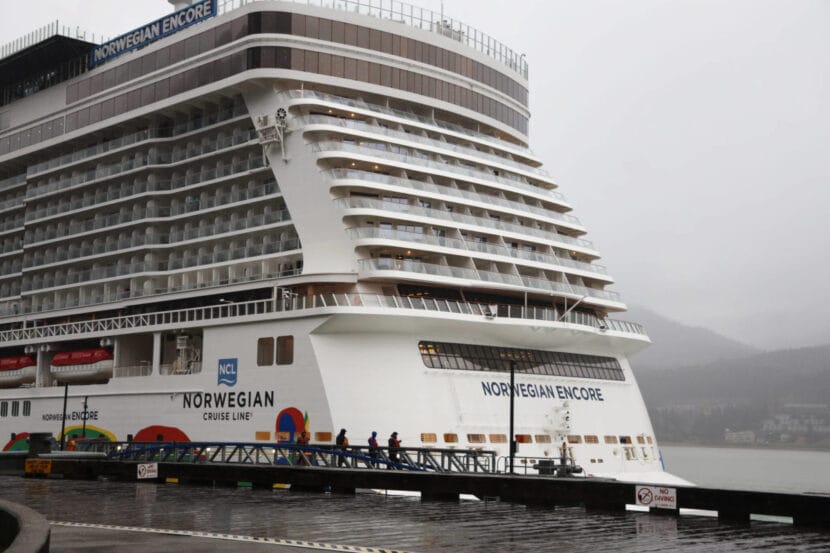
The Norwegian Encore berths in Juneau in Oct. 2022. (Clarise Larson/for the Juneau Empire)

A federal grand jury in Alaska has indicted the man arrested by the FBI in Juneau earlier this month for allegedly stabbing multiple people with scissors aboard the Norwegian Encore.

Ntando Sogoni, 35, of South Africa is charged with one count of assault with intent to murder, three counts of assault with a dangerous weapon and three counts of assault resulting in serious bodily injury. 

If convicted, he could face decades of jail time. Sogoni was working on board the ship at the time. He’s currently in custody at Lemon Creek Correctional Center in Juneau. 

According to a release from the U.S. Department of Justice and a criminal affidavit filed in federal court, on May 6 cruise ship employees noticed Sogoni trying to deploy a lifeboat late at night. Ship security then brought him to the medical center for an assessment. 

There, early on May 7, authorities said Sogoni physically attacked a security guard and nurse in an examination room. He then moved to a different room where he grabbed scissors and stabbed a 75-year-old woman who was being examined, along with two other security guards. 

At the time, officials said the injuries were not life-threatening. Sogoni was later detained and held in the ship’s jail before being arrested in Juneau upon arrival. 

According to the release, the FBI continues to investigate the case. 

Juneau’s graduating seniors celebrated over the weekend – including Thunder Mountain’s final class

From left to right, Yaaḵoosgé Daakahídi Alternative High School graduate Joseph Gomez, Juneau-Douglas High School: Yadaa.at Kalé graduate Ryan Shattuck and Thunder Mountain High School graduate Elizabeth Djajalie on Sunday, May 26, 2024. (Clarise Larson/KTOO)

More than 300 seniors graduated from Juneau’s three high schools on Sunday. For Thunder Mountain’s graduates, the ceremony was especially bittersweet. 

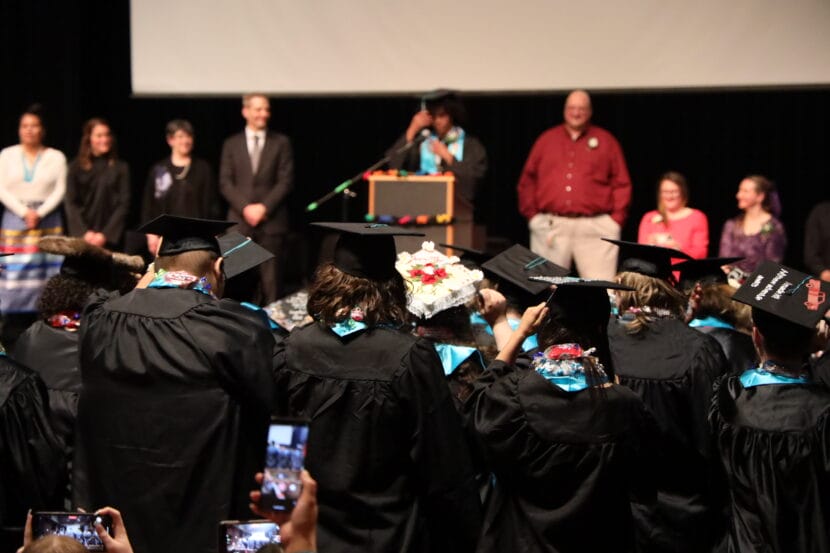
There, 147 new graduates moved their tassels from right to left — signifying the end of their high school careers. 

The day was filled with celebration, but for some it also brought heartbreak. This was Thunder Mountain’s last graduating senior class before it becomes a middle school next year under the Juneau School District’s consolidation plan. 

Thunder Mountain High School graduate Jade Hicks smiles during her graduation ceremony on Sunday, May 26, 2024. (Clarise Larson/KTOO)

The stands were overflowing as faculty, school board members and guest speaker Juneau Representative Andi Story commended the students. 

Valedictorian Lauren Stichert applauded her peers for navigating unprecedented events. The class started high school during the COVID-19 pandemic, and their last year took place amid a difficult district consolidation process brought on by budget issues.

“I would like to take this opportunity to sincerely thank and acknowledge every teacher, coach, counselor, administrator, janitor and librarian that has contributed to the growth and success of every student in this room today,” she said. “We have been made smarter, kinder and better because of our teachers and will continue to grow because of their influence.”

After the ceremony, graduate Elizabeth Djajalie said she was nervous but excited for what’s to come for herself, her peers and Thunder Mountain. 

“This is a super bittersweet moment — but definitely more sweet than anything else. Because I’m just so grateful, overwhelmed with gratitude really, for all the teachers and peers that are all here,” she said. “A lot of these faces I know I won’t see again for a long time, but I’m just so glad to have seen them passed through the halls these past four years.”

Thunder Mountain High School graduates smile during their graduation ceremony on Sunday, May 26, 2024. (Clarise Larson/KTOO)

Across town, 130 students from Juneau-Douglas High School: Yadaa.at Kalé also graduated Sunday. The energy there was lighter — students smiled and waved to their parents, and one even did a backflip as they walked across the stage.

During her speech, Meadow Stanley said she feels a lot of pride to be a Crimson Bear graduate alongside the students in her class. 

“We have all struggled, and yet we have all made it to this day together. And for that, I will be forever grateful,” she said. 

Juneau-Douglas High School: Yadaa.at Kalé graduate Edward Hu shakes hands with School Board President Deedie Sorensen during his graduation ceremony on Sunday, May 26, 2024. (Clarise Larson/KTOO)

Another student, Ryan Shattuck congratulated the class of 2024 for overcoming difficulties throughout their high school careers, including starting school virtually.  

“We became Crimson Bears without even walking through the door,” he said. “Instead of rushing to our classes like most freshmen do, we instead took our time to open our eyes, sit up in our bed, grab our computers, open our computers, and log into our Zoom classes. And then we went back to sleep.”

New graduates at Juneau-Douglas High School: Yadaa.at Kalé throw their hats in the air at their graduation ceremony on Sunday, May 26, 2024. (Clarise Larson/KTOO)

The small-but-mighty graduating class of 31 students from the Yaaḵoosgé Daakahídi alternative high school also received their diplomas on Sunday. Speakers at that ceremony said it was an accomplishment that took a lot of hard work and resilience for many of the students.  

Commencement speaker Kenyon Jordan thanked his teachers for all the support they gave to him throughout his time at the school. 

“We have only just scratched the surface of our own lives, and there are no limits to what we can accomplish,” he said. “If we believe in ourselves as our teachers believed in us, and we’re confident that we will get what we want.”

Students at the Yaaḵoosgé Daakahídi alternative high school move their tassels from right to left at their graduation ceremony on Sunday, May 26, 2024. (Clarise Larson/KTOO)

The district’s consolidation plan will move the alternative high school from the Marie Drake building downtown to the Dzantik’i Heeni Campus in Lemon Creek.

Site notifications
Update notification options
Subscribe to notifications