Jennifer Canfield, KTOO

Juneau police officer takes on criminal justice reform

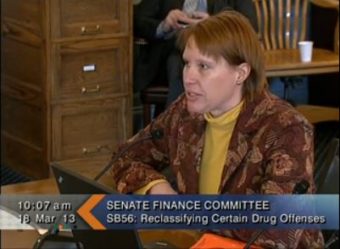
Kris Sell testified yesterday on behalf of the Alaska Peace Officers Association. (Image courtesy Gavel Alaska)
Kris Sell testifying in March on behalf of the Alaska Peace Officers Association. (Image courtesy Gavel Alaska)

Juneau Police Lt. Kris Sell has been appointed by Gov. Sean Parnell to serve on the Alaska Criminal Justice Commission. Sell is the only active police officer to serve on the commission, which was created by a bill that passed the legislature earlier this year. Its purpose is to evaluate sentencing laws and law enforcement practices, and to make recommendations for improving the system, which may include changes to criminal rehabilitation and restitution policies.

Sell says she was asked to apply after Department of Corrections Deputy Commissioner Ronald Taylor recommended her for the appointment.

Sell says she’s never served on a commission like this before, but is looking forward to the challenge. She returned to Juneau earlier this week after the commission’s first meeting in Anchorage.

“We’re kind of spending this first month trying to get our arms around this issue as to how do we really do corrections better? How do we make the public safer and get the most impact out of our corrections dollars and really chart a course for the future?”

Alaska has the nation’s highest rate of criminals who reoffend. Senate Bill 64, the omnibus crime bill that created the commission, was aimed at lowering that rate and preventing the state from having to construct another prison in the near future. The bill was modeled after so-called Smart Justice policy reforms and initiatives that have shown up in states like Texas, Florida, California and Washington. Sell says she’s familiar with some of the reform models.

“I’m still learning a lot of what’s out there and I’m not willing to say I’ve come to a lot of conclusions at this point,” Sell said. “I would say that I am the last person who would agree that someone who is dangerous should be out on the street”

Sell is married to former state prosecutor Patrick Gullufsen. When asked if she and her spouse discuss policy issues, Sell said yes, but that she consults with many people in her work. She’s also vice president of the Alaska Peace Officers Association.

“I have a lot of connections; there are also prosecutors that I work with almost every single day,” Sell said. “I’m sure we’ll discuss things but I will discuss things with other prosecutors as well. I can tell you that we don’t always see things the same way.”

Sell said of all the reform ideas she’s heard, one she’s not keen on is lessening punishment for drug crimes. While she definitely sees a need for increased rehabilitation services, she says drug sentencing should stay as it is. She even testified during the last legislative session against a bill introduced by Sen. Fred Dyson, R-Eagle River, which would have significantly changed how certain drug crimes are prosecuted. Dyson’s intent with the bill was to keep non-violent offenders out of Alaska’s jails. Sell now works with Dyson on the commission.

“It came up when I was interviewed for this position that I did come out against Sen. (Fred) Dyson’s bill and testified against (lessening the consequences for certain drug crimes),” Sell said. “And Sen. Dyson is involved in this committee so this committee was not built to service one viewpoint.”

Sell says she hopes to bring the law enforcement perspective to a commission that will be discussing at times intangible ideas about how to reform the criminal justice system in Alaska. She says that while she appreciates and supports some creative solutions to criminal justice problems, the commission will need to consider the perspective of the law enforcement officers who are often first responders to violent or dangerous situations.

“Lofty academic ideas can sometimes be a disaster in the middle of the night in a dark alley or inside a home filled with terrified children and a traumatized spouse,” Sell said. “My job is to bring to some of these discussions that real world view.”

Others on the commission include retired and current state judges, commissioners from the Departments of Public Safety and Corrections, Attorney General Michael Geraghty and representatives from various social service organizations across the state.

Tribes advance self-governance initiative with tax bill

Capitol Hill, Washington DC. (Creative Commons photo by KP Tripathi)

A bill that will exempt tribes from taxation on social welfare programs has made its way through Congress and is awaiting the president’s signature. The bill was introduced in response to the Internal Revenue Service’s increased auditing of tribes over the last few years and is part of a national initiative to give tribes the same tax status as local and state governments.

John Dossett, an attorney for the National Congress of American Indians, says this whole thing started in 2005 when the IRS Tax Exempt and Government Entities Division went to the National Indian Gaming Commission and got a list of its tribal members.

“They started at the top with the most wealthy tribes and they started auditing them around 2005,” Dossett says. “And then they started working their way down the list.”

While some of the larger tribes complained about the audits, it wasn’t until smaller, less wealthy tribes started getting audited that NCAI looked into the issue. Dossett notes one of the most egregious examples was when the IRS went after the Oglala Sioux tribe. The IRS expected families to claim charity – such as $200 vouchers to buy their children new school clothes – as income on their individual tax forms.

“It’s ridiculous. It’s absolutely off-the-Richter-scale ridiculous,” Dossett says. “And then when they started doing that kind of stuff, that’s when it just lit the tribes up. “

To be clear, the IRS was targeting tribal general funds. So if a tribe was operating a social welfare program with its own money, the IRS wanted those benefits to be taxed. If a tribe was operating a program funded by the federal government, that was OK.

In Alaska, Native interests in oil, timber or other business investments are most often held by the corporations. In turn, most tribes have little if any general funds and instead operate most of their services with federal funding.

Still, Dossett brought a warning to last year’s Alaska Federation of Natives convention in Fairbanks. He told delegates that the same IRS division that had been under fire for targeting Tea Party and conservative groups was also targeting tribes. While the IRS does not disclose who it audits, there haven’t been any publicized reports of Alaska tribes subjected to the targeted audits.

Despite that, tribes like the Central Council of Tlingit and Haida Indian Tribes have become involved in the NCAI’s Inter-Tribal Organization Tax Initiative, which seeks to put Alaska Native and American Indian tribes on a level playing field with local and state governments.

“We need to, one, be on par with state and local government,” says Will Micklin, a vice president with Tlingit and Haida. “And, two, we need access to capital to monetize tax credits that would allow us to operate those economic ventures that would generate those general funds or enterprise funds that we could use for our own purposes to supplement the decreasing federal funding.”

Central Council of Tlingit and Haida Indian Tribes 1st Vice President Will Micklin. (Photo courtesy of Central Council of Tlingit and Haida Indian Tribes)

Micklin is also the CEO for the Ewiiaapaayp Band of Kumeyaay Indians in San Diego and the executive director of the California Association of Tribal Governments. He says numerous tribes in California were subjected to the IRS audits.

“It was burdensome. It was unproductive and resulted in hardship on the tribes and the tribal citizens,” Micklin says.

In June the IRS issued formal instructions on how to deal with tribal welfare programs. It essentially gave tribes the benefit of the General Welfare Doctrine, which allows federal, state and local governments to operate tax-exempt social programs. Despite the change in IRS regulation, the Tribal General Welfare Exclusion Act of 2013 passed both the House and Senate last week with strong bipartisan support and numerous cosponsors, including all of Alaska’s congressional delegation.

Dossett says key elements of the legislation include the temporary suspension of the targeted audits and a mandate for IRS field officers to receive training in federal Indian law, but he hopes that training includes tribal representatives.

“That’s one of the things we’re really advocating for: that it isn’t just a bunch of IRS agents going in a room talking to themselves, but that the tribes are involved and they bring in key people who know what’s going on and that there’s really more consultation with the IRS so they can better understand what the tribes are doing,” Dossett says.

The bill also establishes a Tribal Advisory Committee within the Treasury that will advise the Secretary on Indian tax policy and authorizes the Secretary to waive any penalties or interest imposed on tribal governments or members. The bill allows tribes to file claims for any taxes or fines imposed on its social programs in the last three years and directs the Secretary to resolve any ambiguities in the act in favor of tribal governments.

Another bill that NCAI advocated for through its initiative — the Tribal Tax and Investment Reform Act of 2013 — would have allowed tribes to issue tax-exempt bonds for community infrastructure. The bill is in a House committee and has no companion bill in the Senate. With Congress in recess until November, it’s unlikely to advance.

Southeast organization recognized for work with elders

Tonya Muldoon (left), state Adult Protective Services, and Jon Sherwood (far right), Alaska Division of Senior and Disabilities Services, congratulate Marianne Mills, who accepted the 2014 Adult Protective Services Southeast Community Commitment Award on behalf of Southeast Senior Services Sept. 19. (Photo courtesy of Department of Health and Social Services)

The State of Alaska recognized Southeast Senior Services Friday with a Community Commitment Award. The award was given in appreciation of the organization’s Care Coordination Services and Gatekeeper programs.
The Gatekeeper program trains community members to recognize changes in elders like memory loss, change in appearance or financial problems. The Care Coordination program helps arrange services for elders who are frail or at risk so that they can maintain as much independence as possible.

The award was presented by the Department of Health and Social Services during a resource fair at the Mendenhall Mall. Southeast Senior Services operates in Juneau, Hoonah, Angoon, Yakutat, Ketchikan, Saxman, Prince of Wales and Metlakatla.

Alaska Power & Telephone buys Gustavus Electric Co.

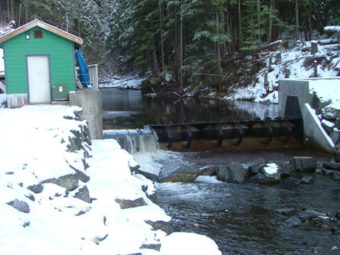
The hydroelectric plant at Falls Creek. (Photo courtesy of Alaska Energy Authority.)

Alaska Power and Telephone has purchased the Gustavus Electric Co. The 32-year-old homespun utility is the life’s work of Gustavus local Dick Levitt and his wife Linda.

AP&T President Bob Grimm says he has no plans to significantly change how the utility is operated. The one change Grimm mentions is that soon customers will be able to pay their bill with a credit card.

Regarding the sale of the utility, Grimm says he was first approached by Dick Levitt over a year ago.

“Eventually we came to an agreement and it included the hydro. Then we had to get all the regulatory approvals,” Grimm said. “We just finalized things up in July.”

Dick and his wife Linda made the choice to sell the utility because of Dick’s health. He suffered a stroke two years ago and hasn’t been able to manage the utility the same since.

“When the sale closed it was definitely mixed emotions for me,” Levitt said. “It was like giving up a child that I had raised. On the one hand I knew I had to give it up and get out of the business because of my health. And on the other hand I was still giving up something that was my life’s work. In that respect it was hard to see it go.”

Levitt is a trained electrical engineer, so when he saw an opportunity in Gustavus to start an electric utility, he went for it. The utility was created in 1982 and was diesel-based at first, but Levitt says he knew from the beginning that wasn’t going to be sustainable. Leavitt needed access to Falls Creek to bring hydropower to Gustavus and to do that he needed and act of Congress.

“Of course it was in Glacier Bay National Park which made it difficult,” Levitt said. “Probably in the mid-80s I started approaching the congressional delegation about legislation that would allow that to happen and it took close to 20 years to get that to come together. It was a long arduous process but we eventually got it done.”

Congress’s stamp of approval allowed the State of Alaska and the National Park Service to swap land, giving Leavitt access he needed to Falls Creek. Levitt prevailed when the Sierra Club protested the hydroplant during the Federal Energy Regulatory Commision’s approval process. The 800 kW hydroplant was finally completed in 2009.

Levitt says he hired AP&T as consultants on the design of the hydroplant, so he feels confident about their ability to maintain the facility.

The next hurdle for Gustavus Electric is to get the National Park Service in Glacier Bay as a customer. The park service still runs its facilities on diesel, despite efforts by Levitt to get them to switch. Grimm says convincing the park service to step away from fossil fuels is a priority.

City decision on blighted Gastineau Apartments expected soon

The Gastineau Apartments burned in November 2012. (Photo by Rosemarie Alexander/KTOO)

Nearly two years after a fire destroyed the Gastineau Apartment building in downtown Juneau, the City and Borough of Juneau is yet to take a decisive action against owner James Barrett. However, that may soon change as officials consider options for rehabilitation.

“If something doesn’t happen from the private sector to the private company that owns it then we would be making a decision in the next month or two,” Mayor Merrill Sanford says.

Barrett was notified by the city in a March 6 letter that he had until May 1 to install a temporary roof and clean all debris from inside the building. He was issued a building permit last November to install a heat-shrinked plastic roof, which hasn’t been accomplished.

The building was insured, but no details have emerged as to how much of a payout Barrett received. The building and the land it is on was last valued at $1.22 million by CBJ. The building accounted for $409,800 of that value.

Sanford confirms one of the solutions under consideration would allow the city to fund the rehabilitation of the building to make it habitable, and then put a lien on the property. Sanford would not give further details on that option. He says the preferred solution would be for a private investor to step in. He adds that the city is willing to do anything it can to encourage private investment, including lowering or suspending taxes on the property.

“But in the end if it drops into our lap to take care of, I think that the assembly is ready to do something whatever the best option will be. I don’t know what that is yet,” Sanford says.

At minimum, Sanford says the debris must be cleaned up and a temporary roof needs to be installed. He also confirms that taking the property by way of eminent domain is a possibility. In that case the city would have to offer fair market value for the property and then use it for a public purpose, which would likely include offering affordable housing. If the property is taken by eminent domain it could not then be sold to a private investor.

“I personally do not lean towards eminent domain at all, but there’s always particular situations that maybe need to have that tool available,” Sanford says.

Alaska Housing Finance Corporation Planning Director Mark Romick visited the building recently and met with City Manager Kim Kiefer, City Attorney Amy Mead and the Assembly during an executive session. The state-backed corporation has financed major rehabilitation projects before. The Fairview Manor in Fairbanks was about five times the size of the 41-unit Gastineau building before its complete reconstruction. Romick says he can’t estimate exactly what rehabilitation would cost.

“It looks like a pretty substantial rehab and so it’s hard to say. I can tell you that new construction is anywhere from $200,000 to $275,000 a unit. Rehab is generally less expensive,” Romick says. “Frankly it just depends on how bad it is inside.”

Romick says it’s probably been since the 1964 earthquake that AHFC or its predecessor, the Alaska State Housing Authority, has been involved with a property taken by eminent domain. Mayor Sanford says he can’t remember the last time the city took a property by eminent domain.

If a private investor bought the property, Romick says AHFC could provide financing for certain kinds of projects. Senior, low-income or affordable housing and partial commercial use are all common options, he says.

James Barrett could not be reached for comment on this story. Calls made to his personal cell phone number and to management at the Bergmann Hotel, which he also owns, did not receive a response.  A visit to the hotel was also unsuccessful.

A neighbor of the Bergmann Hotel said that “significant work” on the hotel’s roof was recently completed.

Thai activist talks about political unrest in his home country

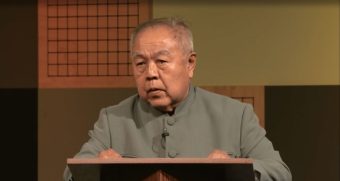
Sulak Sivaraska Sulak Sivaraska
(Photo courtesy 360 North)

Thai activist, author, academic and two-time Nobel Peace prize nominee Sulak Sivaraska spoke Wednesday evening in Juneau. Sivaraska discussed corruption, obstruction and bloody violence on the part of the Thai government and emphasized the need for people everywhere to challenge authority.

Sivaraska’s talk, which was sponsored by the Juneau World Affairs Council, was titled “Unrest in Southeast Asia: A Thai Activist’s Perspective.” For the uninitiated, the title of the talk belied some of the stories Sivaraska would share.

In 1976, after three years of unstable democracy, the military took back control of the Thai government. Sivaraska recalled the violent coup, saying he was out of the country at the time. He’d been invited by the Smithsonian Museum to speak during celebrations for America’s bicentennial. While on his return trip to Thailand, Sivaraska learned of the upheaval.

“I was arrested in absentia,” Sivaraska said.

“Many of my students were killed, were tortured, were murdered by the Thai military.”

Sivaraska’s wife was also briefly arrested and his bookstore was destroyed, leaving them bankrupt. He would spend the next two years in exile.

In 2007, after 75 years of democracy in his homeland, Sivaraska wrote a book about “obstruction in the Siamese democracy.” While he wasn’t arrested, police did confiscate the book. Sivaraska challenged the police and government in Thai administrative court. The court ruled against Sivaraska and he is currently appealing the decision.

“The point is that any unrest anywhere, if you want my opinion as a Thai intellectual, you must have moral courage,” Sivaraska said. “You must challenge those in power.”

Sivaraska spoke of how religious Quakers have actually had more of an impact on his thinking than the Buddhists of his country. He noted similarities in the two religions’ belief in non-violence, but said that many Buddhists in his home country tend to keep quiet about political injustice.

“To keep quiet when there’s unrest, I feel that you are not practicing Buddhism; you are practicing escapism. That’s why I admire the Quakers who always speak truth to power,” Sivaraska said.

Sivaraska will give another talk in Juneau this week, as he is the inaugural speaker for the 2014 Evening at Egan lecture series hosted by the University of Alaska Southeast. The talk is titled “The Wisdom of Sustainability: Consumerism, Capitalism and Climate Change” and will be given this Friday at 7 p.m. at the Egan Lecture Hall.

Site notifications
Update notification options
Subscribe to notifications