Lisa Phu

Managing Editor, KTOO

"As Managing Editor, I work with the KTOO news team to develop and shape news and information for the Juneau community that's accurate and digestible."
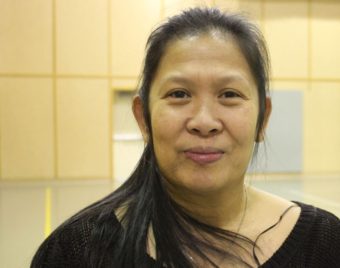
A widow’s journey through grief, anger and art

Ricci Adan (Photo by Lisa Phu/KTOO)

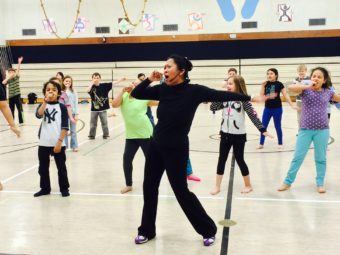
Ricci Adan is a performing artist in Juneau. Locals know her as an actor, dance teacher and choreographer, most recently of Perseverance Theatre’s “Chicago.”

What people may not know is that in 1981, her husband Richard Adan was killed, stabbed on the streets of New York City by a released convict who was a protégé of Pulitzer Prize winning writer Norman Mailer.

The murder trial was highly publicized at the time. But, Ricci Adan is just beginning to tell her side of the story.

At age 18, Ricci Reyes was the dance captain of the Nat Horne Musical Theatre in New York City. It was 1979, the year she met Richard Adan.

“He was very ambitious. He wanted to be a star. He was a writer. He had dreams and you could see that this guy wanted so much in life,” Ricci says.

She didn’t like him at first, but they ended up dancing together in the company and eventually became a couple. They were both aspiring actors.

“Women came after him all the time. But I was really in love with him,” she says.

Ricci and Richard married in February 1981.

Her parents owned a popular Manhattan restaurant called Binibon. Both she and Richard worked there as servers. He had the graveyard shift.

Ricci says she got a call early in the morning on July 18, 1981.

“Richard called me from the restaurant. He said, ‘I’m finishing. I’m going home now and I have three people here – a guy and two girls.’ And I said, ‘OK. Come home. What are you doing?’ ‘I’m doing the ketchups right now. So, as soon as I’m done, I’m going home,'” she recounts.

Richard never came home.

Richard Adan lies dead in the street the morning he was stabbed. (Image courtesy Ricci Adan)

The guy with two girls at the restaurant was 37-year-old Jack Henry Abbott. He was a recently released felon who had spent the better part of his life in jail for crimes like check fraud, killing an inmate and robbing a bank. At that point, he was also a published author. In his book, “In the Belly of the Beast,” Abbott wrote that he’d only been free nine and a half months since he was 12.

Abbott’s book is a collection of letters he wrote from prison about prison life and sent to Norman Mailer, who composed the book’s introduction. They had struck up a relationship while Mailer was writing the “The Executioner’s Song,” according to the introduction.

Mailer described Abbott’s writing as “remarkable,” and called him a “self-made intellectual” and a “potential leader.” Mailer thought he should be released. He wrote to the prison and said he’d hire Abbott as a research assistant if he was paroled, according to The New York Times.

After spending the majority of his life incarcerated, Abbott was released from the Utah State Prison in June. He stabbed and killed Richard Adan the morning of July 18.

Ricci says it was her father who called to tell her the news.

“And I said, ‘What do you mean? What am I going to do? I just ironed his clothes. I just washed his contacts, so who’s going to use that now? What am I going to do?’ And my dad says, ‘Ricci, you’re an actress. Remember everything you just said, everything of this, because you’ll use this in one of your scenes one day,'” Ricci says.

Both of her parents were actors and Ricci says her father’s advice was a tactic to get her to really understand that Richard had died.

A day after the stabbing, The New York Times Book Review coincidentally came out with a glowing review of “In the Belly of the Beast.”

Abbott was arrested and tried for murder in 1982. Ricci was hounded by reporters. At the trial, she saw celebrities in the courtroom like Mailer, Susan Sarandon and Christopher Walken.

“The painful thing is that when the publicity came out, media didn’t even know who my husband was. He was ‘a waiter.’ That was his term,” Ricci says.

Everything during that time was moving so quickly, she could hardly think.

“It’s like going on the subway, but you can’t stop. It just kept going, like 23rd Street, 28th Street and 34th and before you know it, it’s 250th. It doesn’t stop. I see the colors, but I couldn’t stop,” Ricci says.

Abbott was found guilty of manslaughter, but not murder, and was sentenced to 15 years to life in prison. In 1987, he published another book called, “My Return.”

Meanwhile, Ricci says she was having a tough decade.

“My dad thought I was going crazy, but I was just lost, totally lost.”

She threw herself into her work, going to dance classes and performing in Japan and Europe.

In 1990, Abbott was back in court. Ricci had sued him in 1983 for the wrongful death of her husband and won. This trial was to determine the amount of damages Abbott owed. Abbott acted as his own lawyer and cross-examined Ricci.

“Do you know how that feels when somebody kills your husband and his breath is right in front of you? I mean I could’ve just jumped out of that stand and…” Ricci says.

She doesn’t complete her sentence. She says she knew better.

“That’s the difference between him and I, was that I could control it; he couldn’t.”

Ricci says a witness to Richard’s stabbing also testified.

“And what hurt me the most is when he described the thud. He heard the thud on Richard’s chest, across the street,” Ricci says.

A jury awarded Ricci $7.5 million in damages. Part of it came from what Abbott earned from his books. Ricci says most of the money went to her lawyer.

Years later, in 2002, Abbott hung himself in prison. He was 58.

“He didn’t even face his term. He didn’t even face that. He couldn’t even say that ‘I’m sorry.’ No remorse, nothing. And that to me is cowardly. So I said, ‘There you go, he got away with it again,'” Ricci says.

Richard was the love of her life, she says, but love was different then – innocent and fresh.

“When you’re 21, you’re in love. I’m 55 now. I know better. But I remember how I loved him, which is nice,” Ricci says.

Over the years, Ricci’s anger has dissipated and she spends her days and nights teaching the performing arts to kids and adults. After choreographing “Chicago” for a local theater, Ricci said it reminded her of Richard’s murder. Her father had told her, all those years ago, that she’d one day use those emotions as inspiration for her work. He was right.

This is part one of a two-part series. In part two, we’ll take a closer look at Ricci Adan’s work in Juneau and what her plans are when she leaves in May.

Premera cyberattack exposes thousands of Alaskans’ data

Information on Premera's cyberattack can be found on premeraupdate.com.
Information on Premera’s cyberattack can be found on premeraupdate.com.

If you have a health insurance plan through Premera Blue Cross Blue Shield of Alaska, your personal information may be vulnerable to a data breach.

According to Premera, about 650,000 current and former Alaskans are among the 11 million people potentially affected by a cyberattack of the health plan company.

A Premera press release issued today says attackers may have gained access to customers’ names, dates of birth, Social Security numbers, mailing addresses and bank account information.

“This is data going back to 2002, so this affects current and former members, in addition to other individuals and organizations with whom we may have done business,” says Eric Earling, vice president of communications at Premera Blue Cross based in Washington.

Earling says Premera is the largest health plan in Alaska. It has about 110,000 current members in the state.

Mila Cosgrove is human resources director for the City and Borough of Juneau, which uses Premera for its employee health plan. She says the city plans to notify the roughly 1,600 city employees and family members covered under Premera about the cyberattack.

“We are, of course, concerned that this has occurred, but I have no reason to believe that Premera was negligent or lax in their handling of the information. I think this is a reality of the business environment we find ourselves in,” Cosgrove says.

The total number of Alaskans affected also includes 80,000 former and current state workers. The State of Alaska used Premera for the state health plan from July 1, 2006 to June 30, 2009.

Premera discovered the attack at the end of January and notified the FBI, which is involved in the investigation. Aside from the press release, Earling says Premera notified employers and health brokers about the cyberattack. It also plans on mailing letters to notify everyone potentially affected.

Premera’s offering two years of free credit monitoring and identity theft protection services. Customers can sign up on premeraupdate.com or by calling 1-800-768-5817.

Tlingit Raven stories get due attention at UAS symposium

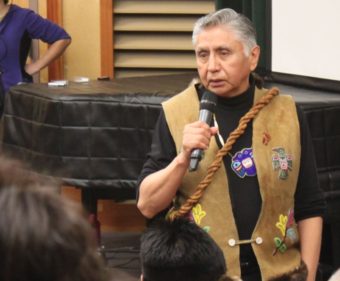
Tlingit elder Paul Marks discusses the Raven story with a packed audience at the UAS Egan Lecture Hall Friday night. (Photo by Lisa Phu/KTOO)

Ravens are ubiquitous in Southeast Alaska, and Tlingit stories about Raven the creator are often told as folklore. But at the University of Alaska Southeast, Raven got his story told in an academic setting.

Native leaders and writers shared and discussed the Tlingit creation story on Friday to a full audience at UAS’s Egan Lecture Hall during the university’s spring honors symposium.

Tlingit teacher and mentor Paul Marks explains how Raven created daylight. He switches between English and Tlingit.

“From the beginning, you couldn’t see him. He was invisible,” Marks says.

I’m not going to retell the story, because Marks says a person shouldn’t share the Raven story without studying it. His telling takes about 35 minutes and toward the end, Raven opens a box of daylight.

“Some of our people got scared of the daylight, ran into the forest. Some of our people hid behind the trees. Some of our people went into the water,” Marks says.

That’s where the bear, wolf, beaver, fish, whale and other animals came from. He says details of the origin story help us understand who we are as human beings.

Marks is from the Raven House of the Lukáax.adi clan. He says he learned the Raven story from clan leader Austin Hammond Sr., but he’s heard other versions as well.

Marks says it’s important to tell the story properly because Tlingit people steer their lives with words and stories.

“Learn the story very well before you tell it to somebody else. The reason is because if you change it, it’s like turning your compass to another direction and you’re going to end up somewhere where you don’t want to be,” Marks says.

But he admits the story has likely changed over time. Someone in the audience asks about similarities with stories in the Bible and Marks says there are parallels.

“I believe they are ancient stories. I look at it as we all come from the same place and each story being passed on verbally from generation-to-generation changes. It’s like a lot of the stories we tell are going to change 30 years from now. But that’s the way life is,” Marks says.

UAS Assistant English Professor Ernestine Hayes is from the Wolf House of the Kaagwaantaan clan. Growing up in the Juneau Indian Village, Hayes says she learned about Raven stories and the world from her grandmother.

She reads from her forthcoming book of prose, “The Tao of Raven.”

“Remember that all things begin and end in water just as rivers flow into and begin in the sea. When forces oppose, victory will be kind to the one who crafts herself like water, to the one whose powers allow her to yield.”

She reads on.

“Take Raven. When he wanted the box of daylight, he didn’t invade a village, he didn’t storm a house. He found the easy way. He used water. He made himself small so he could get close to daylight with the least effort. This is what Raven did to achieve his goal,” Hayes says.

Hayes plans to continue working on “The Tao of Raven” this summer at an artist residency program in California through a Rasmuson Foundation grant.

Lance Twitchell encourages the UAS campus to continue exploring Raven stories. Twitchell is an assistant professor of Alaska Native Languages at UAS. He challenges the university to begin each academic year with a Raven story.

“It’s a great statement to say the university didn’t start with Plato and Socrates, not that they’re not great, but because we’re on Tlingit country, we can start with Tlingit thinking and just see what happens. See how we can open the doors for people – not just Tlingit people but all kinds of people – to say, ‘There’s all these different things here. Let’s share something that comes from long ago, right from this place,'” Twitchell says.

The UAS event was dedicated to Yup’ik elder and cultural leader Paul John, who was supposed to take part in the symposium, but passed away March 6.


Editor’s Note: The story has been updated to correct Paul Marks’ clan. A previous version of this story stated Marks is from the Raven House of the Chookaneidí clan while he is actually from the Raven House of the Lukáax.adi clan.

Potter to lead Glacier Valley Elementary permanently

(Photo courtesy Juneau School District)

Lucy Potter will be the permanent principal of Glacier Valley Elementary School, after holding the position on an interim basis.

Former Glacier Valley Principal Ted Wilson was promoted to director of teaching and learning with the Juneau School District last summer.

Potter was one of three finalists who interviewed for the job last week.

Potter first joined the district in 1999 and has taught at Harborview Elementary School and Auke Bay Elementary School. She then served three years as a K-5 instructional coach, working with the staff at Gastineau Elementary School and Mendenhall River Community School.

Potter holds a masters of education from the University of Alaska Southeast. She has a bachelor of science in elementary education with a minor in psychology from Adams State University in Colorado.

Gold Medal Basketball Tournament tips off Sunday

Wrangell and Haines competed during last year's Gold Medal Tournament. (Photo by Lisa Phu/KTOO)
Wrangell and Haines competed during last year’s Gold Medal Tournament. (Photo by Lisa Phu/KTOO)

The Juneau Lions Club 69th Gold Medal Basketball Tournament starts Sunday morning at Juneau-Douglas High School.

Twenty-four teams from Hydaburg, Wrangell, Craig, Kake, Angoon, Haines, Klukwan, Hoonah, Yakutat, Metlakatla and Juneau will compete in a week of games.

Of the four divisions this year – one women’s and three men’s – Sasha Soboleff says the men’s B bracket is the most competitive and draws the biggest crowds (there is no A bracket). Soboleff is the president of the Juneau Lions Club.

“Most of the time it’s like war. You come and play and put it all on the line for your community,” he says.

Soboleff says a B bracket game will pack the gym with about 1,500 spectators. The tournament brings people from communities all over Southeast to the capital city.

“It’s the parents of the participating teams, their wives, their children, their grandmothers, and usually the only ones left in town are the people running the power plants because everybody else is in Juneau,” Soboleff says.

Gold Medal is the Lions Club’s biggest fundraiser of the year. Soboleff says the event has brought in up to $24,000. Money goes toward scholarships, eyesight assistance and donations to Southeast organizations.

Besides basketball, the tournament features Native dance groups, award ceremonies and a chance to win a brand new car. Finals start at 2 p.m. on Saturday, March 21. Last year’s champion B bracket team was Angoon.

Juneau Library to launch Alaska Native stories project

StoryCorps interviews will take place at the Juneau Public Library system starting in May. (Photo by Lisa Phu/KTOO)

The Juneau Public Library system embarks on an oral history project this spring collecting Alaska Native stories on educational experiences. The capital city’s library is one of ten picked from more than 300 national applicants to bring StoryCorps to the community.

Freda Westman is a product of Juneau’s public school system, a 1974 graduate of Juneau-Douglas High School. Westman is Grand President of the Alaska Native Sisterhood.

One of her strongest childhood memories is from when she was in middle school.

“I asked a teacher at the end of the year why my grade was a C and could we go and look at the grade book, and we did and averaged it out and my grade was really a B, and so it was changed. That took a lot of courage for me to do that,” Westman says.

Freda Westman, right, at a school board meeting in November 2014. (Photo by Lisa Phu/KTOO)

At the time, she learned that teachers, who she greatly respected, could make mistakes and those mistakes could be fixed. She learned the value of standing up for herself.

Now, Westman looks back on that situation and realizes those types of errors were likely made on a regular basis.

“Expectations for Alaska Native students were low, so maybe that was the motivation,” she says.

Westman’s mother stopped going to school in the 8th grade to care for sick family members.

“She was not allowed to speak Tlingit in school and was not only not allowed to do that but was punished for doing that. She told us that that is why she didn’t want to teach us Tlingit. She didn’t want us to experience that,” Westman says.

These are just a couple of memories that exist in Juneau’s Alaska Native community, stories that the public library hopes to capture through StoryCorps interviews.

The Juneau Public Library will hold a community orientation on the StoryCorps project on March 31, 5:30 p.m. at the downtown library. Anyone interested in volunteering or helping with the project should attend.

StoryCorps is a national oral history project based in Brooklyn, New York. You’ve likely heard snippets of StoryCorps interviews on National Public Radio.

Juneau librarian Andrea Hirsh says the interviews aren’t formal. It’s a conversation between two people.

“A lot of people pick a family member, a grandparent, a child, a sibling, a neighbor and they tell their story,” Hirsh says.

The theme of Alaska Native educational experiences sprang from an issue that took place last year concerning the Juneau School District’s elementary language arts curriculum.

Community members raised concerns about school texts depicting Alaska Native and Native American tragedies, including the boarding school experience in Alaska. From the late 1800s to the mid-1900s, the federal government split families and forced Native children into boarding schools to assimilate. The texts were called distorted, inaccurate and insensitive.

The district eventually decided to remove the controversial texts and replace them with locally developed materials. The superintendent invited Alaska Native community members into the classroom to tell their stories.

Juneau Public Libraries librarian Andrea Hirsh and program coordinator Beth Weigel. (Photo by Lisa Phu/KTOO)

Library program coordinator Beth Weigel hopes the StoryCorps project can help fulfill this need and others.

“Oral history is a big part of the Alaska Native tradition so if we have it available then those are available to teachers if they want to use those as part of the resource materials in their classroom,” Weigel says. “And they’ll stories by Alaska Natives, their stories that they tell in their own words.”

Before applying for the project grant, Weigel and Hirsh sought advice and support from members of the Alaska Native community in Juneau, like Sorrel Goodwin.

Goodwin is a librarian at the Alaska State Library. He says the project is an opportunity to get Alaska Native perspectives on the American educational system. In the mid-1990s, Goodwin interviewed Alaska Natives on that topic for a teaching course at the University of Alaska Southeast.

“Most of their perspectives were largely negative, dealing with such issues as racism and assimilation, and the degradation of Alaska Native cultures, languages, histories, going right on into flat out physical, mental and sexual abuse in many of the boarding school contexts,” Goodwin says.

He hopes the library’s project will include interviews of the younger generation, Alaska Natives who are currently going through the educational system.

“A lot of our parents’ and grandparents’ negative experiences in the American education system have been carried forward. It created a sort of intergenerational post-traumatic stress in the ways that many of our people are either able to engage or not engage with the dominant society’s system of educating people,” Goodwin says.

Sorrel says the more stories that are told, the more understanding will take place. He thinks the StoryCorps project can help the community work through issues that still remain.

One of the library’s goals is to capture a range of voices.

“We would love to talk to people who are still in school and this could be grade school, middle school, high school, college, technical school. It could be young adults, it could be older adults. We want to hear everyone’s story,” Hirsh says.

With permission of the participants, all of the StoryCorps interviews will be archived at the American Folklife Center at the Library of Congress and locally at the Juneau Public Library and Sealaska Heritage Institute.

Site notifications
Update notification options
Subscribe to notifications