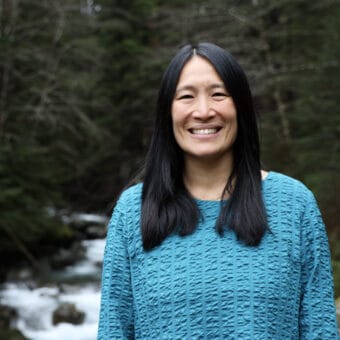
Lisa Phu

Managing Editor, KTOO

"As Managing Editor, I work with the KTOO news team to develop and shape news and information for the Juneau community that's accurate and digestible."

911 operator coaches couple through baby delivery

A man delivered his wife’s baby Saturday afternoon with the help of an emergency dispatcher.

Juneau Police Department received a 911 call from a man reporting that his wife was in active labor.

“She was having a baby as they spoke and the dispatcher provided him with some instructions on how to care for the baby and his wife as the baby was being delivered,” says Erann Kalwara, spokesperson for Juneau police.

A baby girl arrived at 4:14 p.m., roughly two minutes after the call was made. Capital City Fire and Rescue showed up at the residence on Third Street in downtown Juneau a few minutes later to find the mother and baby in good health. They were not taken to the hospital. The names of the couple and the baby were not released.

Kalwara says 911 dispatchers are prepared for this type of call:

“Our dispatchers go through Emergency Medical Dispatch course and are certified to provide pre-arrival instructions and certain time-life critical instructions, like CPR and delivering babies, instructions on how to do the abdominal thrust if somebody is choking.”

Kalwara says a dispatcher helping to deliver a baby over the phone is not very common, although a similar case took place just a few months ago.

On Oct. 23, a man called 911 from Best Western Hotel and said his wife was having a baby. A dispatcher provided instructions and the baby was born within five minutes. Capital City Fire and Rescue arrived to find a healthy mother and baby boy.

Why the capital city isn’t as likeable as it should be

(Photo by Jason A. Howie/Flickr Creative Commons)
(Creative Commons photo by Jason A. Howie)

The City and Borough of Juneau has yet to join the more than one billion users on Facebook, though other governments use social media regularly. While city employees may be personal users, most don’t use it in a professional capacity to push information or interact with the public. But the city of Juneau is beginning to develop a social media policy.

“We’re kind of in this, like, social media limbo right now,” says Laurie Sica, clerk for the City and Borough of Juneau. She’s helping to develop a social media policy, and admits she has a lot to learn:

“I’m learning how to use Facebook, Twitter, LinkedIn – what else – Instagram, Pinterest. There’s just tons of them. I’ve just been trying to get up to speed so that I can speak intelligently about it and how it’s used. These things change so fast, it’s like, ‘Ah.’”

Until the City and Borough of Juneau has a social media policy, city departments are not to open accounts on sites like Facebook and Twitter. Those that already use social media, like Juneau Public Libraries and Eaglecrest ski area, can continue to do so.

Sica says there’s a lot to consider when developing a social media policy for government use, like how much staff time should be allocated to using it, “What happens if staff update the city’s twitter account from home? ‘Oh my gosh, they’re working, we’ll have to pay them.’ That kind of stuff, you know.”

The State of Alaska does not have a social media policy, but some departments utilize social media sites, like:

Division of Retirement & Benefits

Department of Health & Social Services

Department of Transportation

Juneau Public Libraries Director Robert Barr doesn’t consider social media much of a time suck for his staff.

“It’s not a whole lot of effort on behalf of staff. We just kind of lump it in to our typical promotional efforts. This is just one more check box on the list. Just do a quick post on Facebook,” he says.

The public libraries system has had an internal social media policy since June 2011. It has a Facebook page, a Twitter account, and a blog.

City manager Kim Kiefer knows it’s time for Juneau to establish a policy that allows other departments to be active online.

“We’re behind the curve for sure with social media. In government we need to try and reach out to everybody in the community and I think we’re probably missing a group of the population because they don’t go to juneau.org to get information. They want it yesterday and I don’t know that we’re providing it in a way that they can get it.”
The City of Fairbanks has had a social media presence since March 2010, and an internal city policy for six months. Public information officer Amber Courtney says the social media policy makes sure all information is shared in a positive and honest manner, “It’s just ensuring that we have a level of trust with the people who are sharing the information, to make sure that our tone is always professional and respectful, that we’re cognizant of the things we’re sharing and how they’re going to impact the public. For example, we definitely don’t want people sharing photos of accident scenes where somebody might have been injured.”

In Fairbanks, the city, police department, emergency communication center, and mass transit are all on Facebook. Other departments that want to set up an account must get approval from the mayor.

The push for Fairbanks to get on social media stemmed from attending FEMA workshops. Courtney learned that the public relied on Facebook and Twitter to get information from the government about disasters and emergencies.

“And so I thought, ‘Well, we definitely need to kick that into gear and start building our audience so that should something untoward happen, we have access to as many people as possible and I know that that information goes exponentially. There’s 44,000 people within a 10-mile radius of where I sit that have a Facebook account so if I can get to ten percent of them, that’s amazing, because it just goes from there,” Courtney says. 

The City of Fairbanks has more than 340 likes on its Facebook page, which Courtney hopes will grow to at least ten times that. She says posting information about snow removal doubled the city’s Twitter followers, now at more than 800. Courtney will soon have more time to grow the audience on both sites. Her job duties have recently shifted to make social media a primary responsibility.

A sampling of social media sites geared for Juneau residents:
Juneau Police Department on Twitter
Bartlett Regional Hospital on Facebook
Fire Chief Rich Etheridge on Twitter
AEL&P on Twitter
Eaglecrest on Facebook
Juneau-Douglas High School on Twitter
Juneau Public Libraries on Facebook

(*Editors Note: The list of social media sites at the bottom of this story originally included a link to the Capital City Fire and Rescue Facebook page, however it incorrectly linked to the City of Juneau, Wisconsin’s Fire and Rescue Facebook page. The list has been updated to remove the link.)

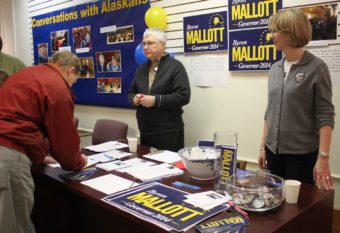
Mallott opens campaign headquarters in Juneau

Democratic gubernatorial candidate Byron Mallott opened campaign headquarters in Juneau on Friday.

“Whenever I’m in town, I will spend time here. The fact of life is that in Alaska, half the population lives in Southcentral, in Anchorage, in the Matanuska Valley, and on the Kenai and, of course, Fairbanks and the road system, and just necessarily, I’ll have to be spending a lot of time in those places, but this space will be the campaign headquarters,” Mallott says. 

Mallott officially launched his run for governor Oct. 14 in his hometown of Yakutat. So far, Mallott has made stops in Anchorage, Fairbanks, Bethel, Kotzebue, Nome, Saxman, Ketchikan, and Sitka. Another campaign office is planned for Anchorage.

Mallott doesn’t have a concrete platform. He says he’s still developing his ideas on the state’s key issues, “Oil taxes, education, the fiscal cliff, the state’s revenues or the lack thereof, how we fund critical services like education and public safety and health, how we continue to grow jobs in this state – all of those are crucial and have to be addressed in this campaign and into the future. They are very, very important and critical.”

Mallott does know his campaign will focus on listening to Alaskans.

“The idea of Alaskans being engaged in crucial decisions that affect their lives and a candidate reaching out to them, having conversations, learning, trying to create the kind of state government that involves, that is responsive to, that cares deeply about Alaskans and their everyday lives and their sense of future for them and their children is what my campaign is all about,” Mallott says. 

Mallot is a former mayor of Juneau and Yakutat and has led the Department of Community and Regional Affairs, Alaska Permanent Fund Corporation, and Sealaska Corporation.

Later this month, Mallott is heading to Anchorage, Kenai, and the Mat-Su Valley. He’ll also be traveling to Washington, D.C.

Juneau dogs suffer from kennel cough

(Photo by Martin Cathrae/Flickr Creative Commons)

Suspected cases of kennel cough in dogs have recently spiked in Juneau. An animal shelter has cancelled its daily dog daycare and is quarantining its kennel.

“Just like the flu is going around Juneau now or colds go around Juneau, in this case, it’s kennel cough. It’s definitely disconcerting for veterinary clinics, for kennels, for the humane society. It can be upsetting,” says Chava Lee, Executive Director of Gastineau Humane Society.
Lee says cases of kennel cough started showing up at the animal shelter within the past two weeks. She says the staff immediately took precautions:

“Our whole kennel is in quarantine, so that means that we’ve shut down all those programs where dogs come in and every dog kennel, regardless of whether there’s a dog in it, is cleaned every single day. And when I mean cleaned, I mean they are bleached down, bleach is left to stand, so that we kill any germs that have gotten into our system.”

Lee says the quarantine will last three weeks. Meanwhile, the humane society has cancelled doggy daycare and informs people wanting to board dogs about the recent cases of kennel cough. Lee says it’s been at least two years since kennel cough has been at the shelter.

State veterinarian Bob Gerlach says kennel cough is very contagious:

“Kennel cough is very, very similar to the human flu in the fact that kennel cough can be caused by both a virus or a bacteria – the parainfluenza virus or the Bordetella bacteria – and it’s spread by the aerosol from the dog, so when the dog sneezes or coughs, the virus could be spread that way.”

Gerlach says kennel cough is passed between dogs through direct contact, as well as licking or playing with the same toys, or using the same water or food bowl. Dogs with kennel cough should stay away from other dogs.

Gerlach says dogs that are very old, very young, or going through other stressful situations, like traveling, are susceptible to picking up the infection, even if they’ve been vaccinated, “No vaccine is going to give you a hundred percent protection,” he explains. “Oftentimes they protect on a mass basis so that a large percentage of dogs that receive the vaccines will be protected but there’s always going to be some that may not be of the greatest health or maybe that they are under some other stresses that they may not get full protection, and so they still could come down with the disease, but generally they are not going to get it as severely as if they didn’t get vaccinated.”

If you suspect kennel cough, Gerlach recommends taking your dog to a veterinarian. To reduce exposure to other dogs, vets often don’t allow the infected dog into the general waiting area.

Symptoms include dry, harsh coughing, retching, snorting, gagging, and sneezing, but Gerlach says if there is a secondary infection, other problems could arise:

“In most cases, it’s restricted to the upper airways and the cough can persist for several days and longer depending on the extent on the irritation and damage. If there is a secondary infection, then obviously there could be some pretty severe consequences with progression to pneumonia.”

Gerlach says he doesn’t know of other communities in Alaska currently experiencing kennel cough but says it’s not an uncommon time of year for the infection to occur.

Fireworks often cause of New Year’s Eve noise complaints

(Photo by Heather Bryant/KTOO)

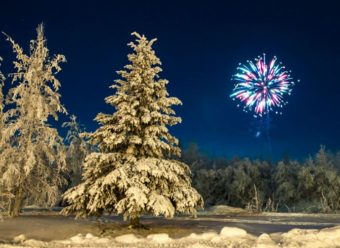
New Year’s Eve tends to be a noisy night. Add fireworks and there’s all kinds of ramifications – anxious dogs, noise complaints, and potential injury.

“Fireworks are not illegal right now; disturbing the peace is,” says Erann Kalwara, spokesperson for Juneau Police Department. She says police will respond to complaints of firework activity, particularly when it’s disturbing the peace. “We do step up response to those calls when other patrol activity allows, so the patrol shift supervisor has to prioritize what’s going on and if we have someone available, we absolutely respond to fireworks complaints.”

Juneau Police Sgt. Chris Gifford says when it comes to prioritizing threats to public safety, nuisance calls are at the bottom of the list:

“If we had a report that there was a drunken driver – somebody saw a vehicle swerving on the road – and another report that someone was shooting off fireworks and it was bothering their sleep, we would go to DUI call first because that is what we would prioritize as being more hazardous than the other one.”

State fireworks regulation allows the use of small fireworks, like roman candles, firecrackers, and skyrockets, each with its own specific limit on weight and size, as well as other restrictions.

“You’ve got to be a good neighbor and if people are up at 3 a.m. shooting them off, that’s when you can call the police department, and we will respond to talk about the noise issue because it can’t be disturbing people’s peace,” says Gifford. “It is legal to use them in neighborhoods, but it isn’t legal to use them in reckless manners, like shooting them at people and things like that.”

While the majority of the fireworks complaints on New Year’s Eve are about disturbing the peace, Lt. Kris Sell says a few calls that come in do concern fireworks being shot at people, “We have had that happen in the downtown district before. Understand that that could be considered a dangerous instrument and potentially treated as a felony assault.”

Animal Control and Protection Services Director Matt Musslewhite says fireworks around New Year’s Eve is not usually a big issue for dogs, compared to July 4th.

Animal Control did not respond to any incidences of dogs running away last December 31, something that could happen to dogs that are anxious over fireworks. Other signs of anxiety include panting, pacing, and shaking.

If your dog does take off after hearing a loud firework or noisemaker, Musslewhite recommends calling Animal Control and filing a lost report, “We may have received calls from people in the public that have seen the dog or possibly have the dog. If your dog has tags on it we can certainly help get him home faster.”

Musslewhite says prevention is the best way to handle dog anxiety over fireworks:

“Some of the things that we recommend is turning up background noise in your house – turning up the TV, turning up radios – that helps muffle some of the sounds from the fireworks. If you can move your pet to an area that may be not as prone to festivities in the area, that’s certainly a good option as well.”

According to Capital City and Fire Rescue, firework usage appears to be more prevalent during the first week of July with limited activity during New Year’s Eve.

Deputy Fire Marshal Sven Pearson says the best way to protect your family is not to use fireworks at home at all. He recommends attending public fireworks displays and leaving the lighting to the professionals.

Pearson also says sparklers are not toys. They can reach 1,800 degrees Fahrenheit, which is hot enough to melt some metals.

Preventing language loss: A three-step process

(Image courtesy of Lance Twitchell)

Indigenous languages throughout North America are teetering on extinction. Of the Native languages spoken in Southeast Alaska, less than 200 people can speak Tlingit, Haida, or Tsimshian. But a Tlingit language expert suggests indigenous language loss can be prevented by addressing it at three levels – individual, community, and state.

Lance Twitchell is an Assistant Professor of Alaska Native Language at University of Alaska Southeast.

Lance Twitchell says it’s time for a dramatic shift in the way Alaskans look at endangered languages, like Tlingit. Twitchell is an assistant professor of Native Languages at the University of Alaska Southeast. “Sometimes we say the language is dying, we don’t have many speakers. And some of these things get so insurmountable in your mind that you don’t really know where to start,” he says.

The first place to start, Twitchell says, is at the individual level. He says it’s important to speak as much as you can on a daily basis:

“I tell students, ‘Find something that that’s the only thing you speak Tlingit to – dog, cat, steering wheel, shower head, mirror – and make that switch.'”

Since the 1800s, Alaska Natives have experienced discrimination, forced assimilation, and boarding schools that prohibited children from speaking their language. Twitchell says due to post-traumatic stress disorder and intergenerational trauma, many students of Tlingit have a fear of failing or being chastised:

“Our grandparents experienced great violence for our language, our parents experienced great neglect with our language, we are trying to look at all those things so that our children and grandchildren will just speak.”

Learning the language is an act of healing, Twitchell says. At an individual level, it’s not about changing the world, but by trying to speak a Tlingit word every day.

The next step is making a dramatic shift at the community level. One way to do this is by implementing language into place. “When I want to Hawaii, I came off the plane and the first thing I heard was Hawaiian, and I thought, ‘That’s what we need to do,'” Twitchell says. “We’re trying to put Tlingit on the ferries, so that when you get on the ferry and you’re pulling into Hoonah, you can hear Tlingit telling you about this place Xunaa.”

Twitchell says community also means surrounding yourself with other Tlingit speakers and doing everything with them, “You guys shop together, you eat together, you do a lot more things together, and it’s a challenge.”

Rebuilding an endangered Native language also requires non-speakers. Twitchell advises non-speakers to be encouraging and supportive of those trying to speak a second language.

Twitchell says it’s up to the community to make room for Tlingit through the implementation of language immersion spaces, like a Tlingit daycare or a community center where only Tlingit is spoken:

“If you want to learn French, you can go to France. If you want to learn Spanish, you can go to different countries. If you want to learn Tlingit, you have to manufacture a place where Tlingit really exists.”

The state also must be involved in the rebuilding of a language, Twitchell says. Part of this involves admission. “We see a trail of responsibility that does go to federal governments, state governments, and religious organizations as far as what has put us in this situation with our languages,” Twitchell says. “So there has to be conscious efforts made to reverse language shift.”

Linguist Alice Taff says the language resurgence in Southeast Alaska is part of a worldwide movement against language loss, “Every nation in this planet has small language communities that are standing their ground against language loss. And it’s a relatively new phenomenon that there is a pushing back from within the communities saying, ‘This is us and we are going to use our own voices.’”

Of the estimated 20,000 Tlingit people in the world, Twitchell says only 140 can speak the language. He says the dramatic shift that needs to be made at the individual, community, and state levels is not a matter of tolerating Tlingit speaking but embracing it.


Watch Lance Twitchell speak on how to prevent language loss on this episode of Forum@360: Living the Language. He’s one of four guests on the topic. The other speakers are Tlingit speaker and clan leader David Katzeek, UAS Tlingit language instructor Marsha Hotch, and linguist Alice Taff.

Site notifications
Update notification options
Subscribe to notifications