Lisa Phu

Managing Editor, KTOO

"As Managing Editor, I work with the KTOO news team to develop and shape news and information for the Juneau community that's accurate and digestible."

MLK Day in Juneau serves as a remembrance & reminder

Nearly 150 people gathered at Monday’s community celebration of Martin Luther King, Jr. Day held at St. Paul’s Catholic Church.

One of the event’s speakers, Alaska Native Sisterhood Grand President Freda Westman, said the fight for racial equality isn’t over:

“Racial equality is always worth fighting for. I am moved because this is something that we are still fighting for today.”

Westman says Dr. Martin Luther King, Jr. taught non-violence, “Our greatest weapon is something that we must examine and burnish and that is our hearts and our conscience and our seeking justice.”

During her speech, Juneau high school student Nathel Sims said she is able to attend schools with integrated classrooms and get a good education because of Martin Luther King, Jr.:

“Because he stood up and fought for the rights of people of color, I have been able to go to schools with many other nationalities – Mexican, Italian, German, anything, you name it. We are able to attend school together.”

Sims is the recipient of a scholarship from the Black Awareness Association of Juneau, which sponsored the Martin Luther King, Jr. event.

President Sherry Patterson saids Sims and the other speakers sent home a strong message:

“We are one people, we’re a rainbow of color in this community and when we come together with events like this, it empowers us to do better.”

Immediately following Martin Luther King, Jr. Day, the organization starts preparing for Black History month events, which take place in February. Black Awareness Association of Juneau was started in 1994 and is celebrating its 20th anniversary this year.

Juneau’s housing market sees influx of rentals

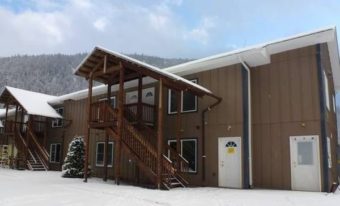
One-bedroom units in River Park Apartments in Lemon Creek are renting at $1,050 a month. (Photo courtesy of Summit Reality)

More than 40 new rental units are becoming available in the capital city, and more are on the way. A developer fears Juneau may become overbuilt, but a city official says that’s far from happening.

Coogan Construction is about to release 24 West Juneau apartments onto the housing market. “They’re all two-bedroom, 1000-square feet, washer and dryer in the units. Kind of like condos,” says Island Hills owner Wayne Coogan. He isn’t sure what rent will be and hasn’t started advertising, but the calls are still coming in. “There’s all kinds of people that are trying to rent them. I mean people see it getting built. There’s people reserving, trying to reserve places right now,” he says.

Property manager Marna McGonegal is seeing the same level of interest for the new 23-unit River Park Apartments in Lemon Creek:

“I’m having a problem keeping up with the demand, trying to get back to everybody and make sure I’ve got everybody taken care of.”

McGonegal started advertising in mid-December and nine apartments are already taken. With one-bedroom units going for $1050 a month, McGonegal doesn’t anticipate having trouble filling the rest. “There has been a high demand for the one-bedrooms. It’s not been sporadic at all. I’ve had regular responses every time I’ve renewed my Craigslist add,” she says.

River Park Apartments developer Bill Heumann says the 23-apartment complex wasn’t even an idea until last spring when the market conditions seemed right, and he’s proud of the fact that it went from concept to occupancy in seven months. His next project is 16 waterfront condominiums in Auke Bay.

With other complexes nearing completion and beginning to rent, Heumann thinks Juneau’s housing need is starting to be met.

“From a developer’s standpoint, it’s time to start being more careful. I think we can find ourselves building too many units,” he says.

West Juneau's Island Hills under construction in January 2013. (Photo courtesy of Wayne Coogan)
West Juneau’s Island Hills under construction one year ago. (Photo courtesy of Wayne Coogan)

But Exit Reality property manager Wayne Bundy thinks it’s going to take a lot more apartments than Island Hills and River Park to make a real difference in Juneau’s tight rental market. “If we could dump another 200 units onto the market, you know 200 quality units, the market would ease up pricing-wise and availability,” Bundy says.

Hal Hart is not worried about Juneau becoming overbuilt. He’s the city and borough’s Community Development Director.

“I completely don’t think we have enough housing. We’re certainly not close to overbuilding the market right now,” Hart says.

He hopes the two apartment complexes will spur other housing projects and create more affordable options, “If we put more units on, that gives release to other areas of the market including less expensive housing opportunities, too. People would move around and move up if there’s more to choose from.”

While growth in the market is key, Hart says location is also important. Ideally he’d like to see growth downtown to help fulfill the needs of the legislature, the tourism industry, as well Juneau’s year-round population, but the rentals opening up now are in good locations. “Bill Heumann is out in Lemon creek. It’s centrally located, which has its good points because there’s bus service either way or the drive time isn’t so long,” Hart explains. “The West Juneau – the Island Hills – is centrally located. We really like that. It’s taken a while for it to come on, but that’s within biking distance or walking distance of the downtown.”

Hart says other important rental unit factors are quality and safety, as well as affordability, which continues to be a priority of the Juneau assembly.

Ways to honor & celebrate Martin Luther King, Jr. Day in Juneau

We Shall Overcome
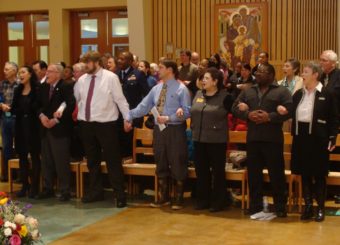
Audience members at last year’s Martin Luther King, Jr. Day observance in Juneau link arms and sing “We Shall Overcome.” (Photo by Casey Kelly/KTOO)

As the nation celebrates Martin Luther King, Jr. Day, here’s what you can do around Juneau on Monday:

Lawyers with the Juneau Bar Association are providing free legal advice in honor of Martin Luther King, Jr. Day of Service. The public is invited to ask questions on a range of topics, including Medicare, Medicaid, landlord/tenant issues, family law, or general law questions. Free legal advice will be available at the Juneau Christian Center from 9 a.m. to noon, and at the Dimond Courthouse from 1 to 5 p.m.

A community celebration will be held at St. Paul’s Catholic Church on Atlin Drive at 1 p.m. The family event includes guest speakers, singing, and tributes. This is a free event sponsored by the Black Awareness Association of Juneau.

Veterans for Peace of Juneau is sponsoring a brief ceremony on the peace sign above Home Depot starting at 5 p.m. People are asked to bring headlights and flashlights, and the lit-up peace sign will be photographed for submission to the Juneau Empire and the Veterans for Peace national newsletter.

Cleaning small fuel spill at Juneau airport requires group work

Two to three gallons of fuel spilled from Alaska Airlines Flight 76 when the auto shut-off failed to work. (Photo courtesy of Marian Call)
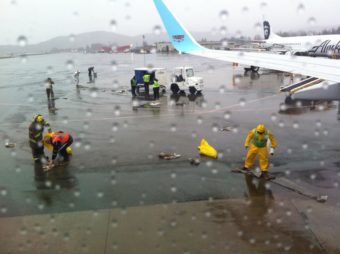
As seen from inside the plane: Two to three gallons of fuel spilled from Alaska Airlines Flight 76 when the fueler’s auto shut-off failed to work. (Photo courtesy of Marian Call)

A small fuel spill occurred with an Alaska Airlines jet at the Juneau International Airport Thursday afternoon. As Aero Services was fueling southbound Flight 76 at Gate 4, the auto shut-off function failed to work, spilling two to three gallons of fuel.

Airport manager Patty deLaBruere says the Department of Environmental Conservation was notified and the spill was responded to quickly:

“Capital City Fire and Rescue was called because it’s part of the response team for fuel spills. It’s Alaska Airlines out there helping out, the airport helping out, the actual fueler, which is Aero Services – everybody jumps in to make sure it’s contained rapidly.”

deLaBruere says the majority of the fuel was cleaned up with oil absorbent pads. Any residual sheen, she said, will drain into an oil-water separator.

deLaBruere says small spills happen at the airport about every other year, but it’s been several years since a large spill occurred.

New science released on how human-made sounds impact marine mammals

Humpback Whale
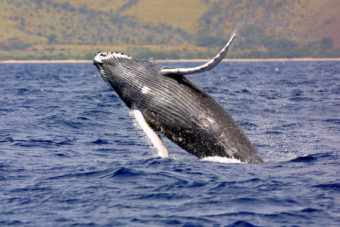
The humpback whale is considered a low frequency cetacean, which means it uses and hears low frequency sounds. (Photo courtesy of NOAA)

The National Oceanic and Atmospheric Administration is asking for public comment on guidelines updating the effects of human-made sounds on marine mammals.

Marine mammals rely on their sense of sound for survival. “They use it for feeding, locating mates, and just generally understanding what’s going on in the world around them,” says NOAA fisheries biologist Amy Scholik-Schlomer, who is also an acoustic specialist.

She says the guidelines update the levels at which human-made sounds affect marine mammals temporarily and permanently. NOAA calls these threshold shifts. A marine mammal experiencing a temporary threshold shift is like going to a rock concert. “Your hearing is temporarily affected but it fully recovers, while permanent threshold shift would be something that your hearing is affected but it doesn’t fully recover. You have some permanent loss. It doesn’t mean you’re deaf and it doesn’t mean that it affects your entire hearing range; it just means that you can’t hear quite as well as you could before,” Scholik-Schlomer explains. 

Brad Smith is a marine mammal biologist with NOAA in Anchorage. He says acoustic impacts on marine mammals are pertinent to Alaska, especially to the oil and gas industry, “We have seismic geophysical surveys which introduce very, very loud sounds into the water in areas where we have endangered and threatened species and marine mammals in general, notably the Chukchi and Beaufort Seas and, more recently, in Cook Inlet.”

The construction industry also needs to be aware of the sounds it creates.

“The Port of Anchorage, certainly the KABATA crossing, the bridge if its built, all those construction activities that involve pile driving or placing sheet pile, possibly others such as dredging, anything that creates in-water noise in areas where marine mammals exist may potentially generate enough noise to cause an animal to be harassed,” Smith says. 

Activities involving operating a vessel, like running a loud outboard motor, don’t reach the same levels of in-water noise, he says.

Scholik-Schlomer says the new guidelines address the fact that different marine mammals hear noise differently. For example, humpback whales are considered low frequency cetaceans. Many human-made sounds heard underwater that come from construction activities or seismic surveys are also low frequency. “Humpback whales hear and use low frequency sounds so they would be more impacted by something like seismic, opposed to killer whales who actually hear better at higher frequencies where there isn’t as much anthropogenic sounds,” she says.

How sounds affect marine marines is still an emerging science and Scholik-Schlomer says there are gaps in research:

“All the large whale species, we actually have no direct information on how they hear because it’s difficult to do those types of studies, so we have to use the best available information we have and extrapolate from data from bottlenose dolphins or even sometimes from terrestrial species, like mice and rats, where we don’t have any other data.”

The public comment period on the updated acoustic guidelines ends Jan. 27. Due to requests from members of Alaska’s congressional delegation, the oil industry, and various conservation organizations, NOAA is considering an extension to the public comment period.

With loss of dock, Gustavus residents worry about tourist season

Tuesday’s storm in Southeast caused a state-owned breakwater in Gustavus to dislodge from its pilings and wash ashore on the beach. The 200-foot steel structure also serves as a popular floating dock facility for local residents running charter fishing and whale watching boats. Now, Gustavus residents are wondering what this means for their tourist season.

“I didn’t want to watch but I couldn’t look away. It was pretty intense,” says Gustavus resident Pep Scott.

She was at the Gustavus dock facility Tuesday from noon to 6 p.m. watching the floating breakwater and pilings rock back and forth. Workers with the state Department of Transportation had tried to secure it with heavy line, but it didn’t work. The floating structure eventually broke loose and landed on the beach.

Scott calls the breakwater, which also serves as a dock, Gustavus’ livelihood. “I run a fish processing plant so I rely on the charter boats and the commercial fishing boats and without a float for anybody to come and put their boat in or for any goods to come in and go out, we’re just kind of stuck,” she says.

As the breakwater dislodged, it swung into city-owned wooden floats causing damage to those as well and leaving Gustavus residents without many options for docking, especially during the busy tourist season coming up in May.

“At this point in time, if we go with what’s left, it looks like we’ve got about a 40-foot section of dock that 20 to 30 boats would have to use every day,” says Mike Halbert.

Halbert has owned Glacier Bay Sportfishing for almost 30 years. Between the end of May and September, he takes up to eight tourists out on the water every day. Boats use the state-owned breakwater and the city-owned wooden floats for whale watching, charter and commercial fishing, kayak transport, and recreation. Halbert says the community with a year-round population of 450 relies heavily on tourism, “It’s life or death. If it’s not there then none of us can operate.”

The breakwater went into service in 2012 and cost the state just under $1.4 million. It’s located in the same facility as Gustavus’ ferry dock, which was not damaged during Tuesday’s storm.

Al Clough is Southeast Director of DOT. He says a storm in December had previously damaged the floating breakwater. At the time, the state conducted surveys and determined that it had to be removed due to unstable pilings. “Unfortunately, before we could get a crew, to get a barge and a crane mobilized out there to remove that breakwater, another storm came in,” he explains.

Clough says he has no idea when the breakwater will be repaired but it’s not going to be put back in the near future:

“We have to redesign a new structure and then we have to permit it and secure funding and everything else. There is not a quick fix, and obviously that breakwater, the way it was installed is not robust enough to handle this major storm event we had so we’re not just going to be put the same thing back in there.”

According to the National Weather Service in Juneau, the maritime wind in Gustavus Tuesday was at least 40 miles per hour.

[youtube https://www.youtube.com/watch?v=jMTND8rE_wo]

Gustavus resident Dan Lesh shot this short video of the steel breakwater before it dislodged. 


Original story published Jan. 15, 1 p.m.:

Tuesday’s storm caused a state-owned breakwater in Gustavus to wash ashore around 4 p.m. The 200-foot steel breakwater also serves as a popular dock facility for local residents.

Al Clough is the Department of Transportation’s Southeast Director. He says another storm that occurred last month had previously damaged the floating breakwater. The state conducted surveys and determined that it had to be removed due to unstable pilings.

“Unfortunately, before we could get a crew, to get a barge and a crane mobilized out there to remove that breakwater, another storm came in and dislodged that float from its mooring structures and it’s now sitting on the beach,” Clough says.

It will not be replaced in the near future, he says:

“We have to redesign a new structure and then we have to permit it and secure funding and everything else. There is not a quick fix.”

The state breakwater was completed roughly two years ago. As it washed ashore Tuesday, it caused damage to the city-owned boat harbor. Clough hopes to get the breakwater removed off the beach today.

Meteorologist Joel Curtis says the maritime wind in Gustavus yesterday was at least 40 miles per hour. Peak wind recorded 60 miles away at Cape Spencer was 85 mph out the west.

Site notifications
Update notification options
Subscribe to notifications