Lisa Phu

Managing Editor, KTOO

"As Managing Editor, I work with the KTOO news team to develop and shape news and information for the Juneau community that's accurate and digestible."

CNN to spotlight Alaska’s high rape numbers

CNN will examine Alaska’s struggle with sexual assault and domestic violence in its Change The List project, propelling the issue to the national stage. The news agency sent a reporter to the state to start exploring the problem.

The sign outside CNN Center in Atlanta. (Photo by Ayush/Flickr Creative Commons)

Columnist John Sutter heads the project Change the List on CNN.com. “This summer we had our audience vote on the issues that they feel like are the biggest social justice issues of our time,” he says. “It was sort of putting readers in the assignment editor’s seat and then getting to choose what they think are really the most important topics.”

Twenty ideas were put forward and more than 32,000 votes were cast. Sutter will write on the top five.

The first issue Sutter tackled was income inequality. He focused on East Carroll Parish, Louisiana, the county with the highest level of income inequality in the U.S.

“Another one of the topics was rape in the United States that was selected by our readers and Alaska has the highest rate of rape, according to the FBI Crime Statistics, so that’s what brought me up here to the state,” Sutter says.

CNN columnist John Sutter is in Alaska exploring the problem of rape and sexual assault. (Photo by Lisa Phu/KTOO)

FBI statistics indicate the rate of forcible rape in Alaska for 2012 was about 80 for every 100,000 people, compared to the national rate of 27. Sutter says he wants to explore the complex factors that contribute to the state’s high rate and find out what people are doing to fix it.
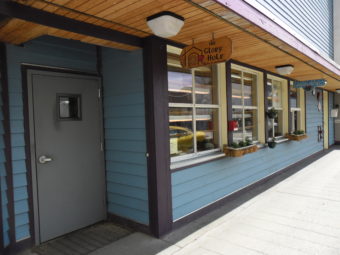
His first stop was Juneau, which recently hosted the second annual domestic violence and sexual assault Prevention Summit. Sutter says he’s gotten some interesting answers to why the rate of rape and sexual violence is so high in Alaska. “One is the incredible isolation. I’ve heard from people that live in remote villages that are only accessible by plane much of the year that people are hesitant to come forward to report rape or sexual abuse in part because it’s difficult for law enforcement to respond and the response times are often very, very long.”

Sutter also heard that talking about rape and sexual violence is taboo in many parts of the state. But he says the Prevention Summit where people were dedicated to talking about and stopping it was encouraging.

“This conference is very focused on prevention and positive work that is being done and can be done, and it seems very intentional to me. I kind of like that focus, to be honest, instead of dwelling on the violence and the victimization and sort of these things that you actually often see featured in the news,” Sutter says. “Here, everyone is talking about what can be done to prevent those things from happening at all.”

The ultimate goal of Change the List is to help bring about change by highlighting the issues for CNN.com readers.

“I don’t claim to think that us doing a few stories on sexual violence and rape in Alaska can change things in and of itself, but I think we can be part of a conversation that’s clearly already happening here at the summit and is already happening in Alaska and around the country and sort of amplify some of the voices in that conversation and, in that way, try to be part of the solution,” explains Sutter.

A sample of CNN columnist John Sutter’s tweets while in Alaska: 


Sutter interviewed Alaska Gov. Sean Parnell whose Choose Respect campaign has seen increasing community participation over the last four years. Parnell says he welcomes the attention that CNN will bring to what he calls Alaska’s epidemic of domestic violence and sexual assault.

“This is America’s problem, too. This is a worldwide problem. It’s not just Alaska’s issue,” he says. “It’s been covered up here too long. We’ve been afraid to address it as friends of each other, as family members for each other, and to stand up for each other. But it’s not unique to Alaska.”

Lauree Morton is executive director of the Council on Domestic Violence and Sexual Assault, which sponsored the Prevention Summit. She invited Sutter to attend.

“While we do have a horrendous problem with domestic violence and sexual assault, we’re not just staying stuck in the problem,” Morton says. “People are actively working to move us away from that and call us into peace. It’s not just sadness, there is hope involved.”

After Juneau, Sutter traveled to Bethel. Sutter’s reporting in Alaska will result in a series of columns, videos, and suggestions for how to keep moving forward, which will all be featured on CNN.com.

What would you do with 9 tons of salmon you can’t sell?

Juneau’s soup kitchen and shelter Glory Hole received the generous salmon donation from SeaShare, a non-profit based in Seattle. (Photo by Lisa Phu/KTOO)

Juneau’s soup kitchen and shelter recently received a donation of salmon with an estimated retail value of more than $100,000.

Nine tons of individually wrapped frozen salmon steaks sit in a container at Juneau’s Alaska Marine Lines. The fish has been donated to The Glory Hole, Juneau’s soup kitchen and shelter.
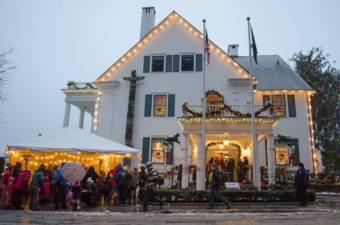
The donation was made by SeaShare, a non-profit based in Seattle that works with the seafood industry to help get food to people who are served by food banks and soup kitchens.

“Our role is we try to make it easier for fishermen and processers to donate and we’re able to bring in other companies who can help with freight or packaging or storage so the donating entity doesn’t have to bear the whole brunt of bringing them up there,” says SeaShare executive director Jim Harmon.

The salmon donated to Glory Hole is chum bycatch from the pollock trawl fishery in the Bering Sea.

“Fishermen have the opportunity to retain those fish and bring them into shore and donate them to SeaShare. We’re the only agency authorized to receive prohibited species catch. If they don’t retain them for us, they have to throw them overboard so there’s no economic incentive to them for retaining high value salmon while they’re fishing for pollock,” Harmon explains.

SeaShare will donate about 1.5 million pounds of fish this year – ten percent of that comes from the bycatch program; the rest is from seafood companies.

Harmon says the goal is to utilize fish that would otherwise be thrown overboard. SeaShare works with more than 120 boats, which Harmon says accounts for every boat in the Bering Sea pollock fishery and more than half in the Gulf of Alaska fishery.

“We make it clear that nobody is asking for bycatch, the people who work with us are some of the best fishermen who work the hardest to avoid it but when they do catch it, they want to see something good done with it,” says Harmon. “They want to utilize everything that’s in the net, so they donate it to us.”

SeaShare has also donated fish to Anchorage, Kodiak, Fairbanks, Kotzebue, Galena, Dutch Harbor, and St. Paul.

In February Juneau’s Glory Hole received 8,000 pounds of sockeye fillets shared among a few other organizations. Executive director Mariya Lovischuk says she was initially overwhelmed with the current donation of 18,000 pounds, “but then I figured that definitely if I called around our partner agencies we would be able to utilize the fish for sure, and I was right, so now all the fish is going to the right places.”

The fish is being divided based on need and freezer space. Glory Hole clients will help distribute the salmon to more than ten other organizations, including Southeast Alaska Food Bank. Manager Darren Adams says the food bank will get 5,000 pounds.

“That’s a very generous donation,” he says. “We can always use an influx of protein. We tend to get a lot of empty calories but it’s always nice to get stuff like salmon and other meats that allow us to offer something healthy to our clients.”

Adams says the food bank will distribute the fish to several organizations in Juneau as well as to individuals and families that pick up food on Saturdays. Last Saturday, that was 60 people but Adams says the number changes week to week.

According to Lovischuk, Glory Hole will keep 3,000 pounds of salmon. She says that’ll help feed the 60 to 100 people that go there for lunch every day. “I think it’ll probably be enough protein for us to do our lunch program for two months.”

Lovischuk says Glory Hole is almost finished with the coho salmon donated in September by Juneau hatchery Douglas Island Pink and Chum, so the SeaShare donation is coming at just the right time.


Governor continues 100-year-old holiday tradition

Russian tea cookies, white chocolate coconut clusters, and star-shaped butter cookies are just a small sampling of what was available Tuesday afternoon at the Governor’s Annual Christmas and Holiday Open House.

Doors to the Governor’s Mansion opened to the public at 3 o’clock, “and then they’re greeted to the governor, first lady, lieutenant governor,” explains Erika Fagerstrom, manager of the Governor’s Mansion. She’s been organizing the Governor’s Annual Christmas and Holiday Open House for eight years. This year, though, is a little more special than others.

“They started constructing the house May, 1912, and by December the family had already moved in and they had their very first open house New Year’s 1913, so this is the 100th open house,” Fagerstrom says.

After the greetings, guests walk into the dining room where there is a large table with trays and trays of cookies and fudge. For 4-year-old Ella Malaby, this is what she’s been waiting for.

“She loves it. That was her favorite part was seeing that whole table full of cookies and candy,” says Staci Malaby.

She brings her daughter to the governor’s open house every year. “She knows this house is the cookie house, not the Governor’s House, and she loves seeing the gingerbread houses and the train.”

Veronica Salter, 14, is with her classmates from Faith Community School. They’re performing songs from the musical “Christmas in Black & White.” Salter can’t remember a year she hasn’t been at the governor’s open house. “I like how everybody is really friendly and how people are singing also and they play beautiful music and I like meeting the governor, too. I got to shake his hand and say hello,” Salter says.

Roland Eim is from Germany and is visiting Juneau for the first time. He heard about the open house from his daughter who recently moved to town.

“We actually walked for about half a mile to come here and got very wet as you can see and I got a really nice conversation with the governor,” Eim says.

Eim says he’s surprised with the notion of a governor opening up his house to the public, “In Germany or like in France or like any other country, you’d likely have lots of police protecting the governor, so I think it’s a very awesome thing. It’s very close to the people and I appreciate that much, really.”

For Gov. Sean Parnell, continuing the open house tradition is important.

“It really says that our government, our house, the people’s house is accessible. And it’s our chance to be accessible in a pretty big way and for people to really enjoy the house that belongs to them,” Parnell says.

Along with continuing the tradition of the open house, the Parnell family will practice another tradition as they spend the holidays at home in Juneau – opening one gift on Christmas Eve.

New reality show filmed in Juneau

The capital city was the finish line for the season finale of The Amazing Race which aired Sunday night. Top Chef featured the Governor’s Mansion early this year, Hotel Impossible filmed at The Alaskan Hotel & Bar in September, and on Saturday night, another production company wrapped up shooting in Juneau for the pilot of yet another reality show.

Executive producer Chris Costine says the show doesn’t have a title yet.

“The show is based on the idea of taking people out of their comfort zones from the lower 48 and people out of their comfort zones from local Juneau, kind of forcing them to try new things,” Costine says.

The cast members include two female leads – one from Juneau and one from the lower 48.

“If they’re from the lower 48, they’re coming up here to experience something they’ve never done before, which is usually the outdoors and the wilderness aspects of it,” he says.

The Juneau cast member – Juneau-Douglas High School graduate Cameron Brockett – went through a boot camp version of etiquette training with Image, a business based in Juneau and Spokane, Washington. The last night of filming was at The Alaskan Hotel & Bar where Brockett performed a few songs.

For five days of filming, Costine worked with a 15-person crew made up of Juneau locals and workers from Los Angeles production company Intuitive Entertainment. He says filming in Alaska is expensive.

“Everything has to be shipped, so everything costs more, everything. Flying crews up is more expensive. Also food, hotels, gas, car rental – everything is more expensive,” explains Costine. “I’d say it’s 20 to 25 percent more expensive to the overall budget of your show.”

Alaska’s state government subsidizes a portion of the high cost, but Costine says the allure of Alaska makes up the rest.

“People are fascinated by Alaska and I think it’s a new thing that people really want to hear about, they want to find out about.

David Worrell agrees. He’s a development specialist for the state and gives assistance to film production companies.

“Right now Alaska is really hot property in terms of the non-fiction television,” Worrell says. “People are endlessly fascinated about Alaska and Alaskans, and the works we do, the jobs we have.”
That’s been going on for some time – Discovery aired the ninth season of Deadliest Catch this year – and Worrell doesn’t see the trend ending anytime soon.

“There’s a steady stream of folks looking for new angles. A few years ago, it was Deadliest Catch, Ice Road Truckers, then we had some miners, and now we’ve got several shows that are looking at bush Alaska lifestyles,” says Worrell. “So I think we’ll cycle through that but as long as those shows continue to get reasonably good ratings, we’ll continue to see them coming up.”

Worrell isn’t sure why Juneau has lately attracted more reality show interest but has some guesses, “Juneau is obviously an incredibly beautiful place. Access is reasonably good. It’s a few hours closer than Anchorage and a few more hours closer than Fairbanks, certainly than Nome, so that may play into it. But I think a lot of it really just has to do with the story lines they’re interested in and the luck of the draw.”

Show producer Costine has been lucky, too. “The snow was perfect. It was sunny every day,” Costine says. “We couldn’t have asked for more. It’s almost as if it was created for us.”

Costine won’t reveal what network the show is for, but hopes it’ll air early next year.

Domestic violence prevention comes in many forms

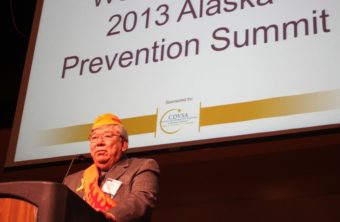
Several Alaska Native communities participated in the second annual domestic violence Prevention Summit that wrapped up Thursday in Juneau.

Reverend Ishmael Andrew works at the Tundra Women’s Coalition in Bethel and lives in Napaskiak. (Photo by Lisa Phu/KTOO)

The goal of the state-sponsored Prevention Summit was for communities to share strategies for how to prevent domestic violence and sexual assault.

In Bethel, Reverend Ishmael Andrew works as the Engaging Men and Boys Coordinator for Tundra Women’s Coalition, a non-profit that runs a women’s shelter and provides educational outreach.

For Andrew, prevention is about practicing a traditional way of life

“Prevention to us is shooting a moose and bringing it home and giving it to the whole community,” Andrew says. “That’s what prevention means to us – keeping ourselves busy instead of being idle at home.”

After three days of attending workshops, networking, and hearing about prevention strategies used throughout the state, Andrew is even more confident about the work he’s doing.

“The Prevention Summit has really opened my eyes and made me believe that I can speak up for the people in our region now,” he says. “We have resources in our communities that we really need to be going to, which are the elders and those who have been authentically living the way of life.”

When he’s not at work, Andrew is at home in the nearby village of Napaskiak where he tries to spread the same values.


UPDATE: Juneau police investigate shooting; kidnapping likely made up

Update 4:24 p.m.

Juneau Police now say  the shooting incident at Coho Park Apartments started over an altercation between the 44-year-old male who was shot and the 24-year-old male who is in police custody.

Lt. Dave Campbell says the two individuals knew each other.

“There was an argument between people that are familiar with each other. It’s not a random incident the general public needs to be too worried about,” Campbell says.

He says police know what the altercation was about but cannot release the information.

Police have determined that the 24-year-old male was driving a white truck with a plow during the shooting incident.

“Following the shooting, he left Coho Apartments and swapped out to a different vehicle that was a sedan and it was the sedan that he was ultimately contacted in at 8 o’clock this morning (Friday),” Campbell explains.

Campbell says police have located and seized both the sedan and the white truck.  The 26-year-old female, who was found in the sedan this morning with the 24-year-old, is in custody.

Also, two firearms were involved in the original report and Campbell says the police have both in evidence. One is a small caliber pistol and the other is a medium caliber pistol. Police know who they belong to, but Cambpell says he can’t release that information.

He adds that the possible kidnapping reported by a 22-year-old woman at 7:40 this morning appears to be a fabrication.

“We can’t get into the details specifically of why we believe that,” Campbell says. “From the information we’ve been able to put together, the report that the lady was kidnapped and held at gunpoint is not accurate.”

He says police are likely getting up to six search warrants. Juneau police have received help from the FBI and the U.S. Forest Service in the investigation. Campbell says no arrests have been made yet.

Update 3:30 p.m.

Juneau police say a kidnapping reported early Friday “is most likely a fabrication.” The made up kidnapping was being investigated along with a shooting reported just after midnight.

In an updated press release, police say the shooting occurred during an altercation between a 44-year-old male who was shot, and a 24-year-old male suspect. The suspect, who is being detained by police, was driving a flat bed truck during the shooting but later switched to a sedan. Both vehicles have been seized as evidence.

The investigation is ongoing.

Original post:

Juneau police are investigating a shooting reported just after midnight Friday and a possible kidnapping.

Lt. Dave Campbell says the shooting took place at the Coho Park Apartments, which are located in the 3600 block of Amalga Street. That’s about 1,200 feet away from Floyd Dryden Middle School.

“Roughly 17 minutes past midnight, the Juneau Police Department received multiple 911 calls that there had been shots fired and there was a man that had been injured and was bleeding,” Campbell says. “Within a matter of minutes police officers arrived on scene. We contacted a 44-year-old male who had been shot twice, once in the left shoulder and once in the left wrist.”

[googlemaps https://mapsengine.google.com/map/u/0/embed?mid=z4ukvTcI6LL4.kFI2jBc04QhE&w=640&h=640]

The man was taken to Bartlett Regional Hospital for treatment. Campbell says he doesn’t know the extent of the injuries but they didn’t appear to be life threatening. He says the man was conscious and aware.

According to a Juneau Police news release, officers searched the area of the apartments and interviewed several people. Witnesses reported hearing an argument, followed by several gunshots. Officers also located a small caliber pistol and several spent shell casings.

Later in the morning, around 7:40, Juneau police got a call of a possible kidnapping.

“We got a call from a lady who said that she had just basically escaped from a man who was involved in the shooting at the Coho apartments,” says Campbell. “Officers met with her and she said she had been held at gunpoint and that when the man fell asleep, she left, she fled.”

Campbell says the 22-year old woman described the car where she had been kept. According to the news release, she reported the male suspect was asleep in a vehicle on Gastineau Avenue.

When Juneau police went there, the car was gone. Campbell says the car described is “distinctive” although would not say why. He said it’s a car that Juneau police has had previous contacts with.

A little after 8 this morning, a police officer saw the car driving outbound on Egan Drive and turn onto Riverside Drive.

“The vehicle was eventually contacted and stopped on Julep Street,” he says. “Inside we ended up contacting two people, a male and a female. They are both detained and taken back to the Juneau Police Department.”

For about an hour and a half this morning, police closed Egan Drive between Vanderbilt Hill Road and Wal-Mart, diverting traffic to Glacier Highway. Campbell says police were looking for evidence tied to the shooting and possible kidnapping. Campbell says evidence was found but could not identify what it was.

Campbell says at this point, no one has been arrested and no names can be released.

(Casey Kelly, Matt Miller and Rosemarie Alexander contributed to this report)

Site notifications
Update notification options
Subscribe to notifications