
Pew Charitable Trusts

States Pursue Varied Police Reforms Amid National Debate

A protester yells at police outside the Ferguson Police Department, Wednesday, March 11, 2015, in Ferguson, Mo. (Associated Press)

On the night he died, Douglas Ostling dialed 911 — but he wasn’t in distress, according to his parents. Bill and Joyce Ostling said they cautioned the police officers who showed up at their Bainbridge Island, Washington, home that their 43-year-old son, who lived in an apartment above the garage, was mentally ill. But when Douglas came to the apartment door carrying the ax he used to cut kindling for his wood-burning stove, the situation escalated.

The Ostlings and the police provide different accounts of what happened next. What is certain is that one of the officers shot Douglas. Over the next hour and 17 minutes, he bled to death on the floor of the apartment while the police surrounding the garage treated him as a barricaded suspect.

After their son’s death in October 2010, the Ostlings advocated for better crisis training for Washington state police officers. Last month, Democratic Gov. Jay Inslee signed the Douglas M. Ostling Act, which mandates that all officers in the state receive an initial eight hours of crisis intervention training and participate in a two-hour review course each year. The bill also includes a mechanism to pay for 25 percent of the patrol officers statewide to participate in a 40-hour training program.

“There are a lot of things broken, and we helped fix one,” Bill Ostling said. “It’s not a total fix, but at least it starts getting some attention, which is needed.”

Spurred by police shootings in Missouri, South Carolina, Ohio and Maryland, lawmakers in many states have debated policing reform measures this legislative session. Among them: measures requiring local police to provide more extensive training, equip officers with body cameras and collect better data on the use of force. But many of the proposals have stalled because of a lack of money and resistance from local police agencies.

Financial Realities

About half of the police agencies in the U.S. employed fewer than 10 officers in 2013, according to the Bureau of Justice Statistics. For such small departments, the cost of training— including paying officers to fill in for those receiving additional training in the classroom — is a major barrier.

In Ohio, where an attorney general’s advisory group recently recommended increasing continuing training requirements for officers from 24 to 40 hours, Fraternal Order of Police President Jay McDonald said police agencies support training measures, but the proposed requirements would cost an additional $30 million annually.

“We just want to make sure that the recommendations of the task force and the implementation of any recommendation doesn’t jeopardize their safety and doesn’t jeopardize employers’ ability to fund police operations,” McDonald said.

Similar concerns played out in Colorado, where Republican state Sen. John Cooke, a former county sheriff, joined with Democrats to pass initiatives including a grant program to help local agencies pay for body cameras, a move to bring outside oversight to investigations of police departments and a requirement that officers receive additional situational de-escalation, community policing and anti-bias training.

Cooke called other bills, such as a failed attempt to ban the use of chokehold techniques, “pretty extreme.”

“I’m not saying that for every minor arrest a chokehold is used,” Cooke explained. “But when you’re in a knockdown, drag-out fight, you’ve got to do what you’ve got to do.”

Cooke said many of the ideas proposed by Denver-area lawmakers don’t translate well in smaller, rural jurisdictions.

“You have different community needs and different agency size,” Cooke said. “You can’t write a law that covers everything. Mandatory training — a lot of these small agencies don’t have the funds or the money to do the training they want to get done.”

Jennifer Shaw, deputy director of the ACLU in Washington state, where the Ostling bill will take effect in late July, said training is typically left to local jurisdictions, but policies governing police action should be standard across the state.

Money could be one reason agencies resist training mandates, she said, but it is more likely that localities want control over their police departments.

“They don’t seem to have a problem taking money when it’s offered,” Shaw said. “But when it comes to laying down certain requirements of how policy is written, how training is undertaken, that’s where the local jurisdictions get upset.”

She said it’s important to have statewide policies, since officers from different agencies often work together.

Before 2015, only four states had body camera laws on the books. By May, 34 states were at least considering legislation related to the devices.

Promoted as a way to hold police accountable, the cameras have raised questions about procedure, public records access and the expense of storing, reviewing and releasing footage.

In a 2014 survey by the Police Executive Research Forum, nearly 40 percent of police agencies without body cameras reported cost was the primary barrier to using the devices.

Tracking Use of Force

While cameras and training are getting a lot of attention from lawmakers, some policing experts say the country’s next wave of reforms lies in accurately tracking how and when officers use lethal force.

Two states, North Carolina and Oregon, already require data collection for incidents involving deadly force, according to the National Conference of State Legislatures (NCSL). Legislators in seven states (California, Colorado, Connecticut, Maryland, Massachusetts, North Carolina and Virginia) have introduced legislation this year to address or expand data collection.

There is no federal standard for collecting and comparing data about police use of force, though the FBI does maintain a database of officers who are assaulted or killed.

“If we had a national database with data by city, we could then say these police departments are doing much better than these others,” said Samuel Walker, a policing expert and professor emeritus at the University of Nebraska at Omaha. “We could then do research about communities — policies, management, personnel practices that contribute to lower rates of shooting.”

In Maryland, lawmakers were already considering a number of reforms before public outcry over the death of Freddie Gray, a Baltimore man who died in police custody, reached a fever pitch.

Del. Alonzo Washington, a Democrat from Prince George’s County outside Washington, D.C., spearheaded a new law that requires law enforcement agencies to report all officer-involved deaths to the Maryland Governor’s Office of Crime Control and Prevention.

“We need more transparency and accountability,” Washington said. “People died at the hands of police officers, why shouldn’t we know that?”

Maryland Republican Gov. Larry Hogan recently signed that measure, along with a bill creating a commission to establish guidelines for police-worn cameras and a measure to establish behavioral health units at police agencies in the Baltimore area.

In Colorado, a similar law will require every officer involved shooting be reported to the state Division of Criminal Justice. Cooke also sponsored that legislation.

Many Bills, Few Laws

The U.S. Justice Department has opened nearly two dozen investigations of police departments during the past six years after allegations of brutality or in the wake of police shootings. It has recommended reforms in cities such as Seattle, Newark, New Jersey, and Ferguson, Missouri, or entered into settlements to change policing policies, as it did last weekin Cleveland.

Although the police shooting of Michael Brown in Ferguson last August launched a national dialogue on police tactics and sparked plenty of discussion in state capitols, that hasn’t translated into many new state laws—at least not yet.

In Missouri, for instance, lawmakers proposed more than 50 reforms during the legislative session. But only one — a measure to limit the revenue local jurisdictions can raise through traffic tickets — became law.

Additionally, Missouri and 19 other states proposed nearly 50 bills regarding racial bias training for officers, according to NCSL. None passed except the one in Colorado, the group said.

Sarah Rossi, director of advocacy and policy for the Missouri ACLU, said legislative leaders in Missouri lacked the appetite to pursue real change. “I think the most important point was there were so many bills that could have addressed police reform and so many of them were ignored or given a cursory glance and then ignored,” Rossi said.

When the Missouri Legislature began its session in January, then-House Speaker John Diehl, a Republican, told reporters the House would not “have a Ferguson agenda,” and lawmakers would not be “eager just to throw money at a problem.”

In Ohio, McDonald of the Fraternal Order of Police said the issue comes down to money. “There are over 900 police agencies in the state of Ohio, so what might be needed in Cleveland or Cincinnati might not be needed [in a rural area.]”

But Mike Brickner, senior policy director for the ACLU of Ohio, said financing is only a part of the resistance to change.

“It’s kind of like swimming in a sea of Jell-O,” he said. “It’s very hard to make progress, it’s very slow going, it’s very arduous. None of these will be overnight solutions.”

Read Original Article – Published June 01, 2015
States Pursue Varied Police Reforms Amid National Debate

To Collect Revenue, Some States Put Tax Scofflaws in Virtual ‘Stocks’

States are trying to bring tax scofflaws out of hiding by publishing lists of delinquent taxpayers, in a technique known as "Internet shaming." (Getty Images)
States are trying to bring tax scofflaws out of hiding by publishing lists of delinquent taxpayers, in a technique known as “Internet shaming.” (Getty Images)

Almost two-thirds of the states are punishing tax delinquents with a digital version of the Colonial practice of locking lawbreakers in stocks set up in the village square.

It turns out publishing the names of tax scofflaws and the amounts they owe on the Internet works spectacularly well, bringing in millions to states eager for the revenue. In many cases, just the threat of being on the list is enough to get delinquent taxpayers to pay.

The technique is the flip side of tax amnesty, in which delinquent taxpayers are offered the chance to come forward voluntarily to escape high interest or penalties. The two processes are similar, however, in that states usually work out a payment plan for taxpayers.

The states that use public lists of delinquent taxpayers range from largely liberal ones such as California and New York to more conservative states such as South Dakota and Alabama.

In Vermont, the latest state to adopt the strategy, the legislature last year approved publishing the names of the top 100 individual and top 100 business tax delinquents. The state estimated it would collect $800,000 of an estimated $175 million in delinquent taxes in fiscal year 2015, which will end June 30.

The program has been even more successful than expected: Since the list was posted in January, Vermont has collected $1.3 million, according to Gregg Mousley, deputy tax commissioner. He predicted a total take of $1.5 million by the end of the fiscal year.

Under its plan, Vermont compiles the two lists, and then notifies the scofflaws by letter that their names are about to be published. According to Mousley, the letter often is incentive enough to prompt payment.

“At least half of the $1.3 million was collected before we put them on the list,” he said. “The threat of being on the list was a very good motivator.” Mousley predicted, however, that the pace of collections will slow and that the state will collect less in subsequent years because some of the buzz about the program will die down.

Mousley noted a quirk that also has been documented by researchers—the more money tax scofflaws owe, the less likely they are to be shamed into paying.

“When you are talking about large debts, you do tend to get some people who just don’t care,” he said. “It’s just not worth playing off their $450,000 or $1.2 million debt. Down on the lower levels, you get more of the Average Joe who is concerned.”

The effectiveness of the shaming tactic has exceeded expectations in other states, too.

Wisconsin officials estimated that publicly naming delinquents would allow them to recoup about $1.5 million annually when they first posted the information in January 2006. Instead, they’ve recovered between $11 million and $31 million annually, according to Stephanie Marquis, communications director at the Department of Revenue. Wisconsin collected $12 million in fiscal 2014 and has garnered $10.8 million so far in fiscal 2015, she said.

The Price of Shame

In their groundbreaking paper “Shaming Tax Delinquents: Theory and Evidence from a Field Experiment in the United States,” researchers Ugo Troiano and Ricardo Perez-Truglia found that the “optimal policy” for collecting tax debts was shaming. But the price of the shame varied among taxpayers, according to Troiano.

“First, the price of the shame is not fixed,” he said in an interview. “If I am on the list for $200, it’s relatively easy to get off the list and not be shamed. But if the price is $10,000, it costs more to get off the list and it’s harder.

“Secondly, it’s possible that people who have smaller debts are different kinds of people than those who have higher debts, and who may not be responsive to shame. They may respond differently,” he said.

Vermont Rep. Janet Ancel, the Democratic chairwoman of the House Ways and Means Committee, was instrumental in passing the legislation. “Our challenge, which every state shares, is in compliance and collections. We felt it was worth a try,” she said. “It helped maybe a little bit that I’m a former tax commissioner and I appreciate how difficult it is to get people to pay what they owe. It turns out it’s been quite successful.”

Ancel said there was little resistance to the program when the legislature had hearings on it, and she doesn’t remember questions being raised about privacy. Initially, the list did not include the amount each delinquent taxpayer owed. But under pressure from the public and other lawmakers, the amounts were added to the list.

She said other legislatures considering similar bills should make sure the tax departments are careful about what they publish. “If you are going to make this information public, it needs to be correct. It takes time and attention from the department,” she said. “I think it’s a good collection tool. It’s one tool, but it’s a fairly significant one.”

California Collects

California was one of the first states to publish the names of delinquent taxpayers online, starting in 2007. Since then, the program has collected more than $414 million from taxpayers in arrears, according to Daniel Tahara, spokesman for the California Franchise Tax Board.

People and businesses pay because they “do not want their name published on a delinquent tax list that is publicly available,” Tahara said, adding that publishing the names is not the only tool state officials have. Other motivators include suspending driver’s licenses and other professional licenses for those who don’t pay, and working with other states on reciprocal agreements that can allow California access to taxpayer refunds from other states.

Jerome Horton, chairman of the California Board of Equalization, another tax administration entity, is a former state legislator who authored the state’s original “tax shaming” bill.

“It was a scarlet letter kind of concept,” Horton said.  “We wanted to know why they weren’t paying. This was a catalyst to figure out a way to do that.”

He said the state was pleasantly surprised to find that “if we educate folks about their responsibilities, most people will actually comply.” He acknowledged however, that some people aren’t thrilled about the exposure.

“Under public pressure, they accuse us of violating their privacy and a whole bunch of things,” he said. Some of the delinquents threaten to sue the state for invading their privacy, “but as soon as they talk to a lawyer they find out it’s not a violation of their privacy to publish that they owe us taxes. Then they call me and scream at me.”

In most of the states, once a taxpayer pays the money, his or her name comes off the list and another taxpayer is put on, creating a rotating file of scofflaws. In California, the list of the top 500 (half individuals and half businesses) is published twice a year. According to the Franchise Tax Board, 41 percent of those who were about to appear on the list made payment arrangements before their names were published, accounting for 205 individuals or businesses.

Matthew Gardner, executive director of the Institute on Taxation and Economic Policy, a left-leaning think tank, said that while making tax delinquents’ names public may work, a larger question is whether that technique is being used because state tax collection departments are underfunded and under-staffed, making regular collections more difficult.

“A better strategy would be that state agencies have the ability to fairly and efficiently collect taxes in the first place,” he said.

Read Original Article – Published May 28, 2015
To Collect Revenue, Some States Put Tax Scofflaws in Virtual ‘Stocks’

Elder Abuse a ‘Huge, Expensive and Lethal’ Problem for States

An elderly woman who was abused by a relative watches television inside her room at a retirement community in Mason, Ohio. Inconsistent reporting and scarce resources have hampered efforts to combat the growing problem of elder abuse. (AP)

We know that victims of elder abuse tend to be socially isolated, physically weakened and struggling to maintain their independence. They are reliant on family, friends or caregivers who violate their trust.

What we don’t know, because elder abuse is underreported, is how big the problem really is.

There are no official national statistics on how many older people are mistreated physically, emotionally or financially. Definitions and methods of addressing the issue differ state to state, and even county to county. Nor is there a dedicated stream of federal dollars for Adult Protective Services (APS) agencies, which most states rely on to combat elder abuse. Each state has cobbled together its own funding and bureaucracy.

Nevertheless, advocates and officials say there is little doubt the problem is growing, driven in large part by the tremendous growth in the elderly population. To address it, some states are training police and financial professionals to recognize and report elder abuse, and creating special teams of police, social workers and geriatric experts to investigate it. Cities, states and nonprofits are creating shelter housing for abuse victims, and some states are trying to quantify the cost to taxpayers when elders are fleeced out of their money and forced to turn to Medicaid.

“People need to understand what a huge, expensive and lethal problem elder abuse is,” said Kathleen Quinn, executive director of the National Adult Protective Services Association(NAPSA). Some researchers estimate that as many as one in 10 people over 60 is abused. That figure does not include financial exploitation, which costs victims at least $2.9 billion a year, according to MetLife.

“If we had a disease that affected 10 percent of the population, I think we’d look closely at it,” Quinn said.

Insufficient Resources

Elder abuse is a long way from achieving the political or budgetary recognition of child abuse or domestic violence, even as the baby-boom generation creates the largest senior population ever, with 10,000 Americans turning 65 every day.

NAPSA recommends that caseworkers at Adult Protective Services agencies handle no more than 25 cases per month. But only 13 states met that standard in a 2012 survey. And in most places, there isn’t enough to money to properly train the caseworkers who are available.

Texas exceeded the caseload standard in the 2012 survey. Since then, however, the state has reduced average caseloads to about 25, thanks to steady funding and a decision to shift more serious mental illness cases away from APS and to the state’s mental health workers. The criteria APS agencies use to determine which cases to accept, such as whether the abused person must be 60 or 65, differ by state, influencing the caseload burden. The changes in Texas mean that APS caseworkers there now have time to assist with the care of clients’ pets.

The Texas APS division last year investigated 81,681 cases of older and disabled adults living at home, and has expanded its responsibilities to investigate abuse in state-operated and state-contracted settings.

“One of the reasons we have a strong program is due to legislative support over time,” said Beth Engelking, who heads Texas APS. One program that has spread through clinics in the state incorporates training and six basic screening questions to help health practitioners determine if a senior is being abused.

In Oregon, Attorney Gen. Ellen Rosenblum, a Democrat, is asking legislators to fund a state prosecutor dedicated to elder abuse – akin to existing posts for domestic violence and drunk driving. The position, including training and assisting local district attorneys, is essential to combat the “growing epidemic,” Rosenblum said.

And Michigan approved 10 laws in 2012 to strengthen elder protections and abuse investigations, penalties and reporting requirements.

A total of 29 states plus the District of Columbia considered legislation in 2013 to crack down on financial crimes against the elderly, according to the National Conference of State Legislatures (NCSL). Eighteen laws and resolutions were adopted. (NCSL has not compiled numbers for 2014 or 2015.)

“All of the states recognize the scope and the nature of the problem. It comes up every time we talk to them,” said Damon Terzaghi, senior policy director at the National Association of States United for Aging and Disabilities. “We definitely see a lot of challenges both from the fact that we have a huge population turning 65, and the fact that people are living longer today than ever before, which creates new service needs that didn’t exist before.”

Inconsistent Reporting

Because states have different reporting methods and victims tend to be reluctant to notify authorities, it is difficult to pin down the extent of the problem. Research indicates the overwhelming majority of cases go unreported.

Michigan officials suspect that as many as 90,000 older adults are abused in their state each year, based on national projections—a number that far outstrips reported incidents. Criticized in recent years by the state auditor for shortcomings in training and investigative practices, Michigan’s APS investigated 13,511 cases last year, compared to 7,523 in 2010. The increase partly resulted from a new centralized state hotline, a “No Excuse for Elder Abuse” awareness campaign and new laws to protect vulnerable adults, officials said.

“Raising the awareness is something that is starting to change here in Michigan,” said Kari Sederburg, director of Michigan’s Office of Services to the Aging. “People are finally starting to wake up and realize we need to pay attention to this, that it’s a growing crime, and not just the physical abuse but also financial exploitation.”

But the wide variation in municipal and agency reporting systems has hindered the state’s ability to grasp the extent of the problem, she said. Michigan lawmakers recently approved $1 million to explore the feasibility of a statewide reporting system, and to support training, awareness and education efforts. Thirty-three out of 83 Michigan counties have adopted voluntary state standards for joint investigations by agencies.

Elder abuse is “an insidious and tragic social problem,” a New York study of cases across the state concluded in 2011. The report, spearheaded by the nonprofit group Lifespan and based on more than 4,156 interviews with seniors, estimated that some 260,000 New Yorkers suffered elder abuse in a year, not including nursing home residents and people with dementia.

But officials from New York’s Office of Children and Family Services said they could not quantify the problem, or even their own cases beyond a 1997 reference on the state website indicating fewer than 17,000 elder abuse reports annually. The state is working on an update, a spokeswoman said.

“This is a huge issue for older adults that largely goes unrecognized,” said Ann Marie Cook, Lifespan’s president. Lifespan helped the state design and implement a program to prevent and swiftly intervene in financial abuse cases, using integrated teams of law enforcement, APS caseworkers, forensic accountants, geriatric health experts and other specialists.

In one promising public-private arrangement in Sacramento, California, private hospitals paid $25,000 each for county-assigned social workers to assist seniors at risk of abuse or neglect who were frequent visitors to emergency departments. The social workers remained involved with the seniors after they were discharged from the hospital to ensure they got the care they needed. Despite promising early results, the program “fell through the cracks” last year because supporters couldn’t prove it was worth its rising costs, said Debra Morrow, county director of Senior and Adult Services.

Several states are participating in a project run by the Administration for Community Living (ACL), which is part of the U.S. Department of Health and Human Services, to develop the first national reporting and data system. The data will help clarify the scope of abuse and other basic information, laying groundwork for potential targeted policies and programs, ACL officials said.

Elder abuse at the federal level has gained a higher profile under Kathy Greenlee, the ACL administrator. It will be one of the major topics addressed at the White House Conference on Aging anticipated this summer. And advocates hailed President Barack Obama’s 2010 authorization of the first dedicated funding for APS, a comparatively restrained $100 million a year for four years. Congress approved the sum as part of the Elder Justice Act, which also incorporated other elder abuse planks and the ACL national reporting project, but has yet to set aside the money to implement it.

Read Original Article – Published May 26, 2015
Elder Abuse a ‘Huge, Expensive and Lethal’ Problem for States

Tax Revenue Plummets in Oil Producing States

An oil worker walks away from a derrick near Williston, North Dakota. Lower oil prices are causing financial worries in some states that rely heavily on oil taxes. (AP)

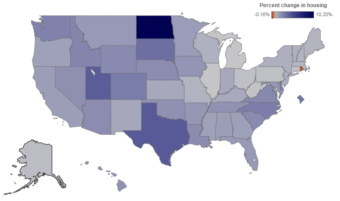
Low oil prices are putting a dent in the treasuries of many of the nation’s biggest oil-producing states, forcing them to cut spending, raid rainy day funds or even reassess how they finance state government.

Monthly revenue from oil taxes has fallen by anywhere from 45 percent to 75 percent in the nation’s top 10 oil-producing states since collection highs in July of last year, as the price per barrel of crude dropped from $103 in July to $54 in April.

Most of the top 10 oil-producing states tax the industry by the barrel taken out of the ground, with the rates varying from state to state. As oil prices have dropped, the industry has pumped fewer barrels in some states because it’s become less cost effective. Dependence on oil has also led to falling sales and income tax revenue in some states as the industry has laid off workers, cutting 3,000 jobs last month alone.

Some states tax oil differently. Pennsylvania, for instance, charges oil companies an impact fee, paying a fee for every drill. California gets part of its oil tax revenue from a flat charge of 36 cents on each gallon pumped from the ground.

None of the states is feeling the pain quite like Alaska, which depends on oil tax revenue to fund three-quarters of state government, the most of any state. The state’s monthly oil revenues have dropped by about 75 percent since the beginning of the fiscal year, leaving a $3.6 billion deficit and a special session stalemate between legislators and independent Gov. Bill Walker that could lead to a government shutdown if a budget isn’t passed soon.

This year’s budget crisis may not be Alaska’s last. The state has just enough money, $9 billion, in its rainy day fund to keep government afloat for three more years, said Jerry Burnett, deputy commissioner for the state’s Department of Revenue.

That prompted Walker to call a three-day summit of leaders from a variety of industries next month to discuss what size of state government the people of Alaska should expect and how it should be paid for.

“I suspect that if oil prices stay down that’s not going to be a revenue source big enough to fund government in Alaska, so yes, I think the discussion is going to be along the lines of how big government needs to be and how we’re going to fund it,” Burnett said of the summit.

Part of Alaska’s problem is the decline in oil production. The state has been dependent on two major oil fields for decades, while new, smaller fields have been difficult to develop.

The situation is forcing lawmakers to consider other taxes or spending cuts to cover this year’s deficit and to finance state government down the line.

“It’s now no longer the case where we have the price and production volume where we can depend on one source of income for the budget. It’s time to diversify for sure,” said Republican state Rep. Paul Seaton. He has proposed extending the state’s income tax to businesses registered as limited liability corporations, or LLCs, which currently don’t pay it.

House Minority Leader Chris Tuck, a Democrat, said the state should focus more on changing its oil tax policy by sticking to its  budget and limiting how much the state pays out in tax credits to the industry each year. Currently, oil companies are eligible for a number of state tax credits based on exploration, development or production of oil. Once the state reviews the expenses, oil companies are presented with a certificate which they can redeem any time for cash. Tuck thinks the state should not pay more than $500 million a year in redemptions. Any certificates presented after that cap would be the first to get paid the following year.

Cuts to education and seniors’ programs also have been proposed this year to balance the budget. One program not being cut: the dividends program, which pays Alaska residents a portion of oil tax revenue, which was almost $1,900 per person in 2014.
Read Original Article – Published May 22, 2015
Tax Revenue Plummets in Oil Producing States

New Efforts to Keep the Mentally Ill Out of Jail

An inmate lies on a bunk reading in the psychiatric unit of the Pierce County Jail in Tacoma, Washington. An estimated 2 million adults with serious mental illnesses are jailed each year. (AP)

Paton Blough has served multiple jail terms as a result of mental illness.

He said his various offenses included brandishing a shotgun, reckless endangerment, destruction of civic property, spitting on a police officer, being a public nuisance and threatening a public official. Never was he charged with being mentally ill. That isn’t a crime, after all. But there was no doubt about why he had ended up in jail.

Blough, 38, has had bipolar disorder since his late teens. At times delusions convinced him of a worldwide conspiracy against him involving police officers, former President George W. Bush and Nazi ghosts.

“Can you imagine if we had two million people locked up for having a heart condition?” Blough, whose last arrest was six years ago, said in a telephone interview last week from his home in Greenville, South Carolina. “Well guess what? We have two million people locked up with a health condition called mental illness.”

In many places, police, judges and elected officials increasingly are pointing out that a high proportion of people in jail are mentally ill, and that in many cases they shouldn’t be there. In recent years, many cities and counties have tried to reduce those numbers by training police to deal with mental health crises, creating mobile mental health units to assist officers, and establishing mental health support centers as an alternative to jail, among other measures.

(Generally, local jails house inmates who are awaiting adjudication or who have short sentences, and they are run by local jurisdictions. State prisons, or penitentiaries, are where inmates serve sentences after conviction. They are the responsibility of the states.)

Earlier this month, a coalition including the Council of State Governments Justice Center, the American Psychiatric Foundation and the National Association of Counties kicked off a national campaign to encourage local jurisdictions to collect data on the jailed mentally ill and adopt strategies to avoid incarceration. In February, the MacArthur Foundation announced it would send a total of $75 million to jurisdictions interested in reducing unnecessary incarceration of people, including the mentally ill.

According to a 2009 study cited by the Council of State Governments Justice Center, an estimated 2 million adults with serious mental illnesses are jailed in the course of a year. Studies, including one from the Urban Institute, say they tend to stay in jail longer than those without mental illnesses, return to jail more often and cost local jurisdictions more money while incarcerated. More frequently than not, they are jailed for minor offenses, such as trespassing, disorderly conduct, disturbing the peace or illicit drug use.

“Today I’m holding 700 inmates and 20 percent are mentally ill,” said Frank Denning, sheriff of Johnson County, Kansas. “Some need to be there because of types of crime, but a higher number would benefit from some other type of intervention, like medication and treatment and so forth.”

Actually, the sheriff was understating the situation in his jail. According to his department’s statistics, in 2014, 22.5 percent of the people jailed in Johnson County were considered sick enough that they were administered psychotropic drugs.

Uncertain Numbers

Across the U.S., jails report that between 20 percent and 80 percent of their inmates are mentally ill. That broad range suggests measurement techniques are far from uniform. A Bureau of Justice Statistics survey found that in 2005, 64 percent of jailed inmates self-reported as having some kind of mental illness.

Many link the problem to the broader issue of a crumbling state and community mental health infrastructure. Without shoring it up, they say, it will be difficult to provide treatment that will keep the mentally ill from coming into conflict with police.

“If there are no other resources and (the mentally ill) have to be in a safe place; that’s still going to be jail,” Denning said.

According to one report, the number of state psychiatric beds in the nation fell from a high of about 550,000 in 1960 to barely 40,000 today. The steep decline began with the movement toward deinstitutionalization of the mentally ill in the 1960s, when scandals over conditions in state-run hospitals caused many to shut down. Now the preferred strategy is to treat mentally ill patients in their own communities.

“It was a good instinct,” said Fred Osher, the director of health systems and services policy for the Council of State Governments Justice Center. “Let’s move people out of these expensive, old, ‘One Flew Over the Cuckoo’s Nest’ facilities. But the problem is that the dollars didn’t flow to the people.”

State spending on mental health services shrunk through the decades. Between 2009 and 2012, states cut back mental health spending by a total of $4.35 billion, according to an often-cited study by the National Association of State Mental Health Program Directors. Although some of that funding has been restored in recent years, it has not been enough to meet the need – with the result that more mentally ill people are ending up in jail.

“It’s been frustrating and tragic that so little has been done to address the problem,” said Ira Burnim, legal director of the Judge David L. Bazelon Center for Mental Health Law. “There’s not a lot of magic in the solution.”

Many are hopeful that the Affordable Care Act’s Medicaid expansion, which extends health benefits to poor, single adults, will enable many to get mental health treatment and avoid the crises that previously landed them in jails. But 21 states have so far resisted expansion.

High Costs

For now, many jails across the country hold more mentally ill people than hospitals do. That is one reason that jail administration has grown to be one of the highest costs for local governments. The mentally ill often require more medical services and surveillance than other inmates.

Even though jails administer psychiatric medicine to many who need it, no one thinks that jails are conducive for recovery from mental illness. Studies, including the Urban Institute report, have found that the mentally ill in jails suffer assaults at far greater rates than those without mental illness. “Jail is jail,” said Toni Carter, a commissioner in Ramsey County, Minnesota, and chairwoman of the Human Services and Education Policy Steering Committee for the National Association of Counties. “It is not a mental health treatment facility… Generally, they come out worse than when they entered.

“We have criminalized mental illness.”

Still, Carter said some cities and counties are employing strategies to keep the mentally ill out of jail that seem to be working. In Miami-Dade County, Florida, for example, police typically respond to 10,000 mental health-related calls a year. A few years ago, that would have led to more than 800 arrests. But after the county trained police in crisis intervention and began diverting the mentally ill to treatment rather than jail, the number of arrests plunged to nine.

Steve Leifman, a Florida judge who heads the Eleventh Judicial Circuit Criminal Mental Health Project, said the average daily jail population in the city of Miami and Miami-Dade County has dropped from 7,800 to 5,000 inmates. The effort has been so successful the county has closed one jail, saving it $12 million a year.

Leifman said the recidivism rate among mentally ill people charged with a misdemeanor has dropped from 75 percent to 20 percent. “Treatment works,” he said. “People with mental illness don’t want to be sick. That’s what most people don’t understand.”

Cook County, Illinois, has found success by using a combination of “supportive” housing (which includes rent subsidies, mental health treatment services), and Assertive Community Treatment (ACT) teams composed of mental health specialists who coordinate treatment and housing and employment support. The strategy has produced an 89 percent reduction in arrests of people with mental illness, and an 86 percent reduction in jail time and 76 percent drop in hospitalizations among participants.

In King County, Washington, a combination of ACT teams, supportive housing and intensive community-based treatments has resulted in a 45 percent reduction in jail and prison bookings among those participating. (See here for these and other examples of successful diversion programs in a report by The ACLU Foundation of Southern California and the Bazelon Center for Mental Health Law.)

According to the Council of State Governments Justice Center, more than 300 cities and counties across the U.S. have established mental health or drug courts, in which the mentally ill and those with substance use disorders are sent to treatment rather than incarcerated. Mental health courts have been established in such diverse locales as the Bronx in New York, Akron, Ohio, and Washoe County, Nevada.

In the majority of Paton Blough’s six arrests, such diversion programs simply were not available.

“They would have liked to have had a place to take me, but there were none,” he said. In jail, he often went without his medication and he found his paranoia deepening. As a result of his illness, Blough said, his first marriage collapsed and he lost his arborist business.

Thankfully, in one of his later arrests, he was sent to mental health court, which led to treatment that has largely kept him stable for six years. “I credit that program,” he said. “I could be dead or in prison if it weren’t for a program like that.”

Today Blough works with National Alliance on Mental Illness helping to promote jail diversion programs.

Read Original Article – May 19, 2015
New Efforts to Keep the Mentally Ill Out of Jail

Site notifications
Update notification options
Subscribe to notifications