Rosemarie Alexander

Kootznoowoo to manage Angoon hydro projects

Kootznoowoo Inc. is taking over development of two hydroelectric projects to move them along.

The City of Angoon holds federal permits for the Ruth Lake and Scenery Lake projects at Thomas Bay, north of Petersburg. Angoon has designated its village Native corporation as development manager.

“Facilitator is a good word for what I think we’re trying to do here,” says Kootznoowoo general manager Peter Naoroz. He says the corporation will help Angoon get the regional projects to license.

“They’re valuable permits and we just hate to see them languish.”

The Federal Energy Regulatory Commission awarded the Ruth Lake preliminary permit to Angoon in 2009, in the first ever random drawing. The award ended up in court, when the City of Petersburg challenged the drawing method of choosing among applications submitted by Petersburg, Wrangell and Angoon. A federal district court upheld the award.

Petersburg also opposed Angoon’s Scenery Lake permit. Both projects became controversial, even in Angoon, when the city wasn’t able to keep up with regulatory reporting requirements.

Kootznoowoo is stepping into the development phase, which requires an environmental assessment and pre-engineering work. Naoroz also says the corporation will advise the city on future power sales agreements.

He’s already contacted the Southeast Alaska Power Agency, which he calls integral to the success of the Ruth and Scenery projects. He hopes Kootznoowoo and SEAPA can help facilitate discussions among the communities that opposed Angoon’s preliminary permits.

“For whatever reason there wasn’t kind of a level playing field for those discussions to take place and we’re hoping to try and create that level playing field,” Naoroz says.

SEAPA owns two hydro plants and transmission lines that serve Wrangell, Petersburg and Ketchikan. SEAPA Chief Executive Officer Dave Carlson says the organization will evaluate all the potential hydro projects in Southeast. He says a state-sponsored Integrated Resource Planning study will provide the agency direction in its goal of getting the best result for SEAPA members and ratepayers.

Naoroz admits the corporation has “selfish reasons” to help Angoon pursue its hydro permits. Kootznoowoo owns about 23,000 acres west of Ketchikan near mining exploration. He says the Ruth and Scenery projects are needed to help the mines develop.

Naoroz says the hydroelectric projects will provide affordable power to stimulate growth and job creation throughout the Southeast region.

Eaglecrest opens Nov. 25

Courtesy John Erben
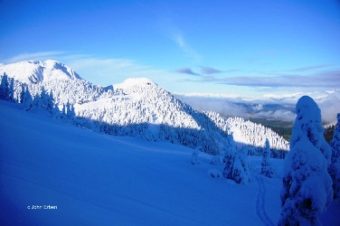
Eaglecrest will open on Friday. The city-owned ski area has enough snow to open a week earlier than planned, so winter operations begin the day after Thanksgiving.

General Manager Matt Lillard says the mountain has received more than 46 inches of snow since Nov. 12th.

“The snow has been of excellent quality. We’re working with our groomers and mountain operations team and packing down as much as we can and moving it around, really setting up the base for a fantastic year,” Lillard says.

The snow has been a mix of the heavy wet stuff – needed for a good base – and lighter, dryer snow. Lillard took some runs this morning.

“Right now there’s a nice base underneath and some fresh powdery snow on top,” he says. “And once the mountain operations and grooming team have some more time to go back over it, it’s going to get even better.”

Lillard has been on the job just two weeks, moving from Londonderry, Vermont, where he was the assistant general manager for Magic Mountain Ski Area.

He says more details of Eaglecrest’s opening day will be announced next week, but it looks like Porcupine, Hooter and Ptarmigan chairlifts will be running.

The rental and repair shops will be open, some ski and snowboard instruction will be available, and the cafeteria will have a limited menu. Mountain Lift Coffee also will be opening. The Eaglecrest Snow Bus will not be running opening weekend, but will start Dec. 3rd.

If KTOO’S memory is correct, the last time Eaglecrest opened Thanksgiving weekend was in 2003. There was a limited Hooter-only opening Nov. 18, 2006.

For more information, check skijuneau.com.

Arne Fuglvog sentencing delayed

A former U.S. Senate fisheries expert – who falsely reported his own catch – will now be sentenced in February.

Arne Fuglvog’s sentencing in U.S. District Court was previously scheduled for Friday, November 18. Judge H. Russell Holland on Thursday approved the latest delay, proposed earlier in the week by Fuglvog’s attorney Jeffrey Feldman.

The hearing scheduled for Friday had already been postponed to December 7 because Feldman had a scheduling conflict this week with clients in another case out-of-state. The latest continuance moves it to February 7, according to electronic federal court records.

Fuglvog pled guilty in August to one count of violating the federal Lacey Act for falsifying catch records of sablefish intended for interstate commerce.

The Petersburg fisherman had worked as a fisheries aide for U.S. Sen. Lisa Murkowski from 2006 until July of this year. He resigned the day before the charges became public and details of a plea agreement were released.

Fuglvog broke the commercial fishing laws before he took the Senate job.

Under his plea agreement, he is to be sentenced to ten months in prison and a $50,000 fine. He also will be required to give $100,000 to the National Fish and Wildlife Foundation. The non-profit was created by Congress in 1984 and directs public conservation funds to preservation and restoration projects for wildlife species and habitats.

School budget committee wants public input

Juneau’s Board of Education wants to know what the public thinks about school district spending.

“If this is the amount of money we have are we allocating it in the most efficient way to get the best results for kids?” asks School Board President Sally Saddler.

She says the 16-member budget committee needs to hear what the community thinks as it begins to work on the 2013 spending plan.

The budget committee is comprised of the entire school board, plus seven public members and representatives from school unions. Work begins in earnest in January. It will be late April before the district will know how much money to expect from the main funding source, which is the state of Alaska. It’s already clear Juneau will have at least three-million dollars less in revenue next year.

Personnel makes up about 80 percent of district expenses. Bargaining begins in January for new teacher and staff contracts. Saddler says the budget hole puts the district in a difficult spot as it goes into negotiations.

“We can’t ask our faculty and support staff to do more with less. They’ve been doing that over the past few years,” she says. “We had a 4-point-1 million dollar cut last year, the year before we had cuts, and I think we’ve been cutting since I’ve been on the board. So what we want to do is say ‘how can we do things differently’ and get people thinking about ways that it’s not business as usual.”

More information on the school district budget is at www.juneauschools.org. You’ll find the link under Hot Topics.

STD cases down; AK still has high rate

The number of sexually transmitted gonorrhea infections in Alaska has decreased, according to the State Section of Epidemiology.

Gonorrhea went down 23 percent for the first three quarters of 2011, with 770 laboratory confirmed cases, compared to more than a thousand for the same time last year.

The decrease was seen statewide, except the Interior. Fewer cases occurred among all racial groups, with the most sizeable reductions among white and Alaska Native populations.

HIV/STD Program Manager Susan Jones says the gonorrhea numbers may be down due to increased awareness of the disease, when it reached almost epidemic proportions in recent years. Emphasis also is being placed on expedited partner therapy, where sexual partners can receive treatment without going to a health care provider.

Despite the decrease, Alaska still has one of the highest rates of sexually transmitted diseases in the nation, ranking third in 2010.

BC power line spurs transboundary development

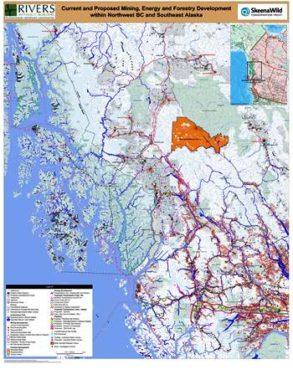
Alaska and Canadian scientists are among a large group of experts hoping to convince the British Columbia government to study the cumulative impacts of proposed development in the transboundary region.

In a letter sent Tuesday to B.C. Premier Christy Clark, 36 scientists say industrialization spurred by construction of B.C. Hydro’s Northwest Transmission Line threatens the area.

The 287-KV Northwest Transmission Line will stretch 214 miles north from the Skeena substation near Terrace, British Columbia.  The B.C. Hydro project will provide reliable, economical power to communities and resource development.

The power line has touched off what Dr. Jim Pojar of Smithers, B.C. calls a gold rush mentality in the transboundary region.  At least 11 mines, coal-bed methane and 18 hydroelectric projects are proposed for the Canadian side.

“There’s no complete assessment of what could happen if all of them get developed within five or 10 years,” Pojar says.

He is one of the scientists to sign the letter.  They say the Stikine, Iskut and Unuk rivers – important to both sides of the border – are the most vulnerable.  To the north, the scientists believe the Taku River is already threatened by the existing Tulsequah Chief Mine at its B.C. headwaters.

It’s an impressive list of Ph.D.-level scientists.  Dr. Jack Stanford of the University of Montana at Missoula is among them.

“That’s a very broad cross-section of the scientific expertise of the U.S. & Canada,” Stanford says.

He believes it should carry some weight with politicians.

“If it doesn’t it just means the disconnect between science and government is more profound than we think.  We want them to listen to this,” Stanford says.

The scientists’ letter requests a “transparent ecosystem-based approach” for assessing new development in the transboundary watersheds.

Pojar says it’s the sum-total of the projects that have them worried.  While environmental impact statements will be done for individual mines, no one knows the effect of five or ten mines in a region.

A forest ecologist, Pojar has spent a lot of time in the transboundary area. He calls big chunks of the watersheds still “fearsomely wild.”

This isn’t just another piece of northern bush. Sometimes we who live up north kind of take it for granted, the landscape we live in, but you know on a continental scale this is just incredible,” Pojar says.

The transboundary rivers support all five species of Pacific salmon that sustain Alaska and British Columbia commercial, sport and subsistence fisheries.

Dr. K.V. Koski of Juneau has studied Southeast Alaska’s transboundary rivers, including many years on the Taku.  The Habitat Restoration  Specialist spent 30 years with the National Marine Fisheries Service at the Auke Bay lab.

“All those transboundary rivers basically are the same type of the system and they rely on so much of the woody debris is those areas for forming the habitats, maintaining the channels and the sloughs and things like that,” Koski says.  

He says hundreds of thousands of salmon rear every year in the lower Taku River in Alaska.

“In the Taku the majority of the juveniles actually come downstream from Canadian waters and rear so it’s really important that those habitats are protected,” he says. 

Stanford calls the transboundary rivers the primary salmon-producers of North America.

“And most of them are entirely intact, not influenced by any activity other than harvest of fish and thus they’re the last best places for fish, particularly salmon,” he says.

The B.C.  Environmental Assessment Office is responsible for evaluating mining, energy and transportation projects for the province.  But a recent Auditor General’s report indicates the E-A-O is erratic when it comes to monitoring and enforcement.

If that’s the case, the scientists say, the B.C. government cannot assure environmental protection at the headwaters of the transboundary rivers, or downstream in Alaska.

They say even if only some of the proposed development happens,  it could transform the ecological landscape of the region.

Site notifications
Update notification options
Subscribe to notifications