Rosemarie Alexander

Quick fix to Snettisham outage

Alaska Electric Light and Power’s Snettisham hydroelectric facility was back in service by mid-afternoon on Saturday, after a Thanksgiving Day power outage.

The workhorse of AEL&P’s generation system was turned back on about 2:30 p.m., two and a half-days after anchor bolts for tower guy wires failed and a tower leaned on a conductor, causing the outage.

Generation engineer Scott Willis says it’s not clear what caused the anchor bolts to fail. He says the tower was not damaged.

“So that tower leaned over and the conductor that tower was carrying –- the big wire that was carrying the electrical power — touched the guy wire of the tower next door—just downhill from it and that’s what shorted things out,” Willis says.

Estimated time of repairs had been three to seven days. But a repair crew was at the site late Friday afternoon; when equipment arrived the next day, the work went quickly, Willis says.

During the Snettisham outage, the company turned on back-up diesel generators. Willis says he began shutting off the diesel as soon as Snettisham was on line. Due to the Lake Dorothy project, he says the company was still able to draw nearly half of Juneau’s power from hydroelectric.

“Lake Dorothy was the key to keeping the amount of diesel generation lower. During the Snettisham outage, AELP was pulling 40 percent from hydro at peak times of the day.” Willis says power generation would have only been about 15 percent hydro without Lake Dorothy.

Willis says the cost of diesel used will not show up in customers’ bills for a couple of months. It will be spread out over a three-month period and covered in the routine cost of power adjustment. Though he doesn’t yet know the amount of the diesel surcharge, he expects it will be very small.

Meanwhile, a snow slide was NOT the cause of last week’s outage. The tower is not in the Snettisham avalanche zone.

For the third winter, AEL&P’s avalanche forecasting program is in place. The company has hired an avalanche specialist, who looks at snow conditions throughout the day, and when needed a snow-control crew brings down small slides before the snow builds up.

Eaglecrest’s early opening draws huge crowd

Saturday sunrise on Mt. Ben Stewart. Rosemarie Alexander photo

Eaglecrest has more snow than any other ski area in North America.

The city-owned ski area opened on Friday to one-hundred inches of snow at the top of the mountain and about 45 at the base, the most snow in recent history for November in Juneau.

According to a database of ski conditions at 97 open ski resorts in the U.S. and Canada, the amount of snow is well above any other area, many of which are operating with manmade snow – Juneau’s is the real thing. www.skicentral.com

Ski Patrol Director Brian Davies called Eaglecrest ski conditions like mid-winter. There’s more snow right now than the area got during that last ski season.

The snow came this month in three major storms. Mountain operations manager Jeff Brown said the groomers started working it immediately to make a solid base. Opening day came eight days earlier than the target date of December 3rd, with dry powder on top of that base.

At 80, Al Shaw seldom misses a day of skiing when Eaglecrest is open.

“The coverage is like February. It just doesn’t get much better,” he said. “You know there’s a few places to fill in and obviously more snow will show up. If you miss this between now and the first of the year, you’re basically missing a whole season.”

Shaw was among those enjoying this weekend’s early three-day opening. Judging by Friday’s crowd, Juneau was ready for winter. Though the numbers are still being crunched, general manager Matt Lillard estimates 1,500 skiers and snowboarders turned out. Eaglecrest sold about 250 day tickets on Friday, which is very high for an area that gets most of its business from season pass holders. Lillard says the area has sold about 2,000 season passes so far.

It may be November, but it looks and skis like mid-winter at Eaglecrest. Rosemarie Alexander photo

Long-time Eaglecrest skiers Bob Marshall and his wife Deborah Craig take an annual ski trip to Utah. They agreed it seemed like mid-winter on their hometown mountain.

“I don’t think you can do better!” Marshall said. “At Utah they have 25 inches right now.”

Craig said skiing this weekend was “as good as it gets in February and March. It’s just amazing out there.”

Eaglecrest will be closed Monday through Friday and open on Saturday for its regular season.

AG resigns

Alaska Attorney General John Burns is resigning, effective Jan. 2.

In a letter to Gov. Sean Parnell, dated Nov. 19, Burns says his “resignation is based solely on personal reasons.” He says living out of a suitcase is neither fair to his family nor conducive to his health.

An attorney from Fairbanks, Burns took the job 11 months ago and did not move to the capital city. His youngest daughter is a senior in high school.

In his resignation letter, he says serving as “the managing partner of the state’s largest law firm has been an incredible and unbelievably fulfilling experience.”
He says he will miss working with the men and women in the Department of Law.

Burns says he is staying on until January to assure a smooth transition with his successor.

Parnell announced the resignation Friday. In a news release he called Burns a capable leader and “true public servant.”

Pet treat alert

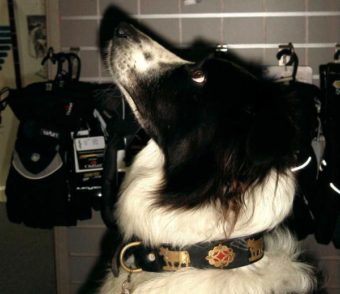
Where's the treat?
Some chicken jerky products for dogs could be making them sick.
The U.S. Food and Drug Administration is warning dog owners that some chicken jerky products imported from China may be associated with various symptoms ranging from decreased appetite and activity level to vomiting and diarrhea.

State Veterinarian Bob Gerlach (Ger-lock) says no specific brand has been identified, but the chicken products are being sold as tenders, strips or treats.

“It actually looks like a piece of jerky that specifically says made in China,” Gerlach says. “So it’s not ingredients that come from China, but the entire product is made in China and then shipped into the U.S. and could be packaged and labeled, or relabeled, once it gets here.”

Gerlach says the federal agency has had a high number of complaints over the last 12 months from dog owners and veterinarians. Some dogs have died.

In 2007 the FDA reported that melamine had been found in dog food imported from China, and recalled more than 100 brand names. But in this case, the agency is still working with animal health laboratories to identify a contaminant in the chicken jerky products. Some of the illnesses reported may have another cause.

Gerlach says it’s important to notify the FDA if a dog has any of the symptoms after eating the treats. Also, keep the packaging.

“So that we can get a better accounting of the extent of the problem,” he says. “The other thing is many people will say ‘gosh I fed the dogs this but we threw the treats out, or we threw the bag out, or the dog ate the entire bag.’ It’s not until they (FDA) can get samples of the treats that are involved in this that they can do more analysis to see if they can find a problem.”

Gerlach says the FDA is continuing chemical and microbial testing to find the problem.

He says veterinarians and consumers should report cases of animal illness associated with pet foods to the FDA at: fda.gov/petfoodcomplaints.

Juneau responds to local and international needs

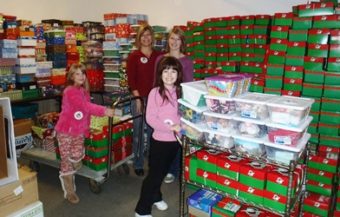
Operation Christmas Child volunteers.Courtesy Kim Garrett.

It’s the time of year to give thanks – and give away some of your many blessings. Southeast Alaska residents have been doing just that.
More than 24-hundred children’s Christmas boxes are headed around the world from Southeast Alaska as part of Operation Christmas Child.

Juneau is the collection point for the shoeboxes packed by Southeast residents for Samaritan’s Purse, an international relief organization.

Tom Brice and his family packed seven shoe boxes this year, in what has become an annual family tradition.

“We tried to get a wide range of gifts for the young kids to the older kids, boys and girls,” he says. “My wife focused on the girls, me and boys focused on the younger boys.”

Samaritan’s Purse recommends shoeboxes be packed with age and gender-specific toys, school supplies, socks, t-shirts, ball caps, hygiene items such as toothbrushes and toothpaste – the list is long and varied. A few things are taboo, such as toy guns and military figures.

Colorful shoe-type boxes were stacked high Sunday at the Chapel by the Lake. Alaska Marine Lines brings the boxes to Juneau from all over the Panhandle. Brice headed up the effort this year, but has volunteered for Operation Christmas Child for six years.

“In that time, this is the largest number of shoeboxes that we received in Southeast and represents probably an 8 to 10 percent increase in contributions and shoeboxes over the past year,” Brice says. “Southeast really came through.”

Volunteers begin packing 2,404 Operation Christmas Child boxes for shipping. Courtesy Kim Garrett.

Samaritan’s Purse is a Christian relief organization that has grown well beyond churches and into entire communities.

Brice says McDonalds donates toys, AML coordinates the shipping, Tyler Rental provides equipment on packing day. The Southeast boxes are headed for an Operation Christmas Child distribution center in California, then to children ages 2 to 14 somewhere around the globe.

“There’s a lot of relief organizations that are focused on basic food and commodities like that. Operation Christmas Child is very specifically focused on kids,” Brice says.

In years past, Southeast boxes have gone to Haiti, the Philippines, Africa, the Russian Far East, Slovakia, Romania, South America; Brice says it’s not known where this years will end up.   It’s not too late to pack a box. Go to samaritanspurse.org.

Closer to home, the Salvation Army expects to serve a traditional Thanksgiving dinner to more than 500 people on Thansksgiving Day. The annual event will again be at the Hangar on the Wharf from 11:30 a.m. to 2:30 p.m.

The Salvation Army has held the community dinner at the popular restaurant for years. It’s not the only public Thanksgiving meal around town, but it’s sure to be the biggest. Captain Donald Warner says the organization can serve more people with fewer resources than by giving out food boxes.

“In other words, 50 turkeys would serve 50 families, whereas 50 turkeys at dinner would serve 500 people, which could be 120 / 140 families, so you more than double the amount of families you can serve by doing it that way,” he says.

Throughout the capital city, charities and churches have stepped up their collections for the holidays, helping the Southeast Alaska Food Bank, the Glory Hole and other organizations as well as individual families. Warner says the number of people seeking  food boxes, clothing vouchers and other assistance from the Salvation Army has doubled in the last five months.

The Salvation Army begins taking applications on Friday to help families during the upcoming Christmas season. Warner expects at least 200 families to register.

“And then what we do is try to put them in the program that we think would best suits their needs, whether it’s Adopt a Family or Angel Tree or under general distribution.”

On Friday, normally the busiest shopping day of the year, the Salvation Army bell ringers will be out at Juneau stores. The money collected in the red pails stays in Juneau to meet local needs.

“Sometimes what we do is we’ll put it aside because during Christmas time is where most of the donations come in and during the summer time donations don’t come in as much,” Warner says. “So a lot of times what I try to do with that money from Christmas is to hold it for the summer so we can continue that level of service all the way through the year.”

He says in responding to need, people should get a hand up and not just a hand out.

ANCSA 40 years later

Courtesy Brian Wallace
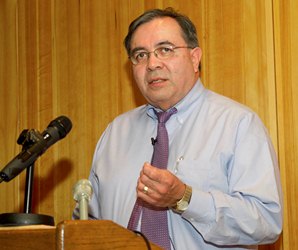
Sealaska Corporation President Chris McNeil is optimistic about Alaska Native Corporations in the current U.S. economic climate. McNeil spoke yesterday (Monday) on the 1971 Alaska Native Claims Settlement Act as part of the Sealaska Heritage Institute’s lecture series celebrating Native American Heritage Month.

“It’s in these kind of times that you can come up with different kinds of new ideas about how to create new opportunities in the economy for Alaska Native people,” McNeil said.

The Sealaska CEO called the 1971 Alaska Native Claims Settlement Act, or ANCSA, an adaptive tool for social, cultural, and economic development of Alaska Natives. He gave Alaska Native leaders of the time credit for “thinking out of the box” by implementing ANCSA as federal law, rather than as a treaty. McNeil said ANCSA is similar to a “double-edged sword,” and its meant to be amended.

“But it also means that every generation is free to look at it and decide for themselves whether or not the way the law is stated actually meets the needs of Alaska Native people at that moment,” McNeil said.

The language included in the first draft of ANCSA simply substituted existing federal funding with the payment provided by the Settlement Act, he said.

“Essentially they were going to take away with one hand, give with the other. But the leadership was very clear about this. They wouldn’t stand for it. Without that, for these 40 years, we might have had our Land Claims Settlement Act, but we might have not been able to participate in any of the federal programs,” he said.

McNeil also stressed the importance of the role of the Indian Self-Determination Act of 1975 in securing federal funds for Alaska Natives.

He said an enormous amount of economic development has occurred because Alaska Natives were considered Indian Tribes in the law. “And then there was almost a companion bill called the Indian Financing Act which also stated that ANCSA would be considered Indian Reservations for the purposes of the Indian Financing Act,” he said.

Examples McNeil gave of these programs included aid from the U.S. Forest Service to facilitate more sustainable timber practices, including tree thinning and planting, and the potential for interested Alaska Natives to pursue oyster farming.

“I think it provides a basis for being able to participate in these programs, to be able to have sustainable economies for the long term future. And I would suggest that we have not plumbed the depths of what the art of the possible is. It seems to me in Congress that there are always opportunities to make things better,” he said. “Administrations come and go, Congresses come and go; we’re always going to be there. One of the things that we need to be thinking about is “What’s next?”

The last lecture in the brown bag series will be delivered by Rosita Worl, the President of the Sealaska Heritage Institute, on Monday, Nov. 28. Worl’s lecture is titled “ANCSA: A Path to Assimilation or Cultural Survival?”

Site notifications
Update notification options
Subscribe to notifications