Retired Juneau Toni Mallott has been named the Alaska Federation of Natives 2013 Citizen of the Year. The annual AFN convention is being broadcast live from Fairbanks on KTOO’s cable channel 360 North. The convention ends Saturday.
Juneau’s Toni Mallott is the AFN Citizen of the Year.
Mallott was selected for the award because of her work in education as a public school elementary teacher and her work with students who speak English as a second language. She taught for more than 30 years in Anchorage, Juneau and Yakutat.
Mallott received the award Friday morning during the annual Alaska Federation of Natives convention being held in Fairbanks.
AFN president Julie Kitka said Mallott was given the award for the impact she has had on so many young children’s lives.
“Toni Mallott is such a remarkable person that you can see her character through the lives of the children she has loved and taught,” Kitka said. “Toni embodies our traditional Native values and all that we admire in a teacher, an educator and a citizen of our community.”
Mallott said she was shocked to receive the award. She said she accepted it on behalf of all teachers, who spend every day trying to make a difference in the lives of their students. Mallott also called for a strong partnership between teachers and parents.
“The parents are the primary teachers of their children, and it’s really crucial that we have a teacher and parent relationship that’s cemented,” she said.
She accepted the award flanked by a number of family members, including a sister and brother, two of Mallott’s five children, several grandchildren, and her husband, gubernatorial hopeful and former Juneau Mayor Byron Mallott.
Toni Mallott grew up in Rampart and has a master’s degree in education from the University of Alaska Fairbanks.
DOT’s George Cottrell digs along the curb of Egan Drive median Thursday, as part of a mapping project for planned improvements from 10th Street to Main Street.
The guys in day-glow vests digging holes in Egan Drive median and along sidewalks Thursday are part of a survey mapping crew, gathering topographic information for DOT’s 10th Street to Main Street project.
It includes bike lanes, wider sidewalks, new crosswalks and Egan Drive resurfacing.
State Transportation Department engineer Kirk Miller says the survey crew was “locating edge of pavement and curbs and drainage inlets and making sure we have those on our survey base map.”
The $4.9 million project is in the 2014 Statewide Transportation Improvement Program, or STIP. It will be paid for with federal and state cruise ship tax funds.
A number of public meetings have already been held on the project and Miller says the public will be interested to see the new set of plans due out in early November. DOT officials are expected to update the Juneau Planning Commission on Nov. 12th.
Design of the Egan Drive improvements from 10th to Main Street will be completed next fall. Construction is to start in 2015.
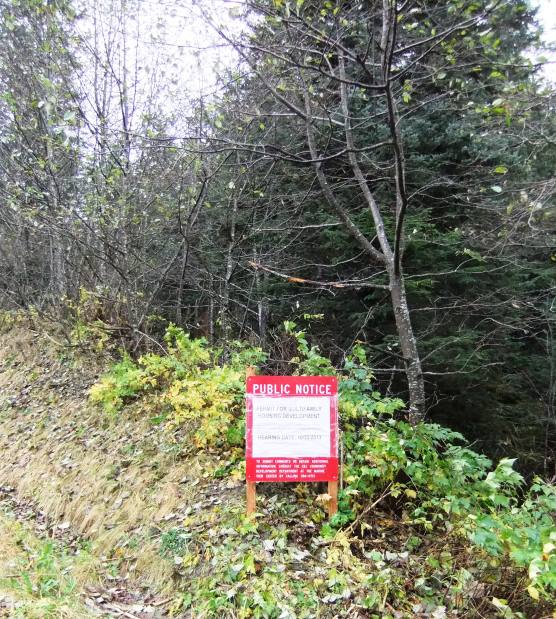
Volunteers of America has received a conditional use permit for a 40-apartment development on Vista Dive in West Juneau.
Volunteers of America have been given the OK to build up to 75 apartments in West Juneau.
The Planning Commission Tuesday night approved a conditional use permit for the two-phase project on Vista Drive. It includes 40 apartments in the first phase, with site work to begin next spring.
CBJ Community Development Director Hal Hart says Volunteers of America must still raise funds for the second phase of 35 units, scheduled to start in 2015.
While the non-profit organization is one of the largest providers of affordable housing in the U.S., more than a third of the Juneau units will rent at market rates. Some units will be set aside for people making less than $50,000 a year.
“There are definitely going to be units that are set aside at 50 percent of the area median income, but there are 15 in this first phase of 40 set aside for market rate,” he says.
Hart says the Volunteers of America development is the first this year to be directed at residents having difficulty finding a house or apartment that is reasonably priced for their income.
“The folks I’m talking about are working but at less than what the median income for Juneau is, so they’re spending more of their income on housing than others are, and it may require a second job for the housing, or two incomes to qualify for housing,” he says.
Hart calls the VOA project very important for a town short on affordable housing. So far in 2013, the city has received 132 applications for housing permits. But most of the proposed condominiums, homes or apartments will be rented or sold at what the market will bear.
Volunteers of America with Alaska Development Partners have been building multi-family housing projects across the state, with most units in Anchorage. The Juneau project would be adjacent to Crest Condominiums. The plan preserves about 25 percent of large trees as well as existing vegetation along Vista Drive. Hart says the apartment complex will be managed onsite by VOA.
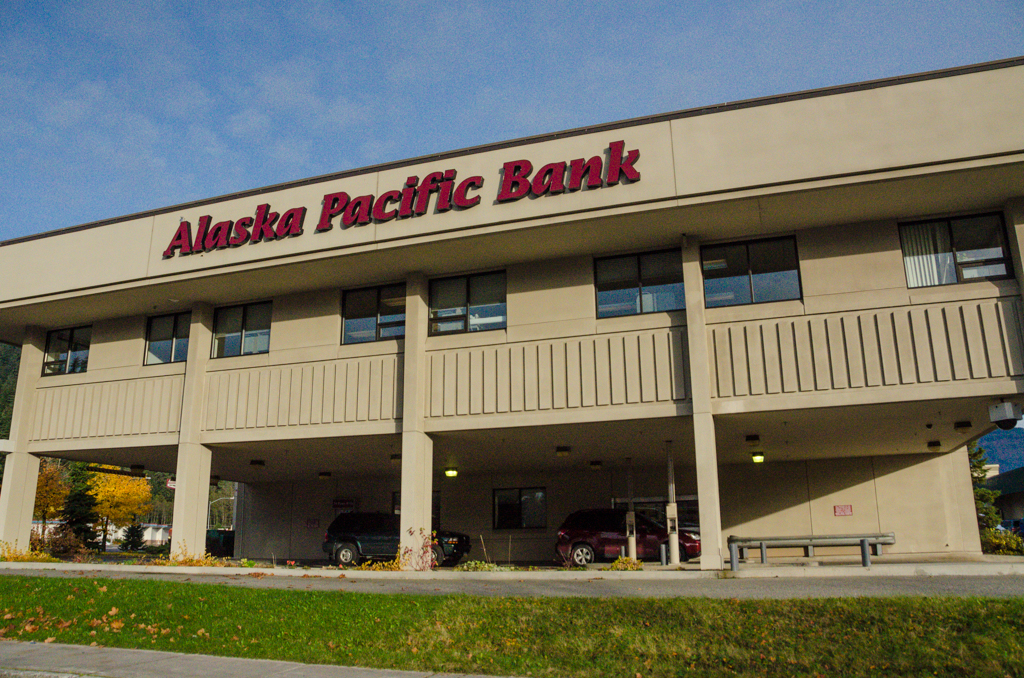
The two have signed an agreement for Northrim to acquire Alaska Pacific in a stock and cash transaction valued at about $14.31 million, or approximately $17.28 per share of Alaska Pacific common stock.
Rosemarie Alexander reports:
Craig Dahl and Joe Beedle have known each other since they were teenagers in Juneau. Now they’re both presidents and CEOs of publicly traded banks – one company in the Railbelt, the other in Southeast Alaska.
Alaska Pacific’s Dahl says the two started talking more than six months ago.
“They wanted to expand their market and we wanted to see a way to grow the bank in this market,” Dahl says.
Northrim’s size dwarfs Alaska Pacific and Dahl says his small company will now be able to grow “from the standpoint of increasing the products and services that our customers will have. It’ll bring to our market a much larger lending limit capacity to assist our business customers and we feel that for the employees of the bank, this will offer other opportunities for career growth that we might not be able to give them as a smaller institution.”
Northrim CEO Beedle calls Alaska Pacific a strong company.
“There are not issues with this bank,” he says.
Alaska Pacific has rebounded from problem loans and losses earlier this decade and become profitable again. Beedle says Alaska Pacific had choices in merging, and the two institutions are compatible.
“We’re about 6 and a half times the size of Alaska Pacific so together we grow from being a 1.2 billion dollar bank to a 1.35 billion dollar bank. And that means that individual loans, our lending limits, will after this merger be in the 25 million dollar range,” he says.
Northrim BanCorp, Inc. is the parent company of Northrim Bank, with ten offices in Anchorage, the Mat-Su and Fairbanks as well as a lending division in Washington state. Alaska Pacific has branches in Juneau, Ketchikan and Sitka.
The merger is subject to review by the Federal Reserve and FDIC. While both companies’ boards of directors have approved it, Alaska Pacific shareholders will vote on the merger early in the first quarter of 2014.
Beedle says at least one member of the Alaska Pacific board of directors will become a member of the Northrim board.
The transaction will not close until next year, according to Dahl.
“After the merger, there’s still a good five to six, seven months involved in actual conversion of systems in products and services. So from this moment forward we’re really looking at almost a year in the process of bringing this altogether,” he says.
Beedle says Alaska Pacific branches will eventually be called Northrim Bank, but no branches will close. The current Alaska Pacific management team will stay in place. Beedle says some backroom functions, such as computer and processing systems, will be consolidated in Anchorage.
When the deal is closed, Craig Dahl says he is headed to retirement and sailing the waters of Southeast Alaska.
A conference call on the merger is set for Wednesday, at 8:30 a.m. Alaska time. The number is (480) 629-9643, or listen online.
Public comment closes Wednesday on the Alaska Statewide Transportation Improvement Program that sets state priorities through 2015.
The STIP, as it’s called, is the list of state and local transportation projects eligible for partial or full federal funding. The Federal Highway Administration requires all states put one together.
“There’s any number of changes that happen in the evolution of these projects that cause the STIP to be revised. So those are the ones through sevens and you know now we’re at eight, which is probably going to be the last revision in this particular STIP,” says Al Clough, DOT Southeast Region director.
While this STIP will be the working list through 2015, Clough says the department will start another one next year.
“It’s driven by funding changes, it’s driven in response to priorities, in response to need, in response to how projects are advancing or not advancing,” he says.
Brotherhood Bridge across the Mendenhall River will be replaced, growing from two to four lanes.
The biggest project for Juneau is Brotherhood Bridge replacement. The project already has the required federal permits and will soon go out to bid.
The old two-lane structure will be replaced with four lanes, better walkways on both sides and an improved intersection at Industrial Boulevard and Brotherhood Bridge trail parking lot.
The 48-year old bridge was designed by Alaska Native leader Roy Peratrovich, Jr. for the 50th anniversary of the Alaska Native Brotherhood. Special bronze medallions with the Alaska Native Brotherhood crest have been removed and preserved.
“The historic character of the current bridge with those nice big bronze medallions and stuff will be carried on in the new structure,” Clough says.
Brotherhood Bridge replacement costs are estimated at more than $25 million.
One Juneau project not in the STIP is the Auke Lake Wayside. DOT and the city and borough have been working on a design, which is about 65 percent complete. There are no construction funds and never have been, says DOT’s Jeremy Woodrow.
Wayside construction, he says, has always been considered “illustrative” in the STIP.
“Illustrative is defined in STIP terms as the project would be funded if eligible funding ever were to be made available. But at the current status, it’s not available for funding,” thanks to federal rules, which prioritize roads and safety measures.
“Things like the Auke Lake Wayside, while it may be significant, it may be important to the community, it’s not a necessity for moving goods and people safely through transportation corridors,” Woodrow says.
According to CBJ Parks Superintendent George Schaaf, the city has committed about $300,000 toward construction, estimated at $1.4 million.
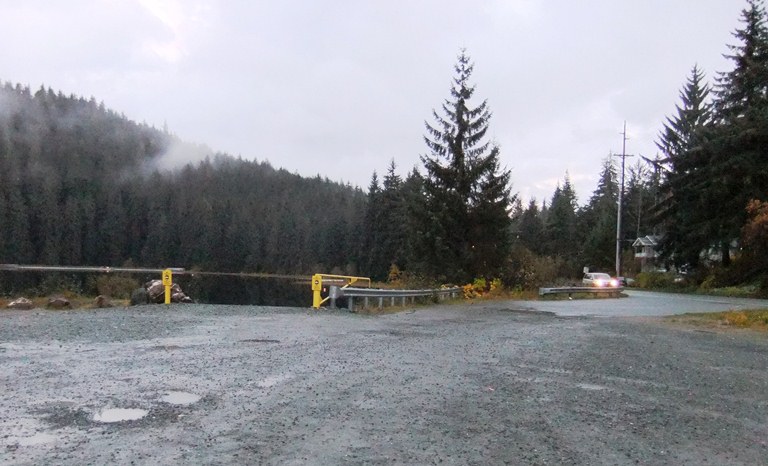
The parking lot at the Auke Lake boat launch would be paved as part of the proposed Auke Lake Wayside, which is not considered for funding in the STIP.
“It was going to be a paved parking lot with some storm water management treatment system, permanent bathrooms, there’d be a picnic shelter and a day use area. There would be a floating dock for the boat ramp along with comes habitat improvements along the bank of the lake,” Schaaf says.
DOT’s Clough calls the STIP a living, breathing document that constantly changes. He says the department considers comments from the general public, various interest groups, municipalities and other government agencies.
“We welcome those, because that’s what leads to the best projects ultimately being moved forward,” he says.
CBJ’s Schaaf says he hopes DOT officials remain open to the public comments he expects they’ll get on the Auke Lake Wayside.
Auke Bay Elementary School teacher Joann Jones testifies at Tuesday’s school board meeting, flanked by other union members.
Arbitration begins Thursday for the Juneau School District and its teachers, who have been stuck at impasse for months.
Negotiations started in January, when teachers were working on a one-year contract. That agreement came through a mediator after talks broke down last year.
In April the two sides declared impasse. Mediation failed and now two days this week have been set aside for arbitration.
The teachers’ one-year contract expired in June, though it’s still in force until a new agreement is reached.
Late last week, the district and Juneau Education Association went back to the bargaining table briefly. The district made an offer; JEA rejected it.
Teachers appeared in force at Tuesday’s school board meeting, and those testifying said the district has neglected its teachers. Floyd Dryden teacher Molly Box called it blatant disrespect.
“After meeting multiple times last year the district continued their take or leave it attitude refusing to budge on any monetary or non-monetary items,” Box said. “Not only is this disrespectful to our teachers, but the time wasted and the energy spent away from our students is atrocious. Our job is to educate not negotiate.”
Other teachers had harsh language for the administration and each time their comments were met with cheers that drowned out the board president’s gavel.
District superintendent Glenn Gelbrich painted a different picture about negotiations, including the most recent session.
“We had a good exchange of ideas and clarification of facts with the association representatives and Thursday we’ll present ideas and our proposals to an arbitrator. We’ll get an arbitrator’s decision, but there’s nothing that keeps us from continuing to talk beyond the meeting with the arbitrator,” Gelbrich said.
According to JEA, Juneau teachers with a master’s degree are paid less than their counterparts in Kodiak, the Mat-Su, and Anchorage. JEA argues that those districts place a higher priority on their teachers.
The arbitrator’s decision is not expected until December, but the two sides can negotiate while they wait.
Meanwhile, school principals and other administrators, represented by the Juneau School Administrators Association, have been working on a one-year contract extension that expired in June. The union recently notified the district that it’s time to begin negotiations. No starting date has been set.
Close
Update notification options
Subscribe to notifications
Subscribe
Get notifications about news related to the topics you care about. You can unsubscribe anytime.