KXLL

What does recidivism mean anyway?

Ideally, when someone gets out of prison, they don’t go back.

In reality, nearly two out of every three offenders in Alaska go back inside within three years.

Some call this the revolving door. The technical term is recidivism.
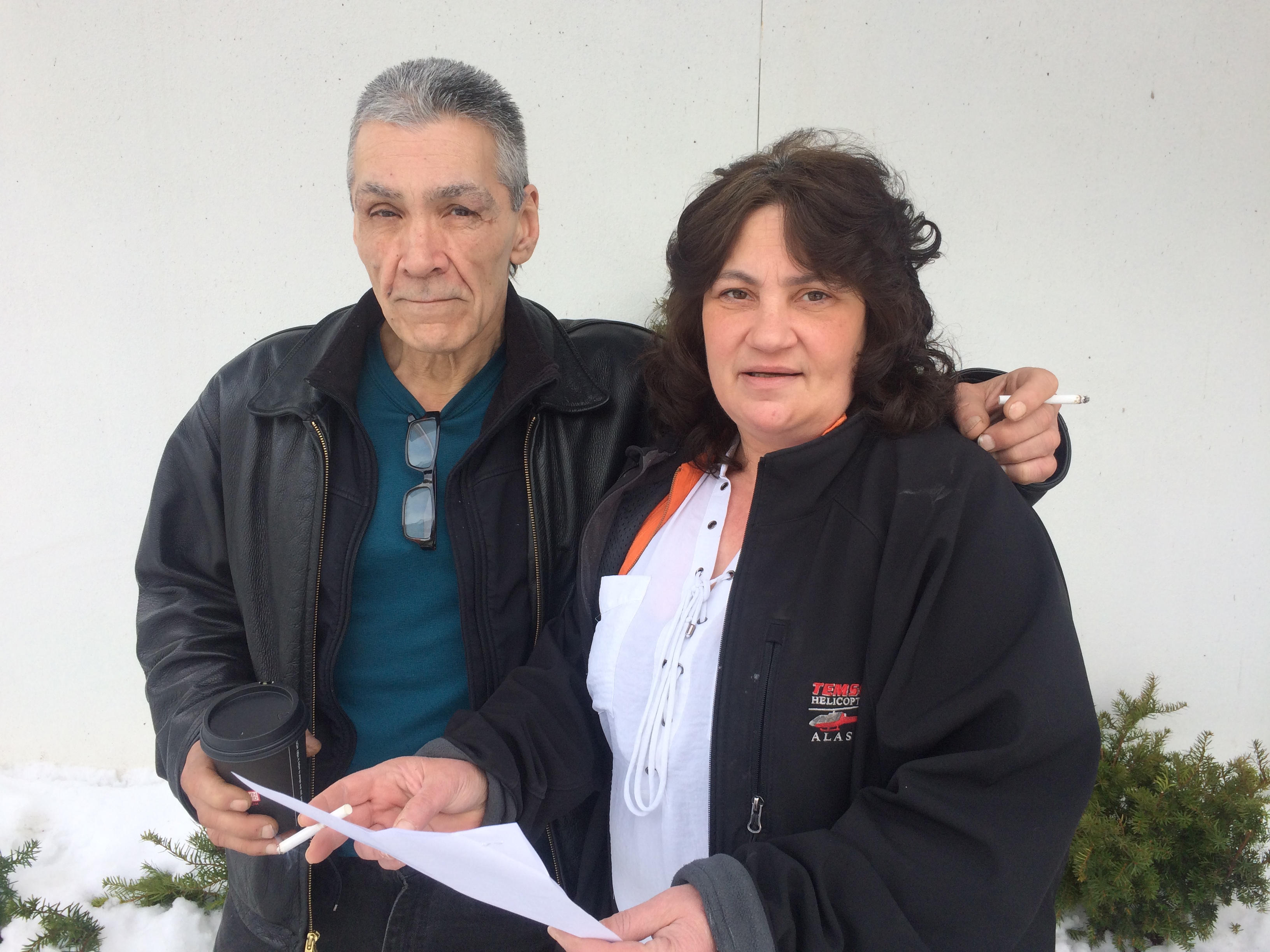
Elasonga Milligrock and Dani Cashen visit outside KTOO. Cashen says felons can be stigmatized by the community. (Photo by Scott Burton/KTOO)

I’ve been through Alaska’s revolving door myself, and hope to bridge the gap between convicts, ex-cons and the communities they’re trying to re-enter.

The Alaska Judicial Council defines a case of recidivism as when an offender is re-arrested, has a new court case filed or is remanded to custody for new charges or for probation/parole violations.

Listen to the story here:

For 25 years, I found just about all of the ways in and out of prison — more times than I care to count. Ironically, I’d never heard the word recidivism. I found I was not alone, so I hit the streets and asked about it.

After asking three random people, not one knew what the word recidivism meant.

At a Juneau Reentry Coalition gathering, it was better understood.

The coalition is a group of people and organizations dedicated to reducing recidivism, among other justice reforms.

I met Logan Henkins, a carpenter and ex-convict, who got it.
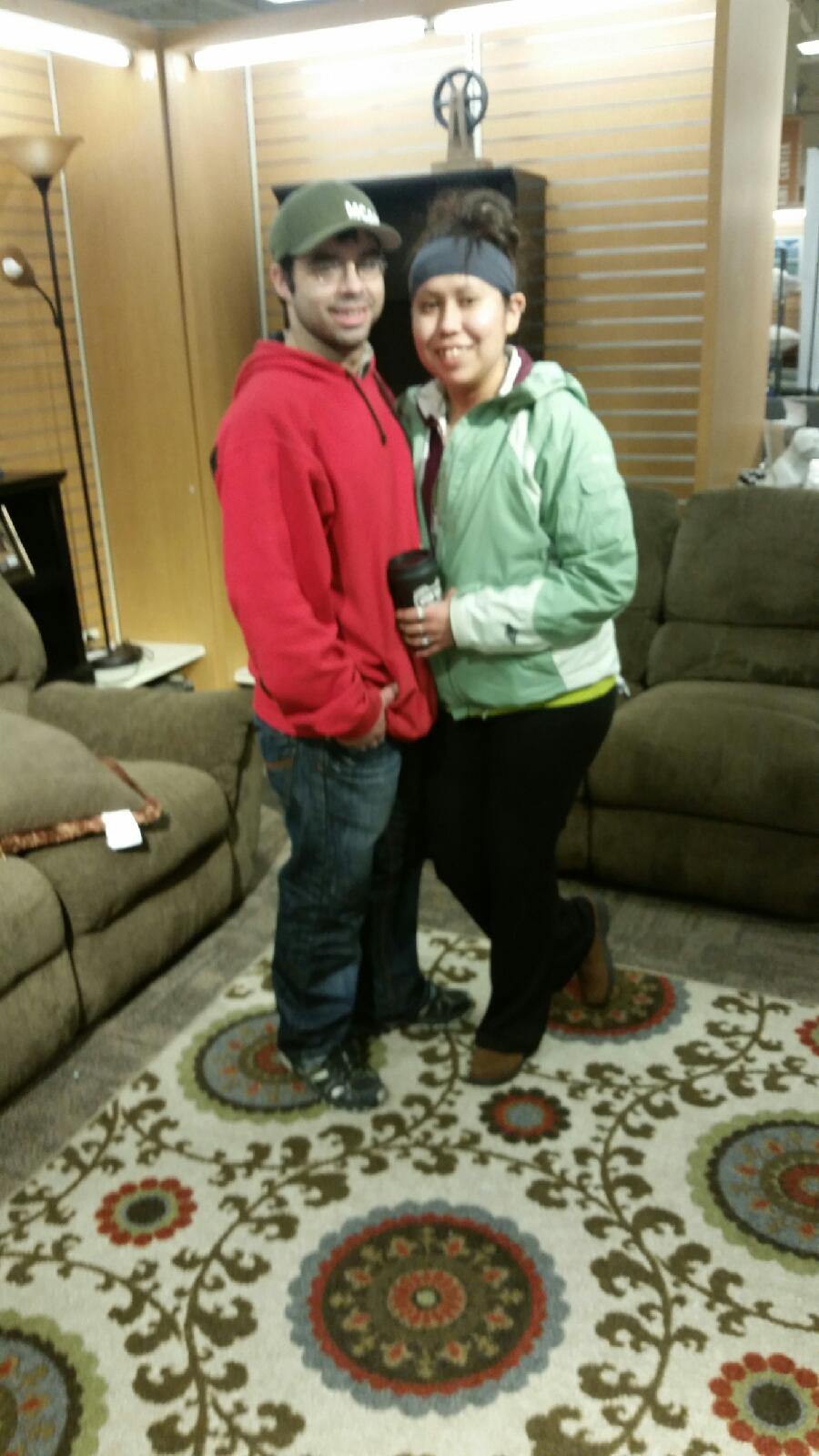
Logan Henkins and his girlfriend, LauraLee Peters. (Photo by Elasonga Milligrock/KTOO)

“Recidivism to me is the percentage of people that go into prison and continue to go back after they’re released because of not changing,” Henkins said.

The part about not changing was right on the money for me.

Eventually, I decided to change my ways, got treatment for my alcohol and drug abuse, and now I am staying out of jail.

But, that personal change, was only part of the equation.

When a person gets out of jail, the process is called re-entry — they’re re-entering society.

And I’ll tell you what, it isn’t easy.

It can be like starting a life in a foreign land where the people don’t want you there.

“I am a felon, yes, and I am a recovering addict after five years,” said Dani Cashen, who’s starting a house cleaning business. “I’m still a felon and it still tracks me and haunts me and follows me wherever I go.”

That stigma is something all felons and ex-convicts experience.

Unlike me, with my tattoos, you might not know Cashen had been to prison – unless you’re an employer.

By law, she has to check the felon box on things like job applications.

And then there’s the rest of life’s challenges, like getting housing and keeping up with the conditions of your release.

I’ve been on parole for three years. I check in with my parole officer downtown once a month, can’t leave town unless approved, can’t go into bars, and, I take random drug tests at my PO meetings. I have to obey all state and federal laws.

If I miss or fail any stipulations, it’s back to prison.

If that isn’t hard enough, imagine adding on mental health issues, which might go undiagnosed and untreated in prison.

Bruce Van Dusen is the executive director at Polaris House, an organization dedicated to supporting people with mental illness. (Photo by Elasonga Milligrock/KTOO)

“In general, the story is around the whole country is that the prisons have become the mental health providers,” said Bruce Van Dusen, who is an ex-convict and executive director of Polaris House, an organization dedicated to supporting people with mental illness.

It’s also part of the re-entry coalition trying to stop the revolving door.

“Because they have so many people who are incarcerated who have schizophrenia, or depression, or bipolar,” Van Dusen said.

Thankfully, people like Van Dusen are helping.

And then there’s Ramona Wigg who is a volunteer advocate for people going through reentry. Despite the many challenges, Wigg says she has seen attitudes around reentry shift for the better.

Despite the many challenges, Wigg said she has seen attitudes around re-entry shift for the better.

“It’s just now coming out in the public, so now it’s popular I guess. But it’s important and it should have been popular years ago,” Wigg said. “Think of all the lives we could have saved.”

Confronting and sharing these experiences, including my own, are just a few steps toward understanding and reducing recidivism as a community.

In my next story, I’ll profile a few people staying out of trouble and try to identify why.

This story is part of an ongoing project on re-entry and recidivism. 360 North is also producing a television documentary on the topic slated for June.

KTOO’s project focusing on recidivism is funded, in part, by a grant from the Alaska Mental Health Trust Authority.

Correction: In a previous version of this story Ramona Wigg was misidentified as a mother of a person going through the revolving door. She is a volunteer advocate for people going through reentry. 
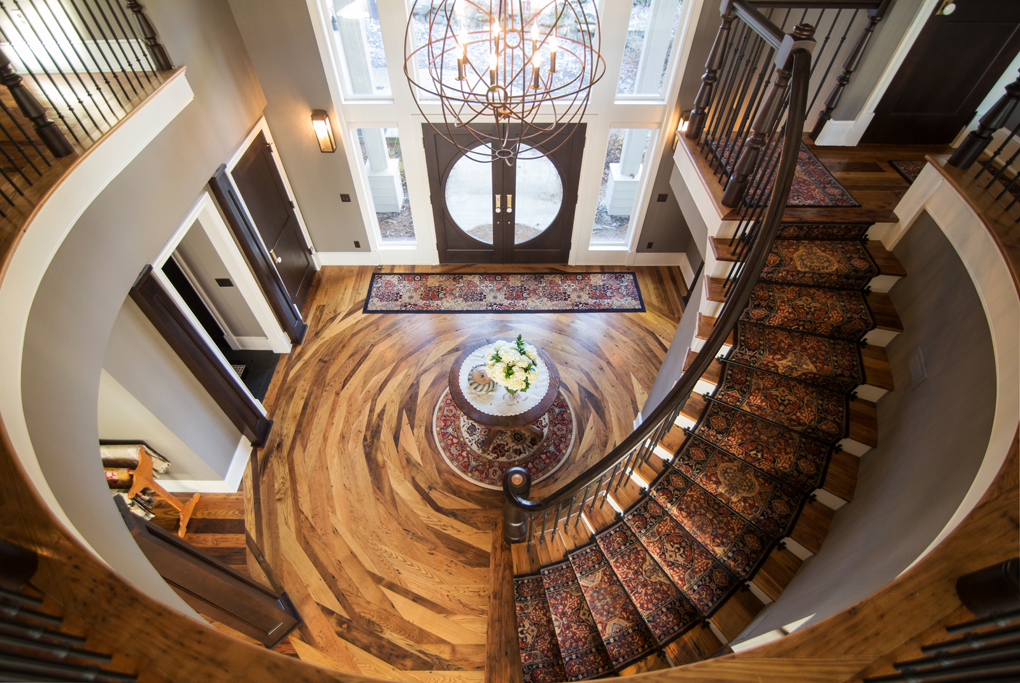
This reimagined Juneau McMansion’s entryway won an award for most innovative design

This remodeled entryway won Bauer/Clifton Interiors a first place prize for most innovative design at the 17th Annual Northwest Design Awards in Seattle. (Photo courtesy Bauer/Clifton Interiors)

A Juneau McMansion’s redesigned entryway was recently celebrated at the 17th Annual Northwest Design Awards in Seattle. Juneau’s Bauer/Clifton Interiors took first place for most innovative design for their work. The entire home’s remodel was inspired by something you might not expect.

If you’ve been to Salt, the Hangar Ballroom, downtown McGivney’s or driven by the downtown Blockbuster remodel, you’ve seen work by Bauer/Clifton Interiors. Their office is downtown, and just inside the door is a wall-mounted image of the design that won the award.

“We’re looking down in the center of an entryway in a home here in Juneau,” said Jeremy Bauer, one of the firm’s principal designers, standing in front of the picture.

The new entryway was part of a remodel of what they call an ’80s McMansion in the valley.

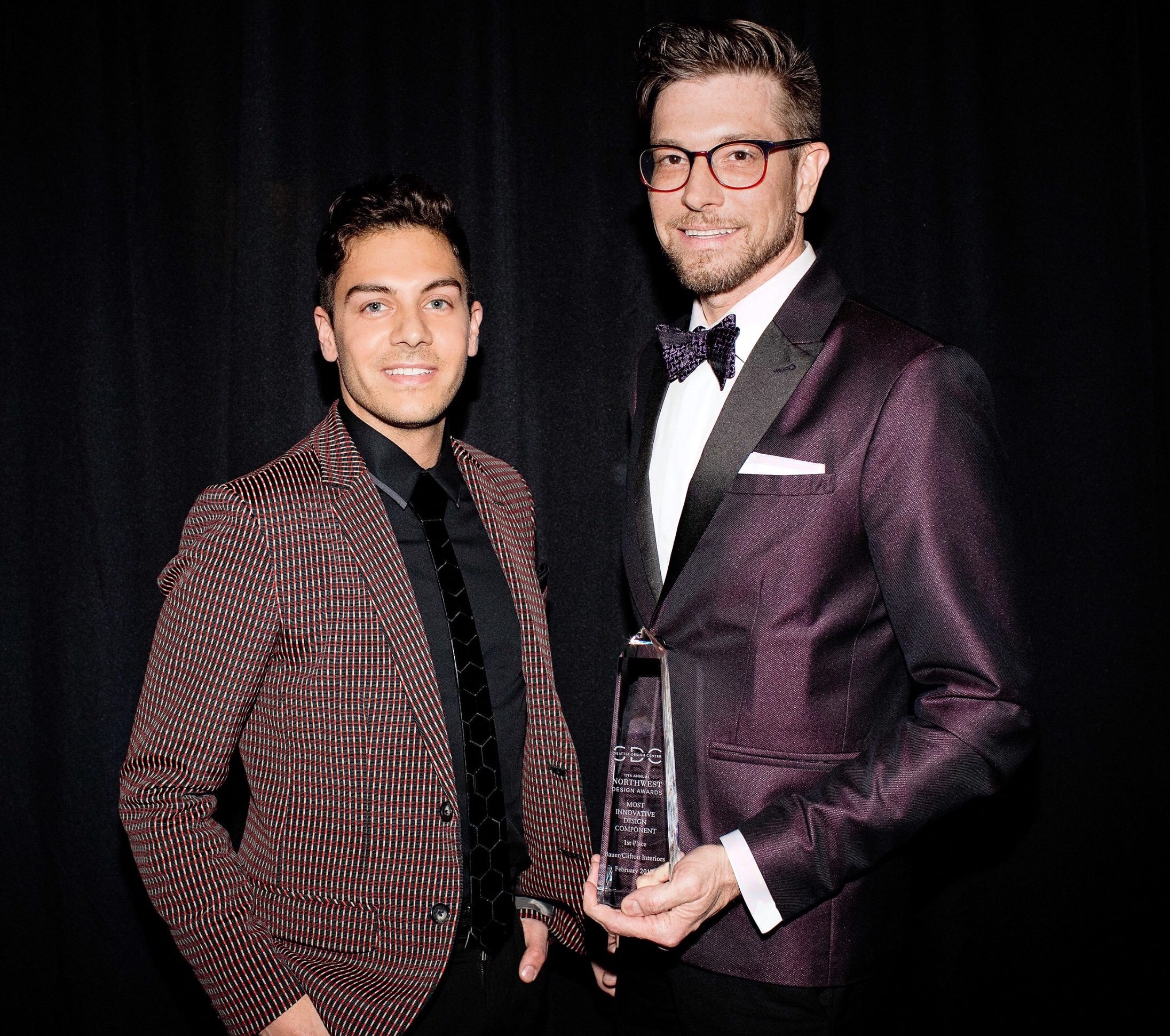
Jason Clifton, left, and Jeremy Bauer hold their award at the 17 Annual Northwest Design Awards Gala in Seattle. (Photo courtesy Bauer/Clifton Interiors)

“And you can see that the round shape is a very prominent form in this entry here with the circular staircase coming up on one side. Definitely, you can see the challenge of laying a wood floor in straight patterns there — that we’d lose the essence, the importance of the circle,” said Bauer.

Thinking in circles was just one of the design’s considerations. Jason Clifton, the firm’s other principal designer, said the clients’ needs were a priority.

“We found that they have some really strong ties to family homesteads in the countryside — as do each of us. And so we were able to share those experiences, bond over those experiences, and come up with a plan to establish more of a farmhouse chic design,” said Clifton.

And what is farmhouse chic?

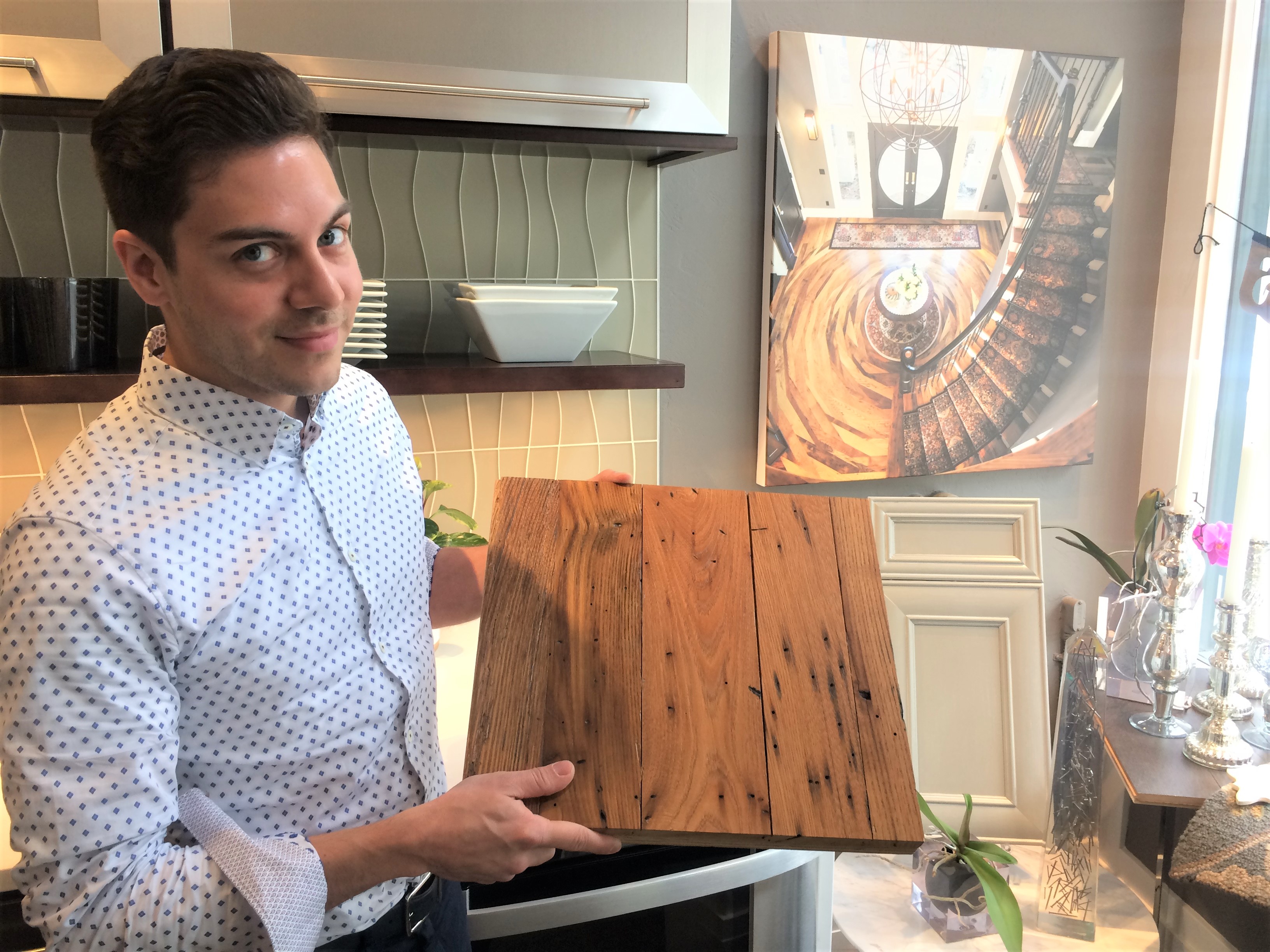
Jason Clifton holds a sample of the wood used for the entryway floor. The 150-year-old American chestnut was salvaged from a farmhouse in West Virginia. (Photo by Scott Burton/KTOO)

“It’s a nice blend of some more historical pieces, heirlooms, antique furnishings, intermixed with the modern amenities of a brand new home.”

But the biggest influence for the entryway might surprise you.

“Looking at the bottom of a woven basket,” said Bauer. “It was something that the owner collected and was very fond of and we had one of them that we took as an inspirational piece that we had laying here on our island in our studio. That was the piece that we turned over and looked at, and it was when the light went off and went, ‘OK, let’s try doing this — let’s try creating a woven wood floor,’” said Bauer.

With farmhouse chic in mind, the designers found reclaimed 150-year-old American chestnut wood flooring from an old farm in West Virginia. The reuse factor is something the designers like, too.

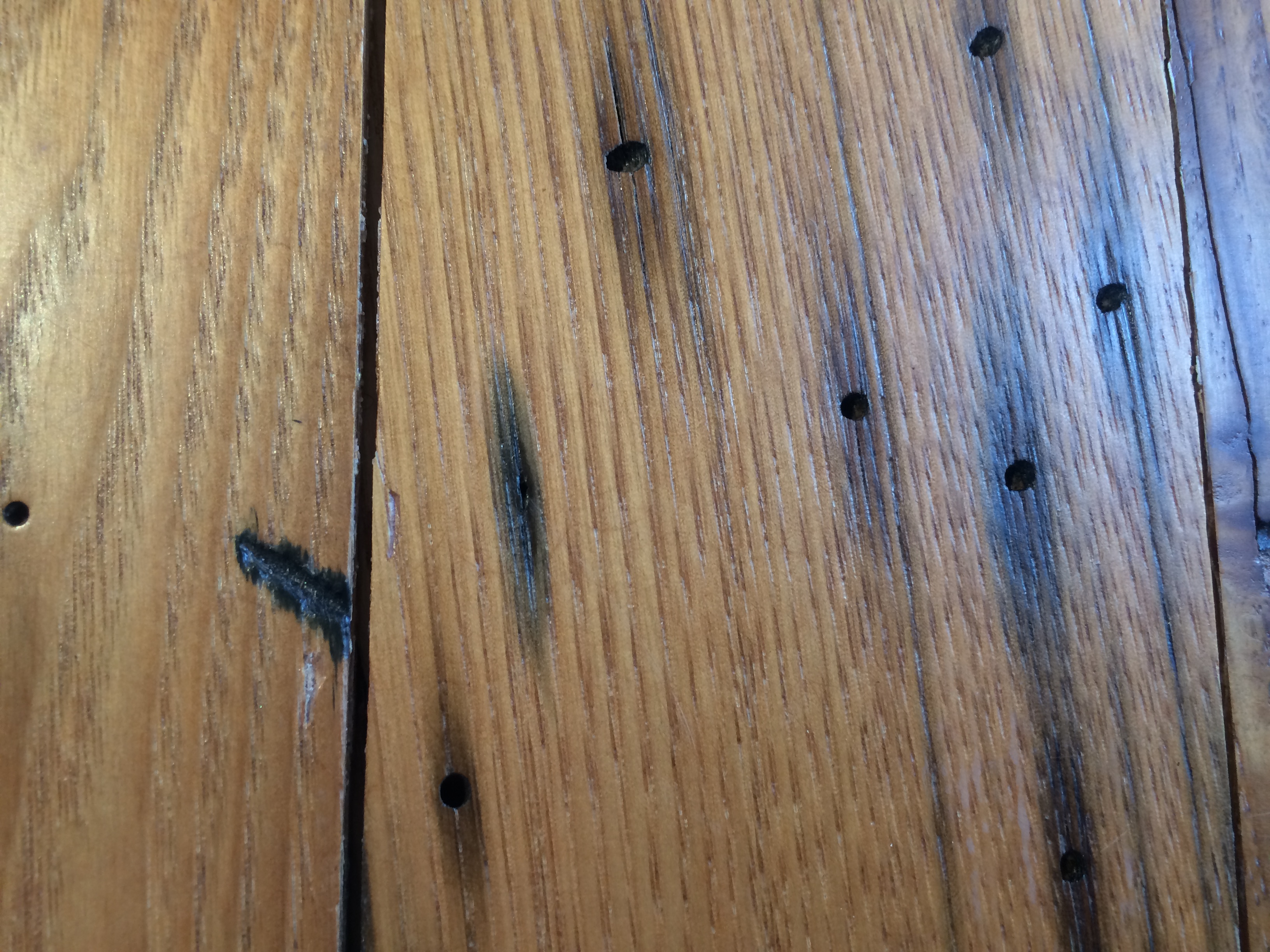
A close up of the American chestnut and its imperfections. (Photo by Scott Burton/KTOO)

“We see that pile of trash getting bigger and bigger out there,” said Bauer, “and I think that is something in the forefront of our minds — instead of something being thrown away can we reuse it and give it new life?”

And it looks cool too.

“And so the product itself isn’t perfect, by any means, so it has quite a bit of character,” said Clifton.

Clifton holds up a sample of the tan wood that’s full of tarnished black holes made by nails and insects.

The planks’ colors vary from light to dark brown, and their widths vary too. This added an additional challenge.

“Each and every one of those planks was laid out individually within CAD (computer aided design) with the dimensions, the angle cuts, the direction, everything pre-planned here within our office before installation was even considered.”

If you didn’t know a basket was its reference, one might also guess kaleidoscope or mandala or beehive. Even though weaving and basketry are several millennia old, they’re still inspiring innovation.

As a professional courtesy, the duo won’t disclose who the homeowner is.

Know what “greige” means?

Listen here:

Veinglorious releases new song “Pray for Me”


Today Juneau musician and Alaska Hip Hop and R&B Awards winner Veinglorious dropped a his latest track “Pray for Me.” Despite the title, the song doesn’t dwell on religion. Instead Ryan Carrillo dedicates this mellow jam to the one thing we all have, yet can’t control: time.

“This song goes out to the most beautiful thing that we have, and that’s time. We should hold onto that as long as possible. This is for the beautiful memories that we all have, and remember,” sings Carillo during the opening lines of “Pray For Me.”

Hear Veinglorious freestyling live on the Jackie Moon show earlier this year:

Statewide Poetry Out Loud finals Tuesday

Now in its twelfth year, Poetry Out Loud is a national program that encourages high school students to learn about poetry through memorization, performance, and competition. Throughout the school year students have been practicing and competing and now it’s down to 10 finalists.

This video is of Juneau’s Briannah Letter reciting David Kirby’s “Broken Promises” at last year’s Poetry Out Loud statewide finals. This year’s competition is at 5 p.m. Tuesday.

Among this year’s state finalists is Elissa Koyuk, a senior at Juneau Douglas High School. She’ll compete against the other finalists Tuesday @360 in the KTOO building. The competition begins at 5 p.m., is open to the public and will also be streamed live at 360North.org. If Koyuk wins, she’ll have the opportunity to travel to Washington D.C. in April for the National finals.

Poetry our Loud in Alaska is a collaboration between the Alaska State Council on the Arts and the Juneau Arts and Humanities Council. 360 North co-produces the television and web streaming coverage.

Winners announced for Wearable Art ‘Renaissance’

Wearable Art entrants are known for innovation, creativity, repurposing materials and for social commentary.

Sarah Sjostedt models “Food Security” by Deena McDougal and Jake Musslewhite at Wearable Art 2017. (Photo courtesy John Hutchins)

This year was no exception.

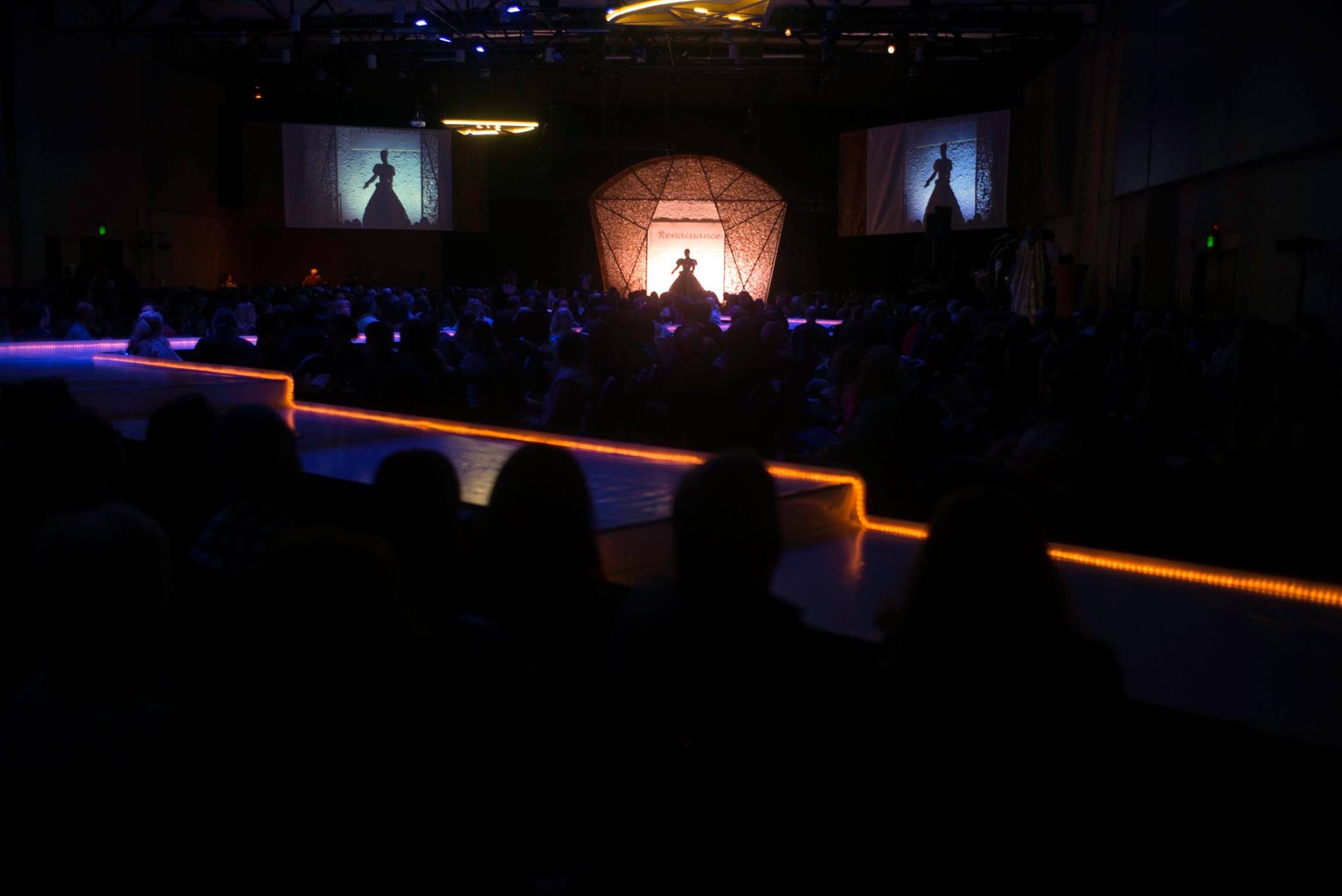
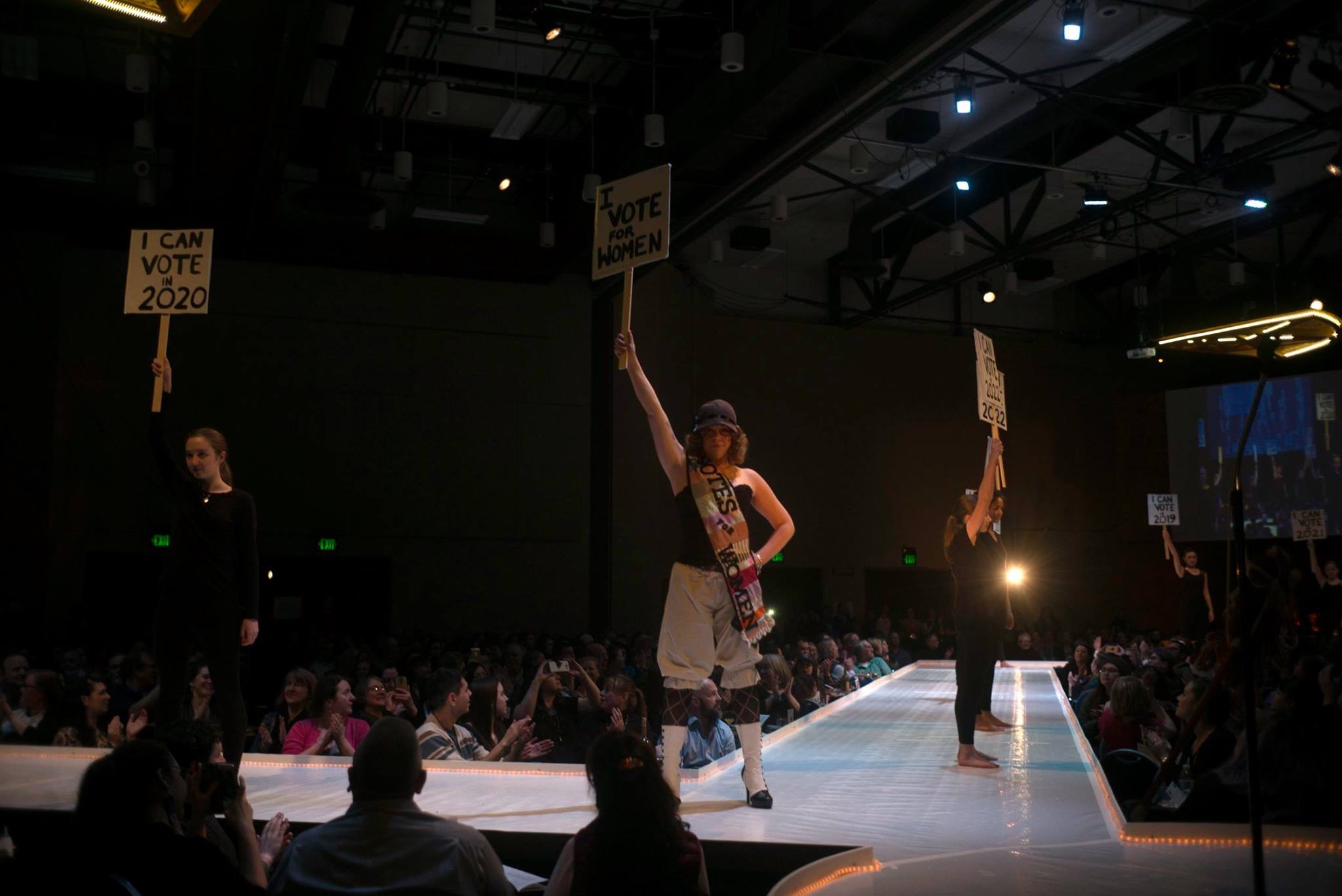
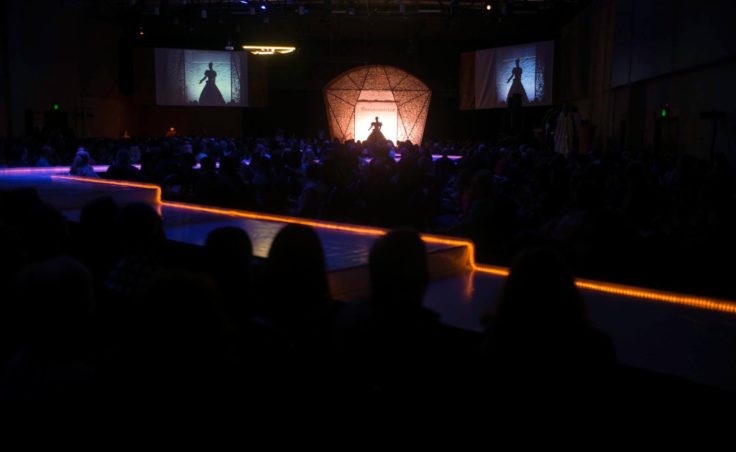
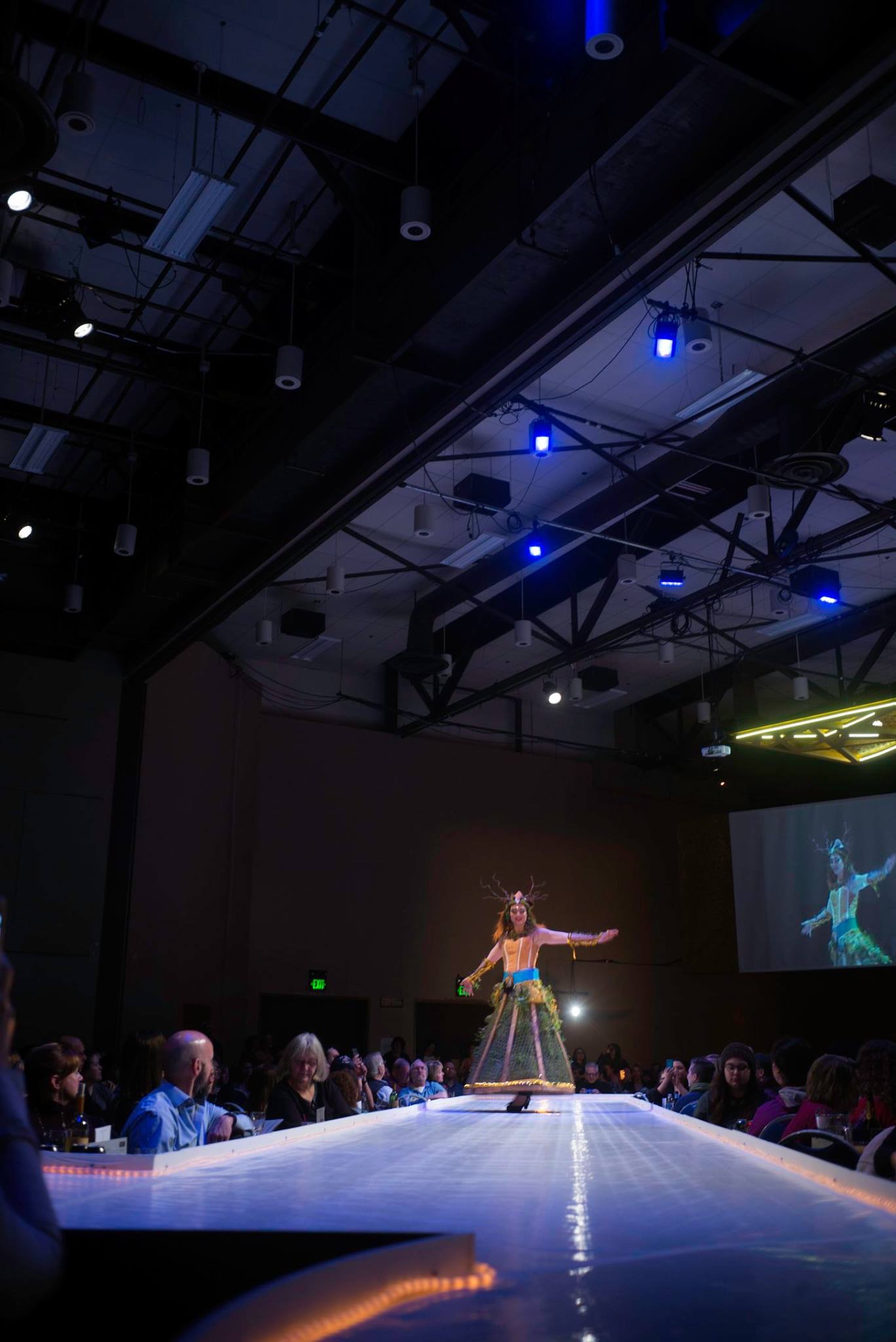
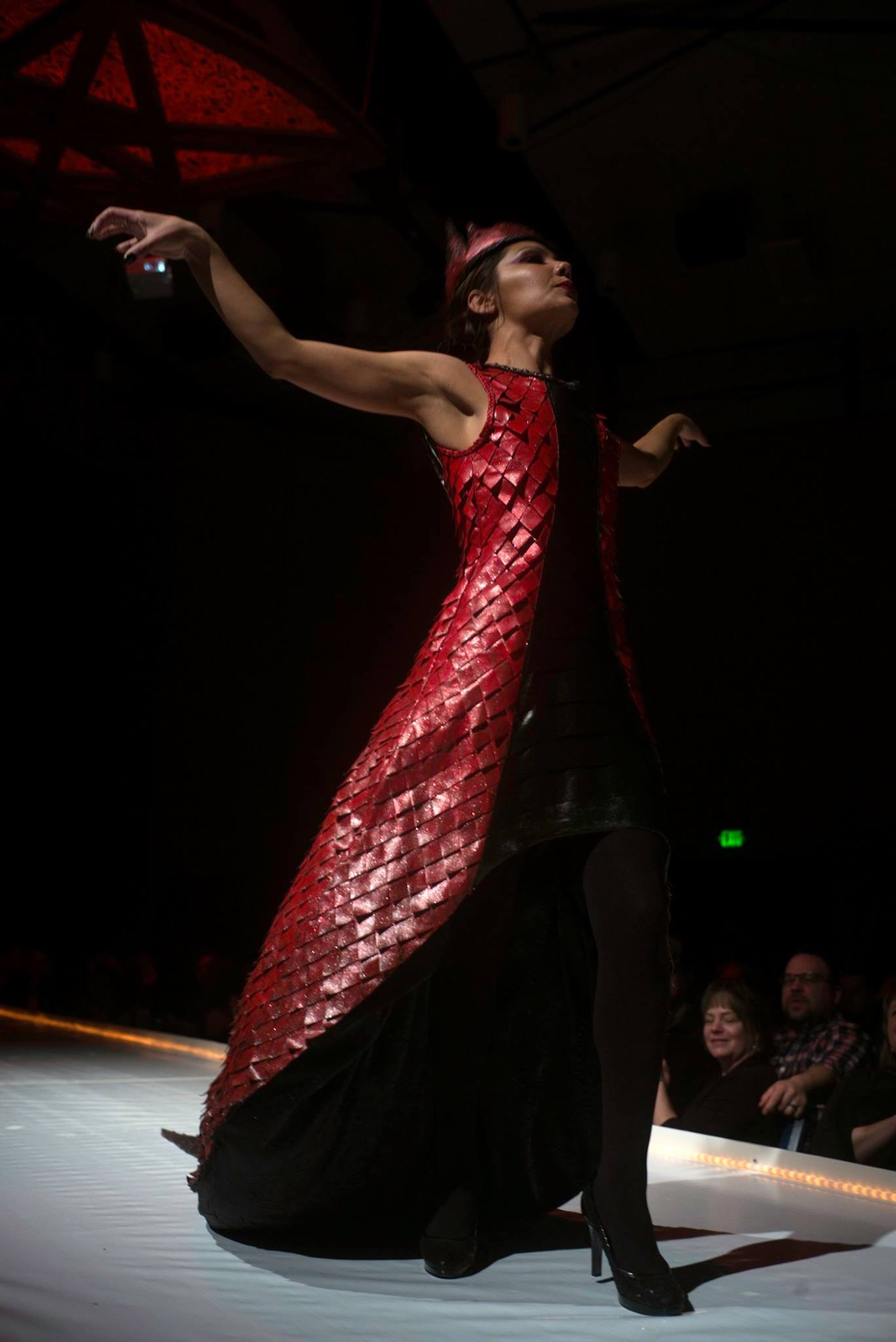
The 2017 show “Renaissance” took place Saturday and Sunday at Centennial Hall.

Models walked 29 entries down the runway as part of the annual fundraiser for the Juneau Arts and Humanities Council.

Materials included tin can lids, glass beads, duct tape, guitar and violin strings, bottle tops, flowers, chicken wire, lace, recycled copper fuel line, corn husks, fur, and vinyl records to name a few.

Emcees were actor Allison Holtkamp and actor-playwright Frank Henry Kaash Katasse.

Listen to a few audio highlights from the event here:

Amy Romme models one side of “Royal Divergence” at Wearable Art 2017. It was a two-person piece she and artist Jessica Hood collaborated on.
Amy Romme models one side of “Royal Divergence” at Wearable Art 2017. It was a two-person piece she and artist Jessica Hood collaborated on. (Photo courtesy John Hutchins)

Winners were chosen by a group of jurors who scored four categories: construction, innovation, overall presentation, and what they call the “wow” factor.

The juror’s first place award, or Best of Show, went to “Church of the Wild,” by artist Lauralye Miko and modeled by Amy George.

“A Lid-dle Un-can-ny,” by artist and model Michelle Morris, won juror’s second place and the people’s choice award.
“Battling Potted Land,” by artist and model Angela Ecklund won, the juror’s third-place award.

You can watch the broadcast of the event on 360 North at 8 p.m. Thursday.

Site notifications
Update notification options
Subscribe to notifications