The Thunder Mountain Falcons are the Southeast Conference champs in high school football. The Falcons beat the Ketchikan Kings 30 to 12 on Saturday in Ketchikan.
After a slow start to the season – and losing their first four games – the Falcons have won three contests in a row, putting them at the top of the small conference of three schools: Thunder Mountain, Sitka and Ketchikan. The Falcons are assured a playoff game in Juneau in two weeks, against a Northern Lights Conference team.
In Juneau on Saturday, the Juneau-Douglas Crimson Bears beat the Fairbanks’ West Valley Wolf Pack by a score of 29 to 8. The Bears have five wins and one loss, and still have one more regular-season game.
The Wolf Pack came to Juneau with just one loss for the season and the crowd expected a tougher contest than it turned out to be. Defense was the key: the Crimson Bears’ line totally stifled the Wolf Pack’s running game, which has been the centerpiece of their offense this season.
Head Coach Rich Sjoross says the Bears defense was tenacious.
“We benefited from getting in the backfield, disrupting their timing,” Sjoross says.
Juneau must win the last regular season game to secure a home play-off for the quarterfinals. The Crimson Bears play Lathrop, another Fairbanks team, next week at Lathrop.
“If we beat Lathrop, we’re guaranteed a home playoff game, absolutely,” Sjoross says. “If Palmer beats Wasilla and we beat Lathrop then we’re the conference champions.”
Juneau plays in the large schools’ Railbelt Conference. The quarterfinals pit a Cook Inlet conference team against a Railbelt team.
Juneau’s economy is back on track. After a brief flirt with recession, Alaska’s capital city is healthy.
That’s the headline from this year’s 2011 Juneau and Southeast Economic Indicators, prepared by the Juneau Economic Development Council.
Meilani Schijvens is the primary author of the annual report, which looks back at 2010.
“This year we’re happy to announce the Juneau population is up, the Southeast population is up, employment is up, total payroll is up, unemployment is down, ” Schijvens says. “School enrollment is up, both is terms of Juneau School District and UAS. Housing starts are up and home values are increasing.”
The annual report shows increases in 2010 employment and wages in mining, fishing, health care, and federal, state and local government. But Schijvens says some of the increases in 2010 were not enough to make up for the losses of 2009.
“Just for an example, the average annual employment in Juneau grew by 2.3 percent in 2010, but in 2009 the loss was 3.5 percent and that was a big loss,” she says. “So we have these nice upward trending numbers but they don’t erase all the losses of 2009.”
The downturn in the cruise industry affects Juneau’s retail segment and city sales tax. One-hundred twenty-three-thousand fewer people arrived by cruise ship last year than in 2009. Schijvens says that’s already turning around and more passengers are projected next year.
The number of independent travelers was up: Both Alaska Airlines and the Alaska Marine Highway System report increases for 2010.
“Ferry passenger traffic was up 6.6 percent. Alaska Airlines passenger traffic was up by 3.9 percent and in 2011 that’s continuing to go up, an additional 3 percent so far,” she says.
The number of passengers traveling by small, regional airlines grew more than 17 percent last year.
The Indicators report is a one-stop guide to economic information for 2010. JEDC compiles research from federal, state, local and industry sources to help inform the business and political communities and citizens about Juneau’s economic climate. Brian Holst is JEDC executive director.
“It looks back at where we’ve been,” Holst says. “The Indicators report gives us a good snapshot of where we are. It doesn’t tell us where we’re going. We believe that by having good information, a good understanding of what the economic sitatuion is, people can make better decisions about the future.”
The population in both the capital city and Southeast region increased slightly in 2010. Senior citizens are the fastest growing segment, but the number of “20-somethings” is also rising.
The report’s bad, but not unexpected news: Juneau’s cost of living is 39 percent more than the average American city. Housing costs are 66 percent higher.
A link to the 75-page Juneau and Southeast Economic Indicators 2011 can be found at www.jedc.org.
Not that long ago, the Coast Guard Cutter Sherman was intercepting illegal drugs off the coast of sunny and warm Costa Rica. Her captain was the Coast Guard’s attaché in Mexico City.
Now Sherman is headed to the cold and wet of the far north.
The cutter arrived in Juneau Wednesday, put to the test by the big wind and rain storm that slammed Southeast Alaska. Rosemarie Alexander talked with Commanding Officer, Capt. Joe Hester, about the trip from the Sherman’s home port of San Diego — where the weather is nearly always nice — to Alaska.
The 43-year-old ship is one of a class of ships being decommissioned by the Coast Guard, to be replaced by bigger, faster cutters. Here are more stories about the ship and her crew.
An affordable-housing group is looking for ways to reduce the number of chronic inebriates downtown. The Juneau Homeless Coalition met Thursday to begin gathering information and planning for new programs.
Juneau Police Officer Tracy Murphy attended the meeting. His beat is downtown Juneau. He says he spends much of his time dealing with disruptive drunks.
“It’s a constant trucking for me. A stop here, a stop there, all the nooks and crannies, everybody goes where they go to drink and hang out. And now with the weather, you can see there’s a lot more loitering and trespassing inside of the businesses,” he says.
Stores and offices in the downtown core clean up after their trash, including human waste.
The library’s Mark Whitman says it’s a problem there too.
“I’m increasingly concerned because I saw this summer some extremely violent behavior in the library itself that caused injury to people. And I’m not sure what we can do. It’s not something that we’re trained to deal with,” he says.
Whitman and Murphy were among about 40 people at the Juneau Homeless Coalition’s meeting on chronic inebriates.
Substance abuse professionals, housing program managers, and representatives of government, social-service and business groups talked about the problem and possible solutions.
Juneau Economic Development Council Affordable Housing Coordinator Scott Ciambor says comparing notes helps.
“A lot of times these agencies are dealing with the problem on their own. So what ended up happening today was a good information-sharing among those agencies that work most frequently with the homeless chronic inebriate population,” Ciambor says.
Those at the meeting said Juneau has around 30 homeless chronic inebriates, some from other Southeast communities. Many have mental health problems, Fetal Alcohol Spectrum Disorders, or other complicating issues.
They said to find solutions, they need more details about the depth of the problem.
“The take-away from this meeting was, a group of those agencies that deal with the same folks day in and day out to go ahead and start investigating the question of who exactly are these folks and what exactly are their needs so they can be addressed,” Ciambor says.
That information will be used to plan for new programs or facilities.
One approach discussed would be a “wet” shelter, a supervised hotel or center where drinking is tolerated.
Another model, called Housing First, provides efficiency apartments and ties residents to assistance programs. Yet another, called 100,000 Homes, identifies the most vulnerable homeless and applies a more intensive treatment system while getting them off the streets.
Some at the meeting also discussed stricter enforcement. That includes a focus on bars and liquor stores. City attorney John Hartle says it’s illegal to sell alcohol to an intoxicated person.
“It’s kind of addressing it from the supply side. In 18 years that I’ve been at the city, though, I’ve never seen an arrest,” Hartle says.
Another idea was to turn some alcohol-related citations into misdemeanors after a certain number of offenses. That would send people to jail, rather than charge fines that will never be paid.
But that’s what some inebriates want: time with food and shelter, even if it’s in jail. Some view treatment programs the same way.
Murphy, the downtown police officer, says he’s seen some people go sober. But on the streets, it’s hard to stay that way.
“I check with them every day. And we count the days together. And it’s saddening to come back after a month to see that they’ve fallen into the same group, the same pressures. It’s there, they just can’t get away from it,” Murphy says.
Some in Juneau’s coalition will attend a statewide homeless issues conference next month in Anchorage. There, they’ll find out more about new programs, including the 100,000 Homes campaign.
The Auke Bay loading facility will be getting a new Sealift.
The Juneau Assembly approved the purchase earlier this week.
The self-propelled hydraulic lift — with shipping, set up and training — will cost about 530-thousand dollars. It’s paid for by a federal TIGER grant, which requires that purchases be made in the U.S. The 45-ton KMI SEA-Lift is made in Bellingham, Washington.
CBJ Port Engineer Gary Gillette says the self-propelled boatlift will be safer for operators, more efficient at handling a variety of vessels and will put less stress on boat hulls.
He says it lifts the boat with a pneumatic tube that runs the full length of the boat, exerting even pressure on the hull.
“It’s much more maneuverable. We plan to use it at the Auke Bay loading facility where space is important,” Gillette told the Assembly. “The other lifts require bars that slide out from underneath, which essentially takes up six feet next to the boat that has to be left open. This one can move it in within inches.”
Gillette says the lift is the most cost-effective method for lifting boats, because it doesn’t require expensive infrastructure.
The Juneau Assembly has repealed a controversial zone change on a small parcel of residential land in the Mendenhall Valley.
The Assembly last month overrode the Planning Commission and CBJ Community Development staff and zoned the area light commercial. Then the city attorney said it was illegal.
The heavily wooded corner of Atlin Drive and Mendenhall Loop Road was previously owned by the U.S. Forest Service. While the parcel is 2.68 acres, it’s also wetlands, reducing the usable land by 40 percent.
Developer Richard Harris and consultant Murray Walsh have been seeking the zone change since January. They weren’t successful until August, when they appealed a Planning Commission decision to the Assembly.
City attorney John Hartle said the zone change violates the city’s land-use code, but the developer’s attorney reads it differently. Walsh told the Assembly Monday night the turn of events was “horribly demoralizing.”
“I understand the yearning for clarity in these things. It would be a good idea to change the code so that we’re not faced with this kind of thing again,” Walsh said. “This has gone on eight months. Lots of emotion, lots of trial. And I just think that the assembly should stick with the decision it’s made, give us what we asked for, and give us a chance to earn our way into something the whole community will be proud of.”
The entire Atlin Drive neighborhood, including Saint Paul’s Catholic Church, has been against the zone change, primarily because Harris has no plan for the corner. He has said he just wants the flexibility that commercial zoning would give.
Linda Wild has testified several times on the issue. She told the Assembly it was time to get beyond dueling attorneys and emotional reactions and focus on a common goal – quality use and development of the property that’s compatible with the neighborhood.
“Mr. Harris would be well advised to remain in dialogue with the neighborhood to garner their support for a specific project rather than the ‘trust me’ of a blanket light commercial designation,” Wild said. “I’d sure hate to see 48 housing units or a Denny’s on that little corner.”
All but one Assembly member – Johan Dybdahl — voted to repeal their action. The corner remains medium density residential.
Close
Update notification options
Subscribe to notifications
Subscribe
Get notifications about news related to the topics you care about. You can unsubscribe anytime.

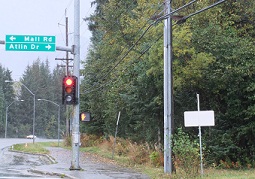 The Juneau Assembly has repealed a controversial zone change on a small parcel of residential land in the Mendenhall Valley.