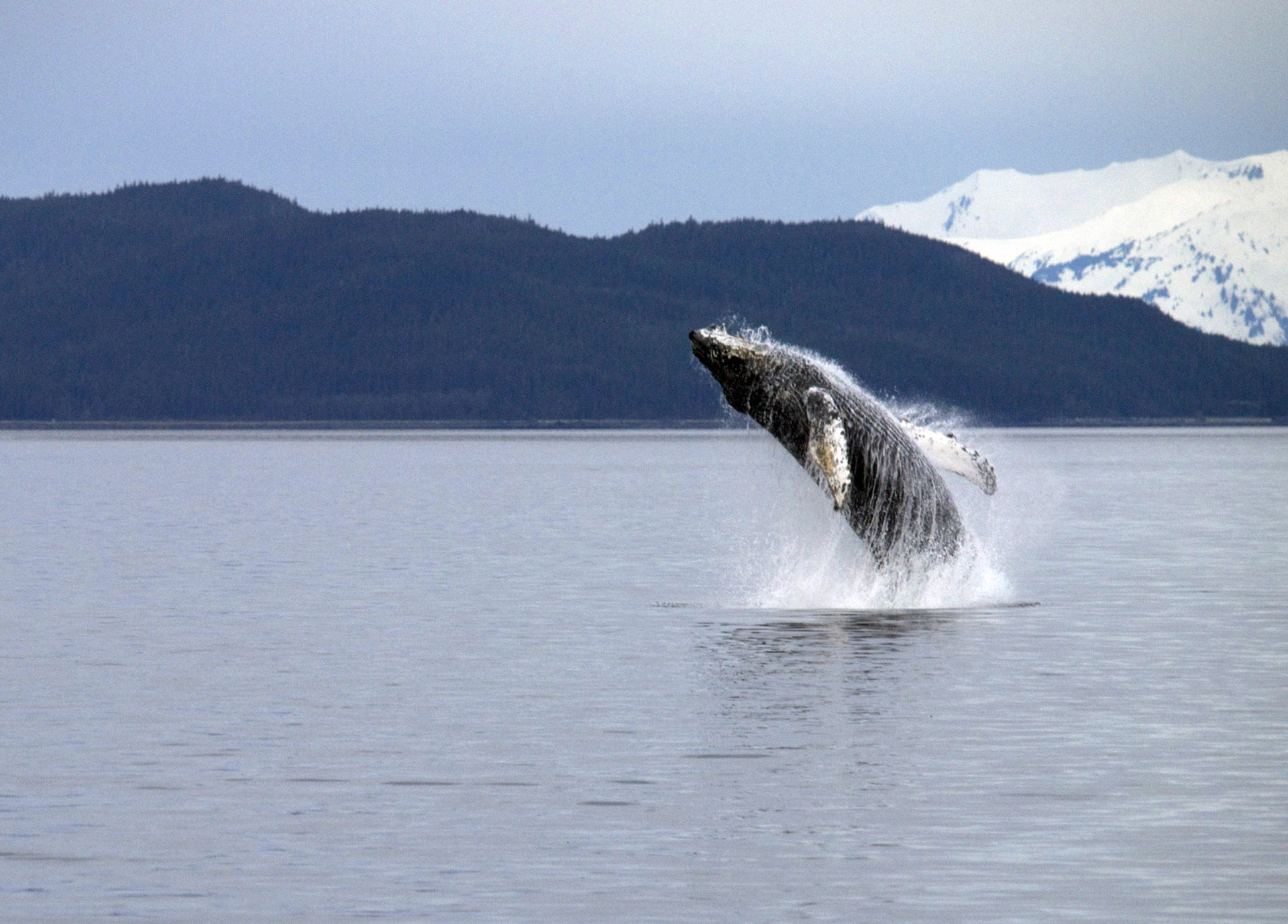
A whale in Berners Bay, near Juneau, Alaska. (Creative Commons photo by Gillfoto)
Seven whale watching companies in Juneau are the first in the state to participate in a voluntary stewardship program that challenges them to go above and beyond federal and state viewing guidelines. The National Oceanic and Atmospheric Administration has brought the East Coast program Whale SENSE to Alaska.
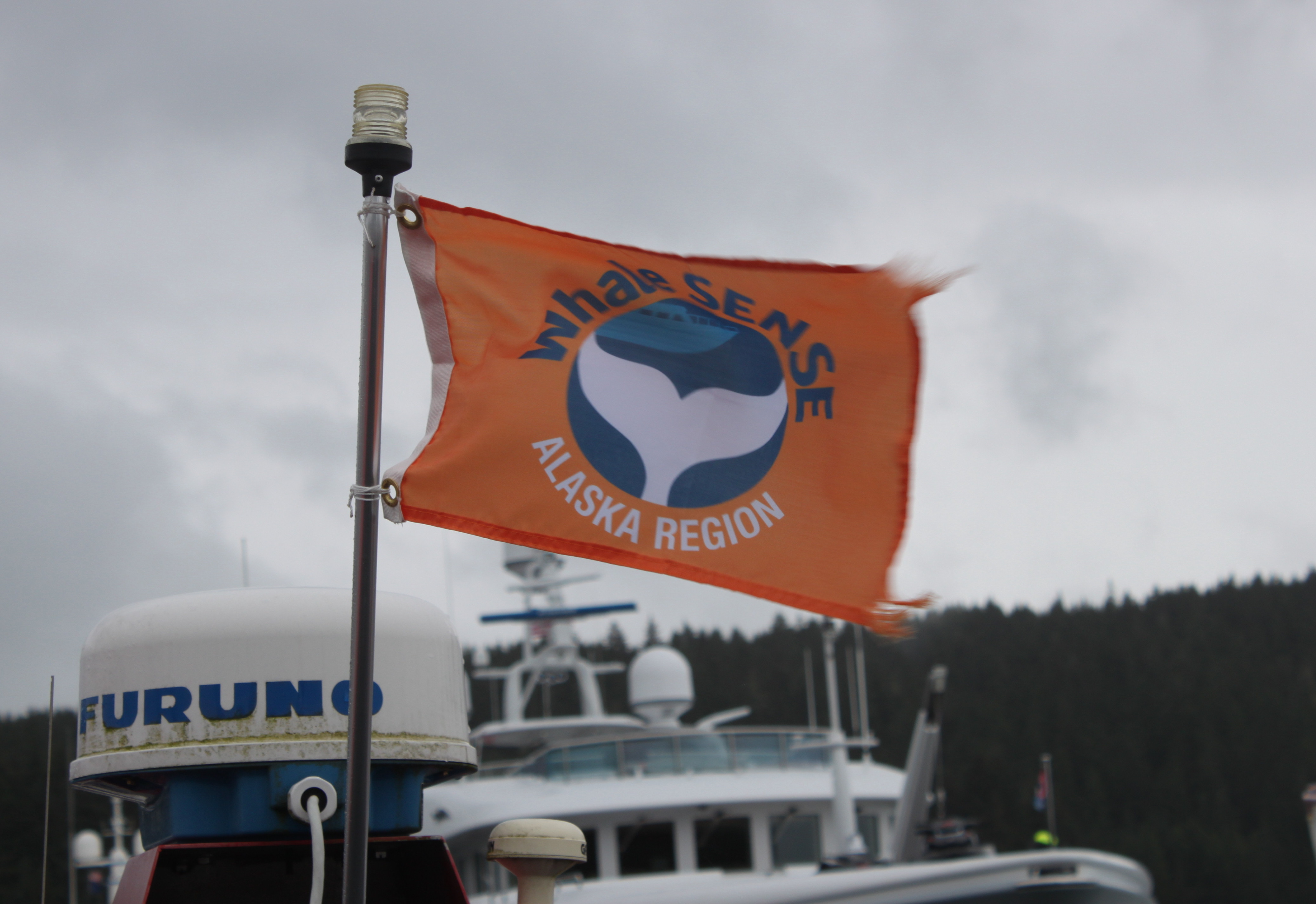
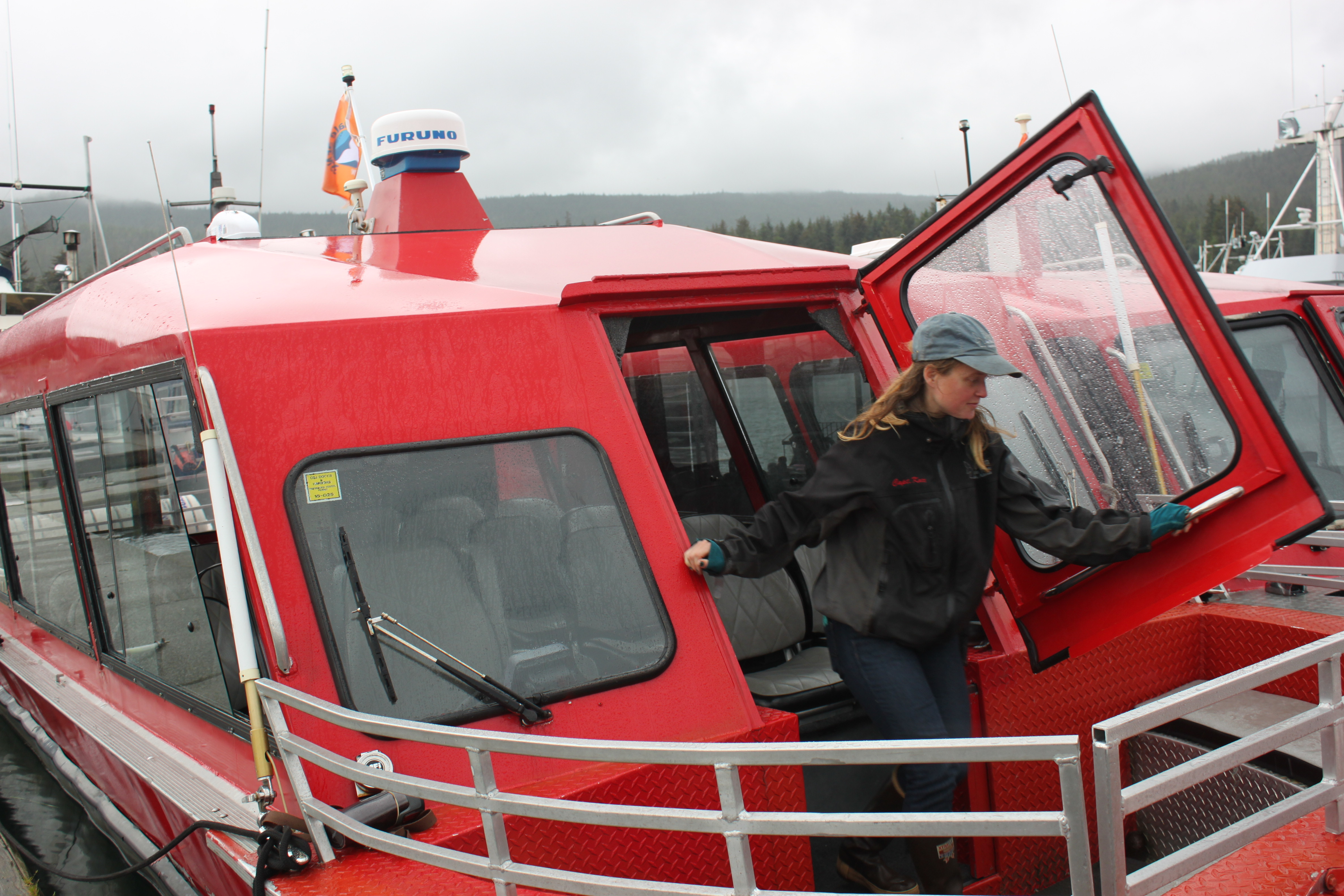
It’s a windy day at Statter Harbor in Juneau, where Dolphin Jet Boat Tours stage trips. A new orange Whale SENSE flag adorns each vessel, “so that other boats on the water can see that we’re a member of Whale SENSE and then they know that we’re well trained and carefully observing all the guidelines and protecting the whales,” says Kathleen Turley, port captain for Dolphin. She’s been with the company for 12 years and does everything from maintaining the boats to being an on-board naturalist.
Participating Whale SENSE companies display an orange flag on their vessels. (Photo by Lisa Phu/KTOO)
Each tour begins with an educational Whale SENSE talk.
“We’re informing the passengers about the stewardship aspect of the whales, that we’re not just here to see the whales, we’re here to protect them,” Turley says.
Federal regulations include a hard rule requiring that vessels keep 100 yards away from a humpback whale. Beyond that distance, the rule is to be “slow” and “safe.” Whale SENSE is more specific and has a tiered set of speed guidelines that start one mile from a whale.
“Basically it’s what we do anyway because you don’t want to just roar up on a whale or leave rapidly or anything like that. I think it’s helpful for new captains especially that haven’t been doing this for a long time,” Turley says.
Kathleen Turley has worked for Dolphin Jet Boat Tours for 12 years. (Photo by Lisa Phu/KTOO)
Other guidelines include additional training and coordinating location and viewing times with other vessels. Program participants go through on-board evaluations. Juneau companies Alaska Galore Tours, Allen Marine Tours, Gastineau Guiding, Juneau Whale Watching Tours, Orca Enterprises and Rum Runner Charters are all part of Whale SENSE.
In return, NOAA and Whale SENSE advertise participating companies on their websites. And the companies know they’re taking the extra step to be more responsible.
For the most part Suzie Teerlink says the industry in Juneau does a good job of respecting the whales. Teerlink is a doctoral student at the University of Alaska Fairbanks. She’s been studying Juneau humpback whales and the whale watching industry.
“Even though companies generally are following the regulations, because of the growth of the industry and the number of vessels on the water, there was just need for more,” Teerlink says.
In the early 1990s, Teerlink says there were no whale watching boats in Juneau. Now, she estimates there are about 35. She’s heard operators complain of overcrowding. She calculates the industry generates in Juneau between $20 and $25 million a year.
NOAA Fisheries marine mammal specialist Aleria Jensen coordinates Whale SENSE Alaska. Worldwide, she says whale watching is a multibillion dollar industry.
“How are we going to make our little piece of that industry in Juneau sustainable? Because we’re on the map as a whale watching destination, we’re probably one of the top destinations and it’s thrilling that we can offer this experience to visitors but we need to do it right and we need to be really careful about how we behave around them,” Jensen says.
Jensen doesn’t see the growth of the whale watching industry leveling off anytime soon. She says the humpback whale population in the North Pacific is growing at a rate of 5 to 7 percent each year, and with more whales come more vessels to watch them.
Watch live video from the Fourth of July fireworks barge and share your photos of the festivities here.
Morning Edition host Matt Miller will be aboard the barge in Gastineau Channel when the show begins Friday night. The fireworks are scheduled to start at 11:59 p.m.
The National Weather Service is forecasting a mostly cloudy Friday night with isolated showers and lows around 51. Saturday’s parade weather is expected to be partly cloudy with highs around 67.
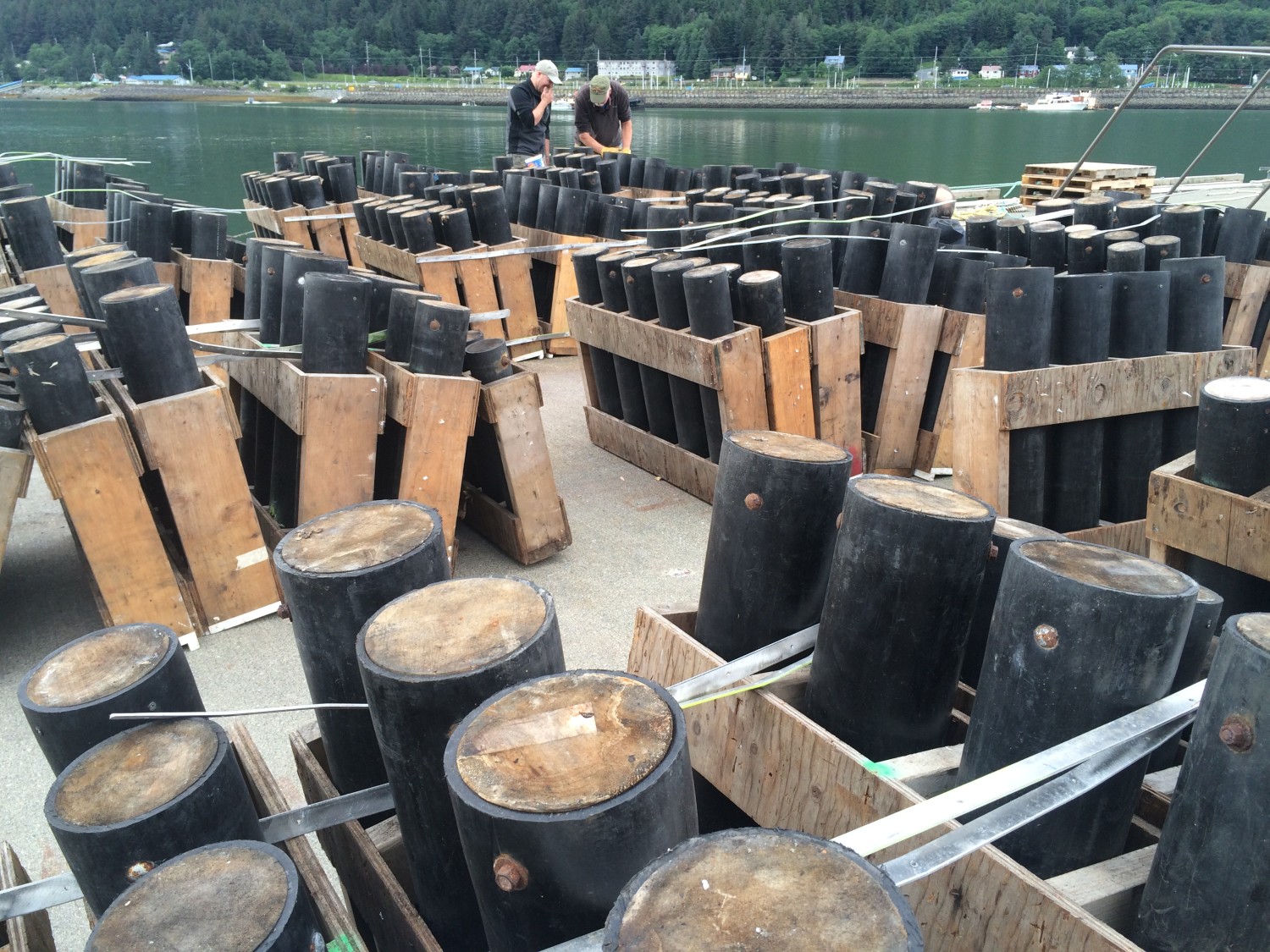
Volunteers with the Juneau Festival Association are preparing launching tubes for this Friday’s fireworks display. (Photo by Matt Miller/KTOO)
Organizers of the Independence Day fireworks display say crowd reaction and their own enjoyment will often dictate the pacing of the annual waterfront spectacle.
Volunteers with the Juneau Festival Association on Tuesday began positioning the various tubes on a state fisheries barge for launching the fireworks. This Friday, just before the display, they’ll load nearly 700 shells into the launching tubes, connect them to firing squibs, and wire them up to a set of switchboards.
Gary Stambaugh says they plan out a show much like any theatrical or musical production with pacing, high points and easy, low interludes. But instead of following any performed musical piece, he says they generally follow their own rhythm and the music in their heads.
“It’s more of what’s playing in the sky. And when you have lots of stuff going off, you don’t want to overload it,” Stambaugh says.
Stambaugh says they plan for a 20-minute display, but it will often get stretched out to 25 minutes.
“We can’t help it when something goes up in the sky and it’s so pretty, we just go ‘Stop, stop! Oh, that’s really nice.’ We really enjoy it. By that time we’re also hearing everybody screaming on the mainland. They’re just enjoying the show and we don’t want to disrupt that thing.”
Fireworks shells range from 2 to 10 inches in diameter. Launching tubes for the extra large 10-inchers are placed inside a large box filled with sand.
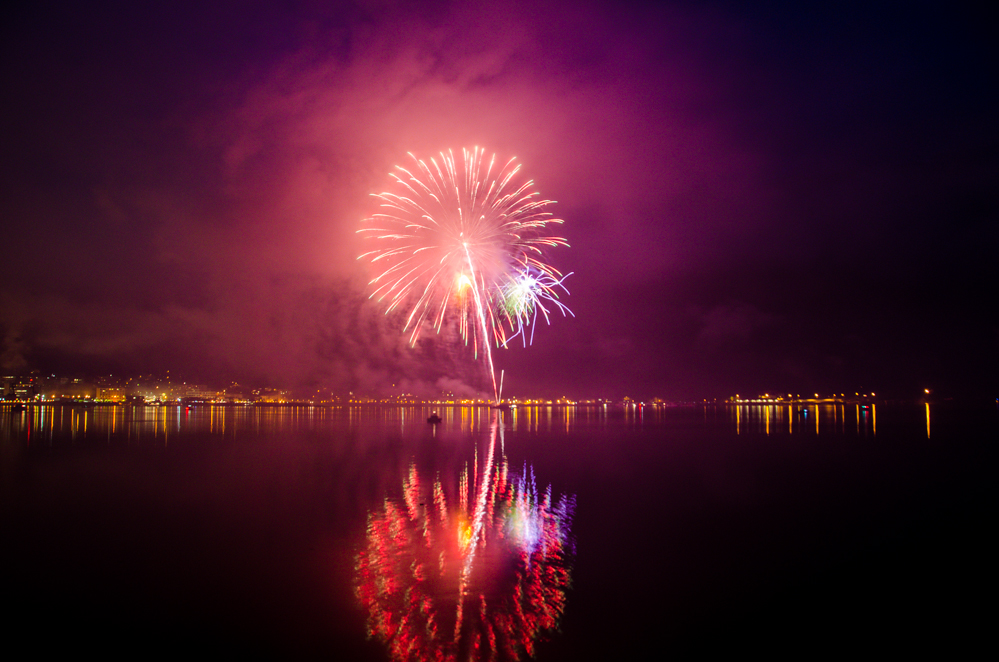
Fireworks over Juneau’s harbor. (Photo by Heather Bryant)
There may be as much as a half-a-pound of gunpowder in each shell. But, as volunteer Sigrid Dahlberg explains, each shell may have many components to it.
“At the bottom of every bomb, there’s a lifting charge. That’s what the fuse lights,” says Dahlberg. “The lifting charge gets lit and makes it explode inside the (launching) tube which causes the bomb to shoot up out of the tube.”
Once the shell is up in the air, the lifting charge lights another fuse and the shell explodes.
“Often, there are more and more chains of explosions and that’s where you get the ones that go up and they go out, and then little pieces burst out of that, and other little pieces burst out of that. And they all fall down,” explains Dahlberg. “Those are all chained fuses where one explosion lights the fuse for the next explosion. So, sometimes you have many layers of explosives inside one big shell.”
Unusual shapes like smiley faces, ringed planets, and bow ties are all accomplished with careful timing of the fuses for the secondary lifting charges and display explosives.
The fireworks display is funded by a $31,000 appropriation from the Juneau Assembly. Some of the larger 10-inch shells or bombs can cost as much $400 dollars a piece. Like other municipal services and activities, Stambaugh says funding for this year’s fireworks was cut about $2,000 from last year.
The display will actually start on Friday, the day before Independence Day, at 11:59 p.m. The fireworks barge will be moved to the middle of Gastineau Channel, just off of the downtown library. A 1,500 foot safety zone around the barge will be enforced by the CBJ Harbormaster and the U.S. Coast Guard.
(Spelling of Gary Stambaugh’s name has been corrected.)
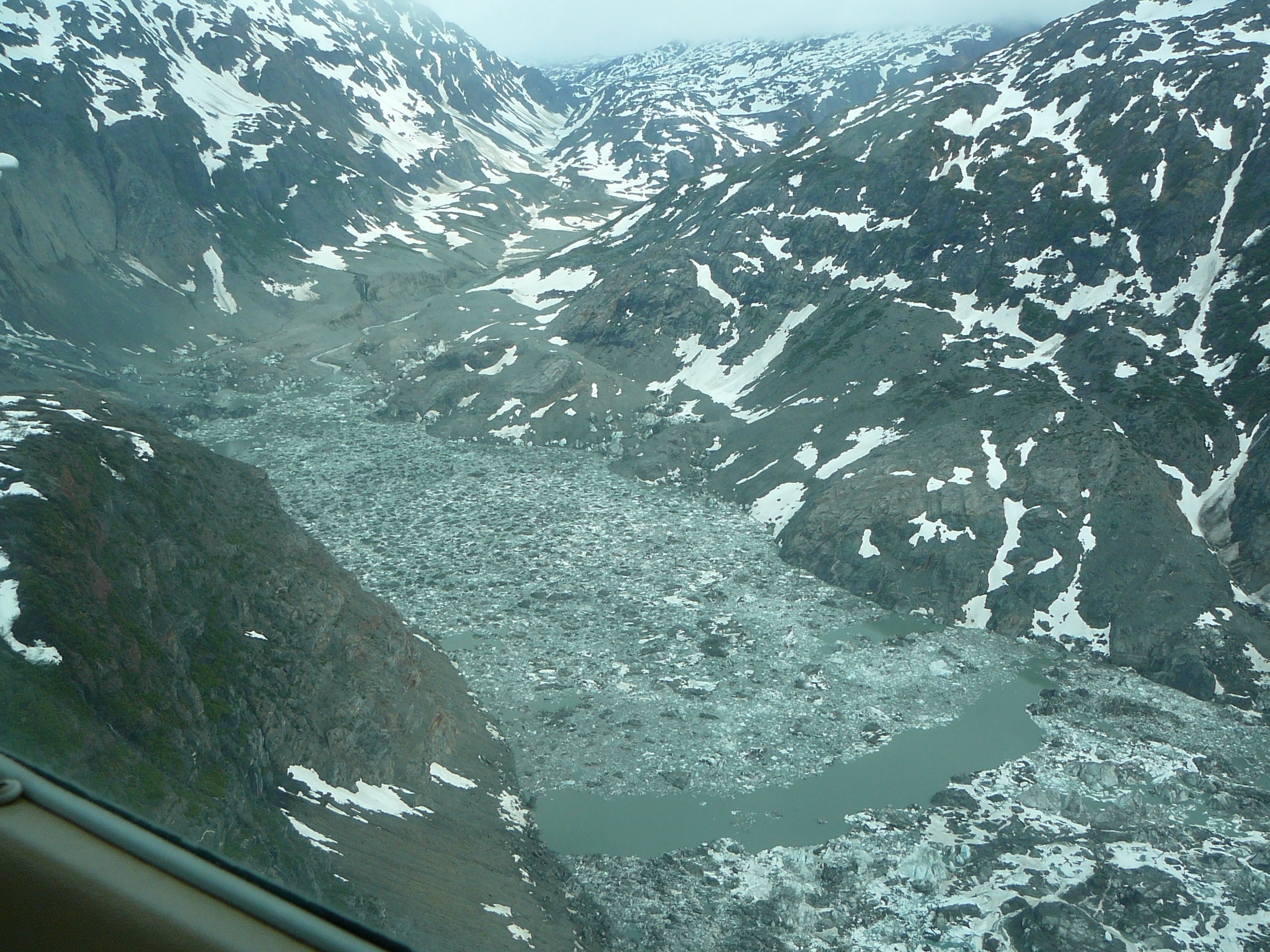
Lake No Lake during a glacier dam release in 2008. (Photo by Aaron Jacobs/National Weather Service)
The Taku River is rising quickly due to a dam release of the Tulsequah Glacier.
Pilots in British Columbia reported seeing water from Lake No Lake located along the glacier beginning to drain.
“There’s a certain amount of water that builds up within these lakes, which is being held back by these glaciers, and once there’s a certain amount of pressure, it actually lifts up the glacier and water is able to start flowing underneath the glacier,” says Aaron Jacobs, hydrologist with the National Weather Service.
The glacier dam release produces a constant flow of water into the Tulsequah River, which is a tributary off the Taku.
As of 2 p.m., the river was at 38.3 feet and is expected to rise another 4.5 feet, just below minor flood stage, by late tomorrow morning.
Even though there’s no flood warning, vessels traveling on the Taku should be careful.
“It’s still going to be treacherous for people who are traversing up and down the Taku River especially on the start of the holiday weekend where there will be debris coming down the river, potentially some ice, and that can cause some havoc along the river if you’re not aware of it or you’re not paying attention,” Jacobs says.
Water temperature of the Taku River is also dropping.
Jacobs says once the lake is drained and the river crests, the Taku will drop to its normal level of about 38 feet by Thursday evening.
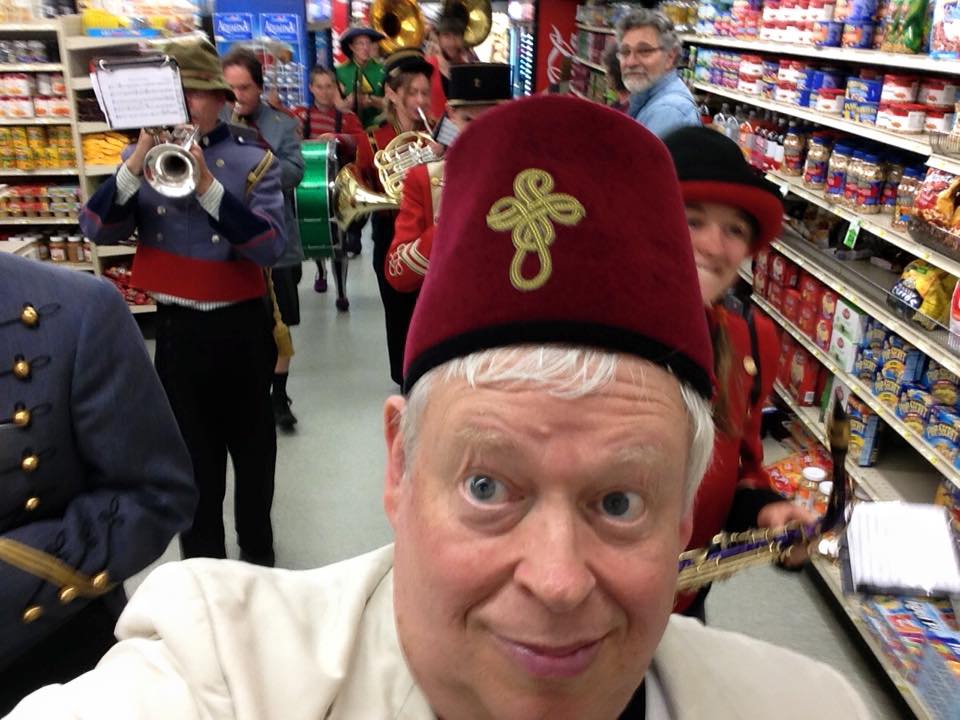
A selfie shot while the New Old Time Chautauqua band marches through a Wrangell supermarket, June 25, 2015. (Photo courtesy Eben Sprinsock/New Old Time Chautauqua)
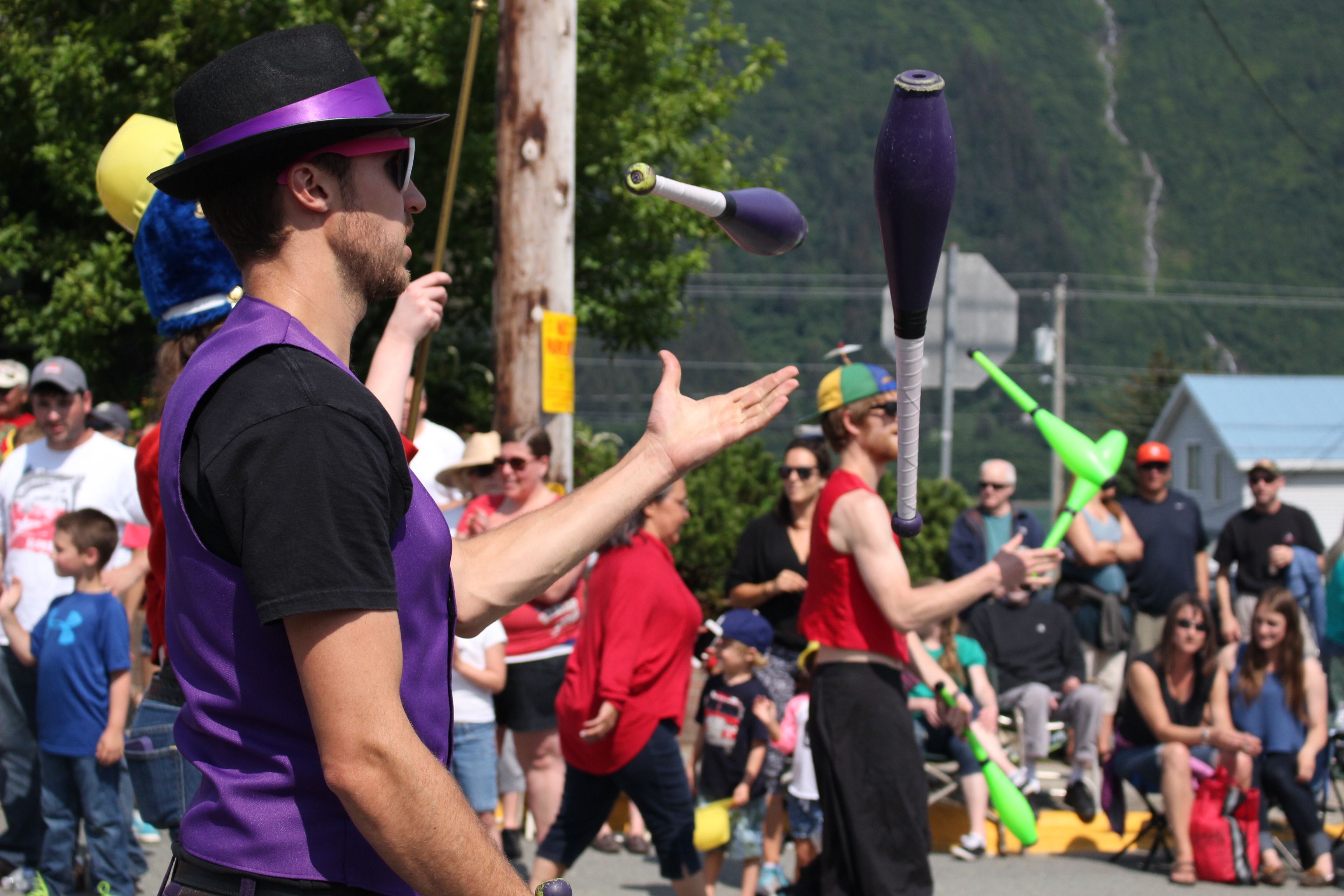
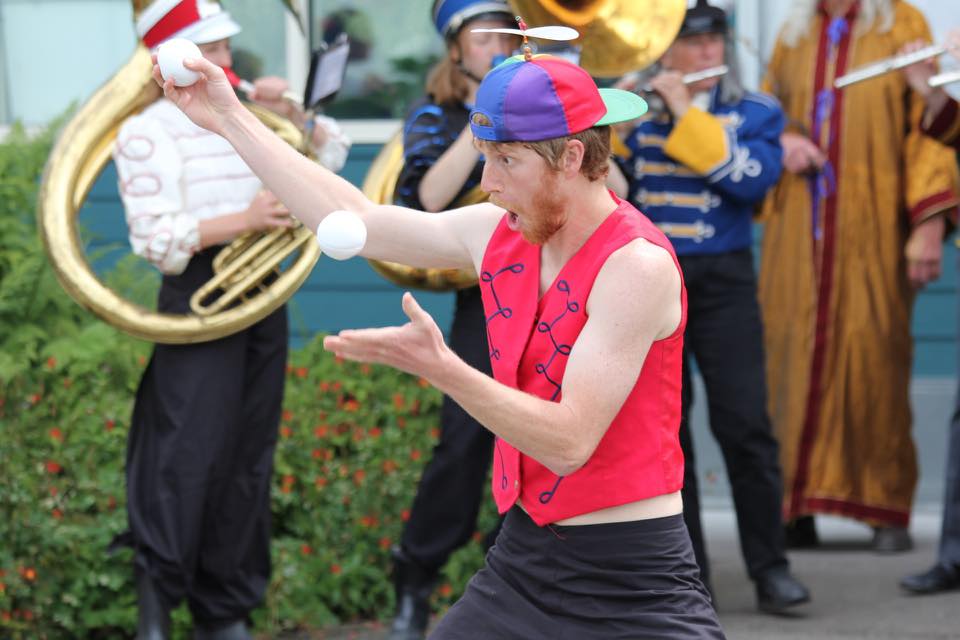
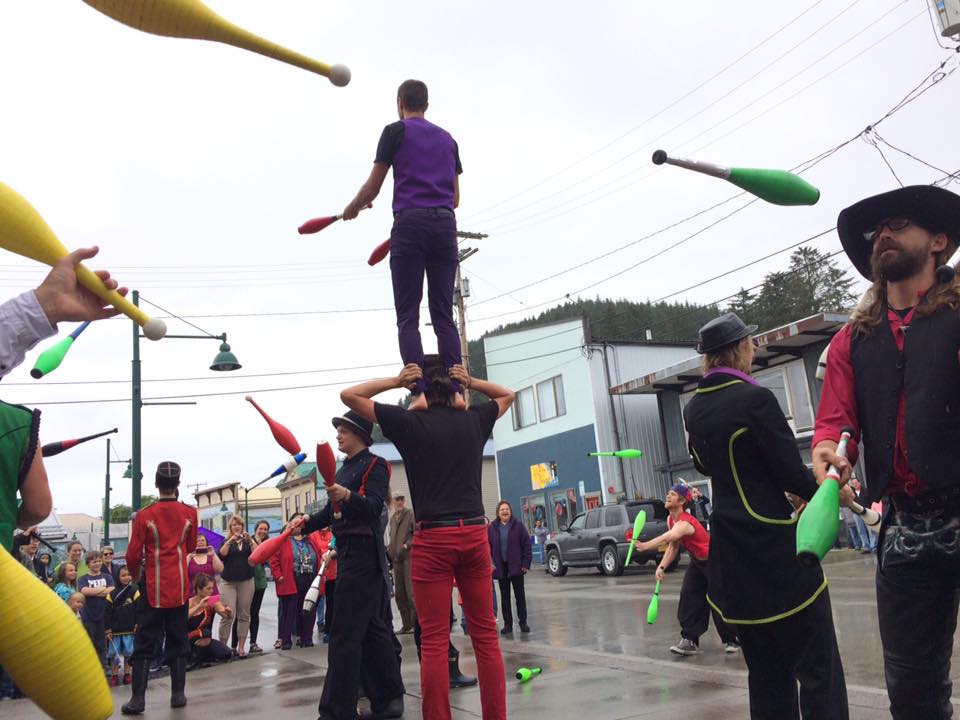
When the New Old Time Chautauqua marched into a TEDx talk in Seattle in 2012, there were jugglers, marching band musicians with mismatched uniforms, a saxophonist with a fez and a mustachioed ringmaster in a kilt.
Now, the motley troupe of almost 60 performers and educators is in Juneau for three days of workshops, shows and activities that start Thursday.
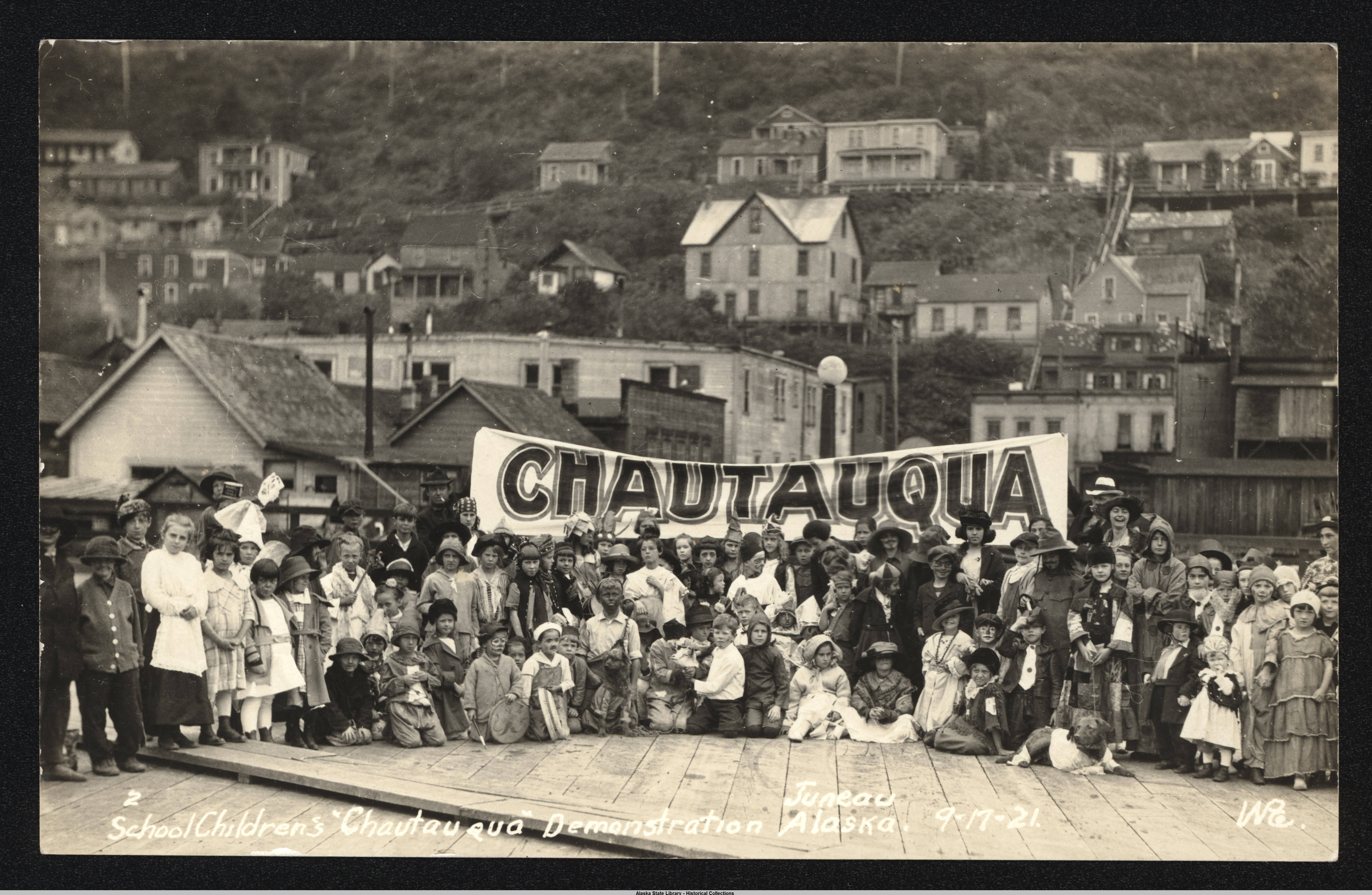
The traveling Chautauqua movement began on Lake Chautauqua in New York in the late 1800s. They brought lectures, theater and music to rural communities but it mostly died out after the rise of radio and motion pictures.
“School Children’s ‘Chautauqua’ Demonstration” in Juneau, Sept. 21, 1921. (Alaska State Library, David & Mary Waggoner Photographs & Papers, 1900-1940, Winter & Pond, ASL-PCA-492)
In 1981, Patch Adams — yup, the one Robin Williams played — and the Flying Karamazov Brothers revived the movement. Natalee Rothaus was with the Juneau Arts and Humanities Council in 1992 when the New Old Time Chautauqua first visited Juneau.
“It’s so much fun and it’s so much goodwill, spirited. You know, you’re working with people who are doing this for the love of it. They’re not coming in just to do a show. It’s not just a gig, it’s a Chautauquan family,” Rothaus says.
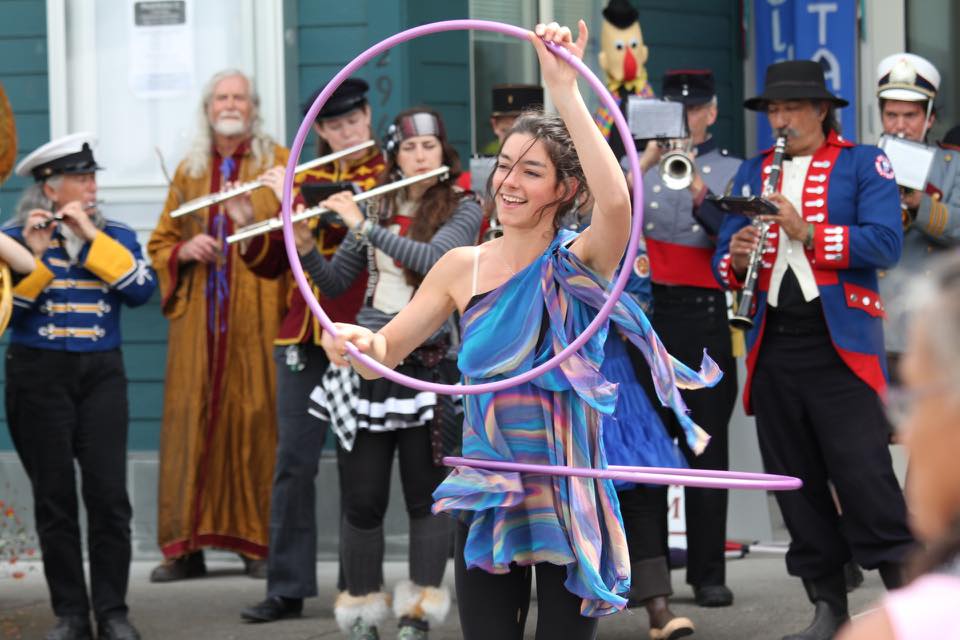
A New Old Time Chautauqua performer in the streets of Wrangell, June 26. (Photo courtesy Zachary “Skip” Waddell/New Old Time Chautauqua)
The New Old Time Chautauqua is a nonprofit whose members volunteer their time and fund their own travel during their month-long tour each summer. It’s Chautauquan tradition to share knowledge, partner with local organizations and build community through laughter, entertainment and education.
“The last time we did do a parade, it was quite wonderful. I myself wanted to run away with the circus,” says Rothaus.
One Juneauite actually did. Valerie Snyder, owner of Douglas’ BrownBoots Costume Company, joined the Chautauqua in Bellingham last month for a crammed week of rehearsals before they hopped the ferry up to Ketchikan. During their parades, Snyder says, “People are genuinely surprised and we get community members to march with us. In Ketchikan, I ran up the sidewalk and I did a little face painting to all the little kids waiting on the side of the street. ”
A New Old Time Chautauqua performer in the streets of Wrangell, June 26. (Photo courtesy Zachary “Skip” Waddell/New Old Time Chautauqua)
So far on this jaunt, the group has performed in Ketchikan, Wrangell and Petersburg.
Snyder is the only Alaskan from Southeast in the troupe. She plays violin, juggles, hula hoops, and contributes a little singing and dancing.
“Just expect fun and warmth and friendship. We’re just here to entertain and put a smile on your face,” Snyder says.
Their three-day routine begins with an open potluck Thursday at the Douglas library. Think of it as a Chautauqua launch party with a chalk drawing competition and community music jam.
Friday is the workshop day at Centennial Hall, where the Chautauquans and community members will teach circus skills, how to build a fire using friction, the Chinese meditative art of Qigong, how to fold a fitted sheet, and lecture on health.
There will also be pop-up performances downtown. The only ticketed part of their visit is their headlining vaudeville show Friday evening, which features music, aerialists, the Flying Karamazov Brothers and lots of shtick.
New Old Time Chautauqua jugglers in a rainy teaser show in Wrangell on June 26. (Photo courtesy Zachary “Skip” Waddell/New Old Time Chautauqua)
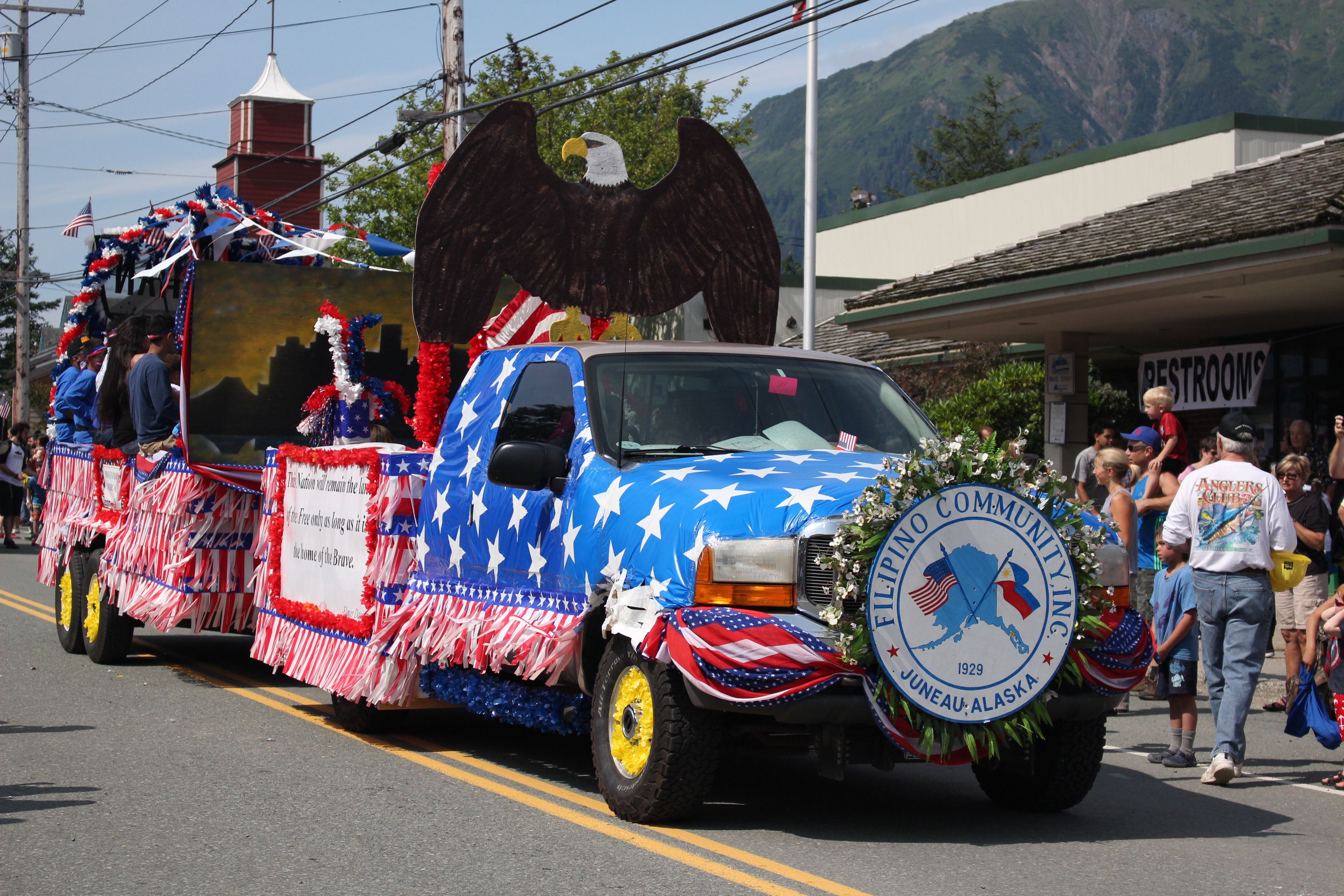
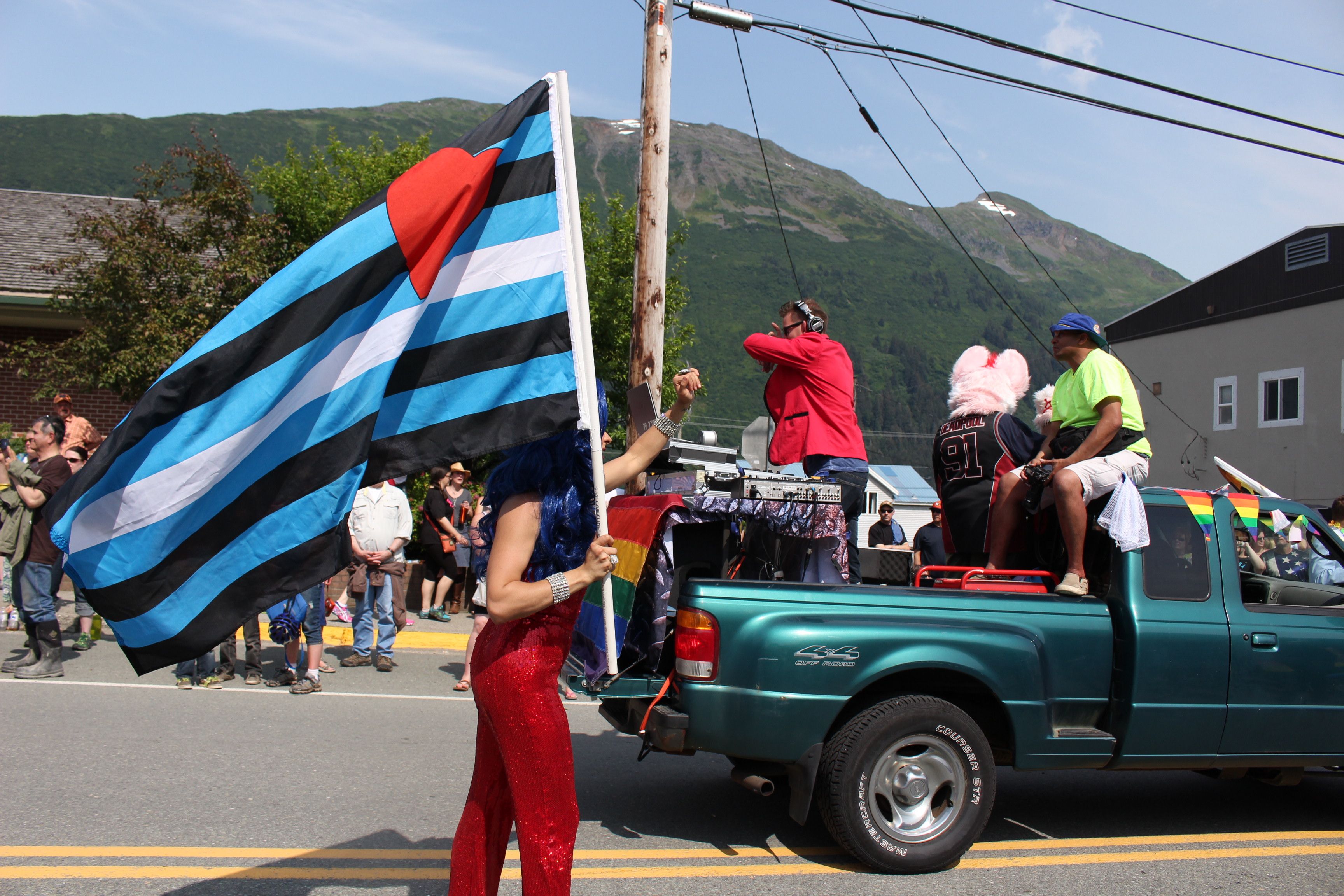
On the Fourth of July, they’ll march in both the downtown Juneau and Douglas parades.
New Old Time Chautauqua founder and original Flying Karamazov Brother Paul Magid hopes to inspire change person to person. The troupe will perform at the Johnson Youth Center and the Juneau Pioneer Home, too, as part of their service mission.
Magid describes the spirit behind their group in his 2012 TEDx talk:
“And it’s a our love of music, play, laughter and for each other that bridges all religious and political differences whether it’s on a baseball field, in a grocery store, or at a maximum security prison.”
After Juneau, they’re headed to Hoonah, Haines and Sitka.
Full disclosure: All proceeds from Friday’s ticket sales benefit KTOO.
Close
Update notification options
Subscribe to notifications
Subscribe
Get notifications about news related to the topics you care about. You can unsubscribe anytime.

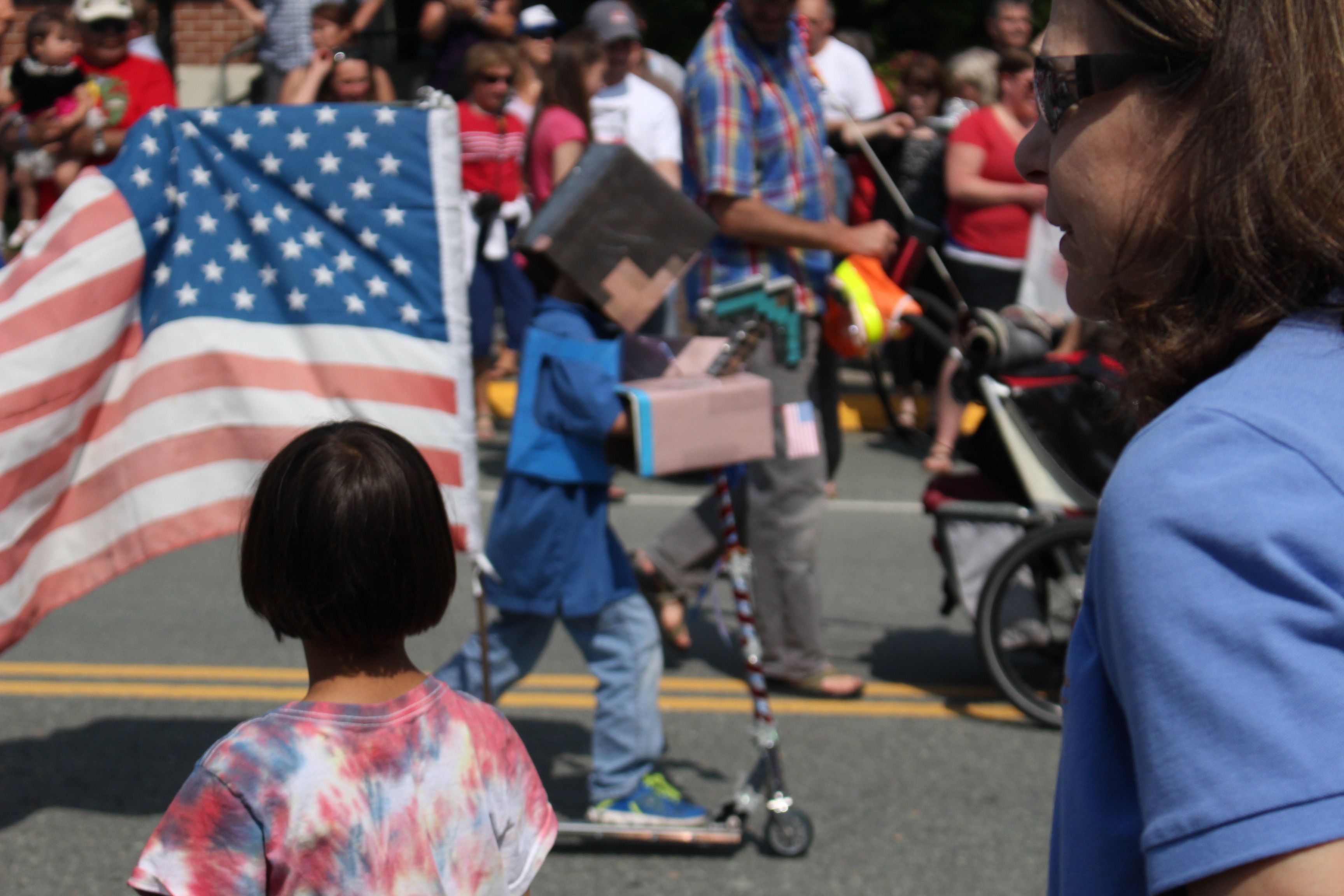
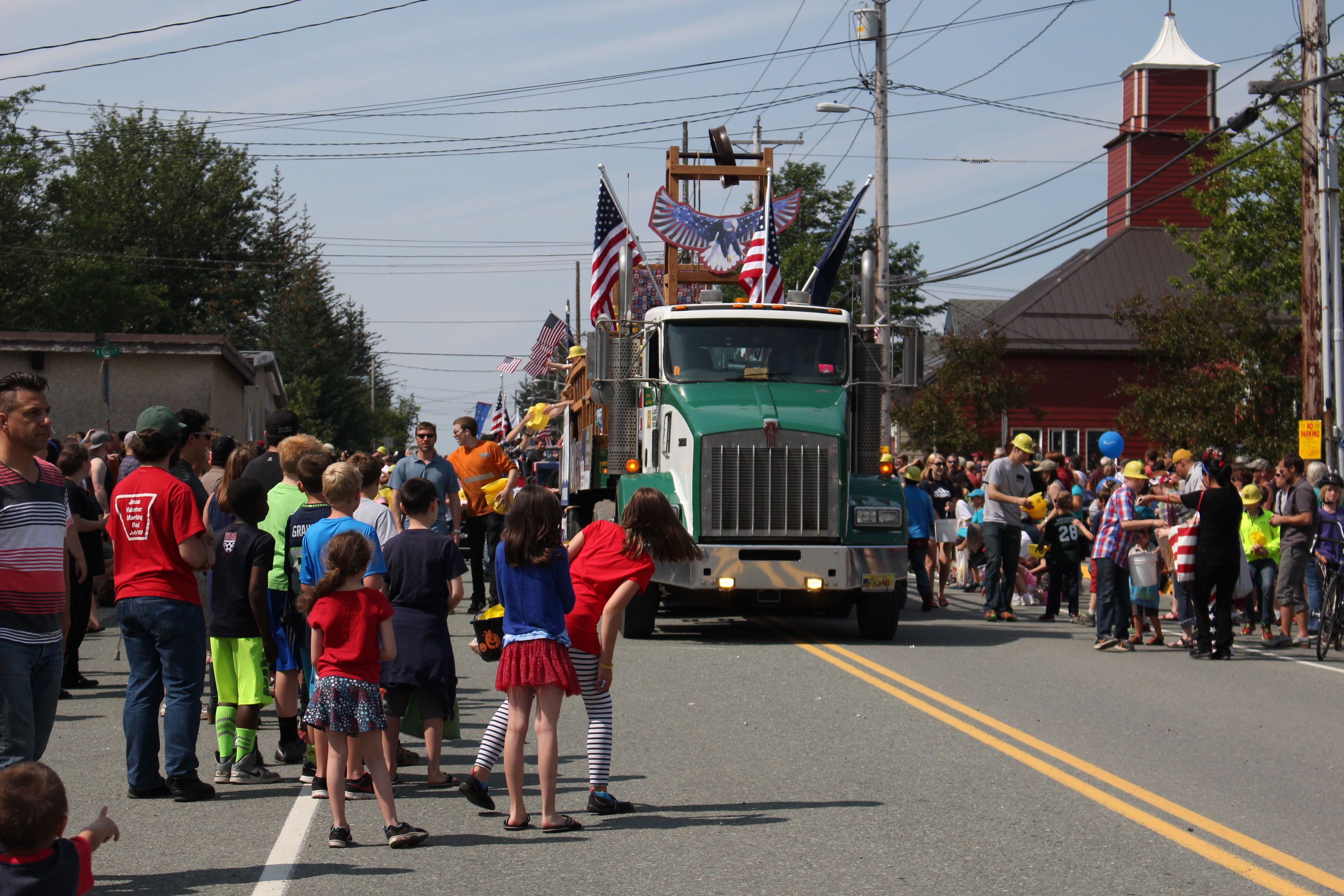
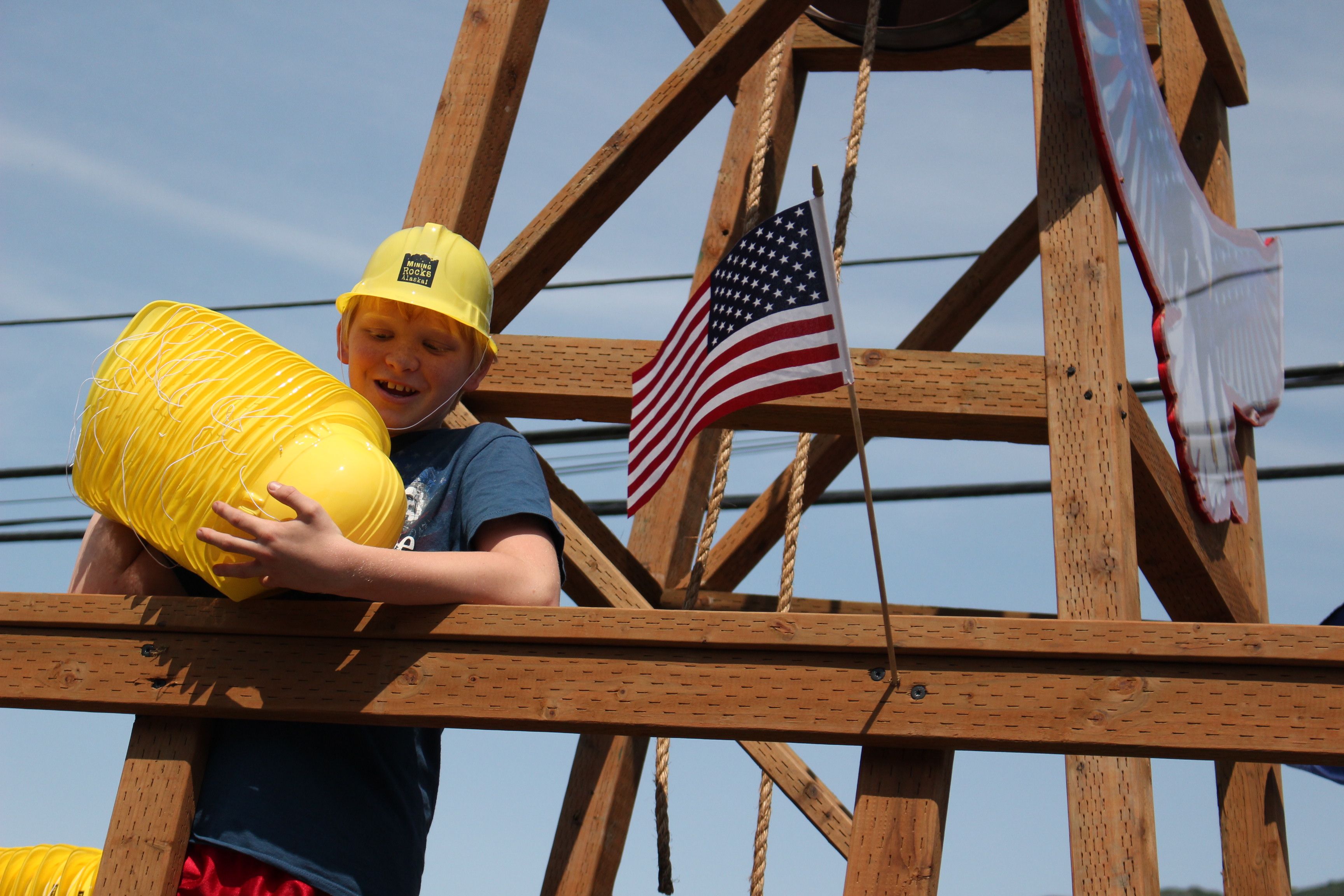
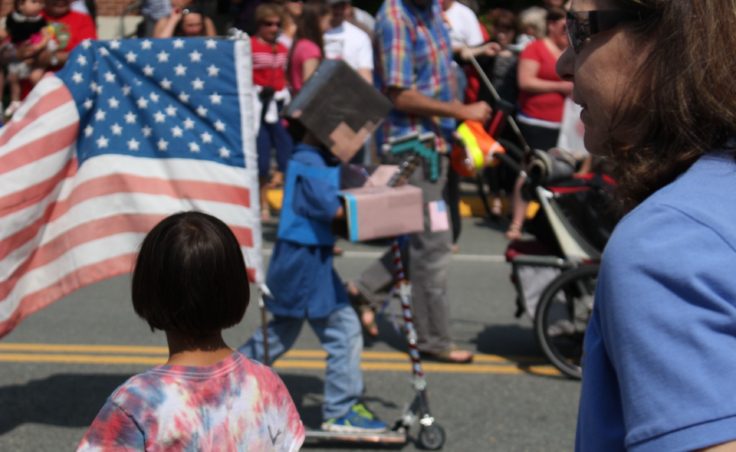 The Douglas Fourth of July parade in 2015. (Photo by Elizabeth Jenkins/KTOO)
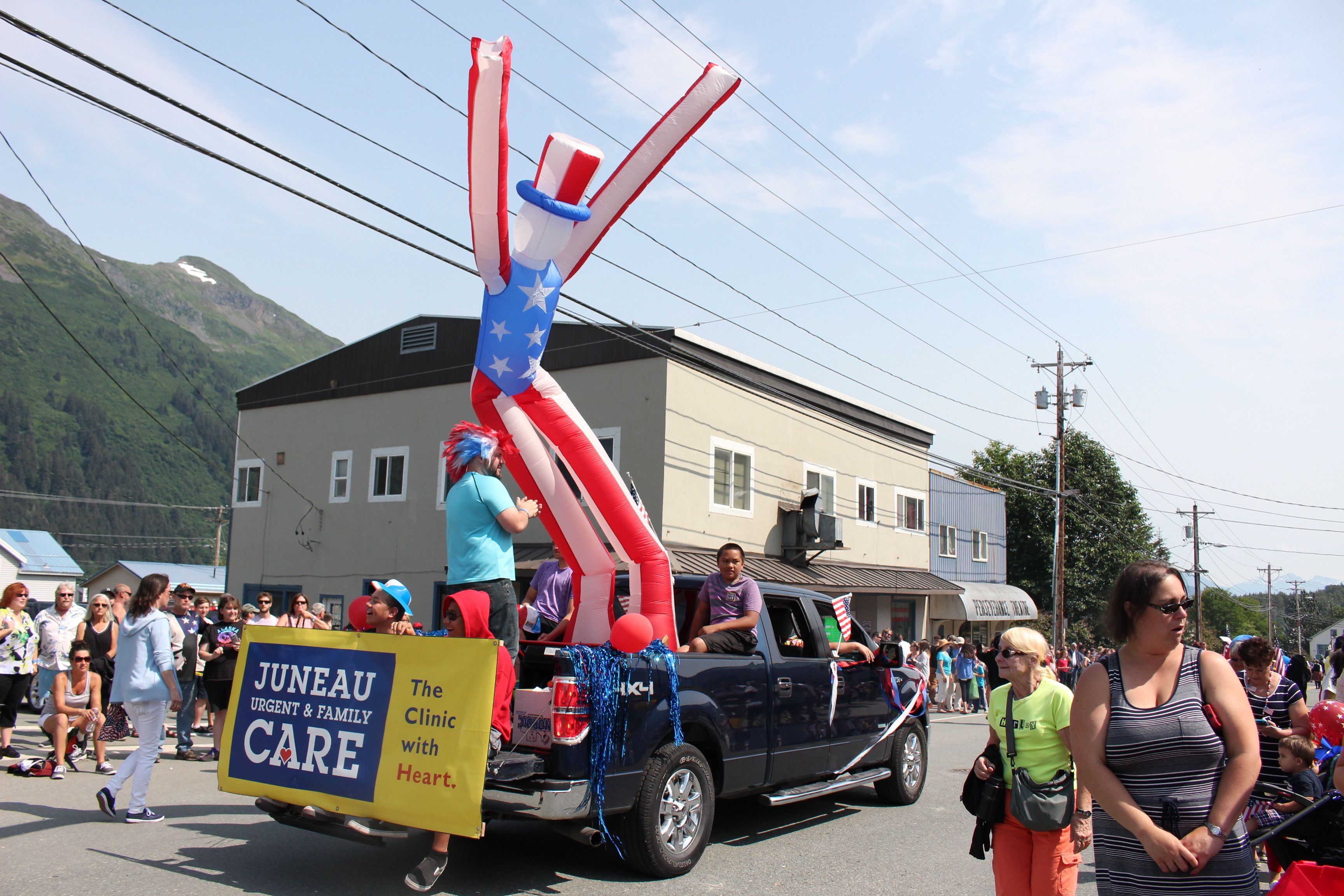
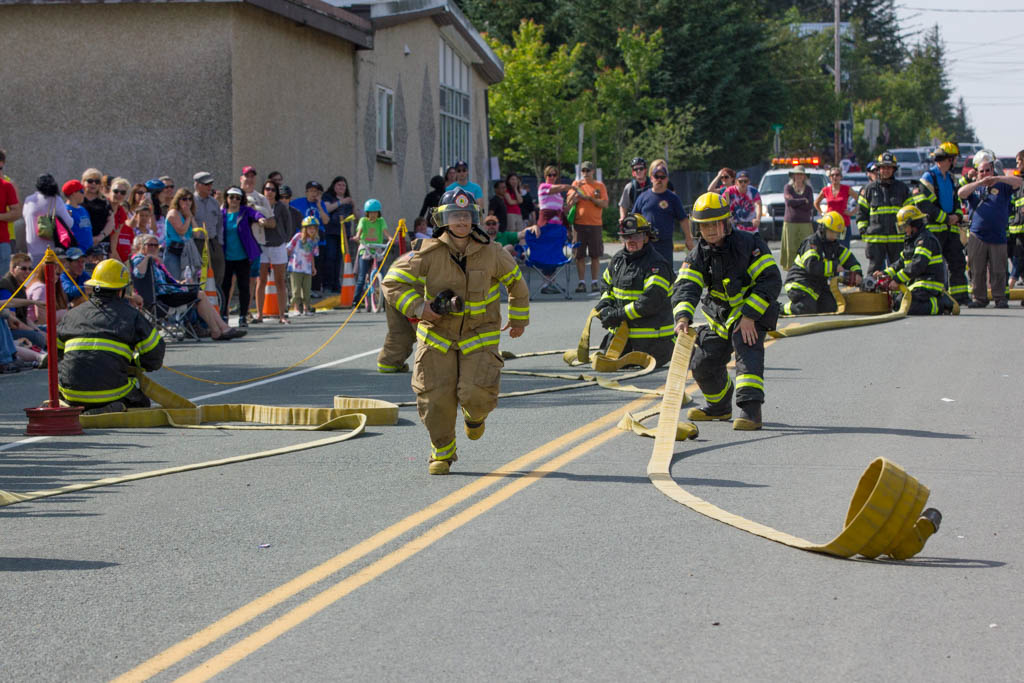
 Juneau Urgent and Family Care at the Douglas Fourth of July parade in 2015. (Photo by Elizabeth Jenkins/KTOO)