Juneau

Falling debris from Gastineau Apartments closes Pocket Park, demolition scheduled for November

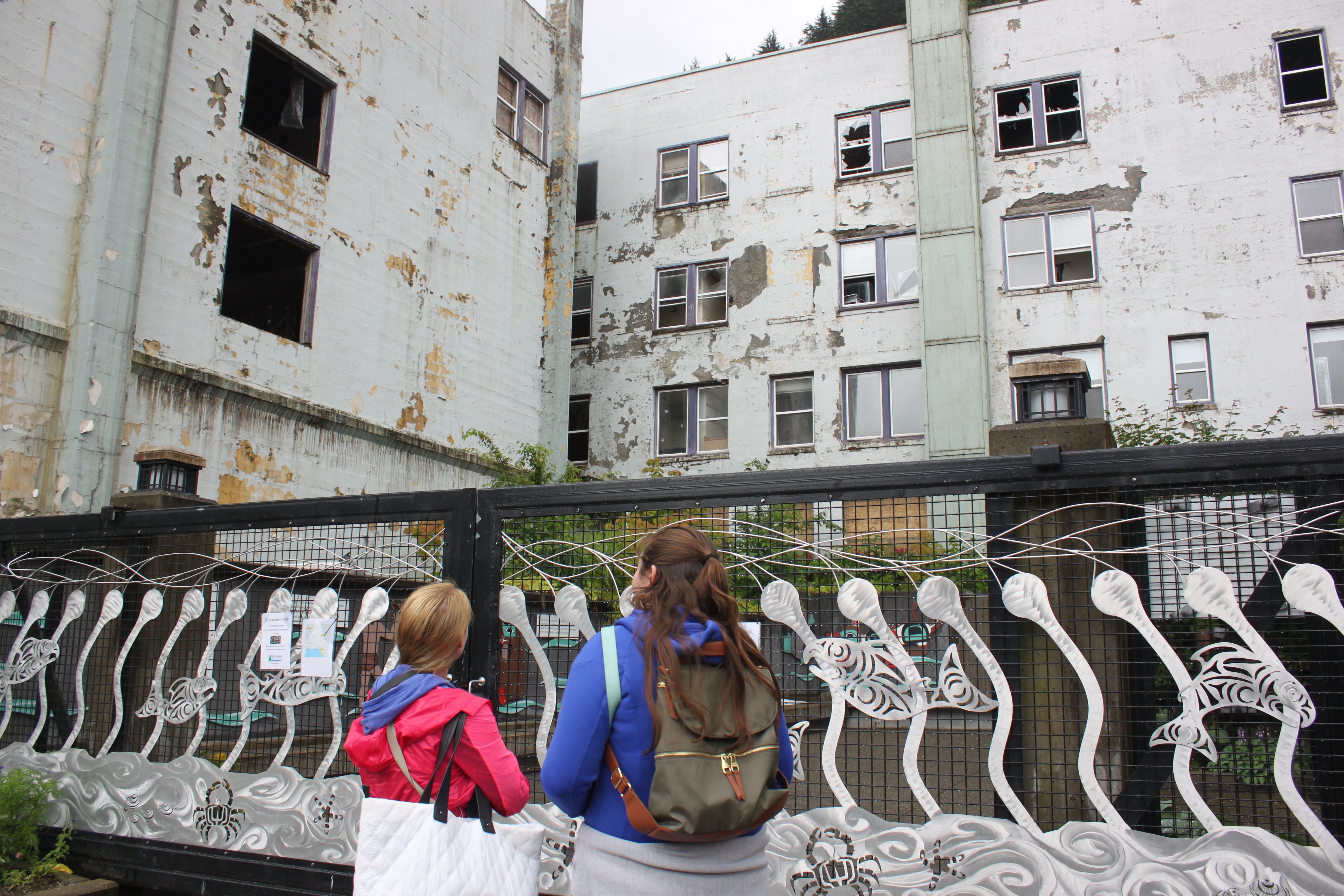
Tourists stand in front of the closed Gunakadeit Park, also known as Pocket Park, on Monday. (Photo by Lisa Phu/KTOO)

The burnt out Gastineau Apartments will finally be demolished by the end of November, according to Juneau’s city attorney. In the meantime, the city says the downtown buildings are a public safety concern. It’s temporarily closed the neighboring park due to falling debris.

The city closed Pocket Park at the end of last week.

“One of our workers was in there the other day and noticed some broken glass in the fountain area,” says Colby Shibler, park maintenance supervisor for Parks and Recreation, “and realized that it wasn’t a broken bottle and then looked up and noticed a bunch of the windows were broken out in the building there and realized that the glass was probably falling out of the window or had been broken out from the inside, it looked like, and was concerned about glass falling on people in the park.”

Dave Lane admits people have trespassed into the apartments in the past, but now he says the buildings are more secure. Lane does construction for the owners of Gastineau Apartments, James and Kathleen Barrett.

“We as of late, and that being the past 8 months, 9 months, have been patrolling more. Almost every evening, we come through and we make sure there’s no one in here at that time. We made sure everything is secure to the best of our abilities,” Lane says.
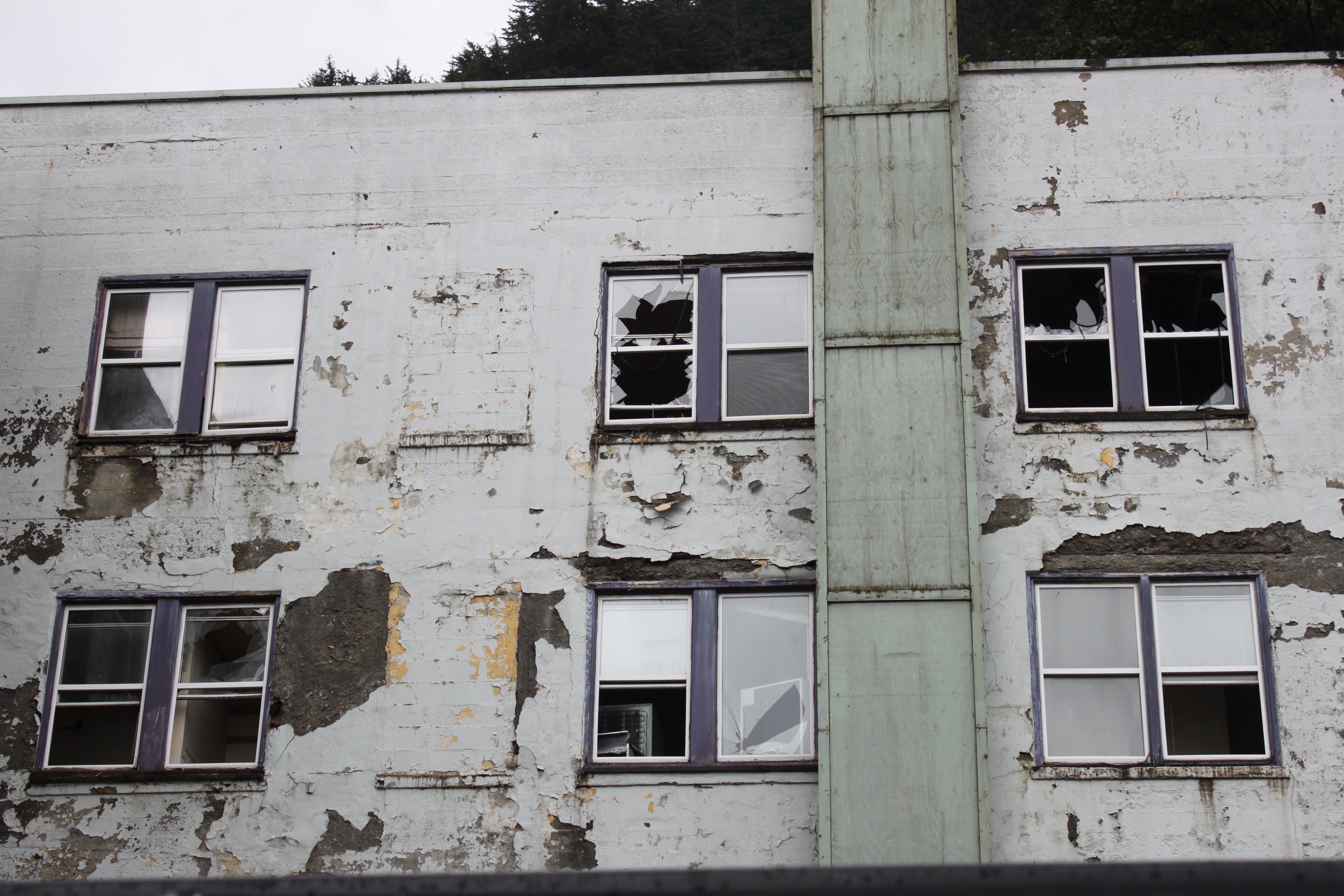
Gastineau Apartments still have unboarded, broken windows. (Photo by Lisa Phu/KTOO)

City building official Charlie Ford says the Barretts are being negligent with security.

“I had been working with Mr. Barrett to try and keep the building secured and all of a sudden, I noticed a side door was open and there was a ladder leaning up against the Rawn Way side of the building that was obviously used for access to get into the upper floors,” Ford says.

Ford sent a letter to the Barretts Monday asking them to board up more windows and clean up the remaining glass shards. He says if they don’t care of it, the city will.

Gastineau Apartments have been uninhabitable since a November 2012 fire. The city declared the buildings a public nuisance soon after. The Barretts have repeatedly missed deadlines for repairs or demolition. Part of the building caught on fire again in March.

The Barretts had until June 19 to turn in paperwork and plans for demolishing the buildings. When they failed to do that, the city sent a letter a week later stating that it would demolish them on its own. At the end of June, the Assembly appropriated $1.8 million to do that.

James Barrett says that’s hindered his own plans to sell or demolish the buildings. He says he’s talked to more than 30 companies.

“It’s just put me at a standstill when we thought we were moving forward. I’m going to see where the other contractors who are bidding are going to end up. That’s about all I can do at this point,” Barrett says.

Barrett says he’s seriously considering suing the city.
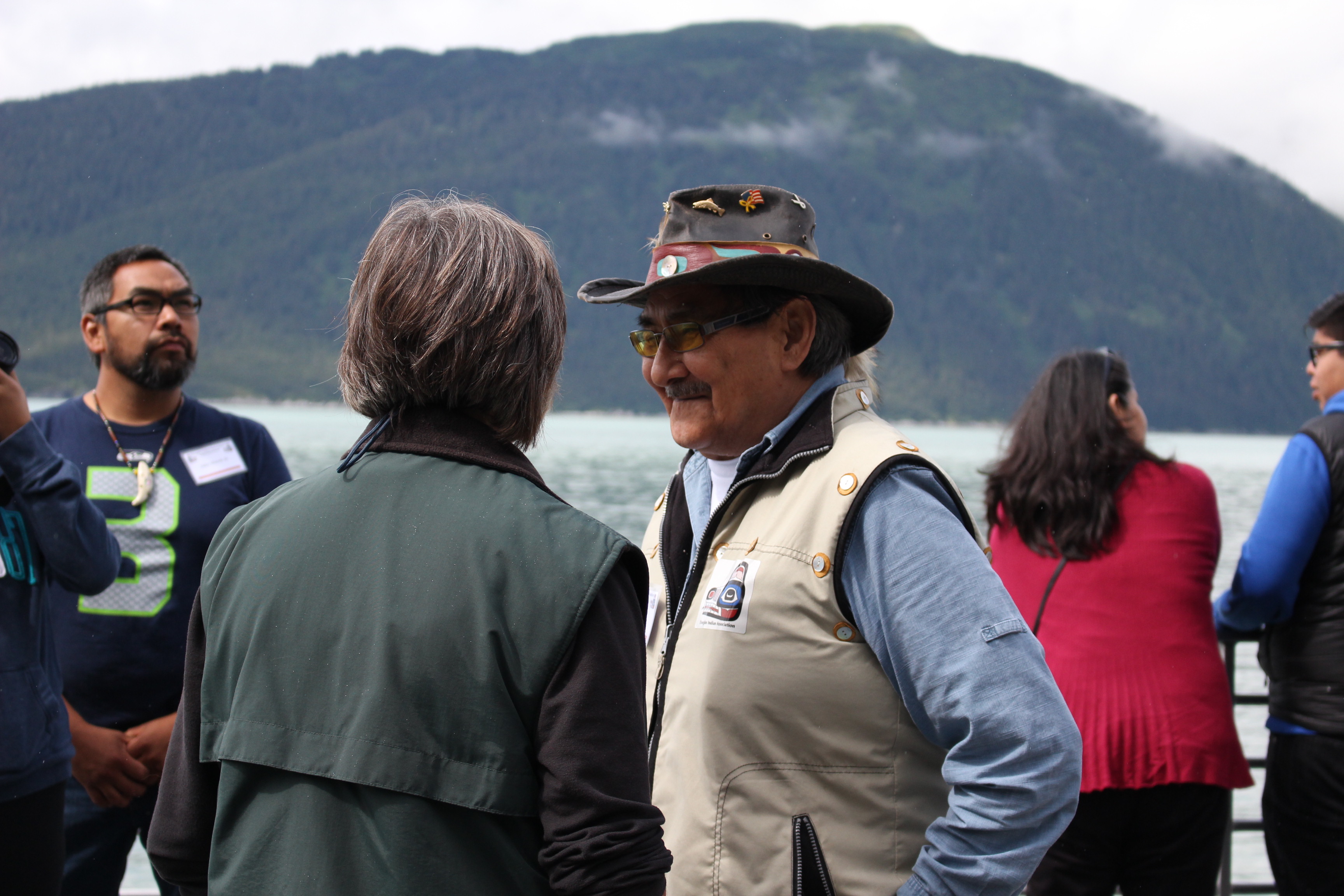
Douglas Indian Association charters cruise to the Taku Glacier

John Morris, a Douglas Indian Association Tribal Council Member, says people recognize him by his trademark hat. (Photo by Elizabeth Jenkins/KTOO)

On Sunday, the Douglas Indian Association invited tribal elders, elected officials and members of the press on a trip up to the Taku Glacier.

DIA members are Tlingit and originate from the T’aaḵu Kwáan and A’akw Kwáan clan — the original inhabitants of Douglas and Juneau.

The organization chartered an Allen Marine vessel to discuss transboundary mine issues and the culture of the T’aaku Kwáan. For some, the cruise was an opportunity to see their ancestors’ waters for the first time. Tillie Day is Tlingit of the T’aaku Kwáan

“We originate from Taku River and this is my first time seeing gillnetters and I worked in a cannery for how many years. I’ve never actually seen them do the gillnetting thing and this is pretty cool. There’s like 35 boats out here,” she said.

The cruise stopped at noon to observe the gillnet fleet put nets in the water to fish for sockeye.

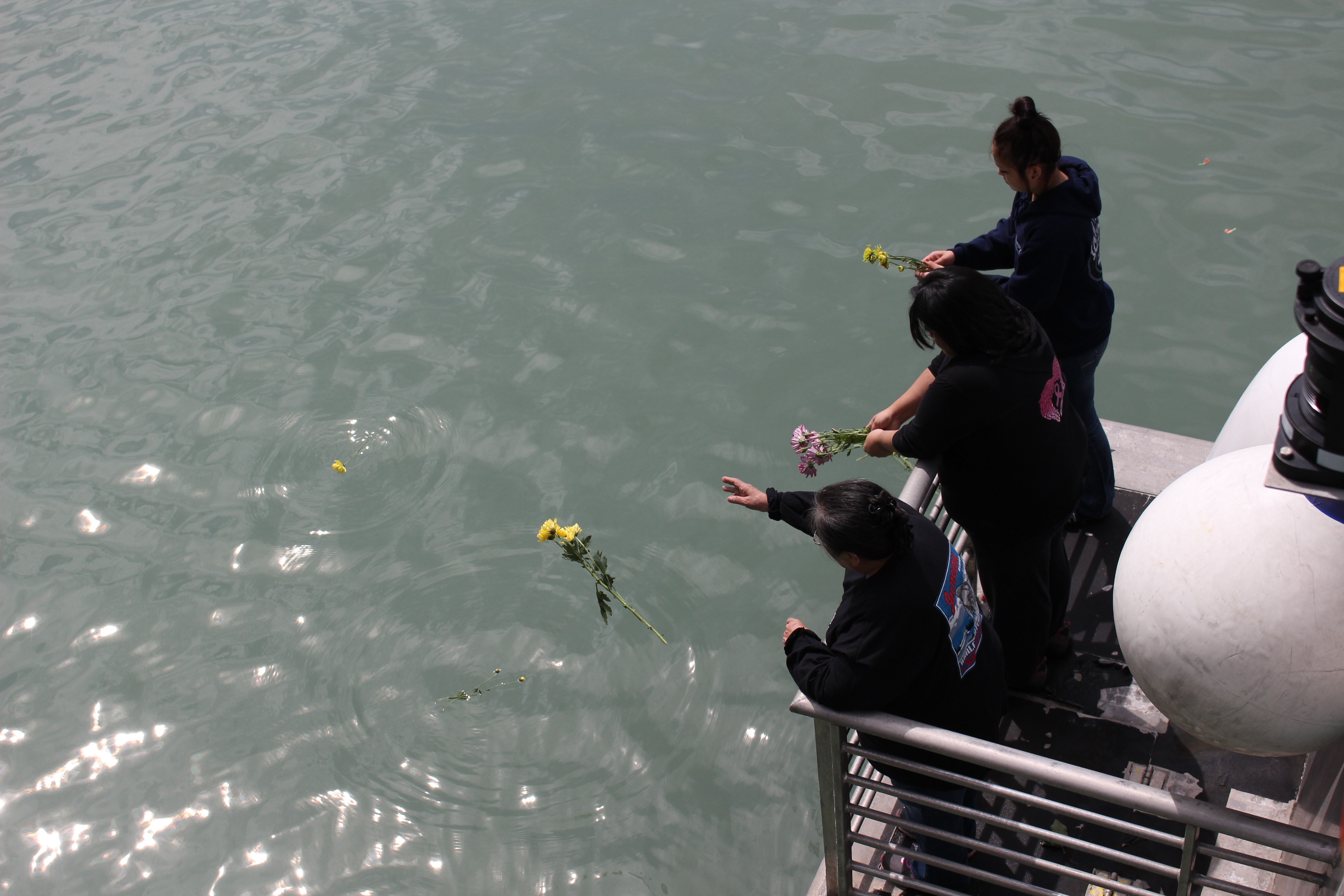
Family members aboard the Douglas Indian Association chartered cruise threw flowers into the water to honor deceased relatives. (Photo by Elizabeth Jenkins/KTOO)

Later, John Morris, a Douglas Indian Association Tribal Council member, spread his brother’s ashes at Taku Inlet near Davidson Point.  His brother died in the spring.

“And since then I’ve been in possession of his ashes. I went to council a couple of months ago and told them I thought this would be a good time to lay them on the river,” he said.

Other family members threw flowers in the water to honor the deceased.

Suspect duffel bag at Federal Building draws JPD bomb squad

A suspicious duffel bag left in the post office parking lot outside Juneau’s downtown Federal Building on Monday drew out the bomb squad.

Police cordoned off the area, but the building wasn’t evacuated.

Lt. Kris Sell with the Juneau Police Department says their initial call was “that a woman who was running for some unknown reason threw down a duffel bag and left it in the parking lot.”

Sell says the woman came back about 25 minutes later and tried to reclaim the bag, but at that point police erred on the side of caution and inspected the bag as if it were a bomb. It wasn’t.

The woman isn’t in custody and hasn’t been identified, though police want to talk to her and have surveillance video.

“If the woman who jettisoned the bag and then came back for it could contact us to talk to us, that would save us a little bit of leg work in the investigation,” Sell said. “We’d sure like to have a conversation with her and know what’s going go.  Not that she’s necessarily in any trouble.”

There was nothing illegal in bag. Sell says the investigation is ongoing.

Forest Service to allow more guided tourism at Mendenhall Glacier

Tour companies will soon be able to guide more visitors on Mendenhall Glacier trails. This group accessed the glacier from the West Glacier Trail. (Photo by Lisa Phu/KTOO)

The U.S. Forest Service is allowing commercial operators to bring more visitors on the lake and trails in the popular Mendenhall Glacier Recreation Area. Later this month, companies can compete for visitor spots through an application process.

Commercial operators have been allowed to bring about 462,000 visitors to the area. That number isn’t changing. Instead, the federal agency is shifting more spots to be used by visitors being guided on the trails and lake versus simply visiting the glacier by bus.

Jennifer Berger is in charge of special uses on the Juneau Ranger District. She says there’s more demand to bring visitors on guided trips than spots available.

“What we’re hearing is that people would like to engage in some active hiking, biking, and lake and river activities, and also get a little further afield from the immediate visitor center which can on certain days be rather crowded,” Berger says.

There are currently 28 permit holders for the Mendenhall Glacier Recreation Area, most just provide transport. The bidding process will allow new and existing guide companies to bring more visitors to the glacier.

“We are going to advertise the prospectus far and wide because we know that there may be business from across the state, there may be businesses from outside the state, and we would want all of them to have an opportunity to apply,” Berger says.

About 200,000 visitor spots will be up for competition. It’s been 19 years since the Forest Service has made so many spots available.

The Forest Service plans to open the bidding process later this month and companies will have 60 days to turn in an application.

Adventure-bound Juneau couple moves into $8,600 tiny house on wheels

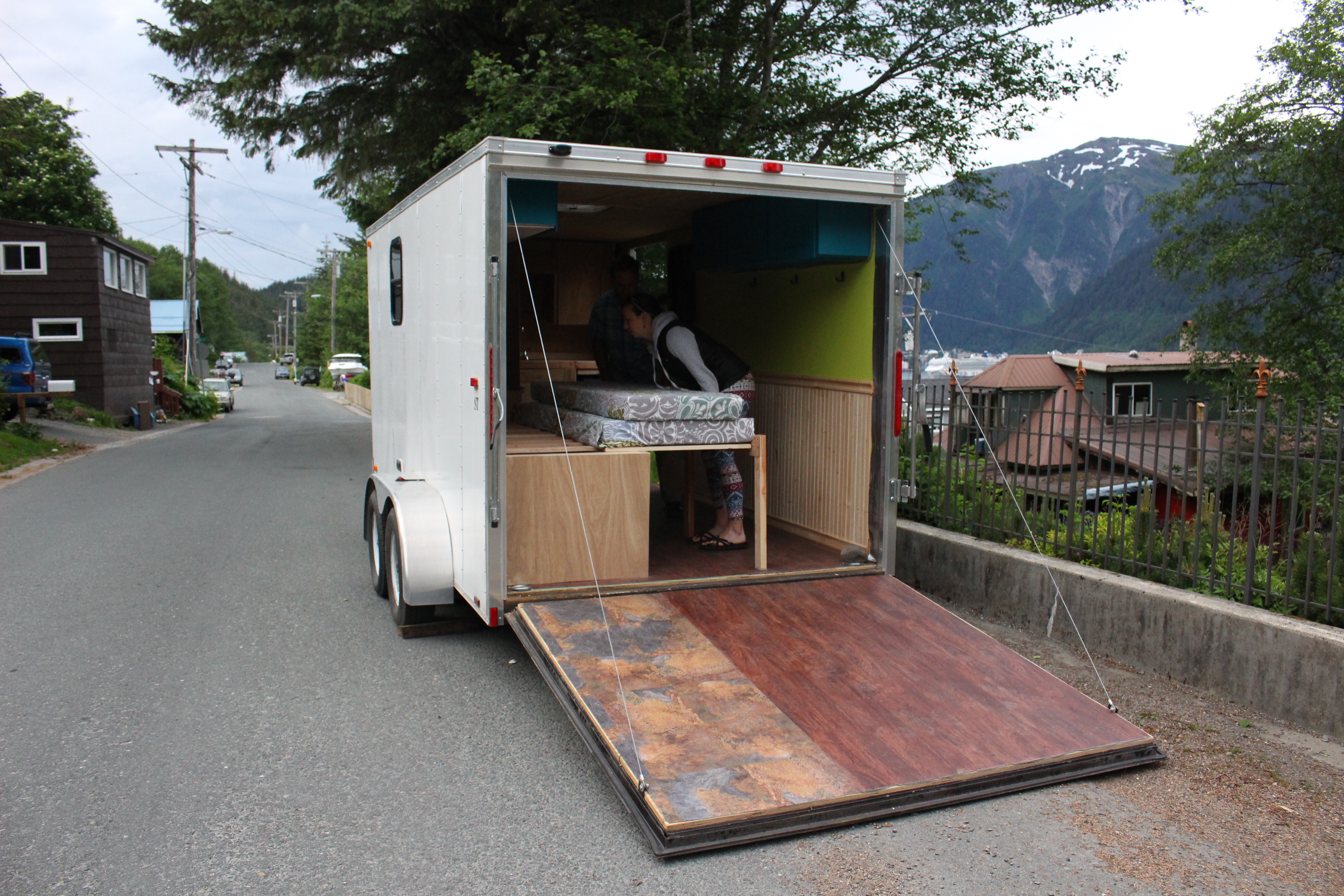
Curtiss Stedman and Kelly Tousley's new home. (Photo by Elizabeth Jenkins)
Curtiss O’Rorke Stedman and Kelly Tousley’s new tiny home. (Photo by Elizabeth Jenkins)

A 1,200-square-foot house is considered small by today’s standards. But one Juneau couple is leaving their home for something with less than 100 square feet of livable space. They’re hitting the road, but that doesn’t come without sacrifice.

On the curb in front of a brown house sits a bookshelf, a suitcase and empty picture frames. Passersby might think the tenants are moving out or spring cleaning.

“We don’t really have enough time to do a true yard sale so this is our, like, piecemeal please-everybody-come-take-our-stuff-so-we-can-move-into-98-square-feet,” Kelly Tousley says with a laugh.

There’s also a sign: “Knock on the door for more items for sale in the house.”

Kelly and her boyfriend are getting rid of nearly everything they own to fit into a tiny house on wheels parked outside their rental. From the outside, it looks like a glossy white travel trailer.

“I mean, picture opening up the back of a U-Haul and that’s what we started with,” she says.

But the inside is more like a home with vinyl hardwood floors and lime green walls. They’ll pull the trailer with a truck for a yearlong trip through the Alaska road system and down to the Lower 48.

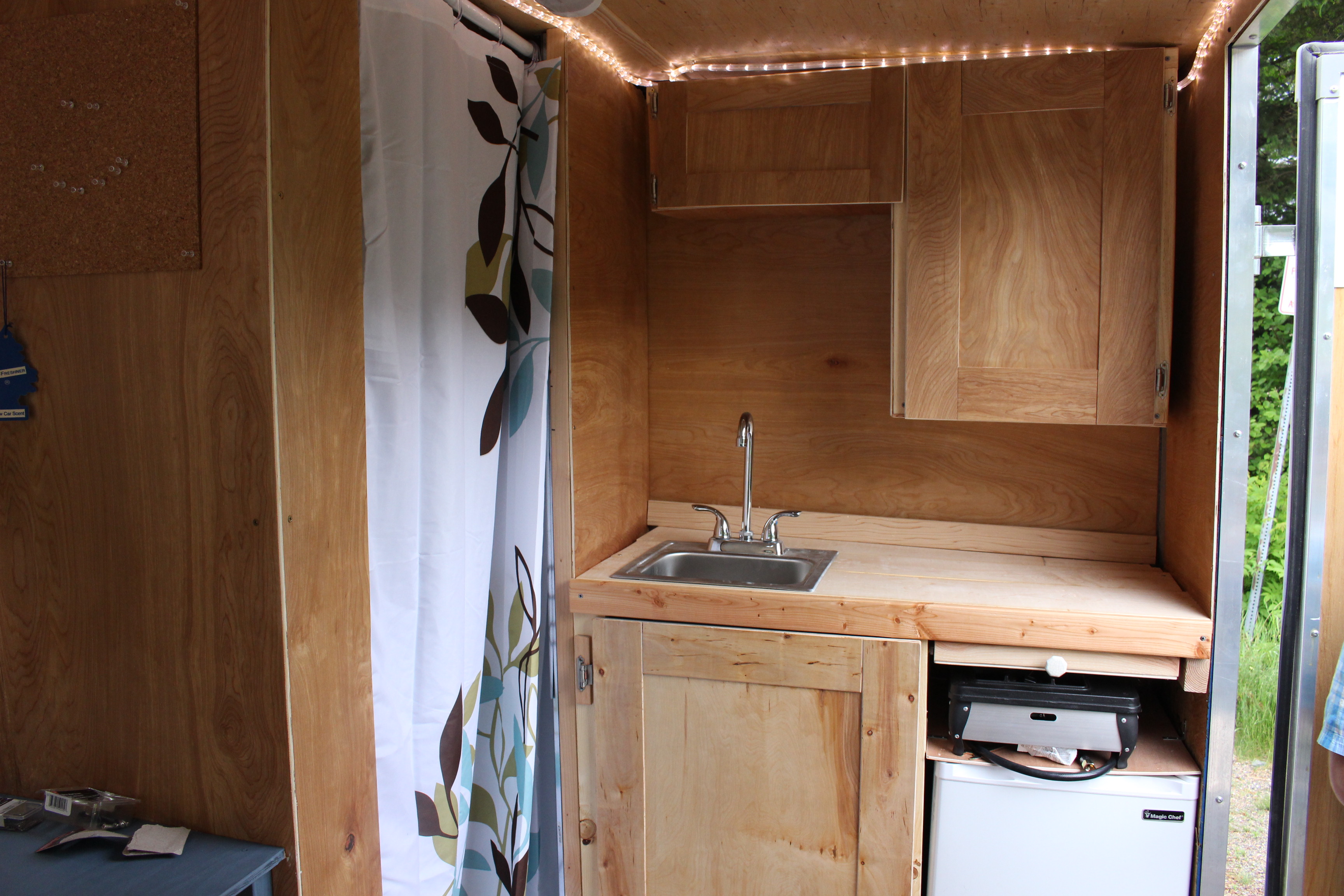
The small bathroom is separated from the kitchen by a curtain. (Photo by Elizabeth Jenkins/KTOO)
A curtain separates the small bathroom from the kitchen. (Photo by Elizabeth Jenkins/KTOO)

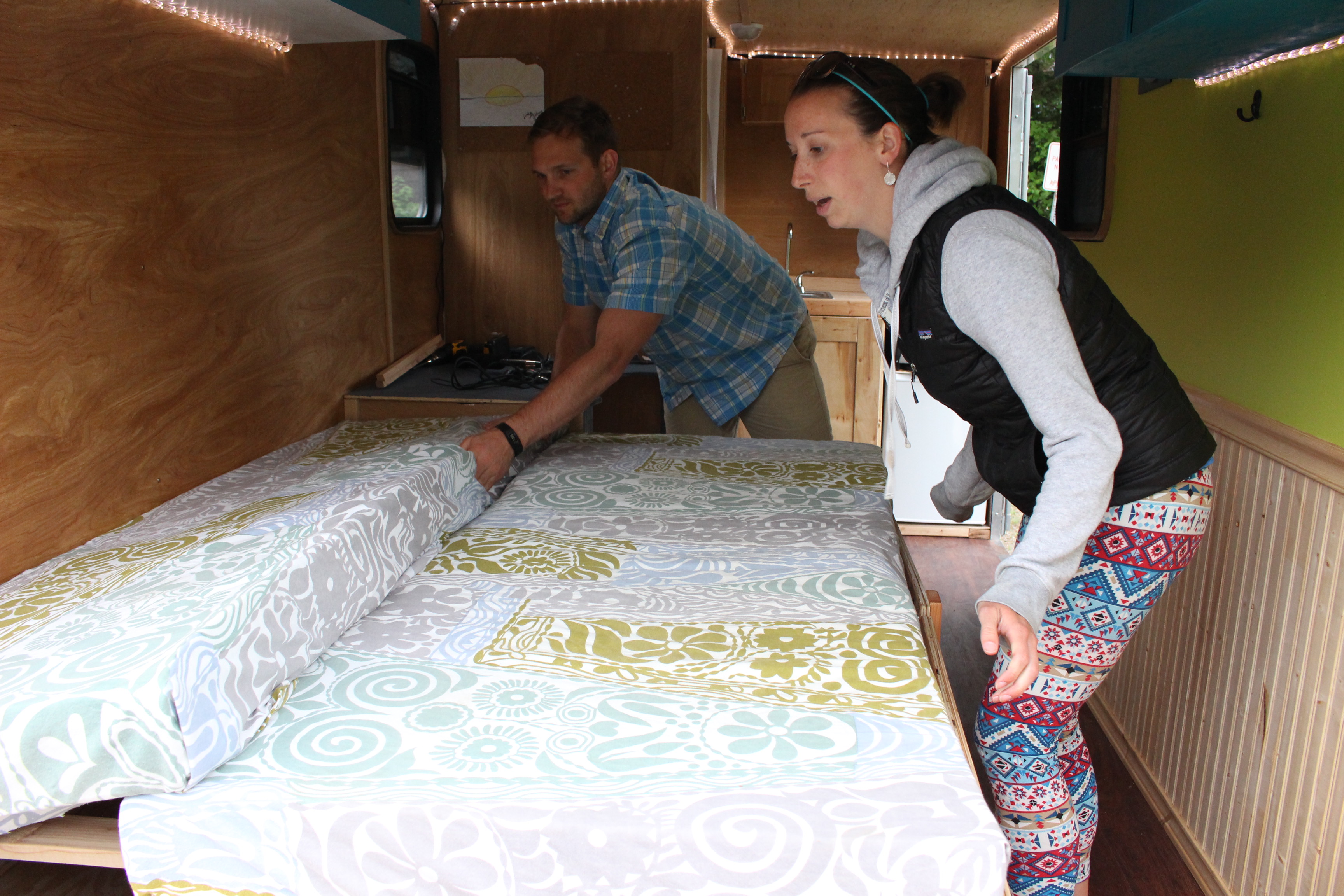
For such a small space, it’s remarkably plush. A bench folds out into a queen-sized bed.

“We had the conversation of, if we’re living in this and this is our house, we don’t want to be sitting on milk crates with cushions on top of them and feeling like we’re going to get slivers in our fingers when we touch the walls,” she says.

Electricity runs off solar panels. There’s a small bathroom separated by a curtain and a kitchenette but no running water.

It’s their version of the tiny house movement, downsizing and taking a do-it-yourself approach to home ownership. Many tiny houses are palaces compared to their trailer. But the couple needed something smaller and road worthy. It only cost $8,600.

“The coolest thing that I built to date was a birdhouse in sixth grade,” says Kelly’s boyfriend, Curtiss O’Rorke Stedman. “And to look at a box and say we can turn this into a house, that was daunting. And that fact that it actually worked so far is great.”

Curtiss is a high school English teacher and musician. Last summer, he toured the interior for his solo music project, Cousin Curtiss.

“So when I got back, I said, ‘You know, this is it. I’m hitting the road. I want to do this full time,’ and Kelly was 110 percent behind me all the way,” he says.

Kelly remembers it differently. She thought he was talking about taking a vacation.

“Whereas, I think when the conversation happened, Curtiss more so took it as I’m hitting the road with him full time,” she says. “And I think it took a couple of months of that conversation to happen. Is it realistic for both of us to hit the road, for both of us to quit our jobs?”

The bench in the "living room area" also doubles as a bed. (Photo by Elizabeth Jenknis/KTOO)
Curtiss O’Rorke Stedman and Kelly Tousley’s “living room” bench doubles as a bed. (Photo by Elizabeth Jenkins/KTOO)

Together, they decided it was. Kelly would quit her job working with autistic kids. They would sell everything and go on tour indefinitely. Traveling from Tok to Chicken, then down south through Montana and Michigan.

Friends and family had mixed reactions. But no one said it was a terrible idea, don’t do it.

“I don’t think anybody said that,” he says. “I think a few people may have said, ‘Why would you do that?’ They didn’t understand it.”

One of those people was Kelly’s grandfather, a professional builder. Kelly recounts telling him about their first big project.

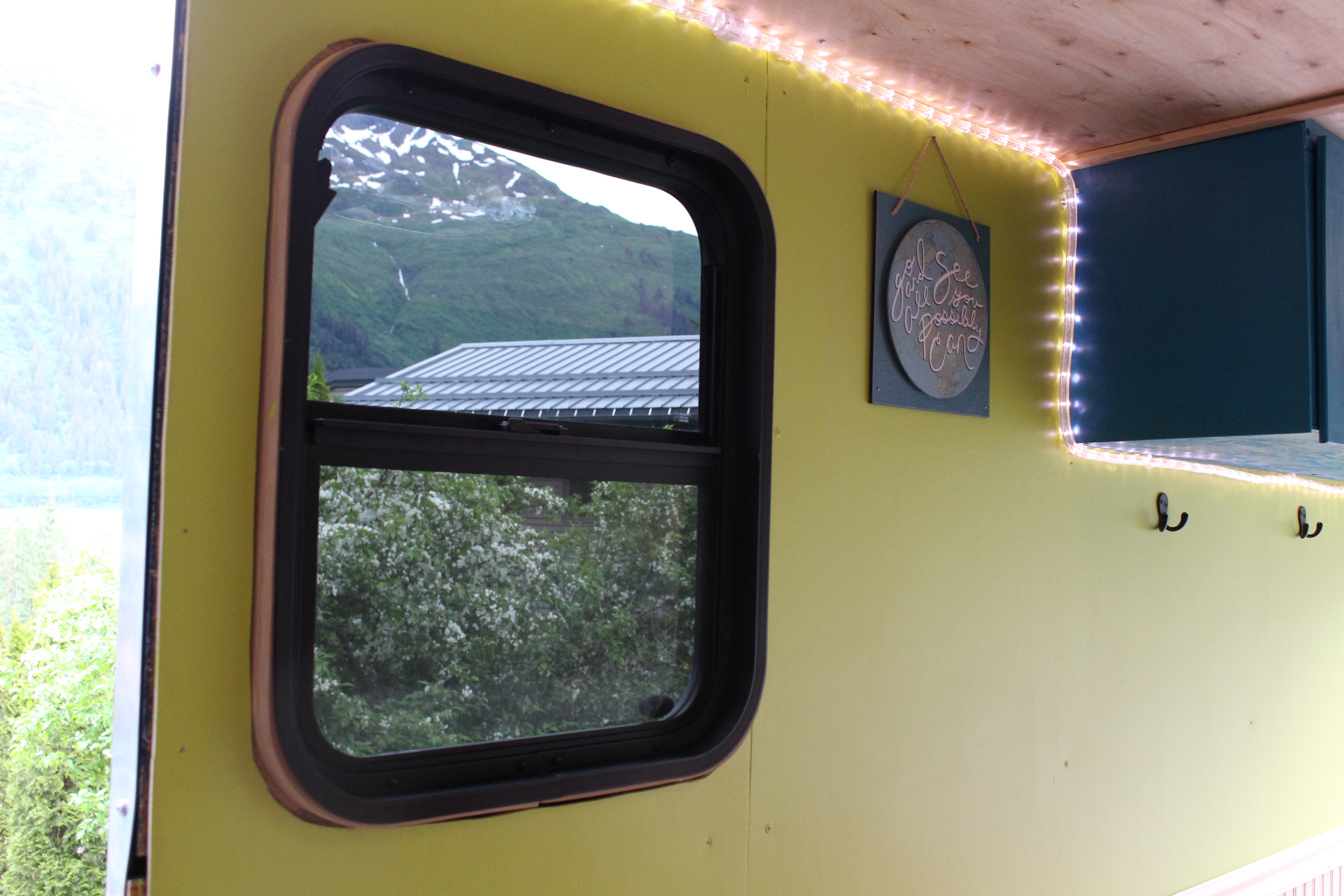
“‘Grandpa, we’re going to cut in windows. We’re going to install our own windows.’ And he said, ‘You can’t do that. You can’t install windows in a trailer. That doesn’t make any sense.’ And I sent a picture of us installing the first window and he said, ‘Huh, they did it!’”

Window installation wasn't easy in the 98 square foot trailer. (Photo by Elizabeth Jenkins/KTOO)
Window installation wasn’t easy in the 98-square-foot trailer. (Photo by Elizabeth Jenkins/KTOO)

They completed the tiny house in eight months. Then came the time to purge all their stuff. For Curtiss, the most difficult thing to give away was his plants, grown from his great-great-grandmother’s clippings.

Kelly says it was her clothes.

“You know, I’ll look at a shirt and be like, ‘I love that sweatshirt! I wore that every home track meet in high school.’ But the reality is I have those memories of track and I don’t need that sweatshirt to hold onto,” she says.

Kelly is giving the tiny lifestyle a year. After that, she says she’ll reassess.

Curtiss wrote the song “Here and Now” about missing Kelly on tour. But now he won’t have to. The couple is setting off for miles of open road, pulling behind them what they’ll call home.

“I think it’s a blessing to be able to ditch everything you own and be able to take off in true nomad style like humans used to be and go hunter-gatherer across the country looking for adventure,” he says.

To see where Kelly and Curtiss are on their journey, visit paygasnotrent.com

A look inside sex offender rehab at Juneau’s prison

(Photo by Lisa Phu/KTOO)

Since 2010, sex offenders in Alaska prisons have been able to opt in to an intensive treatment program at Lemon Creek Correctional Center in Juneau, but it’s unclear if it reduces recidivism.

A 2012 University of Alaska Anchorage Justice Center publication identified a statewide benchmark; of about 240 sex offenders released from Alaska prisons in 2008, 2 percent were reconvicted on sex offenses within two years.

Here’s a look inside the treatment program at Lemon Creek Correctional Center.

Andrew Peabody has served about 27 years in prison for sexual assault. He said he’s scheduled to be released in February. Peabody said he used to feel numb and didn’t want to deal with what he’d done.

During an event at Lemon Creek Correctional Center earlier this year, Peabody said the sex offender treatment program is teaching him empathy “for my victim. You have to write a letter to that person realizing what you’ve become to that person, how you affected that person’s life.”

The letters aren’t actually sent.

Licensed clinical counselor Malcolm Nichols created and runs the sex offender treatment program at the Juneau prison. Nichols has a history of working with high risk populations. Prior to Lemon Creek, he ran a sex offender treatment program in Columbus, Ohio.

Licensed clinical counselor Malcolm Nichols joined Lemon Creek Correctional Center in 2010. He created and runs the sex offender treatment program. (Photo by Lisa Phu/KTOO)

The 2-year program is a combination of structured group therapy and individual counseling. Some inmates are also prescribed medication for sexual urges. Nichols says the program is not supposed to be a cure. The goal is for inmates to learn to control and manage risk factors that could lead to sexual assaults.

Another assignment is writing a narrative describing the period of time leading up to their crime.

“It starts a year out from their sexual crime and then takes them 9 months, 6 months, 3 months and then 24 hours before it happened and this can be very difficult and dramatic,” Nichols said.

It’s supposed to be self-revealing. Nichols doesn’t let inmates get away with denying or minimizing what they’ve done. These are tactics, he says, to avoid change. Nichols recounted what happened when one inmate described his offense during a recent group session.

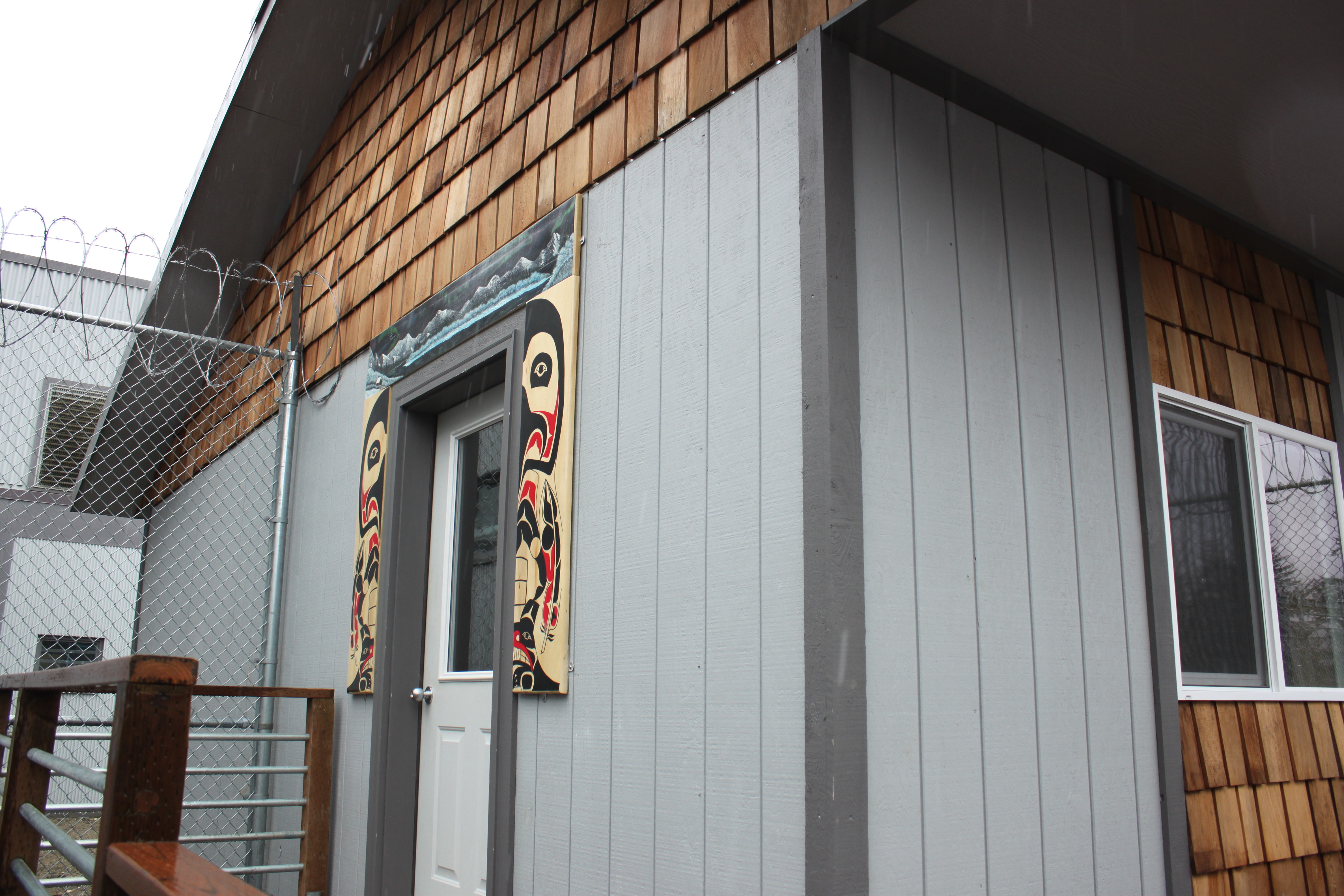
Inmates in the program helped build this exterior classroom for their group sessions. (Photo by Lisa Phu/KTOO)

“He was telling it from his own personal position but I always want them to also give the objective, what actually happened, which he didn’t. So when I confronted him, he sort of got extremely dysphoric and broke into some deep sobbing and the whole group [got quiet]. You could hear a pin drop,” Nichols said.

The Lemon Creek Correctional Center program treats 24 men at a time. Inmates enter the program when they’re within 3 years of being released. All have been convicted of at least one sex assault and have admitted to at least one. Nichols says some have a long history of committing many sexual assaults. One even claimed to have committed hundreds.

“Some of the high risk guys have a history of sex offending going way back into their adolescence or even childhood,” Nichols said.

Alaska leads the country for the rate of reported forcible rape, according to FBI crime statistics. There are about 770 sex offenders in the Alaska prison system, which Nichols says represents a fraction of total offenders.

He says it takes a lot of patience to work with sex offenders.

“I don’t see people as necessarily the sum of their parts. I think that people are capable of choice and that I have to not shame them or ostracize them or let them think that they’re not human or they’re not incapable of change,” Nichols said.

The work takes its toll. When Nichols leaves the office he tries to completely disengage with work. To avoid stress, he bikes and exercises regularly.

And there’s a lot at stake when inmates leave the treatment program and are released into the community.

“We all in this field live in dread of one of our guys getting out and committing some kind of horrendous sexual offense,” Nichols said. “And I’ve had some extremely dangerous inmates who, as they were leaving the program, I was keeping my fingers crossed.”

So far, of the 52 who’ve completed the program and been released, one is back in prison for a sexual offense.

Site notifications
Update notification options
Subscribe to notifications