Lingít Word of the Week

Lingít Word of the Week: Kichx̱.anagaat — Rainbow

Rainbow near the Wrangell Narrows. (Photo by Angela Denning/CoastAlaska)

This is Lingít Word of the Week. Each week, we feature a Lingít word voiced by master speakers. Lingít has been spoken throughout present-day Southeast Alaska and parts of Canada for over 10,000 years.

Gunalchéesh to X̱’unei Lance Twitchell, Goldbelt Heritage Foundation and the University of Alaska Southeast for sharing the recorded audio for this series.

This week’s word is kichx̱.anagaat, or rainbow. Listen to the audio below to learn how to say kichx̱.anagaat.

The following transcript is meant to help illustrate the words and sentences. 

Ḵaakal.áat Florence Marks Sheakley: Kichx̱.anagaat. 

That means rainbow.

And here is a sentence:

Ḵaakal.áat Florence Marks Sheakley: Séew daak wustáanidáx̱ áyá kichx̱.anag̱aat yéi tusatínch

It is from the rain that we always see rainbows.

You can hear each installment of Lingít Word of the Week on the radio throughout the week. 

Find biographies for the master speakers included in this lesson here.

Learn more about why we use Lingít instead of Tlingit here.


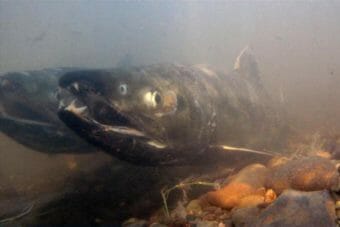
Lingít Word of the Week: Téel’ — chum or dog salmon

Two chum salmon show the distinctive stripes that emerge after they enter freshwater to spawn. Chum salmon are important to the diets of Indigenous residents of Western Alaska. (Photo provided by NOAA)

This is Lingít Word of the Week. Each week, we feature a Lingít word voiced by master speakers. Lingít has been spoken throughout present-day Southeast Alaska and parts of Canada for over 10,000 years.

Gunalchéesh to X̱’unei Lance Twitchell, Goldbelt Heritage Foundation and the University of Alaska Southeast for sharing the recorded audio for this series.

This week’s word is téel’, or chum or dog salmon. Listen to the audio below to learn how to say téel’.

The following transcript is meant to help illustrate the words and sentences. 

Keiyishí Bessie Coolie: Téel’. 

That means chum or dog salmon.

Here are some sentences:

Keiyishí Bessie Cooley: Téelʼ tsú, Deisleent dax̱ uxʼaakch, yéis yít.

Dog Salmon, too, they swim to Teslin in the fall.

Kooshdáakʼu Bill Fawcett: Ḵúnáx̱ yak’éi áwé wé téel’ útlx̱i

Dog salmon is really good boiled fish. 

Ḵaakal.áat Florence Marks Sheakley: Aangoon yá Lʼeeneidí has du ádix̱ sitee yá téelʼ.

In Angoon the dog salmon belongs to the Lʼeeneidí.

Kaxwaan Éesh George Davis: Téelʼ yeisxʼ áwé has yax̱ ya.aa, hóochʼi aayí 

Dog salmon, in the fall, they complete their migration. They are the last one. 


You can hear each installment of Lingít Word of the Week on the radio throughout the week. 

Find biographies for the master speakers included in this lesson here.

Learn more about why we use Lingít instead of Tlingit here.

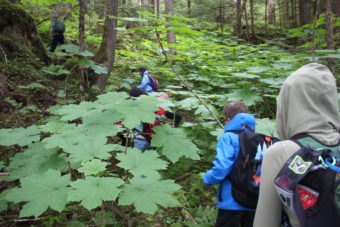
Lingít Word of the Week: S’áxt’ – devil’s club

Kids hike by devil’s club on Juneau’s Auke Lake Trail. (Photo by Lisa Phu/KTOO)

This is Lingít Word of the Week. Each week, we feature a Lingít word voiced by master speakers. Lingít has been spoken throughout present-day Southeast Alaska and parts of Canada for over 10,000 years.

Gunalchéesh to X̱’unei Lance Twitchell, Goldbelt Heritage Foundation and the University of Alaska Southeast for sharing the recorded audio for this series.

This week’s word is s’áxt’, or devil’s club. Listen to the audio below to learn how to say s’áxt’.

The following transcript is meant to help illustrate the words and sentences. 

Keihéenák’w John Martin: S’áxt’. 

That means devil’s club.

Here are some sentences:

Keihéenák’w John Martin: Náakw yáx̱ x̱á atoolgein yá s’axt’.

Itʼs like medicine when we see devil’s club. 

Keiyishí Bessie Cooley: Sʼáxtʼ, a daa yalikʼáts. 

Devilʼs club bark has sharp things around it.

Kooshdáakʼu Bill Fawcett: Yak’éi áwé yéi aa ysaneiyí wé s’áxt’

Itʼs good the way you worked on some of the devil’s club. 

Ḵaakal.áat Florence Marks Sheakley: Naakw yís yéi daadunéi yá sʼáxʼt.

People work on devilʼs club to make medicine.

Kaxwaan Éesh George Davis: Náakw sákw awliyéx̱ wé sʼáxtʼ

They made devil’s club into what will become medicine.


You can hear each installment of Lingít Word of the Week on the radio throughout the week. 

Find biographies for the master speakers included in this lesson here.

Learn more about why we use Lingít instead of Tlingit here.

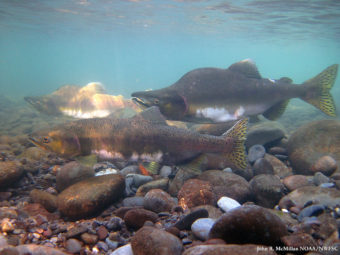
Lingít Word of the Week: Cháas’ — pink salmon

Fishing fleets caught 219 million pink salmon last year. (Photo courtesy NOAA fisheries)

This is Lingít Word of the Week. Each week, we feature a Lingít word voiced by master speakers. Lingít has been spoken throughout present-day Southeast Alaska and parts of Canada for over 10,000 years.

Gunalchéesh to X̱’unei Lance Twitchell, Goldbelt Heritage Foundation and the University of Alaska Southeast for sharing the recorded audio for this series.

This week’s word is cháas’, or pink salmon. Listen to the audio below to learn how to say cháas’.

The following transcript is meant to help illustrate the words and sentences. 

Kooshdáakʼu Bill Fawcett: Cháas’. 

That means pink salmon, or humpy.

Here are some sentences:

Kooshdáakʼu Bill Fawcett: Ḵúnáx̱ áwé yaawa.aa wé cháas’

The pink salmon really flowed along.

Keiyishí Bessie Cooley: Tsʼas éilʼká káxʼ áwé yéi dag̱aatee, cháasʼ

The pink salmon are only on the saltwater coast.

Ḵaakal.áat Florence Marks Sheakley: Yá Yaakwdáat ku.oo has du ádix̱ sitee ya cháasʼ.

The pink salmon belongs to the people of Yakutat.

Keihéenák’w John Martin:   Kwáashk’i Ḵwáan yéi s duwasáakw cháas’.

The Kwáashkʼi Ḵwáan are called humpback salmon.


You can hear each installment of Lingít Word of the Week on the radio throughout the week. 

Find biographies for the master speakers included in this lesson here.

Learn more about why we use Lingít instead of Tlingit here.

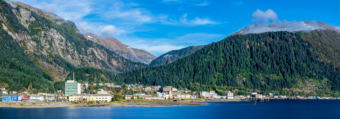
Lingít Word of the Week: G̱agaan — sun

Juneau on a rare sunny day. (Photo by Heather Bryant/KTOO)

This is Lingít Word of the Week. Each week, we feature a Lingít word voiced by master speakers. Lingít has been spoken throughout present-day Southeast Alaska and parts of Canada for over 10,000 years.

Gunalchéesh to X̱’unei Lance Twitchell, Goldbelt Heritage Foundation and the University of Alaska Southeast for sharing the recorded audio for this series.

This week’s word is g̱agaan, or sun. Listen to the audio below to learn how to say g̱agaan.

The following transcript is meant to help illustrate the words and sentences. 

The word this week is g̱agaan.

Keiyishí Bessie Cooley: g̱agaan. 

That means sun.

And here are some sentences.

Keiyishí Bessie Cooley: G̱agaan x̱ʼus.eetí yíkt áa wé g̱áx̱.

The rabbit is sitting in the sunbeam.

Ḵaakal.áat Florence Marks Sheakley: Tlél tláx̱ g̱agaan yéi tusatínch.

We always see very little sun.

Kaxwaan Éesh George Davis: Ligéi g̱agaan.

The sun is bright.

Find biographies for the master speakers included in this lesson here.

Learn more about why we use Lingít instead of Tlingit here.

Lingít Word of the Week: G̱aat — sockeye salmon

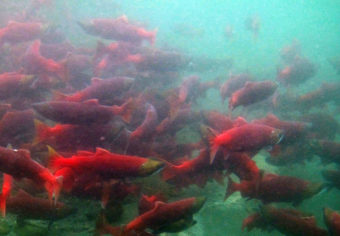
Habitat for sockeye salmon is vulnerable to climate change. (U.S. Fish and Wildlife Service)

This is Lingít Word of the Week. Each week, we feature a Lingít word voiced by master speakers. Lingít has been spoken throughout present-day Southeast Alaska and parts of Canada for over ten thousand years. 

Gunalchéesh to X̱’unei Lance Twitchell, Goldbelt Heritage Foundation and the University of Alaska Southeast for sharing the recorded audio for this series.

This week’s word is g̱aat, or sockeye salmon. Listen to the audio below to learn how to say g̱aat.

The following transcript is meant to help illustrate the words and sentences.

Keihéenák’w John Martin: G̱aat

That means sockeye salmon. 

And here are some sentences:

Keihéenák’w John Martin: G̱aat at x̱’éeshi tlél wáa sá yak’éi.

Dried sockeye salmon is pretty good.

Keiyishí Bessie Cooley: G̱aat kei uwa.xʼák.

The sockeye swam up.

Ḵaakal.áat Florence Marks Sheakley: Ḵúnáx̱ ldakát át yís yakʼéi wé g̱aat.

Sockeye is truly good for everything.

Find biographies for the master speakers included in this lesson here.

Learn more about why we use Lingít instead of Tlingit here.

Site notifications
Update notification options
Subscribe to notifications