Lingít Word of the Week

Lingít Word of the Week: Cháatl — Halibut

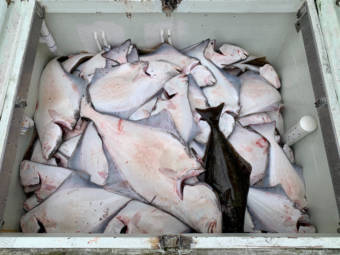
Long-line caught halibut await unloading in Petersburg. (Angela Denning/KFSK)

This is Lingít Word of the Week. Each week, we feature a Lingít word voiced by master speakers. Lingít has been spoken throughout present-day Southeast Alaska and parts of Canada for over 10,000 years.

Gunalchéesh to X̱’unei Lance Twitchell, Goldbelt Heritage Foundation and the University of Alaska Southeast for sharing the recorded audio for this series.

This week’s word is cháatl, or halibut. Listen to the audio below to learn how to say cháatl.

The following transcript is meant to help illustrate the words and sentences. 

Kaxwaan Éesh George Davis: Cháatl. 

That means halibut.

Here are some sentences:

Kaxwaan Éesh George Davis: Cháatl agawdzi.ée has du atx̱aayí sákw.

They cooked halibut for them all to eat.

Keiyishí Bessie Cooley: Shg̱agwéi cháatl toox̱áa neech.

We always eat halibut in Skagway. 

Kooshdáakʼu Bill Fawcett: Haa cháatl kaseik.

They pull up halibut there. 

Ḵaakal.áat Florence Marks Sheakley: Lingít x̱ʼéixʼ yak’éi ya cháatl.

Halibut tastes good to people.

Keihéenák’w John Martin: Cháatl at x̱ʼéeshi ax̱ x̱ʼéi yakʼéi.

Halibut dryfish is delicious to me. 

You can hear each installment of Lingít Word of the Week on the radio throughout the week. 

Find biographies for the master speakers included in this lesson here.

Learn more about why we use Lingít instead of Tlingit here.

Lingít Word of the Week: Aasgutú — Forest

Sun shines through the canopy in the Tongass National Forest. (Photo by Brian Logan/U.S. Forest Service)

This is Lingít Word of the Week. Each week, we feature a Lingít word voiced by master speakers. Lingít has been spoken throughout present-day Southeast Alaska and parts of Canada for over 10,000 years.

Gunalchéesh to X̱’unei Lance Twitchell, Goldbelt Heritage Foundation and the University of Alaska Southeast for sharing the recorded audio for this series.

This week’s word is aasgutú, or forest. Listen to the audio below to learn how to say aasgutú.
The following transcript is meant to help illustrate the words and sentences. 

Ḵaakal.áat Florence Marks Sheakley: Aasgutú. 

That means forest.

Here are some sentences:

Ḵaakal.áat Florence Marks Sheakley: Ldakát át aasgutúdáx̱ yéi daatoné.

We work with everything from the forest.

Keiyishí Bessie Cooley: Aasgutúdé woo.aat wé watsíx.

The caribou walked into the forest. 

Keihéenák’w John Martin: Yá shayadihéin yá Aas Gutú Ḵwáan yéi tsú s duwasáakw, Lingít.

The Lingít call the Tree People by many names. 

Kaxwaan Éesh George Davis: Aasgutúde woogoot.

He walked into the forest.

You can hear each installment of Lingít Word of the Week on the radio throughout the week. 

Find biographies for the master speakers included in this lesson here.

Learn more about why we use Lingít instead of Tlingit here.

Lingít Word of the Week: Keitl — Dog

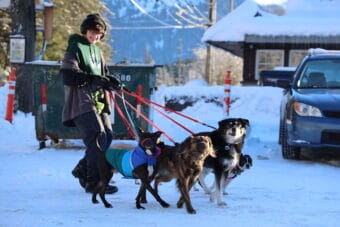
A Juneau Animal Rescue employee takes dogs out for a walk on Thursday, Jan. 18, 2024. (Clarise Larson/KTOO)

This is Lingít Word of the Week. Each week, we feature a Lingít word voiced by master speakers. Lingít has been spoken throughout present-day Southeast Alaska and parts of Canada for over 10,000 years.

Gunalchéesh to X̱’unei Lance Twitchell, Goldbelt Heritage Foundation and the University of Alaska Southeast for sharing the recorded audio for this series.

This week’s word is keitl, or dog. Listen to the audio below to learn how to say keitl.

The following transcript is meant to help illustrate the words and sentences. 

Keiyishí Bessie Cooley: Keitl. 

That means dog.

Here are some sentences:

Keiyishí Bessie Cooley: Aatlein yakʼéi ḵaa x̱ooní áwé, wé keitl.

The dog is the manʼs best friend

Keihéenák’w John Martin: Lingít has du x̱oo shayawdihaa wé keitl.

There got to be a lot of dogs among the Tlingit.

Ḵaakal.áat Florence Marks Sheakley: Ḵúnáx̱ ligei i keidlí.

Your dog is really big.

Kaxwaan Éesh George Davis: Keitlch wooyeeḵ.

The dog bit them.

You can hear each installment of Lingít Word of the Week on the radio throughout the week. 

Find biographies for the master speakers included in this lesson here.

Learn more about why we use Lingít instead of Tlingit here.


Lingít Word of the Week: Ch’áak’ — Eagle

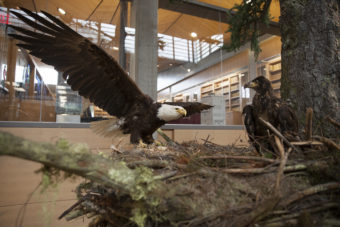
Visitors to the Father Andrew P. Kashevaroff State Library, Archives and Museum building are dwarfed by a life-sized eagle nesting tree on Thursday, May 26, 2016 in Juneau, Alaska. (Photo by Rashah McChesney/KTOO)

This is Lingít Word of the Week. Each week, we feature a Lingít word voiced by master speakers. Lingít has been spoken throughout present-day Southeast Alaska and parts of Canada for over 10,000 years.

Gunalchéesh to X̱’unei Lance Twitchell, Goldbelt Heritage Foundation and the University of Alaska Southeast for sharing the recorded audio for this series.

This week’s word is ch’áak’, or eagle. Listen to the audio below to learn how to say ch’áak’.

The following transcript is meant to help illustrate the words and sentences. 

Keihéenák’w John Martin: Ch’áak’. 

That means eagle.

Here are some sentences:

Keihéenák’w John Martin: Yaa ndaḵín ch’áak’.

The eagle is flying there.

Keiyishí Bessie Cooley: Daḵlʼaweidí at.óowu áwé wé chʼáakʼ.

The eagle is the Daḵlʼaweidíʼs at.óow.

Kooshdáakʼu Bill Fawcett: Yá ḵúnáx̱ áwé yá ḵudzitee ch’áak’.

That eagle was very alive.

Ḵaakal.áat Florence Marks Sheakley: Góosʼ toodéi wdiḵín wé ch’áak’.

The eagle flew up into the clouds.

Kaxwaan Éesh George Davis: Ch’áak’ du kúdi kát.aa.

The eagle is sitting in its nest.


You can hear each installment of Lingít Word of the Week on the radio throughout the week. 

Find biographies for the master speakers included in this lesson here.

Learn more about why we use Lingít instead of Tlingit here.


Lingít Word of the Week: Yéil — Raven

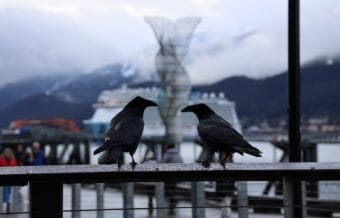
Ravens sit near the seawalk in downtown Juneau on Tuesday, April 9, 2024. (Katie Anastas/KTOO)

This is Lingít Word of the Week. Each week, we feature a Lingít word voiced by master speakers. Lingít has been spoken throughout present-day Southeast Alaska and parts of Canada for over 10,000 years.

Gunalchéesh to X̱’unei Lance Twitchell, Goldbelt Heritage Foundation and the University of Alaska Southeast for sharing the recorded audio for this series.

This week’s word is yéil, or raven. Listen to the audio below to learn how to say yéil.

The following transcript is meant to help illustrate the words and sentences. 

Kooshdáakʼu Bill Fawcett: yéil. 

That means raven.

Here are some sentences:

Kooshdáakʼu Bill Fawcett: Yéil neechx̱ yaa nagút.

Raven is walking along the beach.

Keiyishí Bessie Cooley: Yéil yóode saduwa.áx̱ch.

A ravenʼs call is heard way over there.

Ḵaakal.áat Florence Marks Sheakley: Neechx̱ yaa nagút yéil.

Raven is walking on the beach. 

Keihéenák’w John Martin: Yéil yádi x̱at sitee.

I am a raven child.

You can hear each installment of Lingít Word of the Week on the radio throughout the week. 

Find biographies for the master speakers included in this lesson here.

Learn more about why we use Lingít instead of Tlingit here.

Lingít Word of the Week: Héen — Water

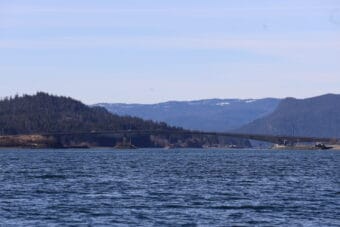
Cars cross the Juneau-Douglas bridge on Saturday, March 23, 2024. (Clarise Larson/KTOO)

This is Lingít Word of the Week. Each week, we feature a Lingít word voiced by master speakers. Lingít has been spoken throughout present-day Southeast Alaska and parts of Canada for over 10,000 years.

Gunalchéesh to X̱’unei Lance Twitchell, Goldbelt Heritage Foundation and the University of Alaska Southeast for sharing the recorded audio for this series.

This week’s word is héen, or water. Listen to the audio below to learn how to say héen.

The following transcript is meant to help illustrate the words and sentences.

Kaxwaan Éesh George Davis: Héen.

That means water.

Here are some sentences:

Kaxwaan Éesh George Davis: Héen ax̱ x̱’éix̱ natí

Get me a drink of water.

Keihéenák’w John Martin: Héen tuwáadáx̱ áyá haa lix̱éitl.

We are blessed by the water.

Keiyishí Bessie Cooley: Yées héen yaa anayáan, wé ḵáa.

The man is packing fresh water.

Kooshdáakʼu Bill Fawcett: Ax̱ x̱ʼeit aa sa.ín wé héen.

Bring me some water to drink.

Ḵaakal.áat Florence Marks Sheakley: Wé héen nadaa.

The water is flowing.

You can hear each installment of Lingít Word of the Week on the radio throughout the week.

Find biographies for the master speakers included in this lesson here.

Learn more about why we use Lingít instead of Tlingit here.

Site notifications
Update notification options
Subscribe to notifications