Lingít Word of the Week

Lingít Word of the Week: Yanshuká — Camp

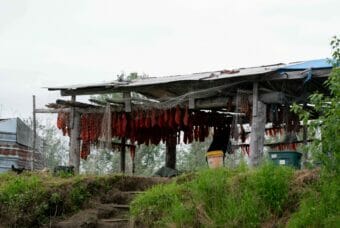
A fish camp near Akiachak, Alaska. June 23, 2023. (MaryCait Dolan/KYUK)

This is Lingít Word of the Week. Each week, we feature a Lingít word voiced by master speakers. Lingít has been spoken throughout present-day Southeast Alaska and parts of Canada for over 10,000 years.

Gunalchéesh to X̱’unei Lance Twitchell, Goldbelt Heritage Foundation and the University of Alaska Southeast for sharing the recorded audio for this series.

This week’s word is yanshuká, or camp. Listen to the audio below to learn how to say yanshuká.

The following transcript is meant to help illustrate the words and sentences. 

Keihéenák’w John Martin: Yanshuká. 

That means camp.

Here are some sentences: 

Keihéenák’w John Martin: Astʼeix̱, astʼeix̱ áwé yanshuká dei ḵuyaanagweich.

People fish when they travel by boat to camp.

Keiyishí Bessie Cooley: Yanshuká, aan.eetí tsú yéi duwasáakw.

Camp is also called remains of the village.

Kooshdáakʼu Bill Fawcett: Yanshukaadé áyá at wutuwaxoon.

We prepared to go to camp.

Ḵaakal.áat Florence Marks Sheakley: Yanshukádéi gax̱too.ḵóox̱

We will go to camp (by vehicle).

Kaxwaan Éesh George Davis: Aadé ḵoowtuwa.oo yé yanshuká.

The way we live at camp.

You can hear each installment of Lingít Word of the Week on the radio throughout the week. 

Additional language resources:

Find biographies for the master speakers included in this lesson here.

Learn more about why we use Lingít instead of Tlingit here.

Watch a video introducing Lingít sounds here.

Lingít Word of the Week: G̱uwakaan — Deer

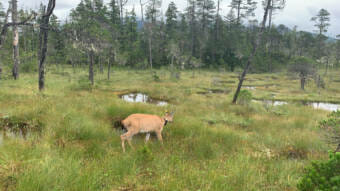
a doe walking through a clearing
A fitted with a tracking collar walks through muskeg on Mitkof Island in 2020. (Photo courtesy of Dan Eacker/ADF&G)

This is Lingít Word of the Week. Each week, we feature a Lingít word voiced by master speakers. Lingít has been spoken throughout present-day Southeast Alaska and parts of Canada for over 10,000 years.

Gunalchéesh to X̱’unei Lance Twitchell, Goldbelt Heritage Foundation and the University of Alaska Southeast for sharing the recorded audio for this series.

This week’s word is g̱uwakaan, or deer. Listen to the audio below to learn how to say g̱uwakaan.

The following transcript is meant to help illustrate the words and sentences. 

Kooshdáakʼu Bill Fawcett: g̱uwakaan. 

That means deer.

Here are some sentences:

Kooshdáakʼu Bill Fawcett: A loowú kg̱wagóot g̱uwakaan. Shákdé yei kḵwasatéen.

A deer is going to walk out on the point. Perhaps I will see it.

Keihéenák’w John Martin: G̱uwakaan dleeyi ax̱ x̱’éi yak’éi.

Deer meat tastes good.

Keiyishí Bessie Cooley: Ḵuwakaan máa yateeyí yéixʼ yei tusatínch, neilxʼ.

Sometimes we see deer at our home.

Ḵaakal.áat Florence Marks Sheakley: At ḵuwaháa ag̱aa du.únt yé yá g̱uwakaan.

The time has come for people to go deer hunting.

Kaxwaan Éesh George Davis: Shaa yadaadé kei wdlitlʼétʼ g̱uwakaan ag̱a.óonit

They climbed up towards the upper part of the mountain to shoot a deer.

You can hear each installment of Lingít Word of the Week on the radio throughout the week.


Additional language resources:

Find biographies for the master speakers included in this lesson here.

Learn more about why we use Lingít instead of Tlingit here.

Watch a video introducing Lingít sounds here.

Lingít Word of the Week: Sʼigeidí — Beaver

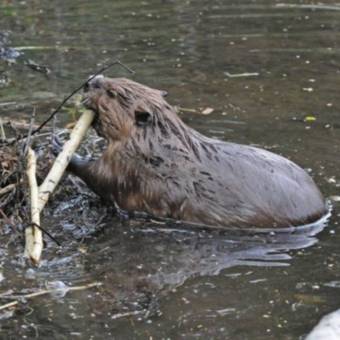
Beavers build dams to create ponds, where they build underwater lodges. The deep water offers protection from predators. (Photo courtesy of SEALT)

This is Lingít Word of the Week. Each week, we feature a Lingít word voiced by master speakers. Lingít has been spoken throughout present-day Southeast Alaska and parts of Canada for over 10,000 years.

Gunalchéesh to X̱’unei Lance Twitchell, Goldbelt Heritage Foundation and the University of Alaska Southeast for sharing the recorded audio for this series.

This week’s word is s’igeidí, or beaver. Listen to the audio below to learn how to say s’igeidí.

The following transcript is meant to help illustrate the words and sentences.

Kaxwaan Éesh George Davis: S’igeidí.

That means beaver.

Here are some sentences:

Kaxwaan Éesh George Davis: S’igeidích wusiḵít.

The beaver dams it.

Keihéenák’w John Martin: Héen x̱oo kat aaní yéi yá s’igeidí has du aaní yéi yatee.

Among the surface of the water, this is the beaverʼs place.

Keiyishí Bessie Cooley: Ḵukaltʼéexʼ káxʼ sʼigeidí x̱oodé ana.átch.

In the spring, people go beaver trapping.

Ḵaakal.áat Florence Marks Sheakley: Chʼa hás has du koowú has alʼéix̱ yá sʼig̱eidí.

The beavers dance with their tails.

You can hear each installment of Lingít Word of the Week on the radio throughout the week.


Additional language resources: 

Find biographies for the master speakers included in this lesson here.

Learn more about why we use Lingít instead of Tlingit here.

Lingít Word of the Week: Dzísk’w — Moose

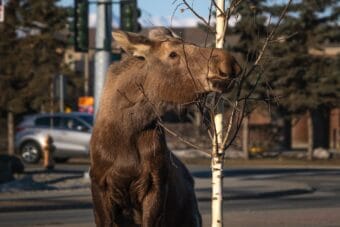
A moose grazes in Anchorage on April 19, 2023. (Photo by Brian Venua/KMXT)

This is Lingít Word of the Week. Each week, we feature a Lingít word voiced by master speakers. Lingít has been spoken throughout present-day Southeast Alaska and parts of Canada for over 10,000 years.

Gunalchéesh to X̱’unei Lance Twitchell, Goldbelt Heritage Foundation and the University of Alaska Southeast for sharing the recorded audio for this series.

This week’s word is dzísk’w, or moose. Listen to the audio below to learn how to say dzísk’w.

The following transcript is meant to help illustrate the words and sentences. 

Ḵaakal.áat Florence Marks Sheakley: dzísk’w. 

That means moose.

Here are some sentences:

Ḵaakal.áat Florence Marks Sheakley: Tlél haa x̱ánxʼ shawoodahéin dziskʼw.

There arenʼt a lot of moose around us here.

Keihéenák’w John Martin: Yá goodáan yáx̱ áyá kooligéi yá dzískʼw.

This moose is as big as a horse.

Keiyishí Bessie Cooley: Dzískʼu dleeyí ax̱ eet uwaháa.

Iʼm hungry for moose meat.

Kooshdáakʼu Bill Fawcett: Dzískʼw alʼóon áwé gax̱tooḵóox̱.

We are going moose hunting.

Kaxwaan Éesh George Davis: Dzísk’w l’óon has oo.aat.

He went moose hunting.

You can hear each installment of Lingít Word of the Week on the radio throughout the week. 

Find biographies for the master speakers included in this lesson here.

Learn more about why we use Lingít instead of Tlingit here.

Lingít Word of the Week: Kéidladi — Seagull

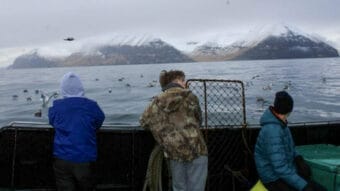
A seagull, or kéidladi, in Glacier Bay National Park in July 2023. (Photo by Clarise Larson/KTOO)

This is Lingít Word of the Week. Each week, we feature a Lingít word voiced by master speakers. Lingít has been spoken throughout present-day Southeast Alaska and parts of Canada for over 10,000 years.

Gunalchéesh to X̱’unei Lance Twitchell, Goldbelt Heritage Foundation and the University of Alaska Southeast for sharing the recorded audio for this series.

This week’s word is kéidladi, or seagull. Listen to the audio below to learn how to say kéidladi.

The following transcript is meant to help illustrate the words and sentences. 

Keiyishí Bessie Coolie: kéidladi. 

That means seagull.

Here are some sentences:

Keiyishí Bessie Cooley: Kéidladi daaḵ kaadáx̱ kanalyíchch yéist ḵuwahaayí.

The seagulls fly out of the interior when fall arrives.

Keihéenák’w John Martin: Kéidladi k’wát’ haa x̱’éi yak’éi.

Seagull eggs taste good to us.

Ḵaakal.áat Florence Marks Sheakley: Kéidladi yá Tʼaḵdeintaan has du ádix̱ sitee yá Xunadáx̱.

The seagull belongs to the Tʼaḵdeintaan, who are from Hoonah.

Kaxwaan Éesh George Davis: Kéidladi k’wát’i aawax̱áa.

They ate seagull eggs.


You can hear each installment of Lingít Word of the Week on the radio throughout the week. 

Find biographies for the master speakers included in this lesson here.

Learn more about why we use Lingít instead of Tlingit here.

Watch a video introducing Lingít sounds here.

Lingít Word of the Week: Dís — Moon or month

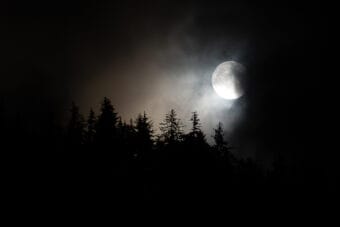
The moon shines through clouds to illuminate trees on Mt. Roberts in Juneau on Nov. 14, 2024. (Photo by Eric Stone)

This is Lingít Word of the Week. Each week, we feature a Lingít word voiced by master speakers. Lingít has been spoken throughout present-day Southeast Alaska and parts of Canada for over 10,000 years.

Gunalchéesh to X̱’unei Lance Twitchell, Goldbelt Heritage Foundation and the University of Alaska Southeast for sharing the recorded audio for this series.

This week’s word is dís, which means moon or month. Listen to the audio below to learn how to say dís.

The following transcript is meant to help illustrate the words and sentences. 

Keihéenák’w John Martin: dís. 

That means moon, or month.

Here are some sentences:

Keihéenák’w John Martin: Dís haa tuwáa kalitéesʼshan.

We enjoy watching the moon.

Keiyishí Bessie Cooley: Tleidooshú yaawax̱ée wé dís.

Six months have gone by.

Ḵaakal.áat Florence Marks Sheakley: Lig̱éi wé dís.

The moon was bright.

Kaxwaan Éesh George Davis:  Góosʼ tóox̱ akdagáan dís daak wuxeexí. 

The moon is shining through the clouds as it comes out.

You can hear each installment of Lingít Word of the Week on the radio throughout the week. 

Additional resources:

Find biographies for the master speakers included in this lesson here.

Learn more about why we use Lingít instead of Tlingit here.

Site notifications
Update notification options
Subscribe to notifications