Lingít Word of the Week

Lingít Word of the Week: G̱áax’w — Herring eggs

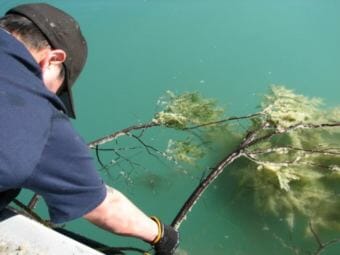
STA staff and volunteers distribute herring eggs on branches after the 2020 subsistence harvest. (Photo by Berett Wilber/KCAW)

This is Lingít Word of the Week. Each week, we feature a Lingít word voiced by master speakers. Lingít has been spoken throughout present-day Southeast Alaska and parts of Canada for over 10,000 years.

Gunalchéesh to X̱’unei Lance Twitchell, Goldbelt Heritage Foundation and the University of Alaska Southeast for sharing the recorded audio for this series.

This week’s word is g̱áax’w, or herring eggs. Listen to the audio below to learn how to say g̱áax’w.

The following transcript is meant to help illustrate the words and sentences. 

Ḵaakal.áat Florence Marks Sheakley: G̱áax’w. 

That means herring eggs.

Here are some sentences:

Ḵaakal.áat Florence Marks Sheakley: Ḵaa jéexʼ kei naldzée yaa yá g̱áaxʼw.

It is getting difficult for people to get herring eggs.

Keihéenák’w John Martin: Tsaa eex̱i tín áwé dux̱áa nooch g̱áaxʼw.

People always eat herring eggs with seal oil.

Keiyishí Bessie Cooley: Dziskʼu dleeyí, g̱áaxʼw daséi yaa dul.átch

People trade moose meat for herring eggs.

Kaxwaan Éesh George Davis: G̱áax’w wutuwax̱áa.

We ate herring eggs.

You can hear each installment of Lingít Word of the Week on the radio throughout the week. 

Additional language resources:

Find biographies for the master speakers included in this lesson here.

Learn more about why we use Lingít instead of Tlingit here.

Watch a video introducing Lingít sounds here.

Lingít Word of the Week: Tsaa — Seal

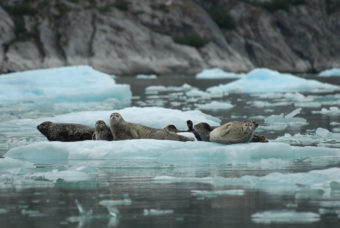
Harbor seals rest on ice near South Sawyer Glacier in 2007. (Photo courtesy NOAA's Alaska Fisheries Science Center)
Harbor seals rest on ice near South Sawyer Glacier in 2007. (Photo courtesy NOAA’s Alaska Fisheries Science Center)

This is Lingít Word of the Week. Each week, we feature a Lingít word voiced by master speakers. Lingít has been spoken throughout present-day Southeast Alaska and parts of Canada for over 10,000 years.

Gunalchéesh to X̱’unei Lance Twitchell, Goldbelt Heritage Foundation and the University of Alaska Southeast for sharing the recorded audio for this series.

This week’s word is tsaa, or seal. Listen to the audio below to learn how to say tsaa.

The following transcript is meant to help illustrate the words and sentences. 

Keiyishí Bessie Cooley: Tsaa. 

That means seal.

Here are some sentences:

Keiyishí Bessie Cooley: Lagaaw yáx̱ amdlitsaa, wé tsaa.

The seal burped loudly.

Keihéenák’w John Martin: Tsaa táayi haa x̱’éi yak’éi.

Seal fat tastes good to us.

Kooshdáakʼu Bill Fawcett: Goodé sáwé tsaa l’ooni áwé kg̱waḵóox̱?

Where are they going to hunt seals?

Ḵaakal.áat Florence Marks Sheakley: Ḵúnáx̱ haa atx̱áyi áyá tsaa.

Seal is an important food of ours.

Kaxwaan Éesh George Davis: Tsaa taayí awaadákw.

They rendered seal fat.

You can hear each installment of Lingít Word of the Week on the radio throughout the week. 

Additional language resources:

Find biographies for the master speakers included in this lesson here.

Learn more about why we use Lingít instead of Tlingit here.

Watch a video introducing Lingít sounds here.

Lingít Word of the Week: Náaḵw — Octopus

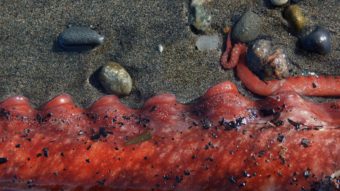
A rock painted like an octopus by Heather Stemmerman (Photo by David Purdy/KTOO)

This is Lingít Word of the Week. Each week, we feature a Lingít word voiced by master speakers. Lingít has been spoken throughout present-day Southeast Alaska and parts of Canada for over 10,000 years.

Gunalchéesh to X̱’unei Lance Twitchell, Goldbelt Heritage Foundation and the University of Alaska Southeast for sharing the recorded audio for this series.

This week’s word is náaḵw, or octopus. Listen to the audio below to learn how to say náaḵw.

The following transcript is meant to help illustrate the words and sentences. 

Kooshdáakʼu Bill Fawcett: Náaḵw. 

That means octopus.

Here are some sentences:

Kooshdáakʼu Bill Fawcett: Daa sáwé aan yeedanáḵw? Há náaḵw áyá.

What are you baiting with? Oh, it’s octopus.

Keihéenák’w John Martin: Náaḵw tsu haa atx̱áayix̱ sitee.

Octopus is also our food.

Keiyishí Bessie Cooley: A tlʼeiḵ káx̱ yaa kdag̱wátʼch, náaḵw.

The octopus is crawling along on its tentacles.

Ḵaakal.áat Florence Marks Sheakley: Náaḵw dutáax’in.

People used to bite octopus.

Kaxwaan Éesh George Davis: Náaḵw du ḵoowú tóodáx̱ daak wujiḵáḵ.

The octopus crawled out of it’s den.

You can hear each installment of Lingít Word of the Week on the radio throughout the week. 

Additional language resources:

Find biographies for the master speakers included in this lesson here.

Learn more about why we use Lingít instead of Tlingit here.

Watch a video introducing Lingít sounds here.

Lingít Word of the Week: Kaklahéen — Slush or Sleet

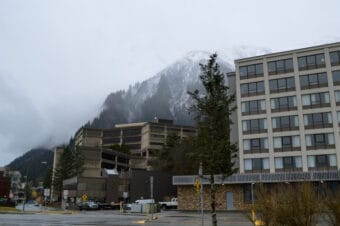
Downtown Juneau in the sleet on March 10, 2025. (Photo by Yvonne Krumrey/KTOO)

This is Lingít Word of the Week. Each week, we feature a Lingít word voiced by master speakers. Lingít has been spoken throughout present-day Southeast Alaska and parts of Canada for over 10,000 years.

Gunalchéesh to X̱’unei Lance Twitchell, Goldbelt Heritage Foundation and the University of Alaska Southeast for sharing the recorded audio for this series.

This week’s word is kaklahéen, meaning slush or sleet. Listen to the audio below to learn how to say kaklahéen.

The following transcript is meant to help illustrate the words and sentences. 

Keihéenák’w John Martin: Kaklahéen. 

That means slush or sleet.

Here are some sentences:

Keihéenák’w John Martin: Táakw.eetí áyá kaklahéen haa ḵaa daak wusitán.

In the spring sleet falls on us.

Keiyishí Bessie Cooley: Kaklahéen wé dleit.

The snow is slush.

Ḵaakal.áat Florence Marks Sheakley: Táakw eenxʼ áyá kaklahéen sitee yá dleit.

In the winter the snow is slushy.

Kaxwaan Éesh George Davis: Kaklahéen has du káa daak wusitán. 

It sleeted on them all. 

You can hear each installment of Lingít Word of the Week on the radio throughout the week. 

Additional language resources:

Find biographies for the master speakers included in this lesson here.

Learn more about why we use Lingít instead of Tlingit here.

Watch a video introducing Lingít sounds here.


Lingít Word of the Week: Kootéeyaa — Totem Pole

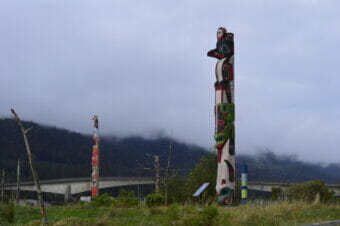
Two kootéeyaa, or totem poles, on Juneau’s waterfront on Oct. 4, 2023. (Photo by Yvonne Krumrey/KTOO)

This is Lingít Word of the Week. Each week, we feature a Lingít word voiced by master speakers. Lingít has been spoken throughout present-day Southeast Alaska and parts of Canada for over 10,000 years.

Gunalchéesh to X̱’unei Lance Twitchell, Goldbelt Heritage Foundation and the University of Alaska Southeast for sharing the recorded audio for this series.

This week’s word is kootéeyaa, or totem pole. Listen to the audio below to learn how to say kootéeyaa.

The following transcript is meant to help illustrate the words and sentences. 

Kaxwaan Éesh George Davis: kootéeyaa. 

That means totem pole.

Here are some sentences:

Kaxwaan Éesh George Davis: Kootéeyaa akaaach’ák’w.

He carved a totem pole.

Keihéenák’w John Martin: Yóo ḵawdudziteey i duwasáakw kootéeyaa.

The thing being carved is called kootéeyaa. 

Keiyishí Bessie Cooley: Kootéeyaa yóoxʼ kaduchʼáakʼw.

A totem pole is being carved way over there.

Kooshdáakʼu Bill Fawcett: Daa sáwé yéi daa.eené? Kootéeyaa áx̱ kaxajaaḵw.

What are you doing? I’m designing a totem pole. 

Ḵaakal.áat Florence Marks Sheakley: Ax̱ éek’ kootéeyaa yéi adaanéiyin.

My brother used to work on totem poles.

You can hear each installment of Lingít Word of the Week on the radio throughout the week. 

Additional language resources:

Find biographies for the master speakers included in this lesson here.

Learn more about why we use Lingít instead of Tlingit here.

Watch a video introducing Lingít sounds here.

Lingít Word of the Week: Ḵutx̱.ayanaháa — Star

Dave Hanson photographs the Juneau night sky. (Photo provided by Dave Hanson)

This is Lingít Word of the Week. Each week, we feature a Lingít word voiced by master speakers. Lingít has been spoken throughout present-day Southeast Alaska and parts of Canada for over 10,000 years.

Gunalchéesh to X̱’unei Lance Twitchell, Goldbelt Heritage Foundation and the University of Alaska Southeast for sharing the recorded audio for this series.

This week’s word is ḵutx̱.ayanaháa, or star. Listen to the audio below to learn how to say ḵutx̱.ayanaháa.

The following transcript is meant to help illustrate the words and sentences. 

Ḵaakal.áat Florence Marks Sheakley: Ḵutx̱.ayanaháa. 

That means star.

Here are some sentences:

Ḵaakal.áat Florence Marks Sheakley: Ḵutx̱.ayanaháa tuteen nooch kéi ḵunas.áatʼi

We always see stars when the weather is cold.

Keiyishí Bessie Cooley: Ḵutx̱.ayanaháa máa yatee yéixʼ ḵutg̱anaháa yóo dáx̱ duwasáakw lingít x̱ʼeináx̱.

Stars are sometimes called “ḵutg̱anaháa” in Lingít.

You can hear each installment of Lingít Word of the Week on the radio throughout the week. 

Additional language resources:

Find biographies for the master speakers included in this lesson here.

Learn more about why we use Lingít instead of Tlingit here.

Watch a video introducing Lingít sounds here.

Site notifications
Update notification options
Subscribe to notifications