Lingít Word of the Week

Lingít Word of the Week: Jánwu — Mountain Goat

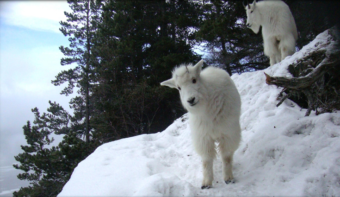
State biologists are tracking Haines-area mountain goats to understand their habitat and range better. (Photo courtesy of Alaska Department of Fish and Game)
State biologists are tracking Haines-area mountain goats to understand their habitat and range better. (Photo courtesy Alaska Department of Fish and Game)

This is Lingít Word of the Week. Each week, we feature a Lingít word voiced by master speakers. Lingít has been spoken throughout present-day Southeast Alaska and parts of Canada for over 10,000 years.

Gunalchéesh to X̱’unei Lance Twitchell, Goldbelt Heritage Foundation and the University of Alaska Southeast for sharing the recorded audio for this series.

This week’s word is jánwu, or mountain goat. Listen to the audio below to learn how to say jánwu.

The following transcript is meant to help illustrate the words and sentences. 

Keiyishí Bessie Cooley: Jánwu. 

That means mountain goat.

Here are some sentences:

Keiyishí Bessie Cooley: Tʼaaḵú Héeni yíx̱ yaa ndaḵúx̱u, jánwu duteen neech, wé shaa kaadé.

When boating on the Taku River, people always see mountain goats on the mountains.

Ḵaakal.áat Florence Marks Sheakley: Jánwu Tʼaaḵudáx̱ du.únt.

People get mountain goats from the Taku.

Kaxwaan Éesh George Davis: Jánwu shaayáx̱ wudlitl’éit’ 

The mountain goat climbed along the face of the mountain.

You can hear each installment of Lingít Word of the Week on the radio throughout the week. 

Additional language resources:

Find biographies for the master speakers included in this lesson here.

Learn more about why we use Lingít instead of Tlingit here.

Watch a video introducing Lingít sounds here.

Lingít Word of the Week: Kaxwaan — Frost

snow frost crystals
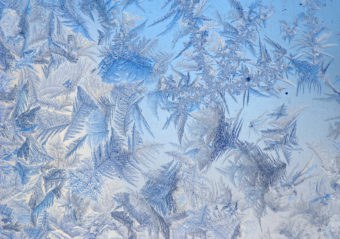
Frost crystals on a window pane. (Creative Commons photo by Tim)

This is Lingít Word of the Week. Each week, we feature a Lingít word voiced by master speakers. Lingít has been spoken throughout present-day Southeast Alaska and parts of Canada for over 10,000 years.

Gunalchéesh to X̱’unei Lance Twitchell, Goldbelt Heritage Foundation and the University of Alaska Southeast for sharing the recorded audio for this series.

This week’s word is kaxwaan, or frost. Listen to the audio below to learn how to say kaxwaan.

The following transcript is meant to help illustrate the words and sentences. 

Keihéenák’w John Martin: Kaxwaan. 

That means frost.

Here are some sentences:

Keihéenák’w John Martin: Kaxwaan ḵusi.áat’.

Frost is cold.

Keiyishí Bessie Cooley: Kaxwaan chukwán káa yéi nateech, ḵoos.áatʼi.

There is always frost on the grass when itʼs cold.

Kaxwaan Éesh George Davis: T’áa ká ḵukawdlixwán.

The frost is on the ground.

You can hear each installment of Lingít Word of the Week on the radio throughout the week. 

Additional language resources:

Find biographies for the master speakers included in this lesson here.

Learn more about why we use Lingít instead of Tlingit here.

Watch a video introducing Lingít sounds here.

Lingít Word of the Week: Dleit— Snow

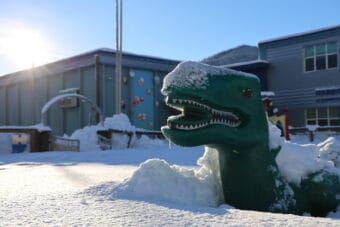
Snow covers playground equipment outside Harborview Elementary School on Tuesday, Jan. 16, 2024. (Clarise Larson/KTOO)

This is Lingít Word of the Week. Each week, we feature a Lingít word voiced by master speakers. Lingít has been spoken throughout present-day Southeast Alaska and parts of Canada for over 10,000 years.

Gunalchéesh to X̱’unei Lance Twitchell, Goldbelt Heritage Foundation and the University of Alaska Southeast for sharing the recorded audio for this series.

This week’s word is dleit, or snow. Listen to the audio below to learn how to say dleit.

The following transcript is meant to help illustrate the words and sentences. 

Kooshdáakʼu Bill Fawcett: Dleit. 

That means snow.

Here are some sentences:

Kooshdáakʼu Bill Fawcett: Ḵúnáx̱ áwé daak wusitaan wé dleit.

It’s really snowing. 

Keiyishí Bessie Cooley: Dleit shaa shakée yéi yatee.

There is snow on the mountaintop.

Ḵaakal.áat Florence Marks Sheakley: Dleit daak wusitán.

It is snowing. 

Kaxwaan Éesh George Davis: Dleit g̱aadlaan.

The snow is deep.

You can hear each installment of Lingít Word of the Week on the radio throughout the week. 


Additional language resources:

Find biographies for the master speakers included in this lesson here.

Learn more about why we use Lingít instead of Tlingit here.

Watch a video introducing Lingít sounds here.

Lingít Word of the Week: G̱ooch — Wolf

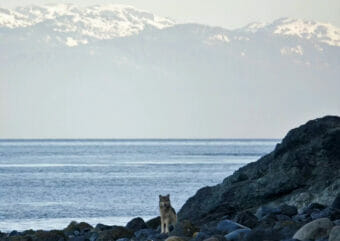
A wolf on Pleasant Island near Gustavus, Alaska peers at the camera. (Photo by Bjorn Dihle)

This is Lingít Word of the Week. Each week, we feature a Lingít word voiced by master speakers. Lingít has been spoken throughout present-day Southeast Alaska and parts of Canada for over 10,000 years.

Gunalchéesh to X̱’unei Lance Twitchell, Goldbelt Heritage Foundation and the University of Alaska Southeast for sharing the recorded audio for this series.

This week’s word is g̱ooch, or wolf. Listen to the audio below to learn how to say g̱ooch.

The following transcript is meant to help illustrate the words and sentences. 

Kaxwaan Éesh George Davis: G̱ooch. 

That means wolf.

Here are some sentences:

Kaxwaan Éesh George Davis: G̱ooch kei akaawag̱áx.

The wolf is howling.

Keihéenák’w John Martin: Kaagwaantaan, g̱ooch áwé has du yahaayí átx̱ alyiex̱.

The Kaagwaantaan use the image of the wolves. 

Keiyishí Bessie Cooley: G̱ooch ax̱ éesh du kʼoodásʼi kaadé wuduwaḵáa.

A wolf was sewn on my fatherʼs shirt.

Ḵaakal.áat Florence Marks Sheakley: Kaagwaantaan Yanyeidí has du at.óowu áyá g̱ooch.

The wolf is the at.óow of the Kaagwaantaan and the Yanyeidí.

Additional language resources:

Find biographies for the master speakers included in this lesson here.

Learn more about why we use Lingít instead of Tlingit here.

Watch a video introducing Lingít sounds here.

Lingít Word of the Week: Ayawditee — It’s stormy

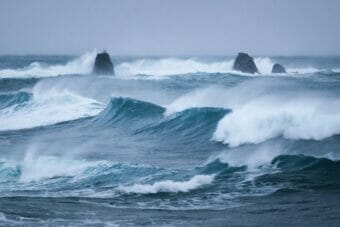
Waves from a winter storm near Kodiak on Dec. 26, 2022. (Brian Venua/KMXT)

This is Lingít Word of the Week. Each week, we feature a Lingít word voiced by master speakers. Lingít has been spoken throughout present-day Southeast Alaska and parts of Canada for over 10,000 years.

Gunalchéesh to X̱’unei Lance Twitchell, Goldbelt Heritage Foundation and the University of Alaska Southeast for sharing the recorded audio for this series.

This week’s word is ayawditee, which means ‘it’s stormy.’ Listen to the audio below to learn how to say ayawditee.
The following transcript is meant to help illustrate the words and sentences. 

Ḵaakal.áat Florence Marks Sheakley: Ayawditee. 

That means “it’s stormy.”

Here are some sentences:

Ḵaakal.áat Florence Marks Sheakley: Ḵúnáx̱ ayawditee yáa yagiyee.

It is very stormy today.

Keihéenák’w John Martin: Táakwxʼ tlákw haa káa ayawditee táakwt ḵuwuhaayí.

In the winter, it is always stormy on us when winter comes.

Keiyishí Bessie Cooley: Aatlein ayamditee, déix̱ sándi x̱ʼáak shuwaxeex.

It was really windy for two weeks.

You can hear each installment of Lingít Word of the Week on the radio throughout the week. 

Additional language resources:

Find biographies for the master speakers included in this lesson here.

Learn more about why we use Lingít instead of Tlingit here.

Watch a video introducing Lingít sounds here.

Lingít Word of the Week: Yán — Hemlock

Hemlock trees (Photo courtesy of Elizabeth Graham/National Forest Service)

This is Lingít Word of the Week. Each week, we feature a Lingít word voiced by master speakers. Lingít has been spoken throughout present-day Southeast Alaska and parts of Canada for over 10,000 years.

Gunalchéesh to X̱’unei Lance Twitchell, Goldbelt Heritage Foundation and the University of Alaska Southeast for sharing the recorded audio for this series.

This week’s word is yán, or hemlock. Listen to the audio below to learn how to say yán.

The following transcript is meant to help illustrate the words and sentences. 

Keiyishí Bessie Cooley: Yán. 

That means hemlock.

Here are some sentences:

Keiyishí Bessie Cooley: Yán at káx̱i linúkts, ḵa náakw yís tsú yéi du.úx̱xʼ

Hemlock sap is sweet, and it is collected for medicine, too.

Kooshdáakʼu Bill Fawcett: Ḵúnáx aan alyeix̱ wé yán.

Theyʼre really building it with hemlock.

Ḵaakal.áat Florence Marks Sheakley: Yán áyá yá yaaw yís héendáx̱ yei du.úx̱xʼ

People put hemlock in the water for the herring.

Kaxwaan Éesh George Davis: Yán wáasʼi káa yoo dilʼóox̱ʼk.

Herring spawn on hemlock branches.

You can hear each installment of Lingít Word of the Week on the radio throughout the week. 

Additional language resources:

Find biographies for the master speakers included in this lesson here.

Learn more about why we use Lingít instead of Tlingit here.

Watch a video introducing Lingít sounds here.


Site notifications
Update notification options
Subscribe to notifications