Lingít Word of the Week

Lingít Word of the Week: Atx̱aan Hídi — Smokehouse

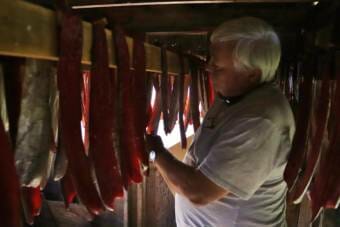
Gene Carlson checks red salmon strips in his smokehouse. July 16, 2021. (Izzy Ross/KDLG)

This is Lingít Word of the Week. Each week, we feature a Lingít word voiced by master speakers. Lingít has been spoken throughout present-day Southeast Alaska and parts of Canada for over 10,000 years.

Gunalchéesh to X̱’unei Lance Twitchell, Goldbelt Heritage Foundation and the University of Alaska Southeast for sharing the recorded audio for this series.

This week’s word is atx̱aan hídi, or smokehouse. Listen to the audio below to learn how to say atx̱aan hídi.

The following transcript is meant to help illustrate the words and sentences. 

Kaxwaan Éesh George Davis: Atx̱aan hídi. 

That means smokehouse.

Here are some sentences:

Kaxwaan Éesh George Davis: Atx̱aan hídi áx̱ ashayaawatée du xaadí. 

He hung his fish in the smokehouse.

Keihéenák’w John Martin: Lingít x̱áat has ax̱ʼán nooch atx̱aan hídi ax̱ has aléiyix̱.

People always make dry fish in the smokehouse by putting it up high.

Keiyishí Bessie Cooley: Atx̱aan hídi yeix̱ ashaayawatee wé tʼá.

They hung up the king salmon in the smoke house

Kooshdáakʼu Bill Fawcett: Ḵúnáx̱ áwé ya’kéi wé x̱áat atgaxtoox̱’aan atx̱aan hídi.

It’s very good, the fish that was smoked in a smokehouse. 

Ḵaakal.áat Florence Marks Sheakley: Atx̱aan hídixʼ yakʼéi wé sʼeiḵ.

The smoke used in smokehouses is good.

You can hear each installment of Lingít Word of the Week on the radio throughout the week. 

Additional language resources:

Find biographies for the master speakers included in this lesson here.

Learn more about why we use Lingít instead of Tlingit here.

Watch a video introducing Lingít sounds here.

Lingít Word of the Week: Xíxch’ — Frog

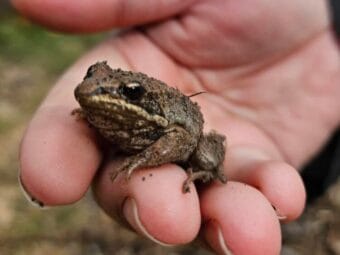
A person's hand holds a frog
A hand holds a wood frog fresh out of winter hibernation. (Photo by Toben Shelby/Alaska Public Media)

This is Lingít Word of the Week. Each week, we feature a Lingít word voiced by master speakers. Lingít has been spoken throughout present-day Southeast Alaska and parts of Canada for over 10,000 years.

Gunalchéesh to X̱’unei Lance Twitchell, Goldbelt Heritage Foundation and the University of Alaska Southeast for sharing the recorded audio for this series.

This week’s word is xíxch’, or frog. Listen to the audio below to learn how to say xíxch’.

The following transcript is meant to help illustrate the words and sentences. 

Kooshdáakʼu Bill Fawcett: Xíxch’. 

That means frog.

Here are some sentences:

Kooshdáakʼu Bill Fawcett: Ḵunax̱ áwé shayadihéin wé xíxch’.

There are very many frogs.

Keiyishí Bessie Cooley: Xíxchʼ yóode yaa nashkʼén.

There is a frog jumping over there.

Ḵaakal.áat Florence Marks Sheakley: Kiks.ádix̱ sitee yá xíxchʼ has du at.óowu áyá.

The frog is the Kiks.ádiʼs at.óow.

You can hear each installment of Lingít Word of the Week on the radio throughout the week. 

Additional language resources:

Find biographies for the master speakers included in this lesson here.

Learn more about why we use Lingít instead of Tlingit here.

Watch a video introducing Lingít sounds here.

Lingít Word of the Week: X̱alak’ách’ — Porcupine

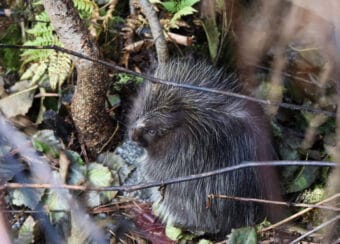
A porcupine hides in some foliage near the Mendenhall Glacier Visitor Center on Saturday, Oct. 15, 2022. (Photo by Clarise Larson/KTOO)

This is Lingít Word of the Week. Each week, we feature a Lingít word voiced by master speakers. Lingít has been spoken throughout present-day Southeast Alaska and parts of Canada for over 10,000 years.

Gunalchéesh to X̱’unei Lance Twitchell, Goldbelt Heritage Foundation and the University of Alaska Southeast for sharing the recorded audio for this series.

This week’s word is x̱alak’ách’, or porcupine. Listen to the audio below to learn how to say x̱alak’ách’.

The following transcript is meant to help illustrate the words and sentences. 

Keiyishí Bessie Cooley: X̱alak’ách’. 

That means porcupine.

Here are some sentences:

Keiyishí Bessie Cooley: X̱alakʼáchʼ kagéináx̱ yaa gagútch.

Porcupines walk down slowly.

Keihéenák’w John Martin: A x̱oo.aa haa atx̱aayíx̱ sitee wé x̱alakʼáchʼ.

Itʼs food for some of us, the porcupine. 

Kooshdáakʼu Bill Fawcett: Alʼóon kḵwagóot x̱alakʼáchʼg̱áa.

I am going to go hunting for porcupine. 

Ḵaakal.áat Florence Marks Sheakley: Chʼáakw dus.éeyin yá x̱alakʼáchʼch haa atx̱aayíx̱ sitéeyin.

A long time ago people would cook it; porcupine used to be our food.

Kaxwaan Éesh George Davis: X̱alak’ách’ ashaawax̱ích.

They clubbed the porcupine.

You can hear each installment of Lingít Word of the Week on the radio throughout the week. 

Additional language resources:

Find biographies for the master speakers included in this lesson here.

Learn more about why we use Lingít instead of Tlingit here.

Watch a video introducing Lingít sounds here.

Lingít Word of the Week: Laax̱ — Red Cedar

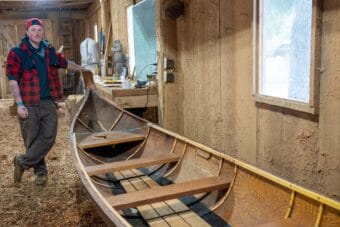
Haida artist and carver Nang K’adangáas Eric Hamar poses with a red cedar canoe hand-carved in the Native Village of Kasaan’s carving shed on Prince of Wales Island on May 9, 2024. (Jack Darrell/KRBD)

This is Lingít Word of the Week. Each week, we feature a Lingít word voiced by master speakers. Lingít has been spoken throughout present-day Southeast Alaska and parts of Canada for over 10,000 years.

Gunalchéesh to X̱’unei Lance Twitchell, Goldbelt Heritage Foundation and the University of Alaska Southeast for sharing the recorded audio for this series.

This week’s word is laax̱, or red cedar. Listen to the audio below to learn how to say laax̱.

The following transcript is meant to help illustrate the words and sentences. 

Keihéenák’w John Martin: Laax̱. 

That means red cedar.

Here are some sentences:

Keihéenák’w John Martin: Kootéeyaa aan dulyeix̱ yaa laax̱.

They make totem poles with red cedar.

Keiyishí Bessie Cooley: Laax̱ haawú litsʼáa.

Red cedar branches smell good.

Kooshdáakʼu Bill Fawcett: Deikeenaa aasí laax̱, ḵúnáx áwé xʼalitseen hé naakéexʼ.

It is a Haida tree, red cedar, it is really valuable here in the north

Ḵaakal.áat Florence Marks Sheakley: Ldakát át aan yéi daadunéi yá laax̱.

People work on red cedar for everything.

Kaxwaan Éesh George Davis: Laax̱ dax̱ dulyéix̱.

People use red cedar.

You can hear each installment of Lingít Word of the Week on the radio throughout the week. 

Additional language resources:

Find biographies for the master speakers included in this lesson here.

Learn more about why we use Lingít instead of Tlingit here.

Watch a video introducing Lingít sounds here.

Lingít Word of the Week: Yaana.eit — Wild Celery

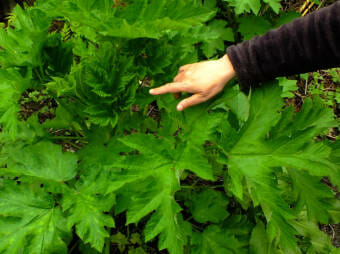
Wild celery
Yéilk’ Vivian Mork points to a wild celery plant’s new leaves, which along with the stalks, are edible. She says the plant usually tastes best when new, young growth develops in the early spring. She recommends picking wild celery – sometimes known as cow parsnip – during cloudy, cool days to avoid an allergic skin reaction to the photosensitive chemical furanocoumarins that are part of the plant’s sap or found on the hairs. (Photo by Matt Miller/KTOO)

This is Lingít Word of the Week. Each week, we feature a Lingít word voiced by master speakers. Lingít has been spoken throughout present-day Southeast Alaska and parts of Canada for over 10,000 years.

Gunalchéesh to X̱’unei Lance Twitchell, Goldbelt Heritage Foundation and the University of Alaska Southeast for sharing the recorded audio for this series.

This week’s word is yaana.eit, or wild celery. Listen to the audio below to learn how to say yaana.eit.

The following transcript is meant to help illustrate the words and sentences. 

Kooshdáakʼu Bill Fawcett: yaana.eit. 

That means wild celery.

Here are some sentences:

Kooshdáakʼu Bill Fawcett: Ḵúnáx̱ áwé yak’éi wé yaana.eit.

Wild celery is very good.

Keiyishí Bessie Cooley: Yaana.eit náakw yáx̱ yéi du.oowún.

People used to use wild celery like medicine.

Ḵaakal.áat Florence Marks Sheakley: Yées yaa kana.éini áyá yakʼéi yá yaana.eit.

This is good, young wild celery is growing here.

Kaxwaan Éesh George Davis: Yaana.eit wutuwax̱áa.

We ate wild celery.

You can hear each installment of Lingít Word of the Week on the radio throughout the week. 

Additional language resources:

Find biographies for the master speakers included in this lesson here.

Learn more about why we use Lingít instead of Tlingit here.

Watch a video introducing Lingít sounds here.

Lingít Word of the Week: Shéiyi — Spruce

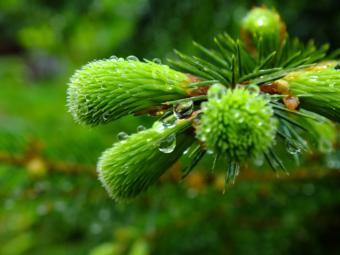
Spruce tips wait to be plucked in the morning dew in May 2017. (Photo courtesy Matt Miller)

This is Lingít Word of the Week. Each week, we feature a Lingít word voiced by master speakers. Lingít has been spoken throughout present-day Southeast Alaska and parts of Canada for over 10,000 years.

Gunalchéesh to X̱’unei Lance Twitchell, Goldbelt Heritage Foundation and the University of Alaska Southeast for sharing the recorded audio for this series.

This week’s word is shéiyi, or spruce. Listen to the audio below to learn how to say shéiyi.

The following transcript is meant to help illustrate the words and sentences. 

Kaxwaan Éesh George Davis: Shéiyi. 

That means spruce. 

Here are some sentences:

Kaxwaan Éesh George Davis: Shéiyi da dax̱ káax’ has awliyéx̱. 

He made a basket out of spruce bark.

Keiyishí Bessie Cooley: Cháash hít yeedé shéiyi haaw, yéi amsinee.

They put spruce boughs in the brush house.

Kooshdáakʼu Bill Fawcett: Aak’éi aas áwé wé shéiyi.

It’s a good tree, the spruce. 

Ḵaakal.áat Florence Marks Sheakley: Shéiyi daayí tsú atx̱ duleix̱.

Spruce bark as well, it is always growing.

You can hear each installment of Lingít Word of the Week on the radio throughout the week. 

Additional language resources:

Find biographies for the master speakers included in this lesson here.

Learn more about why we use Lingít instead of Tlingit here.

Watch a video introducing Lingít sounds here.

Site notifications
Update notification options
Subscribe to notifications