Lingít Word of the Week

Lingít Word of the Week: Tawéi — Mountain sheep

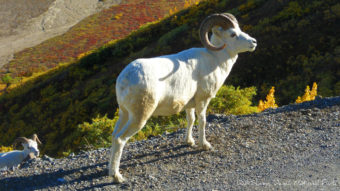
Dall sheep in Denali National Park. (Photo by blmiers2/Flickr Creative Commons)

This is Lingít Word of the Week. Each week, we feature a Lingít word voiced by master speakers. Lingít has been spoken throughout present-day Southeast Alaska and parts of Canada for over 10,000 years.

Gunalchéesh to X̱’unei Lance Twitchell, Goldbelt Heritage Foundation and the University of Alaska Southeast for sharing the recorded audio for this series.

This week’s word is tawéi, or mountain sheep. Listen to the audio below to learn how to say tawéi.

The following transcript is meant to help illustrate the words and sentences. 

Kooshdáakʼu Bill Fawcett: tawéi. 

That means mountain sheep.

Here is a sentence:

Kooshdáakʼu Bill Fawcett: Ax̱ tuwáa sigóo tawéi.

I want a mountain sheep.

You can hear each installment of Lingít Word of the Week on the radio throughout the week. 

Editor’s note: While there are only mountain goats in Southeast Alaska, mountain sheep live in interior regions of Canada and Alaska. The word for mountain goat will be featured in a subsequent Word of the Week. 

Additional resources: 

Find biographies for the master speakers included in this lesson here.

Learn more about why we use Lingít instead of Tlingit here.

Lingít Word of the Week: Atx̱á — Food

The produce section at Foodland IGA in Juneau. (Photo by Tasha Elizarde/KTOO)

This is Lingít Word of the Week. Each week, we feature a Lingít word voiced by master speakers. Lingít has been spoken throughout present-day Southeast Alaska and parts of Canada for over 10,000 years.

Gunalchéesh to X̱’unei Lance Twitchell, Goldbelt Heritage Foundation and the University of Alaska Southeast for sharing the recorded audio for this series.

This week’s word is atx̱á, or food. Listen to the audio below to learn how to say atx̱á.

The following transcript is meant to help illustrate the words and sentences. 

Kaxwaan Éesh George Davis: atx̱á

That means food.

Here are some sentences:

Kaxwaan Éesh George Davis: Hoon daakahídi dax̱ atx̱á aawa.óow.

He bought food from the store.

Keiyishí Bessie Cooley: Atx̱á du yaagú yeedé yaa akanjél.

They are carrying the food to their canoe.

Keihéenák’w John Martin: Shayadihéin áyá haa atx̱aayí

Our food is plentiful.

Ḵaakal.áat Florence Marks Sheakley: Lingít atx̱á haa ee yakéi.

Lingít food is good for us.

You can hear each installment of Lingít Word of the Week on the radio throughout the week. 

Additional resources: 

Find biographies for the master speakers included in this lesson here.

Learn more about why we use Lingít instead of Tlingit here.

Watch a video introducing Lingít sounds here.

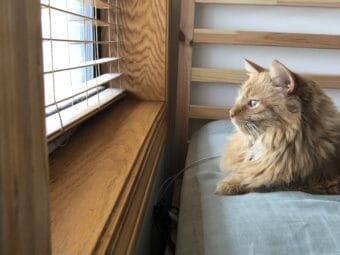
Lingít Word of the Week: Dóosh — Cat

This week’s Lingít word is dóosh, or cat. Popsicle is the cat of KTOO reporter Yvonne Krumrey. (Photo by Yvonne Krumrey).

This is Lingít Word of the Week. Each week, we feature a Lingít word voiced by master speakers. Lingít has been spoken throughout present-day Southeast Alaska and parts of Canada for over 10,000 years.

Gunalchéesh to X̱’unei Lance Twitchell, Goldbelt Heritage Foundation and the University of Alaska Southeast for sharing the recorded audio for this series.

This week’s word is dóosh, or cat. Listen to the audio below to learn how to say dóosh.

The following transcript is meant to help illustrate the words and sentences. 

Ḵaakal.áat Florence Marks Sheakley: dóosh. 

That means cat.

Here are some sentences:

Ḵaakal.áat Florence Marks Sheakley: Tlél haa ádi áyá yá dóosh.

This cat here is not ours.

Keihéenák’w John Martin: Lingít tsu, a dóosh has du jee yei yatee.

Lingít also have cats.

Keiyishí Bessie Cooley: Deix̱ dóosh yóoxʼ has ḵuligaaw

Two cats are fighting way over there.

Kaxwaan Éesh George Davis: Dóosh shí akadlaakw. 

The cat scratched his face.

You can hear each installment of Lingít Word of the Week on the radio throughout the week. 

Find biographies for the master speakers included in this lesson here.

Learn more about why we use Lingít instead of Tlingit here.

Lingít Word of the Week: X̱áay — Yellow cedar

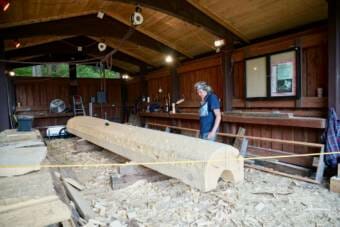
Tlingit carver Tommy Joseph in his workshop behind Totem Hall. He says he prefers red cedar logs to yellow because they’re easier to carve and more durable, but red cedar can only be found further south in Alaska. (Erin McKinstry/KCAW)

This is Lingít Word of the Week. Each week, we feature a Lingít word voiced by master speakers. Lingít has been spoken throughout present-day Southeast Alaska and parts of Canada for over 10,000 years.

Gunalchéesh to X̱’unei Lance Twitchell, Goldbelt Heritage Foundation and the University of Alaska Southeast for sharing the recorded audio for this series.

This week’s word is x̱áay, or yellow cedar. Listen to the audio below to learn how to say x̱áay.

The following transcript is meant to help illustrate the words and sentences. 

Keiyishí Bessie Coolie: x̱áay. 

That means yellow cedar.

Here are some sentences:

Keiyishí Bessie Cooley: X̱áay tín shál amliyéx̱

They made a spoon with yellow cedar

Keihéenák’w John Martin: Lingít tsú átx̱ has alyeix̱ wé saa has du shagóon x̱áay hít.

The Lingít also use that name, it is their origin, Yellow Cedar House. 

Kooshdáakʼu Bill Fawcett: Ḵúnáx̱ x̱ʼalitseeni át áwé kootéeyaa x̱áay kootéeyaa sákw. 

Yellow cedar is really valuable, it will become a totem pole.

Ḵaakal.áat Florence Marks Sheakley: Kootéeyaa aan yéi daadunéi yá x̱áay.

People work on yellow cedar for totem poles.

Kaxwaan Éesh George Davis: X̱áay dáx̱ dulyéx nuch.

It is always made from yellow cedar.

You can hear each installment of Lingít Word of the Week on the radio throughout the week. 

Find biographies for the master speakers included in this lesson here.

Learn more about why we use Lingít instead of Tlingit here.

Lingít Word of the Week: Kéet — Killer whale

The population of endangered southern resident killer whales has dwindled to 76 individuals. (Holly Fearnbach/NOAA)

This is Lingít Word of the Week. Each week, we feature a Lingít word voiced by master speakers. Lingít has been spoken throughout present-day Southeast Alaska and parts of Canada for over 10,000 years.

Gunalchéesh to X̱’unei Lance Twitchell, Goldbelt Heritage Foundation and the University of Alaska Southeast for sharing the recorded audio for this series.

This week’s word is kéet, or killer whale. Listen to the audio below to learn how to say kéet.

The following transcript is meant to help illustrate the words and sentences. 

Keihéenák’w John Martin: kéet. 

That means killer whale. 

Here are some sentences.

Keihéenák’w John Martin: Haa saani has áyá kéet ḵwáan.

Our paternal uncles are killer whale people.

Keiyishí Bessie Cooley: Naanya.aayí has du at.óowu áwé wé kéet

The killer whale is the at.óow of the Naanya.aayí

Ḵaakal.áat Florence Marks Sheakley: At.óowx̱ sitee yá kéet.

The killer whale is at.óow.

Kaxwaan Éesh George Davis: Kéet haa yinaadé yaa yanagwéin

Killer whales were traveling toward us.

You can hear each installment of Lingít Word of the Week on the radio throughout the week. 

Find biographies for the master speakers included in this lesson here.

Learn more about why we use Lingít instead of Tlingit here.


Lingít Word of the Week: Séew — Rain

Visitors brave the rain as they head back to their cruise ships in Juneau on Monday, Sept. 30, 2024. (Clarise Larson/KTOO)

This is Lingít Word of the Week. Each week, we feature a Lingít word voiced by master speakers. Lingít has been spoken throughout present-day Southeast Alaska and parts of Canada for over 10,000 years.

Gunalchéesh to X̱’unei Lance Twitchell, Goldbelt Heritage Foundation and the University of Alaska Southeast for sharing the recorded audio for this series.

This week’s word is séew, or rain. Listen to the audio below to learn how to say séew.

The following transcript is meant to help illustrate the words and sentences. 

Kooshdáakʼu Bill Fawcett: Séew. 

That means rain.

Here are some sentences:

Kooshdáakʼu Bill Fawcett: Séew ḵúnáx̱ daak wusitán.

It’s really raining.

Keihéenák’w John Martin: Séew daak wusitán.

It’s raining.

Keiyishí Bessie Cooley: Aatlein séew daak wustaaní, yeis yít, ḵaa dzískʼw du sheidí chʼáalʼ x̱oox̱ yaa akla.átch.

When it rains a lot in the fall, the bull moose drag their antlers through the willows.

Ḵaakal.áat Florence Marks Sheakley: Haa x̱ánxʼ yakʼéi wé séew.

This rain is good.

Kaxwaan Éesh George Davis: Séew has du káa daak wusitán. 

It rained on them all.

You can hear each installment of Lingít Word of the Week on the radio throughout the week. 

Find biographies for the master speakers included in this lesson here.

Learn more about why we use Lingít instead of Tlingit here.

Site notifications
Update notification options
Subscribe to notifications