Community

Tongass Voices: Mitch Erie on what it takes to be a firefighter for the U.S. Forest Service

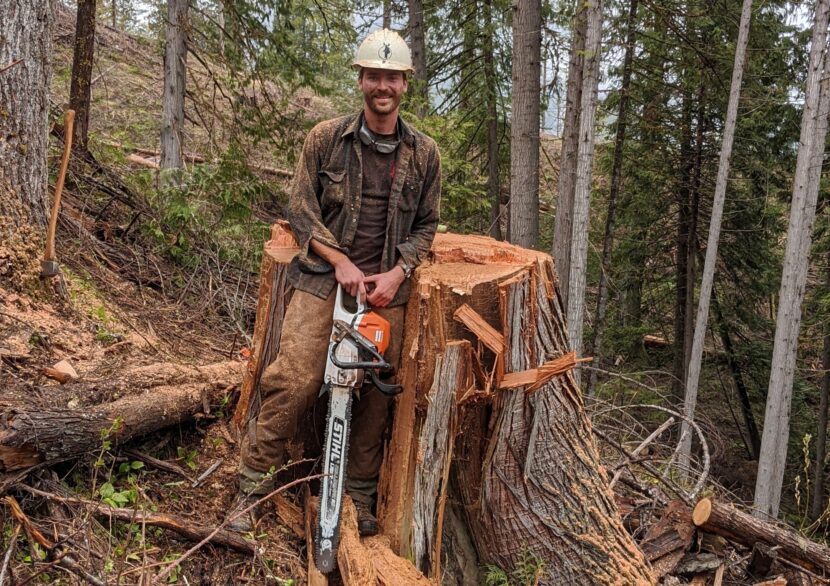
Mitch Erie works as a firefighter for the U.S. Forest Service in Wrangell. (Photo courtesy of Mitch Erie)

This is Tongass Voices, a series from KTOO sharing weekly perspectives from the homelands of the Áak’w Kwáan and beyond.

Mitch Erie is a U.S. Forest Service firefighter based out of Wrangell, but he says the job takes him all over Alaska and the country. 

The Forest Service is recruiting more firefighters now. There are 17 open positions in Moose Pass and Anchorage in the Chugach National Forest, and in Juneau in the Tongass National Forest. Applications are open through next Tuesday.

Listen: 

Mitch Erie: My name is Mitch Erie. I am currently based in Wrangell as the assistant module leader of the Fire Program.

So this is my eighth year with the Forest Service, my first year working in Alaska. Actually, I did my prior seven years working in Idaho on the Sawtooth National Forest and on the Nez Perce Clearwater. Similar jobs as to what I’ve had now, mostly based on hand crews. And this year, I wanted to try something new, so I went for it and moved up to Alaska, and I’ve been loving it so far. 

So the majority of the firefighting I do requires travel to either the interior of Alaska. I didn’t sign it up there at the start of the year on the Kuskokwim River, about two and a half hour flight to the west of Anchorage. And then just this last week, I got back from another assignment, and we were working in Colorado and Idaho. 

I’ve had a lot of moments on some pretty hard hikes where you got 50, 60, 70 pounds of equipment and stuff on your back. Where you’re you’re going up a mountain that seems to just never quite want to end, and it’s just false ridge after false ridge, and you’re kind of working your whole way up to and next thing you know, you’re sitting the top with all your new best friends and laughing and smiling and looking out across the landscape, or some shifts that never quite seem to end, and the hours keep just plugging on away and away and away. 

I formed some really close bonds with people that I still talk to you on an absolutely everyday basis. I would say, for me personally, probably the best parts can also be some of the most challenging parts. 

Living a life on the road can be challenging. Obviously, you’re away for long periods of time, you miss stuff. You miss birthdays. There’s people that I haven’t seen in a few years that I really love to and it’s just challenging with the scheduling. 

And as much as I love spending time outdoors, after two weeks outside, you’re pretty ready for a shower and a night in the bed. 

I know that I’ve definitely had some of the most awe-inspiring moments of my life in this job and without the opportunities that wild and firefighting has brought me. I mean, just this summer, I went on a flight through the Alaska Range out to our work area on the Kuskokwim River. And I don’t know if I ever would have done that in my life. And we were, we had, I think eight of us smashed into this tiny little airplane, and every single person was glued onto the window like a little kid, just awestruck at what we were flying through. And it just opens a lot of opportunities that you never otherwise see in your life, I feel.
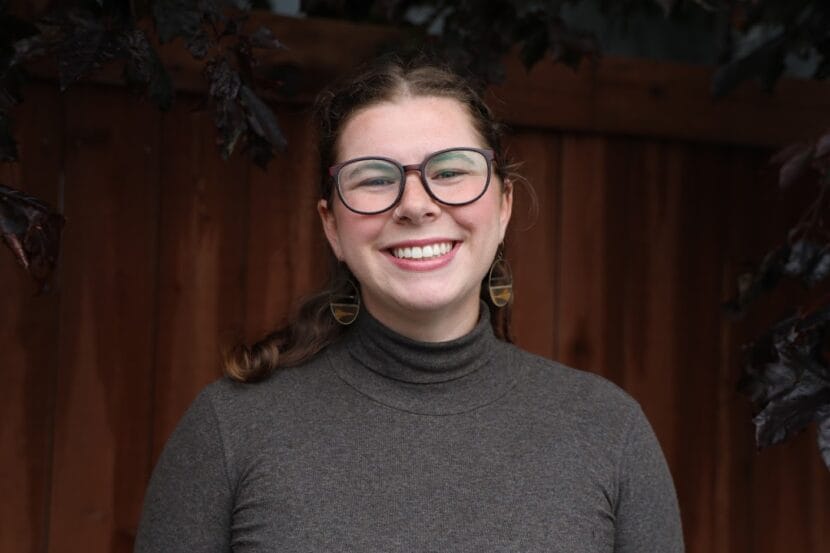
Tongass Voices: Trail Mix’s Meghan Tabacek on what it takes to be in trail work

Meghan Tabacek is the executive director of Trail Mix, Inc. Juneau’s trail maintenance nonprofit. August 30, 2024. (Photo by Clarise Larson/KTOO).

This is Tongass Voices, a series from KTOO sharing weekly perspectives from the homelands of the Áak’w Kwáan and beyond.

Meghan Tabacek has been with Trail Mix, Inc. for four years now, and she’s done a lot of the dirty work. The nonprofit has maintained many of Juneau’s beloved trails since 1993, and she says the crews look a lot different than they used to. 

Volunteers can join in on trail work each Saturday this month. This weekend, volunteers are meeting at Black Bear Trail from 9 a.m. to 3 p.m.

Listen: 

Meghan Tabacek: I’m Megan Tabacek, and I’m the executive director at Trail Mix, Inc.

Our season starts in May, and I started in April. Luckily, I had been working with Ryan for a long time. I’ve been at Trail Mix for four years now, so I had a running start compared to other directors, but it definitely was a busy time. 

Trail mix is a very interesting kind of nonprofit. You got to know how to do the trail work, but then there’s also, like, all of the meat of running a nonprofit.

I actually was never supposed to work at Trail Mix, and then the pandemic happened, and one of the few jobs that was happening was trail work, and I’d always really wanted to do it, but I thought of — saw myself more as a guide. But then pandemic, I applied. I absolutely loved it. 

At the end of my summer, I was going into my senior year at UAS in the environmental studies program and needed an internship, so I begged Ryan O’Shaughnessy, who was the former director, for an internship. I got one, and then I just never really left. 

I loved learning — building trails is really fun. Learning about why and how we build trails is really cool. So it was just really fun, learning about all these inner workings and what goes on behind the scenes just to make a half-mile stretch of trail better. And so I was hooked. I’ve really worn all the hats there is to wear at Trail Mix. 

Almost every single weekend this entire summer, we’ve had a volunteer group out on the trails, and it’s really cool to see how much our community loves our trails and wants to spend a sunny or rainy Saturday on the trails with us. 

I am not the buffest person in the world, and I was really nervous about that when I first started working for Trail Mix — and this is actually something that’s been really, really cool over the past five years at Trail Mix — is you used to have to be pretty buff. I mean, it wasn’t a straight up requirement, but in years prior, we hired just people who are great at trail work and were really strong. 

And then a couple years ago, during the pandemic, we made this shift of saying, “What if we just hired really good people and taught them how to be trail workers?” Because, turns out, you can teach good people how to be good trail workers, but you can’t teach good trail workers how to be good people. 

So if you were to look at photos of Trail Mix 10 years ago, it’s primarily 25 to 30 year old white men — maybe a couple women, very infrequently. That was actually one of the reasons I almost didn’t apply to Trail Mix, is because I didn’t see any women in the photos. 

And over the past five years, you know, we’ve seen a huge swap in our demographics. This year, we have more women and nonbinary people working at Trail Mix than men. 

One of the great things about trail work is there’s always workarounds. You know, you can’t lift something up with your hands? Ask a partner, and maybe you’ll do a team lift. Something’s too big for the whole team to lift? We’re gonna set up a grip hoist and use mechanical advantage to lift this thing. So there’s really all sorts of workarounds. And, oh, you’re not comfortable with chainsaws? That’s fine. There’s always other tasks. A lot of tasks go into making a trail happen. And so there’s always a place for everyone on the trail. 

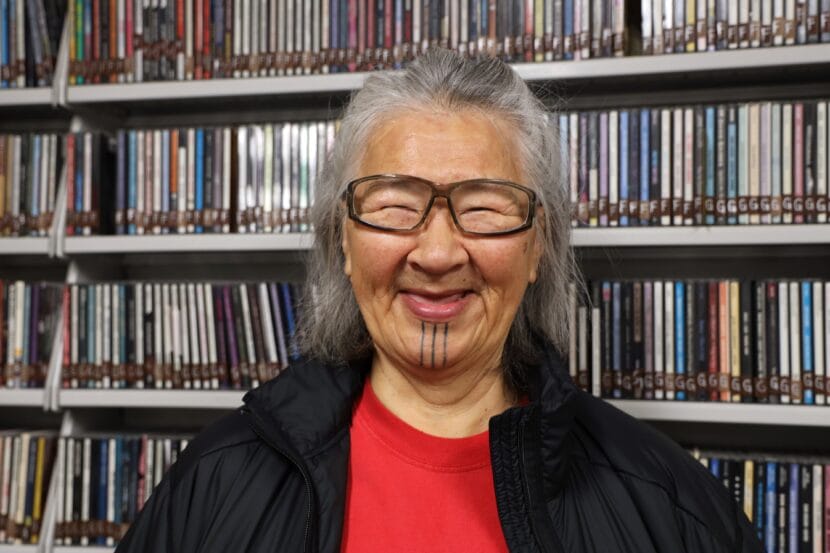
Tongass Voices: Nutaaq Doreen Simmonds on finding herself on the stage

Nutaaq Doreen Simmonds plays the grandmother, Aaka Mary, in Cold Case, running at Perseverance Theater this month. (Photo by Clarise Larson/KTOO)

This is Tongass Voices, a series from KTOO sharing weekly perspectives from the homelands of the Áak’w Kwáan and beyond.

Nutaaq Doreen Simmonds is an Inupiaq actor and language teacher. She was seen by more than 12 million people playing an auntie to Jodie Foster’s step-daughter in the latest season of True Detective. She’s also appearing in a comedy set in the Arctic — North of North — debuting next year on Netflix.

She plays the grandmother, Aaka Mary, in Cold Case, a play opening at Perseverance Theater this weekend.

Content warning: This interview contains mentions of suicide and violence against Indigenous people.

Listen: 

Nutaaq Doreen Simmonds: I gave you my Inupiaq name, Nutaaq. My other name is Doreen Simmonds, and I’m from a place that was known as Barrow for a hundred years, and we just got the name back, Utqiagvik, which means “a place to pick roots.”  

Oh, it was a friend of mine who emailed me something about auditioning for a part in True Detective. She came over with her phone, with her phone, and she helped me do the audition, rather then and there. And they liked it, so I got the part.  

Aaka Mary. I’m the grandmother to the young lady who is looking for her Auntie’s body, Aaka Mary’s daughter.

It happens to be a cold case. She’s been missing for about nine months.

And Aaka Mary doesn’t know too much — not too much about English and gets confused and takes, kind of takes it out on her granddaughter. She’s just a grumpy, grumpy old lady.

There’s still two sisters who were brutally killed. It still hasn’t been solved, and that was 20 some years ago. And also my favorite Auntie’s granddaughter, who was killed and wasn’t found all winter, until people who were walking the beach several miles down found her body. 

It brought back memories, and there are others.  

I had to laugh at myself the way I was before, when I finally found myself, and it was through my older sister. I was near offing myself when I called my sister at midnight. And through her suggestion, I found that myself — this skin and bone was really not the real me. There was a bigger part of me, like an iceberg. 

For most of my life, I thought of myself as that part, and found there was a bigger, deeper part of me, and I began to be kinder to myself and to others. And it took a while, but I learned to be comfortable with myself and not be so judgmental toward others, because I was learning to be kind to me.

And so in that process, I learned to look back at myself how I was before I learned to forgive myself for having been that way.

I grew up very, very, very shy. My grandmother called me Nipailuktaq after a bird that would — very quietly — would swoop down and scare the heck out of us while we were in the tundra because we’re too close to her eggs.

This was an opportunity for me, because I had just finally — at my late age — finally admitted I’m an artist, and I need to work as an artist and acting is an art.

My son, he tells me, “Mom, we just don’t know what you’re going to do from one thing to the next.” But he said, “I have never heard you talk so happily about a job you’ve had before.”

Tongass Voices: Sh Dei Wooteen Jeni Brown on speaking up — “Everybody has a warrior inside them”

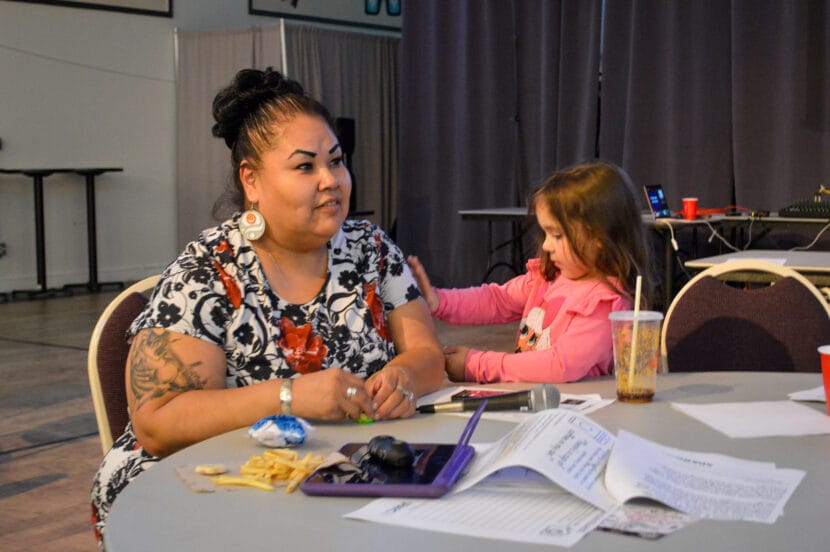
Sh Dei Wooteen Jeni Brown with her niece at a stalking awareness and prevention training in Juneau on Aug. 22, 2024. (Photo by Yvonne Krumrey/KTOO).

This is Tongass Voices, a series from KTOO sharing weekly perspectives from the homelands of the Áak’w Kwáan and beyond.

Sh Dei Wooteen Jeni Brown is a Missing and Murdered Indigenous Peoples’ advocate. Last week, she offered a training that honed in on one aspect of violence that people sometimes overlook — stalking. 

For Brown, this work is personal. She’s a survivor and she’s lost family members to domestic violence. And often, a stage of that increasing danger is stalking. 

Content warning: This interview contains mentions of domestic violence and violence against Indigenous people.

Listen: 

Sh Dei Wooteen Jeni Brown: You don’t have to be quiet. We’re not in the day and age where you’re quiet about this. If they’re doing something that makes you uncomfortable, speak up. Everybody has a warrior inside them, and it’s time for them to wake up. 

My name is Jeni Brown. My Lingít name is Sh Dei Wooteen. I am T’aḵdeintaan from Hoonah, originally Glacier Bay. 

[The trainings] started because I am an advocate for missing and murdered indigenous people, and I’m an advocate for people that are incarcerated. I’m an advocate for recovery. And I feel like this training, the stalking awareness and prevention training, ties into domestic violence, sexual assault, missing and murdered. It all plays a part — like a beginning. You know what I mean?

Sometimes it’s re-traumatizing. Sometimes it’s healing, because I’m not a person that’s gonna sit there and be quiet about things like this. You know what I mean? Like it needs to be brought to the light. We’re no longer in the generation of what happens in the home stays in the home. 

I’m a firm believer in like, “No, you did wrong. We don’t deserve that.” A lot of the self-care that I do is — I’m in counseling. I do counseling with the Community and Behavioral Services with Tlingit and Haida, and I have a good support group. 

I talk to my pastor, I talk to my friends. I’m really well supported. I talk to my sponsor. I’m really well supported in things that I do. You know what I mean, which makes me feel like I am the one that needs to reach out and show people. You know what I mean? 

I’ve said many times in many interviews before that I want to be the light so that people from the dark can see the light and come towards that. To be the path and help people, because I don’t want to stand on a platform by myself. You know what I mean? I feel like we all deserve to be on that platform. 

It kind of really opened my eyes, because I’m a person that likes to be doing awareness trainings in our community, to be like, “Hey, this happens in our community. Please don’t turn a blind eye. It could be your neighbor. It could be somebody that you see every day and not know.”

People use it very loosely, like, when people say, “Oh, I was stalking you on Facebook last night.” Like, we need to end that kind of language. You know what I mean? Because it’s something; this is something serious. 

What happens when the victim gets a restraining order, and the stalker comes forth and kills them, you know what I mean? And nobody took them seriously, because everybody uses it so loosely. “Oh, I was stalking you at the store,” or if you see somebody more than once at the store, “what are you stalking me?” You know what I mean? Like the language in itself needs to stop. 

I always have the saying that my door is open, my phone’s always on, my door is always open. If this is happening, don’t be afraid to reach out. I know that our services in Juneau are limited, but it doesn’t mean that we don’t have a community that cares. 

There’s always somebody — I feel like every person should have that one support that is there through thick and thin, and will answer at the drop of a dime at three o’clock in the morning. And I like to be that person, because I don’t want somebody to feel like they’re alone. 

Siblings of Juneau man killed by police demand answers

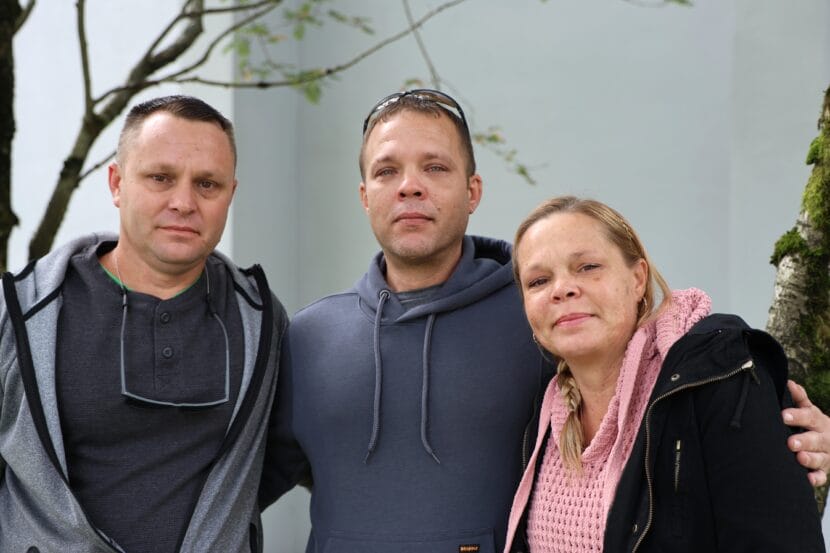
Jason, Monty and Dawn Kissack in Juneau on Aug. 23, 2024. They were in town for their brother Steven’s memorial. (Photo by Clarise Larson/KTOO)

The family of a man who was shot and killed by law enforcement in Juneau in July say they’re still waiting for answers. 

Jason, Monty and Dawn Kissack arrived from Florida this week for a memorial to honor their brother, Steven Kissack. Steven was unhoused, and lived on the streets of downtown Juneau for several years with his malamute, Juno. 

Monty Kissack, Steven’s older brother, said they want to know why he was killed, and to make sure that the officers involved in the incident are held accountable. 

“We’re not going to let it go away. We will keep talking about it, until something is done,” he said. 

Monty was 8 years old when Steven was born. They grew up near Tampa Bay, Florida. 

“He was the youngest. We always carried him around with us, everywhere we went,” oldest brother Jason Kissack said. 

Steven was a calm, smart kid who loved animals, Jason Kissack said. He was reserved, but he loved to debate with his older brothers. He told them he wanted to go to Alaska, where he could be outside and be free. He lived on a boat in Juneau for a while before he couldn’t keep up with the bills.

The Juneau Police Department says Steven Kissack threatened officers with a knife and made verbal threats before he was shot on July 15. The incident took place on a downtown street in the middle of the day, with dozens of witnesses. It’s still under investigation by the Alaska Bureau of Investigation. 

Since his brother’s death, Jason Kissack said he’s been calling the Bureau and the Office of Special Prosecutions, but he’s only received sparse details about what happened.

“We want the information. We want it all,” Jason Kissack said. “We’re just being left in the dark.”

Dawn Kissack said she wants to see the police body camera footage. They’ve watched the videos taken by bystanders dozens of times.

She had been trying to get in touch with her brother last month when she learned from a social worker in Juneau that something had happened. Then, her kids started looking online.

“You shouldn’t hear about your baby brother dying from social media,” she said.

The Kissacks say the videos were tough to watch. But they are glad they exist, because they want to know exactly what happened. They still don’t understand why he was killed.

The five officers involved — four from the Juneau Police Department and an Alaska Wildlife Trooper — were placed on administrative leave after the incident. They’re now back on duty.  

“If somebody in the public shoots somebody, we get arrested, we have to go to jail. We have to bond ourselves out if we’re given a bond, and then we have to go back to court so that we prove our innocence … we have to prove that what we did was justified,” Dawn Kissack said. “I want the same thing for those cops. They need to be held to higher standards than we as citizens are held.” 

Dawn and her brothers have received messages from many people in Juneau who knew Steven. It’s helped to know that he was so loved here, she said. 

“We miss him, you know?” Dawn Kissack said. “And we always wanted him to come back, but this was his home. You know, he didn’t have a home with walls, but Juneau was his home, and the people of Juneau were his family too, and we couldn’t have dragged him away from here.”

The memorial is Sunday at Marine Park at 1 p.m. It will be led by Pastor Karen Perkins and local organization Haa Tóoch Lichéesh. The memorial will be livestreamed and recorded by Resurrection Lutheran Church.

Juneau Afternoon: National Breastfeeding Month, Harvest Fair, and Chef Pati Jinich

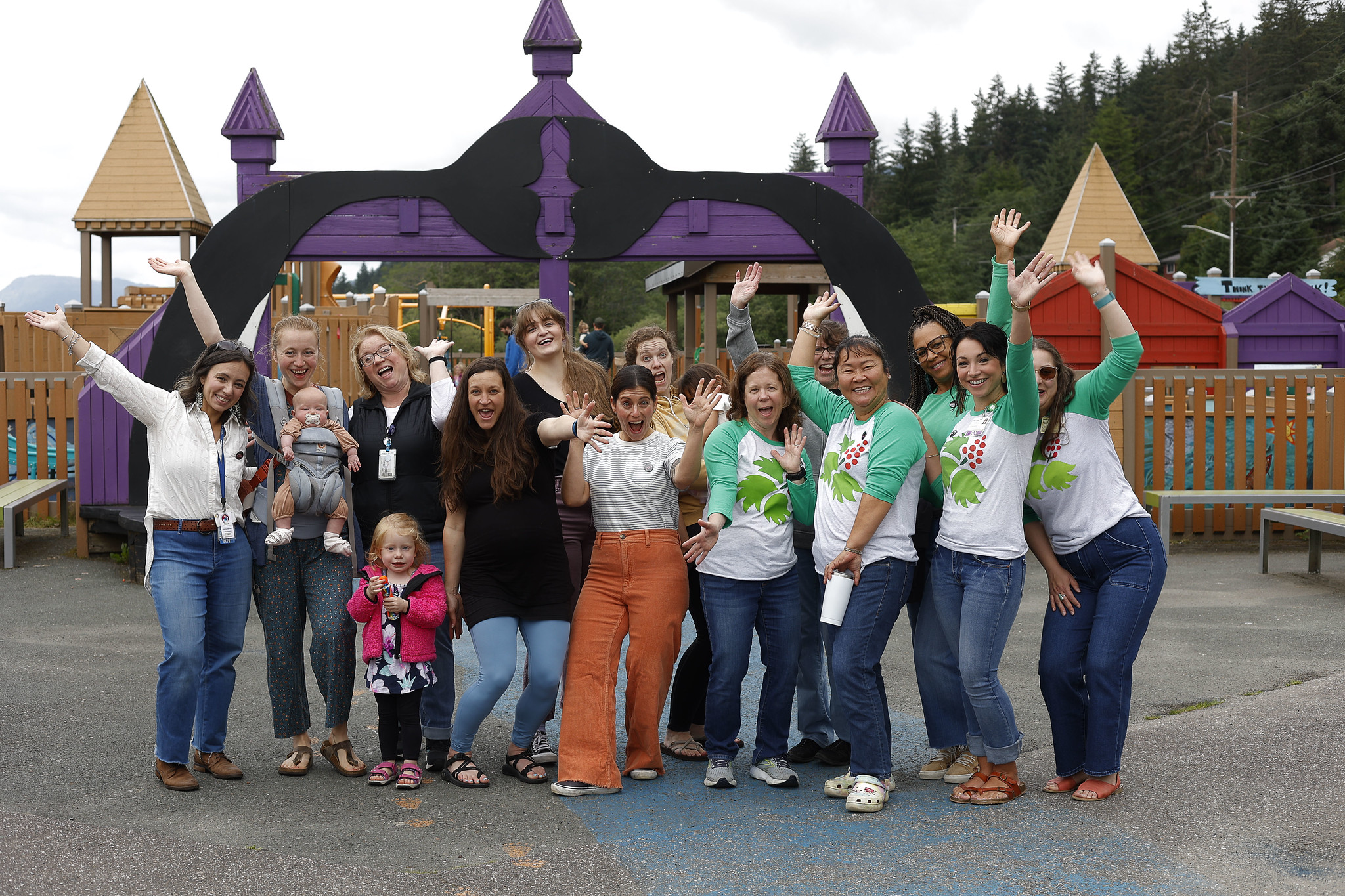
SEARHC, Bartlett Beginnings, and Juneau Family Birth Center hosted a Lactation Resource Fair on August 3, 2024, to connect families with resources to support their breastfeeding journeys. (photo via SEARHC)

On today’s program:

Bostin Christopher hosts the conversation. Juneau Afternoon airs at 3:00 p.m. on KTOO and KAUK with a rebroadcast at 7:00 p.m. Listen online or subscribe to the podcast at ktoo.org/juneauafternoon.

Subscribe to the podcast:

Juneau Afternoon is a production of the KTOO Arts and Culture Team.
Bostin Christopher produced today’s show with help from Erin Tripp.

Site notifications
Update notification options
Subscribe to notifications