Community

Tongass Voices: NAMI Juneau’s Aaron Surma on how to combat the winter blues

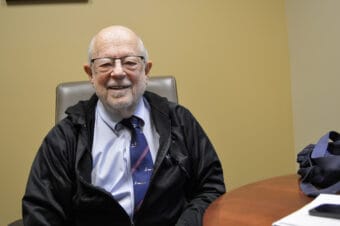
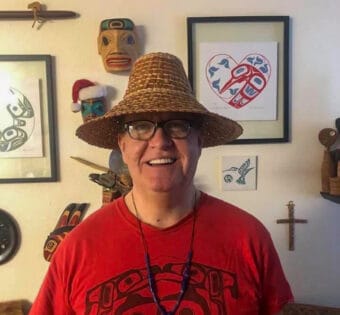
NAMI Juneau’s Aaron Surma. September 5, 2024. (Photo by Yvonne Krumrey/KTOO)

This is Tongass Voices, a series from KTOO sharing weekly perspectives from the homelands of the Áak’w Kwáan and beyond.

Aaron Surma leads the Juneau chapter of the National Alliance on Mental Illness, or NAMI. He said winters in Juneau can be tough, and it takes creativity — and small steps — to keep your mental health strong when it’s dark and cold.

This transcript has been lightly edited for clarity.

Aaron Surma: I just see it as people turning into molasses. It’s just — you slow down, you hunker down. And like, there’s pieces of the hunkering down that can be charming or pleasant. But I think it also speaks to people losing their routine, losing what was working for them, the other six, seven, eight months of the year, where the weather was less difficult, where there was more sunshine. 

My name is Aaron Surma. I’m the Executive Director of NAMI Juneau.

I’ve been addressing my own mental health, like, actively doing it for 25 years, and like, just like feeling the effects of my crummy mental health for multiple years before that. And I have probably done most of the things that exist. I’ve been in inpatient treatment. I’ve seen therapists. I’ve taken medications. I’ve gone to support groups. I’ve done a lot of the stuff that you can and I’ve just done like things in my life to also improve my mental health. 

And it’s been a ton of trial and error, and I think it’s some trial and error that came out of me not having any help or guidance along the way. So I think my main motivation is I wasted a lot of time trying to figure out what worked for me, and I hope that I can be helpful to other people so they don’t spend as much time, kind of like spinning their wheels, so to speak, trying to figure out how they can feel better than they feel. 

I would think about what works for you in summer, and how can you replicate some of that stuff? Like, for me, being around other people is really important, and it’s easy in summer to be spontaneous and like, “Hey, it’s a nice day out. Let’s all go have a bonfire at this  place at 7pm today.” And that seems achievable. There’s a lot more spontaneous social interaction that I have with my friends in the summer that doesn’t happen in the winter. And so having things that are scheduled helps me to still get my social needs met.  

So I turned into a much bigger jock than I’ve ever been in my life, once I moved to Juneau. I started playing a ton of sports. I played basketball sometimes before moving here, but I really crave that teamwork, connection and social engagement, and that’s one great way to do it — especially in the winter. 

What is something that you know will feel good if you do it that seems achievable? And there’s like a classic example of just making your bed in the morning, so you give yourself one gold star for the day, or check off one thing on your to-do list. 

Just what does feel realistic? Is it just going outside and looking around for 10 minutes and coming back in, just so you don’t feel stuck in your house? Maybe that’s the thing. And I think that that stuff does snowball.

But when I feel stuck — just walking outside, it’s like, “Oh yeah, there’s a whole world out here. I am not just inside the four walls of whatever room I’m in.” And so I think just going outside for one minute is meaningful for me. 

A lot of people are feeling stuck in the winter, and those invites to do something — and just explicitly saying, like, “hey, let’s just get out of the house and let’s do this thing,” even if it’s small. Even if it’s let’s have a cup of coffee together. Let’s have a cigarette together. Whatever it is, making those choices feels good. Those are small, achievable things. It’s nice to feel like you’re in it with other people. 

Many people who choose to live here choose to live here because of the summer stuff, and you aren’t doing that stuff anymore, it feels like there’s less options. When it’s raining sideways and 35 degrees, the world doesn’t feel as accessible. And so I think those lifestyle things are meaningful and real as well. 

Juneau high school hockey team fills 3,000 sandbags for flood affected neighborhoods

Volunteers from the Juneau-Douglas High School Yadaa.at Kalé high school hockey team filling sandbags on Sunday, Oct. 13, 2024 (Photo by Anna Canny/KTOO)

The Juneau Douglas High School hockey team spent the weekend filling and delivering sandbags to homeowners in the Mendenhall Valley, where a record-breaking glacial outburst flood damaged nearly 300 homes in August.

Over the last two weekends, the team distributed more than 3,100 sandbags to more than 30 households, according to hockey mom Andrea Petrie, who coordinated the distribution.

Head coach Matt Boline said they shoveled tens of thousands of pounds of sand.

“That’s a lot of time saved in the gym. And they’re out here helping the community in the process,” he said.

The team made dozens of deliveries to neighborhoods that flooded in August 2024. The hope is that the sandbags will help people protect their homes from the next outburst flood. (Photo by Anna Canny/KTOO)

Boline also said the work was an especially good team-building activity as students navigate the Juneau School District consolidation. Some students moved from the former Thunder Mountain High School in the Valley to Juneau-Douglas High School Yadaa.at Kalé downtown this school year.

“With the schools combining and a lot of the attention focused downtown at JDHS, people maybe aren’t thinking about the Valley so much from down there, but all the kids are coming from there,” Boline said. “We have a lot of families, hockey families that live here.”

The sandbags and the sand to fill them were provided by community member Noah Teshner. Debbie Penrose Fischer, whose house flooded this year, also helped to coordinate the deliveries.

Tongass Voices: Kushx̱eet.éesh/Kaasgéiy Bowers on walking the path to identity

Kushx̱eet.éesh/Kaasgéiy Bowers peeks under leaves for thimbleberries near Basin Road on August 23, 2024. (Photo by Tasha Elizarde/KTOO)

This is Tongass Voices, a series from KTOO sharing weekly perspectives from the homelands of the Áak’w Kwáan and beyond.

Kushx̱eet.éesh Bowers, also known as Kaasgéiy, was 5 when he moved to Juneau to grow closer to his Native identity. He’s 18 now, and hiking along Basin Road recently, Bowers talks about harvesting and his path to identifying as a two-spirit person.

Listen: 

This transcript has been lightly edited for clarity.

Kushx̱eet.éesh/Kaasgéiy Bowers: My name is Kaasgéiy or Kushx̱eet.éesh. I’m Shangukeidí of the Eagle moiety. My people come from Klukwan and Angoon and the L‘eeneidí are my grandparents and my great grandparents people, my outer shell.

I moved to Juneau on my fifth birthday. And I lived between two homes of my mom and dad. My mom was very, she was very supportive with us being involved in our culture. And the whole reason we moved to Juneau was so we could learn our culture. So she involved us in dance groups, she tried to enroll us in TCLL (Tlingit Culture Language Literacy program), she took us fishing, berry picking. Since I was five, I’ve gone berry picking. And she always took me on her hikes before I could even walk in a small backpack, and I got to eat the tallest berries! It was the best. 

Kushx̱eet.éesh/Kaasgéiy Bowers harvests green yaana.eit, or cow’s parsnip, near Basin Road on August 23, 2024. He uses the plant to make solid perfume in a process called enfleurage. (Photo by Tasha Elizarde/KTOO)

My interest in plants peaked in high school when I learned the importance of living off the land and the full cycle of reciprocity that comes with it. I feel harvesting for me is a huge part of my cultural identity and helps me bond with other Native people. Also, when you open your freezer and it’s full, it fills your heart, just…not even eating yet! It’s my favorite.

But there’s all the brown yaana.eit that got the most sunlight. Up there is where the green yaana.eit is, and right next to it is thimbleberry. It’s a late summer berry, it has no real body of its own. It actually collapses in your hand. Mm. 

When I first discovered the term two-spirited, I think it was 2022, at Alaska Federation of Natives, AFN. There was, led by a two-spirited person. And that was the first time I’d ever encountered it. I was maybe 15, 16? And I didn’t know – I thought it was only for down south Native people, so I didn’t for a long time, I wouldn’t use the term and I wouldn’t identify under it, even though maybe it was set aside for all Native people. 

Before I graduated, I was like, well, I do feel actually very akin to having a female and male spirit within my body. I hold reverence for many of the feminine figures who played a huge role in my life, in the development of well, myself as a person. I don’t ever want to stop identifying with my female Lingít name out of respect and recognition of that. But very often, I want to be seen as male, always. And instead of Kaasgéiy, I might legally change my name to Kushx̱eet.éesh, so then again, I can step into that. 

Now, I serve male role in ceremony, but when I was younger, it was strictly female role that I served. And now I’m just learning to dance the way a guy would. And you can still see me, I look more like a dying ptarmigan, but learning is how it is. You watch, you see, and you repeat. 

I want to provide more resources for our community, especially maybe queer Native people, because it is hard. It’s huge, especially for a younger person who may not have control over every aspect of their life. Maybe, if I talk about it more often, and more people hear it, one of them could be a young, 16-year-old who only saw it once at a council meeting. And maybe they, too, will feel that they can identify with that.

Kushx̱eet.éesh/Kaasgéiy Bowers shares freshly picked thimbleberries above Basin Road on August 23, 2024. (Photo by Tasha Elizarde/KTOO)

Philippine consulate visits Kodiak for the first time since before the pandemic

A cohort of nearly 20 people swearing in as dual citizens of the Philippines and the United States. (Brian Venua/KMXT)

The Philippine National Anthem, “Lupang Hinirang,” played for newly sworn in citizens at Kodiak’s Best Western Hotel this week. The hotel’s Harbor Room was packed with people looking to meet with the Southeast Asian country’s visiting consulate.

Daisy Briones is one of them. She lives in Kodiak and works at one of the schools and the library. She’s both a volunteer for, and a beneficiary of the consular outreach to Kodiak.

“This is much better, much faster, and more convenient – and you know everybody,” she said.

For the first time since before the pandemic, a Philippine diplomat visited Kodiak on Sept. 24. The consular team provided services that people would otherwise have to leave the island, or the state, to receive.

The Philippine consulate works as a sort of extension of the country’s embassy in Washington D.C. and serves people outside the Philippines.

Immigration can be complex, but the gist for many is that when some Philippine nationals become U.S. citizens, they end up renouncing their home country’s citizenship. But, they can regain legal ties as dual citizens later. That’s what Briones did.

If she wanted to go through the same process without the outreach to Alaska, she would have had to fly to the nearest consular office, which is in San Francisco.

The swearing in ceremony for dual citizenship lasts about 15 minutes, concluding with an oath in Filipino, the official language of the Philippines, which is largely based on Tagalog.

The Kodiak visit is important, in part because the borough has the second most people with Filipino heritage in the state, according to census data. Kodiak has about 3,253 Filipinos, while Anchorage has an estimated 18,033.

Philippine Consulate General Neil Frank Rivera Ferrer said he tries to serve Alaska at least once a year. Teams mostly have gone to cities like Anchorage and Juneau in recent years, but this is the first time anyone can remember consular outreach to Kodiak in nearly a decade.

“Since I assumed my post in 2021, I made it a priority to service our Kababayans in Alaska,” Ferrer said.

Kababayan roughly translates to countrymen in Filipino.

Ferrer is a career diplomat and works for the Government of the Philippines. (Brian Venua/KMXT)

Ferrer, his consulate staff, and volunteers helped 296 people file paperwork with the Philippine government during their day in Kodiak for a variety of administrative services. He said he’s glad to help people who might not be able to get these services otherwise. All they have to do is bring paperwork that shows previous Philippine citizenship.

While some people regained their citizenship, others registered for overseas voting and renewed their passports – or did all three – in a single day.

“It saves them a lot of money in terms of the cost for traveling, and also the time,” he said. “You’d have to take time off from work – one or two days just to travel and those things. So we try to do that as much as we can.”

A flight to San Francisco can cost over $1,000 – not including money for taxis or hotels.

Ferrer’s office is just one of eight in the U.S. including the embassy in Washington D.C. The others are in Chicago, Los Angeles, Honolulu, New York, Houston and Guam.

Ferrer serves Northern California, Northern Nevada, Colorado, Idaho, Montana, Oregon, Utah, Washington State, and Wyoming in addition to Alaska. The combined population he serves is around 1.3 million Filipino people.

Ferrer brought a team of 11 of his office staff as well as worked with several volunteers for the Kodiak outreach. (Brian Venua/KMXT)

Alaska’s honorary consul, Rebecca Carrillo, was also part of the visit. She can’t provide these services herself, but works as a sort of intermediary between Philippine nationals in Alaska and the consular offices in the Lower 48 and Hawaii. She said she loves meeting people and hearing their immigration stories.

“Their journey from the Philippines to here has transformed their lives, their families’ lives, (for) how many generations,” she said.

Carrillo said she’s heard that many Filipino people have faced discrimination, but retained their identity and love for their homeland despite that. Many of whom did so while building their lives here.

“They are thriving – they own their own homes, they’re able to send their kids to college,” Carillo said. “Those kids are doing well, and it’s the proverbial realization of the American Dream.”

And now many folks who’ve realized that dream want to go back to the Philippines. U.S. citizens can usually only stay in the Philippines for about a month depending on their visa, but dual citizenship allows them to stay longer, or even move back. With a Philippine passport, they can also have a faster process when going through customs and immigration.

Briones, the volunteer, still has siblings there. She said the consular team helped make the process to visit them easier for her.

“The consular team, they’re so accommodating,” she said. “We have plenty of senior citizens here who are applying for their dual (citizenship) or (a) passport. There’s a patience in helping out all these people and we truly appreciate all their efforts.”

The San Francisco consulate office plans to draft its schedule for the next Alaska outreach by the end of the year.

Tongass Voices: George Gress, Joseph Galgano and Bryan Bolaños on musical craftsmanship

George Gress and Joe Galgano play their handmade guitars together in Gress’s workshop on April 6, 2024. (Tasha Elizarde/KTOO).

This is Tongass Voices, a series from KTOO sharing weekly perspectives from the homelands of the Áak’w Kwáan and beyond.

Nestled between the tall trees of the Mendenhall Valley, George Gress makes guitars in his woodshop. He’s been making them for the past decade, but in the last few years he’s brought on two ambitious students.

On Saturdays, Joseph Galgano and Bryan Bolaños bond with Gress over wood flames and handmade instruments.

Listen: 

This transcript has been lightly edited for clarity.

George Gress: This. This is right where you want it. This is, but the profile is not yet. So you don’t, you don’t want to go any, you don’t want to grind any more of this off. So, let me make a little pencil mark…

George Gress. And I’ve been here a lifetime, about 35 years, and started making guitars 10 years ago. And have gradually been able to mentor and help some other guitar makers get started. 

Jim Weindorf and George Gress advise Bryan Bolaños after sanding his first guitar neck on May 25, 2024. (Tasha Elizarde/KTOO)

Feel right here? That’s flat. You don’t want that flat. So what you’re going to be working on is, just like this. You’re just going to go back and forth a lot.

Bryan Bolaños: I’m Bryan Bolaños. I grew up here in Juneau, originally from the Philippines. I’m a self-taught musician and artist, and I do like a million things, and this is one of them. 

This is my first guitar build. And I think about like two years into learning the guitar, I was looking at luthier colleges. Luthier is like, what this profession is, making six string instruments, or stringed instruments. And I was like, looking into it, and it was like 20 grand for tuition.

Joseph Galgano: And then you gotta stay there for like five months.

Bolaños: Yeah, but then I just messaged George, and he just got me in right away, and just like, now I’m doing it. So I didn’t need to go pay a crazy tuition, and then I just get to hang out with some cool people and make instruments.

Gress: He hasn’t seen my bill yet. 

Bryan Bolaños, Joseph Galgano, and George Gress hold guitars in various working stages at Gress’s woodshop on May 25, 2024. (Tasha Elizarde/KTOO)

Galgano: Bryan, like thought he had to earn his place here first. And he’s like, ‘I can clean up, and I can do this, and I can do that.’ And George and I were like, ‘What are you talking about? Just pick some wood and get going!’

Yeah, I’m Joseph Galgano. I moved to Juneau in 2018, and I make guitars and bass guitars under the name Intrepid Guitars. When I was in college, I always wanted, like, a custom guitar, but it just felt really unattainable. And like custom guitars are like, if you go to Fender Custom, it’s like $3,000 to $4,000. And I was just like, ‘why don’t I just try to make my own guitar?’ And then, that’s how it started. And I was, I was doing it, but being under George’s mentorship really, really expedited the process, and now I have a shop in my garage, and I’m almost, almost self-sufficient. Almost.

George Gress observes as Joe Galgano cuts a plank of bird’s eye maple into a fretboard on May 25, 2024. (Photo by Tasha Elizarde/KTOO)

Bolaños: Being a musician, you know, ourselves, like we know how we want it to sound and how it, how we want it to feel.

Galgano: That’s probably been my favorite part, seeing the guitar put together and hearing how it sounds, because each one sounds different. You know, you put the work into it, so kind of have a connection to it. 

Bryan, we cut his, it was just a block of wood, and we cut it into his guitar shape. And I saw Bryan, like, getting excited. He’s like, ‘Oh my God, it’s an actual guitar.’ And I was like, so this is how George feels. I was like, I was like, I could see why he likes it so much. 

Gress: Yeah. Yeah. 


Tongass Voices: Enrique Bravo on being the everyman of Juneau’s theater scene

Enrique Bravo in The Elaborate Entrance of Chad Deity. (Courtesy of Perseverance Theater)

This is Tongass Voices, a series from KTOO sharing weekly perspectives from the homelands of the Áak’w Kwáan and beyond.

Enrique Bravo has been acting in Juneau for nearly 20 years. He didn’t think he’d end up in Alaska, but he says the theater community here has allowed him to perform roles he never expected. 

Bravo plays the titular role in Theater Alaska’s “Henry V,” opening Friday at the Juneau Makerspace. It runs until Oct. 20 at multiple locations around town. 

Listen: 

Enrique Bravo: My name is Enrique Bravo, I’m a theater guy in town, I guess. I used to work for Perseverance Theatre, but I kind of now sort of do theater all over town.

In high school, even junior high, where I’m from in South Texas, they had a very competitive theater program in South Texas, and we would go to these competitions on the weekend, and we would compete against each other with theater, and our school was very successful with it. I found out later that every dollar the football team — and this is Texas, mind you –every dollar the football team got also went to the arts program as well. 

I had a mentor there, my high school teacher, who really sort of believed in me, and said, “You can really do this.” And he was right. 

My buddy that actually runs the Theater Alaska — so we go way back — we met in grad school. He was working as a marketing director at Perseverance, and this is when I was living in New York, and he asked me if I wanted to come up and maybe be part of the tribe for “Hair,” which was in 2006.

And they got a grant back in 2014 to actually pay for an artist in residence. And I, you know, I put in my application for that, and I ended up getting that. So for six years, I was the actor in residence at Perseverance, which was kind of like a dream come true, honestly. I mean, I love Juneau. That, and then I’m a little bit of a nature junkie, so I was just like, I would have never thought I was going to find it here in Juneau, Alaska, like when I was in my 20s. But it’s crazy how it all sort of worked out. And I’m very fortunate. 

It’s just — it’s seriously this community. I mean, that’s the other part of the piece of the puzzle that has also kept me here and drawn me here. But that is part of the thing that I love about this community. 

I came from a town of 30,000. It has nowhere near the sort of arts community that we have here. I mean, the fact that we have three, four theater companies that are producing shows. I love Juneau for that, and I try to never take that for granted. 

I have to say, Perseverance has given me roles that I never in my life would have thought I would have played. I played Atticus Finch, you know, I was able to do “Cat on a Hot Tin Roof” and play Brick and, yeah, even this last role with “Indecent,” you know, playing a Jewish man. 

I will say that’s also been a giant draw for me to come back as much as I did at the beginning, and then why I’m still here now, is that those opportunities did not go unappreciated. Or I — because I was given those opportunities, I wanted to make the best of them.

Which sometimes I was just like, “Well, I also want to tell my story too, you know?” 

So that’s the thing that I think I’m looking for now in my career — I do want to, like, share part of my history and my upbringing, my roots that I have in Mexican sort of culture, my grandmother spoke nothing but Spanish. She didn’t speak any English at all. Where we grew up, in South Texas, and, you know, 10 minutes away from the Mexican border. So I think for me, those are the things that — those are the stories that I’m also, like, now actively trying to find to tell for myself.

Site notifications
Update notification options
Subscribe to notifications