The chaos in Boston after explosions at the finish line. Photo by Aaron Tang/Flickr Creative Commons.
Several Alaskans were near the finish line of the Boston marathon when two bombs exploded in the crowded finish area. No Alaskans are known to be among the three people killed and the more than 100 others who were injured.
Forty-one Alaskans were registered to run Monday’s race and many had family members there to cheer them on.
Anchorage resident Heather Aften finished the race about 15 minutes before the bombs exploded. She was just a few blocks away when she heard the explosions.
“And right away I knew something was wrong. It was the kind of sound where you knew it was big and I instantly knew something was wrong. I thought of 9-11,” Aften said.
It was Aften’s dream to qualify for the Boston Marathon, which only allows runners with fast marathon times to enter. She said she felt elation for 15 minutes after she finished, but everything changed the instant she heard the first explosion.
“My trip down those 26 miles was just one long party and so many people put everything they had into it. And it’s just so heartbreaking and I guess because of that, I’m just feeling anger and rage at the whole thing,” she said.
Sixty-four year old Kodiak resident Howard Valley finished his race roughly 40 minutes before the blasts and said he was walking away from the area when he heard the explosions.
“It wasn’t like a propane tank or anything that goes off in Kodiak sometimes, or anything else; it was quite obviously a large explosion of some type. But I didn’t know what it was until about maybe a half an hour later when I got inside a hotel and was watching the TV,” Valley said.
He said it took him about four hours to get out of the city to the Newton, Mass. bed and breakfast where he was staying. He had to use alternate train and bus routes because transportation was shut down near the race course.
Juneau physician John Bursell finished the marathon just 39 seconds under three hours.
He and his wife Jamie had returned to their hotel room about five blocks away, when she heard the explosions and arriving emergency responders.
Bursell said they were asked to stay put in their hotel Monday night.
The forty-nine year old specializes in rehabilitation medicine and has participated in Iron Man events, but this was his first Boston Marathon.
Forty-six year-old Brent Cunningham of Sitka crossed the finish line about a half-hour before the explosions.
He said he and his wife and daughter were just a few blocks away.
Cunningham said all of a sudden it was madness. He said thousand of runners were unable to finish the race. Everyone who finishes the Boston Marathon gets a medal. He gave his medal to a woman who never got to the finish line.
Winter ended at Eaglecrest yesterday (Sunday) with a splash. The city-owned ski area wrapped up its 36th season drenched in sun, warm temperatures, plenty of snow, and the sometimes annual Slush Cup.
That’s where brave skiers and snowboarders race down Hilary’s run to a pond filled with water. The idea is to get across the pond without sinking. Forty-four entered the Slush Cup this year, but only seven finished. The rest fell into the frigid water, but divers were on hand to quickly help them out.
Prizes were given for the longest and shortest distance across the pond, the biggest splash, the best costume, and the person who drew the loudest cheers from the crowd. First place went to Andrew Campbell, also known as “Captain Scurvy” for the event. Bruce Griggs took second place and Lucy Squibb was third.
Hiram Henry made the biggest splash. Ron Flint had the best costume; Jubal Skaggs was the crowd pleaser; Kemper Hart fell immediately on entering the water and got the prize for going the least distance. Dan Ord went the longest distance, skiing across the pond and way beyond before stopping.
Ord’s and Squibb’s results aren’t surprising: both are coaches for the Juneau ski team! Assistant coach Patrick Shanley also made it across the pond, though his style was bit shakey.
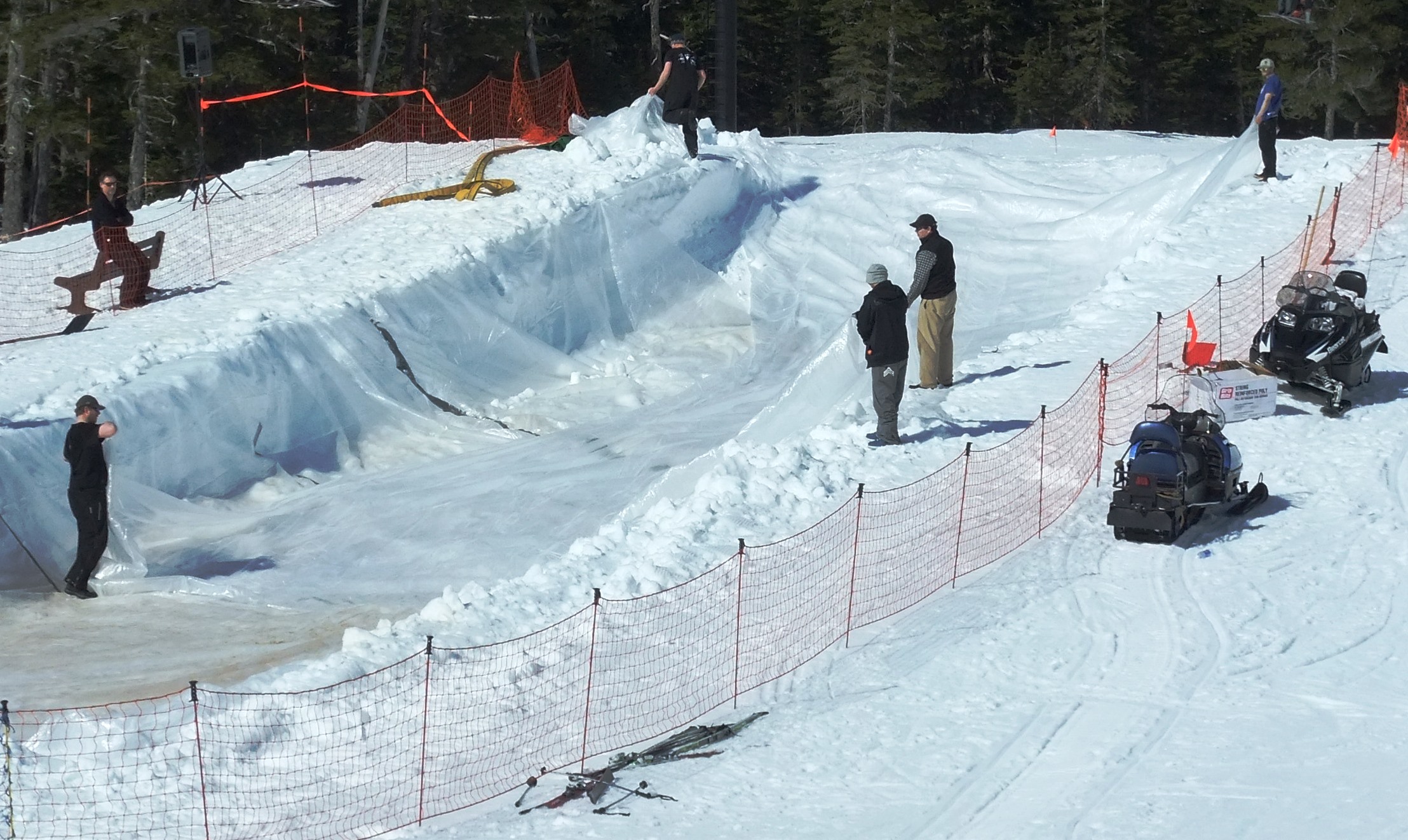
Early Saturday morning, the pond was filling with water, then it sprung a leak. Eaglecrest General Manager Matt Lillard and a crew worked to restore the bottom for Sunday’s Slush cup.
The Slush Cup had been set for Saturday afternoon, but the pond sprung a leak about mid-morning and had to be repaired, so it was postponed ‘til Sunday.
A dog took the stage during this year’s Alaska Folk Festival. So did a drum-and-pipe band, a much-traveled singer-songwriter and some Middle-Eastern-style singers and dancers. We spoke with some of the performers at the 39th annual Juneau event, and assembled this audio post card.
Bill Overstreet was a major advocate for keeping the Capitol in Juneau. (Image courtesy Alaska Film Archives, University of Alaska Fairbanks; from the public television program Alaska Review.)
Former Mayor Bill Overstreet is being remembered as a persuasive and successful spokesman for Juneau during the capital move fights of the 1970s and 80s.
Overstreet died on Monday in Sun City West, Arizona, where he and his wife Jean have spent their winters in recent years. He was 86 years old.
Bill, Jean and their young son moved to Juneau from Oklahoma in 1952, with a teaching job in hand. He started teaching eighth grade at Fifth Street School and coached basketball. Over the years he was a teacher, school administrator, and became the first director of the Alaska School Board Association.
[learn_more caption=”In the Navy”][box color=”blue”]
Battle of Pips
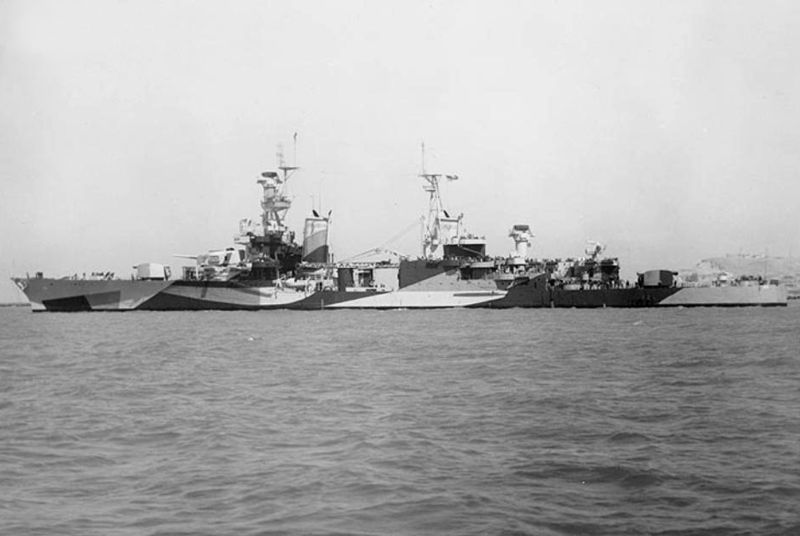
The U.S. Navy heavy cruiser USS Portland (CA-33) off the Mare Island Navy Yard, California (USA), 30 July 1944. Bill Overstreet served on the Portland.
Bill Overstreet was introduced to Alaska during wartime. He enlisted in the Navy in Oklahoma City, coincidentally on the same day the cruiser USS Juneau was torpedoed in the Battle of Guadalcanal. As a 17-year-old seaman, he was ordered to serve on the USS Portland, which had been damaged in the battle.
In an event recorded at the Alaska State Museum in October 2012, several Juneau residents and veterans remembered their World War II experiences.
Overstreet recalled his involvement in the Aleutian campaign, going ashore at Adak, the bombardment and landings at Kiska, and the infamous Battle of the Pips.
U.S. ships raced out and targeted what appeared to be — on radar — seven Japanese ships approaching for a possible evacuation of Kiska.
Overstreet manned a 20-millimeter machine gun on the deck of the Portland. He described it as a very dramatic experience.
“I remember how frightened I was that my knees were literally knocking as I stood by an anti-aircraft gun,” he said. “We moved in and began firing. There were three battleships with us and they were about 11 miles from the target and we were about 8 miles from the target, so they were shooting over our head. At that time it was the most remarkable display of fireworks I had ever seen.”
After the battle, nothing was found. No debris, no injured Japanese sailors. Overstreet said the ocean was uncharacteristically calm and glassy.
It was later determined the radar readings were simply echoes, false readings, or perhaps even huge flocks of migrating birds.
[/box][/learn_more]
It was his work as a Juneau crusader that most recall.
Bill Overstreet was first elected to the Juneau Assembly in 1973, after Alaskans had voted to relocate the capital – to an undetermined site. A capital selection committee was tasked with picking three sites and in 1976 voters chose Willow.
That was the year Overstreet was elected mayor. Rich Poor was on the Assembly then. He calls Overstreet a strong mayor during a time when the capital move dwarfed all other issues.
“There was quite a battle that went right on through the mid-80s to keep the seat in Juneau so it was definitely a dominating time in Juneau,” Poor says.
At the time, Alaska had four time zones. Poor says one of the mayor’s biggest accomplishments was leading the charge toward one time zone, which was a big issue for capital move proponents.
“One of the things that was always a complaint for the Anchorage people in particular was that Juneau was always two hours ahead of them,” he recalls. “So you’d only get five hours of business conducted during the day instead of the normal seven hours, seven and a half hours.”
It was not a popular idea in Juneau and almost cost the mayor his seat.
“There was recall efforts and all kinds of things that tried to stop him, so it was pretty heroic on his part to get her done, so to say,” Poor says.
By 1983, the most populated areas of the state had turned their clocks and all but a small segment of the Aleutian Islands remains on one time zone.
During those years Overstreet was probably the most effective spokesman for the capital city.
“He was just a very effective speaker and very articulate and told our story probably better than any have before and since,” says Win Gruening, who was part of the efforts to save the capital then and now. Gruening describes Overstreet as calm and reasonable when he spoke, ” just a very believable, honest person.”
Juneau’s loudest foe was Bill Atwood, publisher of the Anchorage Times. His bully pulpit was his statewide newspaper, which lobbied continuously to move the capital north. Overstreet was willing to take him on.
“Bill Overstreet went to the lion’s den in Anchorage and faced him and used his humor to really get his points across.”
Clark Gruening was raised in Juneau, but living in Anchorage then, representing the town in the Alaska Legislature. He says Overstreet’s humor helped put a different face on capital move arguments.
The mayor participated in two major debates against Atwood, one before the Anchorage Chamber of Commerce, and the other on statewide public television.
At the time Jim Clark was chairman of a group dubbed Keeping the Capital in Juneau, the forerunner of the Alaska Committee. He recalls the Chamber of Commerce debate very clearly where Atwood tried to draw an analogy between the proximity of the capital to the people.
“He used the analogy of a farmer and his barn and he said ‘when a farmer has his house he wants the barn to be close to his house.’ And Bill stood up and said ‘that’s just the trouble with your thinking, Atwood. It ain’t your barn.’ ”
The showdown came in 1982, when Alaskans would vote for a $2.8 billion bond issue to cover some of the costs of moving the capital to Willow.
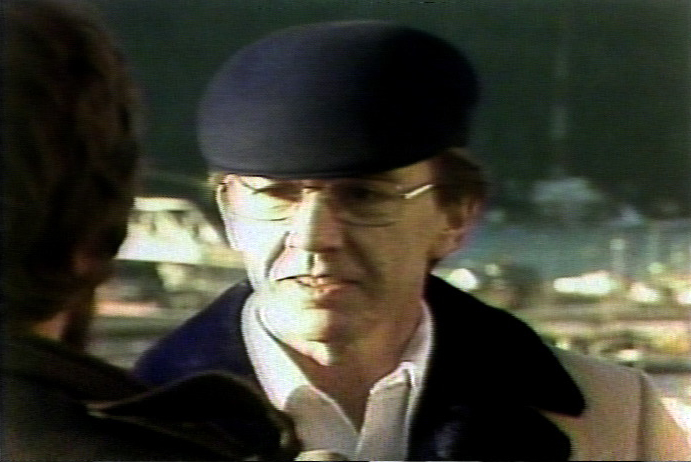
During this interview for the statewide television program Alaska Review, Overstreet described the choice before Alaskans.
“And we think that as soon as people begin to relate to the fact that they can either have their taxes lowered, or have their own communities improved, or they can build a new city for the bureaucrats, there’s no doubt in my mind that they’re going to say ‘let’s fix up all of Alaska. Let’s not just fix up new houses, new buildings, new schools for the people that work for government. Let’s see if we can’t provide some of these benefits to those who are governed.’ “
Alaskans turned down that $2.8 billion bond issue.
Jim Clark credits Overstreet for building good will for Juneau throughout the state, making it possible for the capital city to win that election.
Overstreet’s last project for his beloved capital city was a Skip Wallen whale sculpture to go on the Juneau waterfront. Fund raising is underway and memorials in his name can be made to the Whale Account at the Juneau Community Foundation, 350 North Franklin Street, Juneau, or to the Juneau chapter of the Salvation Army.
A memorial for Bill Overstreet is being planned for July.
A bill setting up a missing persons alert system for seniors with Alzheimer’s, veterans with post traumatic stress disorder, and other vulnerable adults passed the Alaska State Senate on Wednesday, after already getting approval in the House.
The legislation tasks the Department of Public Safety and the Department of Military and Veterans’ Affairs with creating a “silver alert system.” It would be triggered when adults with special needs go missing, much in the same way that amber alerts are used for children who have been abducted. The bill would make participation in the system voluntary for newspaper, radio, and television outlets.
The measure was introduced by Rep. Max Gruenberg, an Anchorage Democrat. It’s the first bill from a member of the minority caucus that has gotten through the legislature. It passed unanimously in both chambers and now needs the signature of the governor.
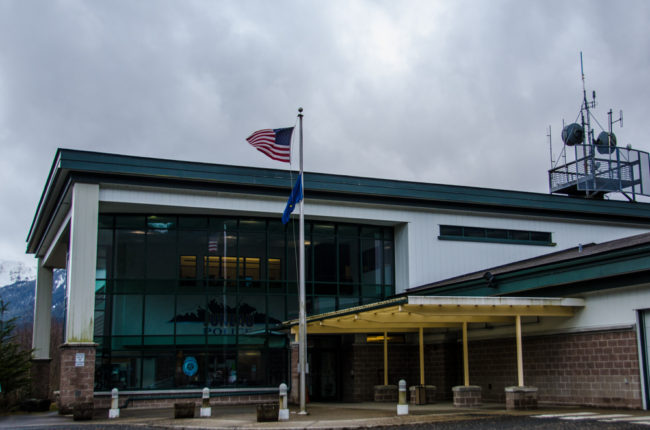
The Juneau Police Department (Photo by Heather Bryant/KTOO)
The team selected to rate candidates for a new Juneau Police Chief reads like a “who’s who” in criminal justice and public safety in the capital city.
Three finalists are in Juneau on Wednesday and Thursday for interviews and Assessment Center exercises used to demonstrate how they react to the daily situations they will encounter as head of the department.
Their demeanor and responses will be rated by Capital City Fire and Rescue Chief Rich Etheridge, City Attorney John Hartle, District Attorney Dave Brower, Alaska State Troopers Lt. Steve Hall, AWARE Shelter’s Mandy O’Neil Cole, and of course, Juneau City Manager Kim Kiefer.
CBJ Human Resources Director Mila Cosgrove says the rating team represents a good cross-section of Juneau.
“I think we’ll get a lot of different perspectives. And you know the Chief of Police is a very important position is our community. It’s very visible, has a major impact on not only the policing program, but how the citizens of the community view their government,” she says. “I think it’s important that we have somebody that people feel comfortable with.”
Current Police Chief Greg Browning is not part of the team, but will be watching and listening, and will give his feedback to the raters.
The public’s perspective is also important, Cosgrove says, and residents’ feedback will be given to the rating team.
The finalists are Don Studt from Birmingham, Mich; Bryce Johnson, of Salt Lake City, Utah; and Bill Musser, of Meridian, Idaho. Cosgrove says all have had police management experience.
“We’re looking for somebody who has solid experience in managing a police department. Somebody with good experience managing budgets, program areas, somebody who has solid experience in terms of their ability to develop a good esprit de corps and manage that workforce in a way that’s positive and keeps people engaged in what they’re doing,” Cosgrove says.
Assessment Center exercises are open to the public on Wednesday, from 1:00 p.m. to 4:15 p.m., and on Thursday, from 9:00 a.m. to 11:30 a.m. Each candidate will make a presentation and take questions from the public between 2:45 p.m. and 4:45 p.m., Thursday, followed by a reception from 5:00 p.m. to 6:30 p.m. All events are in Assembly Chambers in CBJ City Hall.
Close
Update notification options
Subscribe to notifications
Subscribe
Get notifications about news related to the topics you care about. You can unsubscribe anytime.