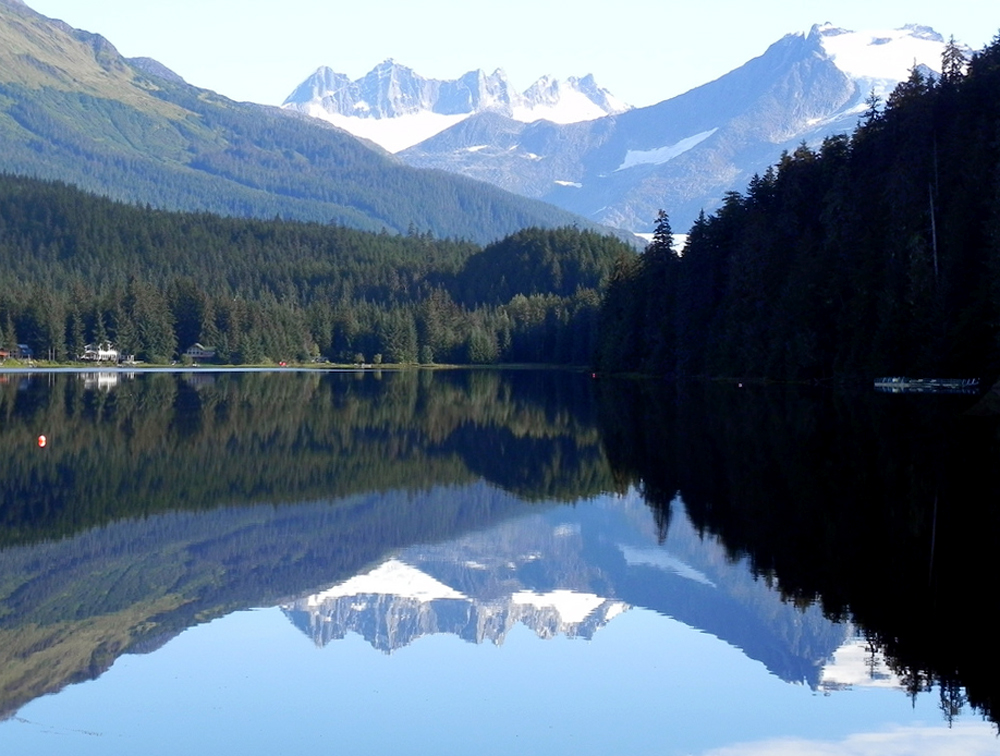
Auke Lake reflection. (Flickr Creative Commons photo by Alaskan Librarian.)
Four months after an accident on Auke Lake took the life of a Juneau teenager, lake management is being reviewed – starting with public meetings.
Sixteen- year-old Savannah Cayce died June 23rd when her inner tube collided with a jet ski. She was being towed by another jet ski somewhere in the middle of the lake. A police investigation ensued and no charges have been filed.
CBJ Parks and Recreation is holding a series of meetings to hear the public’s impression of lake management.
Parks and Landscape Superintendent George Schaaf says regulations governing motorized use of the lake went into effect five years ago. Since then there’s been a new boat ramp, a bridge across Auke Creek, and the Auke Lake Trail has opened.
In the next couple of years a multi-use path will be built along Glacier Highway, and the wayside park near the boat ramp will be improved.
“When you have a lot of changes on the lake and you also have a regulatory scheme that we’ve been challenged with, we basically looked at it and said this is a good time for us to review and see if the plan is working and if the plan needs to be changed than how should it be changed,” Schaaf says.
After many meetings and lengthy, sometimes emotional debate, the city adopted new motorized use policies in 2008.
Schaaf says two familiar themes were raised at a meeting last week on the UAS campus.
“A lot of the folks who generally saw that there were some issues with motorized use of the lake felt that the lake was maybe not large enough to support the type of motorized uses that are out there right now,” Schaaf says, “and on the other side there were folks there who pretty consistently said it was the only fresh water lake in Juneau that was available for motorized use.”
The open house on Auke Lake is Thursday at 7 p.m. in Centennial Hall Egan Room. Then the Parks and Rec staff will come up with recommendations, to be discussed by the Parks and Recreation Advisory Committee. Schaff says any policy changes would have to go through the CBJ Assembly process.
An unattended candle likely caused last week’s fire at the Gastineau Apartments in downtown Juneau.
Fire Marshal Dan Jager said an investigation determined the blaze started in the bedroom of an apartment on the fourth floor, in the back corner of the building.
“We know that the fire occurred on the floor in close proximity of a bed that was in there. This was all verified by the occupant who had come home and found the fire,” said Jager. “We can’t pin down that it was an unattended candle, but after eliminating all the other potentials, that’s the only possible heat source that we can find where the fire had started.”
Jager declined to name the person who lived in the apartment, because he does not expect any criminal charges or citations. He said the person tried to put the fire out with an extinguisher, but for some reason was unable to get it to work properly. He also said they did the right thing by going door to door and alerting other residents of the blaze.
The Gastineau Apartments were built in 1917 and the building was not required to have a sprinkler system.
Jager said he and Fire Chief Rich Etheridge spent most of Monday assisting three insurance companies with their investigations.
“They did a walkthrough of the building to see overall how the damage was, and took their own photographs, took notes,” Jager said. “They’ll be doing their own interviews with occupants. A lot of it is stuff that we’ve already done, but it’s them doing their own independent investigation.”
The building itself was insured in addition to two businesses on the ground floor. Jager also believes some tenants may have had renters insurance.
The structure and property were valued at $1.8-million before the fire. Jager said he’s still working on an estimated dollar value for all the damage, which would include people’s personal belongings.
The building’s owner, James Barrett, said he will wait for the insurance companies complete their investigation before deciding whether to tear down or rebuild.
Barrett had speculated the night of the fire that a candle was likely to blame.
Jager said unattended candles are often responsible for residential fires. In most cases, he says, it’s completely avoidable.
“They seem like they’re very safe,” he says. “But we always tell people, if you’re going to leave the room, just blow the candle out.”
Jager recommends various alternatives, such as electric candles or candle warmers, for people who still want the ambience or aroma without the risk of fire.
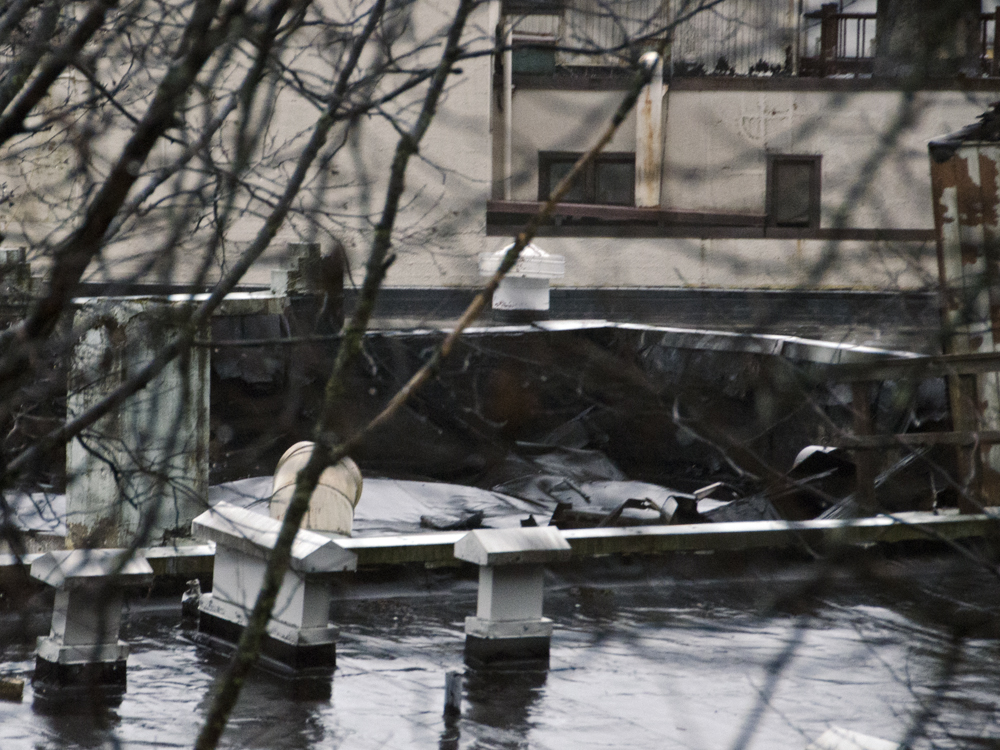
Roof damage is visible from the hill behind the apartments.
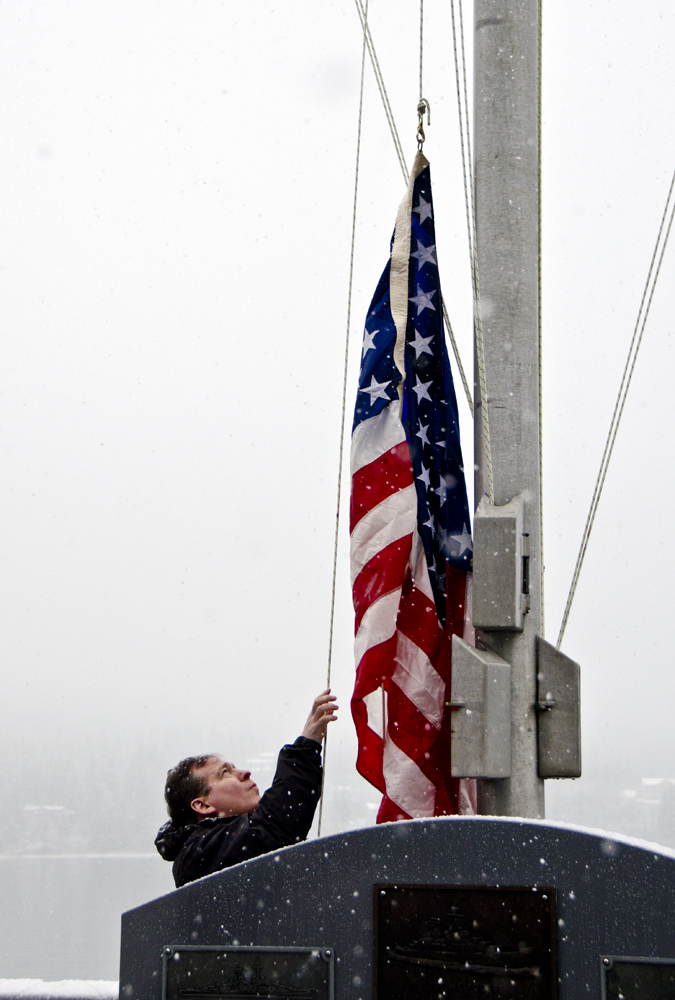
Col Duff Mitchell, retired from Army National Guard, raises the American flag. (Photo by Heather Bryant/KTOO)
A new memorial was dedicated on the waterfront on Tuesday to commemorate those who lost their lives aboard the U.S.S. Juneau seventy years ago.
The new memorial still retains the original plaques and flag standard of the old memorial. But it’s shaped differently and located near the south end of the Seawalk.
The previous memorial — built in 1987 near where the new Visitors Center is located – visibly suffered from the elements.
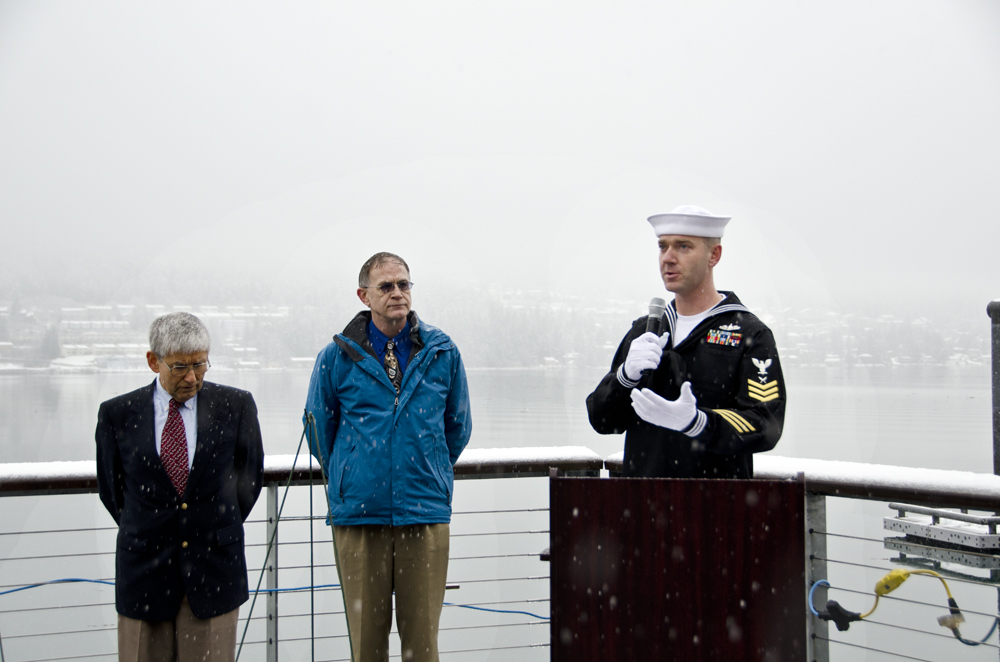
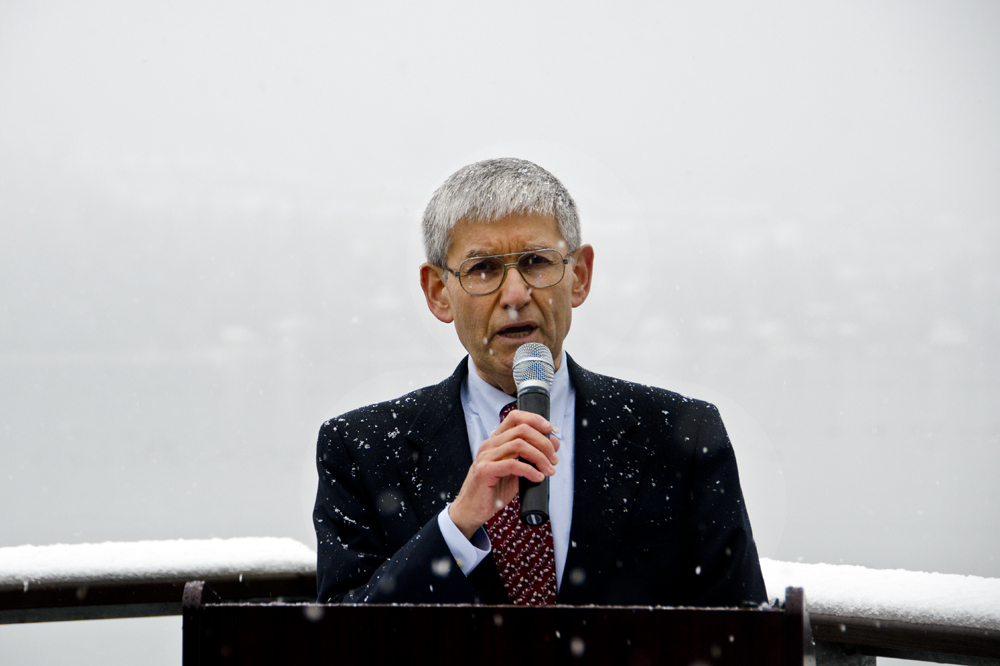
Some of the sounds and voices from Tuesday’s rededication of the U.S.S. Juneau Memorial included the Juneau Community Band, CBJ Port Director Carl Uchytil, an invocation by Lieutenant Colonel Pat Travers of the U.S. Air Force Reserve and who is also pastor of Saint Paul’s Church, CBJ Port Director Gary Gillette, U.S. Navy Petty Officer Gregory Cazemier, Assemblymember Randy Wanamaker, and trumpeter Dave Hurlbut.
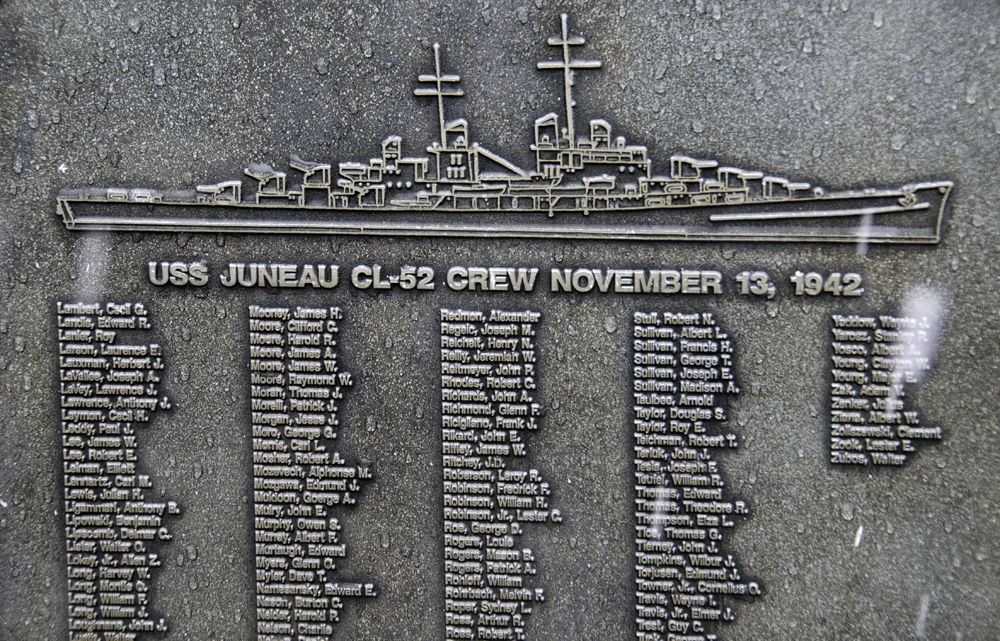
Six-hundred and 87 sailors, including the five Sullivan brothers, died when the light cruiser U.S.S. Juneau was sunk during the naval battle of Guadalcanal.
Four sailors – mostly medics and pharmacists by training – were transferred from the Juneau to the cruiser San Francisco before the Juneau was sunk.
Out of the estimated 115 sailors who initially survived the explosion and sinking of the Juneau, only ten sailors remained when they were rescued eight days later. They rest had succumbed to sharks and exposure.
The Department of the Navy’s Naval Historical Center lists two of the ten survivors as Signalman First Class Lester Eugene Zook and Chief Gunner’s Mate George Imari Mantere.
Albert Shaw of Juneau was a nephew of Mantere. Shaw says Mantere came up to Juneau for the 1987 dedication of the original memorial. We talked to him about his uncle as we hustled from the new memorial site to a reception at the Visitors Center.
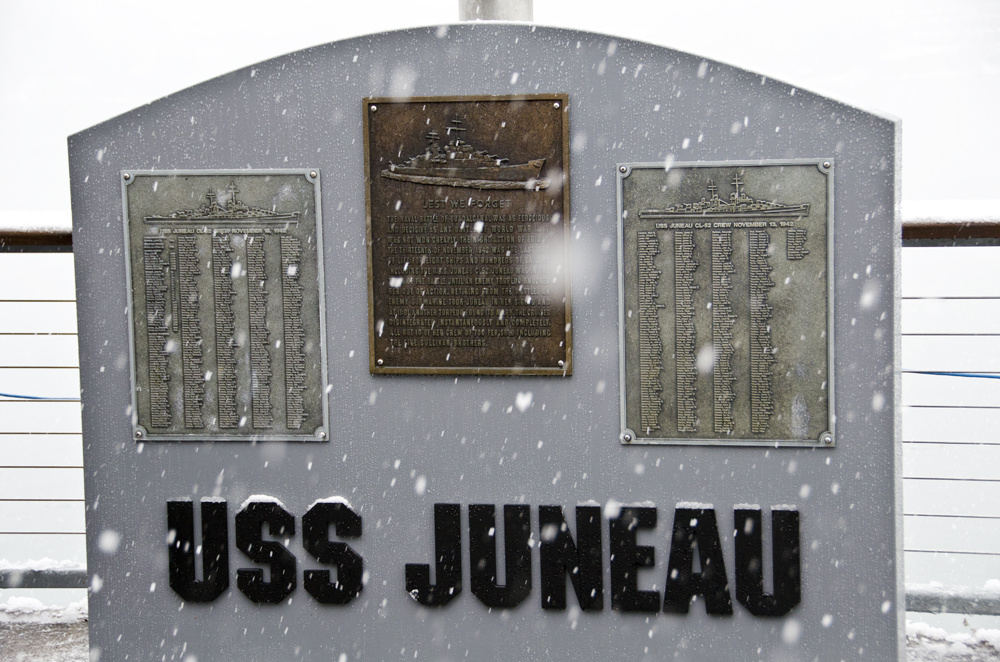
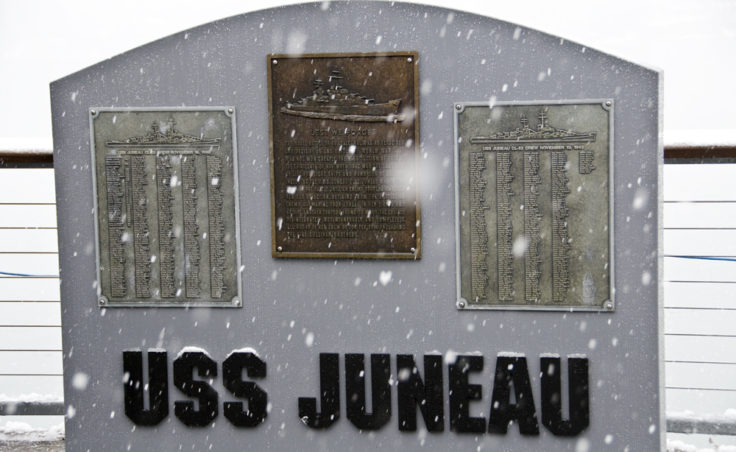
Plaques from the original monument were saved for the new location along the walkway. (Photo by Heather Bryant/KTOO)
Names of the sailors lost when the USS Juneau sank are engraved on two plaques. (Photo by Heather Bryant/KTOO)
Petty Officer Gregory Cazemier, Jr. describes the events of the day the USS Juneau sank. (Photo by Heather Bryant/KTOO)
Assemblyman Randy Wanamaker. (Photo by Heather Bryant/KTOO)
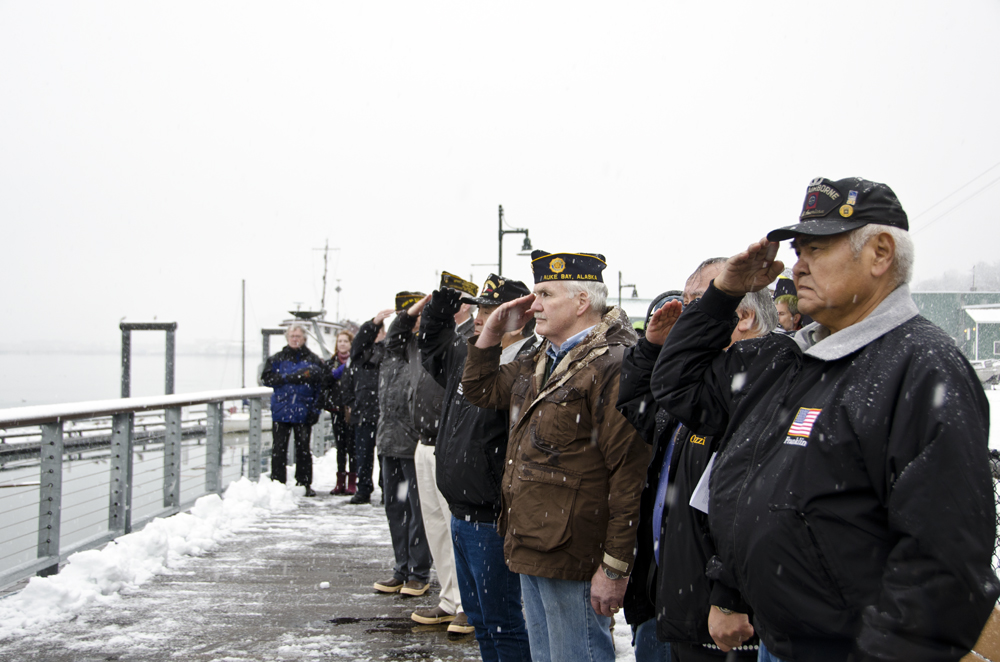
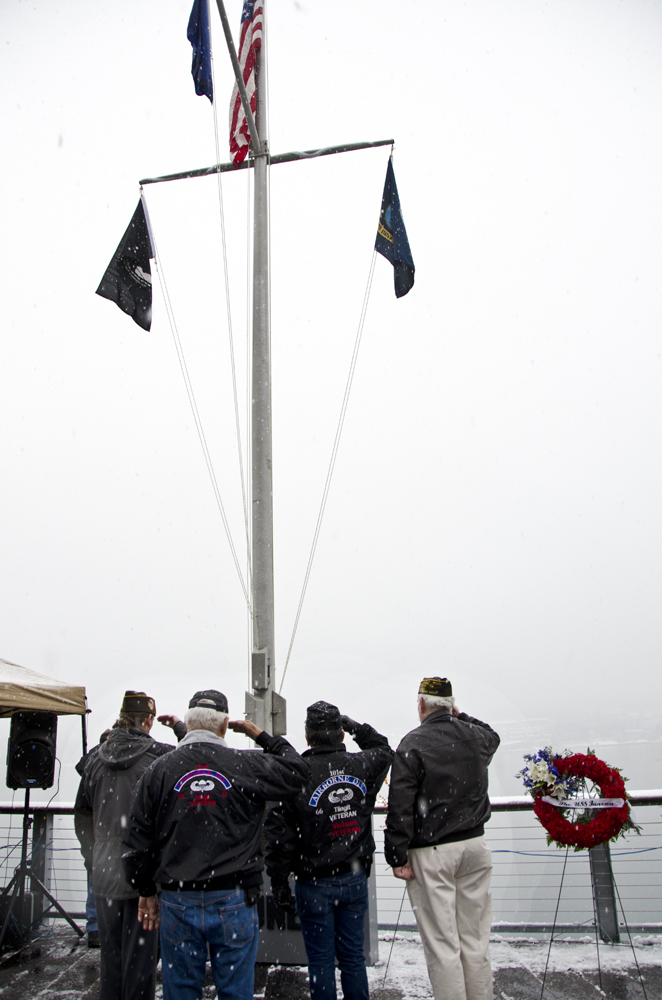
Veterans salute the flag during the playing of Taps. (Photo by Heather Bryant/KTOO)
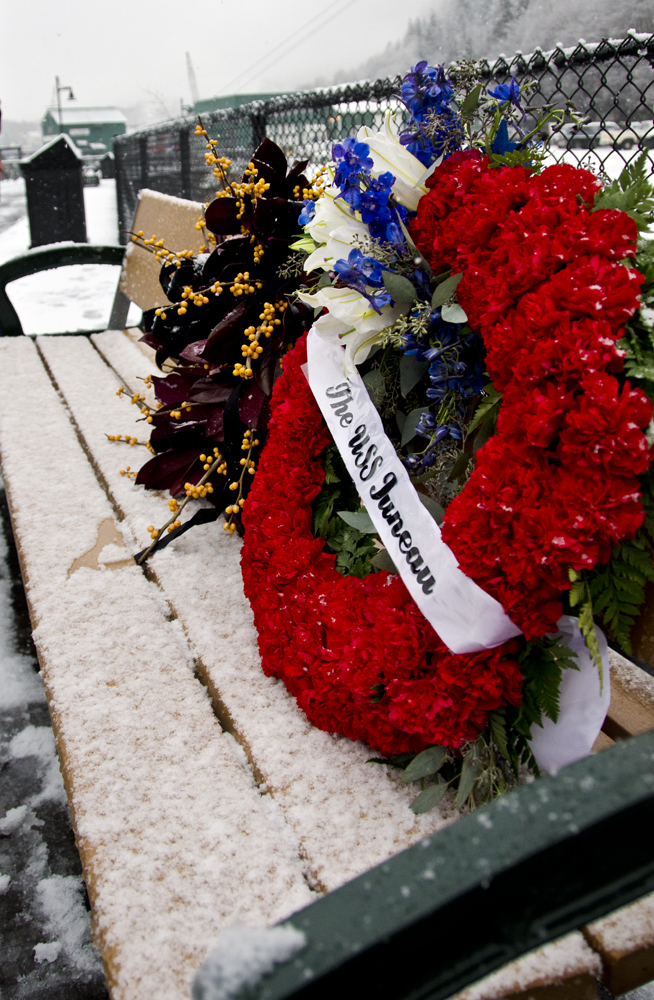
Wreaths line a park bench before the ceremony started. (Photo by Heather Bryant/KTOO)
Col Duff Mitchell, retired from Army National Guard, raises the American flag. (Photo by Heather Bryant/KTOO)
Veterans salute the flag after laying the wreaths. (Photo by Heather Bryant/KTOO)
Tuesday marks the seventieth anniversary of the sinking of the U.S.S. Juneau, a light cruiser that participated in the naval battle of Guadalcanal during World War II. Six-hundred and 87 sailors perished during the sinking on Nov. 13, 1942.
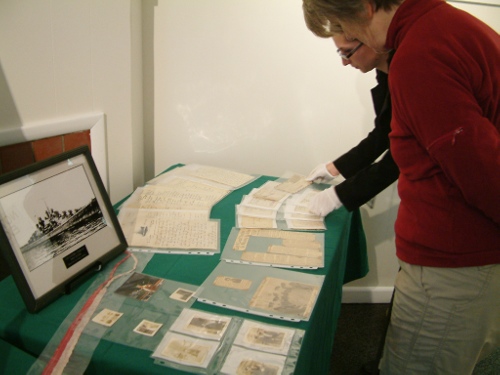
Included in the slideshow below are pictures from Saturday’s event at the Juneau-Douglas City Museum that included display and reading of recently acquired letters originally sent by Seaman William George Meeker from aboard the U.S.S. Juneau to Winifred Blohm in Harrison, New Jersey.
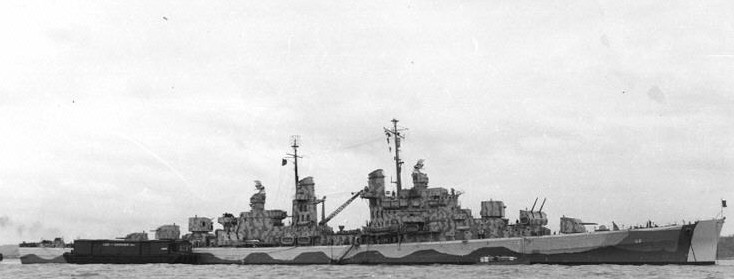
U.S.S Juneau (CL-52) off of New York City on June 1, 1942. She has a barge alongside her starboard quarter. Her superstructure retains its original camouflage scheme, but her hull has been repainted to a different pattern. #19-N-31264 Photograph from the Bureau of Ships Collection in the U.S. National Archives.
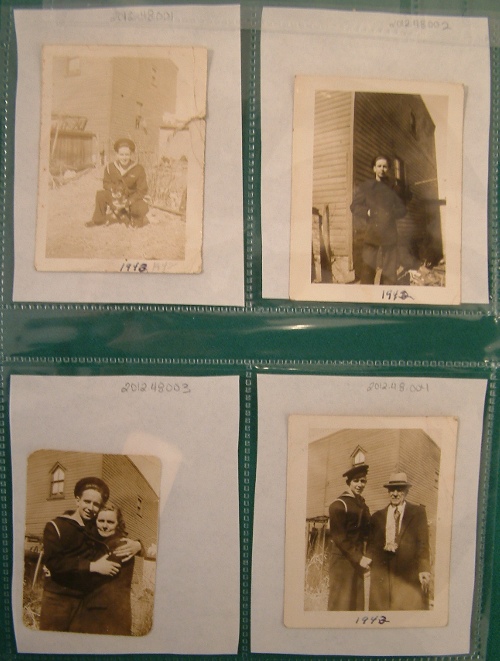
Pictures of Seaman William Meeker. Donated by Mary and Ray Testa, in honor of William G. Meeker, S2C USNR V-6, in memory of Winefrid L. Blohm, 2012.48. Photo by Matt Miller/KTOO News
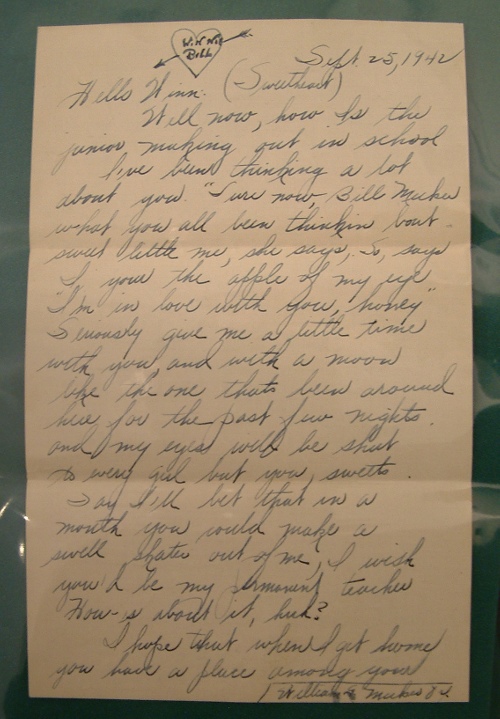
A letter sent by Seaman William Meeker to Winifred Blohm. Donated by Mary and Ray Testa, in honor of William G. Meeker, S2C USNR V-6, in memory of Winefrid L. Blohm, 2012.48. Photo by Matt Miller/KTOO News
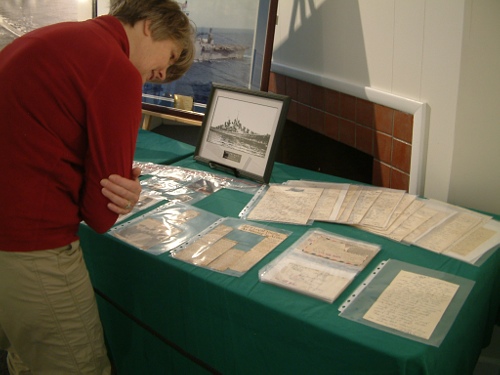
A visitor checks out some of the artifacts on display during the U.S.S. Juneau event on Saturday. Photo by Matt Miller/KTOO News
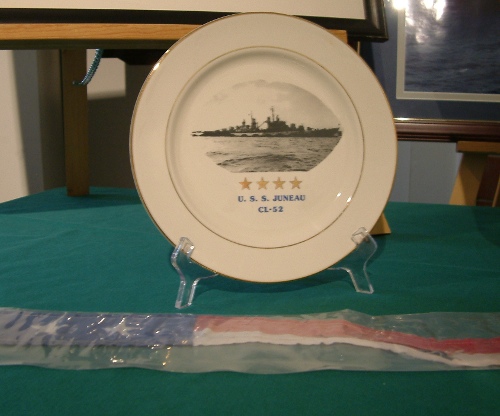
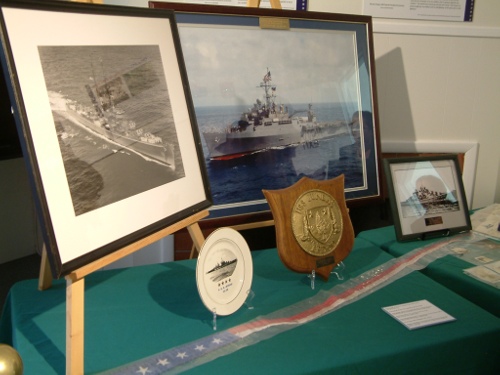
Commemorative china plate from CL-52 and a commissioning pennant from LPD-10, gift of Romer Derr and the City and Borough of Juneau clerk's office. 2009.14.001 and 2009.08.002. Photo by Matt Miller/KTOO News
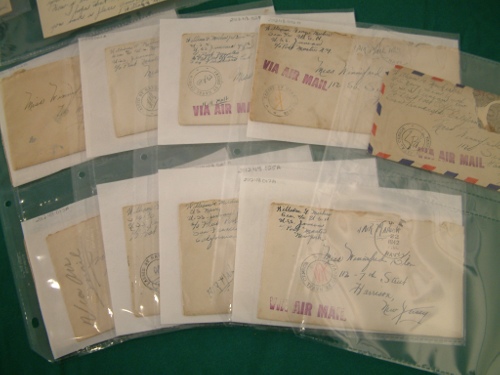
Envelopes of letters sent by Seaman William Meeker to Winifred Blohm. Donated by Mary and Ray Testa, in honor of William G. Meeker, S2C USNR V-6, in memory of Winefrid L. Blohm, 2012.48. Photo by Matt Miller/KTOO News
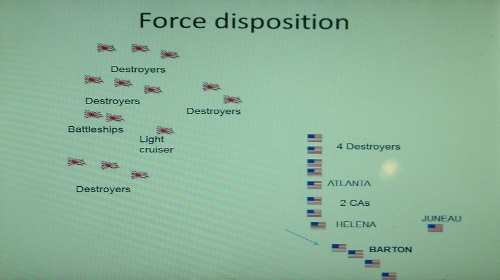
Screengrab of projected presentation used by U.S. Navy Lt. Cmdr. Miguel Vasquez showing the U.S.S. Juneau disengaging from the naval battle of Guadalcanal after being crippled by a torpedo. Photo by Matt Miller/KTOO News
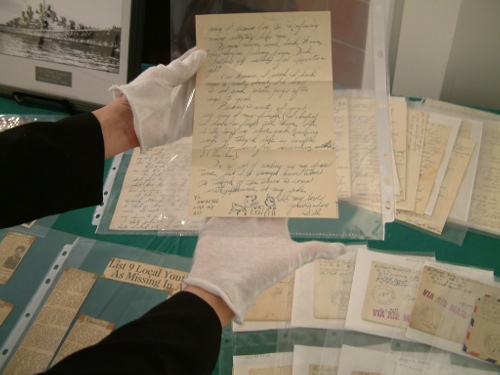
Jodi DeBruyne of the Juneau-Douglas City Museum holds up one of the letters sent by Seaman William Meeker to Winifred Blohm in New Jersey. Donated by Mary and Ray Testa, in honor of William G. Meeker, S2C USNR V-6, in memory of Winefrid L. Blohm, 2012.48. Photo by Matt Miller/KTOO News
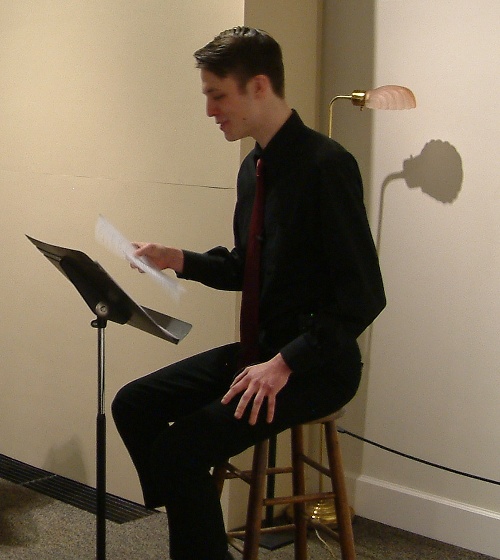
Bryan Crowder, a student in the Perseverance Theatre/UAS Theatre Program, reads from letters written by Seaman William Meeker to Winifred Blohm in New Jersey in 1942. Photo by Matt Miller/KTOO News
Pictures of all three U.S. Navy vessels that were named Juneau from CL-119 (left), LPD-10 (middle), and CL-52 (far right). Also on display were artifacts including a commemorative china plate from CL-52, a plaque and commissioning pennant from LPD-10. Photo by Matt Miller/KTOO News
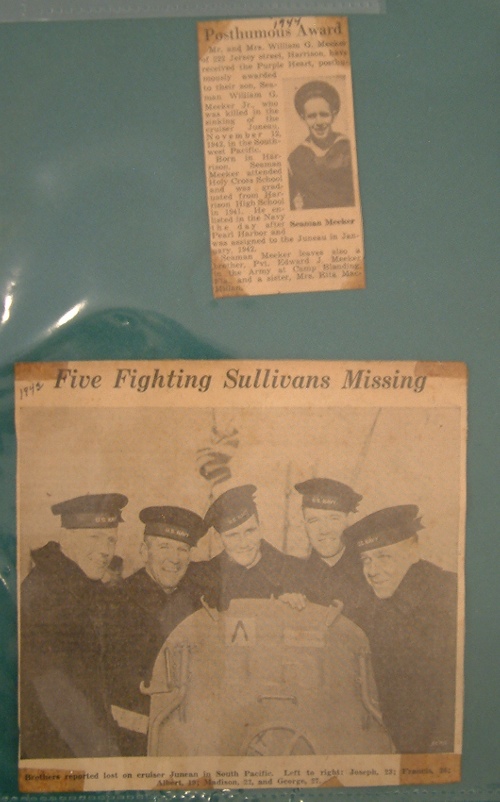
Newspaper clippings noting the apparent passing of Seaman William Meeker and the Sullivan brothers aboard the U.S.S Juneau. Donated by Mary and Ray Testa, in honor of William G. Meeker, S2C USNR V-6, in memory of Winefrid L. Blohm, 2012.48. Photo by Matt Miller/KTOO News
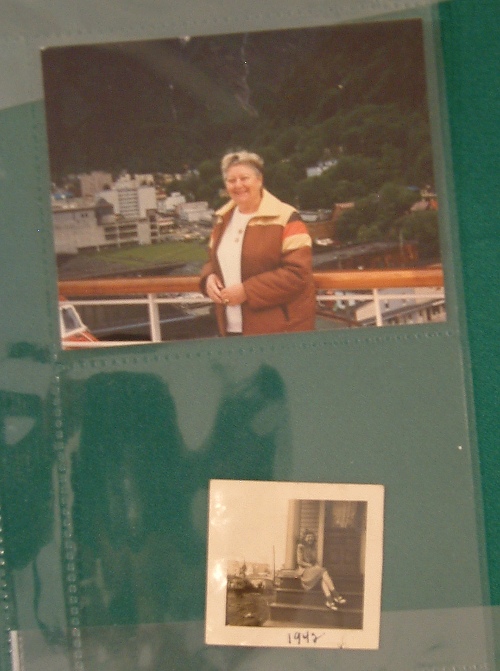
Pictures of Winifred Blohm believed taken in 1991 in Juneau and in 1942 in New Jersey are among some of the donated artifiacts. Donated by Mary and Ray Testa, in honor of William G. Meeker, S2C USNR V-6, in memory of Winefrid L. Blohm, 2012.48. Photo by Matt Miller/KTOO News
The U.S.S. Juneau was a light cruiser engaged in one of the fiercest naval battles of World War II. Along with the cruisers Helena and San Francisco, the Juneau had retired from the naval battle of Guadalcanal to head for a nearby Allied port for repairs. The Juneau was already crippled by a torpedo hit. Another torpedo later sent the Juneau rapidly to the bottom. As many as many as hundred sailors may have initially survived, but crews of the Helena and San Francisco may have thought that no could have survived the explosion and quick sinking. There was also the potential of continued torpedo attacks.
Only ten sailors survived shark attacks and exposure after eight days in the water. Among the 687-sailors who lost their lives were the five Sullivan brothers aboard the Juneau.
Lt. Cmdr. Miguel Vasquez, officer-in-charge of the U.S. Navy’s Pacific Fleet Maritime Homeland Defense Detachment Alaska, was a featured speaker at the Juneau-Douglas City Museum on Saturday. Using a power point presentation, he described the first ship to bear the name Juneau and the battle in which she was crippled and eventually sunk. He gave us a recap following his presentation.
Vasquez says the battle was very chaotic with at least one officer on-board a destroyer calling it ‘a bar room fight with the lights turned out.’
“It was a tactical victory for the Imperial Japanese Navy,” said Vasquez who also noted that the Japanese did not do enough damage to reinforce Guadalcanal. “It turned out to be more of a strategic victory for the U.S. forces.”
What makes this anniversary of the Juneau’s sinking unique is the recent acquisition of letters originally sent by a sailor aboard the cruiser. Seaman William Meeker, sent seventeen letters to Winifred Blohm, his next door neighbor and good friend in New Jersey. The last one was sent exactly a week before the U.S.S. Juneau’s sinking.
Jodi DeBruyne, curator of collections and exhibits at the Juneau-Douglas City Museum, describes the donated collection.
“They tell a really great personal story that everybody can relate to. Friendship, love, honor are just themes that transcend time,” said DeBruyne.
Also on Saturday, local actor Bryan Crowder provided his voice for the words written by the 21-year old Meeker, who thought very fondly of his neighbor in Harrison, New Jersey.
“‘Dear Winnie. How are you, Blondie? How are your big brothers making out?'”
The letters, donated by Blohm’s daughter and son-in-law Mary and Ray Testa, will remain in the care of the Juneau-Douglas City Museum until they are brought out for display again.
Also included: pictures of Meeker and a picture of Winifred Blohm visiting Juneau in 1991. DeBruyne said the Testas are trying to track down another picture of Blohm visiting the U.S.S. Juneau memorial on the waterfront.
Longtime JCVB director Lorene Palmer will become the new director of the Alaska Division of Economic Development later this month.
Palmer has been director of the Juneau Convention and Visitors Bureau for more than a decade. At the Department of Commerce, Community and Economic Development, she will oversee tourism, film, minerals, fisheries, and timber products, as well as small business support and the ARDOR program — Alaska Regional Development Organizations.
She says the Economic Development Division’s major focuses are on Alaska businesses:
[quote]One is to actually do some economic program and strategies that will help Alaska businesses to start or grow and take advantages of opportunities to use the tools the state has available and the other is help them grow. And the other is helping them use the tools available such as the financing programs with loans for small businesses to stimulate their businesses and help them grow. [/quote]
Palmer has worked in the visitor industry for about 30 years, including developing the tourism degree program at the University of Alaska Southeast.
She will stay in Juneau, where most of the Economic Development staff is located.
Elizabeth Arnett – who is tourism marketing manager for JCVB — will be interim director while the board looks for a new director. Advertising for the position has already started.
History came alive on Saturday when Juneau residents heard the words of a sailor who eventually perished when his vessel, the U.S.S. Juneau, was sunk during World War II.
Seaman William George Meeker, a sailor aboard the light cruiser that sank following the naval battle of Guadalcanal, sent seventeen letters to Winifred Blohm, his next door neighbor and good friend in Harrison, New Jersey.
The letters were briefly put on display at the Juneau-Douglas City Museum and an actor read from some of them during an event on Saturday.
The letters were donated by Blohm’s daughter and son-in-law Mary and Ray Testa.
Jodi DeBruyne, curator of the museum’s collections and exhibits, says they just received the letters last week – one week before the seventieth anniversary of the U.S.S. Juneau’s sinking.
Jodi DeBruyne of Juneau-Douglas City Museum (obscured) shows a visitor some of the letters written by Seaman William Meeker from the U.S.S. Juneau before it was sunk during World War II. Photo by Matt Miller/KTOO News
“Mary was reading through the letters last December,” recalls DeBruyne. “So, they came across them and they discovered this great love story. They want to preserve it for a future (generation) and for William Meeker not to be forgotten.”
DeBruyne says letters will be preserved in archival- and museum-quality settings until they are brought out for display again.
Assemblymember Randy Wanamaker brokered the donation of the letters from the Testa family.
Also included: pictures of Meeker and a picture of Winifred Blohm visiting Juneau in 1991. The Testas are trying to track down another picture of Blohm visiting the U.S.S. Juneau memorial on the waterfront.
She passed away in 1998.
Among the 687-sailors who perished when the Juneau was sunk on November 13th, 1942 were the five Sullivan brothers. At least two other sets of brothers reportedly served on the vessel.
A service is planned at the U.S.S. Juneau memorial on the waterfront at 12:15 p.m. on Tuesday.
Close
Update notification options
Subscribe to notifications
Subscribe
Get notifications about news related to the topics you care about. You can unsubscribe anytime.