Weather

Avalanche alert issued for downtown, Thane residents

The Behrends Path above Glacier Highway, where a small snow slide came down on Tuesday, Jan. 16, 2024 (Clarise Larson/KTOO)

Update, 7 p.m. Thursday:

Thane Road is now open.

The Alaska Department of Transportation posted on Facebook that crews had completed avalanche mitigation Thursday and reopened the road.

“Drivers are reminded not to stop in the avalanche zone and to use caution while traveling,” the post reads.

An avalanche advisory remains in effect for the Behrends neighborhood and other areas of downtown in the Mount Juneau slide path.


Update, 1:30 p.m. Wednesday:

Thane Road remains closed as the avalanche risk above it and the Behrends neighborhood remains high.

DOT plans to conduct avalanche mitigation Thursday morning above Thane Road if weather allows. Until then, the road remains closed for safety.

Update, 8:30 a.m. Wednesday:

Thane Road remains closed due to avalanche risk until at least noon Wednesday.

According to an update from the Alaska Department of Transportation, the avalanche hazard remains high for the portion of the road between the avalanche gates.

“DOT&PF crews are continuing to assess conditions. We will provide an updated status around 12:00 PM today,” the update reads.

Original story:

The city issued an alert Tuesday afternoon to residents living in downtown Juneau that avalanche conditions are elevated in the areas above Behrends Avenue and Thane Road. 

The alert is not an evacuation advisory. But the city advises residents in the affected areas to prepare for an evacuation if conditions continue to worsen.

The alert comes after more than 30 inches of snow and freezing rain have fallen in the capital city during an ongoing winter storm. The city activated its new avalanche information page on Monday.

Ryan O’Shaughnessy, the emergency programs manager for the City and Borough of Juneau, says now is the time for residents within those areas to pack a ‘go bag’ and make plans to stay with friends or family in case evacuation is necessary.

“Folks need to be prepared to leave their homes at a moment’s notice,” he said. “I think one of the key things with avalanche hazard, specifically, is that things can change very rapidly and very quickly, and folks need to be prepared.”

Both areas are prone to avalanches. In January 2024, an avalanche blocked Thane Road and another dusted homes in the Behrends neighborhood after more than 30 inches of snow fell during a storm. No damage was reported in either incident.

Patrick Dryer is an avalanche forecaster and geohazard specialist at the Alaska Department of Transportation. He said the department will close Thane Road Tuesday at 8 p.m. in case there is a large avalanche, and will reassess in the morning. 

“They could be large enough to reach the roadway and have debris on the roadway blocking access,” Dryer said. “And so we are doing our preventative closure here tonight during a period of increased hazard for everybody’s safety.”

Dryer dug a snow pit to evaluate the avalanche risk on Gastineau Ridge on Monday. He said Juneau’s extended cold, dry snap earlier this month created weak layers in the snowpack. Then this warmer winter storm piled on heavy snow. 

“So we’re rapidly adding stress, adding weight to those weak layers that has the potential to fail, resulting in large avalanches,” he said. 

But he says this snowfall pattern is unusual for Juneau, so he has a high level of uncertainty about the avalanche forecast. 

“Is there going to be large avalanches, or will there be no avalanches?” he said. “With the intense precipitation and heavy snowfall we’ve had, we haven’t had a lot of observed avalanches. So, you know, it changes so fast.” 

A winter storm warning remains in effect until noon Wednesday. Forecasters say another storm might be on its way to Juneau by the end of the week.

This is a developing story. Check back for updates. 

City, state and businesses continue closures in Juneau amid record-breaking snowfall

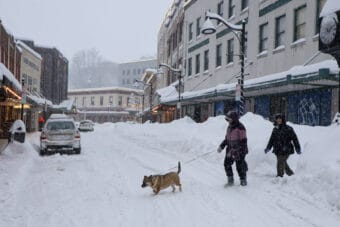
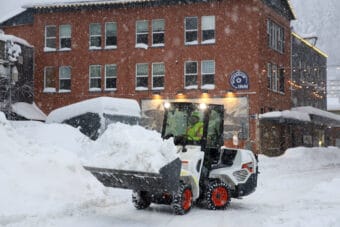
Snow covers the roads in downtown Juneau on Monday, Dec. 29, 2025. (Photo by Clarise Larson/KTOO)

Update, Wednesday 8:30 a.m.:

City facilities remain closed due to snow. That includes offices, libraries, parks and recreation facilities and the recycling center.

Capital City Transit remains on winter bus routes.

Original story:

City and state facilities remain closed again on Tuesday after record-breaking snowfall in Juneau. 

Official snow totals from the National Weather Service confirm that Juneau has broken its all-time snow record for the month of December with 63.7 inches as of Tuesday morning.

The previous record from December 1964 was 54.7 inches. 

The city originally planned a delayed opening of facilities and services at noon, but then cancelled late Tuesday morning. That means City Hall, public libraries and parks and recreation facilities are all closed. Many businesses have announced closures or reduced hours. 

“Residents are encouraged to continue to exercise caution and limit driving where possible until road conditions improve,” the city posted on social media Tuesday. 

Bartlett Regional Hospital also cancelled all non-emergency services on Tuesday. 

Juneau’s Docks and Harbors department pleaded for boat owners to check their vessels on Tuesday. Multiple boats and boat shelters have sunk under the weight of the snow.

“Every boat in the harbor right now is in danger of sinking if not cared for,” said Harbormaster Matt Creswell on Tuesday afternoon. “If you have a vessel, or know someone that has a vessel, please come down, clear it off and maybe help your neighbor clear theirs.”

Andrew Park is a meteorologist at the National Weather Service in Juneau. He says this storm, which arrived Dec. 27, has already delivered 30 inches of snow to Juneau and could bring 7 to 10 more inches. 

“It’s just been a heck of a storm — and yes, we’re not out of it yet, so don’t get complacent,” he said. “We’ve got more snow on the way, and we’ll see what we get out by Wednesday morning.”

Park said the snow load on roofs is a concern, especially for those in the Back Loop area of Mendenhall Valley, where he estimates snow could weigh somewhere around 36 pounds per square foot. 

He said to be careful not to block vents when clearing roofs. 

“Especially as you push snow off your roof, you’re going to plug your vent to your house (and) now you’ve got carbon monoxide building up in your home,” Park said.

A winter storm warning remains in effect until noon Wednesday. Forecasters say another storm might be on its way to Juneau by the end of the week. 

This is a developing story. Check back for updates.

Heavy snow and freezing rain buries Juneau ahead of the new year

Skiers head down a snowy Basin Road in downtown Juneau on Monday, Dec. 29, 2025. (Photo by Clarise Larson/KTOO)

A winter storm dumped more than a foot of snow and freezing rain on the capital city this holiday weekend. As of Monday, residents were still trying to dig out. 

The National Weather Service in Juneau extended the winter storm warning in Juneau to 6 a.m. Tuesday and says an additional 5 to 10 inches of snowfall could arrive by then. 

“Snow totals have so far been around 15 to 40 inches across the northern panhandle,” a winter weather warning states. “Some freezing rain has also been reported around Juneau, Gustavus and Yakutat.”

The capital city is on track to surpass its December monthly snowfall record. 

Juneau, AK, is currently 2.5″ shy of their December monthly snowfall record. The current forecast shows 4″-8″ through the end of the month. So there’s a pretty decent chance that they will break the monthly record. @alaska.bsky.social @alaskawx.bsky.social

[image or embed]

— Climatologist49 (@climatologist49.bsky.social) December 29, 2025 at 8:46 AM


The city, state and dozens of businesses across Juneau announced facility and building closures on Monday due to hazardous road conditions. City Hall, public libraries and parks and recreation facilities are all closed. All State of Alaska executive branch offices are also closed. 

Bartlett Regional Hospital cancelled all non-emergency services on Monday and Southeast Alaska Regional Health Consortium is operating with limited staffing at some locations.

Eaglecrest Ski Area is open, but the Coastal Alaska Avalanche Center reported that multiple natural and human-triggered avalanches occurred in the backcountry on Sunday.

Capital City Transit is running winter bus routes, but there is no service up Cordova Street to Cedar Park on Douglas Island, and on Franklin or 4th Street in downtown. 

Capital City Fire/Rescue and the Juneau Police Department advised residents to stay off the road. 


View this post on Instagram


A post shared by KTOO (@ktoopubmedia)


“Vehicles of all kinds, including plows, are getting stuck. It will take some time for the roadways to clear up,” a JPD social media post stated. “My advice would be to stay home and hunker down for the day.”

Juneau’s Docks and Harbors department is asking boat owners to check their vessels. Multiple boats have sunk and boat shelters are beginning to fail under the heavy snow.

Parts of the area experienced power outages Monday around 1 p.m., according to Alaska Electric Light & Power. Residents in Douglas and downtown also reported lights flickering. AEL&P began restoring power shortly after 2 p.m.

The National Weather Service recorded just shy of 27 inches of snow that had fallen during this storm as of Monday afternoon at its office in the Mendenhall Valley. Forecasters say another storm may be headed this way by the end of the week. 

This is a developing story. Check back for updates. 

Another winter storm could dump more than a foot of snow in Juneau this weekend

Snow covers boats in downtown Juneau on Tuesday, Jan. 16, 2024. (Photo by Clarise Larson/KTOO)

Heavy snow is forecast to hit Juneau and other parts of Alaska’s panhandle this weekend, following days of record-breaking frigid temperatures. 

According to the National Weather Service, Juneau is forecast to see more than a foot of snowfall in 24 hours beginning late Friday evening through Saturday evening. That storm is an atmospheric river and will bring warmer temperatures, which could reach into the high 20s.

Andrew Park, a meteorologist at the National Weather Service in Juneau, said residents should pay attention to the weather and prepare for hazardous conditions.  

“Definitely be prepared. I don’t think you’re gonna be traveling on the roads if we get 20 inches of snow in 24 hours,” Park said. “Make sure you have food, fuel, take care of the things you need to do for stuff like that — like now.” 

The forecasted heavy snow comes after the capital city broke multiple record-low daily temperatures earlier this week. 

On Tuesday, Juneau saw a new daily record-low at the Juneau International Airport of -10 degrees Fahrenheit. It broke the previous record of -3 degrees set back in 1971 for that date and marked the fifth day in December that the airport recorded lows reaching below zero. 

City officials are advising residents to ensure heating sources in their homes are monitored and maintained. Earlier this week, Juneau saw two destructive residential fires in a mobile home park in the course of just three days. While the causes of both fires are still under investigation, officials warn that residential fires are more common with the onset of cold weather because of heating system failures. 

Juneau Harbormaster Matt Creswell said the forecasted snowfall and rise in temperature could cause problems for boats at Juneau’s harbors. 

“If you got a boat, it’s time to get down and check on it, take care of it, and get ready for what will be our third round of snow in this so far this month,” Creswell said. 

Juneau’s emergency warming shelter in Thane remains open to patrons each night and transportation is available to Juneau’s Glory Hall homeless shelter.

What goes into keeping Juneau’s streets clear of snow all winter long?

CBJ Streets & Fleet Superintendent Scott Gray. (Courtesy of CBJ)

When it snows, crews fan out with plows, graders, blowers and more to clear the streets in Juneau. 

Morning Edition Host Mike Lane recently sat down with CBJ Streets & Fleet Superintendent Scott Gray to learn more about local snow removal operations.

Listen:

This transcript has been lightly edited for length and clarity. 

Mike Lane: The city and the state both share responsibility in keeping Juneau’s roads safe and plowed during the snowy months. Can you explain how that works and who is responsible for what?

Scott Gray: Let’s start with CBJ. So CBJ basically takes care of all — pretty much all — the residential areas, downtown area, anything that’s not on the main arterial, like Egan Drive, Back Loop, Loop Road, Fritz Cove and Douglas Highway — that’s all DOT. There’s a number of other smaller streets. They go all the way out the road. They do Engineers Cutoff. They do Nine Mile Creek Road out Douglas. So DOT has quite a few roads locally here in Juneau that are kind of residential too, but we take care of a lot of the residential areas, more populated areas.

Mike Lane: So what does a typical snow removal day look like for your department?

Scott Gray: We have a town crew. The town area crew comes in at 1 o’clock in the morning and they get off at 9 o’clock in the morning. Then we have another crew that comes in 8 in the morning, and they get off at 4 p.m. So we stagger them. We have two guys that work four tens, so they’ll work Sunday through Wednesday, Wednesday through Saturday, and they work from 5 o’clock in the morning until 3 in the afternoon.

Mike Lane: What equipment do you use and or need for the job? And how has technology changed when it comes to snow removal in Juneau?

Scott Gray: Well, so we use graders a lot. We also have loaders with bull blades, and they come from, you know, like 12-foot bull blade to 14 feet, and they’re heavily chained up, and they can go anywhere. They’re pretty amazing pieces of equipment out there. And we have 10-yard trucks with plows, belly blades. We have blowers, so when everything’s all calmed down, hopefully we can go through the neighborhoods. We can blow the big berms out of the way. We have a contract with multiple trucking companies here in town for hauling snow, because a lot of our trucks are already outfitted with sanders, and unless we have a big lull in between storms, we don’t pull those sanders out.

Mike Lane: What do you recommend as the best strategy for residents to deal with the berms?

Scott Gray: You really need to think about snow placement. So when you shovel your driveway, the best way to do it is to put that snow up in your yard or somewhere where the plow can’t get a hold of it again.

Mike Lane: What about sidewalks? Whose responsibility is it to keep those cleared?

Scott Gray: Well, actually, it is the property owner’s responsibility to clear the sidewalks, and we understand that isn’t doable in a lot of areas. There are some people out there, though, that are really good about, you know, cleaning up their sidewalks, and I have to give them kudos for that. It’s a lot of work.

Mike Lane: How do you plan for back to back storms?

Scott Gray: That’s a tough one, you know? I mean, we try to keep our equipment up and running. We have a whole fleet department, you know, that takes care of us and other departments. The Fleet department, they take care of  260 pieces of equipment and vehicles. So we, we try to go through all the equipment in between storms, so we’re ready. So when it does hit, we’re good to go.

Mike Lane: Where do you put all the snow that you remove from, from neighborhoods, etc.?

Scott Gray: So we have multiple areas that we pull, or we we haul the snow to, in the Valley. We also have an area in Lemon Creek where we haul snow to. And then we also have an area out at Thane.

Mike Lane: What should people do when they encounter a plow or grader on the roads?

Scott Gray: You know, give them room. Give them space. A grader only does 22 miles an hour, but that piece of equipment, it takes a lot to get it stopped on a slippery road. So give them space. Their visibility behind them is none.

Mike Lane: Now, Scott, you’re the superintendent for CBJ streets and fleet, and you have quite a few people on your teams in staggered shifts. Do you have a full boat of employees? Or are you still looking for somebody?

Scott Gray: We currently have two positions that are open. We have an operator one position, and it’s a flex position. And then there, then we also have a seasonal position.

Mike Lane: So I would assume that if somebody wanted to apply for either of those positions, they would go to juneau.org and do that through the website. Okay, excellent. Is there anything you’d like to add to this?

Scott Gray: Well, I’ve got to say, my team is out there doing a great job, and they’re clearing the roads. I appreciate them, and I couldn’t do my job without them.

Bitter cold and Taku winds are in the forecast for Juneau. Here’s how to stay safe.

Harris Monsef plays hockey on a frozen Twin Lakes in the late afternoon on Wednesday, Dec. 17, 2025. (Photo by Clarise Larson/KTOO)

Listen to this story:

Officials say to be prepared as Juneau is expected to see frigid temperatures this week and stretching into the next couple of weeks.

The National Weather Service issued a cold weather advisory and a high wind warning starting Thursday evening.  

The forecast shows that a Taku wind event could start as early as Thursday evening. The strongest gusts of 60 miles per hour or more are predicted to blow Saturday. Wind chill temperatures could reach as low as negative 15 degrees Fahrenheit. Without wind chill, temperatures are expected to range from the teens to negative 3 degrees Fahrenheit through Monday.

“We could see some periods, especially where we have the higher winds, that frostbite is going to be a real danger, and that’s where dressing in layers, covering up is important,” said Jeff Garmon, the meteorologist in charge at the National Weather Service in Juneau.

He said the wind could also whip up freezing ocean spray, which can cover boats in ice and make maritime travel dangerous.

Garmon said this December is on track to break weather records.

“It’s looking like the numbers are shaping up for this to be the coldest we’ve seen in over 30 years in Southeast Alaska,” he said. “It’s a little unusual to go through like a two to almost three week period and be as cold as we are.”

Garmon said cold snaps in Juneau typically last just a few days, instead of weeks. He said this one is caused by a consistent flow of strong polar air moving in from interior Alaska and Canada.

Some locals might have seen a social media post from the NOAA NWS Climate Prediction Center warning that dangerous temperatures as low as negative 40 could hit Southeast later this month and into January. The post has been deleted, and Garmon said it looks like it was an error.

“I think what happened there was somebody in Washington (D.C.) got their wires crossed,” he said.

Garmon said such low, arctic temperatures are unlikely in most of Southeast. But he said that farther north — in exposed, high elevation spots like the Klondike Highway — it’s possible to see wind chill temperatures even lower.

The National Weather Service’s extreme cold warning for Skagway and White Pass says wind chill temperatures as low as negative 50 degrees Fahrenheit are expected. But Garmon said areas near sea level would probably see somewhere around negative 10 at the coldest.

In dangerous conditions, officials say it’s important to be prepared in case utilities fail. There’s been a string of power outages in Juneau this month.

Ryan O’Shaughnessy, the emergency programs manager for the City and Borough of Juneau, said to stock up on non-perishable foods, drinking water, blankets, flashlights and batteries in case the power goes out.

“It’s really important to be careful using candles for light and to heat your home — that can pretty quickly turn into a fire hazard,” he said.

To prevent pipes from freezing and bursting, he said to keep taps dripping. And he suggests keeping extra blankets and warm clothes in the car, in case it breaks down.

O’Shaughnessy urges residents to sign up for the city’s emergency alerts. He said just under 3,000 people are signed up.

Vulnerable populations will be the most susceptible to harsh conditions. Juneau’s emergency warming shelter in Thane is open each night. Transportation is available to the Glory Hall, Juneau’s homeless shelter, which offers meals and allows people to stay warm during the day.

The city is asking those with boats docked at the harbors to check and make sure everything is secure and working properly.

Garmon said a possible snowstorm could come through Juneau around Christmas and may bring warmer, maritime air that could pull temperatures out of the negatives. But he said it’s still too far out to be confident.

Site notifications
Update notification options
Subscribe to notifications