Local Government

Juneau Animal Rescue’s long-sought new shelter secures location from Assembly

Rick Driscoll, Juneau Animal Rescue’s executive director, holds a puppy at the shelter on Thursday, Jan. 18, 2024. (Photo by Clarise Larson/KTOO)

Juneau Animal Rescue has finally secured a location for its proposed new animal shelter.

On Monday night, the Juneau Assembly unanimously approved leasing a parcel of city property in the Mendenhall Valley to Juneau Animal Rescue to serve as the site of a larger facility for rescued animals. 

Rick Driscoll, the shelter’s executive director, said the approval is a major milestone for making the new shelter a reality.  

“This was kind of the big step,” he said. “We couldn’t really launch a capital campaign without having land that we can say we’re going to build it on. Everything has led up to this point.”

The nonprofit organization has been fundraising to construct a newer, updated facility for the last few years. The current shelter off Glacier Highway was built in 1984 and needs extensive repairs. The shelter also often finds itself at or near capacity for housing dogs and cats. 

Driscoll said the Assembly’s approval means the animal rescue can begin narrowing in on a design for the facility and figure out how much they need to fundraise to make it happen. 

The proposed new facility would have a better ventilation system to help prevent the spread of diseases, and more space for cats, dogs, and smaller animals like rodents and reptiles. The shelter is also interested in creating walking trails in the surrounding area for dogs.  

Driscoll said a long-term goal is to make the site a campus for all things animals by collaborating with other organizations in Juneau.

“Whether that’s working with the Capital City Kennel Club, or working with Parks and Recreation on a dog park, or working with Trail Mix to perhaps do some kind of cool trails out there — the sky’s the limit,” he said. 

Under the approved lease agreement, the shelter will pay $10 a year for the 35-year lease. The annual market value for the land is $3,000 a month. Driscoll said the organization will share more about the design and fundraising needs for the new shelter as soon as possible. 

Juneau Assembly might approve a spot for Juneau Animal Rescue’s new shelter

Kittens cuddle together at Juneau Animal Rescue on Wednesday, June 12, 2024. (Photo by Clarise Larson/KTOO)

Juneau Animal Rescue might soon have a location in the Mendenhall Valley for its proposed new animal shelter.

The Juneau Assembly is slated to vote Monday night on whether to lease a parcel of city property to the rescue for less than fair market value.

The nonprofit organization has been fundraising to construct a newer, updated facility for the last few years. The current shelter was built back in 1984 and needs extensive repairs. A 2021 inspection showed it didn’t meet national standards. 

The proposed new facility would have a better ventilation system to help prevent the spread of diseases, and more space for cats, dogs, and smaller animals like rodents and reptiles. Right now, the shelter repeatedly struggles with hitting its capacity for housing cats. 

The proposed lease location is in the Mendenhall Valley and the animal shelter would share it with the Southeast Alaska Food Bank. Juneau Animal Rescue leadership says the timeline to construct the facility depends on fundraising. 

Also on the Assembly’s agenda Monday night is the approval of amending portions of the Title 49 Land Use Code and amending the city’s comprehensive plan by adopting the Downtown Douglas and West Juneau Area Plan. 

Juneau residents have the chance to testify on the ordinances – as well as on non-agenda items – in person or online before the Assembly votes on Monday. People who want to testify online must notify the city clerk by 4 p.m. before the meeting. The meeting begins at 6 p.m. on Monday at Centennial Hall.

City now accepting ideas for how Juneau spends marine passenger fees

The Norwegian Joy docks in downtown Juneau on Saturday, April 26, 2025. (Photo by Clarise Larson/KTOO)

The City and Borough of Juneau is seeking ideas from Juneau residents about how to spend the fees paid by cruise ship passengers this coming year. More than $20 million is expected to be available for tourism-related projects. 

Juneau residents and businesses can now submit proposals to the city through Dec. 31. The last round of funding paid for things like free public Wi-Fi downtown and increased bus service to the Mendenhall Valley.

Alix Pierce, the city’s visitor industry director, said community suggestions play a critical role in what gets funded and what doesn’t. 

“We do get a lot of good ideas for what residents are feeling the need for in the community,” she said. “And, not spending general fund on our waterfront infrastructure and our visitor services does free up budget elsewhere in the city to do other things.” 

Every cruise season, the city collects a $5 fee from each passenger who comes into town from a ship. The fees can fund tourism projects that benefit visitors and locals in Juneau. In the past, these fees have funded upgrades to downtown public restrooms and improvements at Marine Park.

The city expects to collect about $22 million in fees this year. But the money collected can’t go toward paying for just anything. A lawsuit the cruise industry filed and settled with the city in 2019 clarifies the limits on how and where the city can use the funds, and some projects require approval by the cruise ship industry. 

Pierce said that people often don’t understand those parameters and that leads to a lot of proposals being rejected. 

“It’s unfortunately not money that’s just available to fill the hole in the city budget,” she said. “We are restricted in how we use those funds.”

Usually, the projects are downtown near the waterfront area, where the impacts of tourism are felt the most. But other parts of town can still secure funding for projects, like near the Mendenhall Glacier, as long as tourism reaches that area and the project would benefit tourism. 

Residents can submit their suggestions for projects in a few different ways. The city has a web form where people can submit proposals. It outlines what types of projects would fit the criteria. The Assembly will ultimately decide which projects to fund during the spring budget cycle.

Clarification: This story has been updated to reflect that the lawsuit settled between the City and Borough of Juneau and the cruise ship industry in 2019 lays out constitutional limits on how passenger fees can be spent. 

Juneau revives task force to tackle big tourism questions

Cruise ship passengers walk down the docks in downtown Juneau on Wednesday, July 9, 2025. (Photo by Clarise Larson/KTOO)

With major cruise tourism developments on the horizon in the capital city, the City and Borough of Juneau is resurrecting a task force to look at whether its current approach to managing tourism is working.  

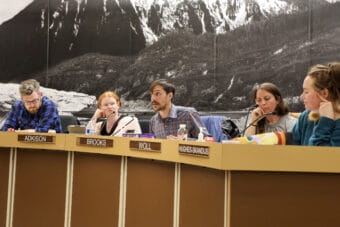
At a Juneau Assembly committee meeting Monday night, members approved the relaunch of the Visitor Industry Task Force and its members. Mayor Beth Weldon said the task force will be crucial in informing the direction the city takes to guide any future growth. 

“There is some issues that need to be addressed, and our tourism director relies heavily on these recommendations on how to move forward with her job,” she said. 

Juneau saw another record-breaking cruise ship tourism season this past summer, with more than 1.7 million passengers coming off ships and into town. 

The task force launches as Goldbelt Incorporated is planning a new $500 million cruise ship port on the backside of Douglas Island. And, that plan coincides with another dock development by Huna Totem Corp., an Alaska Native village corporation based in Hoonah. The Assembly approved the corporation’s plan to build a new cruise ship dock in downtown Juneau this spring. 

Weldon said she wants the task force to make big picture recommendations, like a 10-year tourism plan for Juneau. She also wants them to tackle more specific issues like addressing crowding and congestion in Auke Bay, regulating the whale watching industry and reducing ship emissions.  

Juneau Assembly member Ella Adkison will chair the committee, along with eight members that Weldon handpicked. They are Kirby Day, Kirsa Hughes-Skandijs, Sarah Lowell, Matt Catterson, Meilani Schijvens, Adrienne Scott, Shem Sooter and Jeremy Timothy.

Some members are returning from the previous task force, which originally sunsetted in 2020. Weldon said they represent a wide range of perspectives on tourism’s future. 

“I would say this community is no longer deadly against — as a community as a whole — deadly against tourism,” she said. “Nor are we a community that’s opening our gates wide for tourism.”

The task force has until the end of June to submit its recommendations to the Assembly. The first ship of the 2026 cruise season is slated to arrive in late April. 

Juneau’s new Parks and Rec director says fee increases, service reductions likely

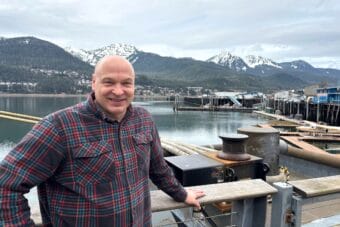
Marc Wheeler, the City and Borough of Juneau’s new Parks and Recreation director, smiles for a photo on Thursday, Nov. 20, 2025. (Photo by Lisa Phu/KTOO)

Marc Wheeler has worn a lot of hats in Juneau – from serving on the Juneau Assembly, to founding a beloved Juneau coffee shop and working with youth at Big Brothers Big Sisters of Alaska, he’s no stranger to public service. 

Now, he’s taken on a new role as the city’s new Parks and Recreation Director. His first day on the job was Nov. 3. And he comes at a tough time as the city faces potential budget cuts following the outcome of this year’s local election. 

Listen:

This interview has been edited for length and clarity.

Mike Lane: As everybody knows, the city’s facing some potential big budget cuts following the results of the recent local election, and how is that going to impact Parks and Recreation? Do you have that insight yet?

Marc Wheeler: Yeah, we don’t exactly know yet. We’re still getting some direction from the city manager’s office, and then also it’ll be up to the Assembly in the end. But I think at this point, it’s pretty clear that we’re going to have to reduce services or increase fees – or both. The magnitude, the impact of the [ballot] initiatives is great, and it’s really affecting our operating funds for the community. Parks and Rec is a big part of the budget, so I’m assuming we’ll have some real direct impacts that the public is going to feel.

Mike Lane: That kind of covers my next question: What changes will Juneau residents see?  There is the possibility of rate hikes and that sort of a thing.

Marc Wheeler: Yeah, I think we have to look at both revenues and expenses to meet the budget. Just coming from the private sector, (CBJ is) a lean organization, and there’s not a lot of places to cut that are going to be easy. So it’s going to have a lot of hard decisions. So ultimately, [it’s] up to the Assembly, but really, we hope the community is really involved in that process and really gives some good direction to the Assembly.

Mike Lane: Okay, and how are you going to balance the community expectations with the financial constraints that we know are there?

Marc Wheeler: Yeah, it’s going to be a balancing act. And, we really want to serve the public as much as we can with Parks and Rec, and that’s our mission, is to really provide a great service to the community. So I think we have to get creative, but also the community is going to need to get involved and prioritize what they want to see from us.

Mike Lane: Immediately, if I think Parks and Recreation, I immediately go to the swimming pool, to softball, to different organized sports. But it’s more than that. How many different areas does Parks and Rec cover? How many facilities?

Marc Wheeler: Yeah, so Parks and Rec not only does the parks, the trails, our facilities, our recreation facilities, the youth sports — we operate a youth shelter. I don’t think many people know about the Shéiyi X̱aat Hít, the Spruce Root House. It’s a place for teens that are experiencing homelessness (to) come and find shelter. So we’re doing everything from that to hosting pickleball now at Floyd Dryden three times a week. But also Parks and Rec, we oversee building maintenance for all of the city’s facilities. So we have at least 44 city buildings — I don’t think people know that —but we run buildings, from the warehouse and thing where we have the cold weather shelter to our IT department in an old NOAA building in Auke Bay. And, we’re servicing these buildings with our city staff. It’s a lot of facilities. It’s a lot of facilities. And then there are parks all over the place. We have parks. There are 42 trails in Juneau that the city is involved with. We also manage the parking garages and some parking lots downtown. We have just some great, hard-working staff, and I’ve been super impressed by the dedication and the heart and all the hard work that our staff is putting in.

Mike Lane: Speaking of staff, how many staff are you responsible for?

Marc Wheeler:  Parks and Rec is over 200 staff, but a lot of them are part-time or seasonal employees, and we have a lot of lifeguards working part-time. It’s over 90 FTEs, so there’s a lot of part-time staff.

Mike Lane: What other big issues do you see your department facing as director of Parks and Recreation?

Marc Wheeler: I think working with a smaller budget, trying to meet the needs in the community — that’s I think our biggest challenge. But also, supporting our workers. Like, I really want to highlight all the people that are behind the scenes making these services so valuable. People think, ‘Oh, it’s just some abstract budget.’ Well, most of our budget are people, people that are working in the city. Those are your friends and neighbors, and they’re working hard. From our shelter staff, who are working like 24/7 in the youth shelter, to our landscape crew, who are responding to downed trees that might be in people’s yards. Those are your friends, those are your neighbors and they really, they really are important.

Juneau Assembly OKs $320K grant purchase of wetland rescue vehicle for airport

A Marsh Master vehicle drives off-road in a field. (Coast Machinery LLC)

Earlier this week, the Juneau Assembly approved spending $320,200 in mostly federal grant funding to purchase an amphibious wetland rescue vehicle for the Juneau International Airport.

The vehicle is called the Marsh Master MM-2MX. At the Assembly meeting on Monday, City Manager Katie Koester said emergency responders would use the vehicle to rescue people who get stranded in wetland areas surrounding the airport.

“The reason that this response vehicle is necessary is if there were to be an accident, an airplane crash in that area, we would need to allow emergency responders to respond quickly and in large volume to that event,” she said. 

The approved purchase includes a $300,200 grant from the Federal Aviation Administration and $20,000 from the airport budget in local matching funds. Airport Manager Andres Delgado said the vehicle can be used in a variety of emergency situations.

“As far as its water capabilities, it does float, and it can traverse ice and muskeg and really harsh terrain as well,” he said. 

The airport’s board of directors approved the purchase last month. The Assembly approval came this week, despite Mayor Beth Weldon and Assembly member Neil Steininger voting against it. Weldon served as a division chief at Capital City Fire/Rescue for two decades. She said she didn’t think the amphibious vehicle was necessary. 

“I appreciate us trying to get a specialized piece of equipment, but as people know, I come from the fire department. I have seen these, and I just don’t see it as something that we need right now,” she said. 

CCFR Chief Rich Etheridge said the department typically responds to three to four incidents a year in the wetlands. People sometimes get trapped there when the tides come in behind them. The ongoing maintenance of the vehicle will be paid for out of the airport’s budget. 

Site notifications
Update notification options
Subscribe to notifications