Local Government

Juneau Assembly stalls on whether to disempower Eaglecrest Ski Area’s board

Juneau Assembly member and Eaglecrest Ski Area board liaison Neil Steininger speaks during a meeting at City Hall on Monday, Jan. 26, 2025. (Photo by Clarise Larson/KTOO)

The Juneau Assembly has stalled on deciding whether to disempower the Eaglecrest Ski Area’s board of directors until a joint meeting in March. 

Earlier this month, Mayor Beth Weldon proposed an ordinance to reduce the status of the city-owned ski area’s board from an empowered board to an advisory board. She cited the recent leadership turnover at the mountain and ongoing financial challenges.

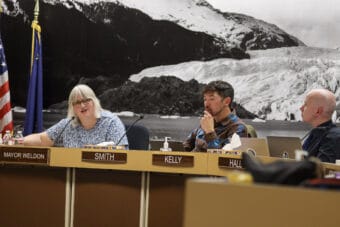
At a committee of the whole meeting Monday night, Weldon further explained her reasoning for the proposed ordinance to the Juneau Assembly and the roughly 20 members of the public in the audience. 

“I’m literally trying to save Eaglecrest, and I think with the empowered board making the decisions, I don’t see the status quo changing,” she said.

Right now, as an empowered board, Eaglecrest has its own set of laws, rules and responsibilities. But, if it became an advisory board, members could only make recommendations to the Assembly. It would lose the authority to establish policies or make decisions without Assembly approval. 

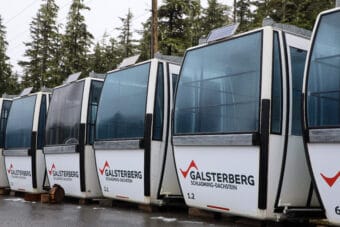
At the meeting, Weldon argued the ski area needs more oversight, given the high amount of funding the city has funneled toward it in recent years, specifically on a new gondola project.

“If we are investing large amounts of money on things such as the chair lifts or maybe even the gondola, we want to have more of a say in how that money is spent, and currently, we don’t,” she said. 

In the coming years, the ski area is slated to run into a multimillion-dollar deficit. The deficit is a part of a plan to repair some broken and aging infrastructure while boosting pay to employees and preparing to operate year-round. 

Its expansion into summer operations relies heavily on the success of the gondola, which the ski area hopes to get up and running by the summer of 2028. However, many city leaders are worried the timeline — and cost — of the project will run far over what the board projected. 

The Assembly agreed to hold off on any decision-making until it holds a joint meeting with the Eaglecrest board on March 4. Assembly member and Eaglecrest Ski Area board liaison Neil Steininger said he thinks that’s the best option. 

“I think we owe it to everybody in the community to have a joint meeting with the Eaglecrest board to actually hash this out,” he said. 

The Assembly will then vote on whether to move the ordinance forward during a committee meeting on March 16.

Eaglecrest board pushes back against Juneau mayor’s plan to diminish its power

Snow covers the Eaglecrest Ski Area’s Fish Creek lodge on Dec. 10, 2023. (Photo by Clarise Larson/KTOO)

Eaglecrest Ski Area’s board of directors is pushing back against the mayor’s proposal to remove most of the board’s decision-making authority. This comes after recent leadership turnover at the mountain and ongoing financial challenges.

Last week, Mayor Beth Weldon told the Juneau Assembly she asked the city’s attorney to draft an ordinance to reduce the status of the board from an empowered board to an advisory board. The Juneau Assembly will discuss the draft ordinance at its committee of the whole meeting on Monday evening. 

As an empowered board, Eaglecrest has its own set of laws, rules and responsibilities and makes decisions without direct Assembly oversight. If it became an advisory board, members could only give advice or make recommendations to the Assembly. It would lose the authority to establish policies or make decisions without Assembly approval. 

“As we know, they’re having major financial issues, and I just think the city needs to have more oversight over what’s happening to Eaglecrest,” she said. “I think the government is standing in its way right now, and it needs to be changed.”

But, at a special meeting on Thursday evening, Eaglecrest’s board moved to draft a letter to the mayor and Assembly asking to remain an empowered board. The board intends to finish the letter this weekend, in time for the Assembly discussion during its committee of the whole meeting on Monday. 

Board member Jim Calvin said remaining an empowered board is in the community’s best interest. 

“The board is deeply engaged in gondola planning work, and we’re deeply engaged in recruiting a new GM (general manager),” he said. “We’re initiating some business planning work, and all of that is at risk of completely derailing if we’re not an empowered board.”

The tension between the Eaglecrest board and the mayor comes after the ski area’s general manager resigned and the board chair stepped down earlier this month. Eaglecrest has also had several issues with its facilities that sullied the beginning of its season, including a broken water line and issues keeping Ptarmigan lift open. 

Eaglecrest is expected to run into a multimillion-dollar deficit in the coming years to repair some broken and aging infrastructure, while boosting pay to employees and preparing to operate year-round. Its plan toward financial stability relies heavily on revenue from the gondola, which the ski area hopes to get up and running by the summer of 2028.

According to the board, the city plans to post the general manager position online next week, which will remain open until it’s filled. 

New city survey seeks public feedback as Juneau faces multimillion-dollar budget hole

People walk past City Hall in downtown Juneau on Thursday, Jan. 22, 2026. (Photo by Clarise Larson/KTOO)

The Juneau Assembly is bracing for a tough budget season in the coming months. 

That’s because during last fall’s municipal election, Juneau voters approved municipal tax cuts that created a multimillion-dollar recurring hole in the city’s budget.

The city’s next fiscal year begins on July 1 of this year. Starting then — and every fiscal year moving forward — the city will face an estimated $10 to $12 million in revenue loss in its general fund. That’s due to the tax exemption on food and utilities and a cap on the city’s property tax rate that voters passed. It’s now up to the Juneau Assembly to figure out how to mend that gap. 

Earlier this week, the city released a survey asking residents to help inform the Assembly as it decides in the coming months how to move forward with the budget. Christine Woll is on the Juneau Assembly and is its finance committee chair. During KTOO’s Juneau Afternoon show on Tuesday, she said the survey is meant to be tough. 

“We want people to be a little bit in our shoes in terms of having to make hard decisions about priorities,” she said. 

The survey asks residents to pick what city programs and services are most important to fund and to pick what services to reduce funding for. The list includes programs like libraries and museums, trails and parks, and homeless services. 

This is a graph of the City and Borough of Juneau’s general fund operating expenditures. (City and Borough of Juneau)

The survey also asks what values they want the Assembly to prioritize, like whether to keep taxes low, continue to support local business year-round, or fund affordable housing projects. 

The survey broadly lists programs, services and values. That’s by design, said Phil Huebschen, an engagement specialist with the city’s communications department. He said the survey is meant to simplify the complexities and nuances of the city’s $478 million budget so it is digestible for everyday residents. 

“We’re trying to reposition all of this really complex data and information as really simple values information that people can understand,” he said. 

The survey also includes some budgets that the Assembly doesn’t necessarily have direct control over, like the airport and hospital, which have their own boards and operate like businesses. But, Huebschen said, the information is meant to guide the Assembly as they make decisions during the budget cycle. 

“We’re hoping that they’ll have a compass, so to speak, of what kind of areas in terms of city services, the broad public of Juneau kind of values the most, and where they’re willing to make trade-offs,” he said. 

Assembly member Woll explained that budgetary cuts aren’t the only way to mend the deficit. There are other options too, like increasing revenue using bonds, increasing sales taxes or user fees. The survey asks respondents what option they’d be comfortable seeing implemented. 

“There are lots of different ways to address revenue reductions. You can figure out other ways to increase revenue,” Woll said. 

Along with the survey, the city plans to host three community workshops and two Assembly listening sessions on the budget. The first workshop is at the Filipino Community Hall on Feb. 18, the second at the Valley Library on Feb. 24, and the third at the Douglas Library on March 3. Each workshop starts at 5:30 p.m. The city hasn’t posted details on the listening sessions yet.

The survey is open until mid-February and respondents are eligible for several prizes, like an annual city bus pass or a two-night stay at Hilda Dam Cabin. 

The city manager will release the draft city budget in March. The Assembly must finalize its budget before July 1.

Juneau’s City Hall move will cost millions more than expected

The Michael J. Burns Building, which houses the Permanent Fund offices on 10th Street, on Monday, Feb. 24, 2025. (Photo by Clarise Larson/KTOO)

The cost to move Juneau’s City Hall is coming in millions of dollars higher than expected.

According to the city administration, it’s expected to cost $20.5 million to purchase, renovate and move into two floors of the Michael J. Burns building, which houses the Alaska Permanent Fund Corporation downtown. The floors are slated to become Juneau’s new City Hall location. 

In September, the Juneau Assembly greenlit the purchase of the floors from the Alaska Permanent Fund Corporation. At the time, the cost estimate was less than $18 million. 

Mayor Beth Weldon said the move to the Burns building is the best option for both city staff and citizens. 

“We have to find a solution. We have looked under every rock to find a cheaper solution. There is no cheaper solution,” she said. 

Those rocks include trying to build a new City Hall, and looking at existing buildings like the former Walmart in Lemon Creek, the Marie Drake building and the Floyd Dryden campus. 

The $20.5 million price tag is millions of dollars higher than city officials anticipated it would be just a few months ago. That cost is to cover moving expenses and a partial remodel of the floors — including things such as new paint, carpet and cubicles. 

And, while the Assembly has already put aside about $14.5 million for a City Hall project during recent budget cycles, they still needed to find another $6 million.

So at a meeting Monday night, Assembly members agreed to pay for the shortfall by pulling that amount from a hodgepodge of other proposed city projects, including the Capital Civic Center, the Lemon Creek Multimodal Path and a waterfront museum. 

But not everyone was in favor of the plan. New Assembly member Nano Brooks voted against the transfer of funds, arguing it was too much money. 

“The amount of $20 million is just, I can’t support that in good conscience,” he said. “It’s not what the taxpayers voted for, and even the funds that were initially set aside has left a lot of the community feeling very disparaged and unheard.”

The Assembly’s vote comes after multiple years of push and pull between city administration and Juneau voters. The city asked voters twice during recent municipal elections to approve bond debt. They said no both times. 

Juneau’s current City Hall near Marine Park fits less than half of the city’s employees and it needs millions of dollars in maintenance and repairs. The new location would consolidate several departments that are now in separate buildings.

Assembly member Alicia Hughes-Skandijs said the plan isn’t perfect, but she’ll support it. 

“There is no workable alternative that I have heard,” she said, “So we need to find the solution, and this is frequently where we find ourselves, which is just choosing the best of our least favorite choices.”

According to the city administration, the renovations and the move to the new location are expected to take at least a year to complete. 

New avalanche alert issued for Behrends, White neighborhoods, Thane Road

A view of Mt. Juneau from across the channel shows the Behrends avalanche path as a treeless swath on the side of the mountain. (Photo by David Purdy / KTOO)

The City and Borough of Juneau issued an avalanche alert via text Monday afternoon, telling residents in the Mount Juneau slide path to be prepared.

It’s the second avalanche alert issued in the last week, as record-breaking snow blankets the community and the mountains above it.  

Ryan O’Shaughnessy, Juneau’s emergency programs manager, said the alert is not an evacuation advisory. 

“It’s reminding folks to be prepared to evacuate, and that conditions can change rapidly,” he said. 

He said that the historic 4-foot snowpack appeared to stabilize over the weekend. But on Monday the avalanche risk rose again due to a change in the weather. 

“With new snowfall today, warming temperatures and high winds in the forecast, avalanche danger is increasing,” he said.

The alert covers residents in the Behrends and White neighborhoods, as well as Thane Road. The road remains open, but drivers are reminded not to stop in the avalanche zone. 

In the event of an avalanche evacuation, O’Shaugnessy said Centennial Hall will be the emergency shelter and the American Red Cross has resources staged there now. He also said the Alaska Department of Transportation is prepared to clear evacuation routes. 

He said the avalanches that DOT triggered above Thane Road on Gastineau Ridge last week weren’t very large, and that tells him two things: the snowpack is a bit more stubborn than anticipated, and there is still a lot of snow up there.

Finalists for new Juneau fire chief present their plans for the department

Capital City Fire/Rescue fire chief finalists Tom Hatley (left) and Sean Wisner (right) during presentations at City Hall in Juneau in December 2025. (Photos by Clarise Larson/KTOO)

Two finalists in the running for fire chief at Capital City Fire/Rescue got a chance to share their vision for the department during public presentations this week. Juneau’s city manager is expected to make a decision next week.

Finalist Sean Wisner, who presented on Monday, has been the fire chief for Alyeska Pipeline Fire & Rescue in Valdez since 2012. He’s spent more than 20 years serving in emergency services leadership roles. He founded a consulting firm that specializes in helping organizations be resilient and improve their performance.

“I’ve been in leadership positions in all sorts of complex, municipal, industrial, backcountry and critical infrastructure environments,” he said. “I think that gives me a unique perspective on a place like Juneau.”

Wisner said he’s had his eye on Juneau since he visited the capital city in 2022 to compete in the Ironman Alaska race.

The other finalist, Tom Hatley, presented on Tuesday. He served as the deputy chief for the Spokane Valley Fire Department in Washington until April of this year, when he left due to a family medical reason. He has more than 30 years of experience in fire service, holding positions like fire chief, assistant chief and fire marshal at multiple agencies in the Pacific Northwest. 

Hatley said he was drawn to the position because of the complexities of Juneau’s fire and emergency medical services. He pointed to the community’s lack of outside support, large service area and seasonal population surges. CCFR services 3,255 square miles.

“This unique operating environment is why CCFR must focus on prevention, system resilience, workforce sustainability and community-centered service delivery,” he said. 

Hatley said, as chief, he would focus on addressing staffing problems in the department, especially retaining the department’s current employees. The fire department has struggled with staffing shortages, which union officials say have led to burnout and driven people away from the department. 

The Juneau Career Firefighters Union is currently at an impasse in its negotiations over a new contract with the city.

Juneau’s Capital City Fire/Rescue Chief Rich Etheridge in downtown Juneau on Tuesday, Sept. 16, 2025. (Photo by Clarise Larson/KTOO)

“Retention must come before recruitment,” Hatley said. “Hiring new people is important, but keeping experienced, well-trained personnel is what maintains service quality and organizational stability.”

Wisner said his strategy for strengthening the department is focusing on staff mental health. He said he wants the department to be a place where employees feel empowered and supported when they need help. 

“Emotional intelligence and emotional literacy is one of the tools that we can use to get there, to create a better culture within the organization and to foster stronger mental health,” he said. 

Both finalists said they also want to increase transparency, leadership development and community engagement.

The new chief will replace outgoing Fire Chief Rich Etheridge, who announced his plans to retire in September. He has been at the helm of Capital City Fire/Rescue for more than 15 years.

The annual salary listed on the city’s website for the position is between $125,944 and $161,761.

Site notifications
Update notification options
Subscribe to notifications