Local Government

Juneau’s new sales tax exemptions just rolled out. Here’s what you need to know.

Phil Gouvey checks out groceries at Foodland IGA on Wednesday, Nov. 19, 2025. (Photo by Clarise Larson/KTOO)

Before Thursday, when you would grab some groceries or pay your utility bill, Juneau’s city government taxed most residents at 5%. But now, that tax has dropped to zero percent for everyone, regardless of their income or age.

That’s because of a ballot measure that was approved by voters during this fall’s election to remove the local sales tax on essential food and residential utilities.

Phil Gouveia was buying groceries at Foodland IGA on Wednesday afternoon. He said he’s excited for the changes and to see some extra cash back in his pocket. 

“Yeah, it’s gonna help me. I’m 70 years old. I’m on a pension, so groceries keep going up, but my pension doesn’t,” he said. 

The exemptions officially take effect on Thursday, 30 days after the fall election results were certified. The proposition passed with nearly 70% of voter approval. 

Deputy City Manager Robert Barr said the roll out of the exemptions should be pretty hands-off for most residents. He said the city is working with businesses on implementing it, but it may take some time before all retailers are under the new system. 

“Our goal was to implement this in a way that was as easy for residents as possible, so most residents shouldn’t have to do much, if anything,” he said. 

The exemptions apply to the same food items that qualify under the Supplemental Nutrition Assistance Program, also known as SNAP or food stamps. That includes foods like fruits and vegetables, meat and dairy, bread and cereals — and cookies and ice cream. But it doesn’t cover hot food — like a rotisserie chicken — or meals from restaurants.

“What qualifies as food is largely groceries, things that you would buy from the grocery store and prepare at home, or things that are intended to be consumed off-site,” he said. 

The utilities exemptions apply to residential electricity, heating oil or propane, water and sewer and garbage and recycling. 

Alec Mesdag is the CEO of Alaska Electric Light & Power, or AEL&P, Juneau’s sole electricity provider. It serves more than 16,000 customers. Mesdag said the logistics of rolling out the exemptions are challenging and complex due to AEL&P’s large number of customers and having to verify which accounts are for residential use versus commercial. 

Despite that, he said the company is actively working with customers to ensure those who are eligible receive the exemption as soon as possible. 

“What we intend to do is go through our list and apply the exemption as broadly as possible, but excluding certain accounts that appear to us to be highly likely to be not eligible to receive the exemption,” he said.

Mesdag said AEL&P is sending out letters to customers to inform them which accounts have received the tax exemption and which have not.

While the exemptions are expected to put some extra cash back into residents’ wallets, it in turn means the city is expected to face a $6.4 million hole in its budget this fiscal year. And, each year moving forward, the city will face an estimated $12 million revenue loss from both the tax exemption on food and utilities and the separate cap on the city’s property tax rate that voters also passed.

City officials and the Juneau Assembly will be grappling with potential service cuts in the coming months.

Unhoused campers kicked off Teal Street say they have few options

An excavator scoops tents and platforms into a dump truck as part of the City and Borough of Juneau’s demolition of an encampment on Teal Street on Nov. 14, 2025. (Photo by Yvonne Krumrey/KTOO)

On Friday morning, about a dozen people pulled items out of their makeshift homes along Teal Street, and packed them into black trash bags or tote boxes.

A dusting of snow had already started settling on the tents and shelters. Police stood on the sidewalk, and volunteers and nonprofit workers passed out eggs and potatoes from a tent nearby. 

Willow Williams sat in a wheelchair across the street from his tent. He has severe health problems: he has a colostomy bag and a hernia, alongside a slew of injuries. A lot of people at the encampment were worried about him, and they came by to bring him food and ask what else he needed, as others helped him pack up his shelter.

“My friend built that place, and he let me move in there, because, you know, it was hard for me with everything,” he said, pointing to his colostomy bag. “And I got a bed in there, and it kept me out of the wind. It kept me away from the rain.” 

Williams said he’s been comfortable there. It’s close to the Glory Hall shelter where he receives help with his health conditions. He said he hopes he’ll get a bed in the shelter soon.

Last year, the city closed a summer campground that unhoused people in Juneau frequently used, and instructed people to camp in small groups on other public land.

This past spring, large groups of tents cropped up in the Teal Street area. And they have been the subject of public debate and safety concerns. The city already cleared the encampment at this spot at least once this year. 

Then in August, because of safety threats to Glory Hall staff and residents, the nearby shelter stopped offering day services. 

Friday morning, the city forced people out of the encampment after giving notice earlier in the week

Juneau Police Commander Jeremy Weske was on site, along with several other officers. He said that this encampment isn’t safe in the winter months. 

“We don’t want people being on streets or in ditches and snow plows coming through and having a tragedy,” he said. “So that’s why this is happening now.” 

Smaller groups of people are allowed to camp on what the city calls “unimproved public land,” but officials haven’t offered more concrete guidance. Friday, city officials advised people to go to the city-funded emergency warming shelter in Thane, which only operates overnight.

Williams needs to make it through the next few days, or however long it takes before he can go to the Glory Hall. He said he hasn’t been able to sleep at the emergency warming shelter in the past due to discomfort from his medical issues, but he’s hopeful accommodations have improved.

Director Kaia Quinto said the Glory Hall has been at capacity every night so far this year. 

“Usually when we have somebody move out, there’s like that hour of space where we’re helping them clean and pack up their belongings,” she said. “And then someone else is right in their bed afterwards.”

But she said staff is trying hard to get Williams into the shelter.

“We don’t have any beds,” Quinto said. “But Willow is a high priority for us, to get him in before the weather gets too bad.”

Doug Worthington and Nathaniel Hensley-Williams pack up their belongings as the City and Borough of Juneau demolishes an encampment on Teal Street on Nov. 14, 2025. (Photo by Yvonne Krumrey/KTOO)

Back on Teal Street, Doug Worthington and his partner Nathaniel Hensley-Williams were strategizing where they could store their stuff, and where to go next. Worthington said they can stay at the Thane warming shelter at night. 

“The other half of the problem is, where are we gonna go during the day?” he said.

“Well, that’s when we just set up our tent during the day and collapse it during the evening,”  Hensley-Williams said. “Because I have thought about that.”

Worthington is from Juneau and said he has been living outside without stable housing for about a year now. 

Initially, people camped here on Teal Street to access the Glory Hall’s day services, but since those stopped, Hensley-Williams said people stay because it feels safer here than other parts of town. 

“Staying here is where we’re not getting f—– with,” he said. “That’s the only reason we have stayed here.”

An excavator drops a tent into a dump truck as part of the City and Borough of Juneau’s demolition of an encampment on Teal Street on Nov. 14, 2025. (Photo by Yvonne Krumrey/KTOO)

As an excavator picked up tents and platforms and dropped them in a dump truck, Worthington stood with his and his partner’s stuff, packed into a tower of totes. He said the city isn’t giving his community the help they need. 

“And they say they hate it because they don’t want to be doing this. But yet, here they are,” he said. “They say they want to help us, and yet they’re kicking us out. We’ve all built our homes right here. 

Worthington said he’s been moved around to different parts of the city, but people always complain about people camping, no matter where they go.

Juneau plans to clear its largest homeless encampment ahead of first snow

Campers pack up their belongings on Teal Street in the Mendenhall Valley on Wednesday, Nov. 12, 2025. (Photo by Clarise Larson/KTOO)

More than a dozen people without permanent housing living in Juneau’s largest unhoused encampment will be forced to leave on Friday morning, ahead of the season’s first expected snowfall. 

The City and Borough of Juneau gave notice to the people camping on Teal Street in the Mendenhall Valley earlier this week. The notices says the city is prohibiting camping in the area due to winter maintenance and safety concerns. 

Right now, the street is lined with more than a dozen campsites. Some campers don’t want to leave.

“I assumed that they would let us stay through the winter. I didn’t anticipate them doing this now — it just seemed like the worst timing,” said Darian Bliss, who’s been living in the Teal Street area in a makeshift shelter since about May. 

People without housing in Juneau set up camp here because it’s close to social services and other resources provided by the Glory Hall and St. Vincent de Paul. 

“I think it’s the safest, best place out of everywhere in town, because you’re right across from the homeless shelter anyway, and so I don’t know where a better place could possibly be,” he said. 

Tents line the sidewalks along Teal Street in the Mendenhall Valley on Wednesday, Nov. 12, 2025, (Photo by Clarise Larson/KTOO)

Bliss said he’s frustrated with the timing of the city’s eviction. He doesn’t want to have to uproot his life again, even as winter comes. He’s spent the last week or so insulating his campsite, and recently installed a wooden door with a lock. 

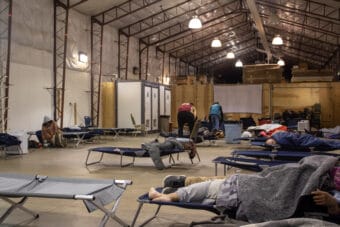
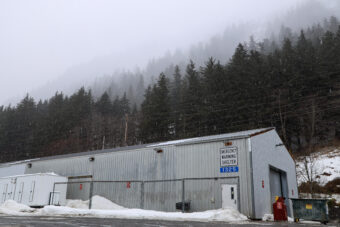
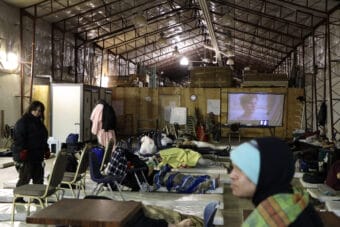
Campers like Bliss have few options for where they can stay. One option is the city’s cold weather emergency shelter, which opened for the season in mid-October. It’s located in a warehouse in Thane, about a mile from downtown and about nine miles across town from the services on Teal Street. 

The shelter accepts anyone who comes in search of a place to sleep at night, as long as they aren’t disruptive to other patrons. City officials say it’s a stopgap and meant to be a last resort for unhoused people when the weather gets cold. 

Bliss said he doesn’t plan on going there. He doesn’t like how crowded it is and the distance from resources. 

“I don’t like going out there at all. I just stay perfectly fine here,” he said. 

Logan Henkins works at the Glory Hall shelter. He was playing music and handing out hot chocolate and coffee to people who passed by on Wednesday afternoon.  

“I’m just out here this morning trying to touch base with as many people as I can touch on base with about the extended services that St. Vincent de Paul is offering on Friday to catch the people who are being displaced,” he said. 

St. Vincent de Paul operates the city’s emergency shelter. In light of the clearing, the shelter will open earlier on Friday and offer a meal.

He’s not the only one trying to help out. Claire Richardson stood outside her car next to a campsite on Teal Street, waiting to help a woman she met the day before move her belongings from an encampment and into a family member’s apartment. 

“You start to realize that people (are) living on the margins, and the snow is coming, and really, I don’t know what they’re going to do, and there’s a lot of stuff here,” she said. 

Richardson is with ReSisters, a local group of women who work for social justice and equality. She said when she heard about the encampments being cleared, she felt drawn to help the people who were about to be displaced. 

“It’s going to start snowing here in a few days, and the thought of me being safe in my home, sipping my hot coffee and knowing that people are living like this. Well, it’s just hard to sleep at night,” she said. 

Other groups in town are helping out too, like the Haa Tóoch Lichéesh Coalition, which is asking the community to offer storage space or funds to those being displaced. 

Deputy Police Chief Krag Campbell said the police department plans to have officers arrive at 8 a.m. on Friday to ask people to leave the area. Then at 9 a.m., they’ll start throwing people’s belongings away. He encouraged campers to pack up their belongings beforehand.

“Hopefully, we’ve given them ample time, ample notice, and they can start making those arrangements to go somewhere else,” he said. 

Deputy City Manager Robert Barr said the city will continue to monitor the area after Friday in the event that people set up camp again. 

Juneau leaders begin to grapple with budget shortfall following election tax cuts

City staff and Juneau Assembly members discuss during an Assembly finance committee meeting on Wednesday, Nov. 5, 2025. (Photo by Clarise Larson/KTOO)

The municipal tax cuts approved by Juneau voters in this fall’s election are expected to create a $6.4 million hole in the city’s budget this fiscal year. But that’s only scraping the surface. 

Next year — and every year moving forward — the city will face an estimated $12 million revenue loss. That’s due to the tax exemption on food and utilities and cap on the city’s property tax rate that voters passed.

This year, the funding gap is smaller because the city is already partially through this fiscal year. The new food and utility tax exemptions take effect starting Nov. 20 and the property tax rate cap will begin next year.

During a finance committee meeting on Wednesday night, Assembly members began to discuss how to move forward. Assembly member Alicia Hughes-Skandijs said the decisions ahead won’t be easy. 

“I think that when people understand the magnitude of the decisions made in the last election, there is going to be a little bit of whiplash,” she said. 

For the immediate $6.4 million hole this fiscal year, Assembly members agreed on Wednesday to absorb the revenue shortfall using interest earnings from last fiscal year that came in higher than expected. They opted against implementing any broad service reductions — for now. 

Angie Flick, the city’s finance director, said it gives the Assembly more time to figure out how to address the recurring shortfall beginning next fiscal year.   

“We have the opportunity to take some time to make thoughtful decisions about reductions,” she said. 

Flick and city staff floated a few directions the Assembly could take to fill the recurring gap — though no major decisions were made. She offered options like implementing a blanket reduction in funding across all city departments, hiring freezes, cutting services and major line-item expenses, or increasing revenue. 

The Assembly also agreed to distribute the remainder of the grant funding that the city withheld from local organizations before the election. The city originally withheld the funds out of concerns about the revenue loss if the ballot propositions passed. 

Assembly member and finance committee chair Christine Woll advocated for providing the full funding promised. 

“I think it plays into this idea that our community grants are philanthropy, that we’re doing this to be nice,” she said. “We’re doing this because these are needed services in our communities that others can do more efficiently and better than we can.” 

City staff and the Assembly plan to evaluate the city’s finances in the coming months and develop a plan to engage the public as it moves forward with any potential reductions to services. 

Disclosure: KTOO is one of the organizations that will receive previously withheld grant funding from the City and Borough of Juneau. 

Telephone Hill tenants file lawsuit as city plans next steps for redevelopment project

A sign leans against a tree in the Telephone Hill neighborhood on Tuesday, Nov. 4, 2025. (Photo by Clarise Larson/KTOO)

Tenants living in Juneau’s historic Telephone Hill neighborhood had until last weekend to move out.

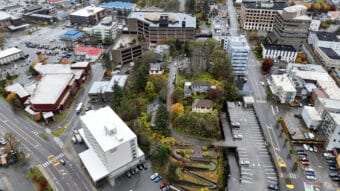
But some didn’t, and three of them are now suing the city to reverse the evictions. At the same time, city officials are discussing the next steps for the downtown neighborhood’s redevelopment into new, denser housing.

The city’s Nov. 1 eviction date for Telephone Hill tenants has come and gone, and now, the city is laying out the plan for what lies ahead for the neighborhood.

“It is really the only piece of property that is large enough to be able to support maximum density housing and really move the needle on housing in Juneau,” City Manager Katie Koester said at a Juneau Assembly committee meeting Monday night.

She and Assembly members discussed what’s next for the controversial redevelopment project.

City Manager Katie Koester speaks during a Juneau Assembly committee of the whole meeting on Monday, Nov. 4, 2025. (Photo by Clarise Larson/KTOO)

The discussion came just days after three tenants living on Telephone Hill filed a joint civil lawsuit against the city on Halloween, seeking to reverse the evictions. City leaders did not mention the lawsuit at the meeting.

The plaintiffs claim the city improperly evicted people on the hill, illegally phased the redevelopment and that the project fails to comply with federal and state historic preservation acts.

Joe Karson is one of the plaintiffs. He’s 80 years old and, as of Tuesday, hadn’t moved out of his apartment on the hill.

“They came and told me today that I have to be out by eight o’clock tomorrow morning, and I won’t be,” Karson said.

He says he plans to fight the evictions and demolition as long as possible. He pointed out that the city doesn’t have a developer lined up yet.

“The idea is that at some point, someone will build something — that’s their idea of a project? What on earth is that?” he said.

City Attorney Emily Wright says the city’s law department is reviewing the lawsuit and plans to file a response shortly. She says the city believes it has no merit.

All of the residents of Telephone Hill were renters and had been since the state took ownership of the neighborhood in the 1980s. The state transferred ownership to the city in 2023. Last year, the Assembly voted to redevelop the neighborhood to build denser housing on prime downtown real estate to ease Juneau’s housing crunch.

The city wants to find a developer willing to build four mid-rise apartments, which could create an estimated 155 new housing units. But, right now, there’s no developer signed onto the project.

“This is a unique gem that a community doesn’t get an opportunity very often to have property so centrally located with utilities with infrastructure in their community,” Koester said.

Trees outline the Telephone Hill neighborhood in downtown Juneau on Monday, June 9, 2025. (Photo by Clarise Larson/KTOO)

According to a 2024 assessment, Juneau is in immediate need of at least 400 new housing units.

The project has come with a lot of pushback from local advocates. That’s in part due to the history of the hill — it was home to Alaska’s first commercial telephone service, and many of its houses were a part of the original Juneau townsite in the late 1800s. All seven structures are slated for demolition this winter.

This past spring, the Assembly approved spending $5.5 million to tear them down and prepare the land for new buildings. The Assembly chose to front that cost in order to attract developers and tack on some affordable housing requirements.

Koester said the city plans to select a developer early next year so that construction can begin in 2027.

At Monday’s meeting, she spoke to an audience filled with advocates against the plan. She said that the decision to redevelop the neighborhood is not an easy one, but added it has the potential to dramatically move the needle on the city’s lack of housing availability and affordability.

“Telephone Hill really does represent some of the most developable property, well-located in our community, and it’s been really hard to struggle with those decisions,” Koester said.

According to Wright, as of Tuesday tenants are still occupying three residences on Telephone Hill. The city plans to take legal action against those tenants on Wednesday.

Haines and Skagway both oppose Cascade Point ferry terminal. Juneau hasn’t taken a stance.

This is a concept design drawing of a new ferry terminal facility in Juneau at Cascade Point. (Alaska Department of Transportation and Public Facilities)

The Juneau Assembly doesn’t plan to take a stance on whether it’s in favor of the state’s proposed Cascade Point Ferry Terminal north of Juneau. That’s despite Haines and Skagway openly opposing the project.

The new ferry terminal would be located beyond where the road ends in Juneau on land owned by Goldbelt Incorporated, a local Alaska Native Corporation. The project is slated to cost tens of millions of dollars. 

Juneau already has a ferry terminal in Auke Bay. The new terminal would be about 30 miles north of the Auke Bay terminal. The state has been pushing for the new terminal for several years, saying it would benefit travelers by reducing operating costs and travel time between Juneau, Haines and Skagway. 

But in an interview, Juneau Mayor Beth Weldon said that the Assembly has other priorities to focus on right now. 

“I don’t think we ever took a stance on it because we just had other, more pressing issues, like the flood,” she said. “We’ve been dealing with that for three years now, and now we’re dealing with budget cuts and everything else, so I don’t see it coming back on our plate for quite some time.”

Multiple Assembly members declined to share where they stood on the topic. Member Paul Kelly said he is “not yet convinced that this is the best solution to help Juneau and other communities in Southeast Alaska improve our interconnectivity.”

The state department of transportation has already signed a $28 million contract for the project’s first phase in July and construction could begin next summer. 

An economic analysis released earlier this month by the department weighed the financial merits. Overall, it portrayed it as having more pros than cons. That’s despite its high price tag and criticism from regional officials and members of the Alaska Marine Highway Oversight Board.

The analysis concluded the project would allow for flexible travel in the region and would play a key role in bringing a proposed new gold mine in Juneau to fruition. Canadian mining company Grande Portage wants to develop an off-site ore terminal at the new ferry dock in partnership with Goldbelt. 

The state began soliciting public comment on the first phase of the project last week. The comment period runs through Nov. 28.

Site notifications
Update notification options
Subscribe to notifications